To save content items to your account,
please confirm that you agree to abide by our usage policies.
If this is the first time you use this feature, you will be asked to authorise Cambridge Core to connect with your account.
Find out more about saving content to .
To save content items to your Kindle, first ensure no-reply@cambridge.org
is added to your Approved Personal Document E-mail List under your Personal Document Settings
on the Manage Your Content and Devices page of your Amazon account. Then enter the ‘name’ part
of your Kindle email address below.
Find out more about saving to your Kindle.
Note you can select to save to either the @free.kindle.com or @kindle.com variations.
‘@free.kindle.com’ emails are free but can only be saved to your device when it is connected to wi-fi.
‘@kindle.com’ emails can be delivered even when you are not connected to wi-fi, but note that service fees apply.
Automatic precision herbicide application offers significant potential for reducing herbicide use in turfgrass weed management. However, developing accurate and reliable neural network models is crucial for achieving optimal precision weed control. The reported neural network models in previous research have been limited by specific geographic regions, weed species, and turfgrass management practices, restricting their broader applicability. The objective of this research was to evaluate the feasibility of deploying a single, robust model for weed classification across a diverse range of weed species, considering variations in species, ecotypes, densities, and growth stages in bermudagrass turfgrass systems across different regions in both China and the United States. Among the models tested, ResNeXt152 emerged as the top performer, demonstrating strong weed detection capabilities across 24 geographic locations and effectively identifying 14 weed species under varied conditions. Notably, the ResNeXt152 model achieved an F1 score and recall exceeding 0.99 across multiple testing scenarios, with a Matthews correlation coefficient (MCC) value surpassing 0.98, indicating its high effectiveness and reliability. These findings suggest that a single neural network model can reliably detect a wide range of weed species in diverse turf regimes, significantly reducing the costs associated with model training and confirming the feasibility of using one model for precision weed control across different turf settings and broad geographic regions.
The mobility of a weed species is a strong determinant of the optimal management strategy, including whether area-wide management will be beneficial. In this paper, we examine the mobility and dispersal distances of flaxleaf fleabane [Conyza bonariensis (L.) Cronquist; syn.: Erigeron bonariensis L.], widely regarded as a highly mobile weed. We sampled individual weeds from two regions and sampled the same sites in the following season to conduct parentage analysis and assess intergenerational dispersal distances. We find high values of FIS across populations consistent with mostly self-fertilization, but also relatively high genotypic diversity, suggesting that outcrossing does occur at low rates. We find evidence for long-distance dispersal (more than 350 km) and detect dispersal distances of up to 71 km and 36 km within each of the two regions using parentage analysis. We also find high spatial genetic structure within the Riverina region, with sites in 2021 genetically very similar to sites in 2020, indicating that local dispersal may be a more important driver of population genetics than long-distance dispersal, perhaps due to the high rates of seed production and self-fertilization. Glyphosate resistance was not spatially structured in C. bonariensis in these regions, highlighting the role of movement, and significant proportions of susceptible plants were found in both regions. The high levels of mobility, including over potentially long distances, indicate that the value of control and preventing weed seed set is likely to extend beyond the farm and offer “area-wide” benefit.
During pregnancy, colonization by genital mycoplasmas may be associated with adverse outcomes. This study was conducted to investigate the prevalence of four species of Mollicutes (Mycoplasma hominis, Mycoplasma genitalium, Ureaplasma parvum, and Ureaplasma urealyticum) in pregnant women receiving high-risk prenatal care and to evaluate possible associated factors. Data collection included the application of a questionnaire and the collection of cervical swabs from pregnant women. Species identification was performed by real-time PCR. The overall prevalence of Mollicutes was 60.97%. 55.9% of pregnant women were colonized by Ureaplasma spp., and 19.51% by Mycoplasma spp. The prevalence rates by species were 48.78% for U. parvum, 11.59% for U. urealyticum, 18.9% for M. hominis, and 1.22% for M. genitalium. Age, 12 years of schooling or more, age at first sexual intercourse up to 14 years, third trimester of pregnancy, having undergone infertility treatment, presence of STI, and groin lymph nodes were associated with a higher prevalence of microorganisms. The results presented are of utmost importance for understanding the prevalence of these microorganisms, the characteristics of colonized pregnant women, and planning screening strategies and interventions that minimize the negative impacts of these infections.
Chemotaxis is the phenomenon of sensing external concentration gradients by cells and the cellular movement towards or away from the cells. While there have been intensive studies on prokaryotes, little research has been conducted on the chemotaxis in flagellated eukaryotes, such as Giardia lamblia (G. lamblia) and Trichomonas vaginalis (T. vaginalis). The current study uses a 2-chamber assay to discuss the motility of G. lamblia and T. vaginalis towards simple sugars. The cells were observed moving towards the sugars in a concentration and time-dependent manner. Furthermore, the cell movements were independent of change in osmolarity. Experiments compared the motility of the parasites grown in TYI-S-33 medium and TYI-S-33 medium without glucose (starvation media). It was noted that the starved cells showed a better chemotactic response towards the carbohydrates than the non-starved cells.
Drought and heat stress are a global concern affecting crop productivity. The current study investigated the daily shoot and root length growth of 48 elite African sorghum genotypes and two commonly grown check varieties in response to heat and drought stresses applied individually and in combination at the early (7-day-old) and late (21-day-old) seedling stages. Genotype, stress, and their interaction significantly affected root and shoot length at both stages. Our findings indicated that the combined stresses suppressed daily shoot length growth at both stages. Drought, heat, and combined stresses equally suppressed daily root length growth during the early seedling growth stage, and drought applied separately showed the highest negative effect on root length at the late seedling stage. In general, the stress treatments showed the utmost negative effects in daily shoot and root length growth at early seedling stage than the late stage. Heat stress induced the highest relative growth reduction of 78% in hypocotyl length followed by combined stresses at 77.6% and 70.8% for drought stress. The average hypocotyl length changes ranged between 0.37 and 2.31 mm per day at early seedling stage. Root length daily growth was reduced by 69.1% under combined stress, 67.6% under heat stress, and 63.3% under drought stress at early seedling stage. Root length changes ranged between 0.35 and 2.96 mm per day at early seedling stage. At late seedling stage, the highest relative daily growth reduction was observed in shoot length (36.6%) under combined stresses while drought stress induced the highest relative daily root length reduction of 10.8%. The average shoot length changes ranged between 5.1 and 8.1 mm per day at late seedling stage while root length changes ranged between 2.7 and 3.5 mm. In reference to the independent genotypic effects, genotype IS13904 displayed the highest performance in hypocotyl and root length growth at the early seedling stage. At the late seedling stage, genotypes IS6994 and NPGRC1478 showed tolerance to at least two of the assessed stress conditions in terms of daily root length growth. Genotypes IS30164, IS30015, and IS9567 showed similar resistance in shoot growth. The overall analysis of both shoot and root daily length growth at both seedling stages revealed the resistance of genotypes NPGRC1478 and IS30164 to drought stress applied separately and combined stressors. The identified sorghum genotypes can be used as potential donors towards tolerance to combined stresses at both seedling stages and are recommended for utilization in hot and dry agroecologies of sub-Saharan Africa due to their potential vigour in early establishment.
The Bransfield Strait stands out as one of the most accessible places to study Antarctic submarine volcanism, hosting seven active principal submarine volcanic edifices (Edifices A, B and C, Three Sisters, Orca, Hook Ridge, G Ridge) and ~100 smaller seamounts. Only two of them have names (Eastern and Western Seamounts), and ~80 are grouped into two named areas: Spanish Rise and Gibbs Rise. During recent decades, numerous studies have assigned different names to the same volcanic edifices, leading to confusion. Only one of them, Orca, is formally registered in the Scientific Committee of Antarctic Research Composite Gazetteer of Antarctica, which is the catalogue collecting all of the official location names in Antarctica. A unified toponymy is essential, particularly to effectively manage regional logistic operations in case of eruption. Therefore, this study compiles the distinct names assigned to these edifices as a toponymy reference for future research. We recommend using the names most commonly cited in previous studies and, when new names are necessary, submitting them to the Scientific Committee of Antarctic Research Composite Gazetteer of Antarctica to avoid further confusion.
Depopulation of end-of-lay hens can result in stress and injury for both hens and catchers. A pilot study was assessed to optimise hen and catcher well-being during loading. Two add-on prototypes for attaching to transport container drawers were tested on five commercial aviary farms: prototype 1 (metal tube with vertical flaps); and prototype 2 (frame with horizontal flaps). Per flock, a subset of 800 end-of-lay hens was assigned to one of three treatments: Standard container with 15 drawers; Standard container plus prototype 1; and Standard container plus prototype 2. Parameters (filling duration, number of escapes, number of body part entrapments, restlessness, and loading inefficiency in container) were scored during the catch, supplemented by a post-loading catcher survey, and at the slaughterhouse (loading damage prevalence, number of dead-on-arrivals). The three treatments were compared using a 1–7 Likert scale. Hens were significantly calmer with prototype 1 compared to prototype 2 with no significant difference relative to the standard container. Loading was less efficient for prototype 2 vs the standard container. Catchers preferred prototype 1 and the standard container over prototype 2 for ease of use and hen calmness and prototype 2 showed no advantages for efficiency or animal and catcher well-being. Prototype 1 resulted in fewer breast bruises than the standard container with no difference in loading efficiency and requires larger-scale testing for enhancing effectiveness, animal and catcher well-being.
The Saami Council, founded in 1956, is one of the oldest Indigenous-led international organisations in the world. Despite this, its role and place on the world stage have been seldom examined, as has the place of internationally facing Indigenous Peoples’ Organisations more broadly. Using the organisation’s historical documents, among other sources, this article constructs a historic case study of the Saami Council from its founding in 1956 until the year 2000 to examine how it has evolved during this period and to better understand its standing within the greater international community. As the study discusses, since its inception, the organisation has evolved into an example of an Indigenous-led diplomatic organisation – one that came about through the changing political climate of the 1970s and solidified in the late 1990s. This evolution has implications for how we understand Indigenous-led advocacy and the role of non-state actors in international relations.
Invasive Group B Streptococcus (GBS) infection caused by the highly virulent Sequence Type 283 (ST283) strain has been linked to consumption of raw freshwater fish. In late summer 2024, enhanced surveillance in Hong Kong detected a surge of invasive ST283 cases.
A retrospective case–control study was conducted involving all invasive GBS patients reported during August to September 2024. Data were collected through standardised interviewer-administered questionnaires. Cases were defined as patients infected with the ST283 strain, while controls had non-ST283 strains. A multivariate logistic regression analysis was conducted to determine the risk factors.
Among 170 invasive GBS patients, 131 (77%) were identified as cases and 39 (23%) as controls. Physical handling of raw freshwater fish was found to be the strongest risk factor for ST283 infection (adjusted odds ratio: 8.4, 95% confidence interval: 1.4–50.1).
This study represents the first epidemiological evidence specifically linking physical contact with raw freshwater fish to an increased risk of invasive GBS ST283 infection. Effective interdepartmental coordination, intensive public health education, active surveillance, and prompt environmental interventions effectively mitigated this large outbreak. The findings underscore the need for sustainable preventive strategies targeting high-risk fish handling practices, particularly during warm periods favouring environmental proliferation of ST283.
The predator Chrysoperla externa (Neuroptera: Chrysopidae) has great potential for its use in biological pest control programs. In order to assist future biological control programs that use Chrysopidae as a control agent, this research aims to study the behaviour of the green lacewing, C. externa, consuming two-spotted spider mites, Tetranychus urticae (Acari: Tetranychidae). In the laboratory, experiments were carried out to determine the predation behaviour of C. externa on different densities of adults of the two-spotted spider mite, T. urticae (1, 2, 4, 8, 16, 32, and 64 prey). For comparison purposes, the behaviour of C. externa was also studied using eggs from the alternative prey Ephestia kuehniella (Lepidoptera: Pyralidae). The functional response was determined by logistic regression of the number of mites consumed as a function of the initial number of prey using polynomial logistic regression. The random equation was used to describe the parameters of the functional response. The predator C. externa showed a type II functional response consuming both E. kuehniella eggs and T. urticae adults. The results obtained will allow to define the best strategy for the use of green lacewings in the biological control of the two-spotted spider mite, T. urticae.
Premised on the Developmental Origins of Health and Disease theory and on the limited effectiveness of antenatal interventions, interventions in the preconception period are being conducted to potentially improve intergenerational health and non-communicable disease burdens. The Healthy Life Trajectories Initiative (HeLTI) is an international health research consortium primarily investigating the intergenerational effects of behavioural interventions on obesity via a complex four-phase intervention initiated preconceptionally, through pregnancy, and into early childhood. HeLTI, in partnership with the World Health Organization, aims to generate evidence that will shape health policy focused on preconception as part of a life course approach to population health. It is necessary to ensure that a renewed public health focus on preconception prioritises justice and equity in its framing. This article presents collaborative interdisciplinary work with HeLTI-South Africa. It applies a feminist bioethics methodology, which is empirical, situated, intersectional, and fundamentally concerned with justice, to investigate what South African HeLTI community health workers, or ‘Health Helpers’, who deliver the complex behavioural intervention, think about preconception health and responsibility. Seven semi-structured interviews were conducted with HeLTI-SA Health Helpers, and data were analysed using reflexive thematic analysis. Our findings show that Health Helpers’ perceptions of preconception health and related responsibility were significantly gendered, heteronormative, and concerned with child-bearing intentionality and desires. These themes were inflected with Health Helpers’ perceptions about how attributions of responsibility are shaped by culture, demonstrating the situated nature of epistemologies. Their ideas also highlight how preconception health knowledge can distribute responsibility unjustly. Understanding the contextual impact and relevance of values around responsibility is critical to prospectively design preconception health interventions that promote equity and fairness. This understanding can then be used for effective policy translation, with the goal that public health policy is founded upon contextual responsivity and justice for the public it aims to serve.
Rallidae are frequent colonists of oceanic islands and are often susceptible to introduced predators. The Tristan Moorhen Gallinula nesiotis was endemic to Tristan da Cunha, South Atlantic and is thought to have gone extinct in the late nineteenth century. The closely related Gough Moorhen G. comeri was introduced to Tristan da Cunha from neighbouring Gough Island in 1956. We report historical records of their spread across Tristan da Cunha and the results of a population survey undertaken in February–March 2024. Gough Moorhens are now found across the entire island wherever there is suitable habitat from sea level to above 900 m elevation. Gough Moorhens prefer fern bush habitat on the Base, the plateau above the steep coastal cliffs. The total population is approximately 41,500 birds (95% confidence interval 24,000–72,000). Our density estimates (3–6 birds/ha) are similar to estimates for Gough Moorhens on Gough Island before the post-2021 population decline and are at the higher end of densities reported for oceanic island rallids, suggesting that the Tristan da Cunha population may be near carrying capacity.
Sessile serrated lesions (SSL) are recognised precursors to colorectal cancer. Little is known about risk factors for SSL due to their relatively recent clinical recognition as a cancer precursor and routine documentation of cases. Lifestyle and diet-related information were collected using validated questionnaires in a colonoscopy-based case–control study in Australia (257 SSL cases, 239 conventional adenoma (CA) cases, 180 polyp-free controls). A posteriori dietary patterns were derived from self-reported dietary intake in the past 12 months using principal component analysis. Multivariable-adjusted OR and 95 % CI were used to examine associations between lifestyle factors and dietary patterns on risk of SSL and CA v. polyp-free controls and SSL v. CA using logistic regression modelling. Use of anti-inflammatory medications was associated with reduced SSL risk (OR = 0·61; 95 % CI 0·38, 1·00), while current smoking was associated with increased SSL risk (OR = 1·96; 95 % CI 1·09, 3·53). Unlike CA, SSL risk was not increased by hormone replacement therapy use and current alcohol consumption but was increased by taller height. Higher adherence to a dietary pattern featuring processed meats, ready-made convenience foods and high-energy drinks was associated with increased SSL risk (OR = 2·13; 95 % CI 1·13, 4·00; Ptrend = 0·03) and CA (OR = 2·60; 95 % CI 1·32, 5·09; Ptrend = 0·005). Compared with CA, a dietary pattern featuring wholegrains, low-fat dairy products, nuts, seeds and oily fish was associated with reduced SSL risk (OR = 0·60; 95 % CI 0·36, 0·98; Ptrend = 0·04). This study supports a healthy diet as primary prevention for both SSL and CA and reinforces smoking as a risk factor for SSL.
Germplasm resources are the foundation for improving crop varieties and a strategic asset for global food security. They also advance plant breeding, agricultural biotechnology and the production of essential agricultural goods. To assess the distribution, diversity and conservation status of food crop germplasm in the Hainan Province, China, we conducted a detailed survey of the Hainan Island. Between 2017 and 2022, we collected 330 food crop germplasm resources, encompassing 16 cereal crops, including rice, maize, sweet potato. The collected germplasm resources exhibited traits of high resistance to both biotic and abiotic stresses, including common diseases and drought stress, as well as superior quality and adaptability to poor soil conditions such as sandy land. However, challenges such as low productivity and hybrid degradation were identified. These resources were primarily found in Haikou City, Baisha County, Danzhou City, Wuzhishan City and Sanya City. Additionally, we collected several ancient local varieties and endangered germplasm resources such as ‘Jiezi rice’ and ‘Wuzhishan maize’. This study serves as a reference for the conservation, development and utilization of local food crop germplasm resources in Hainan Province and lays the foundation for breeding and developing new varieties.
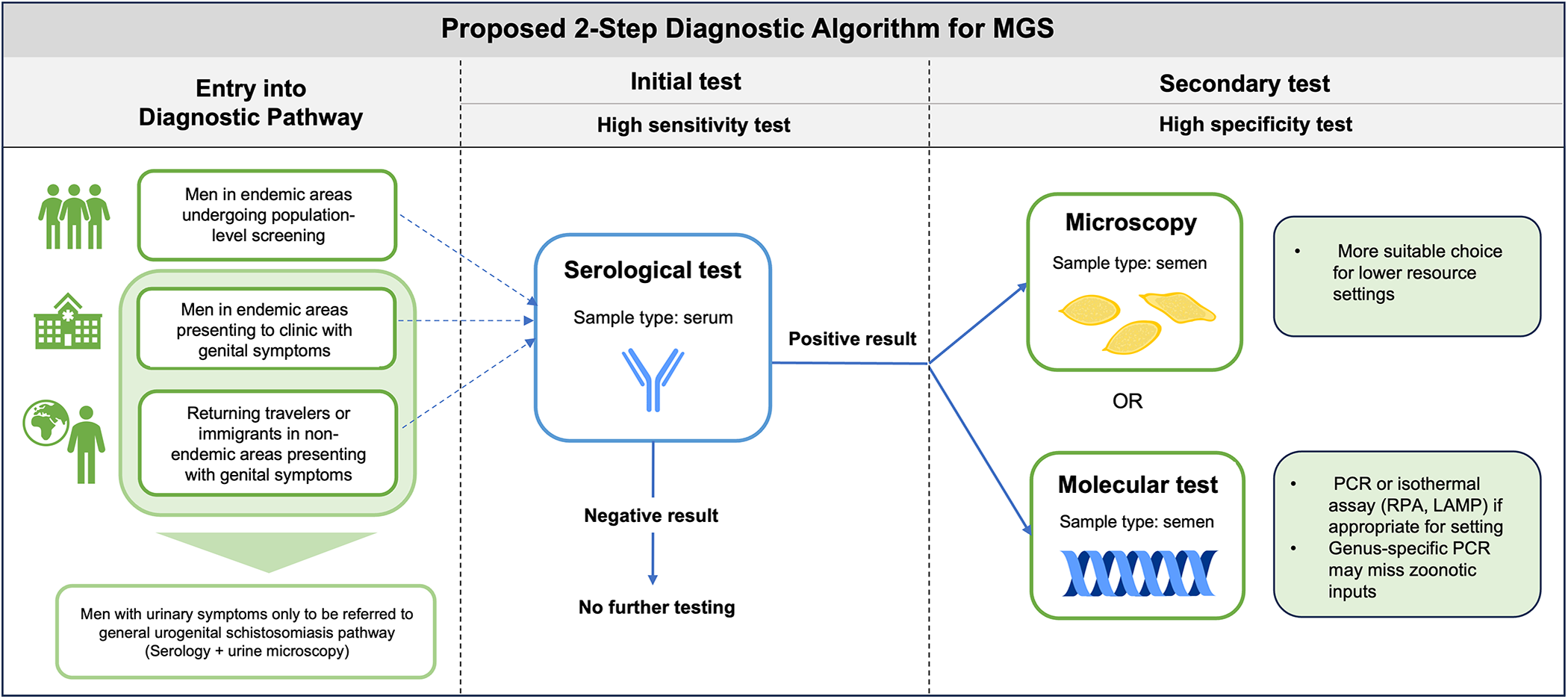
Male genital schistosomiasis (MGS), a gender-specific manifestation of urogenital schistosomiasis and neglected tropical disease, typically results from the entrapment of Schistosoma haematobium eggs within the male genital tract. Across the world, there are no current and accurate estimates of the burden of MGS, due to disease underreporting primarily from diagnostic challenges and a lack of general awareness within the health system. Diagnostic methods for MGS are extremely limited. Conventionally, semen microscopy for Schistosoma ova is used though this technique suffers from low sensitivity and lacks protocol standardization. The introduction of molecular diagnostics, such as polymerase chain reaction (PCR), has partly helped overcome this challenge of low sensitivity, though may not be suitable for use in resource-constrained settings. To address these challenges, in this review, we propose a two-step diagnostic algorithm for MGS in accordance with recent WHO guidelines, consisting of a high sensitivity serological test followed by a high specificity test (microscopy or molecular assay, dependent on setting). Further investigation is required into standardization of sample collection, processing, storage, and analysis in order to identify an evidence-based optimal diagnostic pipeline. New diagnostic tools are needed such as isothermal molecular assays, alongside optimization for semen analysis, which may alleviate barriers to diagnosis and present opportunities for integration with other sexual and reproductive health screening. These areas of future investigation underpin the development of a suitable diagnostic pipeline, as the continued neglect of MGS and its underdiagnosis presents a threat to the goal of elimination of schistosomiasis as a public health problem.
Much research has assessed methods of pain control for cattle castration, but there remains a lack of consensus regarding best practice. We conducted a systematic review and meta-analysis of published research including both an untreated control (i.e. castrated without pain mitigation) and at least one unimodal or multimodal analgesia treatment (i.e. castrated with a local anaesthetic alone, or in combination with a non-steroidal anti-inflammatory drug) to summarise findings on castration pain management. Studies were included if they castrated by surgery, elastration or crushing, and reported at least one of the following outcomes: cortisol, change in bodyweight, foot stomping, wound licking, a subjective assessment of pain using a visual analogue scale, or stride length. Our search identified 383 publications, of which 17 were eligible for inclusion. Most publications focused on surgical castration (n = 14), and the most frequently reported outcome was blood cortisol (n = 13). None of the included studies were assessed as having a low risk of bias, mostly due to a lack of reporting blinding procedures and reasons for missing data. Using a three-level random effect model, we concluded that multimodal analgesia reduced blood cortisol concentrations in the first hour following surgical castration in comparison to the control group; this effect was diminished but still evident at 3 and 4 h, but not beyond at 6, 12 and 24 h. Too few data were available to meaningfully assess other outcomes and methods. Variability in methods and outcomes between studies, and risks of bias, hinder our capacity to provide science-based recommendations for best practice.
In March 2024, the East Midlands Health Protection Team was notified of a case of invasive Group A Streptococcus (iGAS) infection in an elderly care home resident. Twenty-two days later, another case in a resident from the same floor of the care home was notified. In accordance with national guidelines, an outbreak was declared, and a multidisciplinary outbreak control team (OCT) was urgently convened. Screening for GAS throat carriage was undertaken for staff and residents, excluding those receiving end-of-life care. All isolates were strain typed and characterised. Infection prevention and control (IPC) visits were undertaken to provide ongoing support. Screening identified five residents and five staff members positive for GAS. Antibiotic prophylaxis was provided to all staff throughout the setting (n = 74) and all residents on the affected floor (n = 35). Three individuals were positive on repeat screening. All staff and residents screened negative after 4 months and the two clinical cases recovered. Eleven of the 12 GAS isolates were identified as emm 3.93. This outbreak highlighted the importance of rapid screening, possible only through the deployment of a dedicated team, and rescreening post-decolonising treatment, as a means to contain such outbreaks.
Lower COVID-19 vaccination coverage was observed among some populations with a migration background in the Netherlands. This study examined determinants of being unvaccinated against COVID-19 in the primary vaccination round in adults and in the 2022 autumn booster round in persons aged ≥60 years, among four populations of non-Dutch origin with below average vaccination coverage: Moroccan, Turkish, Surinamese and Dutch-Caribbean, and persons of Dutch origin. We performed a population-wide register-based study, examining associations between potential determinants and being unvaccinated using multivariable logistic regression and computing population attributable fractions. Being a migrant with two foreign-born parents, younger age, living in highly/extremely urban areas and having a lower income, lower education level and low medical risk for severe COVID-19 were risk factors for being unvaccinated in all populations. Substantial differences in the (strength of) determinants and population attributable fractions between populations were also observed. Socioeconomic status only partially mediated the association with being a migrant with two foreign-born parents. These findings illustrate that interventions targeting specific ethnic minority and migrant populations need further study with the aim to optimize the impact of vaccination programmes and improve health equity. To understand reasons behind non-uptake and design (community-based) interventions, qualitative and survey-based research is needed.
Plant invader genotype determines much about how the plant establishes, spreads, and impacts receiving habitat and the types of management required to achieve its control. We investigated phenology, vegetative spread, growth and biomass allocation, and response to herbicides of four flowering rush (Butomus umbellatus L.) amplified fragment length polymorphism (AFLP) genotypes (triploid: GT1; diploid: GT3, GT4, GT5) in a multiyear mesocosm experiment. Monthly observations were made over 31 mo to determine whether there were differences in timing of peak plant growth and flowering. We also applied herbicides during years 2 and 3 using imazamox or triclopyr at rates previously determined to be efficacious against B. umbellatus. By the end of year 1, all genotypes spread vegetatively within their containers. From a single sprouted axillary bud (i.e., bulbil), GT4 plants spread to cover nearly 2,000 cm2 in 6 mo. Flowering occurred May through October for all genotypes, but was reduced in years 2 and 3, including almost no flowering in triploid plants after year 1. Maximum leaf abundance occurred in August or September for all genotypes. After one season of growth, biomass was greatest for diploid genotypes, allocated primarily to leaves. However, by year 3, triploid plant biomass was greater than diploid GT4 and GT5, but not GT3. Bulbil production occurred only in diploid genotypes. At the study conclusion, GT4 and GT5 produced nearly 15,000 and 20,000 bulbils each, whereas GT3 plants produced fewer than 5,000 bulbils. Herbicides were effective in reducing biomass, but triploid plants were far more susceptible than diploid plants. Propagule production was generally reduced by herbicides, but rhizome bud production increased 240% in triploid plants treated with imazamox. These results demonstrate (1) the significant capacity for reproduction and spread of B. umbellatus and (2) the importance of investigating differences between lineages of B. umbellatus to inform management and risk assessments.
The gastrointestinal microbiota of mammals plays a crucial role in host health, influencing nutrient absorption, lipid metabolism, and immune system regulation. This study examines the current state of research on gut microbiota in pinnipeds and cetaceans, significant indicators of ocean health. To this end, a bibliometric and an in-depth analysis was conducted using the Scopus database. A total of 83 articles published between 1994 and 2023 were found on this topic. In this period, publications showed a 6.9% annual increase, reflecting a growing interest in this field. The USA and China lead in research output, reflecting their high investment in research funding. Study topics were classified in characterization, characterization and comparison, bacterial isolation, and others. Regarding the origin of the samples, faecal samples predominated over gastrointestinal tissues and oral swabs. The most abundant bacterial phyla were Firmicutes, Proteobacteria, Fusobacteria, and Bacterioidetes. The research also highlights the presence of pathogenic bacteria underscoring the need to better understand the health implications for these species. The analysis also reveals that studies focus on a few species, such as Phoca vitulina (Harbor seal) and Tursiops truncatus (Bottlenose dolphin), reflecting a bias towards more accessible and studied species. To advance in this area, it is recommended to broaden the range of species and countries studied, improve sampling methodologies, and foster international collaborations. Research on marine mammal gut microbiota remains an expanding field, offering significant insights into the biology and ecology of these animals.