To save content items to your account,
please confirm that you agree to abide by our usage policies.
If this is the first time you use this feature, you will be asked to authorise Cambridge Core to connect with your account.
Find out more about saving content to .
To save content items to your Kindle, first ensure no-reply@cambridge.org
is added to your Approved Personal Document E-mail List under your Personal Document Settings
on the Manage Your Content and Devices page of your Amazon account. Then enter the ‘name’ part
of your Kindle email address below.
Find out more about saving to your Kindle.
Note you can select to save to either the @free.kindle.com or @kindle.com variations.
‘@free.kindle.com’ emails are free but can only be saved to your device when it is connected to wi-fi.
‘@kindle.com’ emails can be delivered even when you are not connected to wi-fi, but note that service fees apply.
Female genital schistosomiasis (FGS) is a chronic disease manifestation of the waterborne parasitic infection Schistosoma haematobium that affects up to 56 million women and girls, predominantly in sub-Saharan Africa. Starting from early childhood, this stigmatizing gynaecological condition is caused by the presence of Schistosoma eggs and associated toxins within the genital tract. Schistosoma haematobium typically causes debilitating urogenital symptoms, mostly as a consequence of inflammation, which includes bleeding, discharge and lower abdominal pelvic pain. Chronic complications of FGS include adverse sexual and reproductive health and rights outcomes such as infertility, ectopic pregnancy and miscarriage. FGS is associated with prevalent human immunodeficiency virus and may increase the susceptibility of women to high-risk human papillomavirus infection. Across SSA, and even in clinics outside endemic areas, the lack of awareness and available resources among both healthcare professionals and the public means FGS is underreported, misdiagnosed and inadequately treated. Several studies have highlighted research needs and priorities in FGS, including better training, accessible and accurate diagnostic tools, and treatment guidelines. On 6 September, 2024, LifeArc, the Global Schistosomiasis Alliance and partners from the BILGENSA Research Network (Genital Bilharzia in Southern Africa) convened a consultative, collaborative and translational workshop: ‘Female Genital Schistosomiasis: Translational Challenges and Opportunities’. Its ambition was to identify practical solutions that could address these research needs and drive appropriate actions towards progress in tackling FGS. Here, we present the outcomes of that workshop – a series of discrete translational actions to better galvanize the community and research funders.
We live in a time of significant global risk. Some research has focused on understanding systemic sources of this risk, while other research has focused on possible worst-case outcomes. In this article, we bring together these two areas of research and provide a simple conceptual framework that shows how emergent features of the global system contribute to the risk of global catastrophe.
Technical summary
Humanity faces a complex and dangerous global risk landscape, and many different terms and concepts have been used to make sense of it. One broad strand of research characterises how risk emerges within the complex global system, using concepts like systemic risk, Anthropocene risk, synchronous failure, negative social tipping points, and polycrisis. Another focuses on possible worst-case outcomes, using concepts like global catastrophic risk (GCR), existential risk, and extinction risk. Despite their clear relevance to each other, connections between these two strands remain limited. Here, we provide a simple conceptual framework that synthesises these research strands and shows how emergent properties of the global system contribute to the risk of global catastrophic outcomes. In particular, we show that much of GCR stems from the interaction of hazards and vulnerabilities that arise endogenously within the global system, and how ‘systems thinking’ and complex adaptive systems theory can help illuminate this. We also highlight some unique challenges that systemic sources of GCR pose for risk assessment and mitigation, discuss insights for policy, and outline potential paths forward.
Social media summary
The global system is generating global catastrophic risk.
Nonnative earthworm species are invading the boreal forest in North America. Oribatid mites are key detritivores in boreal forest soils, initiating litter decomposition and maintaining forest floor structure. Earthworms are also detritivores and are considered ecosystem engineers. When introduced into nonendemic environments, earthworms may alter soil biogeochemical cycling and adversely affect oribatid mite communities. However, to our knowledge, no field studies in boreal forests have investigated invasive earthworms and their impacts on oribatid mites. The present study was conducted in a boreal trembling aspen, Populus tremuloides Michaux (Salicaceae), stand near Wolf Lake, Alberta, Canada. After assessing the current state of earthworm invasion, we identified an area with a lower density of earthworms that was invaded by one species, Dendrobaena octaedra Savigny (Crassiclitellata: Lumbricidae), and an area with a higher density of earthworms that was invaded by multiple species, D. octaedra (Crassiclitellata: Lumbricidae) and Aporrectodea spp. (Crassiclitellata: Lumbricidae). The higher-density area was associated with lower understorey vegetation species richness and with thinner forest floors characterised by higher bulk density but lower total organic carbon and nitrogen stocks. Oribatid mite community composition differed between the two areas, and their richness significantly decreased with higher earthworm density. Our findings suggest that earthworm invasion is substantially disrupting habitat for oribatid mites and might affect the overall boreal ecosystem equilibrium in the long term.
Cydalima perspectalis (Walker, 1859) (Lepidoptera: Crambidae) larvae feed on Buxus. It is considered to be the most critical pest of boxwood trees. This study investigated whether different strains of Trichoderma harzianum had an effect on the biocontrol of larvae feeding on boxwood leaves whose nitrogen content was varied by fertilisation. Larvae were collected while feeding on boxwood seedlings in Rize parks and gardens in June 2021. In addition, G1 (no fertilisation), G2 (1.55%), and G5 (1.67%) leaves with different nitrogen concentrations obtained by nitrogen fertilisation were also used as food. As biocontrol agents, ID11D and YP1A strains of T. harzianum were applied in three doses: 50, 100, and 200 μL per water. In total, 21 different groups were created. The nutritional indices of the larvae belonging to the different groups were calculated. In addition, the activities of phenoloxidase, superoxide dismutase, catalase, and glutathione peroxidase activities were measured by taking haemolymph samples. In both strains, the enzyme activities increased with the dose applied. However, it was found that the enzyme activities of the ID11D strain applied were higher than those of the YP1A strain. It can be said that the ID11D strain is effective in controlling C. perspectalis larvae feeding on fertilised boxwood and the YP1A strain is effective in controlling larvae feeding on unfertilised boxwood.
Toxoplasmosis, caused by the obligate intracellular parasite Toxoplasma gondii, is one of the most prevalent zoonotic parasitic infections worldwide. When acquired during pregnancy, T. gondii can be transmitted to the fetus, with clinical outcomes influenced by gestational age at time of infection and the parasite’s genotype. Prenatal screening enables the detection of maternal seroconversion and offers a critical window for intervention. In Uruguay, despite mandatory serological screening during pregnancy, national data on T. gondii seroprevalence and maternal seroconversion have not been updated in two decades. In addition, the genetic diversity of local strains remains poorly characterized. In this study, we analysed publicly available serological data from pregnant individuals attending Uruguay’s largest public maternity hospital between 2019 and 2023. We found that seroprevalence has modestly declined from 50% (reported in 1998) to 45.5%, with a congenital transmission rate of 0.58%. Clinical analysis of affected newborns revealed chorioretinitis as the predominant manifestation. To investigate parasite diversity, we performed genotyping of T. gondii strains using in silico PCR-RFLP following molecular detection. Our findings revealed substantial genetic diversity, including novel allele combinations not previously described in the region. These results highlight both the continued public health burden and the evolving genetic landscape of T. gondii in Uruguay. Our findings underscore the need to strengthen surveillance and prevention strategies for congenital toxoplasmosis in South America.
Vitamin A deficiency (VAD) poses significant health risks and is prevalent in children and adolescents in India. This study aimed to determine the effect of seasonal variation and availability of vitamin A-rich (VA-rich) foods on serum retinol in adolescents. Data on serum retinol levels from adolescents (n 2297, mean age 14 years) from the Comprehensive National Nutrition Survey (2016–2018) in India were analysed, with VAD defined as serum retinol < 0·7 µmol/L. Five states were selected based on a comparable under-five mortality rate and the seasonal spread of the data collection period. Dietary data from adolescents and children ≤ 4 years old were used to assess VA-rich food consumption. A linear mixed model framework was employed to analyse the relationship between serum retinol, month of the year and VA-rich food consumption, with a priori ranking to control for multiple hypothesis testing. Consumption of VA-rich foods, particularly fruits and vegetables/roots and tubers, showed seasonal patterns, with higher consumption during summer and monsoon months. Significant associations were found between serum retinol concentrations and age, month of sampling, consumption of VA-rich foods and fish. VAD prevalence was lowest in August, coinciding with higher consumption of VA-rich fruits and foods. Findings highlight the importance of considering seasonality in assessing VAD prevalence and careful interpretation of survey findings. Intentional design, analysis and reporting of surveys to capture seasonal variation is crucial for accurate assessment and interpretation of VAD prevalence, including during monitoring and evaluation of programmes, and to ensure that public health strategies are appropriately informed.
Determining the factors that impact the risk for infection with SARS-CoV-2 is a priority as the virus continues to infect people worldwide. The objective was to determine the effectiveness of vaccines and other factors associated with infection among Canadian healthcare workers (HCWs) followed from 15 June 2020 to 1 December 2023. We also investigate the association between antibodies to SARS-CoV-2 and subsequent infections with SARS-CoV-2. Of the 2474 eligible participants, 2133 (86%) were female, 33% were nurses, the median age was 41 years, and 99.3% had received at least two doses of COVID-19 vaccine by 31 December 2021. The incidence of SARS-CoV-2 was 0.91 per 1000 person-days. Prior to the circulation of the Omicron variants, vaccine effectiveness (VE) was estimated at 85% (95% CI 1, 98) for participants who received the primary series of vaccine. During the Omicron period, relative adjusted VE was 43% (95% CI 29, 54), 56% (95% CI 42, 67), and 46% (95% CI 24, 62) for 3, 4, and ≥ 5 doses compared with those who received primary series after adjusting for previous infection and other covariates. Exposure to infected household members, coworkers, or friends in the previous 14 days were risk factor for infection, while contact with an infected patient was not statistically significant. Participants with higher levels of immunoglobulin G (IgG) anti-receptor binding domain (RBD) antibodies had lower rates of infection than those with the lowest levels. COVID-19 vaccines remained effective throughout the follow-up of this cohort of highly vaccinated HCWs. IgG anti-RBD antibody levels may be useful as correlates of protection for issues such as vaccine development and testing. There remains a need to increase the awareness among HCWs about the risk of contracting SARS-CoV-2 from contacts at a variety of venues.
Following the recent report of strongyloidiasis caused by Strongyloides fuelleborni within a semi-captive colony of baboons in a UK safari park, we investigated the genetic relationships of this isolate with other Strongyloides isolates across the world. Whole-genome sequencing data were generated with later phylogenetic analysis of mitochondrial (mt) cytochrome oxidase subunit 1 (cox1) and nuclear ribosomal 18S sequences against 300 published Strongyloides reference genotypes. The putative African origin of the UK S. fuelleborni was confirmed and full-length mt genome sequences were assembled to facilitate a more detailed phylogenetic analysis of 14 mt coding regions against all available Strongyloides species. Our analyses demonstrated that the UK isolate represented a novel African lineage not previously described. Additional complete mt genomes were assembled for several individual UK safari park worms to reveal a slightly altered mt genome gene arrangement, allowing clear separation from Asian S. fuelleborni. Furthermore, these UK worms possessed expanded intergenic regions of unknown function that increase their mt genome size to approximately 24 kilobases (kb) as compared with some 16 kb for Asian S. fuelleborni; this may have arisen from unique populational founder and genetic drift effects set within the peculiar mixed species baboon and drill ancestry of this semi-captive primate colony. A maximum likelihood phylogeny constructed from 14 mt coding regions also supported an evolutionary distinction between Asian and African S. fuelleborni.
A considerable knowledge gap exists in relation to the presence and even existence of seagrass within Northern Ireland’s waters. Peer-reviewed publications on the historical ecology of seagrass are scarce and a collated timeline of references directly focusing on Northern Irish seagrasses does not exist. Recognising abiotic and biotic induced environmental change within key marine features such as seagrass is vital when attempting to measure the biodiversity and carbon sequestration services they provide. The research undertaken during this study identified three distinct periods within the archival records, which could be matched to the ecological history of seagrass in Northern Ireland. The first period (extensive and dense seagrass meadows from 1790 to 1880) was characterised by extensive seagrass meadows which were dense and healthy. The second period (degradation from 1880 to 1940) saw the beginnings of decline in seagrass from the 1790s, initially from anthropogenic influences and later from the seagrass wasting disease) and the final period (signs of recovery from 1940 to present day) showed small amounts of local regrowth of seagrass but at far reduced densities compared to the historical baseline described. These three defined periods all delivered varying degrees of anthropogenic stressors which determined the conservational health of seagrass in Northern Ireland. Seagrass habitats have become integral components in future-proofing the coastal marine environment against the effects of climate change and its associated impacts. Therefore, it is envisaged that the historical baseline that this manuscript provides will greatly benefit habitat managers in protecting, repairing, and restoring lost seagrass meadows.
In livestock production, animal welfare is shaped by the quality of the relationship between animals and the farmers with whom they interact. This study investigated the perceptions of Spanish farmers of extensive mountain cow-calf systems regarding the impact of human intervention on animal behaviour, with attention to the human-animal relationship (HAR), farm management strategies, and interactions between animals and unfamiliar people. The research was conducted within the context of cow-calf systems managed under extensive mountain conditions. Seven focus group discussions (FGDs) were conducted, involving 60 mountain cattle farmers from Aragon, Navarra, and the Basque Country. The findings of our study demonstrate that the quality of HAR is contingent upon a multitude of variables, which exert a profound influence on the duration, intimacy, and strength of these relationships, particularly in response to environmental conditions, as reflected, for example, in the changing frequency of human-animal interactions during periods of outdoor grazing compared to times of confinement. Farmers also showed interest in understanding animal behavioural responses in different management scenarios to adapt and individualise their strategies. Across all FGDs, participants recognised the farmer’s role in influencing animals to be less reactive or fearful toward humans through their handling style. Finally, the interactions between people and cows extend beyond farmers and their families, incorporating a variety of unfamiliar individuals who also play a role in each cow’s relationships with humans. Therefore, farmers’ perceptions reveal that animals’ responses to humans are not homogeneous but are highly dependent upon context, ontogeny and levels of familiarity.
Socialisation is important for normal social and behavioural development in companion animals. However, little research has focused on kitten socialisation or owner attitudes towards kitten socialisation programmes. Thus, we used a quantitative online survey to describe US cat owner attitudes towards kitten socialisation and elucidate aspects of socialisation programmes deemed important by owners. Questions (n = 45) included participant demographics, participant experiences with socialisation, information regarding participants’ cats (Felis catus), where participants receive socialisation information, and rating the importance of socialisation components. Participants were recruited via advertisements posted on social media and an online news article. Of the 2,238 responses, participants were most frequently women (74.7%), owning two cats (38.0%), who had not worked with cats professionally (72.9%). Most participants had not heard of socialisation programmes for kittens (69.3%), but would be interested in enrolling in a future programme (50.4%). Participants indicated important aspects of kitten socialisation programmes as: education about reducing problem behaviours (87%); understanding cat body language (85.8%); and getting kittens used to handling (83.1%). A logistic regression revealed that the presence of aggression in their current cat predicted interest in a future programme, as well as living in an urban or suburban area. These results suggest a lack of owner awareness of kitten socialisation, and indicate many owners are interested in enrolling in a future kitten socialisation programme. Further research should explore methods to improve access to kitten socialisation information, elucidate components of current socialisation programmes, and assess their impact on owner management and cat behaviour.
Nut consumption is low, with concern regarding weight gain as a barrier to intake. However, evidence indicates no association between nut consumption and body weight. The metabolisable energy of nuts may partly explain this phenomenon. This study aims to qualitatively explore perceptions of presenting nut metabolisable energy on nutrition labels, and the potential influence this may have on consumption.
Design:
Semi-structured focus groups and interviews, with an inductive, reflexive approach to thematic analysis.
Setting:
Online (Australia).
Participants:
18 years or older, with either no formal nutrition education (consumer group) or formal training and working in nutrition/dietetics, public health, food industry, food regulation or nut growing (stakeholder group).
Results:
Four focus groups and nine interviews consisting of twenty participants (n 8 consumers, n 12 stakeholders) in total were conducted. Five major themes were generated: (i) knowledge of nuts varies, and the healthfulness of nuts is conditional on use and preparation, (ii) nuts are versatile in the diet; the intake is low, (iii) consumers perceive over-eating nuts leads to weight gain, while stakeholders consider the whole dietary pattern, (iv) nutrition labelling is confusing for consumers and needs to be transparent and positively framed, if used and (v) knowing nut metabolisable energy will have limited perceived impact on nut consumption and advice and is dependent on the individual and product.
Conclusions:
The findings suggest that perceptions of presenting nut metabolisable energy on labels are multi-layered, indicating this strategy may not be straightforward in resolving concerns about weight. Other strategies should be considered to promote nut consumption.
The development of oxidative stress depends on the deregulation of the fine balance between the proportion of reactive oxygen species (ROS) generation and the activity of antioxidants. As oxidative stress is deleterious for Leishmania sp., their host cell generates ROS as one of the foremost defence strategies. The parasites have also raised a variety of counteracting tricks in order to conquer this challenge. Upon infection, the host’s own antioxidant system is activated by the parasite to neutralise the oxidative stress-mediated protection. In addition to using the host’s antioxidant mechanisms, some genes within the parasite also make them more tolerant against oxidative stress. Therefore, the present review focuses on some major regulators intimately related to the equilibrium between oxidation and antioxidation following infection with Leishmania sp., which may be helpful in developing a comprehensive knowledge of this specific wing of infection biology associated with oxidative stress.
Search Results
Reactive oxygen species (ROS) play a dual role in leishmaniasis by contributing to both host defence and parasite survival mechanisms. In the host, ROS promote parasite clearance through induction of apoptosis, activation of pro-inflammatory signalling pathways (e.g., MAPK, JNK), inflammasome assembly, and M1 macrophage polarisation. Conversely, Leishmania species have evolved multiple strategies to neutralize ROS, including the upregulation of host antioxidant enzymes like HO-1, inhibition of ROS-producing pathways, and expression of parasite-derived antioxidants such as SOD, GPx, and trypanothione reductase. The parasite alsoadapts through gene regulation and metabolic changes to counter oxidative stress. Importantly, ROS have emerged as key targets for antileishmanial therapies, with various drugs and natural compounds shown to induce ROS-mediated parasite death, highlighting their potential in future therapeutic development.
Conclusions
In summary, the survival of Leishmania hinges on its ability to counteract host-induced oxidative stress. Targeting its antioxidant defences and enhancing host ROS production can disrupt this balance, leading to parasite death. Exploring ROS-related signalling offers a promising path for developing effective therapies against leishmaniasis.
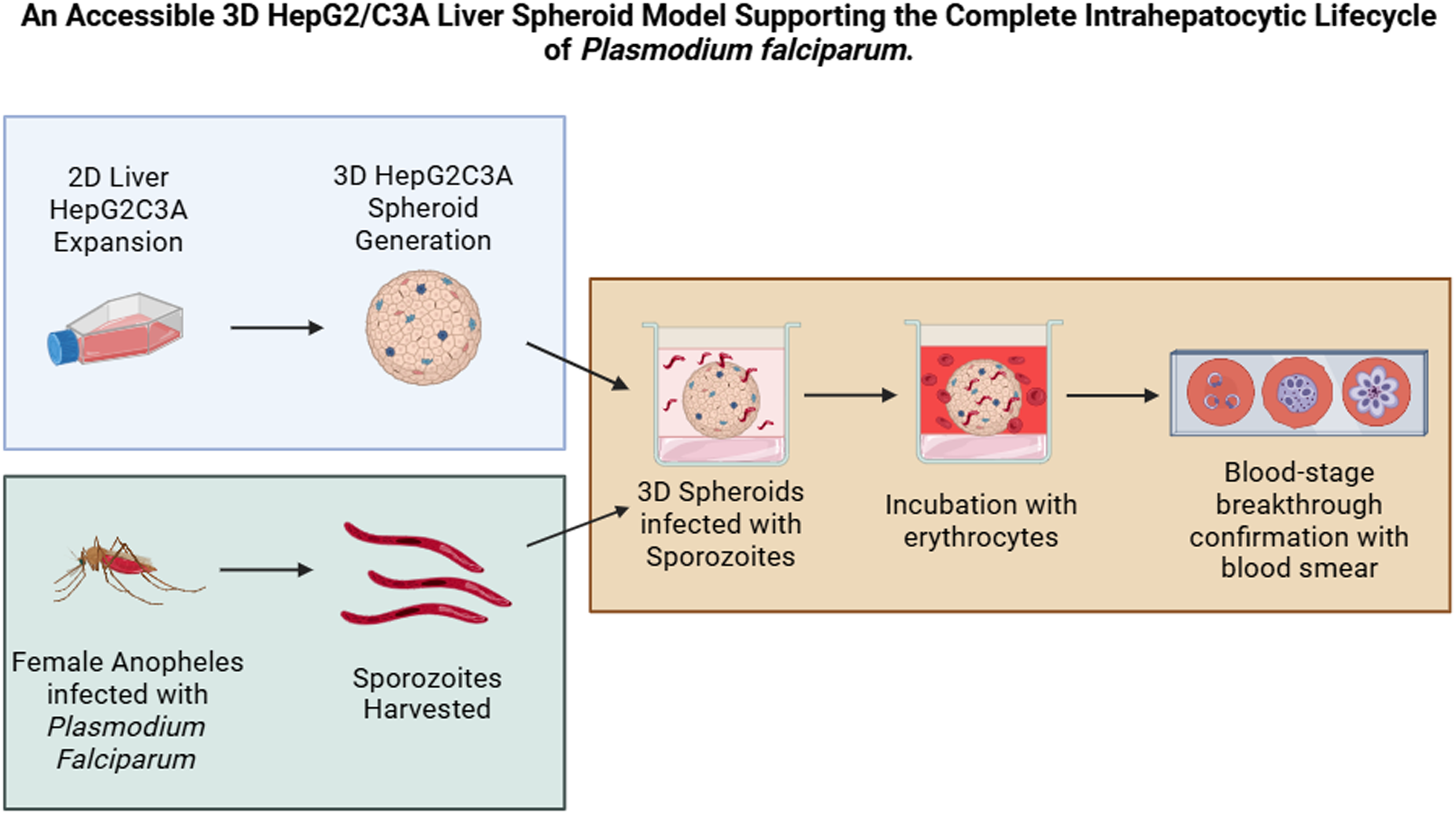
Current liver-stage Plasmodium falciparum models are complex, expensive and largely inaccessible, hindering research progress. Here, we show that a 3D liver spheroid model grown from immortalized HepG2/C3A cells supports the complete intrahepatocytic lifecycle of P. falciparum. Our results demonstrate sporozoite infection, development of exoerythrocytic forms and breakthrough infection into erythrocytes. The 3D-grown spheroid hepatocytes are structurally and functionally polarized, displaying enhanced albumin and urea production and increased expression of key metabolic enzymes, mimicking in vivo conditions – relative to 2D cultures. This accessible, reproducible model lowers barriers to malaria research, promoting advancements in fundamental biology and translational research.
Humans are currently grappling with the challenge of nitrogen (N) management, which involves a multidimensional trade-off between the benefits of N use and the consequences of N pollution. For this study, a deliberative experiment was conducted in which five N scientists, divided into two groups, envisioned the future of NH3 use in the 2050s, adopting the perspective of an imaginary future generation. Through this experience, the study encourages scientists to adopt the proposed framework and embrace freedom to explore desirable future visions, in addition to their usual task of empirically establishing universal disciplinary knowledge.
Technical summary
Humans are currently grappling with the challenge of nitrogen (N) management, which involves a multidimensional trade-off between the benefits of N use and the consequences of N pollution. The urgency to address this issue is already pronounced and may escalate further due to the emergence of ammonia (NH3) as a carbon-free energy resource. For this study, a deliberative experiment was conducted in which five N scientists, divided into two groups, envisioned the future of NH3 use in the 2050s, adopting the perspective of an imaginary future generation. The study revealed that some scientists encountered what is referred to in this study as the ‘positivist gap’, which involves difficulties forming narratives about unpredictable futures that rely on arbitrary assumptions. From this experience, this study develops and illustrates a framework that incorporates (i) Future Design workshops and (ii) abstracting operation for the workshop outputs. Although conducted in Japan, this study aims to inspire similar research in other countries.
Social media summary
A visioning experiment showed how scientists handle nitrogen trade-offs, imagining NH₃’s roles in a complex 2050 world.
North Island brown kiwi (Apteryx mantelli), endemic to New Zealand (NZ), are held in captivity both within and outside of NZ. However, more knowledge is required regarding how kiwi are housed and managed. This study aimed to characterise the demographics and reported health/behavioural issues of the captive population of kiwi, investigate current housing and husbandry practices, and explore the association between reported behavioural problems and housing practices. Between November 2021 and June 2022, all 31 facilities holding kiwi were invited to participate in a questionnaire. Thirteen facilities within NZ (92.9% response rate) and ten elsewhere in the world (58.8%) responded, covering 97 kiwi in NZ (93.3%) and 40 outside NZ (83.3%). Kiwi in NZ were younger on average than birds elsewhere. Environmental conditions, including enclosure size, temperature, and lighting, varied across facilities. Health issues were reported in 39% of kiwi and behavioural in 20%, with common behavioural issues including stereotypical or reproduction-related behaviours. Kiwi in those facilities outside of NZ were heavier and housed in smaller enclosures. Kiwi in nocturnal houses were more likely to be reported as displaying behavioural problems than off-display enclosures. A higher proportion of NZ kiwi were housed in nocturnal houses compared to elsewhere, and one in five NZ kiwi were reported as displaying a behavioural problem, compared to 1/8 in other countries. Behavioural issues in kiwi may be underreported due to their nocturnal nature, and both behavioural and health challenges could negatively impact their welfare. Further research is essential to optimise captive conditions and improve health, behaviour, and welfare outcomes for this iconic species.
The composite dietary antioxidant index (CDAI) has been identified as a critical factor in the pathogenesis of certain inflammatory diseases. The study aimed to investigate the relationship between CDAI and Helicobacter pylori infection using cross-sectional design. In this study, participants from the 1999–2000 National Health and Nutrition Examination Survey were analysed using logistic and Cox regression analyses to assess the associations between H. pylori infection and CDAI, encompassing vitamin A, vitamin C, vitamin E, carotene, Zn, Se and Cu. The results demonstrated a negative correlation between CDAI scores and H. pylori infection, revealing a non-linear relationship between the odds of H. pylori infection and CDAI as a continuous variable. Subsequently, a two-sample Mendelian randomisation study was conducted utilising genome-wide association study summary statistics to explore the causal relationship between antioxidant levels and H. pylori infection. We found that the intake of Cu was a protective factor in the occurrence of H. pylori infection but did not support a causal association between circulating Cu levels and H. pylori infection. The prevalence of H. pylori infection was found to be elevated among individuals of older age, lower education levels, limited socio-economic status, smokers, diabetes and those with hypertension. The study suggests that higher CDAI is linked to decreased odds of H. pylori infection, and further prospective studies are needed to confirm the association. Our findings may have significant implications for the prevention and management of H. pylori-related diseases.