Refine search
Actions for selected content:
26077 results in Abstract analysis
On the involution fixity of simple groups
- Part of
-
- Journal:
- Proceedings of the Edinburgh Mathematical Society / Volume 64 / Issue 2 / May 2021
- Published online by Cambridge University Press:
- 04 June 2021, pp. 408-426
-
- Article
- Export citation
-
Let $G$ be a finite permutation group of degree $n$ and let ${\rm ifix}(G)$ be the involution fixity of $G$, which is the maximum number of fixed points of an involution. In this paper, we study the involution fixity of almost simple primitive groups whose socle $T$ is an alternating or sporadic group; our main result classifies the groups of this form with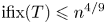 ${\rm ifix}(T) \leqslant n^{4/9}$. This builds on earlier work of Burness and Thomas, who studied the case where $T$ is an exceptional group of Lie type, and it strengthens the bound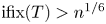 ${\rm ifix}(T) > n^{1/6}$ (with prescribed exceptions), which was proved by Liebeck and Shalev in 2015. A similar result for classical groups will be established in a sequel.


COMMUTATOR EQUATIONS IN FINITE GROUPS
- Part of
-
- Journal:
- Glasgow Mathematical Journal / Volume 64 / Issue 2 / May 2022
- Published online by Cambridge University Press:
- 03 June 2021, pp. 320-335
-
- Article
- Export citation
BIG MAPPING CLASS GROUPS WITH HYPERBOLIC ACTIONS: CLASSIFICATION AND APPLICATIONS
- Part of
-
- Journal:
- Journal of the Institute of Mathematics of Jussieu / Volume 21 / Issue 6 / November 2022
- Published online by Cambridge University Press:
- 31 May 2021, pp. 2173-2204
- Print publication:
- November 2022
-
- Article
- Export citation
-
We address the question of determining which mapping class groups of infinite-type surfaces admit nonelementary continuous actions on hyperbolic spaces.
More precisely, let $\Sigma $ be a connected, orientable surface of infinite type with tame endspace whose mapping class group is generated by a coarsely bounded subset. We prove that ${\mathrm {Map}}(\Sigma )$ admits a continuous nonelementary action on a hyperbolic space if and only if $\Sigma $ contains a finite-type subsurface which intersects all its homeomorphic translates.
When $\Sigma $ contains such a nondisplaceable subsurface K of finite type, the hyperbolic space we build is constructed from the curve graphs of K and its homeomorphic translates via a construction of Bestvina, Bromberg and Fujiwara. Our construction has several applications: first, the second bounded cohomology of ${\mathrm {Map}}(\Sigma )$ contains an embedded $\ell ^1$; second, using work of Dahmani, Guirardel and Osin, we deduce that ${\mathrm {Map}} (\Sigma )$ contains nontrivial normal free subgroups (while it does not if $\Sigma $ has no nondisplaceable subsurface of finite type), has uncountably many quotients and is SQ-universal.


THE SIMPLE SEPARATING SYSTOLE FOR HYPERBOLIC SURFACES OF LARGE GENUS
- Part of
-
- Journal:
- Journal of the Institute of Mathematics of Jussieu / Volume 21 / Issue 6 / November 2022
- Published online by Cambridge University Press:
- 31 May 2021, pp. 2205-2214
- Print publication:
- November 2022
-
- Article
- Export citation
-
In this note we show that the expected value of the separating systole of a random surface of genus g with respect to Weil–Petersson volume behaves like $2\log g $ as the genus goes to infinity. This is in strong contrast to the behavior of the expected value of the systole which, by results of Mirzakhani and Petri, is independent of genus.

Concentration phenomena for fractional magnetic NLS equations
- Part of
-
- Journal:
- Proceedings of the Royal Society of Edinburgh. Section A: Mathematics / Volume 152 / Issue 2 / April 2022
- Published online by Cambridge University Press:
- 28 May 2021, pp. 479-517
- Print publication:
- April 2022
-
- Article
- Export citation
The power of two choices for random walks
- Part of
-
- Journal:
- Combinatorics, Probability and Computing / Volume 31 / Issue 1 / January 2022
- Published online by Cambridge University Press:
- 28 May 2021, pp. 73-100
-
- Article
-
- You have access
- Open access
- Export citation
-
We apply the power-of-two-choices paradigm to a random walk on a graph: rather than moving to a uniform random neighbour at each step, a controller is allowed to choose from two independent uniform random neighbours. We prove that this allows the controller to significantly accelerate the hitting and cover times in several natural graph classes. In particular, we show that the cover time becomes linear in the number n of vertices on discrete tori and bounded degree trees, of order
 $${\mathcal O}(n\log \log n)$$ on bounded degree expanders, and of order
  $${\mathcal O}(n{(\log \log n)^2})$$ on the Erdős–Rényi random graph in a certain sparsely connected regime. We also consider the algorithmic question of computing an optimal strategy and prove a dichotomy in efficiency between computing strategies for hitting and cover times.

Counterexamples in Measure and Integration
-
- Published online:
- 27 May 2021
- Print publication:
- 17 June 2021
Dynamic aspects of tumour–immune system interaction under a periodic immunotherapy
- Part of
-
- Journal:
- European Journal of Applied Mathematics / Volume 33 / Issue 4 / August 2022
- Published online by Cambridge University Press:
- 27 May 2021, pp. 606-645
-
- Article
- Export citation
Concentration functions and entropy bounds for discrete log-concave distributions
- Part of
-
- Journal:
- Combinatorics, Probability and Computing / Volume 31 / Issue 1 / January 2022
- Published online by Cambridge University Press:
- 27 May 2021, pp. 54-72
-
- Article
- Export citation
Structure-preserving deep learning
- Part of
-
- Journal:
- European Journal of Applied Mathematics / Volume 32 / Issue 5 / October 2021
- Published online by Cambridge University Press:
- 27 May 2021, pp. 888-936
-
- Article
-
- You have access
- Open access
- Export citation
Spanning trees in random regular uniform hypergraphs
- Part of
-
- Journal:
- Combinatorics, Probability and Computing / Volume 31 / Issue 1 / January 2022
- Published online by Cambridge University Press:
- 26 May 2021, pp. 29-53
-
- Article
- Export citation
-
Let
 $${{\mathcal G}_{n,r,s}}$$ denote a uniformly random r-regular s-uniform hypergraph on the vertex set {1, 2, … , n}. We establish a threshold result for the existence of a spanning tree in $${{\mathcal G}_{n,r,s}}$$, restricting to n satisfying the necessary divisibility conditions. Specifically, we show that when s ≥ 5, there is a positive constant ρ(s) such that for any r ≥ 2, the probability that $${{\mathcal G}_{n,r,s}}$$ contains a spanning tree tends to 1 if r > ρ(s), and otherwise this probability tends to zero. The threshold value ρ(s) grows exponentially with s. As $${{\mathcal G}_{n,r,s}}$$ is connected with probability that tends to 1, this implies that when r ≤ ρ(s), most r-regular s-uniform hypergraphs are connected but have no spanning tree. When s = 3, 4 we prove that $${{\mathcal G}_{n,r,s}}$$ contains a spanning tree with probability that tends to 1, for any r ≥ 2. Our proof also provides the asymptotic distribution of the number of spanning trees in $${{\mathcal G}_{n,r,s}}$$ for all fixed integers r, s ≥ 2. Previously, this asymptotic distribution was only known in the trivial case of 2-regular graphs, or for cubic graphs.

The homotopy classification of four-dimensional toric orbifolds
- Part of
-
- Journal:
- Proceedings of the Royal Society of Edinburgh. Section A: Mathematics / Volume 152 / Issue 3 / June 2022
- Published online by Cambridge University Press:
- 25 May 2021, pp. 626-648
- Print publication:
- June 2022
-
- Article
- Export citation
-
Let X be a 4-dimensional toric orbifold. If $H^{3}(X)$ has a non-trivial odd primary torsion, then we show that X is homotopy equivalent to the wedge of a Moore space and a CW-complex. As a corollary, given two 4-dimensional toric orbifolds having no 2-torsion in the cohomology, we prove that they have the same homotopy type if and only their integral cohomology rings are isomorphic.

Periodic pattern formation in the coupled chemotaxis-(Navier–)Stokes system with mixed nonhomogeneous boundary conditions – CORRIGENDUM
-
- Journal:
- Proceedings of the Royal Society of Edinburgh. Section A: Mathematics / Volume 152 / Issue 2 / April 2022
- Published online by Cambridge University Press:
- 24 May 2021, p. 544
- Print publication:
- April 2022
-
- Article
-
- You have access
- HTML
- Export citation
Most permutations power to a cycle of small prime length
- Part of
-
- Journal:
- Proceedings of the Edinburgh Mathematical Society / Volume 64 / Issue 2 / May 2021
- Published online by Cambridge University Press:
- 24 May 2021, pp. 234-246
-
- Article
- Export citation
-
We prove that most permutations of degree $n$
 have some power which is a cycle of prime length approximately $\log n$
 . Explicitly, we show that for $n$
 sufficiently large, the proportion of such elements is at least $1-5/\log \log n$
 with the prime between $\log n$
 and $(\log n)^{\log \log n}$
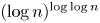 . The proportion of even permutations with this property is at least $1-7/\log \log n$
 .
.


Spiraling solutions of nonlinear Schrödinger equations
-
- Journal:
- Proceedings of the Royal Society of Edinburgh. Section A: Mathematics / Volume 152 / Issue 3 / June 2022
- Published online by Cambridge University Press:
- 24 May 2021, pp. 592-625
- Print publication:
- June 2022
-
- Article
- Export citation
-
We study a new family of sign-changing solutions to the stationary nonlinear Schrödinger equation
with \[ -\Delta v +q v =|v|^{p-2} v, \qquad \text{in}\,{ {\mathbb{R}^{3}},} \] $2 < p < \infty$ and $q \ge 0$. These solutions are spiraling in the sense that they are not axially symmetric but invariant under screw motion, i.e., they share the symmetry properties of a helicoid. In addition to existence results, we provide information on the shape of spiraling solutions, which depends on the parameter value representing the rotational slope of the underlying screw motion. Our results complement a related analysis of Del Pino, Musso and Pacard in their study (2012, Manuscripta Math., 138, 273–286) for the Allen–Cahn equation, whereas the nature of results and the underlying variational structure are completely different.


NOTE ON THE p-DIVISIBILITY OF CLASS NUMBERS OF AN INFINITE FAMILY OF IMAGINARY QUADRATIC FIELDS
- Part of
-
- Journal:
- Glasgow Mathematical Journal / Volume 64 / Issue 2 / May 2022
- Published online by Cambridge University Press:
- 20 May 2021, pp. 352-357
-
- Article
- Export citation
Turán-type results for intersection graphs of boxes
- Part of
-
- Journal:
- Combinatorics, Probability and Computing / Volume 30 / Issue 6 / November 2021
- Published online by Cambridge University Press:
- 19 May 2021, pp. 982-987
-
- Article
-
- You have access
- Open access
- Export citation
-
In this short note, we prove the following analog of the Kővári–Sós–Turán theorem for intersection graphs of boxes. If G is the intersection graph of n axis-parallel boxes in
 $${{\mathbb{R}}^d}$$ such that G contains no copy of Kt,t, then G has at most ctn( log n)2d+3 edges, where c = c(d)>0 only depends on d. Our proof is based on exploring connections between boxicity, separation dimension and poset dimension. Using this approach, we also show that a construction of Basit, Chernikov, Starchenko, Tao and Tran of K2,2-free incidence graphs of points and rectangles in the plane can be used to disprove a conjecture of Alon, Basavaraju, Chandran, Mathew and Rajendraprasad. We show that there exist graphs of separation dimension 4 having superlinear number of edges.

Estimate, existence and nonexistence of positive solutions of Hardy–Hénon equations
- Part of
-
- Journal:
- Proceedings of the Royal Society of Edinburgh. Section A: Mathematics / Volume 152 / Issue 2 / April 2022
- Published online by Cambridge University Press:
- 18 May 2021, pp. 518-541
- Print publication:
- April 2022
-
- Article
- Export citation
-
We consider the boundary Hardy–Hénon equation
where \[ -\Delta u=(1-|x|)^{\alpha} u^{p},\ \ x\in B_1(0), \] $B_1(0)\subset \mathbb {R}^{N}$ $(N\geq 3)$ is a ball of radial $1$ centred at $0$,
$0$,  $p>0$ and $\alpha \in \mathbb {R}$. We are concerned with the estimate, existence and nonexistence of positive solutions of the equation, in particular, the equation with Dirichlet boundary condition. For the case $0< p<({N+2})/({N-2})$, we establish the estimate of positive solutions. When $\alpha \leq -2$ and $p>1$, we give some conclusions with respect to nonexistence. When $\alpha >-2$ and $1< p<({N+2})/({N-2})$, we obtain the existence of positive solution for the corresponding Dirichlet problem. When $0< p\leq 1$ and $\alpha \leq -2$, we show the nonexistence of positive solutions. When $0< p<1$, $\alpha >-2$, we give some results with respect to existence and uniqueness of positive solutions.


PRM volume 151 issue 3 Cover and Back matter
-
- Journal:
- Proceedings of the Royal Society of Edinburgh. Section A: Mathematics / Volume 151 / Issue 3 / June 2021
- Published online by Cambridge University Press:
- 14 May 2021, pp. b1-b2
- Print publication:
- June 2021
-
- Article
-
- You have access
- Export citation
PRM volume 151 issue 3 Cover and Front matter
-
- Journal:
- Proceedings of the Royal Society of Edinburgh. Section A: Mathematics / Volume 151 / Issue 3 / June 2021
- Published online by Cambridge University Press:
- 14 May 2021, pp. f1-f2
- Print publication:
- June 2021
-
- Article
-
- You have access
- Export citation
