Refine search
Actions for selected content:
26077 results in Abstract analysis
Card guessing with partial feedback
- Part of
-
- Journal:
- Combinatorics, Probability and Computing / Volume 31 / Issue 1 / January 2022
- Published online by Cambridge University Press:
- 15 June 2021, pp. 1-20
-
- Article
- Export citation
-
Consider the following experiment: a deck with m copies of n different card types is randomly shuffled, and a guesser attempts to guess the cards sequentially as they are drawn. Each time a guess is made, some amount of ‘feedback’ is given. For example, one could tell the guesser the true identity of the card they just guessed (the complete feedback model) or they could be told nothing at all (the no feedback model). In this paper we explore a partial feedback model, where upon guessing a card, the guesser is only told whether or not their guess was correct. We show in this setting that, uniformly in n, at most $m+O(m^{3/4}\log m)$ cards can be guessed correctly in expectation. This resolves a question of Diaconis and Graham from 1981, where even the $m=2$ case was open.

Singularity of sparse random matrices: simple proofs
- Part of
-
- Journal:
- Combinatorics, Probability and Computing / Volume 31 / Issue 1 / January 2022
- Published online by Cambridge University Press:
- 15 June 2021, pp. 21-28
-
- Article
- Export citation
-
Consider a random $n\times n$ zero-one matrix with ‘sparsity’ p, sampled according to one of the following two models: either every entry is independently taken to be one with probability p (the ‘Bernoulli’ model) or each row is independently uniformly sampled from the set of all length-n zero-one vectors with exactly pn ones (the ‘combinatorial’ model). We give simple proofs of the (essentially best-possible) fact that in both models, if $\min(p,1-p)\geq (1+\varepsilon)\log n/n$ for any constant $\varepsilon>0$, then our random matrix is nonsingular with probability $1-o(1)$. In the Bernoulli model, this fact was already well known, but in the combinatorial model this resolves a conjecture of Aigner-Horev and Person.


REPRESENTATION VARIETIES OF ALGEBRAS WITH NODES
- Part of
-
- Journal:
- Journal of the Institute of Mathematics of Jussieu / Volume 21 / Issue 6 / November 2022
- Published online by Cambridge University Press:
- 15 June 2021, pp. 2215-2245
- Print publication:
- November 2022
-
- Article
- Export citation
OBSERVABILITY OF BAOUENDI–GRUSHIN-TYPE EQUATIONS THROUGH RESOLVENT ESTIMATES
- Part of
-
- Journal:
- Journal of the Institute of Mathematics of Jussieu / Volume 22 / Issue 2 / March 2023
- Published online by Cambridge University Press:
- 14 June 2021, pp. 541-579
- Print publication:
- March 2023
-
- Article
- Export citation
-
In this article, we study the observability (or equivalently, the controllability) of some subelliptic evolution equations depending on their step. This sheds light on the speed of propagation of these equations, notably in the ‘degenerated directions’ of the subelliptic structure.
First, for any $\gamma \geq 1$, we establish a resolvent estimate for the Baouendi–Grushin-type operator $\Delta _{\gamma }=\partial _x^2+\left \lvert x\right \rvert ^{2\gamma }\partial _y^2$, which has step $\gamma +1$. We then derive consequences for the observability of the Schrödinger-type equation $i\partial _tu-\left (-\Delta _{\gamma }\right )^{s}u=0$, where $s\in \mathbb N$. We identify three different cases: depending on the value of the ratio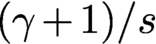 $(\gamma +1)/s$, observability may hold in arbitrarily small time or only for sufficiently large times or may even fail for any time.
As a corollary of our resolvent estimate, we also obtain observability for heat-type equations $\partial _tu+\left (-\Delta _{\gamma }\right )^su=0$ and establish a decay rate for the damped wave equation associated with $\Delta _{\gamma }$.


CONNECTIVITY AND PURITY FOR LOGARITHMIC MOTIVES
- Part of
-
- Journal:
- Journal of the Institute of Mathematics of Jussieu / Volume 22 / Issue 1 / January 2023
- Published online by Cambridge University Press:
- 14 June 2021, pp. 335-381
- Print publication:
- January 2023
-
- Article
-
- You have access
- Open access
- Export citation
-
The goal of this article is to extend the work of Voevodsky and Morel on the homotopy t-structure on the category of motivic complexes to the context of motives for logarithmic schemes. To do so, we prove an analogue of Morel’s connectivity theorem and show a purity statement for $({\mathbf {P}}^1, \infty )$-local complexes of sheaves with log transfers. The homotopy t-structure on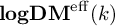 ${\operatorname {\mathbf {logDM}^{eff}}}(k)$ is proved to be compatible with Voevodsky’s t-structure; that is, we show that the comparison functor $R^{{\overline {\square }}}\omega ^*\colon {\operatorname {\mathbf {DM}^{eff}}}(k)\to {\operatorname {\mathbf {logDM}^{eff}}}(k)$ is t-exact. The heart of the homotopy t-structure on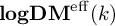 ${\operatorname {\mathbf {logDM}^{eff}}}(k)$ is the Grothendieck abelian category of strictly cube-invariant sheaves with log transfers: we use it to build a new version of the category of reciprocity sheaves in the style of Kahn-Saito-Yamazaki and Rülling.

Monochromatic paths and cycles in 2-edge-coloured graphs with large minimum degree
- Part of
-
- Journal:
- Combinatorics, Probability and Computing / Volume 31 / Issue 1 / January 2022
- Published online by Cambridge University Press:
- 14 June 2021, pp. 109-122
-
- Article
- Export citation
-
A graph G arrows a graph H if in every 2-edge-colouring of G there exists a monochromatic copy of H. Schelp had the idea that if the complete graph $K_n$ arrows a small graph H, then every ‘dense’ subgraph of $K_n$ also arrows H, and he outlined some problems in this direction. Our main result is in this spirit. We prove that for every sufficiently large n, if $n = 3t+r$ where $r \in \{0,1,2\}$ and G is an n-vertex graph with $\delta(G) \ge (3n-1)/4$, then for every 2-edge-colouring of G, either there are cycles of every length $\{3, 4, 5, \dots, 2t+r\}$ of the same colour, or there are cycles of every even length $\{4, 6, 8, \dots, 2t+2\}$ of the samecolour.
Our result is tight in the sense that no longer cycles (of length $>2t+r$) can be guaranteed and the minimum degree condition cannot be reduced. It also implies the conjecture of Schelp that for every sufficiently large n, every $(3t-1)$-vertex graph G with minimum degree larger than $3|V(G)|/4$ arrows the path $P_{2n}$ with 2n vertices. Moreover, it implies for sufficiently large n the conjecture by Benevides, Łuczak, Scott, Skokan and White that for $n=3t+r$ where $r \in \{0,1,2\}$ and every n-vertex graph G with $\delta(G) \ge 3n/4$, in each 2-edge-colouring of G there exists a monochromatic cycle of length at least $2t+r$.


Right-angled Artin groups, polyhedral products and the ${{\sf {TC}}}$-generating function
- Part of
-
- Journal:
- Proceedings of the Royal Society of Edinburgh. Section A: Mathematics / Volume 152 / Issue 3 / June 2022
- Published online by Cambridge University Press:
- 11 June 2021, pp. 649-673
- Print publication:
- June 2022
-
- Article
- Export citation
-
For a graph $\Gamma$, let $K(H_{\Gamma },\,1)$ denote the Eilenberg–Mac Lane space associated with the right-angled Artin (RAA) group $H_{\Gamma }$ defined by $\Gamma$. We use the relationship between the combinatorics of $\Gamma$ and the topological complexity of $K(H_{\Gamma },\,1)$ to explain, and generalize to the higher TC realm, Dranishnikov's observation that the topological complexity of a covering space can be larger than that of the base space. In the process, for any positive integer $n$, we construct a graph $\mathcal {O}_n$ whose TC-generating function has polynomial numerator of degree $n$. Additionally, motivated by the fact that $K(H_{\Gamma },\,1)$ can be realized as a polyhedral product, we study the LS category and topological complexity of more general polyhedral product spaces. In particular, we use the concept of a strong axial map in order to give an estimate, sharp in a number of cases, of the topological complexity of a polyhedral product whose factors are real projective spaces. Our estimate exhibits a mixed cat-TC phenomenon not present in the case of RAA groups.


EMBEDDING THEOREM OF THE WEIGHTED SOBOLEV–LORENTZ SPACES
- Part of
-
- Journal:
- Glasgow Mathematical Journal / Volume 64 / Issue 2 / May 2022
- Published online by Cambridge University Press:
- 10 June 2021, pp. 358-375
-
- Article
- Export citation
HERMITIANS IN MATRIX ALGEBRAS WITH OPERATOR NORM – II
- Part of
-
- Journal:
- Glasgow Mathematical Journal / Volume 64 / Issue 2 / May 2022
- Published online by Cambridge University Press:
- 10 June 2021, pp. 376-396
-
- Article
- Export citation
-
We continue our investigation of the real space H of Hermitian matrices in
 $${M_n}(\mathbb{C})$$ with respect to norms on
  $${\mathbb{C}^n}$$. We complete the commutative case by showing that any proper real subspace of the real diagonal matrices on $${\mathbb{C}^n}$$ can appear as H. For the non-commutative case, we give a complete solution when n=3 and we provide various illustrative examples for n ≥ 4. We end with a short list of problems.


On class 2 quotients of linear groups
- Part of
-
- Journal:
- Proceedings of the Edinburgh Mathematical Society / Volume 64 / Issue 3 / August 2021
- Published online by Cambridge University Press:
- 09 June 2021, pp. 590-593
-
- Article
- Export citation
True complexity of polynomial progressions in finite fields
- Part of
-
- Journal:
- Proceedings of the Edinburgh Mathematical Society / Volume 64 / Issue 3 / August 2021
- Published online by Cambridge University Press:
- 07 June 2021, pp. 448-500
-
- Article
- Export citation
-
The true complexity of a polynomial progression in finite fields corresponds to the smallest-degree Gowers norm that controls the counting operator of the progression over finite fields of large characteristic. We give a conjecture that relates true complexity to algebraic relations between the terms of the progression, and we prove it for a number of progressions, including $x, x+y, x+y^{2}, x+y+y^{2}$
 and $x, x+y, x+2y, x+y^{2}$
 . As a corollary, we prove an asymptotic for the count of certain progressions of complexity 1 in subsets of finite fields. In the process, we obtain an equidistribution result for certain polynomial progressions, analogous to the counting lemma for systems of linear forms proved by Green and Tao.
WITTEN DEFORMATION FOR NONCOMPACT MANIFOLDS WITH BOUNDED GEOMETRY
-
- Journal:
- Journal of the Institute of Mathematics of Jussieu / Volume 22 / Issue 2 / March 2023
- Published online by Cambridge University Press:
- 07 June 2021, pp. 643-680
- Print publication:
- March 2023
-
- Article
-
- You have access
- Open access
- Export citation
-
Motivated by the Landau–Ginzburg model, we study the Witten deformation on a noncompact manifold with bounded geometry, together with some tameness condition on the growth of the Morse function f near infinity. We prove that the cohomology of the Witten deformation $d_{Tf}$ acting on the complex of smooth $L^2$ forms is isomorphic to the cohomology of the Thom–Smale complex of f as well as the relative cohomology of a certain pair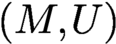 $(M, U)$ for sufficiently large T. We establish an Agmon estimate for eigenforms of the Witten Laplacian which plays an essential role in identifying these cohomologies via Witten’s instanton complex, defined in terms of eigenspaces of the Witten Laplacian for small eigenvalues. As an application, we obtain the strong Morse inequalities in this setting.


Lifting of recollements and gluing of partial silting sets
- Part of
-
- Journal:
- Proceedings of the Royal Society of Edinburgh. Section A: Mathematics / Volume 152 / Issue 1 / February 2022
- Published online by Cambridge University Press:
- 07 June 2021, pp. 209-257
- Print publication:
- February 2022
-
- Article
- Export citation
Unbalanced optimal total variation transport problems and generalized Wasserstein barycenters
- Part of
-
- Journal:
- Proceedings of the Royal Society of Edinburgh. Section A: Mathematics / Volume 152 / Issue 3 / June 2022
- Published online by Cambridge University Press:
- 04 June 2021, pp. 674-700
- Print publication:
- June 2022
-
- Article
- Export citation
-
In this paper, we establish a Kantorovich duality for unbalanced optimal total variation transport problems. As consequences, we recover a version of duality formula for partial optimal transports established by Caffarelli and McCann; and we also get another proof of Kantorovich–Rubinstein theorem for generalized Wasserstein distance $\widetilde {W}_1^{a,b}$ proved before by Piccoli and Rossi. Then we apply our duality formula to study generalized Wasserstein barycenters. We show the existence of these barycenters for measures with compact supports. Finally, we prove the consistency of our barycenters.

Weighted norm inequalities for positive operators restricted on the cone of λ-quasiconcave functions — Corrigendum
-
- Journal:
- Proceedings of the Royal Society of Edinburgh. Section A: Mathematics / Volume 152 / Issue 2 / April 2022
- Published online by Cambridge University Press:
- 04 June 2021, pp. 542-543
- Print publication:
- April 2022
-
- Article
-
- You have access
- HTML
- Export citation
Smooth parameterizations of power-subanalytic sets and compositions of Gevrey functions
- Part of
-
- Journal:
- Proceedings of the Edinburgh Mathematical Society / Volume 64 / Issue 3 / August 2021
- Published online by Cambridge University Press:
- 04 June 2021, pp. 532-554
-
- Article
- Export citation
-
We show that if $X$
 is an $m$
 -dimensional definable set in $\mathbb {R}_\text {an}^\text{pow}$
 , the structure of real subanalytic sets with real power maps added, then for any positive integer $r$
 there exists a $C^{r}$
 -parameterization of $X$
 consisting of $cr^{m^{3}}$
 maps for some constant $c$
 . Moreover, these maps are real analytic and this bound is uniform for a definable family.


Asymptotics of the principal eigenvalue of the Laplacian in 2D periodic domains with small traps
- Part of
-
- Journal:
- European Journal of Applied Mathematics / Volume 33 / Issue 4 / August 2022
- Published online by Cambridge University Press:
- 04 June 2021, pp. 646-673
-
- Article
- Export citation
-
We derive and numerically implement various asymptotic approximations for the lowest or principal eigenvalue of the Laplacian with a periodic arrangement of localised traps of small
 \[\mathcal{O}(\varepsilon )\] spatial extent that are centred at the lattice points of an arbitrary Bravais lattice in
  \[{\mathbb{R}^2}\]. The expansion of this principal eigenvalue proceeds in powers of
  \[\nu\equiv- 1/\log (\varepsilon {d_c})\], where dc is the logarithmic capacitance of the trap set. An explicit three-term approximation for this principal eigenvalue is derived using strong localised perturbation theory, with the coefficients in this series evaluated numerically by using an explicit formula for the source-neutral periodic Green’s function and its regular part. Moreover, a transcendental equation for an improved approximation to the principal eigenvalue, which effectively sums all the logarithmic terms in powers of v, is derived in terms of the regular part of the periodic Helmholtz Green’s function. By using an Ewald summation technique to first obtain a rapidly converging infinite series representation for this regular part, a simple Newton iteration scheme on the transcendental equation is implemented to numerically evaluate the improved ‘log-summed’ approximation to the principal eigenvalue. From a numerical computation of the PDE eigenvalue problem defined on the fundamental Wigner–Seitz (WS) cell for the lattice, it is shown that the three-term asymptotic approximation for the principal eigenvalue agrees well with the numerical result only for a rather small trap radius. In contrast, the log-summed asymptotic result provides a very close approximation to the principal eigenvalue even when the trap radius is only moderately small. For a circular trap, the first few transcendental correction terms that further improves the log-summed approximation for the principal eigenvalue are derived. Finally, it is shown numerically that, amongst all Bravais lattices with a fixed area of the primitive cell, the principal eigenvalue is maximised for a regular hexagonal arrangement of traps.


RETRACTED – The wigner property for CL-spaces and finite-dimensional polyhedral banach spaces
- Part of
-
- Journal:
- Proceedings of the Edinburgh Mathematical Society / Volume 64 / Issue 3 / August 2021
- Published online by Cambridge University Press:
- 04 June 2021, pp. 717-733
-
- Article
- Export citation
-
We say that a map $f$
 from a Banach space $X$
 to another Banach space $Y$
 is a phase-isometry if the equality\[ \{\|f(x)+f(y)\|, \|f(x)-f(y)\|\}=\{\|x+y\|, \|x-y\|\} \]holds for all $x,\,y\in X$
 . A Banach space $X$
 is said to have the Wigner property if for any Banach space $Y$
 and every surjective phase-isometry $f : X\rightarrow Y$
 , there exists a phase function $\varepsilon : X \rightarrow \{-1,\,1\}$
 such that $\varepsilon \cdot f$
 is a linear isometry. We present some basic properties of phase-isometries between two real Banach spaces. These enable us to show that all finite-dimensional polyhedral Banach spaces and CL-spaces possess the Wigner property.


Homotopy nilpotency of localized spheres and projective spaces
- Part of
-
- Journal:
- Proceedings of the Edinburgh Mathematical Society / Volume 64 / Issue 3 / August 2021
- Published online by Cambridge University Press:
- 04 June 2021, pp. 501-512
-
- Article
-
- You have access
- Open access
- HTML
- Export citation
-
For the $p$
 -localized sphere $\mathbb {S}^{2m-1}_{(p)}$
 with $p >3$
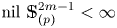
 a prime, we prove that the homotopy nilpotency satisfies $\mbox {nil}\ \mathbb {S}^{2m-1}_{(p)}<\infty$
 , with respect to any homotopy associative $H$
 -structure on $\mathbb {S}^{2m-1}_{(p)}$
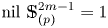
 . We also prove that $\mbox {nil}\ \mathbb {S}^{2m-1}_{(p)}= 1$
 for all but a finite number of primes $p >3$
 . Then, for the loop space of the associated $\mathbb {S}^{2m-1}_{(p)}$
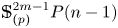
 -projective space $\mathbb {S}^{2m-1}_{(p)}P(n-1)$
 , with $m,n\ge 2$
 and $m\mid p-1$
 , we derive that $\mbox {nil}\ \Omega (\mathbb {S}^{2m-1}_{(p)}P (n-1))\le 3$
 .
.


Chaos and frequent hypercyclicity for composition operators
- Part of
-
- Journal:
- Proceedings of the Edinburgh Mathematical Society / Volume 64 / Issue 3 / August 2021
- Published online by Cambridge University Press:
- 04 June 2021, pp. 513-531
-
- Article
- Export citation
-
The notions of chaos and frequent hypercyclicity enjoy an intimate relationship in linear dynamics. Indeed, after a series of partial results, it was shown by Bayart and Ruzsa in 2015 that for backward weighted shifts on $\ell _p(\mathbb {Z})$
 , the notions of chaos and frequent hypercyclicity coincide. It is with some effort that one shows that these two notions are distinct. Bayart and Grivaux in 2007 constructed a non-chaotic frequently hypercyclic weighted shift on $c_0$
 . It was only in 2017 that Menet settled negatively whether every chaotic operator is frequently hypercylic. In this article, we show that for a large class of composition operators on $L^{p}$
 -spaces, the notions of chaos and frequent hypercyclicity coincide. Moreover, in this particular class, an invertible operator is frequently hypercyclic if and only if its inverse is frequently hypercyclic. This is in contrast to a very recent result of Menet where an invertible operator frequently hypercyclic on $\ell _1$
 whose inverse is not frequently hypercyclic is constructed.


