Refine search
Actions for selected content:
26077 results in Abstract analysis
PRM volume 151 issue 4 Cover and Front matter
-
- Journal:
- Proceedings of the Royal Society of Edinburgh. Section A: Mathematics / Volume 151 / Issue 4 / August 2021
- Published online by Cambridge University Press:
- 13 July 2021, pp. f1-f2
- Print publication:
- August 2021
-
- Article
-
- You have access
- Export citation
PRM volume 151 issue 4 Cover and Back matter
-
- Journal:
- Proceedings of the Royal Society of Edinburgh. Section A: Mathematics / Volume 151 / Issue 4 / August 2021
- Published online by Cambridge University Press:
- 13 July 2021, pp. b1-b2
- Print publication:
- August 2021
-
- Article
-
- You have access
- Export citation
Wold decomposition on odometer semigroups
- Part of
-
- Journal:
- Proceedings of the Royal Society of Edinburgh. Section A: Mathematics / Volume 152 / Issue 3 / June 2022
- Published online by Cambridge University Press:
- 13 July 2021, pp. 738-755
- Print publication:
- June 2022
-
- Article
- Export citation
THE GENERIC FIBRE OF MODULI SPACES OF BOUNDED LOCAL G-SHTUKAS
- Part of
-
- Journal:
- Journal of the Institute of Mathematics of Jussieu / Volume 22 / Issue 2 / March 2023
- Published online by Cambridge University Press:
- 12 July 2021, pp. 799-878
- Print publication:
- March 2023
-
- Article
-
- You have access
- Open access
- HTML
- Export citation
-
Moduli spaces of bounded local G-shtukas are a group-theoretic generalisation of the function field analogue of Rapoport and Zink’s moduli spaces of p-divisible groups. In this article we generalise some very prominent concepts in the theory of Rapoport-Zink spaces to our setting. More precisely, we define period spaces, as well as the period map from a moduli space of bounded local G-shtukas to the corresponding period space, and we determine the image of the period map. Furthermore, we define a tower of coverings of the generic fibre of the moduli space, which is equipped with a Hecke action and an action of a suitable automorphism group. Finally, we consider the $\ell $-adic cohomology of these towers.
Les espaces de modules de G-chtoucas locaux bornés sont une généralisation des espaces de modules de groupes p-divisibles de Rapoport-Zink, au cas d’un corps de fonctions local, pour des groupes plus généraux et des copoids pas nécessairement minuscules. Dans cet article nous définissons les espaces de périodes et l’application de périodes associés à un tel espace, et nous calculons son image. Nous étudions la tour au-dessus de la fibre générique de l’espace de modules, équipée d’une action de Hecke ainsi que d’une action d’un groupe d’automorphismes. Enfin, nous définissons la cohomologie $\ell $-adique de ces tours.


GEOMETRICAL AND MEASURE-THEORETIC STRUCTURES OF MAPS WITH A MOSTLY EXPANDING CENTER
- Part of
-
- Journal:
- Journal of the Institute of Mathematics of Jussieu / Volume 22 / Issue 2 / March 2023
- Published online by Cambridge University Press:
- 12 July 2021, pp. 919-959
- Print publication:
- March 2023
-
- Article
- Export citation
-
In this article we study physical measures for $\operatorname {C}^{1+\alpha }$ partially hyperbolic diffeomorphisms with a mostly expanding center. We show that every diffeomorphism with a mostly expanding center direction exhibits a geometrical-combinatorial structure, which we call skeleton, that determines the number, basins and supports of the physical measures. Furthermore, the skeleton allows us to describe how physical measures bifurcate as the diffeomorphism changes under $C^1$ topology.
Moreover, for each diffeomorphism with a mostly expanding center, there exists a $C^1$ neighbourhood, such that diffeomorphism among a $C^1$ residual subset of this neighbourhood admits finitely many physical measures, whose basins have full volume.
We also show that the physical measures for diffeomorphisms with a mostly expanding center satisfy exponential decay of correlation for any Hölder observes. In particular, we prove that every $C^2$, partially hyperbolic, accessible diffeomorphism with 1-dimensional center and nonvanishing center exponent has exponential decay of correlations for Hölder functions.


ON THE EXISTENCE OF NON-NORM-ATTAINING OPERATORS
- Part of
-
- Journal:
- Journal of the Institute of Mathematics of Jussieu / Volume 22 / Issue 3 / May 2023
- Published online by Cambridge University Press:
- 09 July 2021, pp. 1023-1035
- Print publication:
- May 2023
-
- Article
- Export citation
-
In this article, we provide necessary and sufficient conditions for the existence of non-norm-attaining operators in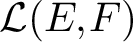 $\mathcal {L}(E, F)$. By using a theorem due to Pfitzner on James boundaries, we show that if there exists a relatively compact set K of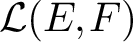 $\mathcal {L}(E, F)$ (in the weak operator topology) such that $0$ is an element of its closure (in the weak operator topology) but it is not in its norm-closed convex hull, then we can guarantee the existence of an operator that does not attain its norm. This allows us to provide the following generalisation of results due to Holub and Mujica. If E is a reflexive space, F is an arbitrary Banach space and the pair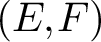 $(E, F)$ has the (pointwise-)bounded compact approximation property, then the following are equivalent:
 (i) $\mathcal {K}(E, F) = \mathcal {L}(E, F)$;
(ii) Every operator from E into F attains its norm;
(iii) $(\mathcal {L}(E,F), \tau _c)^* = (\mathcal {L}(E, F), \left \Vert \cdot \right \Vert )^*$,
where $\tau _c$ denotes the topology of compact convergence. We conclude the article by presenting a characterisation of the Schur property in terms of norm-attaining operators.


A reaction–diffusion system with cross-diffusion: Lie symmetry, exact solutions and their applications in the pandemic modelling
- Part of
-
- Journal:
- European Journal of Applied Mathematics / Volume 33 / Issue 5 / October 2022
- Published online by Cambridge University Press:
- 08 July 2021, pp. 785-802
-
- Article
- Export citation
Invasion fronts and adaptive dynamics in a model for the growth of cell populations with heterogeneous mobility
- Part of
-
- Journal:
- European Journal of Applied Mathematics / Volume 33 / Issue 4 / August 2022
- Published online by Cambridge University Press:
- 08 July 2021, pp. 766-783
-
- Article
- Export citation
QUANTITATIVE ESTIMATE FOR THE MEASURE OF A SET OF REAL NUMBERS
- Part of
-
- Journal:
- Glasgow Mathematical Journal / Volume 64 / Issue 2 / May 2022
- Published online by Cambridge University Press:
- 06 July 2021, pp. 411-433
-
- Article
- Export citation
-
An effective estimate for the measure of the set of real numbers for which the inequality |P(x)|<Q-w for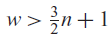 $w > {3 \over 2}n + 1$ has a solution in integral polynomials P of degree n and of height H(P) at most $Q \in {\rm{\mathbb N}}$ is obtained.

Average-case complexity of the Euclidean algorithm with a fixed polynomial over a finite field
- Part of
-
- Journal:
- Combinatorics, Probability and Computing / Volume 31 / Issue 1 / January 2022
- Published online by Cambridge University Press:
- 06 July 2021, pp. 166-183
-
- Article
- Export citation
-
We analyse the behaviour of the Euclidean algorithm applied to pairs (g,f) of univariate nonconstant polynomials over a finite field $\mathbb{F}_{q}$ of q elements when the highest degree polynomial g is fixed. Considering all the elements f of fixed degree, we establish asymptotically optimal bounds in terms of q for the number of elements f that are relatively prime with g and for the average degree of $\gcd(g,f)$. We also exhibit asymptotically optimal bounds for the average-case complexity of the Euclidean algorithm applied to pairs (g,f) as above.


On directed analogues of expander and hyperfinite graph sequences
- Part of
-
- Journal:
- Combinatorics, Probability and Computing / Volume 31 / Issue 2 / March 2022
- Published online by Cambridge University Press:
- 06 July 2021, pp. 184-197
-
- Article
-
- You have access
- Open access
- HTML
- Export citation
Continuous phase transitions on Galton–Watson trees
- Part of
-
- Journal:
- Combinatorics, Probability and Computing / Volume 31 / Issue 2 / March 2022
- Published online by Cambridge University Press:
- 06 July 2021, pp. 198-228
-
- Article
- Export citation
-
Distinguishing between continuous and first-order phase transitions is a major challenge in random discrete systems. We study the topic for events with recursive structure on Galton–Watson trees. For example, let $\mathcal{T}_1$ be the event that a Galton–Watson tree is infinite and let $\mathcal{T}_2$ be the event that it contains an infinite binary tree starting from its root. These events satisfy similar recursive properties: $\mathcal{T}_1$ holds if and only if $\mathcal{T}_1$ holds for at least one of the trees initiated by children of the root, and $\mathcal{T}_2$ holds if and only if $\mathcal{T}_2$ holds for at least two of these trees. The probability of $\mathcal{T}_1$ has a continuous phase transition, increasing from 0 when the mean of the child distribution increases above 1. On the other hand, the probability of $\mathcal{T}_2$ has a first-order phase transition, jumping discontinuously to a non-zero value at criticality. Given the recursive property satisfied by the event, we describe the critical child distributions where a continuous phase transition takes place. In many cases, we also characterise the event undergoing the phase transition.


JMJ volume 20 Issue 4 Cover and Front matter
-
- Journal:
- Journal of the Institute of Mathematics of Jussieu / Volume 20 / Issue 4 / July 2021
- Published online by Cambridge University Press:
- 02 August 2021, pp. f1-f2
- Print publication:
- July 2021
-
- Article
-
- You have access
- Export citation
JMJ volume 20 Issue 4 Cover and Back matter
-
- Journal:
- Journal of the Institute of Mathematics of Jussieu / Volume 20 / Issue 4 / July 2021
- Published online by Cambridge University Press:
- 02 August 2021, pp. b1-b2
- Print publication:
- July 2021
-
- Article
-
- You have access
- Export citation
Large N behaviour of the two-dimensional Yang–Mills partition function
- Part of
-
- Journal:
- Combinatorics, Probability and Computing / Volume 31 / Issue 1 / January 2022
- Published online by Cambridge University Press:
- 30 June 2021, pp. 144-165
-
- Article
- Export citation
-
We compute the large N limit of the partition function of the Euclidean Yang–Mills measure on orientable compact surfaces with genus $g\geqslant 1$ and non-orientable compact surfaces with genus $g\geqslant 2$, with structure group the unitary group ${\mathrm U}(N)$ or special unitary group ${\mathrm{SU}}(N)$. Our proofs are based on asymptotic representation theory: more specifically, we control the dimension and Casimir number of irreducible representations of ${\mathrm U}(N)$ and ${\mathrm{SU}}(N)$ when N tends to infinity. Our main technical tool, involving ‘almost flat’ Young diagram, makes rigorous the arguments used by Gross and Taylor (1993, Nuclear Phys. B 400(1–3) 181–208) in the setting of QCD, and in some cases, we recover formulae given by Douglas (1995, Quantum Field Theory and String Theory (Cargèse, 1993), Vol. 328 of NATO Advanced Science Institutes Series B: Physics, Plenum, New York, pp. 119–135) and Rusakov (1993, Phys. Lett. B 303(1) 95–98).


The cohomology rings of real toric spaces and smooth real toric varieties
- Part of
-
- Journal:
- Proceedings of the Royal Society of Edinburgh. Section A: Mathematics / Volume 152 / Issue 3 / June 2022
- Published online by Cambridge University Press:
- 29 June 2021, pp. 720-737
- Print publication:
- June 2022
-
- Article
- Export citation
-
We compute the cohomology rings of smooth real toric varieties and of real toric spaces, which are quotients of real moment-angle complexes by freely acting subgroups of the ambient 2-torus. The differential graded algebra (dga) we present is in fact an equivariant dga model, valid for arbitrary coefficients. We deduce from our description that smooth toric varieties are $\hbox{M}$-varieties.

Triangle-free subgraphs with large fractional chromatic number
- Part of
-
- Journal:
- Combinatorics, Probability and Computing / Volume 31 / Issue 1 / January 2022
- Published online by Cambridge University Press:
- 29 June 2021, pp. 136-143
-
- Article
- Export citation
-
It is well known that for any integers k and g, there is a graph with chromatic number at least k and girth at least g. In 1960s, Erdös and Hajnal conjectured that for any k and g, there exists a number h(k,g), such that every graph with chromatic number at least h(k,g) contains a subgraph with chromatic number at least k and girth at least g. In 1977, Rödl proved the case when $g=4$, for arbitrary k. We prove the fractional chromatic number version of Rödl’s result.

A NOTE ON RANK TWO STABLE BUNDLES OVER SURFACES
- Part of
-
- Journal:
- Glasgow Mathematical Journal / Volume 64 / Issue 2 / May 2022
- Published online by Cambridge University Press:
- 28 June 2021, pp. 397-410
-
- Article
- Export citation
-
Let π : X → C be a fibration with integral fibers over a curve C and consider a polarization H on the surface X. Let E be a stable vector bundle of rank 2 on C. We prove that the pullback π*(E) is a H-stable bundle over X. This result allows us to relate the corresponding moduli spaces of stable bundles
 $${{\mathcal M}_C}(2,d)$$ and
  $${{\mathcal M}_{X,H}}(2,df,0)$$ through an injective morphism. We study the induced morphism at the level of Brill–Noether loci to construct examples of Brill–Noether loci on fibered surfaces. Results concerning the emptiness of Brill–Noether loci follow as a consequence of a generalization of Clifford’s Theorem for rank two bundles on surfaces.

PEM series 2 volume 64 issue 2 Cover and Front matter
-
- Journal:
- Proceedings of the Edinburgh Mathematical Society / Volume 64 / Issue 2 / May 2021
- Published online by Cambridge University Press:
- 25 June 2021, pp. f1-f2
-
- Article
-
- You have access
- Export citation
PEM series 2 volume 64 issue 2 Cover and Back matter
-
- Journal:
- Proceedings of the Edinburgh Mathematical Society / Volume 64 / Issue 2 / May 2021
- Published online by Cambridge University Press:
- 25 June 2021, pp. b1-b2
-
- Article
-
- You have access
- Export citation
