Refine search
Actions for selected content:
26078 results in Abstract analysis
4 - Algebraic and Essential Numerical Ranges
-
- Book:
- Numerical Ranges of Hilbert Space Operators
- Published online:
- 27 July 2021
- Print publication:
- 05 August 2021, pp 146-193
-
- Chapter
- Export citation
Index
-
- Book:
- Numerical Ranges of Hilbert Space Operators
- Published online:
- 27 July 2021
- Print publication:
- 05 August 2021, pp 480-484
-
- Chapter
- Export citation
On Turán exponents of bipartite graphs
- Part of
-
- Journal:
- Combinatorics, Probability and Computing / Volume 31 / Issue 2 / March 2022
- Published online by Cambridge University Press:
- 04 August 2021, pp. 333-344
-
- Article
- Export citation
-
A long-standing conjecture of Erdős and Simonovits asserts that for every rational number $r\in (1,2)$ there exists a bipartite graph H such that $\mathrm{ex}(n,H)=\Theta(n^r)$. So far this conjecture is known to be true only for rationals of form $1+1/k$ and $2-1/k$, for integers $k\geq 2$. In this paper, we add a new form of rationals for which the conjecture is true: $2-2/(2k+1)$, for $k\geq 2$. This in turn also gives an affirmative answer to a question of Pinchasi and Sharir on cube-like graphs. Recently, a version of Erdős and Simonovits $^{\prime}$s conjecture, where one replaces a single graph by a finite family, was confirmed by Bukh and Conlon. They proposed a construction of bipartite graphs which should satisfy Erdős and Simonovits $^{\prime}$s conjecture. Our result can also be viewed as a first step towards verifying Bukh and Conlon $^{\prime}$s conjecture. We also prove an upper bound on the Turán number of theta graphs in an asymmetric setting and employ this result to obtain another new rational exponent for Turán exponents: $r=7/5$.


An example regarding Kalton's paper ‘isomorphisms between spaces of vector-valued continuous functions’
- Part of
-
- Journal:
- Proceedings of the Edinburgh Mathematical Society / Volume 64 / Issue 3 / August 2021
- Published online by Cambridge University Press:
- 02 August 2021, pp. 615-619
-
- Article
- Export citation
-
The paper alluded to in the title contains the following striking result: Let $I$
 be the unit interval and $\Delta$
 the Cantor set. If $X$
 is a quasi Banach space containing no copy of $c_{0}$
 which is isomorphic to a closed subspace of a space with a basis and $C(I,\,X)$
 is linearly homeomorphic to $C(\Delta ,\, X)$
 , then $X$
 is locally convex, i.e., a Banach space. We will show that Kalton result is sharp by exhibiting non-locally convex quasi Banach spaces $X$
 with a basis for which $C(I,\,X)$
 and $C(\Delta ,\, X)$
 are isomorphic. Our examples are rather specific and actually, in all cases, $X$
 is isomorphic to $C(K,\,X)$
 if $K$
 is a metric compactum of finite covering dimension.


INTERSECTION COHOMOLOGY OF THE MODULI SPACE OF HIGGS BUNDLES ON A GENUS 2 CURVE
- Part of
-
- Journal:
- Journal of the Institute of Mathematics of Jussieu / Volume 22 / Issue 3 / May 2023
- Published online by Cambridge University Press:
- 02 August 2021, pp. 1037-1086
- Print publication:
- May 2023
-
- Article
-
- You have access
- Open access
- HTML
- Export citation
-
Let C be a smooth projective curve of genus $2$. Following a method by O’Grady, we construct a semismall desingularisation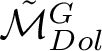 $\tilde {\mathcal {M}}_{Dol}^G$ of the moduli space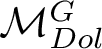 $\mathcal {M}_{Dol}^G$ of semistable G-Higgs bundles of degree 0 for $G=\mathrm {GL}(2,\mathbb {C}), \mathrm {SL}(2,\mathbb {C})$. By the decomposition theorem of Beilinson, Bernstein and Deligne, one can write the cohomology of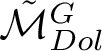 $\tilde {\mathcal {M}}_{Dol}^G$ as a direct sum of the intersection cohomology of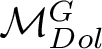 $\mathcal {M}_{Dol}^G$ plus other summands supported on the singular locus. We use this splitting to compute the intersection cohomology of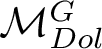 $\mathcal {M}_{Dol}^G$ and prove that the mixed Hodge structure on it is pure, in analogy with what happens to ordinary cohomology in the smooth case of coprime rank and degree.

TOPOLOGY OF 1-PARAMETER DEFORMATIONS OF NON-ISOLATED REAL SINGULARITIES
- Part of
-
- Journal:
- Glasgow Mathematical Journal / Volume 64 / Issue 2 / May 2022
- Published online by Cambridge University Press:
- 30 July 2021, pp. 484-498
-
- Article
- Export citation
-
Let $f\,{:}\,(\mathbb R^n,0)\to (\mathbb R,0)$ be an analytic function germ with non-isolated singularities and let $F\,{:}\, (\mathbb{R}^{1+n},0) \to (\mathbb{R},0)$ be a 1-parameter deformation of f. Let $ f_t ^{-1}(0) \cap B_\epsilon^n$, $0 < \vert t \vert \ll \epsilon$, be the “generalized” Milnor fiber of the deformation F. Under some conditions on F, we give a topological degree formula for the Euler characteristic of this fiber. This generalizes a result of Fukui.


Spectral properties of a beam equation with eigenvalue parameter occurring linearly in the boundary conditions
- Part of
-
- Journal:
- Proceedings of the Royal Society of Edinburgh. Section A: Mathematics / Volume 152 / Issue 3 / June 2022
- Published online by Cambridge University Press:
- 30 July 2021, pp. 780-801
- Print publication:
- June 2022
-
- Article
- Export citation
-
In this paper, we consider an eigenvalue problem for ordinary differential equations of fourth order with a spectral parameter in the boundary conditions. The location of eigenvalues on real axis, the structure of root subspaces and the oscillation properties of eigenfunctions of this problem are investigated, and asymptotic formulas for the eigenvalues and eigenfunctions are found. Next, by the use of these properties, we establish sufficient conditions for subsystems of root functions of the considered problem to form a basis in the space $L_p,1 < p < \infty$.
Global well-posedness and nonlinear stability of a chemotaxis system modelling multiple sclerosis
- Part of
-
- Journal:
- Proceedings of the Royal Society of Edinburgh. Section A: Mathematics / Volume 152 / Issue 4 / August 2022
- Published online by Cambridge University Press:
- 28 July 2021, pp. 826-856
- Print publication:
- August 2022
-
- Article
- Export citation

Numerical Ranges of Hilbert Space Operators
-
- Published online:
- 27 July 2021
- Print publication:
- 05 August 2021
Lower bound on the size of a quasirandom forcing set of permutations
- Part of
-
- Journal:
- Combinatorics, Probability and Computing / Volume 31 / Issue 2 / March 2022
- Published online by Cambridge University Press:
- 27 July 2021, pp. 304-319
-
- Article
-
- You have access
- Open access
- HTML
- Export citation
-
A set S of permutations is forcing if for any sequence $\{\Pi_i\}_{i \in \mathbb{N}}$ of permutations where the density $d(\pi,\Pi_i)$ converges to $\frac{1}{|\pi|!}$ for every permutation $\pi \in S$, it holds that $\{\Pi_i\}_{i \in \mathbb{N}}$ is quasirandom. Graham asked whether there exists an integer k such that the set of all permutations of order k is forcing; this has been shown to be true for any $k\ge 4$. In particular, the set of all 24 permutations of order 4 is forcing. We provide the first non-trivial lower bound on the size of a forcing set of permutations: every forcing set of permutations (with arbitrary orders) contains at least four permutations.


COMPARISON OF KUMMER LOGARITHMIC TOPOLOGIES WITH CLASSICAL TOPOLOGIES
- Part of
-
- Journal:
- Journal of the Institute of Mathematics of Jussieu / Volume 22 / Issue 3 / May 2023
- Published online by Cambridge University Press:
- 27 July 2021, pp. 1087-1117
- Print publication:
- May 2023
-
- Article
- Export citation
THE BOREL CHARACTER
- Part of
-
- Journal:
- Journal of the Institute of Mathematics of Jussieu / Volume 22 / Issue 2 / March 2023
- Published online by Cambridge University Press:
- 26 July 2021, pp. 747-797
- Print publication:
- March 2023
-
- Article
- Export citation
Spectral gap in random bipartite biregular graphs and applications
- Part of
-
- Journal:
- Combinatorics, Probability and Computing / Volume 31 / Issue 2 / March 2022
- Published online by Cambridge University Press:
- 23 July 2021, pp. 229-267
-
- Article
-
- You have access
- Open access
- HTML
- Export citation
Asymptotic stability of rarefaction wave for the compressible Navier‐Stokes‐Korteweg equations in the half space
- Part of
-
- Journal:
- Proceedings of the Royal Society of Edinburgh. Section A: Mathematics / Volume 152 / Issue 3 / June 2022
- Published online by Cambridge University Press:
- 23 July 2021, pp. 756-779
- Print publication:
- June 2022
-
- Article
- Export citation
-
In this study, we are concerned with the asymptotic stability towards a rarefaction wave of the solution to an outflow problem for the Navier-Stokes Korteweg equations of a compressible fluid in the half space. We assume that the space-asymptotic states and the boundary data satisfy some conditions so that the time-asymptotic state of this solution is a rarefaction wave. Then we show that the rarefaction wave is non-linearly stable, as time goes to infinity, provided that the strength of the wave is weak and the initial perturbation is small. The proof is mainly based on $L^{2}$-energy method and some time-decay estimates in $L^{p}$-norm for the smoothed rarefaction wave.


TOPOLOGICAL 4-MANIFOLDS WITH 4-DIMENSIONAL FUNDAMENTAL GROUP
- Part of
-
- Journal:
- Glasgow Mathematical Journal / Volume 64 / Issue 2 / May 2022
- Published online by Cambridge University Press:
- 23 July 2021, pp. 454-461
-
- Article
- Export citation
-
Let $\pi$ be a group satisfying the Farrell–Jones conjecture and assume that $B\pi$ is a 4-dimensional Poincaré duality space. We consider topological, closed, connected manifolds with fundamental group $\pi$ whose canonical map to $B\pi$ has degree 1, and show that two such manifolds are s-cobordant if and only if their equivariant intersection forms are isometric and they have the same Kirby–Siebenmann invariant. If $\pi$ is good in the sense of Freedman, it follows that two such manifolds are homeomorphic if and only if they are homotopy equivalent and have the same Kirby–Siebenmann invariant. This shows rigidity in many cases that lie between aspherical 4-manifolds, where rigidity is expected by Borel’s conjecture, and simply connected manifolds where rigidity is a consequence of Freedman’s classification results.


ON NONCRITICAL GALOIS REPRESENTATIONS
- Part of
-
- Journal:
- Journal of the Institute of Mathematics of Jussieu / Volume 22 / Issue 1 / January 2023
- Published online by Cambridge University Press:
- 22 July 2021, pp. 383-420
- Print publication:
- January 2023
-
- Article
- Export citation
PETERZIL–STEINHORN SUBGROUPS AND $\mu $-STABILIZERS IN ACF
- Part of
-
- Journal:
- Journal of the Institute of Mathematics of Jussieu / Volume 22 / Issue 3 / May 2023
- Published online by Cambridge University Press:
- 21 July 2021, pp. 1003-1022
- Print publication:
- May 2023
-
- Article
- Export citation
-
We consider G, a linear algebraic group defined over $\Bbbk $, an algebraically closed field (ACF). By considering $\Bbbk $ as an embedded residue field of an algebraically closed valued field K, we can associate to it a compact G-space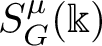 $S^\mu _G(\Bbbk )$ consisting of $\mu $-types on G. We show that for each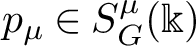 $p_\mu \in S^\mu _G(\Bbbk )$, $\mathrm {Stab}^\mu (p)=\mathrm {Stab}\left (p_\mu \right )$ is a solvable infinite algebraic group when $p_\mu $ is centered at infinity and residually algebraic. Moreover, we give a description of the dimension of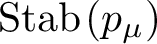 $\mathrm {Stab}\left (p_\mu \right )$ in terms of the dimension of p.


NORMAL REFLECTION SUBGROUPS OF COMPLEX REFLECTION GROUPS
- Part of
-
- Journal:
- Journal of the Institute of Mathematics of Jussieu / Volume 22 / Issue 2 / March 2023
- Published online by Cambridge University Press:
- 21 July 2021, pp. 879-917
- Print publication:
- March 2023
-
- Article
-
- You have access
- Open access
- HTML
- Export citation
Perfect matchings, rank of connection tensors and graph homomorphisms
- Part of
-
- Journal:
- Combinatorics, Probability and Computing / Volume 31 / Issue 2 / March 2022
- Published online by Cambridge University Press:
- 19 July 2021, pp. 268-303
-
- Article
-
- You have access
- Open access
- HTML
- Export citation
EULER CLASSES: SIX-FUNCTORS FORMALISM, DUALITIES, INTEGRALITY AND LINEAR SUBSPACES OF COMPLETE INTERSECTIONS
- Part of
-
- Journal:
- Journal of the Institute of Mathematics of Jussieu / Volume 22 / Issue 2 / March 2023
- Published online by Cambridge University Press:
- 16 July 2021, pp. 681-746
- Print publication:
- March 2023
-
- Article
-
- You have access
- Open access
- HTML
- Export citation
-
We equate various Euler classes of algebraic vector bundles, including those of [12] and one suggested by M. J. Hopkins, A. Raksit, and J.-P. Serre. We establish integrality results for this Euler class and give formulas for local indices at isolated zeros, both in terms of the six-functors formalism of coherent sheaves and as an explicit recipe in the commutative algebra of Scheja and Storch. As an application, we compute the Euler classes enriched in bilinear forms associated to arithmetic counts of d-planes on complete intersections in $\mathbb P^n$ in terms of topological Euler numbers over $\mathbb {R}$ and $\mathbb {C}$.


