Refine search
Actions for selected content:
26076 results in Abstract analysis
Monochromatic trees in random tournaments
- Part of
-
- Journal:
- Combinatorics, Probability and Computing / Volume 29 / Issue 3 / May 2020
- Published online by Cambridge University Press:
- 07 November 2019, pp. 318-345
-
- Article
- Export citation
-
We prove that, with high probability, in every 2-edge-colouring of the random tournament on n vertices there is a monochromatic copy of every oriented tree of order $O(n{\rm{/}}\sqrt {{\rm{log}} \ n} )$. This generalizes a result of the first, third and fourth authors, who proved the same statement for paths, and is tight up to a constant factor.

Surjectivity of near-square random matrices
- Part of
-
- Journal:
- Combinatorics, Probability and Computing / Volume 29 / Issue 2 / March 2020
- Published online by Cambridge University Press:
- 06 November 2019, pp. 267-292
-
- Article
- Export citation
Periodic pattern formation in the coupled chemotaxis-(Navier–)Stokes system with mixed nonhomogeneous boundary conditions
- Part of
-
- Journal:
- Proceedings of the Royal Society of Edinburgh. Section A: Mathematics / Volume 150 / Issue 6 / December 2020
- Published online by Cambridge University Press:
- 04 November 2019, pp. 3121-3152
- Print publication:
- December 2020
-
- Article
- Export citation
The string of diamonds is nearly tight for rumour spreading
- Part of
-
- Journal:
- Combinatorics, Probability and Computing / Volume 29 / Issue 2 / March 2020
- Published online by Cambridge University Press:
- 04 November 2019, pp. 190-199
-
- Article
- Export citation
-
For a rumour spreading protocol, the spread time is defined as the first time everyone learns the rumour. We compare the synchronous push&pull rumour spreading protocol with its asynchronous variant, and show that for any n-vertex graph and any starting vertex, the ratio between their expected spread times is bounded by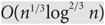 $O({n^{1/3}}{\log ^{2/3}}n)$. This improves the $O(\sqrt n)$ upper bound of Giakkoupis, Nazari and Woelfel (2016). Our bound is tight up to a factor of O(log n), as illustrated by the string of diamonds graph. We also show that if, for a pair α, β of real numbers, there exist infinitely many graphs for which the two spread times are nα and nβ in expectation, then $0 \le \alpha \le 1$ and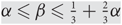 $\alpha \le \beta \le {1 \over 3} + {2 \over 3} \alpha $; and we show each such pair α, β is achievable.


Unlabelled Gibbs partitions
- Part of
-
- Journal:
- Combinatorics, Probability and Computing / Volume 29 / Issue 2 / March 2020
- Published online by Cambridge University Press:
- 04 November 2019, pp. 293-309
-
- Article
- Export citation
Self-similar solutions of the radially symmetric relativistic Euler equations
- Part of
-
- Journal:
- European Journal of Applied Mathematics / Volume 31 / Issue 6 / December 2020
- Published online by Cambridge University Press:
- 04 November 2019, pp. 919-949
-
- Article
- Export citation
Introduction to Approximate Groups
-
- Published online:
- 31 October 2019
- Print publication:
- 14 November 2019
Modelling silicosis: The structure of equilibria
- Part of
-
- Journal:
- European Journal of Applied Mathematics / Volume 31 / Issue 6 / December 2020
- Published online by Cambridge University Press:
- 31 October 2019, pp. 950-967
-
- Article
- Export citation
PARABOLIC COMPACTIFICATION OF HOMOGENEOUS SPACES
- Part of
-
- Journal:
- Journal of the Institute of Mathematics of Jussieu / Volume 20 / Issue 4 / July 2021
- Published online by Cambridge University Press:
- 30 October 2019, pp. 1371-1408
- Print publication:
- July 2021
-
- Article
- Export citation
-
In this article, we study compactifications of homogeneous spaces coming from equivariant, open embeddings into a generalized flag manifold $G/P$. The key to this approach is that in each case $G/P$ is the homogeneous model for a parabolic geometry; the theory of such geometries provides a large supply of geometric tools and invariant differential operators that can be used for this study. A classical theorem of Wolf shows that any involutive automorphism of a semisimple Lie group $G$ with fixed point group $H$ gives rise to a large family of such compactifications of homogeneous spaces of $H$. Most examples of (classical) Riemannian symmetric spaces as well as many non-symmetric examples arise in this way. A specific feature of the approach is that any compactification of that type comes with the notion of ‘curved analog’ to which the tools we develop also apply. The model example of this is a general Poincaré–Einstein manifold forming the curved analog of the conformal compactification of hyperbolic space. In the first part of the article, we derive general tools for the analysis of such compactifications. In the second part, we analyze two families of examples in detail, which in particular contain compactifications of the symmetric spaces $\mathit{SL}(n,\mathbb{R})/\mathit{SO}(p,n-p)$ and $\mathit{SO}(n,\mathbb{C})/\mathit{SO}(n)$. We describe the decomposition of the compactification into orbits, show how orbit closures can be described as the zero sets of smooth solutions to certain invariant differential operators and prove a local slice theorem around each orbit in these examples.


GALOIS CONJUGATES OF SPECIAL POINTS AND SPECIAL SUBVARIETIES IN SHIMURA VARIETIES
- Part of
-
- Journal:
- Journal of the Institute of Mathematics of Jussieu / Volume 20 / Issue 3 / May 2021
- Published online by Cambridge University Press:
- 30 October 2019, pp. 1075-1089
- Print publication:
- May 2021
-
- Article
- Export citation
-
Let $S$ be a Shimura variety with reflex field $E$. We prove that the action of $\text{Gal}(\overline{\mathbb{Q}}/E)$ on $S$ maps special points to special points and special subvarieties to special subvarieties. Furthermore, the Galois conjugates of a special point all have the same complexity (as defined in the theory of unlikely intersections). These results follow from Milne and Shih’s construction of canonical models of Shimura varieties, based on a conjecture of Langlands which was proved by Borovoi and Milne.


DENSITY RESULTS FOR SPECIALIZATION SETS OF GALOIS COVERS
- Part of
-
- Journal:
- Journal of the Institute of Mathematics of Jussieu / Volume 20 / Issue 5 / September 2021
- Published online by Cambridge University Press:
- 25 October 2019, pp. 1455-1496
- Print publication:
- September 2021
-
- Article
-
- You have access
- Open access
- Export citation
-
We provide evidence for this conclusion: given a finite Galois cover $f:X\rightarrow \mathbb{P}_{\mathbb{Q}}^{1}$ of group $G$, almost all (in a density sense) realizations of $G$ over $\mathbb{Q}$ do not occur as specializations of $f$. We show that this holds if the number of branch points of $f$ is sufficiently large, under the abc-conjecture and, possibly, the lower bound predicted by the Malle conjecture for the number of Galois extensions of $\mathbb{Q}$ of given group and bounded discriminant. This widely extends a result of Granville on the lack of $\mathbb{Q}$-rational points on quadratic twists of hyperelliptic curves over $\mathbb{Q}$ with large genus, under the abc-conjecture (a diophantine reformulation of the case $G=\mathbb{Z}/2\mathbb{Z}$ of our result). As a further evidence, we exhibit a few finite groups $G$ for which the above conclusion holds unconditionally for almost all covers of $\mathbb{P}_{\mathbb{Q}}^{1}$ of group $G$. We also introduce a local–global principle for specializations of Galois covers $f:X\rightarrow \mathbb{P}_{\mathbb{Q}}^{1}$ and show that it often fails if $f$ has abelian Galois group and sufficiently many branch points, under the abc-conjecture. On the one hand, such a local–global conclusion underscores the ‘smallness’ of the specialization set of a Galois cover of $\mathbb{P}_{\mathbb{Q}}^{1}$. On the other hand, it allows to generate conditionally ‘many’ curves over $\mathbb{Q}$ failing the Hasse principle, thus generalizing a recent result of Clark and Watson devoted to the hyperelliptic case.


On the Brownian separable permuton
- Part of
-
- Journal:
- Combinatorics, Probability and Computing / Volume 29 / Issue 2 / March 2020
- Published online by Cambridge University Press:
- 24 October 2019, pp. 241-266
-
- Article
- Export citation
Global minimisers for anisotropic attractive–repulsive interactions
- Part of
-
- Journal:
- European Journal of Applied Mathematics / Volume 31 / Issue 5 / October 2020
- Published online by Cambridge University Press:
- 22 October 2019, pp. 854-870
-
- Article
- Export citation
On the number of symbols that forces a transversal
- Part of
-
- Journal:
- Combinatorics, Probability and Computing / Volume 29 / Issue 2 / March 2020
- Published online by Cambridge University Press:
- 21 October 2019, pp. 234-240
-
- Article
- Export citation
FKN theorem for the multislice, with applications
- Part of
-
- Journal:
- Combinatorics, Probability and Computing / Volume 29 / Issue 2 / March 2020
- Published online by Cambridge University Press:
- 18 October 2019, pp. 200-212
-
- Article
- Export citation
JMJ volume 18 Issue 6 Cover and Back matter
-
- Journal:
- Journal of the Institute of Mathematics of Jussieu / Volume 18 / Issue 6 / November 2019
- Published online by Cambridge University Press:
- 18 October 2019, pp. b1-b8
- Print publication:
- November 2019
-
- Article
-
- You have access
- Export citation
On Ramsey numbers of hedgehogs
- Part of
-
- Journal:
- Combinatorics, Probability and Computing / Volume 29 / Issue 1 / January 2020
- Published online by Cambridge University Press:
- 18 October 2019, pp. 101-112
-
- Article
- Export citation
-
The hedgehog Ht is a 3-uniform hypergraph on vertices $1, \ldots ,t + \left({\matrix{t \cr 2}}\right)$ such that, for any pair (i, j) with 1 ≤ i < j ≤ t, there exists a unique vertex k > t such that {i, j, k} is an edge. Conlon, Fox and Rödl proved that the two-colour Ramsey number of the hedgehog grows polynomially in the number of its vertices, while the four-colour Ramsey number grows exponentially in the square root of the number of vertices. They asked whether the two-colour Ramsey number of the hedgehog Ht is nearly linear in the number of its vertices. We answer this question affirmatively, proving that r(Ht) = O(t2 ln t).

JMJ volume 18 Issue 6 Cover and Front matter
-
- Journal:
- Journal of the Institute of Mathematics of Jussieu / Volume 18 / Issue 6 / November 2019
- Published online by Cambridge University Press:
- 18 October 2019, pp. f1-f2
- Print publication:
- November 2019
-
- Article
-
- You have access
- Export citation
About a cavitation model including bubbles in thin film lubrication: A first mathematical analysis
- Part of
-
- Journal:
- European Journal of Applied Mathematics / Volume 31 / Issue 5 / October 2020
- Published online by Cambridge University Press:
- 14 October 2019, pp. 828-853
-
- Article
- Export citation
The Infinite limit of random permutations avoiding patterns of length three
- Part of
-
- Journal:
- Combinatorics, Probability and Computing / Volume 29 / Issue 1 / January 2020
- Published online by Cambridge University Press:
- 14 October 2019, pp. 137-152
-
- Article
- Export citation
-
For
 $$\tau \in {S_3}$$, let
  $$\mu _n^\tau $$ denote the uniformly random probability measure on the set of
  $$\tau $$-avoiding permutations in
  $${S_n}$$. Let
  $${\mathbb {N}^*} = {\mathbb {N}} \cup \{ \infty \} $$ with an appropriate metric and denote by
  $$S({\mathbb{N}},{\mathbb{N}^*})$$ the compact metric space consisting of functions
  $$\sigma {\rm{= }}\{ {\sigma _i}\} _{i = 1}^\infty {\rm{}}$$ from
  $$\mathbb {N}$$ to
  $${\mathbb {N}^ * }$$ which are injections when restricted to
  $${\sigma ^{ - 1}}(\mathbb {N})$$; that is, if
  $${\sigma _i}{\rm{= }}{\sigma _j}$$,
  $$i \ne j$$, then
  $${\sigma _i} = \infty $$. Extending permutations
  $$\sigma \in {S_n}$$ by defining
  $${\sigma _j} = j$$, for
  $$j \gt n$$, we have
  $${S_n} \subset S({\mathbb{N}},{{\mathbb{N}}^*})$$. For each
  $$\tau \in {S_3}$$, we study the limiting behaviour of the measures
  $$\{ \mu _n^\tau \} _{n = 1}^\infty $$ on
  $$S({\mathbb{N}},{\mathbb{N}^*})$$. We obtain partial results for the permutation
  $$\tau= 321$$ and complete results for the other five permutations
  $$\tau \in {S_3}$$.


