Refine search
Actions for selected content:
26063 results in Abstract analysis
PARITY OF THE LANGLANDS PARAMETERS OF CONJUGATE SELF-DUAL REPRESENTATIONS OF $\text{GL}(n)$ AND THE LOCAL JACQUET–LANGLANDS CORRESPONDENCE
- Part of
-
- Journal:
- Journal of the Institute of Mathematics of Jussieu / Volume 19 / Issue 6 / November 2020
- Published online by Cambridge University Press:
- 19 February 2019, pp. 2017-2043
- Print publication:
- November 2020
-
- Article
- Export citation
-
We determine the parity of the Langlands parameter of a conjugate self-dual supercuspidal representation of $\text{GL}(n)$ over a non-archimedean local field by means of the local Jacquet–Langlands correspondence. It gives a partial generalization of a previous result on the self-dual case by Prasad and Ramakrishnan.


Mass-conserving solutions to the Smoluchowski coagulation equation with singular kernel
- Part of
-
- Journal:
- Proceedings of the Royal Society of Edinburgh. Section A: Mathematics / Volume 150 / Issue 4 / August 2020
- Published online by Cambridge University Press:
- 19 February 2019, pp. 1805-1825
- Print publication:
- August 2020
-
- Article
- Export citation
RAMSEY GROWTH IN SOME NIP STRUCTURES
- Part of
-
- Journal:
- Journal of the Institute of Mathematics of Jussieu / Volume 20 / Issue 1 / January 2021
- Published online by Cambridge University Press:
- 19 February 2019, pp. 1-29
- Print publication:
- January 2021
-
- Article
- Export citation
-
We investigate bounds in Ramsey’s theorem for relations definable in NIP structures. Applying model-theoretic methods to finitary combinatorics, we generalize a theorem of Bukh and Matousek (Duke Mathematical Journal 163(12) (2014), 2243–2270) from the semialgebraic case to arbitrary polynomially bounded $o$-minimal expansions of $\mathbb{R}$, and show that it does not hold in $\mathbb{R}_{\exp }$. This provides a new combinatorial characterization of polynomial boundedness for $o$-minimal structures. We also prove an analog for relations definable in $P$-minimal structures, in particular for the field of the $p$-adics. Generalizing Conlon et al. (Transactions of the American Mathematical Society 366(9) (2014), 5043–5065), we show that in distal structures the upper bound for $k$-ary definable relations is given by the exponential tower of height $k-1$.


Computational Bayesian Statistics
- An Introduction
-
- Published online:
- 18 February 2019
- Print publication:
- 28 February 2019
ON THE $p$-ADIC VARIATION OF HEEGNER POINTS
- Part of
-
- Journal:
- Journal of the Institute of Mathematics of Jussieu / Volume 19 / Issue 6 / November 2020
- Published online by Cambridge University Press:
- 18 February 2019, pp. 2127-2164
- Print publication:
- November 2020
-
- Article
- Export citation
-
In this paper, we prove an ‘explicit reciprocity law’ relating Howard’s system of big Heegner points to a two-variable $p$-adic $L$-function (constructed here) interpolating the $p$-adic Rankin $L$-series of Bertolini–Darmon–Prasanna in Hida families. As applications, we obtain a direct relation between classical Heegner cycles and the higher weight specializations of big Heegner points, refining earlier work of the author, and prove the vanishing of Selmer groups of CM elliptic curves twisted by 2-dimensional Artin representations in cases predicted by the equivariant Birch and Swinnerton-Dyer conjecture.


Positive solutions of semilinear elliptic problems with a Hardy potential
- Part of
-
- Journal:
- Proceedings of the Royal Society of Edinburgh. Section A: Mathematics / Volume 150 / Issue 4 / August 2020
- Published online by Cambridge University Press:
- 15 February 2019, pp. 1791-1804
- Print publication:
- August 2020
-
- Article
- Export citation
-
Let Ω ⊂ ℝN be a bounded domain and δ(x) be the distance of a point x ∈ Ω to the boundary. We study the positive solutions of the problem Δu + (μ/(δ(x)2))u = up in Ω, where p > 0, p ≠ 1 and μ ∈ ℝ, μ ≠ 0 is smaller than the Hardy constant. The interplay between the singular potential and the nonlinearity leads to interesting structures of the solution sets. In this paper, we first give the complete picture of the radial solutions in balls. In particular, we establish for p > 1 the existence of a unique large solution behaving like δ−(2/(p−1)) at the boundary. In general domains, we extend the results of Bandle and Pozio and show that there exists a unique singular solutions u such that $u/\delta ^{\beta _-}\to c$ on the boundary for an arbitrary positive function $c \in C^{2+\gamma }(\partial \Omega ) \, (\gamma \in (0,1)), c \ges 0$. Here β− is the smaller root of β(β − 1) + μ = 0.

Spectra of a class of non-symmetric operators in Hilbert spaces with applications to singular differential operators
- Part of
-
- Journal:
- Proceedings of the Royal Society of Edinburgh. Section A: Mathematics / Volume 150 / Issue 4 / August 2020
- Published online by Cambridge University Press:
- 15 February 2019, pp. 1769-1790
- Print publication:
- August 2020
-
- Article
- Export citation
A Representation Theoretic Study of Non-Commutative Symmetric Algebras
- Part of
-
- Journal:
- Proceedings of the Edinburgh Mathematical Society / Volume 62 / Issue 3 / August 2019
- Published online by Cambridge University Press:
- 14 February 2019, pp. 875-887
-
- Article
- Export citation
The Cohomology Groups of Real Toric Varieties Associated with Weyl Chambers of Types C and D
- Part of
-
- Journal:
- Proceedings of the Edinburgh Mathematical Society / Volume 62 / Issue 3 / August 2019
- Published online by Cambridge University Press:
- 14 February 2019, pp. 861-874
-
- Article
- Export citation
WEIERSTRASS PRYM EIGENFORMS IN GENUS FOUR
- Part of
-
- Journal:
- Journal of the Institute of Mathematics of Jussieu / Volume 19 / Issue 6 / November 2020
- Published online by Cambridge University Press:
- 14 February 2019, pp. 2045-2085
- Print publication:
- November 2020
-
- Article
- Export citation
-
We prove the connectedness of the Prym eigenforms loci in genus four (for real multiplication by some order of discriminant $D$), for any $D$. These loci were discovered by McMullen in 2006.


HIGHER ORDER DIFFERENTIABILITY OF OPERATOR FUNCTIONS IN SCHATTEN NORMS
- Part of
-
- Journal:
- Journal of the Institute of Mathematics of Jussieu / Volume 19 / Issue 6 / November 2020
- Published online by Cambridge University Press:
- 13 February 2019, pp. 1993-2016
- Print publication:
- November 2020
-
- Article
- Export citation
-
We establish the following results on higher order ${\mathcal{S}}^{p}$-differentiability, $1<p<\infty$, of the operator function arising from a continuous scalar function $f$ and self-adjoint operators defined on a fixed separable Hilbert space:
(i) $f$ is $n$ times continuously Fréchet ${\mathcal{S}}^{p}$-differentiable at every bounded self-adjoint operator if and only if $f\in C^{n}(\mathbb{R})$;
(ii) if $f^{\prime },\ldots ,f^{(n-1)}\in C_{b}(\mathbb{R})$ and $f^{(n)}\in C_{0}(\mathbb{R})$, then $f$ is $n$ times continuously Fréchet ${\mathcal{S}}^{p}$-differentiable at every self-adjoint operator;
(iii) if $f^{\prime },\ldots ,f^{(n)}\in C_{b}(\mathbb{R})$, then $f$ is $n-1$ times continuously Fréchet ${\mathcal{S}}^{p}$-differentiable and $n$ times Gâteaux ${\mathcal{S}}^{p}$-differentiable at every self-adjoint operator.
We also prove that if $f\in B_{\infty 1}^{n}(\mathbb{R})\cap B_{\infty 1}^{1}(\mathbb{R})$, then $f$ is $n$ times continuously Fréchet ${\mathcal{S}}^{q}$-differentiable, $1\leqslant q<\infty$, at every self-adjoint operator. These results generalize and extend analogous results of Kissin et al. (Proc. Lond. Math. Soc. (3)108(3) (2014), 327–349) to arbitrary $n$ and unbounded operators as well as substantially extend the results of Azamov et al. (Canad. J. Math.61(2) (2009), 241–263); Coine et al. (J. Funct. Anal.; doi:10.1016/j.jfa.2018.09.005); Peller (J. Funct. Anal.233(2) (2006), 515–544) on higher order ${\mathcal{S}}^{p}$-differentiability of $f$ in a certain Wiener class, Gâteaux ${\mathcal{S}}^{2}$-differentiability of $f\in C^{n}(\mathbb{R})$ with $f^{\prime },\ldots ,f^{(n)}\in C_{b}(\mathbb{R})$, and Gâteaux ${\mathcal{S}}^{q}$-differentiability of $f$ in the intersection of the Besov classes $B_{\infty 1}^{n}(\mathbb{R})\cap B_{\infty 1}^{1}(\mathbb{R})$. As an application, we extend ${\mathcal{S}}^{p}$-estimates for operator Taylor remainders to a broad set of symbols. Finally, we establish explicit formulas for Fréchet differentials and Gâteaux derivatives.


Ground state solutions of Hamiltonian elliptic systems in dimension two
- Part of
-
- Journal:
- Proceedings of the Royal Society of Edinburgh. Section A: Mathematics / Volume 150 / Issue 4 / August 2020
- Published online by Cambridge University Press:
- 12 February 2019, pp. 1737-1768
- Print publication:
- August 2020
-
- Article
- Export citation
-
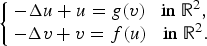
The aim of this paper is to study Hamiltonian elliptic system of the form0.1
where Ω ⊂ ℝ2 is a bounded domain. In the second place, we present existence results for the following stationary Schrödinger systems defined in the whole plane0.2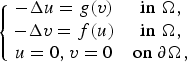 $$\left\{ {\matrix{ {-\Delta u = g(v)} & {{\rm in}\;\Omega,} \cr {-\Delta v = f(u)} & {{\rm in}\;\Omega,} \cr {u = 0,v = 0} & {{\rm on}\;\partial \Omega,} \cr } } \right.$$We assume that the nonlinearities f, g have critical growth in the sense of Trudinger–Moser. By using a suitable variational framework based on the generalized Nehari manifold method, we obtain the existence of ground state solutions of both systems (0.1) and (0.2).
 $$\left\{ {\matrix{ {-\Delta u + u = g(v)\;\;\;{\rm in}\;{\open R}^2,} \cr {-\Delta v + v = f(u)\;\;\;{\rm in}\;{\open R}^2.} \cr } } \right.$$
PARABOLIC KAZHDAN–LUSZTIG BASIS, SCHUBERT CLASSES, AND EQUIVARIANT ORIENTED COHOMOLOGY
- Part of
-
- Journal:
- Journal of the Institute of Mathematics of Jussieu / Volume 19 / Issue 6 / November 2020
- Published online by Cambridge University Press:
- 11 February 2019, pp. 1889-1929
- Print publication:
- November 2020
-
- Article
- Export citation
-
We study the equivariant oriented cohomology ring $\mathtt{h}_{T}(G/P)$ of partial flag varieties using the moment map approach. We define the right Hecke action on this cohomology ring, and then prove that the respective Bott–Samelson classes in $\mathtt{h}_{T}(G/P)$ can be obtained by applying this action to the fundamental class of the identity point, hence generalizing previously known results of Chow groups by Brion, Knutson, Peterson, Tymoczko and others. Our main result concerns the equivariant oriented cohomology theory $\mathfrak{h}$ corresponding to the 2-parameter Todd genus. We give a new interpretation of Deodhar’s parabolic Kazhdan–Lusztig basis, i.e., we realize it as some cohomology classes (the parabolic Kazhdan–Lusztig (KL) Schubert classes) in $\mathfrak{h}_{T}(G/P)$. We make a positivity conjecture, and a conjecture about the relationship of such classes with smoothness of Schubert varieties. We also prove the latter in several special cases.


On the Ideal Case of a Conjecture of Huneke and Wiegand
- Part of
-
- Journal:
- Proceedings of the Edinburgh Mathematical Society / Volume 62 / Issue 3 / August 2019
- Published online by Cambridge University Press:
- 11 February 2019, pp. 847-859
-
- Article
- Export citation
On the Schertz Conjecture
- Part of
-
- Journal:
- Proceedings of the Edinburgh Mathematical Society / Volume 62 / Issue 3 / August 2019
- Published online by Cambridge University Press:
- 08 February 2019, pp. 837-845
-
- Article
- Export citation
Ooid growth: Uniqueness of time-invariant, smooth shapes in 2D
- Part of
-
- Journal:
- European Journal of Applied Mathematics / Volume 31 / Issue 1 / February 2020
- Published online by Cambridge University Press:
- 08 February 2019, pp. 172-182
-
- Article
- Export citation
ORIENTED FLIP GRAPHS, NONCROSSING TREE PARTITIONS, AND REPRESENTATION THEORY OF TILING ALGEBRAS
- Part of
-
- Journal:
- Glasgow Mathematical Journal / Volume 62 / Issue 1 / January 2020
- Published online by Cambridge University Press:
- 07 February 2019, pp. 147-182
-
- Article
-
- You have access
- Export citation
Gerstenhaber Bracket on the Hochschild Cohomology via An Arbitrary Resolution
- Part of
-
- Journal:
- Proceedings of the Edinburgh Mathematical Society / Volume 62 / Issue 3 / August 2019
- Published online by Cambridge University Press:
- 06 February 2019, pp. 817-836
-
- Article
- Export citation
Improper colouring of graphs with no odd clique minor
- Part of
-
- Journal:
- Combinatorics, Probability and Computing / Volume 28 / Issue 5 / September 2019
- Published online by Cambridge University Press:
- 04 February 2019, pp. 740-754
-
- Article
- Export citation
Limit laws of planar maps with prescribed vertex degrees
- Part of
-
- Journal:
- Combinatorics, Probability and Computing / Volume 28 / Issue 4 / July 2019
- Published online by Cambridge University Press:
- 04 February 2019, pp. 519-541
-
- Article
- Export citation
