Refine listing
Actions for selected content:
387 results in 37Axx
Flexibility of Lyapunov exponents with respect to two classes of measures on the torus
- Part of
-
- Journal:
- Ergodic Theory and Dynamical Systems / Volume 42 / Issue 2 / February 2022
- Published online by Cambridge University Press:
- 31 May 2021, pp. 737-776
- Print publication:
- February 2022
-
- Article
- Export citation
-
We consider a smooth area-preserving Anosov diffeomorphism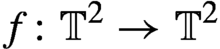 $f\colon \mathbb T^2\rightarrow \mathbb T^2$ homotopic to an Anosov automorphism L of $\mathbb T^2$. It is known that the positive Lyapunov exponent of f with respect to the normalized Lebesgue measure is less than or equal to the topological entropy of L, which, in addition, is less than or equal to the Lyapunov exponent of f with respect to the probability measure of maximal entropy. Moreover, the equalities only occur simultaneously. We show that these are the only restrictions on these two dynamical invariants.

Thermodynamics of smooth models of pseudo–Anosov homeomorphisms
- Part of
-
- Journal:
- Ergodic Theory and Dynamical Systems / Volume 42 / Issue 3 / March 2022
- Published online by Cambridge University Press:
- 18 May 2021, pp. 1284-1326
- Print publication:
- March 2022
-
- Article
-
- You have access
- Open access
- Export citation
On one-sided topological conjugacy of topological Markov shifts and gauge actions on Cuntz–Krieger algebras
- Part of
-
- Journal:
- Ergodic Theory and Dynamical Systems / Volume 42 / Issue 8 / August 2022
- Published online by Cambridge University Press:
- 17 May 2021, pp. 2575-2582
- Print publication:
- August 2022
-
- Article
- Export citation
New examples of Bernoulli algebraic actions
- Part of
-
- Journal:
- Ergodic Theory and Dynamical Systems / Volume 42 / Issue 9 / September 2022
- Published online by Cambridge University Press:
- 17 May 2021, pp. 2923-2934
- Print publication:
- September 2022
-
- Article
-
- You have access
- Open access
- Export citation
-
We give an example of a principal algebraic action of the non-commutative free group ${\mathbb {F}}$ of rank two by automorphisms of a connected compact abelian group for which there is an explicit measurable isomorphism with the full Bernoulli 3-shift action of ${\mathbb {F}}$. The isomorphism is defined using homoclinic points, a method that has been used to construct symbolic covers of algebraic actions. To our knowledge, this is the first example of a Bernoulli algebraic action of ${\mathbb {F}}$ without an obvious independent generator. Our methods can be generalized to a large class of acting groups.


Geodesic planes in geometrically finite acylindrical $3$-manifolds
- Part of
-
- Journal:
- Ergodic Theory and Dynamical Systems / Volume 42 / Issue 2 / February 2022
- Published online by Cambridge University Press:
- 04 May 2021, pp. 514-553
- Print publication:
- February 2022
-
- Article
- Export citation
-
Let M be a geometrically finite acylindrical hyperbolic $3$-manifold and let $M^*$ denote the interior of the convex core of M. We show that any geodesic plane in $M^*$ is either closed or dense, and that there are only countably many closed geodesic planes in $M^*$. These results were obtained by McMullen, Mohammadi and Oh [Geodesic planes in hyperbolic 3-manifolds. Invent. Math. 209 (2017), 425–461; Geodesic planes in the convex core of an acylindrical 3-manifold. Duke Math. J., to appear, Preprint, 2018, arXiv:1802.03853] when M is convex cocompact. As a corollary, we obtain that when M covers an arithmetic hyperbolic $3$-manifold $M_0$, the topological behavior of a geodesic plane in $M^*$ is governed by that of the corresponding plane in $M_0$. We construct a counterexample of this phenomenon when $M_0$ is non-arithmetic.


Pointwise convergence of certain continuous-time double ergodic averages
- Part of
-
- Journal:
- Ergodic Theory and Dynamical Systems / Volume 42 / Issue 7 / July 2022
- Published online by Cambridge University Press:
- 04 May 2021, pp. 2270-2280
- Print publication:
- July 2022
-
- Article
- Export citation
-
We prove almost everywhere convergence of continuous-time quadratic averages with respect to two commuting $\mathbb {R}$-actions, coming from a single jointly measurable measure-preserving $\mathbb {R}^2$-action on a probability space. The key ingredient of the proof comes from recent work on multilinear singular integrals; more specifically, from the study of a curved model for the triangular Hilbert transform.


Infinitely presented permutation stable groups and invariant random subgroups of metabelian groups
- Part of
-
- Journal:
- Ergodic Theory and Dynamical Systems / Volume 42 / Issue 6 / June 2022
- Published online by Cambridge University Press:
- 30 April 2021, pp. 2028-2063
- Print publication:
- June 2022
-
- Article
- Export citation
Rigidity of joinings for some measure-preserving systems
- Part of
-
- Journal:
- Ergodic Theory and Dynamical Systems / Volume 42 / Issue 2 / February 2022
- Published online by Cambridge University Press:
- 30 April 2021, pp. 665-690
- Print publication:
- February 2022
-
- Article
- Export citation
-
We introduce two properties: strong R-property and $C(q)$-property, describing a special way of divergence of nearby trajectories for an abstract measure-preserving system. We show that systems satisfying the strong R-property are disjoint (in the sense of Furstenberg) with systems satisfying the $C(q)$-property. Moreover, we show that if $u_t$ is a unipotent flow on $G/\Gamma $ with $\Gamma $ irreducible, then $u_t$ satisfies the $C(q)$-property provided that $u_t$ is not of the form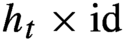 $h_t\times \operatorname {id}$, where $h_t$ is the classical horocycle flow. Finally, we show that the strong R-property holds for all (smooth) time changes of horocycle flows and non-trivial time changes of bounded-type Heisenberg nilflows.


Unicorn paths and hyperfiniteness for the mapping class group
- Part of
-
- Journal:
- Forum of Mathematics, Sigma / Volume 9 / 2021
- Published online by Cambridge University Press:
- 29 April 2021, e36
-
- Article
-
- You have access
- Open access
- Export citation
Entropy dimension for deterministic walks in random sceneries
- Part of
-
- Journal:
- Ergodic Theory and Dynamical Systems / Volume 42 / Issue 6 / June 2022
- Published online by Cambridge University Press:
- 29 April 2021, pp. 1908-1925
- Print publication:
- June 2022
-
- Article
- Export citation
-
Entropy dimension is an entropy-type quantity which takes values in $[0,1]$ and classifies different levels of intermediate growth rate of complexity for dynamical systems. In this paper, we consider the complexity of skew products of irrational rotations with Bernoulli systems, which can be viewed as deterministic walks in random sceneries, and show that this class of models can have any given entropy dimension by choosing suitable rotations for the base system.

On uniqueness of invariant measures for random walks on ${\textup {HOMEO}}^+(\mathbb R)$
- Part of
-
- Journal:
- Ergodic Theory and Dynamical Systems / Volume 42 / Issue 7 / July 2022
- Published online by Cambridge University Press:
- 29 April 2021, pp. 2207-2238
- Print publication:
- July 2022
-
- Article
-
- You have access
- Open access
- Export citation
-
We consider random walks on the group of orientation-preserving homeomorphisms of the real line ${\mathbb R}$. In particular, the fundamental question of uniqueness of an invariant measure of the generated process is raised. This problem was studied by Choquet and Deny [Sur l’équation de convolution $\mu = \mu * \sigma $. C. R. Acad. Sci. Paris 250 (1960), 799–801] in the context of random walks generated by translations of the line. Nowadays the answer is quite well understood in general settings of strongly contractive systems. Here we focus on a broader class of systems satisfying the conditions of recurrence, contraction and unbounded action. We prove that under these conditions the random process possesses a unique invariant Radon measure on ${\mathbb R}$. Our work can be viewed as following on from Babillot et al [The random difference equation $X_n=A_n X_{n-1}+B_n$ in the critical case. Ann. Probab. 25(1) (1997), 478–493] and Deroin et al [Symmetric random walk on $\mathrm {HOMEO}^{+}(\mathbb {R})$. Ann. Probab. 41(3B) (2013), 2066–2089].


Arithmeticity of hyperbolic $3$-manifolds containing infinitely many totally geodesic surfaces
- Part of
-
- Journal:
- Ergodic Theory and Dynamical Systems / Volume 42 / Issue 3 / March 2022
- Published online by Cambridge University Press:
- 22 April 2021, pp. 1188-1219
- Print publication:
- March 2022
-
- Article
- Export citation
-
We prove that if a closed hyperbolic $3$-manifold M contains infinitely many totally geodesic surfaces, then M is arithmetic.


Margulis–Ruelle inequality for general manifolds
- Part of
-
- Journal:
- Ergodic Theory and Dynamical Systems / Volume 42 / Issue 6 / June 2022
- Published online by Cambridge University Press:
- 22 April 2021, pp. 2064-2079
- Print publication:
- June 2022
-
- Article
- Export citation
Dynamical Borel–Cantelli lemma for recurrence theory
- Part of
-
- Journal:
- Ergodic Theory and Dynamical Systems / Volume 42 / Issue 6 / June 2022
- Published online by Cambridge University Press:
- 12 April 2021, pp. 1994-2008
- Print publication:
- June 2022
-
- Article
- Export citation
-
We study the dynamical Borel–Cantelli lemma for recurrence sets in a measure-preserving dynamical system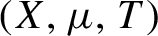 $(X, \mu , T)$ with a compatible metric d. We prove that under some regularity conditions, the $\mu $-measure of the following set $$\begin{align*}R(\psi)= \{x\in X : d(T^n x, x) < \psi(n)\ \text{for infinitely many}\ n\in\mathbb{N} \} \end{align*}$$obeys a zero–full law according to the convergence or divergence of a certain series, where $\psi :\mathbb {N}\to \mathbb {R}^+$. The applications of our main theorem include the Gauss map, $\beta $-transformation and homogeneous self-similar sets.


There are no deviations for the ergodic averages of Giulietti–Liverani horocycle flows on the two-torus
- Part of
-
- Journal:
- Ergodic Theory and Dynamical Systems / Volume 42 / Issue 2 / February 2022
- Published online by Cambridge University Press:
- 18 March 2021, pp. 500-513
- Print publication:
- February 2022
-
- Article
- Export citation
-
We show that the ergodic integrals for the horocycle flow on the two-torus associated by Giulietti and Liverani with an Anosov diffeomorphism either grow linearly or are bounded; in other words, there are no deviations. For this, we use the topological invariance of the Artin–Mazur zeta function to exclude resonances outside the open unit disc. Transfer operators acting on suitable spaces of anisotropic distributions and their Ruelle determinants are the key tools used in the proof. As a bonus, we show that for any $C^\infty $ Anosov diffeomorphism F on the two-torus, the correlations for the measure of maximal entropy and $C^\infty $ observables decay with a rate strictly smaller than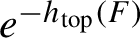 $e^{-h_{\mathrm {top}}(F)}$. We compare our results with very recent related work of Forni.


Non-dense orbits on homogeneous spaces and applications to geometry and number theory
- Part of
-
- Journal:
- Ergodic Theory and Dynamical Systems / Volume 42 / Issue 4 / April 2022
- Published online by Cambridge University Press:
- 18 March 2021, pp. 1327-1372
- Print publication:
- April 2022
-
- Article
- Export citation
-
Let G be a Lie group, let $\Gamma \subset G$ be a discrete subgroup, let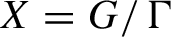 $X=G/\Gamma $ and let f be an affine map from X to itself. We give conditions on a submanifold Z of X that guarantee that the set of points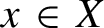 $x\in X$ with f-trajectories avoiding Z is hyperplane absolute winning (a property which implies full Hausdorff dimension and is stable under countable intersections). A similar result is proved for one-parameter actions on X. This has applications in constructing exceptional geodesics on locally symmetric spaces and in non-density of the set of values of certain functions at integer points.
Subsystems of transitive subshifts with linear complexity
- Part of
-
- Journal:
- Ergodic Theory and Dynamical Systems / Volume 42 / Issue 6 / June 2022
- Published online by Cambridge University Press:
- 17 March 2021, pp. 1967-1993
- Print publication:
- June 2022
-
- Article
-
- You have access
- Open access
- Export citation
Groups with infinite FC-center have the Schmidt property
- Part of
-
- Journal:
- Ergodic Theory and Dynamical Systems / Volume 42 / Issue 5 / May 2022
- Published online by Cambridge University Press:
- 17 March 2021, pp. 1662-1707
- Print publication:
- May 2022
-
- Article
-
- You have access
- Open access
- Export citation
Generic non-singular Poisson suspension is of type III1
- Part of
-
- Journal:
- Ergodic Theory and Dynamical Systems / Volume 42 / Issue 4 / April 2022
- Published online by Cambridge University Press:
- 05 March 2021, pp. 1415-1445
- Print publication:
- April 2022
-
- Article
- Export citation
-
It is shown that for a dense $G_\delta $-subset of the subgroup of non-singular transformations (of a standard infinite $\sigma $-finite measure space) whose Poisson suspensions are non-singular, the corresponding Poisson suspensions are ergodic and of Krieger’s type III1.


A piecewise smooth Fermi–Ulam pingpong with potential
- Part of
-
- Journal:
- Ergodic Theory and Dynamical Systems / Volume 42 / Issue 5 / May 2022
- Published online by Cambridge University Press:
- 04 March 2021, pp. 1847-1870
- Print publication:
- May 2022
-
- Article
- Export citation
-
In this paper we study a Fermi–Ulam model where a pingpong ball bounces elastically against a periodically oscillating platform in a gravity field. We assume that the platform motion $f(t)$ is 1-periodic and piecewise $C^3$ with a singularity, $\dot {f}(0+)\ne \dot {f}(1-)$. If the second derivative $\ddot {f}(t)$ of the platform motion is either always positive or always less than $-g$, where g is the gravitational constant, then the escaping orbits constitute a null set and the system is recurrent. However, under these assumptions, escaping orbits co-exist with bounded orbits at arbitrarily high energy levels.


