Refine search
Actions for selected content:
238152 results in Physics and Astronomy
Effect of external magnetic field and dust grains on the properties of ion-acoustic waves
-
- Journal:
- Journal of Plasma Physics / Volume 89 / Issue 5 / October 2023
- Published online by Cambridge University Press:
- 12 September 2023, 905890502
-
- Article
- Export citation
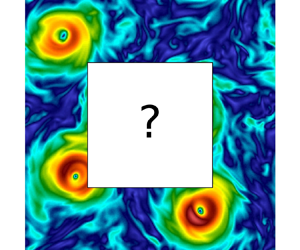
Multi-scale reconstruction of turbulent rotating flows with proper orthogonal decomposition and generative adversarial networks
-
- Journal:
- Journal of Fluid Mechanics / Volume 971 / 25 September 2023
- Published online by Cambridge University Press:
- 12 September 2023, A3
-
- Article
-
- You have access
- Open access
- HTML
- Export citation
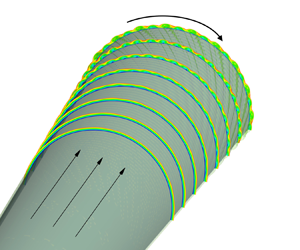
Effect of cone rotation on the nonlinear evolution of Mack modes in supersonic boundary layers
-
- Journal:
- Journal of Fluid Mechanics / Volume 971 / 25 September 2023
- Published online by Cambridge University Press:
- 12 September 2023, A4
-
- Article
- Export citation
-
In this paper, we present a systematic study of the nonlinear evolution of the travelling Mack modes in a Mach 3 supersonic boundary layer over a rotating cone with a $7^{\circ }$ half-apex angle using the nonlinear parabolic stability equation (NPSE). To quantify the effect of cone rotation, six cases with different rotation rates are considered, and from the same streamwise position, a pair of oblique Mack modes with the same frequency but opposite circumferential wavenumbers are introduced as the initial perturbations for NPSE calculations. As the angular rotation rate $\varOmega$ increases such that $\bar \varOmega$ (defined as the ratio of the rotation speed of the cone to the streamwise velocity at the boundary-layer edge) varies from 0 to $O(1)$, three distinguished nonlinear regimes appear, namely the oblique-mode breakdown, the generalised fundamental resonance and the centrifugal-instability-induced transition. For each regime, the mechanisms for the amplifications of the streak mode and the harmonic travelling waves are explained in detail, and the dominant role of the streak mode in triggering the breakdown of the laminar flow is particularly highlighted. Additionally, from the linear stability theory, the dominant travelling mode undergoes the greatest amplification for a moderate $\varOmega$, which, according to the $e^N$ transition-prediction method, indicates premature transition to turbulence. However, this is in contrast to the NPSE results, in which a delay of the transition onset is observed for a moderate $\varOmega$. Such a disagreement is attributed to the different nonlinear regimes appearing for different rotation rates. Therefore, the traditional transition-prediction method based on the linear instability should be carefully employed if multiple nonlinear regimes may appear.


Understanding trade-offs in stellarator design with multi-objective optimization
-
- Journal:
- Journal of Plasma Physics / Volume 89 / Issue 5 / October 2023
- Published online by Cambridge University Press:
- 12 September 2023, 905890503
-
- Article
-
- You have access
- Open access
- HTML
- Export citation
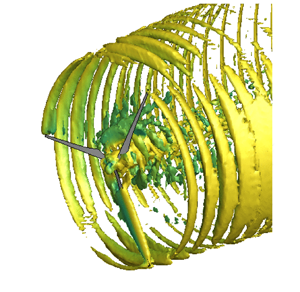
Characterization of energy transfer and triadic interactions of coherent structures in turbulent wakes
-
- Journal:
- Journal of Fluid Mechanics / Volume 971 / 25 September 2023
- Published online by Cambridge University Press:
- 12 September 2023, A7
-
- Article
- Export citation
-
Turbulent wakes are often characterized by dominant coherent structures over disparate scales. Dynamics of their behaviour can be attributed to interscale energy dynamics and triadic interactions. We develop a methodology to quantify the dynamics of kinetic energy of specific scales. Coherent motions are characterized by the triple decomposition and used to define mean, coherent and random velocity. Specific scales of coherent structures are identified through dynamic mode decomposition, whereby the total coherent velocity is separated into a set of velocities classified by frequency. The coherent kinetic energy of a specific scale is defined by a frequency triad of scale-specific velocities. Equations for the balance of scale-specific coherent kinetic energy are derived to interpret interscale dynamics. The methodology is demonstrated on three wake flows: (i) ${Re}=175$ flow over a cylinder; (ii) a direct numerical simulation of ${Re}=3900$ flow over a cylinder; and (iii) a large-eddy simulation of a utility-scale wind turbine. The cylinder wake cases show that energy transfer starts with vortex shedding and redistributes energy through resonance of higher harmonics. The scale-specific coherent kinetic energy balance quantifies the distribution of transport and transfer among coherent, mean and random scales. The coherent kinetic energy in the rotor scales and the hub vortex scale in the wind turbine interact to produce new scales. The analysis reveals that vortices at the blade root interact with the hub vortex formed behind the nacelle, which has implications for the proliferation of scales in the downwind near wake.


SimSpin v2.6.0—constructing synthetic spectral IFU cubes for comparison with observational surveys
-
- Journal:
- Publications of the Astronomical Society of Australia / Volume 40 / 2023
- Published online by Cambridge University Press:
- 11 September 2023, e048
-
- Article
-
- You have access
- Open access
- HTML
- Export citation
Multi-cell trap developments towards the accumulation and confinement of large quantities of positrons
- Part of
-
- Journal:
- Journal of Plasma Physics / Volume 89 / Issue 5 / October 2023
- Published online by Cambridge University Press:
- 08 September 2023, 935890501
-
- Article
-
- You have access
- Open access
- HTML
- Export citation
-
The multi-cell Penning–Malmberg trap concept has been proposed as a way to accumulate and confine unprecedented numbers of antiparticles, an attractive but challenging goal. We report on the commissioning and first results (using electron plasmas) of the World's second prototype of such a trap, which builds and improves on the findings of its predecessor. Reliable alignment of both ‘master’ and ‘storage’ cells with the axial magnetic field has enabled confinement of plasmas, without use of the ‘rotating wall’ (RW) compression technique, for over an hour in the master cell and tens of seconds in the storage cells. In the master cell, attachment to background neutrals is found to be the main source of charge loss, with an overall charge-confinement time of 8.6 h. Transfer to on-axis and off-axis storage cells has been demonstrated, with an off-axis transfer rate of $50\,\%$
 of the initial particles, and confinement times in the storage cells in the tens of seconds (again, without RW compression). This, in turn, has enabled the first simultaneous plasma confinement in two off-axis cells, a milestone for the multi-cell trap concept.

Numerical simulations of relativistic jets
- Part of
-
- Journal:
- Journal of Plasma Physics / Volume 89 / Issue 5 / October 2023
- Published online by Cambridge University Press:
- 08 September 2023, 915890501
-
- Article
-
- You have access
- Open access
- HTML
- Export citation
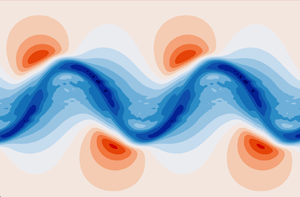
A comparison of methods to balance geophysical flows
-
- Journal:
- Journal of Fluid Mechanics / Volume 971 / 25 September 2023
- Published online by Cambridge University Press:
- 08 September 2023, A2
-
- Article
-
- You have access
- Open access
- HTML
- Export citation
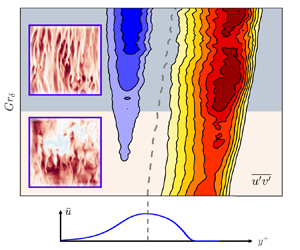
From classical to ultimate heat fluxes for convection at a vertical wall
-
- Journal:
- Journal of Fluid Mechanics / Volume 970 / 10 September 2023
- Published online by Cambridge University Press:
- 08 September 2023, F1
-
- Article
-
- You have access
- Open access
- HTML
- Export citation
Impact of neutrals on the plasma screening length
-
- Journal:
- Journal of Plasma Physics / Volume 89 / Issue 5 / October 2023
- Published online by Cambridge University Press:
- 08 September 2023, 905890501
-
- Article
-
- You have access
- Open access
- HTML
- Export citation
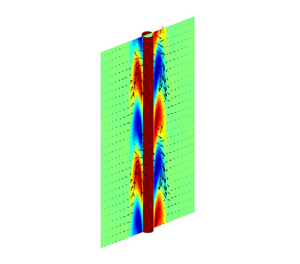
Local linear stability of plumes generated along vertical heated cylinders in stratified environments
-
- Journal:
- Journal of Fluid Mechanics / Volume 971 / 25 September 2023
- Published online by Cambridge University Press:
- 08 September 2023, A1
-
- Article
-
- You have access
- Open access
- HTML
- Export citation
Planetary biotechnospheres, biotechnosignatures and the search for extraterrestrial intelligence
-
- Journal:
- International Journal of Astrobiology / Volume 22 / Issue 6 / December 2023
- Published online by Cambridge University Press:
- 08 September 2023, pp. 663-695
-
- Article
-
- You have access
- Open access
- HTML
- Export citation

Quantum Mechanics with Concept Maps
-
- Published online:
- 07 September 2023
- Print publication:
- 21 September 2023
-
- Textbook
- Export citation
Deep learning for morphological identification of extended radio galaxies using weak labels
-
- Journal:
- Publications of the Astronomical Society of Australia / Volume 40 / 2023
- Published online by Cambridge University Press:
- 07 September 2023, e044
-
- Article
-
- You have access
- HTML
- Export citation
-
The present work discusses the use of a weakly-supervised deep learning algorithm that reduces the cost of labelling pixel-level masks for complex radio galaxies with multiple components. The algorithm is trained on weak class-level labels of radio galaxies to get class activation maps (CAMs). The CAMs are further refined using an inter-pixel relations network (IRNet) to get instance segmentation masks over radio galaxies and the positions of their infrared hosts. We use data from the Australian Square Kilometre Array Pathfinder (ASKAP) telescope, specifically the Evolutionary Map of the Universe (EMU) Pilot Survey, which covered a sky area of 270 square degrees with an RMS sensitivity of 25–35 $\mu$Jy beam $^{-1}$. We demonstrate that weakly-supervised deep learning algorithms can achieve high accuracy in predicting pixel-level information, including masks for the extended radio emission encapsulating all galaxy components and the positions of the infrared host galaxies. We evaluate the performance of our method using mean Average Precision (mAP) across multiple classes at a standard intersection over union (IoU) threshold of 0.5. We show that the model achieves a mAP $_{50}$ of 67.5% and 76.8% for radio masks and infrared host positions, respectively. The network architecture can be found at the following link: https://github.com/Nikhel1/Gal-CAM


Detection of dsrAB operon expression in Desulfotalea psychrophila cells subjected to simulated Martian conditions of temperature and regolith's sulphate minerals composition
-
- Journal:
- International Journal of Astrobiology / Volume 22 / Issue 6 / December 2023
- Published online by Cambridge University Press:
- 07 September 2023, pp. 641-662
-
- Article
-
- You have access
- Open access
- HTML
- Export citation
Galois groups and prime divisors in random quadratic sequences
- Part of
-
- Journal:
- Mathematical Proceedings of the Cambridge Philosophical Society / Volume 176 / Issue 1 / January 2024
- Published online by Cambridge University Press:
- 07 September 2023, pp. 95-122
- Print publication:
- January 2024
-
- Article
-
- You have access
- Open access
- HTML
- Export citation
-
Given a set $S=\{x^2+c_1,\dots,x^2+c_s\}$ defined over a field and an infinite sequence $\gamma$ of elements of S, one can associate an arboreal representation to $\gamma$, generalising the case of iterating a single polynomial. We study the probability that a random sequence $\gamma$ produces a “large-image” representation, meaning that infinitely many subquotients in the natural filtration are maximal. We prove that this probability is positive for most sets S defined over $\mathbb{Z}[t]$, and we conjecture a similar positive-probability result for suitable sets over $\mathbb{Q}$. As an application of large-image representations, we prove a density-zero result for the set of prime divisors of some associated quadratic sequences. We also consider the stronger condition of the representation being finite-index, and we classify all S possessing a particular kind of obstruction that generalises the post-critically finite case in single-polynomial iteration.


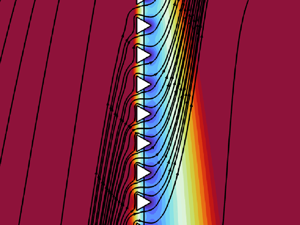
Homogenization theory captures macroscopic flow discontinuities across Janus membranes
-
- Journal:
- Journal of Fluid Mechanics / Volume 970 / 10 September 2023
- Published online by Cambridge University Press:
- 07 September 2023, A39
-
- Article
-
- You have access
- Open access
- HTML
- Export citation
Dirichlet law for factorisation of integers, polynomials and permutations
- Part of
-
- Journal:
- Mathematical Proceedings of the Cambridge Philosophical Society / Volume 175 / Issue 3 / November 2023
- Published online by Cambridge University Press:
- 06 September 2023, pp. 649-676
- Print publication:
- November 2023
-
- Article
- Export citation
-
Let $k \geqslant 2$ be an integer. We prove that factorisation of integers into k parts follows the Dirichlet distribution $\mathrm{Dir}\left({1}/{k},\ldots,{1}/{k}\right)$ by multidimensional contour integration, thereby generalising the Deshouillers–Dress–Tenenbaum (DDT) arcsine law on divisors where $k=2$. The same holds for factorisation of polynomials or permutations. Dirichlet distribution with arbitrary parameters can be modelled similarly.


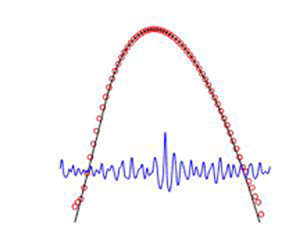
A new probability density function for the surface elevation in irregular seas
-
- Journal:
- Journal of Fluid Mechanics / Volume 970 / 10 September 2023
- Published online by Cambridge University Press:
- 06 September 2023, A38
-
- Article
-
- You have access
- Open access
- HTML
- Export citation
