Refine search
Actions for selected content:
238160 results in Physics and Astronomy
Instabilities in the wake of an isolated cylindrical roughness element
-
- Journal:
- Journal of Fluid Mechanics / Volume 960 / 10 April 2023
- Published online by Cambridge University Press:
- 30 March 2023, A8
-
- Article
-
- You have access
- Open access
- HTML
- Export citation
-
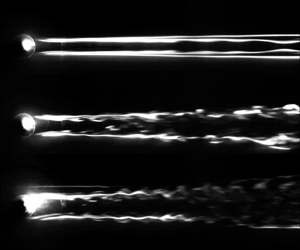
The instability mechanism behind a geometrically simple cylindrical roughness element continues to be a challenging topic in fluid mechanics. Considerable progress has been made in understanding the phenomena in recent years, but more research is needed to predict the temporal nature and spatial structure of the dominant instability in a given flow configuration. This is of particular interest, as these instabilities dictate the transition to turbulence and thus are significant for large-scale effects such as skin friction drag. A smoke-flow visualization study with a large variation of parameters, featuring a cylindrical roughness element connected to a linear traverse, has been performed. Results show good agreement with previous investigations and provide further insights into the stability properties, revealing several unexpected effects. For a low roughness aspect ratio $\eta$, no global instability is detected even at the highest roughness Reynolds number $Re_{kk}$, whereas a high aspect ratio indicates a delay in the onset of instability. From the acquired visualizations, we constructed the, so far, richest instability diagram of the wake behind an isolated roughness element in the $Re_{kk}\unicode{x2013}\eta$ space, sampled in the same measurement campaign. Furthermore, information regarding the dominant frequency in the wake can be extracted from the visualization images. Our results suggest a new scaling of the frequency as the velocity is increased. Finally, it is shown that the dominant frequency in a certain flow regime can be well predicted using a Strouhal number based on the cylinder diameter and the roughness velocity.


Effects of physical property changes of expelled respiratory liquid on atomization morphology
-
- Journal:
- Journal of Fluid Mechanics / Volume 960 / 10 April 2023
- Published online by Cambridge University Press:
- 30 March 2023, A10
-
- Article
-
- You have access
- Open access
- HTML
- Export citation
Asymmetry of motion: vortex rings crossing a density gradient
-
- Journal:
- Journal of Fluid Mechanics / Volume 960 / 10 April 2023
- Published online by Cambridge University Press:
- 30 March 2023, R1
-
- Article
-
- You have access
- Open access
- HTML
- Export citation
Mixing, entrainment and energetics of gravity currents released from two-layer stratified locks
-
- Journal:
- Journal of Fluid Mechanics / Volume 960 / 10 April 2023
- Published online by Cambridge University Press:
- 29 March 2023, A1
-
- Article
-
- You have access
- Open access
- HTML
- Export citation
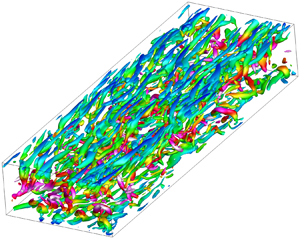
Artificial-neural-network-based nonlinear algebraic models for large-eddy simulation of compressible wall-bounded turbulence
-
- Journal:
- Journal of Fluid Mechanics / Volume 960 / 10 April 2023
- Published online by Cambridge University Press:
- 29 March 2023, A4
-
- Article
- Export citation
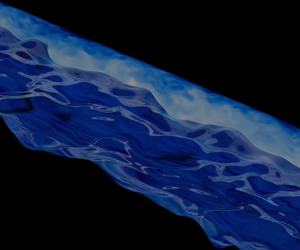
Propagation of capillary waves in two-layer oil–water turbulent flow
-
- Journal:
- Journal of Fluid Mechanics / Volume 960 / 10 April 2023
- Published online by Cambridge University Press:
- 29 March 2023, A5
-
- Article
-
- You have access
- Open access
- HTML
- Export citation
-
We study the dynamics of capillary waves at the interface of a two-layer stratified turbulent channel flow. We use a combined pseudo-spectral/phase field method to solve for the turbulent flow in the two liquid layers and to track the dynamics of the liquid–liquid interface. The two liquid layers have same thickness and same density, but different viscosity. We vary the viscosity of the upper layer (two different values) to mimic a stratified oil–water flow. This allows us to study the interplay between inertial, viscous and surface tension forces in the absence of gravity. In the present set-up, waves are naturally forced by turbulence over a broad range of scales, from the larger scales, whose size is of order of the system scale, down to the smaller dissipative scales. After an initial transient, we observe the emergence of a stationary capillary wave regime, which we study by means of temporal and spatial spectra. The computed frequency and wavenumber power spectra of wave elevation are in line with previous experimental findings and can be explained in the frame of the weak wave turbulence theory. Finally, we show that the dispersion relation, which gives the frequency ( $\omega$) as a function of the wavenumber ( $k$), is in good agreement with the well-established theoretical prediction, $\omega (k) \sim k^{3/2}$.


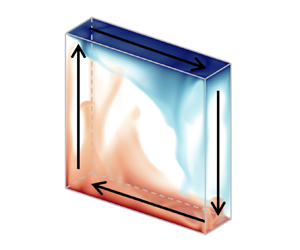
Wall-sheared thermal convection: heat transfer enhancement and turbulence relaminarization
-
- Journal:
- Journal of Fluid Mechanics / Volume 960 / 10 April 2023
- Published online by Cambridge University Press:
- 29 March 2023, A2
-
- Article
- Export citation
-
We studied the flow organization and heat transfer properties in two-dimensional and three-dimensional Rayleigh–Bénard cells that are imposed with different types of wall shear. The external wall shear is added with the motivation of manipulating flow mode to control heat transfer efficiency. We imposed three types of wall shear that may facilitate the single-roll, the horizontally stacked double-roll, and the vertically stacked double-roll flow modes, respectively. Direct numerical simulations are performed for fixed Rayleigh number $Ra = 10^{8}$ and fixed Prandtl number $Pr = 5.3$, while the wall-shear Reynolds number ( $Re_{w}$) is in the range $60 \leqslant Re_{w} \leqslant 6000$. Generally, we found enhanced heat transfer efficiency and global flow strength with the increase of $Re_{w}$. However, even with the same magnitude of global flow strength, the heat transfer efficiency varies significantly when the cells are under different types of wall shear. An interesting finding is that by increasing the wall-shear strength, the thermal turbulence is relaminarized, and more surprisingly, the heat transfer efficiency in the laminar state is higher than that in the turbulent state. We found that the enhanced heat transfer efficiency at the laminar regime is due to the formation of more stable and stronger convection channels. We propose that the origin of thermal turbulence laminarization is the reduced amount of thermal plumes. Because plumes are mainly responsible for turbulent kinetic energy production, when the detached plumes are swept away by the wall shear, the reduced number of plumes leads to weaker turbulent kinetic energy production. We also quantify the efficiency of facilitating heat transport via external shearing, and find that for larger $Re_{w}$, the enhanced heat transfer efficiency comes at a price of a larger expenditure of mechanical energy.


On the mechanism of anomalous phenomena in current-carrying magnetized plasma
-
- Journal:
- Journal of Plasma Physics / Volume 89 / Issue 2 / April 2023
- Published online by Cambridge University Press:
- 27 March 2023, 935890201
-
- Article
- Export citation
Bayesian optimization of massive material injection for disruption mitigation in tokamaks
-
- Journal:
- Journal of Plasma Physics / Volume 89 / Issue 2 / April 2023
- Published online by Cambridge University Press:
- 27 March 2023, 905890204
-
- Article
-
- You have access
- Open access
- HTML
- Export citation
Automated control and optimization of laser-driven ion acceleration
- Part of
-
- Journal:
- High Power Laser Science and Engineering / Volume 11 / 2023
- Published online by Cambridge University Press:
- 27 March 2023, e35
-
- Article
-
- You have access
- Open access
- HTML
- Export citation

Quantum Phases of Matter
-
- Published online:
- 24 March 2023
- Print publication:
- 13 April 2023

What are the ultimate limits of photonic quantum memories?
-
- Journal:
- Research Directions: Quantum Technologies / Volume 1 / 2023
- Published online by Cambridge University Press:
- 24 March 2023, e8
-
- Article
-
- You have access
- Open access
- HTML
- Export citation
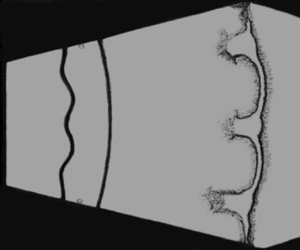
Divergent Richtmyer–Meshkov instability on a heavy gas layer
-
- Journal:
- Journal of Fluid Mechanics / Volume 959 / 25 March 2023
- Published online by Cambridge University Press:
- 24 March 2023, A37
-
- Article
- Export citation
-
Experiments on divergent Richtmyer–Meshkov (RM) instability at a heavy gas layer are performed in a specially designed shock tube. A novel soap-film technique is extended to generate gas layers with controllable thicknesses and shapes. An unperturbed gas layer is first examined and its two interfaces are found to move uniformly at the early stage and be decelerated later. A general one-dimensional theory applicable to an arbitrary-thickness layer is established, which gives a good prediction of the layer motion in divergent geometry. Then, six kinds of perturbed SF $_6$ layers with various thicknesses and shapes surrounded by air are examined. At the early stage, the amplitude growths of the inner interface for various-thickness layers collapse quite well and also can be predicted by the Bell model for cylindrical RM instability at a single interface, which indicates a negligible interface coupling effect. Later, a rarefaction wave accelerates the inner interface, causing a dramatic rise in the growth rate. It is found that a thicker gas layer will result in a larger extent that the rarefaction wave can promote the instability growth. A modified Bell model accounting for both Rayleigh–Taylor (RT) instability and interface stretching caused by a rarefaction wave is established, which well reproduces the quick instability growth. At late stages, reverberating waves inside the layer are negligibly weak such that the inner interface growth is dominated by RM instability and RT stability. The major factors driving the outer interface development are a compression wave and interface coupling. A new interface coupling phenomenon existing uniquely in divergent geometry caused by the gradual thinning of the gas layer is observed and also modelled.

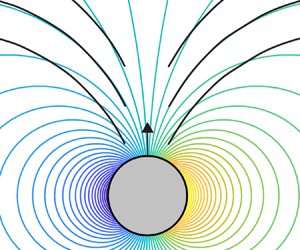
Boundary effects on ideal fluid forces and Kelvin's minimum energy theorem
-
- Journal:
- Journal of Fluid Mechanics / Volume 959 / 25 March 2023
- Published online by Cambridge University Press:
- 24 March 2023, A40
-
- Article
- Export citation
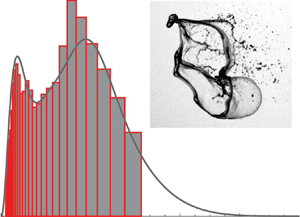
Size distribution of a drop undergoing breakup at moderate Weber numbers
-
- Journal:
- Journal of Fluid Mechanics / Volume 959 / 25 March 2023
- Published online by Cambridge University Press:
- 24 March 2023, A38
-
- Article
- Export citation

Oscillating viscous flow past a streamwise linear array of circular cylinders
-
- Journal:
- Journal of Fluid Mechanics / Volume 959 / 25 March 2023
- Published online by Cambridge University Press:
- 24 March 2023, A39
-
- Article
-
- You have access
- Open access
- HTML
- Export citation
Bayesian evidence-driven likelihood selection for sky-averaged 21-cm signal extraction
-
- Journal:
- Publications of the Astronomical Society of Australia / Volume 40 / 2023
- Published online by Cambridge University Press:
- 24 March 2023, e016
-
- Article
-
- You have access
- Open access
- HTML
- Export citation
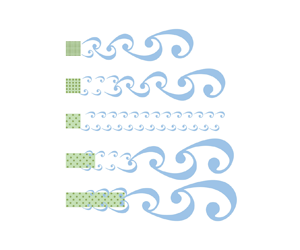
Experimental study on the combined effects of patch density and elongation on wake structure behind a rectangular porous patch
-
- Journal:
- Journal of Fluid Mechanics / Volume 959 / 25 March 2023
- Published online by Cambridge University Press:
- 24 March 2023, A36
-
- Article
-
- You have access
- Open access
- HTML
- Export citation

Supermassive Black Holes
-
- Published online:
- 23 March 2023
- Print publication:
- 30 March 2023
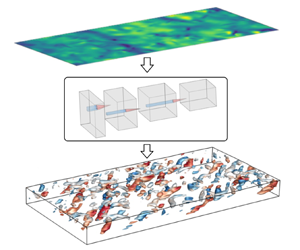
Reconstruction of three-dimensional turbulent flow structures using surface measurements for free-surface flows based on a convolutional neural network
-
- Journal:
- Journal of Fluid Mechanics / Volume 959 / 25 March 2023
- Published online by Cambridge University Press:
- 23 March 2023, A34
-
- Article
-
- You have access
- Open access
- HTML
- Export citation
