Refine search
Actions for selected content:
238152 results in Physics and Astronomy

Inundation, runup and flow velocity of wavemaker generated bores on a planar beach
-
- Journal:
- Journal of Fluid Mechanics / Volume 959 / 25 March 2023
- Published online by Cambridge University Press:
- 15 March 2023, A5
-
- Article
-
- You have access
- Open access
- HTML
- Export citation
Bubble–particle collisions in turbulence: insights from point-particle simulations
-
- Journal:
- Journal of Fluid Mechanics / Volume 959 / 25 March 2023
- Published online by Cambridge University Press:
- 15 March 2023, A6
-
- Article
-
- You have access
- Open access
- HTML
- Export citation
Linear stability analysis of purely elastic travelling-wave solutions in pressure-driven channel flows
-
- Journal:
- Journal of Fluid Mechanics / Volume 959 / 25 March 2023
- Published online by Cambridge University Press:
- 15 March 2023, R1
-
- Article
-
- You have access
- Open access
- HTML
- Export citation
FLM volume 958 Cover and Front matter
-
- Journal:
- Journal of Fluid Mechanics / Volume 958 / 10 March 2023
- Published online by Cambridge University Press:
- 15 March 2023, p. f1
-
- Article
-
- You have access
- Export citation
Viscous effects in Mach reflection of shock waves and passage to the inviscid limit
-
- Journal:
- Journal of Fluid Mechanics / Volume 959 / 25 March 2023
- Published online by Cambridge University Press:
- 15 March 2023, A2
-
- Article
- Export citation
-
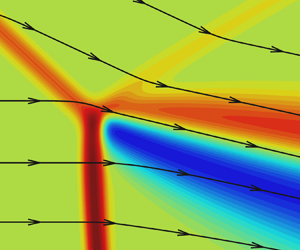
The influence of viscosity on the Mach reflection of shock waves in a steady flow of a monatomic gas is studied by solving the Navier–Stokes equations numerically. Based on the nested block grid refinement technique, the flow near the shock wave intersection is simulated, and its behaviour with increasing Reynolds number is studied. The computations are performed for the interaction of both strong (free-stream Mach number $M_\infty = 4$) and weak ( $M_\infty = 1.7$) shock waves. In the strong reflection of shock waves at all Reynolds numbers in the examined range, it is found that there exists a small-size zone behind the shock wave intersection where the flow parameters differ from those predicted by the Rankine–Hugoniot relations and hence deviate from the predictions of the inviscid three-shock theory. The structure of this zone is self-similar: in coordinates normalised to the mean free path of molecules in the free stream. The structure is identical at all Reynolds numbers considered in the study. As the Reynolds number increases, the size of this zone in physical coordinates decreases, but the maximum difference between the viscous and inviscid solutions in this zone remains constant, reaching approximately $10\,\%$ for pressure. In the weak reflection of shock waves, the flow structure behind the shock wave intersection is not self-similar, i.e. the flow fields at different Reynolds numbers do not coincide in the normalised coordinates, but converge, as the Reynolds number increases, to the parameters predicted by the inviscid three-shock theory.


Planetary geodynamics and age constraints on circumstellar habitable zones around main sequence stars
-
- Journal:
- International Journal of Astrobiology / Volume 22 / Issue 4 / August 2023
- Published online by Cambridge University Press:
- 14 March 2023, pp. 272-316
-
- Article
- Export citation
-
Planetary geodynamics may have an important influence over planetary habitability and the boundaries of the circumstellar habitable zone (CHZ) in space and time. To investigate this we use a minimal parameterized model of the co-evolution of the geosphere and atmosphere of Earth-like planets around F, G, K and M main sequence stars. We found the CHZ for the present Solar System located between 0.92 and 1.09 au for a 1.0 M$_{\oplus }$
 Earth-like planet, extendible to 1.36 au for a 4.0 M$_{\oplus }$
 planet. In the literature, the CHZ varies considerably in width and border location, but the outer edges tend to be more spread out than the inner edges, showing a higher difficulty in determining the outer edge. Planetary mass has a considerable effect on planetary geodynamics, with low-mass planets cooling down faster and being less capable of maintaining a rich carbon dioxide atmosphere for several billions of years. Age plays a particularly important role in the width of the CHZ as the CHZ contracts in both directions: from the inner edge (as stellar luminosity increases with time), and from the outer edge (as planetary heat flux and seafloor spreading rate decrease with time). This strongly affects long-lived habitability as the 5 Gyr continuous CHZ may be very narrow or even non-existent for low-mass planets (<0.5 M$_{\oplus }$
 ) and fast-evolving high-mass stars (>1.1 M$_{\odot }$
 ). Because of this, the mean age of habitable terrestrial planets in our Galaxy today may be younger than Earth's age. Our results suggest that the best targets for future surveys of biosphere signatures may be planets between 0.5 and 4.0 M$_{\oplus }$
 , in systems younger than the Solar System. These planets may present the widest and long-lived CHZ.


Separating large-scale superposition and modulation in turbulent channels
-
- Journal:
- Journal of Fluid Mechanics / Volume 958 / 10 March 2023
- Published online by Cambridge University Press:
- 14 March 2023, A37
-
- Article
-
- You have access
- Open access
- HTML
- Export citation
-
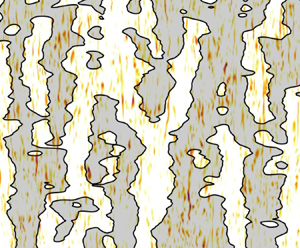
The presence of very-large-scale motions in wall-bounded turbulent flows is commonly associated with their footprint in the form of the superposition of the large scales at the wall and the additional amplitude modulation of small-scale near-wall turbulence. These two phenomena are currently understood to be interlinked, with the superposed large-scale velocity gradient causing the modulation of small-scale activity in the proximity of the wall. To challenge this idea, we devise a numerical strategy that selectively suppresses either superposition or amplitude modulation, in an effort to isolate and study the remaining phenomenon. Results from our direct numerical simulations indicate that a positive correlation between the amplitude of the small scales in the near-wall region and the large-scale signal in the outer flow persists even when near-wall large-scale motions are suppressed – i.e. in absence of superposition. Clearly, this kind of correlation cannot be caused by the near-wall large-scale velocity or its gradients, as both are absent. Conversely, when modulation is blocked, the near-wall footprints of the large scales seem to disappear. This study has been carried out on channel flows at friction Reynolds number $Re_\tau =1000$ in both standard simulation domains and minimal streamwise units (MSUs), where the streamwise fluctuation energy is enhanced. The consistency of the results obtained by the two approaches suggests that MSUs can capture correctly this kind of scale interaction at a much reduced cost.

Finite point configurations in products of thick Cantor sets and a robust nonlinear Newhouse Gap Lemma
- Part of
-
- Journal:
- Mathematical Proceedings of the Cambridge Philosophical Society / Volume 175 / Issue 2 / September 2023
- Published online by Cambridge University Press:
- 13 March 2023, pp. 285-301
- Print publication:
- September 2023
-
- Article
-
- You have access
- Open access
- HTML
- Export citation
-
In this paper we prove that the set $\{|x^1-x^2|,\dots,|x^k-x^{k+1}|\,{:}\,x^i\in E\}$ has non-empty interior in $\mathbb{R}^k$ when $E\subset \mathbb{R}^2$ is a Cartesian product of thick Cantor sets $K_1,K_2\subset\mathbb{R}$. We also prove more general results where the distance map $|x-y|$ is replaced by a function $\phi(x,y)$ satisfying mild assumptions on its partial derivatives. In the process, we establish a nonlinear version of the classic Newhouse Gap Lemma, and show that if $K_1,K_2, \phi$ are as above then there exists an open set S so that $\bigcap_{x \in S} \phi(x,K_1\times K_2)$ has non-empty interior.


Professor John Stewart Turner 11 January 1930 – 3 July 2022
-
- Journal:
- Journal of Fluid Mechanics / Volume 958 / 10 March 2023
- Published online by Cambridge University Press:
- 13 March 2023, E1
-
- Article
-
- You have access
- Open access
- HTML
- Export citation
Measurement of electron beam transverse slice emittance using a focused beamline
- Part of
-
- Journal:
- High Power Laser Science and Engineering / Volume 11 / 2023
- Published online by Cambridge University Press:
- 13 March 2023, e36
-
- Article
-
- You have access
- Open access
- HTML
- Export citation
Validation of magnetized gas-jet experiments to investigate the effects of an external magnetic field on laser-plasma instabilities
-
- Journal:
- Journal of Plasma Physics / Volume 89 / Issue 2 / April 2023
- Published online by Cambridge University Press:
- 13 March 2023, 175890201
-
- Article
-
- You have access
- Open access
- HTML
- Export citation
-
Laser-plasma instabilities (LPI) play a detrimental role in energy coupling to the target in inertial confinement fusion (ICF). The recent development of applied strong magnetic fields for use in ICF and laboratory astrophysics experiments has opened opportunities to investigate the role of external magnetic fields on LPIs. Recent numerical studies have shown that stimulated Raman scattering (SRS) can be mitigated by external magnetic fields in the kinetic regime of the instability and warrant systematic experimental studies to validate modelling. To this end, we design experiments at the OMEGA-EP laser facility to investigate the effect of an external perpendicular $B$
 -field of 5–30 T on the backscattered light spectrum from a gas-jet target. We present measurements from a proof-of-principle experiment, where the backward-SRS (BSRS) is in the kinetic regime, for which the magnetization is expected to produce the greatest effects on instability growth. New simulations motivated by this experiment are used to inform the proposal of an upgraded experimental design. Our simulation predictions show that the new design is suited to experimentally demonstrating BSRS mitigation by an external magnetic field, despite the magnetization effects on the hydrodynamics, as well as the inherent temporal and spatial variations in plasma conditions.


A Student's Guide to the Navier-Stokes Equations
-
- Published online:
- 10 March 2023
- Print publication:
- 09 February 2023
-
- Textbook
- Export citation
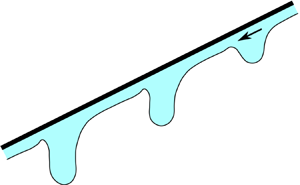
On the transition to dripping of an inverted liquid film
-
- Journal:
- Journal of Fluid Mechanics / Volume 958 / 10 March 2023
- Published online by Cambridge University Press:
- 10 March 2023, A46
-
- Article
-
- You have access
- Open access
- HTML
- Export citation
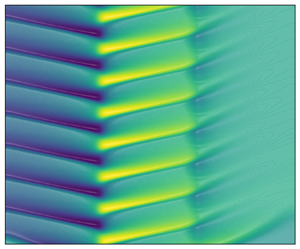
Comparative analysis of machine learning methods for active flow control
-
- Journal:
- Journal of Fluid Mechanics / Volume 958 / 10 March 2023
- Published online by Cambridge University Press:
- 10 March 2023, A39
-
- Article
- Export citation
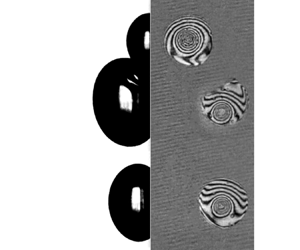
Microlayer dynamics of hydrodynamically interacting vapour bubbles in flow boiling
-
- Journal:
- Journal of Fluid Mechanics / Volume 958 / 10 March 2023
- Published online by Cambridge University Press:
- 10 March 2023, A44
-
- Article
- Export citation
Co-t-structures, cotilting and cotorsion pairs
- Part of
-
- Journal:
- Mathematical Proceedings of the Cambridge Philosophical Society / Volume 175 / Issue 1 / July 2023
- Published online by Cambridge University Press:
- 10 March 2023, pp. 89-106
- Print publication:
- July 2023
-
- Article
-
- You have access
- Open access
- HTML
- Export citation
-
Let $\textsf{T}$ be a triangulated category with shift functor $\Sigma \colon \textsf{T} \to \textsf{T}$. Suppose $(\textsf{A},\textsf{B})$ is a co-t-structure with coheart $\textsf{S} = \Sigma \textsf{A} \cap \textsf{B}$ and extended coheart $\textsf{C} = \Sigma^2 \textsf{A} \cap \textsf{B} = \textsf{S}* \Sigma \textsf{S}$, which is an extriangulated category. We show that there is a bijection between co-t-structures $(\textsf{A}^{\prime},\textsf{B}^{\prime})$ in $\textsf{T}$ such that $\textsf{A} \subseteq \textsf{A}^{\prime} \subseteq \Sigma \textsf{A}$ and complete cotorsion pairs in the extended coheart $\textsf{C}$. In the case that $\textsf{T}$ is Hom-finite, $\textbf{k}$-linear and Krull–Schmidt, we show further that there is a bijection between complete cotorsion pairs in $\textsf{C}$ and functorially finite torsion classes in $\textsf{mod}\, \textsf{S}$.


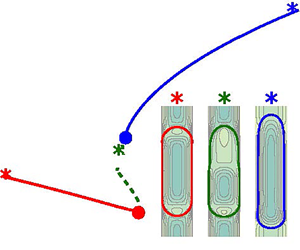
Global stability analysis of bubbles rising in a vertical capillary with an external flow
-
- Journal:
- Journal of Fluid Mechanics / Volume 958 / 10 March 2023
- Published online by Cambridge University Press:
- 10 March 2023, A45
-
- Article
-
- You have access
- Open access
- HTML
- Export citation
-
We study the linear stability of bubbles in a capillary tube under external flow. Yu et al. (J. Fluid Mech., vol. 911, 2021, pp. 1–19) showed that a rich variety of bubble dynamics occurs when a downward external flow is applied, opposing the buoyancy-driven ascent of the bubble. They found experimentally and numerically the existence of two branches of solutions that overlap over a finite range of the capillary number of the downward external flow in cases where the Reynolds number is small and the Bond number is larger than the critical value for which the bubble can rise spontaneously (Bretherton, J. Fluid Mech., vol. 10, issue 2, 1961, pp. 166–188). Furthermore, inertialess, symmetry-breaking steady-state shapes were found as the bubble transits near the tipping points of the solution branches. In this work, using steady axisymmetric simulations, we show that the reported multiplicity of solutions can be described using bifurcation diagrams with three branches of steady axisymmetric solutions and two limit points. The linear global stability analysis of the different branches of the stationary axisymmetric solutions demonstrates that the symmetry breaking is due to the development of three-dimensional instabilities with azimuthal wavenumber $|m|=1$.

Validation of PANS and effects of ground and wheel motion on the aerodynamic behaviours of a square-back van
-
- Journal:
- Journal of Fluid Mechanics / Volume 958 / 10 March 2023
- Published online by Cambridge University Press:
- 10 March 2023, A47
-
- Article
- Export citation
-
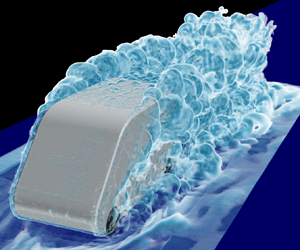
This paper presents a numerical investigation of the effects of the moving ground and rotating wheels on the turbulent flow around a 1/10 scaled square-back van model. A comprehensive comparison among the partially averaged Navier–Stokes (PANS), large eddy simulation (LES) and particle image velocimetry (PIV) involving the aerodynamic drag, the wake topology, the velocity and the Reynolds stress profiles in the wake region is conducted. The proper orthogonal decomposition (POD) and fast Fourier transform (FFT) are applied to the shear layers shedding from the trailing edges to comment on the coherent structures and their frequency content. The Reynolds number for both simulations and experiments is set to Re = 2.5 × 10⁵ based on the inlet velocity ${U_{inf}} = 9\;\textrm{m}\;{\textrm{s}^{ - 1}}$ and the width of the model W = 0.17 m. The results show that PANS accurately predicts the flow field measured in experiments and predicted by a resolved LES, even with a low-resolution grid. The superiority of the PANS approach could provide good guidance for industrial research in predicting the turbulent flow around the square-back van model with affordable computational grids. The ground and wheel motion mechanism on the aerodynamic forces has been revealed by analysing the surface pressure distribution, the wheels’ surrounding flow, the underbody flow characteristics and the turbulent wake structures. The effects of the ground and wheel motion on the frequency, evolution and development characteristics of the wake shear layers are analysed, thus providing relevant insights for future experimental investigations of square-back van models.
H2 bubble motion reversals during water electrolysis
-
- Journal:
- Journal of Fluid Mechanics / Volume 958 / 10 March 2023
- Published online by Cambridge University Press:
- 10 March 2023, A43
-
- Article
-
- You have access
- Open access
- HTML
- Export citation
-
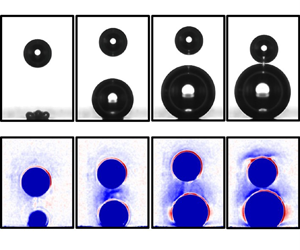
The dynamics of hydrogen bubbles produced by water electrolysis in an acidic electrolyte is studied using electrochemical and optical methods. A defined cyclic modulation of the electric potential is applied at a microelectrode to produce pairs of interacting H $_2$ bubbles in a controlled manner. Three scenarios of interactions are identified and studied systematically. The most prominent one consists of a sudden reversal in the motion of the first detached bubble, its return to the electrode, and finally its coalescence with the second bubble. Attested by Toepler's schlieren technique, an explanation of contactless motion reversal is provided by the competition between buoyancy and thermocapillary effects.

8 - Inflation
- from Part II - The Early Universe
-
- Book:
- A Course in Cosmology
- Published online:
- 31 March 2023
- Print publication:
- 09 March 2023, pp 136-172
-
- Chapter
- Export citation
