Refine search
Actions for selected content:
238160 results in Physics and Astronomy
Hyperspectral compressive wavefront sensing
- Part of
-
- Journal:
- High Power Laser Science and Engineering / Volume 11 / 2023
- Published online by Cambridge University Press:
- 21 March 2023, e32
-
- Article
-
- You have access
- Open access
- HTML
- Export citation
Role of the overshoot in the shock self-organization
-
- Journal:
- Journal of Plasma Physics / Volume 89 / Issue 2 / April 2023
- Published online by Cambridge University Press:
- 20 March 2023, 905890201
-
- Article
-
- You have access
- Open access
- HTML
- Export citation
Linear stability of monopolar vortices over isolated topography
-
- Journal:
- Journal of Fluid Mechanics / Volume 959 / 25 March 2023
- Published online by Cambridge University Press:
- 20 March 2023, A23
-
- Article
- Export citation
-
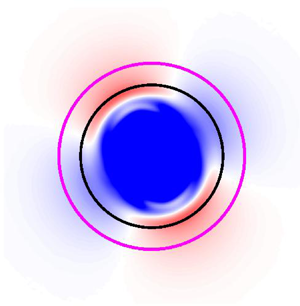
The linear instability of circular vortices over isolated topography in a homogeneous and inviscid fluid is examined for the shallow-water and quasi-geostrophic models in the $f$-plane. The eigenvalue problem associated with azimuthal disturbances is derived for arbitrary axisymmetric topographies, either submarine mountains or valleys. Amended Rayleigh and Fjørtoft theorems with topographic effects are given for barotropic instability, obtaining necessary criteria for instability when the potential vorticity gradient is zero somewhere in the domain. The onset of centrifugal instability is also discussed by deriving the Rayleigh circulation theorem with topography. The barotropic instability theorems are applied to a wide family of nonlinear, quasi-geostrophic solutions of circular vortices over axisymmetric topographic features. Flow instability depends mainly on the vortex/topography configuration, as well as on the vortex size in comparison with the width of the topography. It is found that anticyclones/mountains and cyclones/valleys may be unstable. In contrast, cyclone/mountain and anticyclone/valley configurations are stable. These statements are validated with two numerical methods. First, the generalised eigenvalue problem is solved to obtain the wavenumber of the fastest-growing perturbations. Second, the evolution of the vortices is simulated numerically to detect the development of linear perturbations. The numerical results show that for unstable vortices over narrow topographies, the fastest growth rate corresponds to mode $1$, which subsequently forms asymmetric dipolar structures. Over wide topographies, the fastest perturbations are mainly modes $1$ and $2$, depending on the topographic features.


Trailing-edge noise reduction through finlet-induced turbulence
-
- Journal:
- Journal of Fluid Mechanics / Volume 959 / 25 March 2023
- Published online by Cambridge University Press:
- 20 March 2023, A24
-
- Article
-
- You have access
- Open access
- HTML
- Export citation
Cargo carrying with an inertial squirmer in a Newtonian fluid
-
- Journal:
- Journal of Fluid Mechanics / Volume 959 / 25 March 2023
- Published online by Cambridge University Press:
- 20 March 2023, A25
-
- Article
- Export citation
Presence of liquid water during the evolution of exomoons orbiting ejected free-floating planets
-
- Journal:
- International Journal of Astrobiology / Volume 22 / Issue 4 / August 2023
- Published online by Cambridge University Press:
- 20 March 2023, pp. 317-346
-
- Article
-
- You have access
- Open access
- HTML
- Export citation
-
Free-floating planets (FFPs) can result from dynamical scattering processes happening in the first few million years of a planetary system's life. Several models predict the possibility, for these isolated planetary-mass objects, to retain exomoons after their ejection. The tidal heating mechanism and the presence of an atmosphere with a relatively high optical thickness may support the formation and maintenance of oceans of liquid water on the surface of these satellites. In order to study the timescales over which liquid water can be maintained, we perform dynamical simulations of the ejection process and infer the resulting statistics of the population of surviving exomoons around FFPs. The subsequent tidal evolution of the moons’ orbital parameters is a pivotal step to determine when the orbits will circularize, with a consequential decay of the tidal heating. We find that close-in ($a \lesssim 25$
 RJ) Earth-mass moons with carbon dioxide-dominated atmospheres could retain liquid water on their surfaces for long timescales, depending on the mass of the atmospheric envelope and the surface pressure assumed. Massive atmospheres are needed to trap the heat produced by tidal friction that makes these moons habitable. For Earth-like pressure conditions (p0 = 1 bar), satellites could sustain liquid water on their surfaces up to 52 Myr. For higher surface pressures (10 and 100 bar), moons could be habitable up to 276 Myr and 1.6 Gyr, respectively. Close-in satellites experience habitable conditions for long timescales, and during the ejection of the FFP remain bound with the escaping planet, being less affected by the close encounter.

Explosive dispersal of granular media
-
- Journal:
- Journal of Fluid Mechanics / Volume 959 / 25 March 2023
- Published online by Cambridge University Press:
- 17 March 2023, A17
-
- Article
- Export citation
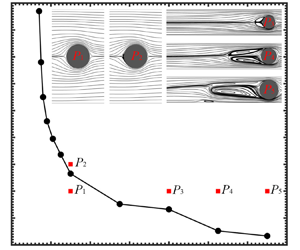
Numerical study of viscoelastic upstream instability
-
- Journal:
- Journal of Fluid Mechanics / Volume 959 / 25 March 2023
- Published online by Cambridge University Press:
- 17 March 2023, A16
-
- Article
- Export citation
Spatial–temporal transformation for primary and secondary instabilities in weakly non-parallel shear flows
-
- Journal:
- Journal of Fluid Mechanics / Volume 959 / 25 March 2023
- Published online by Cambridge University Press:
- 17 March 2023, A21
-
- Article
- Export citation
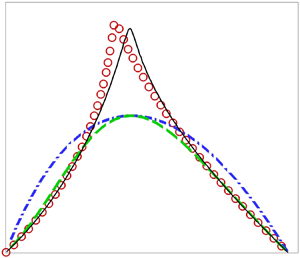
Freak wave in a two-dimensional directional wavefield with bottom topography change. Part 1. Normal incidence wave
-
- Journal:
- Journal of Fluid Mechanics / Volume 959 / 25 March 2023
- Published online by Cambridge University Press:
- 17 March 2023, A19
-
- Article
- Export citation
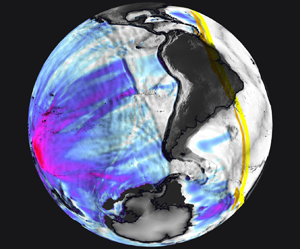
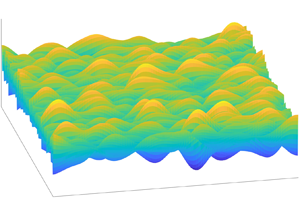
Two-way coupled long-wave isentropic ocean-atmosphere dynamics
-
- Journal:
- Journal of Fluid Mechanics / Volume 959 / 25 March 2023
- Published online by Cambridge University Press:
- 17 March 2023, A22
-
- Article
-
- You have access
- Open access
- HTML
- Export citation
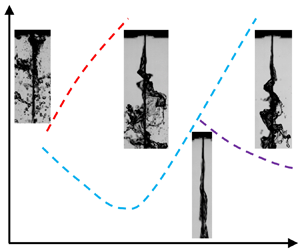
Experimental study on the oscillatory Kelvin–Helmholtz instability of a planar liquid sheet in the presence of axial oscillating gas flow
-
- Journal:
- Journal of Fluid Mechanics / Volume 959 / 25 March 2023
- Published online by Cambridge University Press:
- 17 March 2023, A18
-
- Article
- Export citation
-
The oscillatory Kelvin–Helmholtz (K–H) instability of a planar liquid sheet was experimentally investigated in the presence of an axial oscillating gas flow. An experimental system was initiated to study the oscillatory K–H instability. The surface wave growth rates were measured and compared with theoretical results obtained using the authors’ early linear method. Furthermore, in a larger parameter range experimentally studied, it is interesting that there are four different unstable modes: first disordered mode (FDM), second disordered mode (SDM), K–H harmonic unstable mode (KHH) and K–H subharmonic unstable mode (KHS). These unstable modes are determined by the oscillating amplitude, oscillating frequency and liquid inertia force. The frequencies of KHH are equal to the oscillating frequency; the frequency of KHS equals half the oscillating frequency, while the frequencies of FDM and SDM are irregular. By considering the mechanism of instability, the instability regime maps on the relative Weber number versus liquid Weber number (Werel–Wel) and the Weber number ratio versus the oscillating frequency (Werel/Wel– $\varOmega$s2) were plotted. Among these four modes, KHS is the most unexpected: the frequency of this mode is not equal to the oscillating frequency, but the surface wave can also couple with the oscillating gas flow. Linear instability theory was applied to divide the parameter range between the different unstable modes. According to linear instability theory, K–H and parametric unstable regions both exist. However, note that all four modes (KHH, KHS, FDM and SDM) corresponded primarily to the K–H unstable region obtained from the theoretical analysis. Nevertheless, the parametric unstable mode was also observed when the oscillating frequency and amplitude were relatively low, and the liquid inertia force was relatively high. The surface wave amplitude was small but regular, and the evolution of this wave was similar to that of Faraday waves. The wave oscillating frequency was half that of the surface wave.

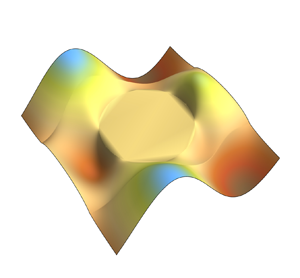
Upscaled dynamic capillary pressure for two-phase flow in porous media
-
- Journal:
- Journal of Fluid Mechanics / Volume 959 / 25 March 2023
- Published online by Cambridge University Press:
- 17 March 2023, R2
-
- Article
- Export citation
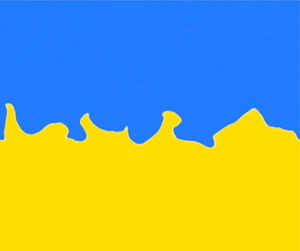
Energy balances for the collision of gravity currents of equal strengths
-
- Journal:
- Journal of Fluid Mechanics / Volume 959 / 25 March 2023
- Published online by Cambridge University Press:
- 17 March 2023, A20
-
- Article
-
- You have access
- Open access
- HTML
- Export citation
-
Collision of two counterflowing gravity currents of equal densities and heights was investigated by means of three-dimensional high-resolution simulations with the goal of understanding the flow structures and energetics in the collision region in more detail. The lifetime of collision is approximately $3 \tilde {H}/\tilde {u}_f$, where $\tilde {H}$ is the depth of heavy and ambient fluids, and $\tilde {u}_f$ is the front velocity of the approaching gravity currents, and the lifetime of collision can be divided into three phases. During Phase I, $-0.2 \leqslant (\tilde {t}-\tilde {t}_c) \tilde {u}_f/\tilde {H} \leqslant 0.5$, where $\tilde {t}$ is the time, and $\tilde {t}_c$ is the time instance at which the two colliding gravity currents have fully osculated, geometric distortions of the gravity current fronts result in stretching of pre-existing vorticity in the wall-normal direction inside the fronts, and an array of vertical vortices extending throughout the updraught fluid column develop along the interface separating the two colliding gravity currents. The array of vertical vortices is responsible for the mixing between the heavy fluids of the two colliding gravity currents and for the production of turbulent kinetic energy in the collision region. The presence of the top boundary deflects the updraughts into the horizontal direction, and a number of horizontal streamwise vortices are generated close to the top boundary. During Phase II, $0.5 \leqslant (\tilde {t}-\tilde {t}_c) \tilde {u}_f/\tilde {H} \leqslant 1.2$, the horizontal streamwise vortices close to the top boundary induce turbulent buoyancy flux and break up into smaller structures. While the production of turbulent kinetic energy weakens, the rate of transfer of energy to turbulent flow due to turbulent buoyancy flux reaches its maximum and becomes the primary supply in the turbulent kinetic energy in Phase II. During Phase III, $1.2 \leqslant (\tilde {t}-\tilde {t}_c) \tilde {u}_f/\tilde {H} \leqslant 2.8$, the collided fluid slumps away from the collision region, while the production of turbulent kinetic energy, turbulent buoyancy flux and dissipation of energy attenuate. From the point of view of energetics, the production of turbulent kinetic energy and turbulent buoyancy flux transfers energy away from the mean flow to the turbulent flow during the collision. Our study complements previous experimental investigations on the collision of gravity currents in that the flow structures, spatial distribution and temporal evolution of the mean flow and turbulent flow characteristics in the collision region are presented clearly. It is our understanding that such complete information on the energy budgets in the collision region can be difficult to attain in laboratory experiments.


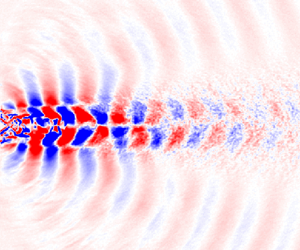
Perturbation-based active flow control in overexpanded to underexpanded supersonic rectangular twin jets
-
- Journal:
- Journal of Fluid Mechanics / Volume 959 / 25 March 2023
- Published online by Cambridge University Press:
- 16 March 2023, A13
-
- Article
-
- You have access
- Open access
- HTML
- Export citation
Experimental monitoring of nonlinear wave interactions in crab orchard sandstone under uniaxial load
-
- Journal:
- Experimental Results / Volume 4 / 2023
- Published online by Cambridge University Press:
- 16 March 2023, e10
-
- Article
-
- You have access
- Open access
- HTML
- Export citation
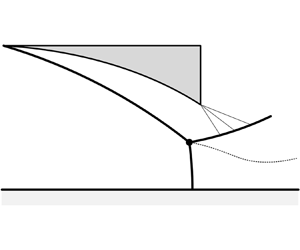
Reflection and transition of planar curved shock waves
-
- Journal:
- Journal of Fluid Mechanics / Volume 959 / 25 March 2023
- Published online by Cambridge University Press:
- 16 March 2023, A11
-
- Article
-
- You have access
- HTML
- Export citation
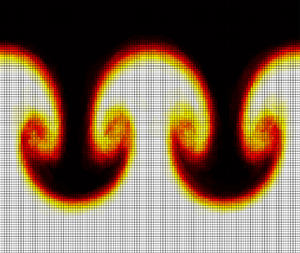
Interface models for three-dimensional Rayleigh–Taylor instability
-
- Journal:
- Journal of Fluid Mechanics / Volume 959 / 25 March 2023
- Published online by Cambridge University Press:
- 16 March 2023, A10
-
- Article
- Export citation
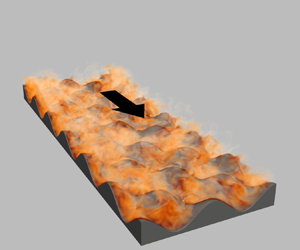
Heat-transfer scaling at moderate Prandtl numbers in the fully rough regime
-
- Journal:
- Journal of Fluid Mechanics / Volume 959 / 25 March 2023
- Published online by Cambridge University Press:
- 16 March 2023, A8
-
- Article
-
- You have access
- Open access
- HTML
- Export citation
-
In the fully rough regime, proposed models predict a scaling for a roughness heat-transfer coefficient, e.g. the roughness Stanton number ${St}_k \sim (k^+)^{-p} {Pr}^{-m}$ where the exponent values $p$ and $m$ are model dependent, giving diverse predictions. Here, $k^+$ is the roughness Reynolds number and ${Pr}$ is the Prandtl number. To clarify this ambiguity, we conduct direct numerical simulations of forced convection over a three-dimensional sinusoidal surface spanning $k^+ = 5.5$– $111$ for Prandtl numbers ${Pr} = 0.5$, 1.0 and 2.0. These unprecedented parameter ranges are reached by employing minimal channels, which resolve the roughness sublayer at an affordable cost. We focus on the fully rough phenomenologies, which fall into two groups: $p=1/2$ (Owen & Thomson, J. Fluid Mech., vol. 15, issue 3, 1963, pp. 321–334; Yaglom & Kader, J. Fluid Mech., vol. 62, issue 3, 1974, pp. 601–623) and $p=1/4$ (Brutsaert, Water Resour. Res., vol. 11, issue 4, 1975b, pp. 543–550). Although we find the mean heat transfer favours the $p=1/4$ scaling, the Prandtl–Blasius boundary-layer ideas associated with the Reynolds–Chilton–Colburn analogy that underpin the $p=1/2$ can remain an apt description of the flow locally in regions exposed to high shear. Sheltered regions, meanwhile, violate this behaviour and are instead dominated by reversed flow, where no clear correlation between heat and momentum transfer is evident. The overall picture of fully rough heat transfer is then not encapsulated by one singular mechanism or phenomenology, but rather an ensemble of different behaviours locally. The implications of the approach to a Reynolds-analogy-like behaviour locally on bulk measures of the Nusselt and Stanton numbers are also examined, with evidence pointing to the onset of a regime transition at even-higher Reynolds numbers.


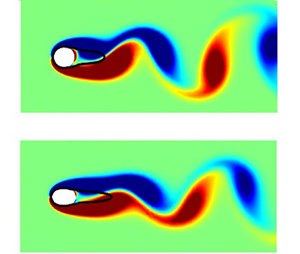
Shape optimisation for a stochastic two-dimensional cylinder wake using ensemble variation
-
- Journal:
- Journal of Fluid Mechanics / Volume 959 / 25 March 2023
- Published online by Cambridge University Press:
- 16 March 2023, A7
-
- Article
- Export citation
