Refine search
Actions for selected content:
238160 results in Physics and Astronomy

A Course in Cosmology
- From Theory to Practice
-
- Published online:
- 31 March 2023
- Print publication:
- 09 March 2023
-
- Textbook
- Export citation
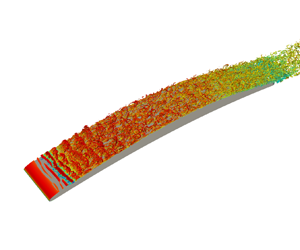
On the effect of adverse pressure gradients on wall-pressure statistics in a controlled-diffusion aerofoil turbulent boundary layer
-
- Journal:
- Journal of Fluid Mechanics / Volume 960 / 10 April 2023
- Published online by Cambridge University Press:
- 31 March 2023, A17
-
- Article
- Export citation
-
Wall-pressure and velocity statistics in the turbulent boundary layer (TBL) on a cambered controlled-diffusion aerofoil at $8^{\circ }$ incidence, a Mach number of 0.25 and a chord-based Reynolds number ${Re}_c=1.5\times 10^{5}$ are analysed at four locations on the suction side with zero and adverse pressure gradients (ZPG and APG), characterised by increasing Reynolds numbers based on momentum thickness, ${Re}_{\theta }=319$, 390, 877 and $1036$. The strong APG yields a highly non-equilibrium TBL at the trailing edge that significantly affects the turbulent flow statistics. Different normalisations of the full wall-pressure statistics involved in trailing-edge noise are analysed for the first time in such strong APG with convex curvature, and compared with available experimental and numerical data. Good overall agreement is found in the ZPG region, and most results obtained in previous APG TBL can be extended to the present highly non-equilibrium case. The presence of strong APG augments the intensity of wall-pressure fluctuations noticeably at low frequencies, shortens the streamwise and broadens the spanwise coherence of wall-pressure fluctuations in both time and space, and significantly reduces the convection velocity. The wall-pressure power spectral density are found to scale with the displacement thickness, the Zaragola–Smits velocity and the root-mean-squared pressure, the latter possibly being replaced by the local maximum Reynolds shear stress. The other two key parameters to trailing-edge noise modelling, the spanwise coherence length and the convection velocity, rather scale with displacement thickness and friction velocity, respectively.


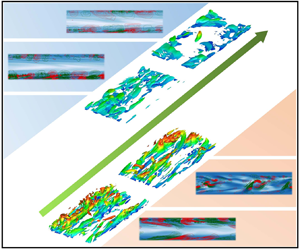
Maximum drag reduction state of viscoelastic turbulent channel flow: marginal inertial turbulence or elasto-inertial turbulence
-
- Journal:
- Journal of Fluid Mechanics / Volume 960 / 10 April 2023
- Published online by Cambridge University Press:
- 31 March 2023, A12
-
- Article
- Export citation
-
The essence of the maximum drag reduction (MDR) state of viscoelastic drag-reducing turbulence (DRT) is still under debate, which mainly holds two different types of views: the marginal state of inertial turbulence (IT) and elasto-inertial turbulence (EIT). To further promote its understanding, this paper conducts a large number of direct numerical simulations of DRT at a modest Reynolds number Re with $Re = 6000$ for the FENE-P model that covers a wide range of flow states and focuses on the problem of how nonlinear extension affects the nature of MDR by varying the maximum extension length $L$ of polymers. It demonstrates that the essence of the MDR state can be both IT and EIT, where $L$ is somehow an important parameter in determining the dominant dynamics. Moreover, there exists a critical $L_c$ under which the minimum flow drag can be achieved in the MDR state even exceeding the suggested MDR limit. Systematic analyses on the statistical properties, energy spectrum, characteristic structures and underly dynamics show that the dominant dynamics of the MDR state gradually shift from IT-related to EIT-related dynamics with an increase of $L$. The above effects can be explained by the effective elasticity introduced by different $L$ at a fixed Weissenberg number (Wi) as well as the excitation of pure EIT. It indicates that larger $L$ introduces more effective elasticity and is favourable to EIT excitation. Therefore, we argue that the MDR state is still dominated by IT-related dynamics for the case of small $L$, but replaced by EIT-related dynamics at high $L$. The obtained results can harmonize the seemingly controversial viewpoints on the dominant dynamics of the MDR state and also provide some ideas for breaking through the MDR limit, such as searching for a polymer solution with a proper molecular length and concentration.


Reducing ageism focusing on stereotype embodiment theory: Pre-registered study and Bayesian analysis approach
-
- Journal:
- Experimental Results / Volume 4 / 2023
- Published online by Cambridge University Press:
- 31 March 2023, e17
-
- Article
-
- You have access
- Open access
- HTML
- Export citation
Fast magneto-acoustic wave turbulence and the Iroshnikov–Kraichnan spectrum
-
- Journal:
- Journal of Plasma Physics / Volume 89 / Issue 2 / April 2023
- Published online by Cambridge University Press:
- 31 March 2023, 905890205
-
- Article
- Export citation
-
An analytical theory of wave turbulence is developed for pure compressible magnetohydrodynamics in the small $\beta$
 limit. In contrast to previous works where the multiple scale method was not mentioned and slow magneto-acoustic waves were included, we present here a theory for fast magneto-acoustic waves for which only an asymptotic closure is possible in three dimensions. We introduce the compressible Elsässer fields (canonical variables) and show their linear relationship with the mass density and the compressible velocity. The kinetic equations of wave turbulence for three-wave interactions are obtained and the detailed conservation is shown for the two invariants, energy and momentum (cross-helicity). An exact stationary solution (Kolmogorov-Zakharov spectrum) exists only for the energy. We find a $k^{-3/2}$
 energy spectrum compatible with the Iroshnikov–Kraichnan (IK) phenomenological prediction; this leads to a mass density spectrum with the same scaling. Despite the presence of a relatively strong uniform magnetic field, this turbulence is characterized by an energy spectrum with a power index that is independent of the angular direction; its amplitude, however, shows an angular dependence. We prove the existence of the IK solution using the locality condition, show that the energy flux is positive and hence the cascade direct and find the Kolmogorov constant. This theory offers a plausible explanation for recent observations in the solar wind at small $\beta$
 where isotropic spectra with a $-3/2$
 power-law index are found and associated with fast magneto-acoustic waves. This theory may also be used to explain the IK spectrum often observed near the Sun. Besides, it provides a rigorous theoretical basis for the well-known phenomenological IK spectrum, which coincides with the Zakharov–Sagdeev spectrum for acoustic wave turbulence.


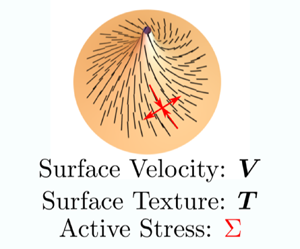
Active nematic fluid films
-
- Journal:
- Journal of Fluid Mechanics / Volume 960 / 10 April 2023
- Published online by Cambridge University Press:
- 31 March 2023, F1
-
- Article
-
- You have access
- HTML
- Export citation
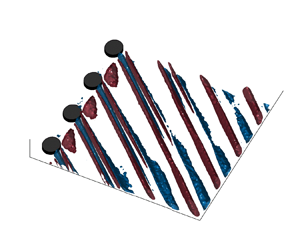
The near wake of discrete roughness elements on swept wings
-
- Journal:
- Journal of Fluid Mechanics / Volume 960 / 10 April 2023
- Published online by Cambridge University Press:
- 31 March 2023, A11
-
- Article
-
- You have access
- Open access
- HTML
- Export citation
Near-field evolution and scaling of shear layer instabilities in a reacting jet in crossflow
-
- Journal:
- Journal of Fluid Mechanics / Volume 960 / 10 April 2023
- Published online by Cambridge University Press:
- 31 March 2023, A13
-
- Article
-
- You have access
- Open access
- HTML
- Export citation
-
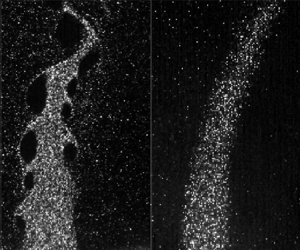
This study analyses the stability characteristics of the shear layer vortices (SLV) in a reacting jet in crossflow, analysing effects of flame position, momentum flux ratio ( $J$) and density ratio ( $S$). It utilizes 40 kHz particle image velocimetry to characterize the dominant SLV frequencies, streamwise evolution and convective/global stability characteristics for three different canonical configurations, one non-reacting and two reacting (‘R1’ and ‘R2’). In the non-reacting case, both convective and global instability is observed, depending upon $S$ and $J$. Qualitatively similar $S$ dependencies occur for the R1 reacting case where the radial flame position lies outside the jet shear layer, albeit with slower SLV growth rates. When the flame lies inside the jet shear layer, the R2 reacting case, a qualitatively different behaviour is observed, as vorticity concentration in the shear layers is suppressed almost completely. Finally, we show that frequency and stability characteristics of the non-reacting and R1 cases can be scaled in a unified manner using a counter-current shear layer model. This model relates these SLV behaviours to a vorticity layer thickness, a velocity scale and an effective density ratio (noting that there are three distinct densities associated with the jet, the crossflow and the burned gases). These parameters were extracted from the data and used to collapse the frequency scaling, and to explain the transition to self-excited oscillatory behaviour.


Shocked confined-granular flow over obstacles
-
- Journal:
- Journal of Fluid Mechanics / Volume 960 / 10 April 2023
- Published online by Cambridge University Press:
- 31 March 2023, A21
-
- Article
-
- You have access
- Open access
- HTML
- Export citation
-
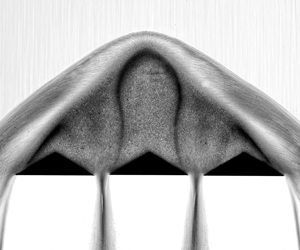
Interaction of supercritical granular flow with obstacles in a confined channel generates shock waves characterised by a nearly parabolic front of agitated grains in the outer region and a heap of static grains in the inner region. The inner static heap results from granular collapse due to high volume fraction and enhanced collision rate near the obstacle. The present work reports interesting flow structures when granular shock waves are formed on an array of three identical triangular obstacles placed in a rectangular channel at different spacings. It is observed that spacing has a profound influence, resulting in three types of flow structures. Through dimensional analysis, it is found that the normalised shock stand-off distance primarily depends on the Froude number, $Fr$, and the normalised spacing between the wedges. The experimental data show a strong dependence on these parameters. The normalised shock stand-off distance decreases linearly for small $Fr$ and asymptotically approaches a small value at high $Fr$. The presence of a new stagnant dome-like structure results in a non-intuitive behaviour of shock stand-off with the wedge spacing. These features are discussed in detail using high-resolution shadowgraphy and the velocity field from particle image velocimetry.


Similarity for dissipation-scaled wall turbulence
-
- Journal:
- Journal of Fluid Mechanics / Volume 960 / 10 April 2023
- Published online by Cambridge University Press:
- 31 March 2023, A18
-
- Article
-
- You have access
- Open access
- HTML
- Export citation
-
In this paper, we put forward a hypothesis for turbulent kinetic energy, Reynolds stresses and scalar variance in wall-bounded turbulent flows, whereby these quantities, when normalized with the kinematic viscosity, mean turbulent energy dissipation rate and scalar dissipation rate, are independent of the Reynolds and Péclet numbers when they are sufficiently large. In particular, there exist two scaling ranges: (i) an inertial-convective range at sufficiently large distance from the wall over which a $2/3$ power-law scaling emerges for all quantities mentioned above; (ii) a viscous-convective range between the viscous-diffusive and inertial-convective ranges at large Prandtl number over which the normalized scalar variance is constant. The relatively large amount of available wall turbulence data either provides reasonably good support for this hypothesis or at least exhibits a trend that is consistent with the predictions of this hypothesis. The relationship between the proposed scaling and the traditional wall scaling is discussed. Possible ultimate statistical states of wall turbulence are also proposed.

Lagrangian particle tracking velocimetry investigation of vortex shedding topology for oscillating heavy spherical pendulums underwater
-
- Journal:
- Journal of Fluid Mechanics / Volume 960 / 10 April 2023
- Published online by Cambridge University Press:
- 31 March 2023, A14
-
- Article
-
- You have access
- Open access
- HTML
- Export citation
-
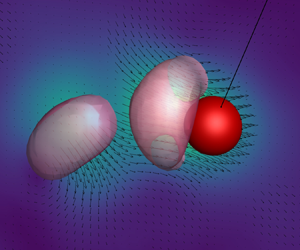
The vortex shedding topology of a heavy pendulum oscillating in a dense fluid is investigated using time-resolved three-dimensional particle tracking velocimetry (tr-3-D-PTV). A series of experiments with eight different solid to fluid mass ratios $m^*$ in the range $[1.14, 14.95]$ and corresponding Reynolds numbers of up to $Re \sim O(10^4)$ was conducted. The period of oscillation depends heavily on $m^*$. The relation between amplitude decay and oscillation frequency is non-monotonic, having a damping optimum at $m^* \approx 2.50$. Moreover, a novel digital object tracking (DOT) method using vorticity-magnitude iso-surfaces is implemented to analyse vortical structures. A similar vortex shedding topology is observed for various mass ratios $m^*$. Our observations show that first, a vortex ring in the pendulum's wake is formed. Soon after, the initial ring breaks down to two clearly distinguishable structures of similar size. One of the two vortices remains on the circular path of the pendulum, while the other detaches, propagates downwards, and eventually dissipates. The time when the first vortex is shed, and its initial propagation velocity, depend on $m^*$ and the momentum imparted by the spherical bob. The findings further show good agreement between the experimentally determined vortex shedding frequency and the theoretical vortex shedding time scale based on the Strouhal number.


Object transport by a confined active suspension
-
- Journal:
- Journal of Fluid Mechanics / Volume 960 / 10 April 2023
- Published online by Cambridge University Press:
- 31 March 2023, A16
-
- Article
-
- You have access
- Open access
- HTML
- Export citation
A kind of Lagrangian chaotic property of the Arnold–Beltrami–Childress flow
-
- Journal:
- Journal of Fluid Mechanics / Volume 960 / 10 April 2023
- Published online by Cambridge University Press:
- 31 March 2023, A15
-
- Article
- Export citation
-
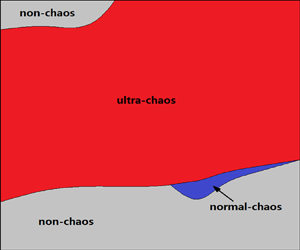
Three-dimensional steady-state Arnold–Beltrami–Childress (ABC) flow has a chaotic Lagrangian structure, and also satisfies the Navier–Stokes (NS) equations with an external force per unit mass. It is well known that, although trajectories of a chaotic system have sensitive dependence on initial conditions, i.e. the famous ‘butterfly effect’, their statistical properties are often insensitive to small disturbances. This kind of chaos (such as governed by the Lorenz equations) is called normal-chaos. However, a new concept, i.e. ultra-chaos, has been reported recently, whose statistics are unstable to tiny disturbances. Thus, ultra-chaos represents higher disorder than normal chaos. In this paper, we illustrate that ultra-chaos widely exists in Lagrangian trajectories of fluid particles in steady-state ABC flow. Moreover, solving the NS equation when $Re=50$ with the ABC flow plus a very small disturbance as the initial condition, it is found that trajectories of nearly all fluid particles become ultra-chaotic when the transition from laminar to turbulence occurs. These numerical experiments and facts highly suggest that ultra-chaos should have a relationship with turbulence. This paper identifies differences between ultra-chaos and sensitivity of statistics to parameters. Possible relationships between ultra-chaos and the Poincaré section, ultra-chaos and ergodicity/non-ergodicity, etc., are discussed. The concept of ultra-chaos opens a new perspective of chaos, the Poincaré section, ergodicity/non-ergodicity, turbulence and their inter-relationships.


Water wave propagation through arrays of closely spaced surface-piercing vertical barriers
-
- Journal:
- Journal of Fluid Mechanics / Volume 960 / 10 April 2023
- Published online by Cambridge University Press:
- 31 March 2023, A20
-
- Article
-
- You have access
- Open access
- HTML
- Export citation
-
This paper presents and compares two different approaches to solving the problem of wave propagation across a large finite periodic array of surface-piercing vertical barriers. Both approaches are formulated in terms of a pair of integral equations, one exact and based on a spacing $\delta > 0$ between adjacent barriers and the other approximate and based on a continuum model formally developed by using homogenisation methods for small $\delta$. It is shown that the approximate method is simpler to evaluate than the exact method which requires eigenvalues and eigenmodes related to propagation in an equivalent infinite periodic array of barriers. In both methods, the numerical effort required to solve problems is independent of the size of the array. The comparison between the two methods allows us to draw important conclusions about the validity of homogenisation models of plate array metamaterial devices. The practical interest in this problem stems from the result that for an array of barriers there exists a critical value of radian frequency, $\omega _c$, dependent on $\delta$, below which waves propagate through the array and above which it results in wave decay. When $\delta \to 0$, the critical frequency is given by $\omega _c = \sqrt {g/d}$, where $d$ is the plate submergence and $g$ is the acceleration due to gravity, which relates to the resonance in narrow channels and is an example of local resonance, studied extensively in metamaterials. The results have implications for proposed schemes to harness energy from ocean waves and other problems related to rainbow trapping and rainbow reflection.


Polymer and surfactant flows through a periodically constricted tube
-
- Journal:
- Journal of Fluid Mechanics / Volume 960 / 10 April 2023
- Published online by Cambridge University Press:
- 31 March 2023, A19
-
- Article
-
- You have access
- Open access
- HTML
- Export citation
Problems
-
- Book:
- Supermassive Black Holes
- Published online:
- 23 March 2023
- Print publication:
- 30 March 2023, pp 289-298
-
- Chapter
- Export citation
Pulse repetition-rate effect on the intensity inside a femtosecond laser filament in air
-
- Journal:
- High Power Laser Science and Engineering / Volume 11 / 2023
- Published online by Cambridge University Press:
- 30 March 2023, e46
-
- Article
-
- You have access
- Open access
- HTML
- Export citation
4 - Disc Accretion on to Black Holes
-
- Book:
- Supermassive Black Holes
- Published online:
- 23 March 2023
- Print publication:
- 30 March 2023, pp 66-111
-
- Chapter
- Export citation
Millijoule ultrafast optical parametric amplification as replacement for high-gain regenerative amplifiers
-
- Journal:
- High Power Laser Science and Engineering / Volume 11 / 2023
- Published online by Cambridge University Press:
- 30 March 2023, e48
-
- Article
-
- You have access
- Open access
- HTML
- Export citation
-
We report on the development of an ultrafast optical parametric amplifier front-end for the Petawatt High Energy Laser for heavy Ion eXperiments (PHELIX) and the Petawatt ENergy-Efficient Laser for Optical Plasma Experiments (PEnELOPE) facilities. This front-end delivers broadband and stable amplification up to 1 mJ per pulse while maintaining a high beam quality. Its implementation at PHELIX allowed one to bypass the front-end amplifier, which is known to be a source of pre-pulses. With the bypass, an amplified spontaneous emission contrast of $4.9\times {10}^{-13}$ and a pre-pulse contrast of $6.2\times {10}^{-11}$ could be realized. Due to its high stability, high beam quality and its versatile pump amplifier, the system offers an alternative for high-gain regenerative amplifiers in the front-end of various laser systems.


Index
-
- Book:
- Supermassive Black Holes
- Published online:
- 23 March 2023
- Print publication:
- 30 March 2023, pp 306-308
-
- Chapter
- Export citation
