Refine search
Actions for selected content:
238161 results in Physics and Astronomy
The Dawes Review 10: The impact of deep learning for the analysis of galaxy surveys
-
- Journal:
- Publications of the Astronomical Society of Australia / Volume 40 / 2023
- Published online by Cambridge University Press:
- 10 January 2023, e001
-
- Article
-
- You have access
- Open access
- HTML
- Export citation
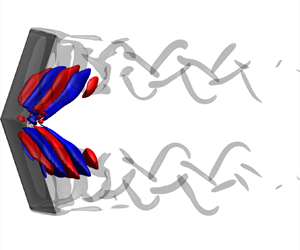
Triglobal resolvent analysis of swept-wing wakes
-
- Journal:
- Journal of Fluid Mechanics / Volume 954 / 10 January 2023
- Published online by Cambridge University Press:
- 09 January 2023, A42
-
- Article
- Export citation
-
Through triglobal resolvent analysis, we reveal the effects of wing tip and sweep angle on laminar separated wakes over swept wings. For the present study, we consider wings with semi-aspect ratios from $1$ to $4$, sweep angles from $0^\circ$ to $45^\circ$ and angles of attack of $20^\circ$ and $30^\circ$ at a chord-based Reynolds number of $400$ and a Mach number of $0.1$. Using direct numerical simulations, we observe that unswept wings develop vortex shedding near the wing root with a quasi-steady tip vortex. For swept wings, vortex shedding is seen near the wing tip for low sweep angles, while the wakes are steady for wings with high sweep angles. To gain further insights into the mechanisms of flow unsteadiness, triglobal resolvent analysis is used to identify the optimal spatial input–output mode pairs and the associated gains over a range of frequencies. The three-dimensional forcing and response modes reveal that harmonic fluctuations are directed towards the root for unswept wings and towards the wing tip for swept wings. The overlapping region of the forcing–response mode pairs uncovers triglobal resolvent wavemakers associated with self-sustained unsteady wakes of swept wings. Furthermore, we show that for low-aspect-ratio wings optimal perturbations develop globally over the entire wingspan. The present study uncovers physical insights on the effects of tip and sweep on the growth of optimal harmonic perturbations and the wake dynamics of separated flows over swept wings.


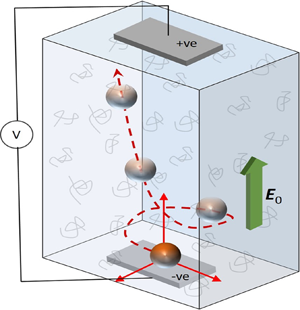
Electrophoretic trajectories of non-uniformly charged particles in viscoelastic fluids: the weak surface charge limit
-
- Journal:
- Journal of Fluid Mechanics / Volume 954 / 10 January 2023
- Published online by Cambridge University Press:
- 09 January 2023, A48
-
- Article
- Export citation
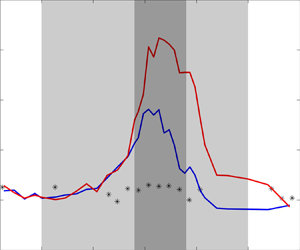
Enhanced extreme wave statistics of irregular waves due to accelerating following current over a submerged bar
-
- Journal:
- Journal of Fluid Mechanics / Volume 954 / 10 January 2023
- Published online by Cambridge University Press:
- 09 January 2023, A50
-
- Article
- Export citation
-
We present experimental results of irregular long-crested waves propagating over a submerged trapezoidal bar with the presence of a background current in a wave flume. We investigate the non-equilibrium phenomenon (NEP) induced by significant changes of water depth and mean horizontal flow velocity as wave trains pass over the bar. Using skewness and kurtosis as proxies, we show evidence that an accelerating following current could increase the sea-state non-Gaussianity and enhance both the magnitude and spatial extent of the NEP. We also find that below a ‘saturation relative water depth’ $k_p h_2 \approx 0.5$ ( $k_p$ being the peak wavenumber in the shallow area of depth $h_2$), although the NEP manifests, the decrease of the relative water depth does not further enhance the maximum skewness and kurtosis over the bar crest. This work highlights the nonlinear physics according to which a following current could provoke higher freak wave risk in coastal areas where modulation instability plays an insignificant role.


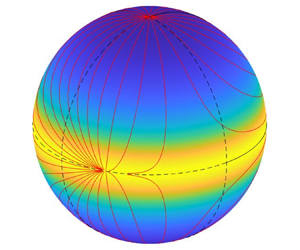
Particle orientation distribution in a rotating, dilute suspension of rod-shaped particles
-
- Journal:
- Journal of Fluid Mechanics / Volume 954 / 10 January 2023
- Published online by Cambridge University Press:
- 09 January 2023, A49
-
- Article
-
- You have access
- Open access
- HTML
- Export citation
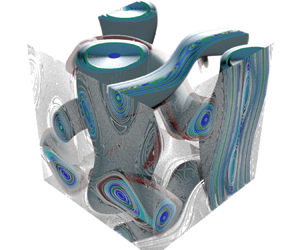
Approximate streamsurfaces for flow visualization
-
- Journal:
- Journal of Fluid Mechanics / Volume 954 / 10 January 2023
- Published online by Cambridge University Press:
- 09 January 2023, A28
-
- Article
-
- You have access
- Open access
- HTML
- Export citation
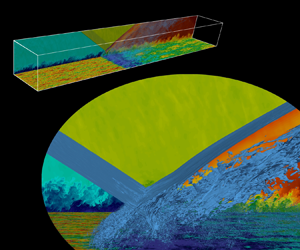
Unsteadiness characterisation of shock wave/turbulent boundary-layer interaction at moderate Reynolds number
-
- Journal:
- Journal of Fluid Mechanics / Volume 954 / 10 January 2023
- Published online by Cambridge University Press:
- 09 January 2023, A43
-
- Article
-
- You have access
- Open access
- HTML
- Export citation
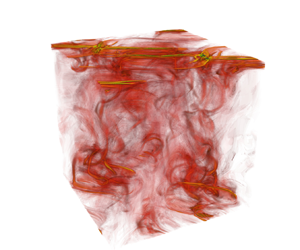
The stability of inviscid Beltrami flow between parallel free-slip impermeable boundaries
-
- Journal:
- Journal of Fluid Mechanics / Volume 954 / 10 January 2023
- Published online by Cambridge University Press:
- 09 January 2023, A31
-
- Article
-
- You have access
- Open access
- HTML
- Export citation
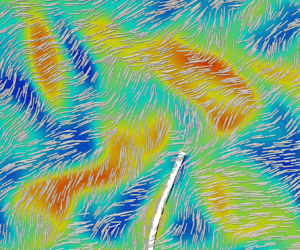
Vibration induced by active nematics
-
- Journal:
- Journal of Fluid Mechanics / Volume 954 / 10 January 2023
- Published online by Cambridge University Press:
- 09 January 2023, R5
-
- Article
-
- You have access
- Open access
- HTML
- Export citation
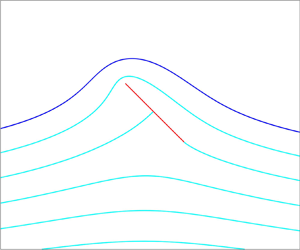
The high-speed submerged hydrofoil
-
- Journal:
- Journal of Fluid Mechanics / Volume 954 / 10 January 2023
- Published online by Cambridge University Press:
- 09 January 2023, A45
-
- Article
-
- You have access
- Open access
- HTML
- Export citation
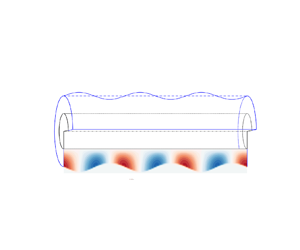
Slip-enhanced Rayleigh–Plateau instability of a liquid film on a fibre
-
- Journal:
- Journal of Fluid Mechanics / Volume 954 / 10 January 2023
- Published online by Cambridge University Press:
- 09 January 2023, A46
-
- Article
- Export citation
Particle motion determines the types of bioaerosol particles in the stratosphere
-
- Journal:
- International Journal of Astrobiology / Volume 22 / Issue 3 / June 2023
- Published online by Cambridge University Press:
- 09 January 2023, pp. 205-215
-
- Article
-
- You have access
- Open access
- HTML
- Export citation
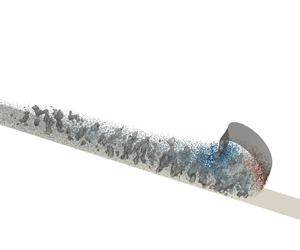
Turbidity currents propagating down an inclined slope: particle auto-suspension
-
- Journal:
- Journal of Fluid Mechanics / Volume 954 / 10 January 2023
- Published online by Cambridge University Press:
- 09 January 2023, A44
-
- Article
- Export citation
-
The turbidity current (TC), a ubiquitous fluid–particle coupled phenomenon in the natural environment and engineering, can transport over long distances on an inclined terrain due to the suspension mechanism. A large-eddy simulation and discrete element method coupled model is employed to simulate the particle-laden gravity currents over the inclined slope in order to investigate the auto-suspension mechanism from a Lagrangian perspective. The particle Reynolds number in our TC simulation is $0.01\sim 0.1$ and the slope angle is $1/20 \sim 1/5$. The influences of initial particle concentration and terrain slope on the particle flow regimes, particle movement patterns, fluid–particle interactions, energy budget and auto-suspension index are explored. The results indicate that the auto-suspension particles predominantly appear near the current head and their number increases and then decreases during the current evolution, which is positively correlated with the coherent structures around the head. When the turbidity current propagates downstream, the average particle Reynolds number of the auto-suspension particles remains basically unchanged, and is higher than that of other transported particles. The average particle Reynolds number of the transported particles exhibits a negative correlation with the Reynolds number of the current. Furthermore, the increase in particle concentration will enhance the particle velocity, which allows the turbidity current to advance faster and improves the perpendicular support, thereby increasing the turbidity current auto-suspension capacity. Increasing slope angle will result in a slightly larger front velocity, while the effect of that on the total force is insignificant.


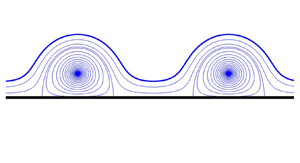
Exact solutions for steadily travelling water waves with submerged point vortices
-
- Journal:
- Journal of Fluid Mechanics / Volume 954 / 10 January 2023
- Published online by Cambridge University Press:
- 09 January 2023, A47
-
- Article
- Export citation

A Complex Systems Approach to Epilepsy
- Concept, Practice, and Therapy
-
- Published online:
- 06 January 2023
- Print publication:
- 26 January 2023
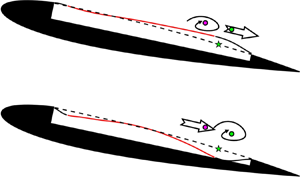
Aerodynamics and fluid–structure interaction of an airfoil with actively controlled flexible leeward surface
-
- Journal:
- Journal of Fluid Mechanics / Volume 954 / 10 January 2023
- Published online by Cambridge University Press:
- 06 January 2023, A34
-
- Article
- Export citation
-
Piezoelectric macro-fibre composite (MFC) actuators are employed onto the flexible leeward surface of an airfoil for active control. Time-resolved aerodynamic forces, membrane deformations and flow fields are synchronously measured at low Reynolds number (Re = 6 × 10⁴). Mean aerodynamics show that the actively controlled airfoil can achieve lift-enhancement and drag-reduction simultaneously in the angle of attack range of 10° ≤ α ≤ 14°, where the rigid airfoil encounters stall. The maximum increments of lift and lift-to-drag ratio are 27.1 % and 126 % at the reduced actuation frequency of ${f^ + } = 3.52$. The unsteady coupling features are further analysed at α = 12°, where the maximum lift-enhancement occurs. It is newly discovered that the membrane vibrations and flow fields are locked into half of the actuation frequency when ${f^ + } > 3$. The shift of the dominant vibration mode from bending to inclining is the reason for the novel ‘half-frequency lock-in’ phenomenon. To the fluid–structure interaction, there are three characteristic frequencies for the actively controlled airfoil: $S{t_1} = 0.5{f^ + }$, $S{t_2} = {f^ + }$, and $S{t_3} = 1.5{f^ + }$. Here, St1 and its harmonics (St2, St3) are coupled with the natural frequencies of the leading-edge shear layer, resulting in the generation of multi-scale flow structures and suppression of flow separation. The lift presents comparable dominant frequencies between St1 and St3, which means the instantaneous lift is determined by the flow structures of St1 and St3. The local membrane bulge and dent affect the instantaneous swirl strength of flow structures near the maximum vibration amplitude location, which is the main reason for the variation of instantaneous lift.


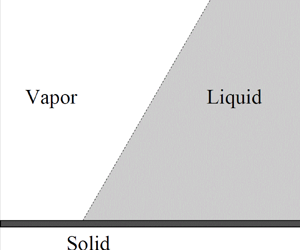
The multicomponent diffuse-interface model and its application to water/air interfaces
-
- Journal:
- Journal of Fluid Mechanics / Volume 954 / 10 January 2023
- Published online by Cambridge University Press:
- 06 January 2023, A41
-
- Article
-
- You have access
- Open access
- HTML
- Export citation
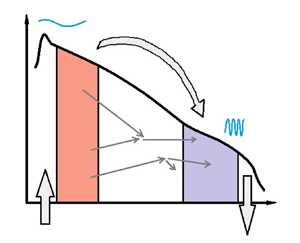
The structure of energy fluxes in wave turbulence
-
- Journal:
- Journal of Fluid Mechanics / Volume 954 / 10 January 2023
- Published online by Cambridge University Press:
- 06 January 2023, A30
-
- Article
- Export citation
-
We calculate the net energy per unit time exchanged between two sets of modes in a generic system governed by a three-wave kinetic equation. Our calculation is based on the property of detailed energy conservation of the triadic resonant interactions. In a first application to isotropic systems, we re-derive the previously used formula for the energy flux as a particular case for adjacent sets. We then exploit the new formalism to quantify the level of locality of the energy transfers in the example of surface capillary waves. A second application to anisotropic wave systems expands the currently available set of tools to investigate magnitude and direction of the energy fluxes in these systems. We illustrate the use of the formalism by characterizing the energy pathways in the oceanic internal wavefield. Our proposed approach, unlike traditional approaches, is not limited to stationarity, scale invariance and strict locality. In addition, we define a number $w$ that quantifies the scale separation necessary for two sets of modes to having negligible mutual energy exchange, with potential consequences in the interpretation of wave turbulence experiments. The methodology presented here provides a general, simple and systematic approach to energy fluxes in wave turbulence.

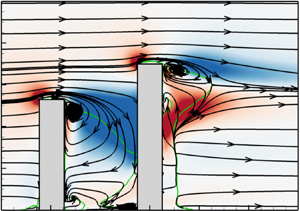
Effects of sheltering on the unsteady wake dynamics of tandem cylinders mounted in a turbulent boundary layer
-
- Journal:
- Journal of Fluid Mechanics / Volume 954 / 10 January 2023
- Published online by Cambridge University Press:
- 06 January 2023, A40
-
- Article
-
- You have access
- Open access
- HTML
- Export citation
-
The unsteady wake dynamics of two finite wall-mounted cylinders of unequal height and arranged in tandem are investigated using time-resolved particle image velocimetry (TR-PIV). The cylinders were fully submerged in a turbulent boundary layer with a Reynolds number based on the cylinder diameter (d) of 5540 and boundary layer thickness of $\delta /d = 8.7$. The centre-to-centre spacing between the cylinders was fixed at 4d. The degree of sheltering was studied by varying the height of the upstream cylinder (UC) $(h/d \in [0.7\unicode{x2013} 7.0])$ while keeping the height of the downstream cylinder (DC) constant at $H/d\; = \; 7.0$. The resulting height ratios were $h/H = 0.10,0.25,0.50,0.75$ and $1.00$ denoted as HR10, HR25, HR50, HR75 and HR100, respectively. The wake dynamics of the DC were also compared to those of an isolated single cylinder (SC) with similar Reynolds number, aspect ratio and submergence ratio. TR-PIV measurements were performed in the symmetry plane for all test cases and five spanwise planes along the height of HR75. The results showed that as the height ratio increases, the downwash from the free end of the UC impinges directly on the frontal surface of the DC and induces a strong upwash on the opposite rear side of the DC. The induced upwash impedes the downwash from the free end of the DC much earlier than observed behind the SC, resulting in a reduced reverse flow area and high velocity deficit in the sheltered portion of the DC. Nonetheless, the reverse flow area behind the UC and DC undergoes a quasi-periodic pumping motion with frequencies that are synchronized for HR25 to HR100. Spectral analysis and proper orthogonal decomposition also reveal that the attachment of the shear layers of the UC on the DC also promotes a lock-in anti-symmetric vortex shedding behaviour.


Optimizing the configuration of plasma radiation detectors in the presence of uncertain instrument response and inadequate physics
- Part of
-
- Journal:
- Journal of Plasma Physics / Volume 89 / Issue 1 / February 2023
- Published online by Cambridge University Press:
- 06 January 2023, 895890101
-
- Article
-
- You have access
- HTML
- Export citation
