To save content items to your account,
please confirm that you agree to abide by our usage policies.
If this is the first time you use this feature, you will be asked to authorise Cambridge Core to connect with your account.
Find out more about saving content to .
To save content items to your Kindle, first ensure no-reply@cambridge.org
is added to your Approved Personal Document E-mail List under your Personal Document Settings
on the Manage Your Content and Devices page of your Amazon account. Then enter the ‘name’ part
of your Kindle email address below.
Find out more about saving to your Kindle.
Note you can select to save to either the @free.kindle.com or @kindle.com variations.
‘@free.kindle.com’ emails are free but can only be saved to your device when it is connected to wi-fi.
‘@kindle.com’ emails can be delivered even when you are not connected to wi-fi, but note that service fees apply.
We consider the task completion time of a repairable server system in which a server experiences randomly occurring service interruptions during which the server works slowly. Every service-state change preempts the task that is being processed. The server may then resume the interrupted task, it may replace the task with a different one, or it may restart the same task from the beginning, under the new service-state. The total time that the server takes to complete a task of random size including interruptions is called completion time. We study the completion time of a task under the last two cases as a function of the task size distribution, the service interruption frequency/severity, and the repair frequency. We derive closed form expressions for the completion time distribution in Laplace domain under replace and restart recovery disciplines and present their asymptotic behavior. In general, the heavy tailed behavior of completion times arises due to the heavy tailedness of the task time. However, in the preempt-restart service discipline, even in the case that the server still serves during interruptions albeit at a slower rate, completion times may demonstrate power tail behavior for exponential tail task time distributions. Furthermore, we present an $M/G/\infty$ queue with exponential service time and Markovian service interruptions. Our results reveal that the stationary first order moments, that is, expected system time and expected number in the system are insensitive to the way the service modulation affects the servers; system-wide modulation affecting every server simultaneously vs identical modulation affecting each server independently.

In this work, we consider extensions of the dual risk model with proportional gains by introducing dependence structures among gain sizes and gain interarrival times. Among others, we further consider the case where the proportionality parameter is randomly chosen, the case where it is a uniformly random variable, as well as the case where we may have upward as well as downward jumps. Moreover, we consider the case with causal dependence structure, as well as the case where the dependence is based on the generalized Farlie–Gumbel–Morgenstern copula. The ruin probability and the distribution of the time to ruin are investigated.
Tourism in Africa was entangled with colonialism from the start. However, after the Second World War it became an integral part of the colonising powers’ development agenda, albeit one that has received little scholarly attention so far. This presented African states with a serious dilemma when most of them gained independence during the 1960s. On the one hand, tourism promised to stimulate economic growth, provide much needed foreign currency, and create employment opportunities. On the other hand, international tourism had the potential to threaten the economic independence of post-colonial states and perpetuate colonial stereotypes, as well as international and local power imbalances and inequalities. The newly elected governments had to deal with this “colonial baggage.” This article focusses on the transition from colonial to post-colonial tourism in two East African countries, Kenya and Tanzania. I explore how the late colonial government pursued tourism as a development strategy for the region. I also demonstrate how Kenya and Tanzania approached tourism and its colonial legacies in different ways after independence. To trace their respective tourism histories, I draw on published reports and newspaper articles, historical research literature, in particular, from tourism scholars of various disciplines, as well as archival sources.
The global population and status of Snowy Owls Bubo scandiacus are particularly challenging to assess because individuals are irruptive and nomadic, and the breeding range is restricted to the remote circumpolar Arctic tundra. The International Union for Conservation of Nature (IUCN) uplisted the Snowy Owl to “Vulnerable” in 2017 because the suggested population estimates appeared considerably lower than historical estimates, and it recommended actions to clarify the population size, structure, and trends. Here we present a broad review and status assessment, an effort led by the International Snowy Owl Working Group (ISOWG) and researchers from around the world, to estimate population trends and the current global status of the Snowy Owl. We use long-term breeding data, genetic studies, satellite-GPS tracking, and survival estimates to assess current population trends at several monitoring sites in the Arctic and we review the ecology and threats throughout the Snowy Owl range. An assessment of the available data suggests that current estimates of a worldwide population of 14,000–28,000 breeding adults are plausible. Our assessment of population trends at five long-term monitoring sites suggests that breeding populations of Snowy Owls in the Arctic have decreased by more than 30% over the past three generations and the species should continue to be categorised as Vulnerable under the IUCN Red List Criterion A2. We offer research recommendations to improve our understanding of Snowy Owl biology and future population assessments in a changing world.
The study area Sonapahar is an integral part of Shillong Meghalaya Gneissic Complex (SMGC), which is located in the Northeastern part of India. This complex mainly comprises metamorphic formations spanning from Upper Amphibolite to Ultra-high temperature granulite, interspersed with various igneous intrusions. In this study, particular attention is directed towards unravelling the metamorphic history of Mg-Al granulite. For the very first time, we establish the pressure–temperature (P-T) trajectory of the Mg-Al granulite from Sonapahar, SMGC. Employing conventional thermobarometry along with winTWQ analysis, the inferred metamorphic conditions for this granulite reveal temperatures exceeding 900°C and pressures of approximately >8 kbar. These conditions firmly indicate the presence of ultra-high-temperature metamorphism. By utilizing the Perple_X software in the MnO-Na2O-CaO-K2O-FeO-MgO-Al2O3-SiO2-H2O-TiO2-Fe2O3 compositional system, we construct a P-T pseudosection. This gives a clockwise P-T path, signifying an episode of cooling (+ minor decompression). Such a pattern also suggests rapid cooling of the tectonically-thickened crust. Concurrently, a geochemical exploration of trace and rare earth elements in the rocks offers further insights. These investigations give an idea about the protolith, having a clay-to-sandstone in nature. Additionally, chemical data from monazite within the studied rock provide a weighted mean age of 682 Ma for the peak metamorphic stage. This age aligns with the global Pan-African orogenic events. The biotite K-Ar isotopic geochronology from the symplectite position provides decompression history or cooling age of 442 Ma. This age corresponds to a period after the last peak metamorphic phase that occurred during the Pan-African thermal event.
The Indigenous data sovereignty movement has arisen out of the ambition of Indigenous peoples to benefit from data-informed policy while preventing extractive and harmful research practices by external governments or researchers. Tribes exercise the sovereign authority to choose whether and when to share data with researchers and institutions outside their communities. To provide insight into how Indigenous peoples feel about data sharing, we document meaningful variation in a unique, nationwide survey of Native Americans. We find that respondents support their tribes in sharing data for economic benefit and that those who vote in tribal elections are particularly supportive. As tribal leaders, Native communities, and external research partners address potentially harmful data gaps and build Indigenous data resources, our findings suggest the importance of carefully considering and communicating the purpose of data collection and sharing. Broad benefit to Indigenous peoples’ economic well-being is one factor that likely increases support for data sharing.
How does EU free movement alter the role of the sovereign state? While this question may not sound new, this Article addresses it from a novel angle. If from the perspective of host Member States free movement upgrades a class of migrants to the status of ‘migrant citizens’, from the perspective of home Member States free movement instead splits the class of the citizens into citizen–settlers and citizen–migrants. The Article explores how the social contract between the state and the citizen is rewritten in the wake of this latter transformation. It articulates the duty of the states as agents for the citizen–migrants. It flashes out the implications for the relation between citizen–migrants and citizen–settlers. And it points to the partly reflexive nature of duties of states and citizens towards non-citizen migrants. It thus ultimately sheds light on how free movement prompts the sovereign state to embrace cosmopolitan obligations towards others ‘from within’, as an indirect effect of advancing the transnational interests of the citizen–migrants. The findings ultimately add to the cosmopolitan statist vision of European integration, while also rephrasing some of the questions of solidarity, non-discrimination and participation that remain unanswered in the literature on Union citizenship and free movement.
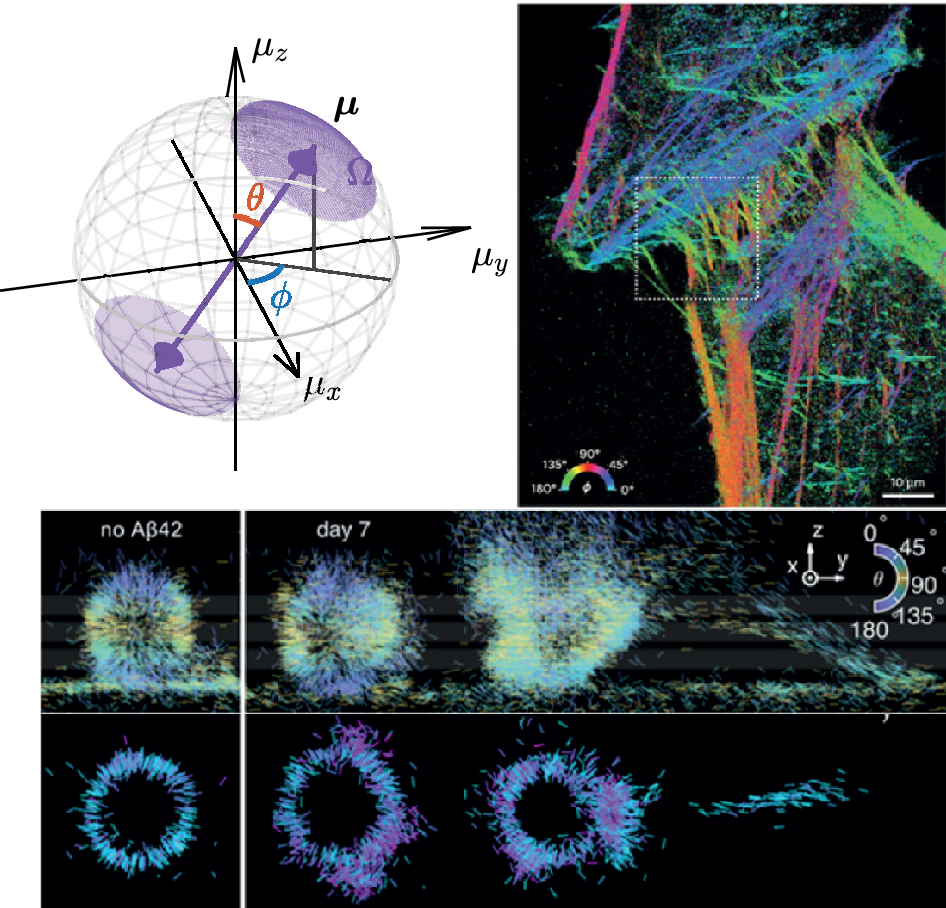
Single-molecule orientation-localization microscopy (SMOLM) builds upon super-resolved localization microscopy by imaging orientations and rotational dynamics of individual molecules in addition to their positions. This added dimensionality provides unparalleled insights into nanoscale biophysical and biochemical processes, including the organization of actin networks, movement of molecular motors, conformations of DNA strands, growth and remodeling of amyloid aggregates, and composition changes within lipid membranes. In this review, we discuss recent innovations in SMOLM and cover three key aspects: (1) biophysical insights enabled by labeling strategies that endow fluorescent probes to bind totargets with orientation specificity; (2) advanced imaging techniques that leverage the physics of light-matter interactions and estimation theory to encode orientation information with high fidelity into microscope images; and (3) computational methods that ensure accurate and precise data analysis and interpretation, even in the presence of severe shot noise. Additionally, we compare labeling approaches, imaging hardware, and publicly available analysis software to aid the community in choosing the best SMOLM implementation for their specific biophysical application. Finally, we highlight future directions for SMOLM, such as the development of probes with improved photostability and specificity, the design of “smart” adaptive hardware, and the use of advanced computational approaches to handle large, complex datasets. This review underscores the significant current and potential impact of SMOLM in deepening our understanding of molecular dynamics, paving the way for future breakthroughs in the fields of biophysics, biochemistry, and materials science.
Hormonal mechanisms associated with cell elongation play a vital role in the development and growth of plants. Here, we report Nextflow-root (nf-root), a novel best-practice pipeline for deep-learning-based analysis of fluorescence microscopy images of plant root tissue from A. thaliana. This bioinformatics pipeline performs automatic identification of developmental zones in root tissue images. This also includes apoplastic pH measurements, which is useful for modeling hormone signaling and cell physiological responses. We show that this nf-core standard-based pipeline successfully automates tissue zone segmentation and is both high-throughput and highly reproducible. In short, a deep-learning module deploys deterministically trained convolutional neural network models and augments the segmentation predictions with measures of prediction uncertainty and model interpretability, while aiming to facilitate result interpretation and verification by experienced plant biologists. We observed a high statistical similarity between the manually generated results and the output of the nf-root.
With recent leaps in large language model technology, conversational AI offer increasingly sophisticated interactions. But is it fair to say that they can offer authentic relationships, perhaps even assuage the loneliness epidemic? In answering this question, this essay traces the history of AI authenticity, historically shaped by cultural imaginations of intelligent machines and human communication. The illusion of human-like interaction with AI has existed since at least the 1960s, when the term “Eliza effect’ was named after the first chatbot Eliza. Termed a “crisis of authenticity” by sociologist Sherry Turkle, the Eliza effect has stood for fears that AI interactions can undermine real human connections and leave users vulnerable to manipulation. More recently, however, researchers have begun investigating less anthropomorphic definitions of authenticity. The expectation - and perhaps fantasy - of authenticity stems, in turn, from a much longer history of technologically mediated communications, dating back to the invention of the telegraph in the nineteenth century. Read through this history, the essay concludes that AI relationships might not mimic human interactions but must instead acknowledge the artifice of AI, offering a new form of companionship in our mediated, often lonely, times.
The US Supreme Court follows a fixed weekly schedule, with specific days assigned for tasks. Oral arguments – held on select Mondays, Tuesdays, and Wednesdays – are the only public part of the Court’s decision-making process. We argue that news outlets consider the Court’s schedule when deciding which arguments to cover. To test this, we analyze media coverage of oral arguments from the 2019, 2020, and 2021 terms. Our findings reveal a notable disparity, with Monday arguments receiving the most coverage. This highlights the influence of the Court’s schedule on media attention, shaping public awareness, and the perceived importance of cases.
This paper presents the bit efficiency of 28 GHz digital beamforming in over-the-air (OTA) measurements and simulations for distributed massive multiple-input–multiple-output (D-MIMO) and collocated massive multiple-input–multiple-output (C-MIMO) systems, as well as simulations for a 3.75 GHz small-cell scenario. Under the condition that users are randomly located in the line of sight coverage indoor area and spatially selected from each other by the normalized zero-forcing method, the OTA measured D-MIMO system exhibits an average of 4–7 dB better signal-to-noise ratio compared to C-MIMO when the number of simultaneously connected users “K” approaches the number of transceivers “M.” This means that the D-MIMO system provides higher bit efficiency than the C-MIMO system when K/M is large. Furthermore, the D-MIMO 3.75 GHz simulation predicts a relatively approximate 30% higher maximum efficiency than C-MIMO due to the shorter average distances between user equipment and access points in the D-MIMO system. To the best of the author’s knowledge, an earlier version of this paper has been presented at the 53rd European Microwave Conference as a first report on the 28 GHz OTA measured bit efficiency between C-MIMO and D-MIMO, highlighting D-MIMO’s advantage.
Mediterranean spotted fever (MSF) is a rickettsial disease caused by Rickettsia conorii, transmitted by brown dog ticks, and endemic in the Mediterranean region. Its incidence is increasing, with varied presentations and potential complications because of delayed diagnosis. This study retrospectively included 173 adult patients hospitalized for MSF at La Rabta University Hospital, Tunis, from 2000 to 2020. Patients, predominantly male (67.6%) and averaging 40 years of age, mostly resided in urban areas (82.7%). Animal exposure was reported in 74.6%, and cases peaked during the hot season (68.8%), with no cases in winter months. The classic triad of fever, rash, and eschar was observed in 69.9%, with maculopapular lesions affecting palms and soles in 83.8%. Headache (64.5%), myalgia (60.7%), and arthralgia (57.2%) were also common. Laboratory findings included elevated white blood cell count (36.4%), thrombocytopenia (48%), and increased aspartate aminotransferase (50.9%). Treatment with doxycycline (n = 161) resolved fever within 2.8±1.3 [1–5] days. Complications, including encephalitis, chorioretinitis, anterior uveitis and vasculitis, occurred in 2.3% of cases, but all patients recovered without relapse. No significant risk factors for severe forms were identified. Improved awareness of MSF’s clinical features may be the key to an early diagnosis and successful treatment.
The majority of studies of mental health interventions for young adolescents have only evaluated short-term benefits. This study evaluated the longer-term effectiveness of a non-specialist delivered group-based intervention (Early Adolescent Skills for Emotions; EASE) to improve young adolescents’ mental health.
Methods
In this single-blind, parallel, controlled trial, Syrian refugees aged 10-14 years in Jordan who screened positive for psychological distress were randomised to receive either EASE or enhanced usual care (EUC). Primary outcomes were scores on the Paediatric Symptom Checklist (PSC) assessed at Week 0, 8-weeks, 3-months, and 12 months after treatment. Secondary outcomes were disability, posttraumatic stress, school belongingness, wellbeing, and caregivers’ reports of distress, parenting behaviour, and their perceived children’s mental health.
Results
Between June, 2019 and January, 2020, 185 adolescents were assigned to EASE and 286 to EUC, and 149 (80.5%) and 225 (78.7%) were retained at 12 months, respectively. At 12 months there were no significant differences between treatment conditions, except that EASE was associated with less reduction in depression (estimated mean difference -1.6, 95% CI –3.2 to -0.1; p=.03; effect size, -0.3), and a greater sense of school belonging (estimated mean difference -0.3, 95% CI –5.7 to -0.2; p=.03; effect size, 5.0).
Conclusions
Although EASE led to significant reductions in internalising problems, caregiver distress, and harsh disciplinary parenting at 3-months, these improvements were not maintained at 12 months relative to EUC. Scalable psychological interventions for young adolescents need to consider their ongoing mental health needs. Prospectively registered: ACTRN12619000341123.
I argue that semi-lexical have is a transitive verb in the sense that it has the same selectional properties as lexical transitives but is lexically underspecified. I propose a system of argument linking that assigns verbs a set of ‘D-selectors’ (selectors for determiner phrases) that are distinguished by a ‘thematic feature’ ±θ; selectors are licensed by linking rules that associate them with a position in a conceptual structure on the basis of their ±θ-specification. I argue that have is underspecified both syntactically (its initial D-selector can be +θ or –θ) and semantically (it lacks a lexical conceptual structure, which must thus be provided in syntax). I show that this enables the major interpretations of have (causative, affected experiencer, possessive, locative, affectee) to be derived straightforwardly. A particular contribution of the paper is its description and analysis of ‘affectee have’, which, as I show, poses particular problems for recent analyses such as Kim (2012) and Myler (2016).
Hegel’s early work The Life of Jesus (Das Leben Jesu) of 1795 presents Jesus as a teacher of Kantian morality and ends abruptly with his death, anointing of his body, and burial, such that Jesus could appear to be merely a figure of the remote past. However, within a few years Hegel’s view of the death of Jesus was to change radically. Writing of his death in terms of the ‘death of God’, this individual is transformed into the universality of Spirit who dwells in the community. This paper examines how this fundamental change in Hegel’s thought came about, how Hegel’s mature understanding of the death of Jesus was appropriated by Richard Wagner in his proposed opera Jesus of Nazareth, and how this ‘death of God’ became the model for the death of Brünnhilde in the Ring cycle. For both Hegel and Wagner, the death of Christ can only be understood as a self-involving enterprise, the bringing together of the ‘objective’ and ‘subjective’. Further, Wagner largely shares Hegel’s immanent understanding of God, although under other influences he can affirm the idea of a transcendent God or a transcendent world.