To save content items to your account,
please confirm that you agree to abide by our usage policies.
If this is the first time you use this feature, you will be asked to authorise Cambridge Core to connect with your account.
Find out more about saving content to .
To save content items to your Kindle, first ensure no-reply@cambridge.org
is added to your Approved Personal Document E-mail List under your Personal Document Settings
on the Manage Your Content and Devices page of your Amazon account. Then enter the ‘name’ part
of your Kindle email address below.
Find out more about saving to your Kindle.
Note you can select to save to either the @free.kindle.com or @kindle.com variations.
‘@free.kindle.com’ emails are free but can only be saved to your device when it is connected to wi-fi.
‘@kindle.com’ emails can be delivered even when you are not connected to wi-fi, but note that service fees apply.
The aim of this paper is to characterise the internal structures and ice-flow history of representative valley glaciers in Svalbard and infer from them dynamic changes over centennial timescales. Three polythermal and one cold valley glacier are investigated using field- and laboratory-based techniques and remote sensing. Structures along flow-unit boundaries indicate that ice-flow configuration in three of the glaciers has remained stable spanning the residence time of the ice. Deformation of a flow-unit boundary in the fourth reveals an ice-flow instability, albeit one that has been maintained since its most recent advance. Macro-crystallographic, sedimentological and isotopic analyses indicate that basal ice is elevated to the glacier surface, as shown by entrained sediments and enrichment in heavy isotopes. In narrow zones of enhanced cumulative strain, new ice facies are generated through dynamic recrystallisation. The surface density of longitudinal foliation is shown to represent the relative magnitude of cumulative strain. Geometric similarities between flow-unit boundaries in Svalbard valley glaciers and larger scale longitudinal surface structures in ice sheets suggest that deformation mechanisms are common to both.
In response to increasing hypertension rates, South Africa implemented a regulation which set a maximum total Na content for certain packaged food categories. We assess changes in reported Na intake among 18–39 years old adults living in one township in the Western Cape as a result of the implementation of the regulation in 2016.
Design:
By linking one set of 24-h dietary recall data to two versions of the South Africa Food Composition Database which reflect the pre-regulation and post-regulation periods, we calculated changes in Na intake due to reformulation of food products, not behaviour change. We statistically tested differences in mean consumption in this sample with paired t tests.
Setting:
Langa, Western Cape, South Africa
Participants:
Surveyed participants were residents of Langa between 18 and 39 years old (n 2148)
Results:
Before and after the implementation of the regulation, there was a statistically significant decrease in the estimated Na intake among adults of 189·4 mg (137·5, 241·4; P = 0·00). Reported Na from cured meat (such as Russians) and certain types of soup powder, cereals and salted peanuts had a 9 to 33 per cent lower calculated Na consumption.
Conclusions:
Our conclusions show that independent of any behavioural changes on the part of consumers, it is possible to lower Na intake by using regulations to induce food manufacturers to lower the Na levels in their products. As countries explore similar regulatory strategies, this work can add to that body of evidence to inform policies to improve the food system.
We explore the interaction of natural convection and mechanical ventilation in a room where fresh air is supplied at low level and stale air is extracted at high level. Turbulent buoyant plumes rising from heat sources interact with this upward airflow and establish a steady-state stratification with a warm upper layer above a layer of the cold supply air. Adapting the volume balance model used in natural ventilation (Linden et al., J. Fluid Mech., vol. 212, 1990, pp. 309–335) leads to the prediction that the upper layer will vent from the room when the ventilation volume flux exceeds the volume flux in the plumes at the ceiling. However, our new laboratory experiments establish that there is still a stable two-layer stratification beyond this point of critical ventilation. Motivated by our observations, we propose that the kinetic energy flux supplied by the plume leads to turbulent mixing in the upper layer. We propose a new model of this mixing which is consistent with our experiments in both the over- and under-ventilated regimes. This has important implications for air recirculation in buildings with large ventilation flows, particularly hospital operating theatres and clean rooms.
The ability to control international flows of information constitutes one of the core elements of the soft power of any modern state aspiring to exercise some level of regional or global hegemony. This phenomenon has been previously examined by those who study long-distance communications mainly in the context of the nineteenth-century telegraph or the twentieth-century broadcast. However, inquiries focusing on the analogous historical role performed by the postal service during the early modern era are much more scarce. Building upon this premise, this study examines the strategic advantages gained by the Republic of Venice through its control of the mail exchange between Europe and the Middle East – a de facto postal monopoly established during the sixteenth century. Venice deliberately subsidized this service in order to prevent the rise of potential competition. Despite the substantial cost, this was seen as an effective investment through which the republic gained a set of tangible strategic advantages. In particular, it helped to extend Venice’s relevance on the European political scene long past the point when its traditional political, economic, and naval–military power was already fading away.
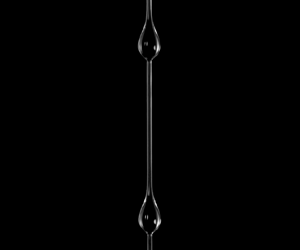
Liquid flowing down a fibre readily destabilises into a train of beads, commonly called a bead-on-fibre pattern. Bead formation results from capillary-driven instability and gives rise to patterns with constant velocity and time-invariant bead frequency $f$ whenever the instability is absolute. In this study, we develop a scaling law for $f$ that relates the Strouhal number $St$ and capillary number $Ca$ for Ostwaldian power-law liquids with Newtonian liquids recovered as a limiting case. We validate our proposed scaling law by comparing it with prior experimental data and new experimental data using xanthan gum solutions to produce a low capillary number $Ca \leq 10^{-2}$ regime. The experimental data encompasses both Ostwaldian and Newtonian flow, as well as symmetric and asymmetric patterns, and we find the data collapses along the predicted trend across seven orders of magnitude in $Ca$. Our proposed scaling law is a powerful tool for studying and applying bead-on-fibre flows where $f$ is critical, such as heat and mass transfer systems.
Previous economic evidence about interventions for schizophrenia is outdated, non-transparent and/or limited to a specific clinical context.
Aims
We developed a de novo discrete event simulation (DES) model for estimating the cost-effectiveness of interventions in schizophrenia in the UK.
Method
The DES model was developed based on the structure of previous models, populated with demographic, clinical and cost data from the UK, and antipsychotics' effects from recent network meta-analyses. We simulated treatment pathways for patients with first-episode schizophrenia including events such as relapse, remission, treatment discontinuation, cardiovascular disease and death and estimated costs (2020£) taking the National Health Service perspective and quality-adjusted life years (QALYs) over ten years. Using the model, we ranked ten first-line antipsychotics based on their QALYs and cost-effectiveness.
Results
Amisulpride was associated with the highest QALYs, followed by risperidone long-acting injection (LAI), aripiprazole-LAI (6.121, 6.084, 6.070, respectively) and others (5.947–6.058). The most cost-effective antipsychotics were amisulpride, olanzapine and risperidone-LAI, with total probability of rankings of 1, ≤2, ≤3, that is, 95%, 89%, 80%, respectively; meanwhile, the least cost-effective were cariprazine, lurasidone and quetiapine, with total probability of rankings of 10, ≥9, ≥8, that is, 96%, 92%, 81%, respectively. Results were robust across sensitivity analyses and influenced primarily by relapse relevant parameters.
Conclusions
Our findings suggest amisulpride (or risperidone-LAI where oral treatment is inappropriate) as the best overall first-line option based on QALYs and cost-effectiveness. Our ranking may be used to guide decision-making between antipsychotics. Our model is open source and could be applied to the other settings.
This Element offers a review of advancements in willingness to communicate (WTC) in a second language (L2) over the past twenty-five years. It begins with the origin of the concept of WTC in first language (L1) communication research and the seminal and novel conceptualizations of WTC in the L2 context. This Element then categorizes six key perspectives that have informed WTC research: social psychological, cultural, dynamic, ecological, multimodal, and digital. By analyzing representative studies, it elucidates insights gained from these perspectives. The Element then discusses key factors associated with WTC, including individual attributes, situational factors, and outcome factors. This is followed by an overview of and critical commentary on methodological approaches in WTC research. Implications for enhancing L2 learners' WTC in in-class, out-of-class, and digital contexts are discussed. The Element concludes by proposing important venues for future WTC research. This title is also available as Open Access on Cambridge Core.
A calcium-silicate xenolith (no. 11) from the ignimbrite of the Upper Chegem Caldera in Kabardino-Balkaria, Russia, has revealed a diverse mineral assemblage with As- and B-bearing phases from the apatite supergroup such as the svabite and johnbaumite–hydroxylellestadite series, in addition to cahnite and datolite. Three distinct zones of variable arsenic content have been investigated. Notably, the outermost altered zone adjacent to the ignimbrite hosts the highest concentration of arsenic and arsenate minerals. A detailed structural analysis using Raman spectroscopy was carried out to investigate the distribution of boron and arsenic in tetrahedral coordination. This has provided the basis for describing a solid-solution system between hydroxylellestadite, svabite and johnbaumite and can be used as a novel technique for identifying apatite-supergroup minerals. One aim of the analysis was to elucidate the origin of various elements and content levels, particularly in relation to the distance from the xenolith–ignimbrite contact. The presence of boron and arsenic, probably derived from ignimbrites, highlights the important role of volcanic rocks as potential contributors of these elements in mineral formation processes.
One of the most popular instruments used to assess perceived social support is the Multidimensional Scale of Perceived Social Support (MSPSS). Although the original structure of the MSPSS was defined to include three specific factors (significant others, friends and family), studies in the literature propose different factor solutions. In this study, we addressed the controversial factor structure of the MSPSS using a meta-analytic confirmatory factor analysis approach. For this purpose, we utilized studies in the literature that examined and reported the internal structure of the MSPSS. However, we used summary data from 59 samples of 54 studies (total N = 27,905) after excluding studies that did not meet the inclusion criteria. We tested five different models discussed in the literature and found that the fit indices of the correlated 3-factor model and the bifactor model were quite good. Therefore, we also examined both models’ factor loadings and omega coefficients. Since there was no sharp difference between the two models and the theoretical structure of the scale was represented by the correlated three factors, we decided that the correlated three-factor model was more appropriate for the internal structure of the MSPSS. We then examined the measurement invariance for this model according to language and sample type (clinical and nonclinical) and found that metric invariance was achieved. As a result, we found that the three-factor structure of the MSPSS was supported in this study.
This article tells the story of 36 Chinese peasants and their audacious campaign to defend their private rights on two tiny islands in Manchuria from the Japanese empire and a Chinese warlord regime. A borderland in Northeast Asia, Manchuria was a site of intense inter-imperial rivalry in the first half of the twentieth century. Using newly discovered local Chinese archival documents as well as sources produced by Japanese, Korean, and American actors, I discuss how the peasants leveraged their knowledge of multiple property regimes in the borderland to delay and deflect the demands of two states. This microhistory of a transnational dispute illustrates the workings of a form of convergent legal pluralism in the Northeast Asian borderland. While historians agree that state capacity grew substantially in the East Asian borderlands in the early twentieth century, the case shows how that growth also complicated the nature of the state and created new possibilities of bottom-up socio-legal action. It exemplifies the kind of legal cosmopolitanism grassroots actors practised in a world of justice dominated by not-so-cosmopolitan nation-states.
Large datasets, combined with modeling techniques, provide a quantitative way to estimate when known archaeological sites will be impacted by climatological changes. With over 4,000 archaeological sites recorded on the coast of Georgia, USA, the state provides an ideal opportunity to compare methods. Here, we compare the popular passive “bathtub” modeling with the dynamic Sea Level Affecting Marshes Model (SLAMM) combined with the Marshes Equilibrium Model (MEM). The goal of this effort is to evaluate prior modeling and test the benefits of more detailed ecological modeling in assessing site loss. Our findings indicate that although rough counts of archaeological sites destroyed by sea-level rise (SLR) are similar in all approaches, using the latter two methods provides critical information needed in prioritizing site studies and documentation before irrevocable damages occur. Our results indicate that within the next 80 years, approximately 40% of Georgia's coastal sites will undergo a loss of archaeological context due to wetlands shifting from dry ecological zones to transitional marshlands or submerged estuaries and swamps.
This work presents the results of an investigation of an assemblage of secondary Sc-minerals from the intraplutonic metaluminous pegmatite Kožichovice II, Třebíč Pluton, Czech Republic. The assemblage was formed by hydrothermally-induced dissolution of primary Sc-enriched (≈1.6 wt.% Sc2O3) columbite-(Mn) followed by in situ reprecipitation of volumetrically dominant fersmite (≈0.16 wt.% Sc2O3) and minor nioboheftetjernite (ScNbO4). Subsequent hydrothermal processes resulted in the formation of fluorcalciomicrolite + Sc-minerals (thortveitite + kristiansenite) + titanite. The mass balance calculations (based on EPMA-derived mineral compositions, mineral proportions obtained from TIMA automated mineralogy and textural observations) revealed that the amount of Sc released from the replaced mass of columbite-(Mn) is significantly higher than the amount of Sc incorporated in the mass of the secondary minerals. This indicates that part of the Sc was mobilised and released to the host rocks (pegmatite and granite). The secondary mineral assemblages indicate elevated Ca activity in the alteration fluids. Other occurrences of Sc-minerals in pegmatites (Baveno Pluton and Heftetjern pegmatite) show remarkable similarities in the paragenetic position of Sc-minerals (late hydrothermal/replacement minerals), including the high activity of Ca in fluids during their formation. The high activity of Ca in fluids during the metasomatic replacement of Sc-enriched precursors causes the formation of the volumetrically dominant Sc incompatible phases, followed by a local supersaturation of Sc resulting in the crystallisation of secondary Sc-minerals.
The simplification of collision operators is necessary for quasilinear turbulence modelling used with integrated modelling frameworks, such as the gyrokinetic code QuaLiKiz. The treatment of collisions greatly impacts the accuracy of trapped electron mode (TEM) modelling, which is necessary to predict the electron heat flux and the balance between inward and outward particle fluxes. In particular, accurate particle flux predictions are necessary to successfully model density peaking in the tokamak core. We explored two ways of improving collisional TEM model reduction for tokamak core plasmas. First, we carried out linear GENE simulations to study the complex interplay between collisions and trapped electrons. We then used these simulations to define an effective trapped fraction to characterize the collisional TEM based on two key parameters, the local inverse-aspect ratio $\epsilon$ and the collisionality $\nu ^\ast$. One aspect missing from analytical TEM research is that the collisional frequency and the bounce-transit frequency are both velocity dependent; this effective trapped fraction takes both into account. In doing so, we determined that two parameters are not enough to model the collisional TEM, as an additional third free parameter was necessary. We determined that this model, as currently formulated, is not suitable for integrated modelling purposes. Second, we directly improved QuaLiKiz's Krook operator, which relies on two free parameters. We determined that these parameters required adjustments against higher-fidelity collisional models. In order to improve density profile predictions when paired with integrated models, we refined the Krook operator by using GENE simulations as a higher-fidelity point of comparison. We then demonstrate strong improvement of density peaking predictions of QuaLiKiz within the integrated modelling framework JETTO.
Over the last decades, archaeology has experienced a transformative revolution in the wake of the digital that has shaped the ways in which it is researched and published. A key concept, openness, has emerged from this shift. This article explores digital approaches to data management conducted within the framework of the PERAIA project, which provides a comprehensive open database and a web application that integrate data on archaeological heritage spanning from late prehistory to antiquity, covering the Aegean area (Crete) and northeastern Libya / northwestern Egypt (Marmarica). We used a methodology that integrates legacy data with historical aerial and satellite imagery to identify archaeological features in the landscape, thereby enriching them with associated environmental and historical (meta)data. Our open data practices reflect a commitment to open science, in which digital technology and the LOUD+FAIR principles have been at the core of the project to achieve data openness, fair access to information, and enhanced data reusability potential.
This study aims to investigate the effects of the vine of Lonicera japonica Thunb (VLT) and marine-derived Bacillus amyloliquefaciens-9 (BA-9) supplementation on the growth performance, antioxidant capacity, and gut microbiota of goat kids. A total of 32 4-week-old kids were randomly assigned into four groups: a control group (CON), a group supplemented with 0.3% BA-9 (BA-9), a group supplemented with 2% VLT (VLT), and a group supplemented with both 0.3% BA-9 and 2% VLT (MIX). The results indicated that VLT supplementation significantly increased both average daily (P < 0.001) and total weight gain (TWG) (P < 0.001), while BA-9 alone had no significant effect (P > 0.05) on the average daily and TWG. Biomarker analysis of oxidative stress revealed that supplementation of VLT or BA-9 alone enhanced antioxidant capacity. The MIX group showing a higher total antioxidant capacity (T-AOC) compared with the CON, VLT, and BA-9 groups (P < 0.05). Plasma albumin (ALB) levels were significantly increased in the both VLT and BA-9 groups. Microbiota analysis revealed significant differences in α-diversity and β-diversity between the MIX and CON groups, with specific genera such as Prevotellaceae_UCG.004 and Rikenellaceae_RC9_gut_group negatively correlated with average daily gain (ADG), while Alistipes was positively correlated with T-AOC. These findings suggest that the combined supplementation of VLT and BA-9 can significantly enhance growth performance and antioxidant capacity in goat kids by modulating the composition of gut microbiota and reducing oxidative stress.
Verses by Arnórr ‘jarls’-poet’, preserved in Orkneyinga saga, describe a battle in which Earl Thorfinn of Orkney fought the English south of the Isle of Man. The thirteenth-century saga-author associated these verses with a campaign supposedly fought in the 1030s or 1040s, but this account is doubtful. Turning to the Norwegian expedition of 1058, this article considers whether the verses might originally have referred to that campaign and later become linked with a different story. New readings of the key stanzas are proposed, and a new sequence, with consequences impacting on the chronology and circumstances of Thorfinn’s life and death. There are ramifications for discussions touching the saga tradition, Arnórr’s career, Malcolm (Máel Coluim) III Canmore’s career, and his marriage to Ingibjorg.
While active back-support exoskeletons can reduce mechanical loading of the spine, current designs include only one pair of actuated hip joints combined with a rigid structure between the pelvis and trunk attachments, restricting lumbar flexion and consequently intended lifting behavior. This study presents a novel active exoskeleton including actuated lumbar and hip joints as well as subject-specific exoskeleton control based on a real-time active low-back moment estimation. We evaluated the effect of exoskeleton support with different lumbar-to-hip (L/H) support ratios on spine loading, lumbar kinematics, and back muscle electromyography (EMG). Eight healthy males lifted 15 kg loads using three techniques without exoskeleton (NOEXO) and with exoskeleton: minimal impedance mode (MINIMP), L/H support ratio in line with a typical L/H net moment ratio (R0.8), lower (R0.5) and higher (R2.0) L/H support ratio than R0.8, and a mechanically fixed lumbar joint (LF; simulating hip joint-only exoskeleton designs).
EMG-driven musculoskeletal model results indicated that R0.8 and R0.5 yielded significant reductions in spinal loading (4–11%, p < .004) across techniques when compared to MINIMP, through reducing active moments (14–30%) while not affecting lumbar flexion and passive moments. R2.0 and LF significantly reduced spinal loading (8–17%, p < .001; 22–26%, p < .001, respectively), however significantly restricted lumbar flexion (3–18%, 24–27%, respectively) and the associated passive moments.
An L/H support ratio in line with a typical L/H net moment ratio reduces spinal loading, while allowing normal lifting behavior. High L/H support ratios (e.g., in hip joint-only exoskeleton designs) yield reductions in spinal loading, however, restrict lifting behavior, typically perceived as hindrance.
An extension of Szemerédi’s theorem is proved for sets of positive density in approximate lattices in general locally compact and second countable abelian groups. As a consequence, we establish a recent conjecture of Klick, Strungaru and Tcaciuc. Via a novel version of Furstenberg’s correspondence principle, which should be of independent interest, we show that our Szemerédi theorems can be deduced from a general transverse multiple recurrence theorem, which we establish using a recent work of Austin [Non-conventional ergodic averages for several commuting actions of an amenable group. J. Anal. Math.130 (2016), 243–274].
The Supreme Court of India's judgment in Vedanta Ltd v. State of Tamil Nadu and Others, affirming the closure of Vedanta's copper smelting plant in Tuticorin in southern India, concludes a long and contentious chain of litigation. The plant's troubled history and the ensuing litigation reflect contestations between economic development, environmental and social devastation, human well-being, and corporate responsibility, which are often characteristic of environmental litigation in the global south. This article analyzes the significance of the Indian Supreme Court's reliance on established constitutional rights principles as well as settled environmental jurisprudence, and highlights the relevance of this judicial pronouncement for climate litigation in the global south.
Stimulated Raman scattering is a third-order nonlinear optical effect that is not only effective for wavelength converting laser output, but also for single longitudinal-mode output due to the absence of spatial hole burning. Diamond is a prominent Raman-active medium that has significant potential for linewidth narrowing and wavelength converting lasers at high power levels due to its high thermal conductivity, long Raman frequency shift and wide spectral transmission range. In this work we utilize diamond in a resonantly mode-matched external cavity to achieve cascaded Raman conversion of a 1064 nm laser. By fine-tuning the length of this external cavity, we can obtain narrow linewidth emission at 1240 and 1485 nm. When operating at maximum power, the measured linewidths were more than twofold narrower than the linewidth of the fundamental field. In addition, the noise levels of the Stokes fields are lower than that of the fundamental field throughout the entire noise frequency range, and the intrinsic linewidth of the second Stokes field, which is expressed at the hertz level (~3.6 Hz), is decreased by approximately three orders of magnitude compared to that of the pump. This work represents the first measurement and analysis of the linewidth and noise characteristics of cascaded diamond Raman lasers and, significantly, offers a new means by which high-power, narrow linewidth laser output can be produced from wavelength-converted laser systems.