To save content items to your account,
please confirm that you agree to abide by our usage policies.
If this is the first time you use this feature, you will be asked to authorise Cambridge Core to connect with your account.
Find out more about saving content to .
To save content items to your Kindle, first ensure no-reply@cambridge.org
is added to your Approved Personal Document E-mail List under your Personal Document Settings
on the Manage Your Content and Devices page of your Amazon account. Then enter the ‘name’ part
of your Kindle email address below.
Find out more about saving to your Kindle.
Note you can select to save to either the @free.kindle.com or @kindle.com variations.
‘@free.kindle.com’ emails are free but can only be saved to your device when it is connected to wi-fi.
‘@kindle.com’ emails can be delivered even when you are not connected to wi-fi, but note that service fees apply.
Asking the simple question of why writers in one language commented on works composed in another opens up a set of questions and problems for thinking through the relationships between languages and literary cultures and their development over time. The archive of Hindi literature—a set of literary vernaculars that came into use at the end of the fourteenth century and were assimilated into the modern standard language of Hindi during the nineteenth and early twentieth centuries—contains a wealth of commentarial literature, including commentaries in which Hindi writers commented on texts in Sanskrit—the privileged ‘cosmopolitan’ language of literature, science, and scripture. Despite the ubiquity of such commentaries, they have received almost no attention from modern scholars—the result of certain nationalist modes of literary historiography that counterpose Hindi and Sanskrit. This article attempts a preliminary history of commentarial writing in Hindi, outlining the motivations, strategies, and techniques behind different types of commentaries that were composed during the fifteenth to eighteenth centuries. Even this brief survey of commentarial writings reveals not only how writers thought about the relationship between Hindi and Sanskrit—which they understood to be two distinct species or modes of language—but also the techniques and operations through which they created new lexicons and metalanguages in the vernacular of Hindi. These commentaries reflect a type of renaissance that occurred during the sixteenth to eighteenth centuries in northern India, characterised by new types of interpretive and analytical engagements with ‘classical’ works.
The publication of annual sustainability reports—in which companies describe their sustainability performance and strategies—is now a routine part of doing business, especially for multinational companies. This essay examines the legal implications of inflated, misleading—or even plain false—statements made by UK companies in their sustainability reports regarding their operations and those of their subsidiaries, as well as those of entities in their supply chains. It argues that even when they are not legally mandated, these statements can carry legal significance under English tort law. It explains how in Vedanta the UK Supreme Court, applying the doctrine of “assumption of responsibility,” held that a company that states in a sustainability report that it is undertaking a specific task to prevent harm caused by a separate entity may thereby incur a duty to perform that task. Should the company fail to perform that task, and harm occur as a result, the company may incur tortious liability for its omission. This ruling has important implications for UK companies that, for both reputational and legal reasons, make statements concerning their responsibility for the conduct of entities in their supply chains. In practice, as a result of this lesser-known aspect of Vedanta, the legal position of UK companies with respect to entities in their supply chains may not be very different from that of their EU counterparts subject to the EU Corporate Sustainability Due Diligence Directive (CSDDD).
The Central Asian Orogenic Belt is the world’s largest accretionary orogenic belt, associated with the closure of the Paleo-Asian Ocean (PAO). However, the final closure timing of the eastern PAO remains contentious. The Permian-Triassic sedimentary sequences in the Wangqing area along the Changchun-Yanji suture zone offer important clues into this final closure. New data on petrology, whole-rock geochemistry, zircon U-Pb geochronology and zircon Hf isotopes of sedimentary rocks from the Miaoling Formation and Kedao Group in Wangqing area provide new insights into the final closure of the eastern end of the PAO. The maximum deposition ages of the Miaoling Formation and Kedao Group have been constrained to the Late Permian (ca. 253 Ma) and early Middle Triassic (ca. 243 Ma), respectively. These sedimentary rocks exhibit similar geochemical characteristics, showing low textural and compositional maturities, implying short sediment transport, with all detrital zircons suggesting their origins from felsic igneous rocks. The εHf(t) values of the Miaoling Formation range from −6.09 to 12.43 and from −2.20 to 7.59 for the Kedao Group, implying these rocks originated from NE China. Considering our new data along with previously published data, we propose that a reduced remnant ocean remained along the Changchun-Yanji suture zone in the early Middle Triassic (ca. 243 Ma), suggesting the final closure of the eastern PAO likely occurred between the latest Middle Triassic and early Late Triassic.
International Relations (IR) accounts of the post–World War II international order often claim that after its defeat, Germany ‘transformed’ from a fascist, militaristic, and racist state into a model liberal democracy, facilitating its full rehabilitation and integration into Western institutions and alliances. Yet a closer examination of post-war German domestic and international politics challenges this account: denazification was widely reviled, survivors faced ongoing persecution, and a retooled antisemitism asserted itself in international diplomacy. This article offers the concept of adaptive politics to capture how collectively held beliefs, identities, policies, and conduct travel across incisive political events like defeat in war, occupation, and genocide, outlining the complex concurrence of continuity, adaptation, and change in their aftermath. Drawing on theories of sovereignty, biopolitics, racism, and antisemitism, the article tracks the unfolding of West German adaptive politics in the immediate post-war period, focusing on efforts to exonerate perpetrators, modifications of racism and antisemitism, and the role of the trauma diagnosis in debilitating survivors. By sanitising this history, IR scholarship positions the post-war liberal international order, and the international politics of the West more broadly, as entirely disconnected from the disordered conduct associated with Nazism.
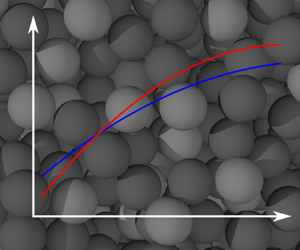
The shear-induced diffusivity of non-Brownian spheres in monodisperse suspensions undergoing viscous flow was calculated using simulations that account for particle roughness and friction as independent parameters. The diffusivity increases significantly as the friction coefficient is increased, and the effect is largest on rougher particles. Roughness reduces the transverse diffusivities relative to smoother particles for sufficiently concentrated suspensions of frictionless and low-friction particles. However, the diffusivity of roughened particles is larger than smoother ones at high values of the friction coefficient. The increase of the diffusivity with friction is associated with a significant broadening of the variance of the rotational velocities. The most prevalent observation, when correlating the microstructure to changes in diffusivity for frictionless particles, is that less diffusive systems, with larger roughness, form layers along the flow direction. These results confirm previous experimental and simulation results that roughness can decrease diffusivity at large concentrations using a more detailed model. Also, comparisons of the simulation results with previously published experimental measurements indicate that friction improves the alignment of the results with experiments.
With the economic and political support of the United States, in July 1947, Turkey signed contracts with the Westinghouse Electric International Company and J.G. White Engineering Corporation to construct its first international civilian airport, Istanbul's Yeşilköy Airport. As this article will argue, the building of Yeşilköy (1949–53), through a partnership with two American engineering firms, is essentially an early Cold War narrative of transnational exchange involving the multidirectional flow of technical knowledge, expertise and resources between the United States and Turkey; the circulation of geopolitically significant (and frequently competing) military, civilian and government actors; and the local and global implications of these transmissions. Yet the Yeşilköy construction narrative also illustrates how post-war technology transfer was a highly political process of constant adaptation, modification and negotiation. Fraught with unforeseen friction and thorny challenges, Yeşilköy exemplifies the complicated American Cold War strategy of creating and maintaining alliances through engineering knowledge, personnel and practices, often with unintended consequences. Moreover, as a case study, Yeşilköy opens a new window into the cautious science diplomacy that occurred along the Iron Curtain, while filling a notable historiographic gap with respect to aviation in early Cold War Turkey.
England's primary care service for psychological therapy (Improving Access to Psychological Therapies [IAPT]) treats anxiety and depression, with a target recovery rate of 50%. Identifying the characteristics of patients who achieve recovery may assist in optimizing future treatment. This naturalistic cohort study investigated pre-therapy characteristics as predictors of recovery and improvement after IAPT therapy.
Methods
In a cohort of patients attending an IAPT service in South London, we recruited 263 participants and conducted a baseline interview to gather extensive pre-therapy characteristics. Bayesian prediction models and variable selection were used to identify baseline variables prognostic of good clinical outcomes. Recovery (primary outcome) was defined using (IAPT) service-defined score thresholds for both depression (Patient Health Questionnaire [PHQ-9]) and anxiety (Generalized Anxiety Disorder [GAD-7]). Depression and anxiety outcomes were also evaluated as standalone (PHQ-9/GAD-7) scores after therapy. Prediction model performance metrics were estimated using cross-validation.
Results
Predictor variables explained 26% (recovery), 37% (depression), and 31% (anxiety) of the variance in outcomes, respectively. Variables prognostic of recovery were lower pre-treatment depression severity and not meeting criteria for obsessive compulsive disorder. Post-therapy depression and anxiety severity scores were predicted by lower symptom severity and higher ratings of health-related quality of life (EuroQol questionnaire [EQ5D]) at baseline.
Conclusion
Almost a third of the variance in clinical outcomes was explained by pre-treatment symptom severity scores. These constructs benefit from being rapidly accessible in healthcare services. If replicated in external samples, the early identification of patients who are less likely to recover may facilitate earlier triage to alternative interventions.
Pediatric bipolar disorder (PBD) is characterized by abnormal functional connectivity among distributed brain regions. Increasing evidence suggests a role for the limbic network (LN) and the triple network model in the pathophysiology of bipolar disorder (BD). However, the specific relationship between the LN and the triple network in PBD remains unclear. This study aimed to investigate the aberrant causal connections among these four core networks in PBD.
Method
Resting-state functional MRI scans from 92 PBD patients and 40 healthy controls (HCs) were analyzed. Dynamic Causal Modeling (DCM) was employed to assess effective connectivity (EC) among the four core networks. Parametric empirical Bayes (PEB) analysis was conducted to identify ECs associated with group differences, as well as depression and mania severity. Leave-one-out cross-validation (LOOCV) was used to test predictive accuracy.
Result
Compared to HCs, PBD patients exhibited primarily excitatory bottom-up connections from the LN to the salience network (SN) and bidirectional excitatory connections between the default mode network (DMN) and SN. In PBD, top-down connectivity from the triple network to the LN was excitatory in individuals with higher depression severity but inhibitory in those with higher mania severity. LOOCV identified dysconnectivity circuits involving the caudate and hippocampus as being associated with mania and depression severity, respectively.
Conclusions
Disrupted bottom-up connections from the LN to the triple network distinguish PBD patients from healthy controls, while top-down disruptions from the triple network to LN relate to mood state differences. These findings offer insight into the neural mechanisms of PBD.
Mycetoma is a chronic infection of the skin and the subcutaneous tissue caused by both bacteria and fungi. Eumycetoma, caused by fungus, requires prolonged use of antifungals and/or surgery.
Methods:
In this scenario it has been attempted to treat a case of eumycetoma with an aim to improve the symptoms and to give an antifungal drug free period. Radiotherapy was delivered in two sittings. In the first sitting, 20 Gy in five fractions was given. Because of the excellent response to the radiotherapy, after 9 months, another 15 Gy was delivered in five fractions.
Results:
The symptom-free period extended for another 11 months, making a cumulative effect of 21 months.
Conclusion:
The use of radiotherapy in the salvage of refractory eumycetoma cases should be further explored.
This study investigates the level of knowledge and utilization of colorectal cancer (CRC) and prostate cancer (PCa) early detection measures (EDMs) over a period of 12 years in general practice from the patient’s perspective.
Background:
The role of general practitioners (GPs) in EDMs for CRC and PCa in Germany is not well-documented with comprehensive data.
Methods:
We conducted a patient-centric survey in the German federal state of Berlin-Brandenburg at a 12-year interval to examine the role of GPs in EDMs for CRC and PCa. In 2009, 55 GPs were tasked with informing 50 consecutive male patients, each aged over 35, about participating in a survey study (study phase 1/SP1). To evaluate changes over 12 years, a new survey involving 50 male patients from each of 150 GPs was conducted from October 2021 to March 2022 (SP2).
Findings:
We thoroughly reviewed the questionnaires of 890 patients, with 755 in SP1 and 135 in SP2. Patients showed greater awareness of recommendations regarding colonoscopy compared to prostate-specific antigen (PSA) testing. GPs were the most frequently reported source of information for both EDMs in our cohort. Comparing the two study phases, no significant difference in specific awareness of colonoscopy or PSA testing was found among men eligible for EDMs. However, there was a notable increase in the role of health insurance companies as a source of information about colonoscopy over time. Nearly 60% of included patients underwent colonoscopy and/or PSA testing as EDMs.
Conclusion:
The number of EDMs performed among study participants did not increase over time. Our study confirms that GPs remain the primary source of information about EDMs among the study participants.
This study investigates the importance of interregional mobility along the Eastern Silk Roads during the Mongol period, highlighting the interconnectedness of postal and pilgrim networks in eastern Central Asia, with a particular focus on mid-fourteenth-century changes in the multifaceted dynamics of overland mobility under Mongol rule. By referencing an extensive corpus of Old Uyghur and Middle Mongolian administrative texts, as well as pilgrim inscriptions, the research provides a nuanced understanding of the relationship between the Mongol administration and the postal system within it, and how they were connected with pilgrim activities. The article uncovers valuable insights into how mobility patterns changed over time. Furthermore, a comprehensive analysis of the geographical aspects of these networks reveals enduring links between the Eastern Tianshan Region and the Gansu Corridor, whilst also underlining the expansion of pilgrim networks during the Mongol period. The research also explores the societal implications of these mobility networks, highlighting the importance of religious affiliation and social status in overland mobility. This comprehensive analysis illuminates the Eastern Silk Roads and presents a unique perspective on the interplay of political, religious, and socio-economic factors that shaped the history of the region during Mongol rule.
Substance use may be associated with the onset of psychotic symptoms, necessitating treatment for individuals with comorbid mental health and substance use disorders (MHD/SUD). COVID-19 significantly impacted individuals with MHD/SUD, reducing access to appropriate care and treatment. Changes in drug availability and prices during the pandemic may have influenced drug consumption. This study aimed to determine the frequency of substance-induced psychosis (SIP) during COVID-19 among individuals with MHD/SUD and to explore substance fidelity by following patterns of SIP over time.
Method
In this retrospective cohort study, we analyzed data from all individuals with MHD/SUD registered in 2019–2021 in the Norwegian Patient Register. We used graphical approaches, descriptives, and Poisson regression to study occurrence and risk of SIP episodes in the three-year observation period. Sankey diagrams were used to examine trajectories of psychotic episodes induced by various substances.
Results
Despite a decrease in individuals diagnosed with SIP during COVID-19, SIP episodes increased overall. We observed a decline in cannabis-induced psychosis, but a rise in SIP episodes involving amphetamines and multiple substances. Among individuals with recurrent SIP episodes, the psychosis was more often induced by different substances during COVID-19 (2020: RR, 1.50 [95% CI, 1.34–1.67]; 2021: RR, 1.30 [95% CI, 1.16–1.46]) than in 2019.
Conclusion
During COVID-19, fewer individuals were hospitalized with SIP, but those patients experienced more episodes. There were fewer cannabis-induced psychotic episodes, but more SIP hospitalizations caused by central stimulants and more SIP diagnoses caused by different substances, possibly reflecting changes in drug availability and pricing.
Recently, scholars have advanced an ideal of the entrepreneurial state in which industrial policy is pursued in a mission-directed manner. Crucially, this perspective does not merely call for the heavier use of industrial policy, but envisions the state as a central focal point, mobilising society around the pursuit of a common mission. Using the historical example of East Asia's developmental state, which closely resembles its contemporary variant, I demonstrate that mission-directionality – should it be consistently applied – tends towards the pursuit of a singular overarching mission, and could require the use of authoritarian and disciplinary mechanisms to sustain mission focus in an environment of uncertainty. In turn, this potential risk arises because mission-directionality seeks to transcend the otherwise directionless nature of market-based and democratic decision-making through the use of bureaucratic discretion, to align the behaviour of social actors in a cohesive and directional manner.
In this short note, we show that every convex, order-bounded above functional on a Fréchet lattice is automatically continuous. This improves a result in Ruszczyński and Shapiro ((2006) Mathematics of Operations Research31(3), 433–452.) and applies to many deviation and variability measures. We also show that an order-continuous, law-invariant functional on an Orlicz space is strongly consistent everywhere, extending a result in Krätschmer et al. ((2017) Finance and Stochastics18(2), 271–295.).
Cognitive impairment is a core feature of psychosis, which adversely affects global functioning and quality of life and has been consistently reported from the early stages of illness. Patients with first-episode psychosis (FEP) exhibit deficits in processing speed, short-term memory, attention, working memory, and executive functioning, which respond poorly to psychotropic drugs. Among non-pharmacological approaches, physical activity has shown promise in improving cognitive functioning in schizophrenia spectrum disorders. However, current evidence lacks specific data on individuals with FEP. In this review, we aim to explore the potential role of physical activity-based interventions in ameliorating the cognitive functions of people with FEP.
Methods
The literature search was conducted on PubMed, PsycINFO, and Web of Science in March 2024, identifying 127 de-duplicated records. One additional article was identified by screening the reference lists of the included studies. A total of six studies fulfilled the inclusion criteria and were reviewed. They all analyzed the effect of structured physical activity interventions on the cognitive functioning of patients with FEP.
Results
Preliminary findings suggest that physical activity interventions enhance memory, attention, and executive functions of patients with FEP but not social cognition and motor function.
Conclusions
Study differences in sample characteristics, design, and intervention protocols prevent firm conclusions about the cognitive-boosting effects of the interventions in FEP. Further studies using more rigorous methodologies are needed to understand the durability of these effects and the underlying mechanisms.
A year after the premiere of the complete Ring cycle in Bayreuth in 1876, a concert-form ‘London Wagner Festival’ took place at the Royal Albert Hall, newly opened in South Kensington near the site of the Great Exhibition of 1851. Comprising lengthy excerpts from Wagner’s operas performed by a vast orchestra and star singers, this event was partly born out of financial necessity in the aftermath of the costly and extravagant staging of the Ring in Bayreuth. But Wagner’s London connections also reveal the significance of Victorian industry and the built environment in disseminating his music dramas and shaping listening practices beyond Bayreuth. This article situates the London Wagner Festival in relation to the early history of the Royal Albert Hall, foregrounding the contributions and responses of Victorian architects, engineers, concert reformers and musical critics to the peculiarly modern phenomenon of the massive concert. By approaching the Albert Hall as a medium for the early dissemination of Wagner’s music dramas, I seek to make a broader case for the relevance of the nineteenth-century concert hall to histories of operatic performance and technological mediation.
Early robust design (RD) can lead to significant cost savings in the later stages of product development. In order to design systems that are insensitive to various sources of deviation in the early stages, specific design knowledge (SDK) plays a crucial role. Different design situations result in higher or lower levels of derivable SDK, which leads to different activities to achieve the development goal. Due to the variety of design situations, it is difficult for design engineers to choose a more robust concept to avoid the costly iterations that occur in the later development stages. Existing RD methods often do not adequately support these differences in design situations. To address the problem, this paper outlines an adaptive modeling method using the Embodiment Function Relation and Tolerance model. The method is developed in two contrasting design situations, each with a high and low level of derivable SDK, and evaluated in another two corresponding case studies. It has a consistent structure with five stages and gates. At each stage, the derivable SDK is taken into account and the individual modeling steps are adapted. This method provides design engineers with concrete support for early robustness evaluation of a product concept in different development scenarios.
Consumers have in law been defined as the weaker parties in a transaction. Contract laws have integrated consumer protection with a view to balancing the interests of the parties, ensuring equal bargaining power and to some extent substantive fairness in contractual relations. Rules of consumer protection have therefore, from a contract lawyer’s perspective, been construed as expressions of a general principle of equality. The principle of equality, conceived in this way, complements the general principle of autonomy underlying contract law, which embodies the idea that parties should have the capacity for self-realisation. Does this construction of consumer contract law still hold in EU consumer markets transformed by the rise of online platforms and the overall move towards an economy based on services and experiences rather than the sale of physical goods? Or do we need to redefine the ways in which the principle of equality is expressed in European contract law in order to correct for new inequalities arising between consumers and businesses? This article aims to answer that question against the backdrop of established insights of the ways in which the rationality of European contract law differs from that of national, doctrinal private law systems. It concludes that the rules laid down in instruments such as the Unfair Commercial Practices Directive (UCPD) and the Unfair Contract Terms Directive (UCTD) can protect consumers against exploitative practices. However, problems arise in cases where the interest at stake go beyond economic interests and concern also non-economic interests, such as data protection or freedom of expression, or do not have a market exchange value. Solutions can be pursued, it is submitted, by the European legislator and the European Court of Justice, potentially using the EU Charter of Fundamental Rights as a catalyst for reform.
Buildings employ an ensemble of technical systems like those for heating and ventilation. Ontologies such as Brick, IFC, SSN/SOSA, and SAREF have been created to describe such technical systems in a machine-understandable manner. However, these focus on describing system topology, whereas several relevant use cases (e.g., automated fault detection and diagnostics (AFDD)) also need knowledge about the physical processes. While mathematical simulation can be used to model physical processes, these are practically expensive to run and are not integrated with mainstream technical systems ontologies today. We propose to describe the effect of component actuation on underlying physical mechanisms within component stereotypes. These stereotypes are linked to actual component instances in the technical system description, thereby accomplishing an integration of knowledge about system structure and physical processes. We contribute an ontology for such stereotypes and show that it covers 100% of Brick heating, ventilation, and air-conditioning (HVAC) components. We further show that the ontology enables automatically inferring relationships between components in a real-world building in most cases, except in two situations where component dependencies are underreported. This is due to missing component models for passive parts like splits and join in ducts, and hence points at concrete future extensions of the Brick ontology. Finally, we demonstrate how AFDD applications can utilize the resulting knowledge graph to find expected consequences of an action, or conversely, to identify components that may be responsible for an observed state of the process.