To save content items to your account,
please confirm that you agree to abide by our usage policies.
If this is the first time you use this feature, you will be asked to authorise Cambridge Core to connect with your account.
Find out more about saving content to .
To save content items to your Kindle, first ensure no-reply@cambridge.org
is added to your Approved Personal Document E-mail List under your Personal Document Settings
on the Manage Your Content and Devices page of your Amazon account. Then enter the ‘name’ part
of your Kindle email address below.
Find out more about saving to your Kindle.
Note you can select to save to either the @free.kindle.com or @kindle.com variations.
‘@free.kindle.com’ emails are free but can only be saved to your device when it is connected to wi-fi.
‘@kindle.com’ emails can be delivered even when you are not connected to wi-fi, but note that service fees apply.
Published guidelines for conducting clinical trials for migraine therapeutics recommend recruiting participants based on disease epidemiology and including sex/gender-based subpopulation analyses. These recommendations aim to improve the quality and generalizability of migraine clinical trials. The aim of this study was to summarize participant demographics in migraine clinical trials for FDA-approved calcitonin gene-related peptide (CGRP)-targeting drugs (receptor antagonists [gepants], CGRP peptide or receptor monoclonal antibodies [mAbs]) and assess the use of sex/gender-based subpopulation analyses in these studies.
Methods:
We conducted a review of industry-sponsored migraine clinical trials for FDA-approved CGRP-targeting medications. Demographic data (sex and/or gender) from phase II or III trials were abstracted, and the use of sex/gender-based analyses was recorded.
Results:
Fourteen trials of gepants were included in this analysis. Participants who were identified as females or women were more likely to participate in these trials (87.0 ± 2.2%). Twenty-four trials of CGRP mAbs were reviewed. These studies also reported that participants were predominantly identified as female or women (84.9 ± 2.3%). None of the clinical trials reviewed reported sex/gender-based analyses of their results.
Conclusions:
This study suggests that men are underrepresented in migraine CGRP clinical trials. Greater attention to sex and gender is needed in migraine clinical trial design so that they better align with current recommendations made by headache societies and regulatory agencies.
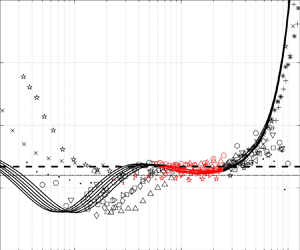
Empirical evidence is provided that within the inertial sublayer (i.e. logarithmic region) of adiabatic turbulent flows over smooth walls, the skewness of the vertical-velocity component $S_w$ displays universal behaviour, being a positive constant and constrained within the range $S_w \approx 0.1\unicode{x2013}0.16$, regardless of flow configuration and Reynolds number. A theoretical model is then proposed to explain this behaviour, including the observed range of variations of $S_w$. The proposed model clarifies why $S_w$ cannot be predicted from down-gradient closure approximations routinely employed in large-scale meteorological and climate models. The proposed model also offers an alternative and implementable approach for such large-scale models.

As pressures build, this study can serve as a guidepost for scholars and policymakers to learn from global trends in social inclusion and social inclusion policy. Our systematic review of global trends in social inclusion and social inclusion policy points to the general expansion and retrenchment of social inclusion policy amid increasing social exclusion associated with trends such as globalisation and neoliberalism. In the absence of recent, detailed case descriptions of social inclusion policy at the national level, we call for a renewed scholarly focus on case studies of social inclusion policy. We also discuss the likelihood that persistent climate change, migration, ageing populations, and technological innovations are poised to dramatically influence global social inclusion and suggest that future research should seek to understand the relationship between these developments and social inclusion. As we look to the future and the growing needs of excluded populations, we aim to use this study to learn from and build on these global trends to promote the inclusion of excluded groups around the world.
Drosophila melanogaster has given enormous contributions to Space Biology Research. This organism is an important tool to be manipulated in genetic engineering and molecular experiments in order to understand different biological processes homologous to other multicellular systems, including humans. Their milestone contribution in microgravity conditions and radiation, the two most important variables in space, have allowed new knowledge and perspectives on the positive and negative effects on cellular, molecular and genetic levels. In this review, we expose the historical contribution of Drosophila melanogaster in Astrobiology.
Local context is the most common concern regarding use of a single institutional review board (sIRB). Yet what “local context” constitutes remains underspecified. Developing a shared understanding of the goals of local context review, the categories of information that should be considered, as well as the types of studies for which sIRB review may be inappropriate, are critical for ensuring that sIRB review provides adequate protections for human subjects.
Methods:
We conducted a three-round modified Delphi process convening individuals with expertise in the conduct and oversight of multisite research. Delphi surveys explored: (1) the goals of local context review; (2) the types of information that should be considered; and (3) study types that should be exempted from sIRB requirements.
Results:
Twenty-one experts participated. Experts agreed that (1) local context review should aim to both protect local participants and ensure compliance and (2) that four types of information should be considered (population/participant-level characteristics; investigator and research team characteristics; institution-level characteristics; and state and local laws). There was less consensus about whether existing processes facilitated adequate consideration of this information. Experts agreed that exemptions from sIRB requirements should be permitted but disagreed about when and in what circumstances.
Conclusion:
There is overlapping consensus about both the goals of local context review and the types of information that should be assessed. Future work remains, however, to develop effective processes to best realize the goals of local context review – and do so with appropriate efficiency.
This article examines the role of normative power in shaping the global sustainability order. It challenges the prevailing focus on hegemonic leadership and norm diffusion from dominant states, arguing that less powerful states have contributed significantly to the global order by creating regional initiatives tailored to their unique contexts. The article adopts an alternative theoretical framework of norm-governed change, comprising norm-building, institutionalisation, and transformation. Using an illustrative case study of Africa’s regional economic institutions, it employs process-tracing and archival analysis of key policy documents. The study demonstrates how African states have proactively embedded environmental norms within their regional initiatives, while contributing to the global sustainability agenda, exemplifying a form of normative power referred to as ‘Green Pan-Africanism’. This approach broadens the understanding of global sustainability governance, positioning less economically powerful actors as active participants in world-making. The findings highlight the critical role of normative power in advancing global sustainability governance, particularly in addressing complex global challenges such as climate change.
We are living through cruel and frightening times. How should a progressive policy studies respond? Critique undoubtedly plays a role: the task of exposing the structural conditions, political interests and power asymmetries that lie beneath the ‘prosaic surface’ of policy is an urgent one. But are these primarily deconstructive efforts enough? Can they lead us out of this quagmire, alone? In this article, we argue that something additional – something more generative and hopeful – is also required. In response, we introduce ‘critical utopian policy analysis’ (CUPA) a methodological elaboration of critical policy analysis (CPA) designed to support its use in both deconstructive and reconstructive policy efforts. This approach builds on the theoretical offerings of critical policy analysis, utopianism and prefiguration, to posit a methodological embrace of critique, imagination, enactment and play. It seeks to mobilise a complex nexus of affect – including heartbreak and hope – to motivate and support a range of intellectual undertakings and emancipatory politics.
We study an epidemic patch model that describes the disease spread in population with variable latency due to the differences in immunologic tolerance between individuals. We focus on whether the disease can spread in space that leads to the emergence of epidemic wave, that is the travelling wave solution with constant speed. We first establish some properties of the linearized wave profile equations, which are helpful in obtaining the priori estimates of travelling waves and wave speeds. Then, applying the truncation method and limiting arguments, we can obtain threshold propagation dynamics of the epidemic model. Our result gives a complete characterization of the existence, nonexistence and minimal wave speed of travelling waves. To the best of our knowledge, this is the first time to characterize the propagation dynamics of epidemic patch model with variable latency, which contributes to the understanding of the transmission phenomenon of disease.
The Implementation Science Centers in Cancer Control (ISC3) initiative, funded by the National Cancer Institute, called for the development of implementation laboratories to bolster implementation science, create research-ready environments, and expedite adoption and implementation of evidence-based interventions (EBIs) into practice. The Building Research in Implementation and Dissemination to close Gaps and achieve Equity in Cancer Control (BRIDGE-C2) Center is one of seven ISC3 centers. BRIDGE-C2 aims to identify strategies to improve implementation of cancer prevention EBIs and conduct research / develop pragmatic methods to tailor, enhance, and support the adoption and sustainability of these strategies; advance implementation science; and build capacity and training opportunities. Since its inception, the BRIDGE-C2 Center has been conducting research and training activities to advance knowledge on how to effectively implement strategies to improve cancer prevention EBIs in primary care clinics serving socioeconomically disadvantaged patients. The translational science benefits model (TSBM) provides a useful framework for organizing a description of the BRIDGE-C2 Center’s activities. In this paper, we describe examples of BRIDGE-C2 activities and the specific impact indicators within each relevant domain/subdomain of the TSBM, demonstrating that a single activity or project has multiple impacts on methods and capacity building, clinical domains, and community health.
Recent research has shown that music interventions involving body movements are beneficial for reinforcing music learning. Given the reported positive transfer between music training and phonological skills, we investigated, for the first time, the value of an embodied music training program for improving pronunciation skills. In a classroom experiment, 48 Chinese adolescent learners of English participated in three 40-minute sessions of either Dalcroze-inspired embodied music training or treatment-as-usual non-embodied music training. Participants in the embodied music group were involved in a series of activities designed to develop their rhythmic and melodic skills through bodily experiences. Participants in the non-embodied music group followed music lessons designed by their music teacher, appreciating music pieces and receiving music knowledge. Before and after training, participants were tested with a language imitation task using six unfamiliar languages and an oral reading task in second language English. Results show that the embodied music group significantly outperformed the non-embodied music group in both tasks. Overall, our findings suggest that an embodied music training program has beneficial effects on pronunciation skills, supporting an embodied-based language teaching approach.
With the passage of the Climate Change Act, and to help meet its net zero obligations by 2060, Nigeria must transition from its dependence on fossil fuel energy sources to renewable energy. This will involve the procurement of large amounts of renewable energy by the government. In the past, procurement of power from the government-owned bulk trader has been chaotic, with no discernible strategy, and it is doubtful whether the government or Nigeria's citizens have derived value for money from the process. This article suggests a transition from the current, mostly unsolicited, proposal system to energy auctions, as the authors believe that this will help the country achieve low prices for renewable energy. The article also examines polices that have been implemented in other countries to drive energy auctions, with a view to applying relatable practices to the Nigerian exercise.
This volume assesses the role of intellectual property in pandemic times through lessons learned from COVID-19. Authored by an international roster of experts, chapters diagnose causes for the inequitable distribution of lifesaving COVID-19 vaccines and offer concrete suggestions for reform. From delinking vaccine development from monopoly rights in technology, to enhanced legal requirements under national and international law for sharing publicly funded technologies, to requiring funding from rich nations to former colonies to build local vaccine manufacturing capacity in low and middle-income countries (including those in Africa), this work highlights timely IP reforms that prepare us for the next pandemic. This title is also available as Open Access on Cambridge Core.
We model the slip length tribometer (SLT), originally presented by Pelz et al. (J. Fluid Mech., vol. 948, 2022, p. A8) in OpenFOAM. The plate tribometer is especially designed to simultaneously measure viscosity and slip length for lubrication gaps in the range of approximately 10 $\mathrm {\mu }$m at temperatures and surface roughnesses relevant to technical applications, with a temperature range of $-30$ to $100\,^\circ \mathrm {C}$ and surface roughness ranging from $10\ \mathrm {nm}$ to $1\ \mathrm {\mu }\mathrm {m}$. A simplified analytical model presented by Pelz et al. (J. Fluid Mech., vol. 948, 2022, p. A8) infers the slip length of the plate from the experimentally measured torque and the plate gap height. The present work verifies the analytical model using axisymmetric flow simulations and presents the effect of inlet on the numerical velocity profiles. The simulation results are in very good agreement with the results of the analytical model. The main conclusion drawn from this study is the validation of the Navier-slip boundary condition as an effective model for partial slip in computational fluid dynamics simulations and the negligible influence of the inlet on the fluid flow between the SLT's plates.
The article at hand introduces a comprehensive foundational database on the Czech Constitutional Court spanning from its inception in 1993 to 2023. The database includes metadata on all decisions, full-text corpus, and additional background data on judges and law clerks, filling a gap in high-quality datasets for empirical legal research in the Central and Eastern European regions. As one of the first comprehensive court databases in the CEE region, it has the potential to catalyze similar research efforts and contribute to methodologically rigorous empirical legal research in a region of increasing European significance.
This research explores the theory of authentic leadership and the critiques on the theory by analyzing the portrayals of Queen Elizabeth II, Princess Diana, and Margaret Thatcher in season 4 of the Netflix’s series The Crown. Utilizing directed qualitative content analysis, we seek to understand how authenticity in leadership is manifested, its limitations, and the role of gender within this framework. The investigation highlights the challenges leaders face between expected role fulfillment and genuine self-expression. It explores the benefits and drawbacks of authenticity, the attribution of authenticity when the leaders deviate from the formal roles, the nature of the role as influencing the expression of authenticity (e.g., degrees of freedom associated with each role) and the complex interaction between gender and authenticity. In response to these findings, the concept of ‘leader bounded authenticity’ is proposed, suggesting a balance between adhering to the formal role and the display of authentic leadership.
Using information from all International Monetary Fund conditionality programmes from 1990 to 2018, we implement a dynamic Augmented Inverse Probability Weighting Regression Adjustment approach to enquire whether public-sector employment retrenchment may be incompatible with the goal of shrinking the informal economy. The estimated effect 5 years after the policy intervention indicates an increase in the share of the shadow economy to GDP by about 1.3 percentage points. More importantly, this change involves a sizable reallocation of private economic activity from its formal to its informal part; that is, the size of the formal private sector relative to the size of the informal sector decreases by seven percentage points. We interpret these findings through a two-sector model in which there is interdependence between worker incomes and the allocation of product demand across the formal and informal sectors.
How does ‘Europe’ cope with its dark past and how does it handle its internal conflicts and contradictions? This is the question at the heart of Christian Joerges’s 600-page opus magnum Conflict and Transformation – Essays on European Law and Policy where he advances his reconceptualization of EU law as a particular form of conflicts law as his answer. But the problem constellation the EU is faced with in today’s world is well-beyond what can be encapsulated by a conflicts law perspective. As an alternative the idea of transformative law is introduced and its potential for acting as a basis for the reconceptualization of the EU legal order discussed. Joerges’s oeuvre moreover has a blind angle, as it is internalistic in nature. But rather than internal forces driving the integration project forward the structural trigger and driver of European integration should rather be found in the reconfiguration of Europe’s relations with the wider world. From (de-)colonialisation to todays ‘fragmented globalisation’ it is the structural reconfigurations of Europe’s relationships to the rest of the world which is the central driver of the integration process.
We review journal publications from 2007 to 2023 that specifically study or consider racial/ethnic and gender differences in financial knowledge. Of the 32 papers we review, 12 focus on racial/ethnic differences, 7 focus on gender differences, and 13 consider racial/ethnic and gender differences. From these studies, we estimate that, on average White adults score 17 percentage points higher than Black adults on objective financial knowledge, 14 percentage points higher than Hispanic adults, and 2 percentage points lower than Asian adults. We also estimate that, on average, men score 13 percentage points higher than women on objective financial knowledge. We also provide average racial/ethnic and gender differences in subjective financial, knowledge, and these differences across groups seem much smaller. We provide an overview of possible determinants for these racial/ethnic and gender gaps in financial knowledge. We discuss how stakeholders should leverage research on financial knowledge and directions for future research with the purpose to address racial/ethnic and gender gaps in financial knowledge in the United States.
Cognitive function plays a pivotal role in assessing an individual’s quality of life. This research aimed to investigate how azelaic acid (AzA), a natural dicarboxylic acid with antioxidant and anti-inflammatory properties, affects aluminium chloride (AlCl3)-induced behavioural changes and biochemical alterations in the hippocampus of rats.
Methods:
Thirty-two male Wistar rats divided into four groups received distilled water, AzA 50 mg/kg, AlCl3 100 mg/kg and AzA plus AlCl3, respectively, by oral gavage for 6 weeks. Behavioural changes were evaluated using open-field maze, elevated plus maze, novel object recognition (NOR), passive avoidance task, and Morris water maze (MWM) tests. Also, malondialdehyde (MDA), carbonyl protein, tumour necrosis factor-alpha (TNF-α), interleukin-1 beta (IL-1β), nuclear factor-kappa B (NF-κB), C/EBP homologous protein (CHOP), glycogen synthase kinase-3 beta (GSK-3β), brain-derived neurotrophic factor (BDNF) and acetylcholinesterase (AChE) activity were examined.
Results:
AzA significantly affected AlCl3-provoked anxiety-like behaviours and learning and memory impairments. It also reduced the toxic effect of AlCl3 on MDA, carbonyl protein, TNF-α, IL-1β, NF-κB and GSK-3β status; however, its beneficial effects on AlCl3-induced changes of CHOP, BDNF and AChE activity were not significant.
Conclusion:
These findings disclosed that AzA could improve behavioural and cognitive function and almost limit the oxidative stress and neuroinflammation caused by AlCl3.