To save content items to your account,
please confirm that you agree to abide by our usage policies.
If this is the first time you use this feature, you will be asked to authorise Cambridge Core to connect with your account.
Find out more about saving content to .
To save content items to your Kindle, first ensure no-reply@cambridge.org
is added to your Approved Personal Document E-mail List under your Personal Document Settings
on the Manage Your Content and Devices page of your Amazon account. Then enter the ‘name’ part
of your Kindle email address below.
Find out more about saving to your Kindle.
Note you can select to save to either the @free.kindle.com or @kindle.com variations.
‘@free.kindle.com’ emails are free but can only be saved to your device when it is connected to wi-fi.
‘@kindle.com’ emails can be delivered even when you are not connected to wi-fi, but note that service fees apply.
Canada is regarded as an early adopter of democratic innovations, including the high-profile BC Citizens’ Assembly on Electoral Reform. To what extent has Canada maintained this trajectory? We examine this in the context of breadth and depth by examining trends in adoption over time across Canada and case-level adoption according to the dimensions of influence and temporality. While case studies of Canadian democratic innovations exist, these do not provide analytical capacity to understand trends in the breadth of adoption; we thus contribute a novel dataset of democratic innovations in Canada from 2000 to 2020. To analyze the depth of adoption, we present a two-by-three framework, which we apply to interpret our dataset of Canadian democratic innovations. We find that while there is an increase in the total number of democratic innovations, a low quantity is observed that exhibits high influence and permanence.
Time-domain characterization of ultrashort pulses is essential for studying interactions between light and matter. Here, we propose and demonstrate an all-optical pulse sampling technique based on reflected four-wave mixing with perturbation on a solid surface. In this method, a weak perturbation pulse perturbs the four-wave mixing signal generated by a strong fundamental pulse. The modulation signal of the four-wave mixing, which is detected in the reflection geometry to ensure a perfect phase-matching condition, directly reflects the temporal profile of the perturbation pulse. We successfully characterized multi-cycle and few-cycle pulses using this method. The reliability of our approach was verified by comparing it to the widely employed frequency-resolved optical gating method. This technique provides a simple and robust method for characterizing ultrashort laser pulses.
This chapter explores the definition of the notion of ‘family’ from an EU law perspective. The chapter first acknowledges the variable geometry of the family, and the absence of a uniform category of ‘family’ in EU legal norms. The chapter then shows that, despite the fragmentation of sources and the modulation of family circles, the way in which the EU characterises a person as a ‘family member’ obeys a form of logic and expresses a certain rationality. Borrowing from the work of Morgan and his notion of ‘doing family’, the chapter demonstrates that in addition to the de jure family members, other persons are counted as family members on the basis of them ‘behaving’ like family members. Barbou des Places concludes that ‘family members’ is a defined category of EU law: it designates the groups of people who are assumed to perform – or asked to prove that they do perform – different functions like education, care, protection and socialisation. It is subsequently emphasised that these roles are central because they contribute to a broader ambition, namely, participating in the cohesion of the whole of European society.
Over the past decade, ethnographers have increasingly paid attention to the ways in which practices and principles of financial speculation have been adopted in the governance of public and private resources. Those interested in matters of tax and taxation have typically associated speculation with tax evasion and fraud, paying less attention to other ways in which speculative thinking has entered the relationship between the taxpayer and the state. In this chapter, I examine the design and public reception of the Slovak National Receipt Lottery, one example of the way speculative logic has become part of governing the fiscal subject. I show how the Lottery both reflected and challenged established ideas of fiscal citizenship and redistributive justice, triggering novel anxieties about fraud, disclosure, and privacy amongst citizens and policymakers alike. It revealed a profound disconnect between the way policymakers imagined taxpayer behaviour and motivation, and citizens’ own perception of themselves as morally and socially embedded subjects. Finally, I suggest that the National Receipt Lottery is an example of speculative governance: a particular way of administering public life which combines elements of audit culture, behavioural policy, and gamification to generate social goods and shape citizen subjectivities.
This chapter elaborates upon the latter part of the Stockholm Conference preparation period, including key Swedish science diplomacy interventions and the production of three landmark scientific reports on climate change, acid rain, and environmental monitoring. It also recounts the efforts of Maurice Strong and Barbara Ward to reconcile the emerging North–South divide ahead of Stockholm by organizing a meeting of development economists in Founex, Switzerland. The drafting of the Stockholm Declaration, as well as other aspects of the actual Conference, its parallel events, and its final outcomes, are examined. The chapter also explores other important early-1970s developments in Stockholm related to the Conference and the ongoing institutionalization of international climate science. These include the environmental turn at the Royal Swedish Academy of Sciences embodied by the launch of the journal Ambio in 1972, a large donation to the Academy by a Swedish industrialist that led to the establishment of the influential Beijer Institute, and the convening of another major GARP Conference in Stockholm in 1974.
In this chapter, we describe the most important policy evaluation criteria that can be used to choose the appropriate mix of energy and climate policy instruments. We give space to economic efficiency, effectiveness, macroeconomic effects, equity, acceptability, enforceability, and administrative practicability. In the second part of the chapter, we present a simple overview of the most important economic models that can be used to estimate the impact of the introduction of energy and climate policy measures, such as applied general equilibrium models and integrated assessment models. Further, we provide a short introduction to some policy evaluation methods such as randomised controlled trials, difference-in-difference, and regression discontinuity designs that can be used to evaluate policy effectiveness.
After outlining sceptical theism (ST) and the fine-tuning argument (FTA), I demonstrate how arguments for the former undercut the latter. I then consider and reject three recent proposals for ameliorating the conflict: positive ST, considerations about normative superiors, and appeal to theistic metaethics. I contend, however, that Kirk Durston’s complexity argument for ST does not undercut the FTA but in fact supports it. In defending that thesis, I respond to Climenhaga’s contention that ST undermines all warrant for theistic belief, the FTA included.
This paper investigates the increasing, but complex, support for reparations among Democratic elected officials—highlighting their tendency to endorse the concept while deferring discussion of policy details. This strategic ambiguity is common in policy discourse and can be embedded within policy design, such as legislative proposals to create commissions tasked with studying and recommending future actions on reparations. The effectiveness of these reparations commissions is uncertain. They could represent productive steps toward genuine reparations or simply serve to alleviate political pressure without any substantial policy changes. We explore these potential outcomes in three inter-related analyses: a compilation and comparison of all bills mentioning slavery reparations introduced at the federal and state level, the first nationally representative public opinion poll asking about support for reparations commissions, and a content analysis of legislative bill texts establishing reparations commissions. Our findings suggest that while reparations commissions offer an effective way for Democratic policymakers to manage conflicting constituency pressures in the short term, their potential to propel forward, rather than stall, the reparations debate hinges on their design and execution.
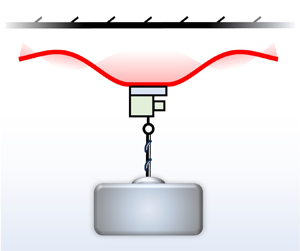
Developed in this study is a theoretical description of squeeze-film lubrication systems that involve the flexural oscillation of a thin plate near a parallel wall. Such systems were discovered in recent experiments to produce load-bearing attractive forces that are a thousandfold stronger than those generated by rigid oscillators, which typically favour repulsion. Analyses of squeeze-film gas flow driven by a presumed plate deformation reproduce the observed magnification of attractive load capacity, but exhibit serious discrepancies with crucial aspects of the experimental measurements – most importantly, the precise distribution of air pressure along the film. The discrepancies are resolved in this study by accounting for the presence of two-way-coupled fluid–structure interactions whereby the undulations of the plate, modelled here with use of the classical Kirchhoff–Love equation, are affected non-negligibly by the evolving pressure, described by a modified Reynolds lubrication equation that accounts for compressibility. The resulting problem of elastohydrodynamic lubrication is solved with use of perturbation methods that exploit the limit of small oscillation amplitudes. The analysis ultimately provides an explicit expression specifying the attractive load capacity of a squeeze-film system as a function of relevant operating parameters – including, in particular, the amplitude and frequency of the localized excitation force exerted on the plate. The rudimentary theory derived here may be readily generalized to guide the analysis and development of a wide variety of emerging engineering systems that exploit the vibration-induced squeeze-film effect – such as wall-climbing soft robots and contactless grippers.
Although many positive social changes have been achieved over the past 30 years, members of LGBT, Sistergirl and Brotherboy communities continue to encounter negative experiences with health and ageing service provision. In this article, 232 responses from a survey exploring ageing and care concerns and preferences among LGBT, Sistergirl and Brotherboy communities in Australia were analysed using chi square analysis. The largest proportion of participants were aged 55–64 years (26.4%, n = 61), with the majority residing in metropolitan regions (67.7%, n = 154). The three most frequently selected gender identities were cisgender woman (40.1%, n = 93), cisgender man (39.7%, n = 92) and non-binary (11.6%, n = 28). The three most frequently selected sexual orientations were gay (39.2%, n = 91), lesbian (32.0%, n = 77) and queer (17.7%, n = 41). While many concerns demonstrated no age-related differences, concerns regarding physical differences, respect and inclusion, finances and standard of care reflected higher levels of concern among younger participants compared with older participants. Preferences for receiving information reflected a desire for LGBT, Sistergirl and Brotherboy communities-specific resources for options for support from participants approaching retirement, that is, aged 55–64 (x2 (5, n = 178) = 11.08, p = 0.050); less desire for information provided through public health service services among participants aged 65+ (x2 (5, n = 178) = 15.58, p = 0.008); and variation in preferences regarding supports provided by LGBT, Sistergirl and Brotherboy communities. Results suggest that different generations of LGBT, Sistergirl and Brotherboy members may prefer to receive services and information in different ways. Further research is needed to understand how concerns, expectations and preferences are influenced across generations.
Urban areas are increasingly recognized as important centers of biodiversity. Nonetheless, invasive species can reduce this biodiversity, and cities can be hubs for alien plant invasions, highlighting the need to monitor urban biodiversity and problematic alien species. The goal of our study was to assess the distribution of wild chervil [Anthriscus sylvestris (L.) Hoffm.] and anise [Myrrhis odorata (L.) Scop.] in green spaces of Reykjavík, Iceland. This information is necessary to implement the city’s biodiversity strategy regarding invasive species. Both of these alien plants are spreading throughout Iceland, and Reykjavík’s high-latitude location (≥63°N) and remoteness make it an ideal case study to assess alien plant introductions and invasions in subarctic urban areas. We surveyed four green spaces (Laugarnes, Vatnsmýri, Elliðaárdalur, and Ægisiða) from May to October 2017 using AllTrailsPro and ArcGIS mobile applications. ANOVA and Bonferroni correction (post hoc test) were used to compare the distribution and patch sizes of A. sylvestris and M. odorata among the study sites. We found that A. sylvestris covered at least 10% (15.5 ha) of the total area surveyed (158 ha), while M. odorata only covered ≤1 ha. Both plants were abundant near buildings, pathways, riversides, and streams, and they are expanding their distribution in Reykjavík’s green spaces. While A. sylvestris is clearly more established and widespread with larger patches (>100 m2), the distribution of M. odorata is more localized, occurring mainly in smaller patches (<100 m2). We recommend long-term monitoring to further assess M. odorata’s invasive potential, as well as testing and adopting integrated weed management strategies via adaptive management to control the distribution of A. sylvestris and that of other problematic alien plants. These actions, which are applicable to other subarctic cities, will help foster more proactive management encouraging urban biodiversity.
We demonstrate the post-compression of the GW-level femtosecond pulse in a solid-state multi-pass cell (MPC) by the pre-chirp management method. When the laser pulse is positively pre-chirped, the 200 μJ 170 fs input pulse is compressed to 163 μJ 44 fs at the output, corresponding to a transmission of 81% and a pulse shortening factor of 3.86. When the laser pulse is negatively pre-chirped, the spectral evolution, as the pulse propagates in the MPC, is characterized and, eventually, the pulse duration is compressed to 51 fs, corresponding to a pulse shortening factor of 3.3. After the driving laser goes through the pre-chirp managed MPC device, the power stability and beam quality are almost preserved. The experimental results offer a viable path toward the post-compression of high-peak-power laser pulses.
This chapter investigates tax payments and self-making amongst Romanian migrants in London. Vicol demonstrates how taxation is a mode of anchoring oneself in a moral order premised on self-sufficiency. Although the UK’s mainstream media cast Romanian migrants through tropes of welfare dependency, Romanian self-narrations as hard working, taxpaying subjects enabled interlocutors to constitute themselves as good migrants. However, becoming a taxpayer in practice was also an exercise in a particular type of bureaucratic literacy. A host of digital barriers, language deficiencies, and unhelpful bureaucrats drove many to seek out private consultants who made a business of helping their co-nationals decode their obligations to HM Revenue and Customs. Thus, this chapter also explores taxpaying as a technical exercise of making oneself legible through the language of the fiscal authority. Taxation becomes part of the making of the migrant subject. It is about the paradoxical ways in which a digitising state premised on self-reliance prompts affirmations of independence at the level of discourse, while simultaneously generating new networks of dependency in practice.
In this chapter, we present and discuss the theory of energy demand for the residential sector and for the industrial sector. For the residential sector, we provide a discussion of household production theory, whereas for firms, we discuss duality and production theory. We also provide an extensive discussion on how researchers are estimating energy demand models using empirical methods to derive income and price elasticities, and we provide tables with information on price, income, and substitution elasticities derived in studies that have been recently published. At the end of the chapter, we discuss issues in developing countries related to the topics discussed in the chapter.
The maximum temperature that a geotechnical bentonite barrier in a deep geological repository for radioactive waste can withstand while maintaining its integrity and meeting safety requirements is still an open question. Therefore, an international consortium set up an in situ heater test (HotBENT experiment) at the Grimsel Test Site (GTS) in Switzerland at relevant scales and gradients with temperatures ranging from 175°C to 200°C at the heater/canister surface. After dismantling (5 and 20 years, respectively), the identification of bentonite alteration processes of (clay) minerals has to be based on the comparison of data with reference values determined before the heating started. The experiment was set up using ~150 tons of two different clays (Wyoming and BCV from the Czech Republic) provided in different batches. The bentonites were used both as compacted bentonite blocks and as granular bentonite material (GBM). The determination of representative mineralogical and geochemical bentonite reference values must be based on a significant number of samples taken from all parts of the experiment, which is presented here. Most of the compositional variability was close to the accuracy of the methods used. However, chemical, mineralogical and exchangeable cation analyses showed that different raw materials were used to produce the BCV top blocks. The Wyoming bentonite used is similar to MX80 bentonite in that it is dominated by Na-rich smectite, but the HotBENT material contains slightly more feldspar and zeolite and slightly less smectite. Overall, 55 samples were analysed from different parts of the experiment, providing a statistical basis for post-excavation investigations.
This chapter contributes an ethnographic case study on the creation of international tax norms at the OECD during the ‘Base Erosion Profit Shifting’ initiative. I argue that what makes countries share taxing rights and multinational corporations give money, as in tax to specific jurisdictions and not to others, is not necessarily this ‘natural’ law of reciprocity, but changes to the dominant modes of relatedness, conversation, and presence in international tax norms. Tax scholars, but also recent anthropological studies on tax, explore taxes against a gift-exchange logic. I suggest that this conceptual obsession with mutual interest, return, and benefits obscures the fact that taxes are often unilateral monetary transactions. More generally, it overlooks the human capacity to give and provide, under specific conditions, without calculating or receiving something in return. While taxation is not a form of sharing, I argue that it is productive to pay attention to the many similarities between these two types of transfers. They share, at times as I show in the chapter, more commonalities than taxation and reciprocal gift exchanges, and there are moments when taxation facilitates and enables sharing.
This chapter is a study of the Swedish Tax Agency work with mottos and shows how the STA has increasingly legitimised their work with the Swedish taxpayers. It reveals how a tax administration has responded to contemporary politics, which tax compliance research has been applied, and its adaptation to contemporary trends in public organization, while paying attention to how taxpayers view them. It also shows how a tax administration adapts to societal change, and how the mottos over time convey messages about the importance of taxes for Swedish society and which types of individual – moral – behaviour are seen to constitute society. These fiscal mottos are thus imperative as they make, in Douglas Holmes’ words, ‘promises of a distinctive social order’, one where all taxpayers ought to be willing to pay their taxes due to society and trust that all other taxpayers are made to do the same.