To save content items to your account,
please confirm that you agree to abide by our usage policies.
If this is the first time you use this feature, you will be asked to authorise Cambridge Core to connect with your account.
Find out more about saving content to .
To save content items to your Kindle, first ensure no-reply@cambridge.org
is added to your Approved Personal Document E-mail List under your Personal Document Settings
on the Manage Your Content and Devices page of your Amazon account. Then enter the ‘name’ part
of your Kindle email address below.
Find out more about saving to your Kindle.
Note you can select to save to either the @free.kindle.com or @kindle.com variations.
‘@free.kindle.com’ emails are free but can only be saved to your device when it is connected to wi-fi.
‘@kindle.com’ emails can be delivered even when you are not connected to wi-fi, but note that service fees apply.
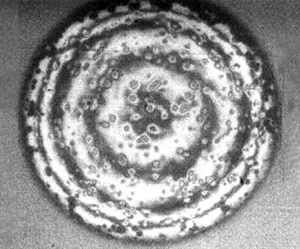
We study the first contact of an emulsion drop impacting on a smooth solid surface. The lubricating air layer causes rapid deceleration of the bottom tip of the drop as it approaches first contact, causing a dimple in the drop surface. When the dispersed emulsion droplets are of higher density than the drop's continuous phase, the rapid deceleration (${\sim }10^5$ m s$^{-2}$) induces the formation of narrow spikes extruding out of the free surface. These spikes form when the impact Weber number exceeds a critical value ${\simeq }10$. Time-resolved interferometric imaging, at rates up to 7 million frames per second, shows the emergence and shape of these spikes leading to the local contacts with the solid. We characterize the tip curvature and capillary pressure affecting their dynamics as they emerge and can touch the substrate before the main outer ring of contact.
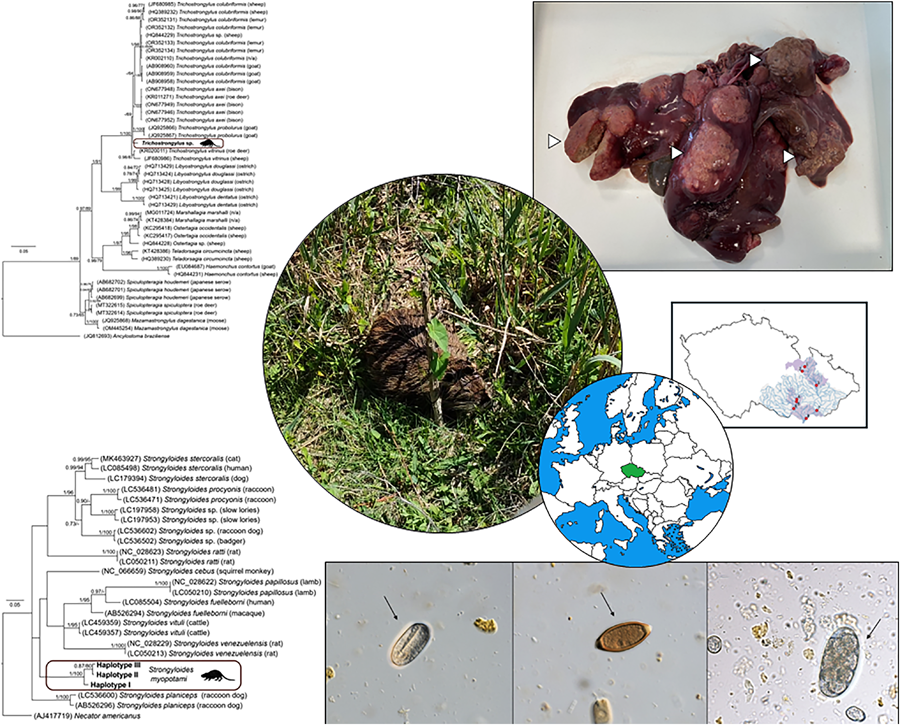
The nutria was introduced to Europe from South America and kept for the fur industry. This semiaquatic rodent became a well-established species in the Czech Republic; however, it still poses a significant threat to the native fauna, not only as a natural competitor but also as a vector of non-indigenous parasites. Our research aimed to investigate the diversity of endoparasitic helminths in nutria, with a particular focus on assessing the risk posed by helminth species with zoonotic potential. A total of 46 nutria cadavers were collected at 8 locations in the Morava River basin and examined using standard parasitological post-mortem procedures. Additionally, coprological and molecular methods were used to identify the parasites. The presence of 6 helminth species was revealed. The highest prevalence was observed for Strongyloides myopotami (78.3%) and Trichuris myocastoris (37.0%), both of which are host-specific nematodes of nutria. Only 2 trematode taxa were recorded (Echinostoma sp. and a representative of the family Psilostomidae). The presence of alveolar hydatid cysts of Echinococcus multilocularis in the livers of 5 nutria specimens was also recorded. Herein, we provide novel molecular data for each parasite species collected, which is valuable for future phylogenetic analyses. Our findings also demonstrate that nutria in the Czech Republic serve as a carrier of helminths with zoonotic potential, particularly E. multilocularis and S. myopotami. Although the nutria is a relatively new species in local fauna, its synanthropic behaviour raises concerns about potential threats to human health, underscoring the importance of exercising caution when handling these animals.
We have reviewed seed dormancy and germination in the Rubiaceae, the fourth-largest angiosperm family (in terms of species richness), in relation to ecology, life form, biogeography and phylogeny (subfamily/tribe). Life forms include trees, shrubs, vines and herbs, and tropical rainforest trees have the greatest number of tribes and species. The family has five kinds of embryos: investing, linear-full, linear-underdeveloped, spatulate and spatulate-underdeveloped, and seeds are non-dormant (ND) or have morphological (MD), morphophysiological (MPD) or physiological (PD) dormancy. Except for the occurrence of the investing embryo only in dry fruits of Dialypetalanthoideae, each kind of embryo is found in dry and fleshy fruits of Dialypetalanthodies and of Rubioideae. In tropical and temperate regions, there are species with ND seeds and others whose seeds have MD, MPD or PD. A complete seed dormancy profile (i.e. some species with ND seeds and others whose seeds have MD, MPD or PD) was found for tropical rainforest trees and shrubs and semi-evergreen rainforest shrubs. Dormancy-break occurs during cold or warm stratification or dry-afterripening, depending on the species. Some tropical species have long periods of dormancy-break/germination extending for 4–5 to 30–40 weeks. Soil seed banks are found in 5 and 15 tribes of Rubiaceae in tropical and temperate regions, respectively. With increased distance from the Equator, diversity of life forms and seed dormancy decreases, resulting in only herbs with PD at high latitudes. We conclude that the low species richness of Rubiaceae in temperate regions is not related to low diversity of seed dormancy/germination.
Artificial neural networks (ANNs) and adaptive neuro-fuzzy inference systems (ANFISs) are machine learning techniques that enable modeling and prediction of various properties in the milling process of alloy 2017A, including quality, cost, and energy consumption (QCE). To utilize ANNs or ANFIS for QCE prediction, researchers must gather a dataset consisting of input–output pairs that establish the relationship between QCE and various input variables such as machining parameters, tool properties, and material characteristics. Subsequently, this dataset can be employed to train a machine learning model using techniques like backpropagation or gradient descent. Once the model has been trained, predictions can be made on new input data by providing the desired input variables, resulting in predicted QCE values as output. This study comprehensively examines and identifies the scientific contributions of strategies, machining sequences, and cutting parameters on surface quality, machining cost, and energy consumption using artificial intelligence (ANN and ANFIS). The findings indicate that the optimal neural architecture for ANNs, utilizing the Bayesian regularization (BR) algorithm, is a {3-10-3} architecture with an overall mean square error (MSE) of 2.74 × 10⁻³. Similarly, for ANFIS, the optimal structure yielding better error and correlation for the three output variables (Etot, Ctot, and Ra) is a {2, 2, 2} structure. The results demonstrate that using the BR algorithm with a multi-criteria output response yields favorable outcomes compared to the ANFIS.
The international community, and the UN in particular, is in urgent need of wise policies, and a regulatory institution to put data-based systems, notably AI, to positive use and guard against their abuse. Digital transformation and “artificial intelligence (AI)”—which can more adequately be called “data-based systems (DS)”—present ethical opportunities and risks. Helping humans and the planet to flourish sustainably in peace and guaranteeing globally that human dignity is respected not only offline but also online, in the digital sphere, and the domain of DS requires two policy measures: (1) human rights-based data-based systems (HRBDS) and (2) an International Data-Based Systems Agency (IDA): IDA should be established at the UN as a platform for cooperation in the field of digital transformation and DS, fostering human rights, security, and peaceful uses of DS.
With the increased use of computer-based tests in clinical and research settings, assessing retest reliability and reliable change of NIH Toolbox-Cognition Battery (NIHTB-CB) and Cogstate Brief Battery (Cogstate) is essential. Previous studies used mostly White samples, but Black/African Americans (B/AAs) must be included in this research to ensure reliability.
Method:
Participants were B/AA consensus-confirmed healthy controls (HCs) (n = 49) or mild cognitive impairment (MCI) (n = 34) adults 60–85 years that completed NIHTB-CB and Cogstate for laptop at two timepoints within 4 months. Intraclass correlations, the Bland-Altman method, t-tests, and the Pearson correlation coefficient were used. Cut scores indicating reliable change provided.
Results:
NIHTB-CB composite reliability ranged from .81 to .93 (95% CIs [.37–.96]). The Fluid Composite demonstrated a significant difference between timepoints and was less consistent than the Crystallized Composite. Subtests were less consistent for MCIs (ICCs = .01–.89, CIs [−1.00–.95]) than for HCs (ICCs = .69–.93, CIs [.46–.92]). A moderate correlation was found for MCIs between timepoints and performance on the Total Composite (r = -.40, p = .03), Fluid Composite (r = -.38, p = .03), and Pattern Comparison Processing Speed (r = -.47, p = .006).
On Cogstate, HCs had lower reliability (ICCs = .47–.76, CIs [.05–.86]) than MCIs (ICCs = .65–.89, CIs [.29–.95]). Identification reaction time significantly improved between testing timepoints across samples.
Conclusions:
The NIHTB-CB and Cogstate for laptop show promise for use in research with B/AAs and were reasonably stable up to 4 months. Still, differences were found between those with MCI and HCs. It is recommended that race and cognitive status be considered when using these measures.
Anticipating future migration trends is instrumental to the development of effective policies to manage the challenges and opportunities that arise from population movements. However, anticipation is challenging. Migration is a complex system, with multifaceted drivers, such as demographic structure, economic disparities, political instability, and climate change. Measurements encompass inherent uncertainties, and the majority of migration theories are either under-specified or hardly actionable. Moreover, approaches for forecasting generally target specific migration flows, and this poses challenges for generalisation.
In this paper, we present the results of a case study to predict Irregular Border Crossings (IBCs) through the Central Mediterranean Route and Asylum requests in Italy. We applied a set of Machine Learning techniques in combination with a suite of traditional data to forecast migration flows. We then applied an ensemble modelling approach for aggregating the results of the different Machine Learning models to improve the modelling prediction capacity.
Our results show the potential of this modelling architecture in producing forecasts of IBCs and Asylum requests over 6 months. The explained variance of our models through a validation set is as high as 80%. This study offers a robust basis for the construction of timely forecasts. In the discussion, we offer a comment on how this approach could benefit migration management in the European Union at various levels of policy making.
In recent years the evidence base for psychological interventions in low- and -middle-income countries (LMIC) has rapidly accrued, demonstrating that task-shifting models result in desired outcomes. Next, it is important to look at how this evidence translates into practice. In doing so, this paper argues that the field of global mental health might benefit from applying a system theory or system science perspective. Systems thinking aims to understand how different components are connected and interdependent within a larger emergent entity. At present much of the research efforts into psychological interventions in LMIC are focusing on single interventions, with little focus on how these interventions sit in, or influence, a larger system. Adopting systems theory and system dynamics tools can help in; (i) better analyzing and understanding the key drivers of mental health problems and services, (ii) optimizing mental health services; and (iii) understanding the organization of people, institutions and resources required for rolling out and scaling-up mental health services. This paper reflects on some of these merits of a systems perspective, as well as provides some examples.
Integrating cover crops (CCs) in dryland crop rotations could help in controlling herbicide-resistant weeds. Field experiments were conducted at Kansas State University Agricultural Research Center near Hays, KS, from 2020 to 2023 to determine the effect of fall-planted CCs on weed suppression in grain sorghum [Sorghum bicolor (L.) Moench], crop yield, and net returns in no-till dryland winter wheat (Triticum aestivum L.)–grain sorghum–fallow (W-S-F) rotation. The field site had a natural seedbank of glyphosate-resistant (GR) kochia [Bassia scoparia (L.) A. J. Scott] and Palmer amaranth (Amaranthus palmeri S. Watson). A CC mixture [winter triticale (×Triticosecale Wittm. ex A. Camus [Secale × Triticum])–winter peas (Pisum sativum L.)–canola (Brassica napus L.)–radish (Raphanus sativus L.)] was planted after wheat harvest and terminated at triticale heading stage before sorghum planting. Treatments included nontreated control, chemical fallow, CC terminated with glyphosate (GLY), and CC terminated with GLY+ acetochlor/atrazine (ACR/ATZ). Across 3 yr, CC terminated with GLY+ACR/ATZ reduced total weed density by 34% to 81% and total weed biomass by 45% to 73% compared with chemical fallow during the sorghum growing season. Average grain sorghum yield was 786 to 1,432 kg ha−1 and did not differ between chemical fallow and CC terminated with GLY+ACR/ATZ. However, net returns were lower with both CC treatments (−US$275 to US$66) in all 3 yr compared with chemical fallow (−US$111 to US$120). These results suggest that fallow replacement with fall-planted CCs in the W-S-F rotation can help suppress GR B. scoparia and A. palmeri in the subsequent grain sorghum. However, the cost of integrating CCs exceeded the benefits of improved weed control, and lower net returns were recorded in all 3 yr compared with chemical fallow.
Sociolinguistics has recently turned its attention to the production of hope in language. Although hope is dismissed in several everyday and academic discourses as escapism or cruel optimism, if investigated ethnographically, the affect and practice of hope emerge contextually as both practical reason and semiotic ideology with important political implications. The articles in this special issue variously engage with hope as situated action whereby individuals and communities struggle for material resources, reorient temporality, recalibrate registers, create alliances, and reflexively engage with social practice to build forms of life that in many ways resist despair and paralysis. While the collection of articles gathered here does not share a single view of hope, a common thread is that hope in different ways coheres with the Brazilian Portuguese esperançar—that is, hope not as sheer or passive waiting but as pragmatic and reflexive action. (Sociolinguistics of hope, affect, practical reason, language ideology, ethnography)
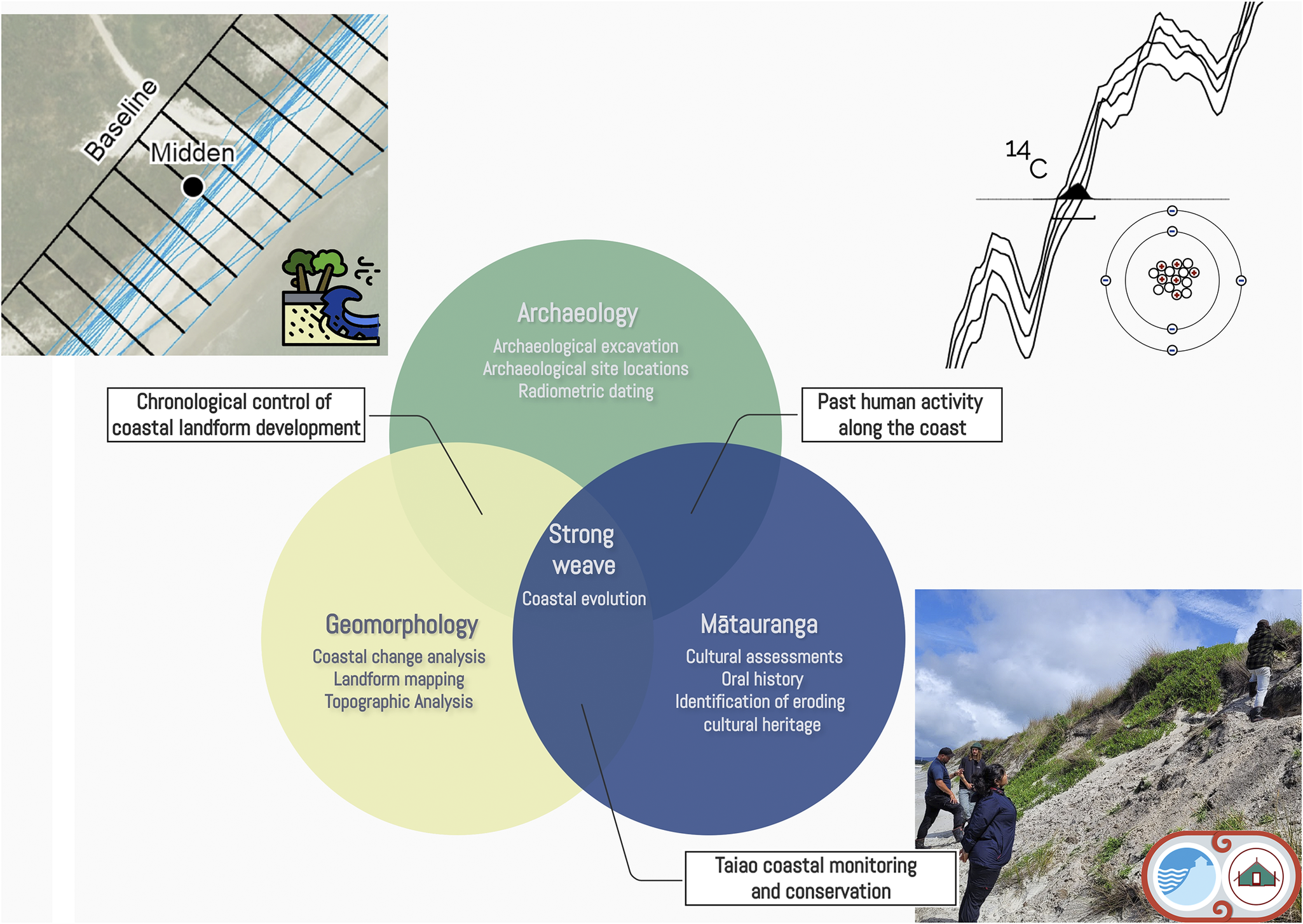
Coastal landforms and associated archaeological records are at risk of erosion from a combination of rising sea levels and increasingly frequent high-intensity storms. Improved understanding of this risk can be gained by braiding archaeological and geomorphological methodologies with Indigenous knowledge.1 In this article, archaeological, geomorphological and mātauranga (a form of Indigenous knowledge) are used to analyse a prograded Holocene foredune barrier in northern Aotearoa/New Zealand. Anthropogenic deposits within dune stratigraphy are radiocarbon-dated and used as chronological markers to constrain coastal evolution, alongside geomorphological analyses of topographic data, historical aerial photographs and satellite imagery. These investigations revealed that the barrier is eroding at a rate of 0.45 m/year. A midden in the foredune, which has been radiocarbon dated to 224–270 B.P. (95% Confidence), has been exposed by coastal erosion, confirming that the barrier is in the most eroded state it has been within the past ~300 years. Vertical stratigraphy reveals the presence of midden and palaeosol deposits capped by dune sand deposits in the foredune, indicating that vertical accretion of the foredune continued over the last ~200 years, despite the barrier now being in an eroding state. Mātauranga played a vital role in this project, as it was the coastal taiao (environmental) monitoring unit of Patuharakeke (a Māori sub-tribe) that discovered the midden. The ecological mātauranga shared also played a vital role in this project, adding experiential evidence to empirical observations. The work of local Indigenous groups, like Patuharakeke, demonstrates the active use of mātauranga, woven with Western science methods to preserve or capture the knowledge contained within archaeological sites at risk of being lost to coastal erosion. In this study, we present a method for weaving mātauranga, geomorphological and archaeological approaches to gain a deeper understanding of coastal landscape development.
To investigate the co-existence of single and multiple anthropometric failures among children using an extended composite index of anthropometric failure (ECIAF). This study aims to elucidate the complex interplay between child-specific and maternal factors, highlighting the multifaceted nature of childhood malnutrition.
Design:
A multicentre cross-sectional study as part of the BESLEN project
Setting:
Mother-Child Education Centre in the Pendik district of Istanbul, Türkiye
Participants:
1283 children (preschool children, n 822, school-aged children, n 462) and 1044 mothers
Results:
Almost 1/3 of the children included in the study had an anthropometric failure as determined by ECIAF. Weight excess was the leading cause of the total anthropometric failures, most of which were observed to be slightly higher in boys, except for stunting only and co-occurrence of stunting and underweight. Among the mother-related factors, including higher BMI and waist circumference, low maternal age at delivery, low number of children in the household and being a single parent may be considered predisposing factors to any phenomenon of childhood malnutrition. Among child-related factors, birth weight being ≥ 3500 g had a higher risk for ECIAF failure, and children aged ≥ 60 months were more likely to experience stunting and underweight, while those < 60 months had a higher prevalence of weight excess.
Conclusions:
The co-existence of stunting and overweight, the occurrence of weight excess in one in three stunted children and the high risk of central obesity are public health concerns. Also, ECIAF can better assess all aspects of childhood malnutrition than conventional measures.
We study the tearing instability of a current sheet in a relativistic pair plasma with a power-law distribution function. We first estimate the growth rate analytically and then confirm the analytical results by solving numerically the dispersion equation, taking into account all exact particle trajectories within the reconnecting layer. We found that the instability is suppressed when the particle spectrum becomes harder.
Public procurement is a fundamental aspect of public administration. Its vast size makes its oversight and control very challenging, especially in countries where resources for these activities are limited. To support decisions and operations at public procurement oversight agencies, we developed and delivered VigIA, a data-based tool with two main components: (i) machine learning models to detect inefficiencies measured as cost overruns and delivery delays, and (ii) risk indices to detect irregularities in the procurement process. These two components cover complementary aspects of the procurement process, considering both active and passive waste, and help the oversight agencies to prioritize investigations and allocate resources. We show how the models developed shed light on specific features of the contracts to be considered and how their values signal red flags. We also highlight how these values change when the analysis focuses on specific contract types or on information available for early detection. Moreover, the models and indices developed only make use of open data and target variables generated by the procurement processes themselves, making them ideal to support continuous decisions at overseeing agencies.
Italian ryegrass [Lolium perenne L. ssp. multiflorum (Lam.) Husnot] has become a major annual weed in wheat (Triticum aestivum L.) production systems in the inland Pacific Northwest. With large genetic variability and abundant seed production, L. perenne ssp. multiflorum has developed globally 74 documented cases of herbicide resistance covering 8 different mechanisms of action. Harvest weed seed control (HWSC) systems were introduced in Australia in response to the widespread evolution of multiple herbicide resistance in rigid ryegrass (Lolium rigidum Gaudin) and wild radish (Raphanus raphanistrum L.). The efficacy of these systems for any given weed species is directly related to the proportion of total seed retained by that species at harvest time. From 2017 to 2020, ten L. perenne ssp. multiflorum plants were collected from three different slope aspects at each location in Washington, USA. Collections were initiated in each field when it was visually apparent that seed fill was nearly complete, and seed shatter had not yet occurred. Collection continued at near-weekly intervals until the fields were harvested. The number of filled florets on a spikelet was used to assess the degree of seed shatter over time. Seed shatter at harvest was 67% of the total number of florets on each spikelet. Seed shatter was closely aligned with wheat kernel development in both spring and winter wheat. The high percentage of L. perenne ssp. multiflorum seeds that are shattered by harvest may make HWSC less effective than for L. rigidum in Australia; however, seeds with the greatest biomass tend to not shatter before harvest, which may increase the efficacy of HWSC for managing the soil seedbank. Strategies like planting earlier-maturing wheat cultivars could help HWSC be more effective by having wheat harvest begin earlier, when more L. perenne ssp. multiflorum seeds are still on the mother plant.
Furrow-irrigated rice (Oryza sativa L.) hectares are increasing in the Midsouth. The lack of sustained flooding creates a favorable environment for weed emergence and persistence, which makes Palmer amaranth (Amaranthus palmeri S. Watson) difficult to control throughout the growing season. The negative yield impacts associated with season-long A. palmeri interference in corn (Zea mays L.), cotton (Gossypium hirsutum L.), and soybean [Glycine max (L.) Merr.] have been evaluated. However, there is limited knowledge of the weed’s ability to influence rice grain yield. Research was initiated in 2022 and 2023 to determine the effect of A. palmeri time of emergence relative to rice on weed seed production and grain yield. Cotyledon-stage A. palmeri plants were marked every 7 d, beginning 1 wk before rice emergence through 4 wk after rice emergence. Amaranthus palmeri seed production decreased exponentially as emergence timing was delayed relative to rice, and seed production increased by 447 seed plant−1 for every 1-g increase in weed biomass. Without rice competition and from the earliest emergence timing, A. palmeri produced 540,000 seeds plant−1. Amaranthus palmeri that emerged 1 wk before the crop had the greatest spatial influence on rice, with grain yield loss of 5% and 50% at a distance of 1.4 m and 0.40 m from the weed, respectively. As A. palmeri emergence was delayed, the area of influence decreased. However, A. palmeri plants emerging 3.5 wk after rice emergence still negatively affected grain yield and produced sufficient seed to replenish the soil seedbank, potentially impacting long-term crop management decisions. These results show that the time of A. palmeri emergence is a crucial factor influencing rice grain yield and weed seed production, which can be used to determine the consequences of escapes in rice.
This article discusses communicative strategies enacted by participants of Faveladoc, a documentary-making workshop that the first author attended in 2021. It examines how the participants, who are residents from Rio de Janeiro's Complexo do Alemão favelas, grappled with a shootout that broke out during a meeting. Based on textual analysis and our ongoing dialogue with participants, we unpack their semiotic and rhetorical work of avoiding despair by reorienting knowledge, building socialites, and pursuing resources. They mobilized generic resources (i.e. discursive and listening genres), pragmatic strategies (e.g. collective singling out of the area of risk), and metapragmatic moves (e.g. contextual recourse to humor) to assess security. Through further enacting a distributed embodiment—collective commitments beyond a bounded body—participants facilitated hope as a modality of action. Finally, their recourse to humor in spite of potential danger reflected an enactment of communal care that we call a poetics of hope. (Sociolinguistics of hope, favelas, distributed embodiment, generic resources, humor).
Tetflupyrolimet (Dodhylex™ Active, FMC Corporation) is a novel herbicide inhibiting de novo pyrimidine biosynthesis that controls grassy weeds preemergence in rice (Oryza sativa L.) production. Field trials were conducted from 2021 to 2024 to evaluate turfgrass tolerance to tetflupyrolimet applications for annual bluegrass (Poa annua L.) and smooth crabgrass [Digitaria ischaemum (Schreb.) Schreb. ex Muhl.] control. Tolerance was evaluated on seven turfgrass species, including creeping bentgrass (Agrostis stolonifera L.), Kentucky bluegrass (Poa pratensis L.), tall fescue [Schedonorus arundinaceus (Schreb.) Dumort.; syn.: Festuca arundinacea Schreb.], hybrid bermudagrass [Cynodon dactylon (L.) Pers. × Cynodon transvaalensis Burtt-Davy], and manilagrass [Zoysia matrella (L.) Merr.] at various mowing heights ranging from 3.8 to 12.5 mm. Separate experiments were conducted on each turfgrass species to evaluate tolerance in both fall and spring. Tetflupyrolimet was applied at rates of 0, 25, 50, 100, 200, 400, 800, 1600, 3200, or 6400 g ai ha−1. No injury was observed on any warm-season turfgrass species in either season, whereas cool-season grass tolerance varied among species each season; however, cool-season turfgrass tolerance for all species was greater in spring than fall. While efficacy of tetflupyrolimet (400 g ha−1) for preemergence D. ischaemum control varied among years, mixtures of tetflupyrolimet (400 g ha−1), pyroxasulfone (128 g ai ha−1), and rimsulfuron (35 g ai ha−1) applied preemergence or early postemergence effectively controlled multiple-resistant P. annua in both seasons. Overall, these findings highlight that warm-season turfgrasses are highly tolerant of tetflupyrolimet applications for P. annua or D. ischaemum control.
We aimed to explore participant perspectives on social prescribing (SP) for mental health and well-being and the acceptability of community pharmacists (CP) as members of SP pathways that support people with mild to moderate depression and anxiety.
Background:
SP aims to support people with poor health related to socio-demographic determinants. Positive effects of SP on self-belief, mood, well-being, and health are well documented, including a return to work for long-term unemployed.
Methods:
The study was set in a city in southwest England with diverse cultural and socio-demographics. We recruited SP stakeholders, including CP, to either one of 17 interviews or a focus group with nine members of the public.
Findings:
An inductive iterative approach to thematic analysis produced four superordinate themes: (1) offering choice a non-pharmacological option, (2) supporting pharmacy communities – ‘it is an extension of what we do’, (3) stakeholder perspectives – pharmacists are very busy and their expertise unknown by some, and (4) potential for pharmacy in primary care.
Stakeholders viewed CP as local to and accessible by their community. Pharmacists perceived referral to SP services as part of their current role. General practitioner participants considered pharmacy involvement could reduce their workload and expand the primary healthcare team. Importantly, general practitioners and CP viewed SP as a non-pharmacological alternative to prescribing unnecessary antidepressants and reduce associated adverse effects. All participants voiced concerns about pharmacy dispensing busyness as a potential barrier to involvement and pharmacists requesting mental health training updates.
Key findings suggest CP offer a potential alternative to the general practitioner for people with mild to moderate depression and anxiety seeking access to support and health information. However, CP need appropriately commissioned and funded involvement in SP, including backfill for ongoing dispensing, medicines optimization, and mental health first aid training.