To save content items to your account,
please confirm that you agree to abide by our usage policies.
If this is the first time you use this feature, you will be asked to authorise Cambridge Core to connect with your account.
Find out more about saving content to .
To save content items to your Kindle, first ensure no-reply@cambridge.org
is added to your Approved Personal Document E-mail List under your Personal Document Settings
on the Manage Your Content and Devices page of your Amazon account. Then enter the ‘name’ part
of your Kindle email address below.
Find out more about saving to your Kindle.
Note you can select to save to either the @free.kindle.com or @kindle.com variations.
‘@free.kindle.com’ emails are free but can only be saved to your device when it is connected to wi-fi.
‘@kindle.com’ emails can be delivered even when you are not connected to wi-fi, but note that service fees apply.
This review examines the relationship between long-term antipsychotic use and individual functioning, emphasizing clinical implications and the need for personalized care. The initial impression that antipsychotic medications may worsen long-term outcomes is critically assessed, highlighting the confounding effects of illness trajectory and individual patient characteristics. Moving beyond a focus on methodological limitations, the discussion centers on how these findings can inform clinical practice, keeping in consideration that a subset of patients with psychotic disorders are on a trajectory of long-term remission and that for a subset of patient the adverse effects of antipsychotics outweigh potential benefits. Key studies such as the OPUS study, Chicago Follow-up study, Mesifos trial, and RADAR trial are analyzed. While antipsychotics demonstrate efficacy in short-term symptom management, their long-term effects on functioning are less obvious and require careful interpretation. Research on long-term antipsychotic use and individual functioning isn't sufficient to favor antipsychotic discontinuation or dose reduction below standard doses for most patients, but it is sufficient to highlight the necessity of personalization of clinical treatment and the appropriateness of dose reduction/discontinuation in a considerable subset of patients.
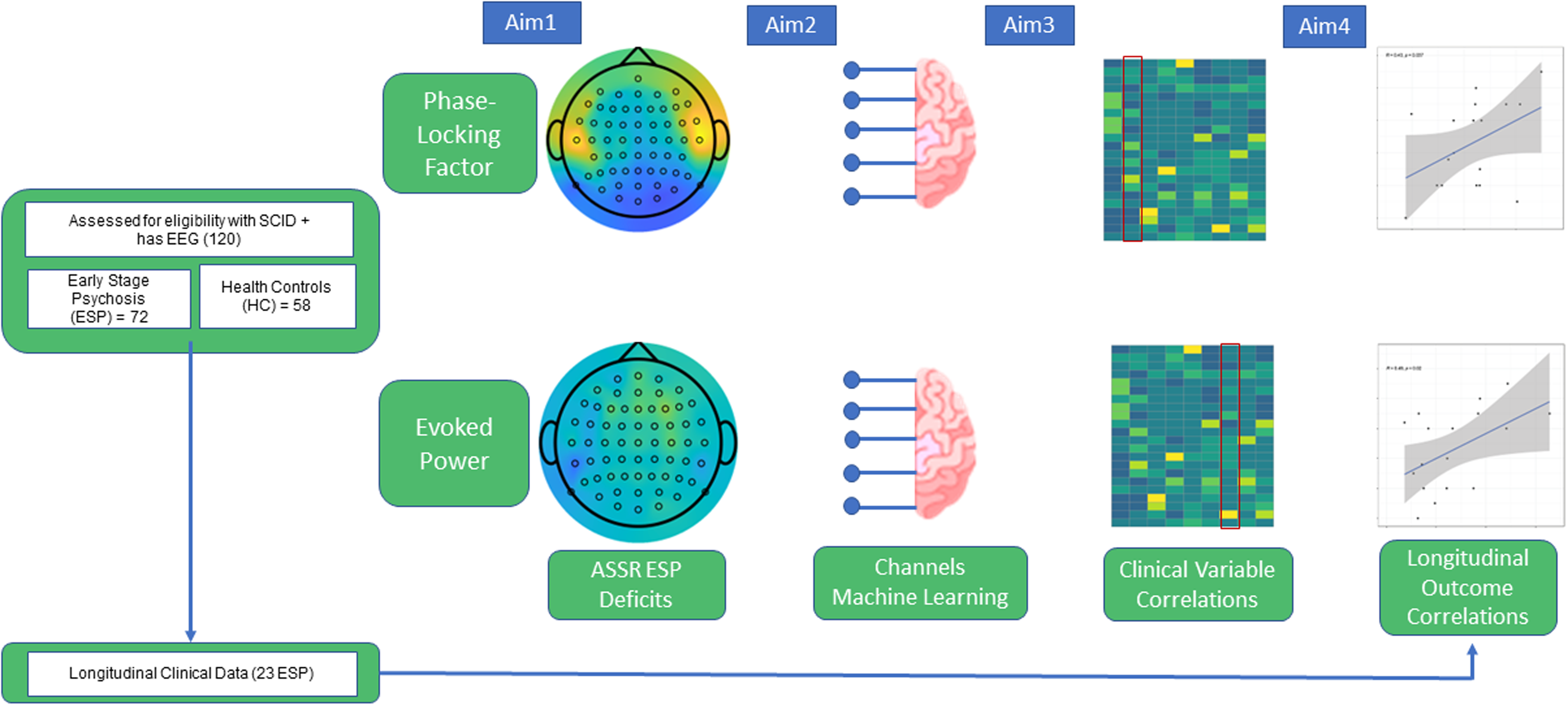
Psychotic disorders are characterised by abnormalities in the synchronisation of neuronal responses. A 40 Hz gamma band deficit during auditory steady-state response (ASSR) measured by electroencephalogram (EEG) is a robust observation in psychosis and is associated with symptoms and functional deficits. However, the majority of ASSR studies focus on specific electrode sites, while whole scalp analysis using all channels, and the association with clinical symptoms, are rare.
Methods:
In this study, we use whole-scalp 40 Hz ASSR EEG measurements – power and phase-locking factor – to establish deficits in early-stage psychosis (ESP) subjects, classify ESP status using an ensemble of machine learning techniques, identify correlates with principal components obtained from clinical/demographic/functioning variables, and correlate functional outcome after a short-term follow-up.
Results:
We identified significant spatially-distributed group level differences for power and phase locking. The performance of different machine learning techniques and interpretation of the extracted feature importance indicate that phase locking has a more predictive and parsimonious pattern than power. Phase locking is also associated with principal components composed of measures of cognitive processes. Short-term functional outcome is associated with baseline 40 Hz ASSR signals from the FCz and other channels in both phase locking and power.
Conclusion:
This whole-scalp EEG study provides additional evidence to link deficits in 40 Hz ASSRs with cognition and functioning in ESP, and corroborates with prior studies of phase locking from a subset of EEG channels. Confirming 40 Hz ASSR deficits serves as a candidate phenotype to identify circuit dysfunctions and a biomarker for clinical outcomes in psychosis.
This article examines the National Health Data Network (RNDS), the platform launched by the Ministry of Health in Brazil as the primary tool for its Digital Health Strategy 2020–2028, including innovation aspects. The analysis is made through two distinct frameworks: Right to health and personal data protection in Brazil. The first approach is rooted in the legal framework shaped by Brazil’s trajectory on health since 1988, marked by the formal acknowledgment of the Right to health and the establishment of the Unified Health System, Brazil’s universal access health system, encompassing public healthcare and public health actions. The second approach stems from the repercussions of the General Data Protection Law, enacted in 2018 and the inclusion of Right to personal data protection in Brazilian’s Constitution. This legislation, akin to the EU’s General Data Protection Regulations, addressed the gap in personal data protection in Brazil and established principles and rules for data processing. The article begins by explanting the two approaches, and then it provides a brief history of health informatics policies in Brazil, leading to the current Digital Health Strategy and the RNDS. Subsequently, it delves into an analysis of the RNDS through the lenses of the two aforementioned approaches. In the final discussion sections, the article attempts to extract lessons from the analyses, particularly in light of ongoing discussions such as the secondary use of data for innovation in the context of different interpretations about innovation policies.
The embedding problem of Markov chains examines whether a stochastic matrix$\mathbf{P} $ can arise as the transition matrix from time 0 to time 1 of a continuous-time Markov chain. When the chain is homogeneous, it checks if $ \mathbf{P}=\exp{\mathbf{Q}}$ for a rate matrix $ \mathbf{Q}$ with zero row sums and non-negative off-diagonal elements, called a Markov generator. It is known that a Markov generator may not always exist or be unique. This paper addresses finding $ \mathbf{Q}$, assuming that the process has at most one jump per unit time interval, and focuses on the problem of aligning the conditional one-jump transition matrix from time 0 to time 1 with $ \mathbf{P}$. We derive a formula for this matrix in terms of $ \mathbf{Q}$ and establish that for any $ \mathbf{P}$ with non-zero diagonal entries, a unique $ \mathbf{Q}$, called the ${\unicode{x1D7D9}}$-generator, exists. We compare the ${\unicode{x1D7D9}}$-generator with the one-jump rate matrix from Jarrow, Lando, and Turnbull (1997), showing which is a better approximate Markov generator of $ \mathbf{P}$ in some practical cases.
Trauma-related beliefs are theorized to contribute to the development and maintenance of psychosis symptoms. However, the evidence for this proposal has yet to be systematically reviewed. This article is the first to synthesize and meta-analyze studies examining associations between trauma-related beliefs and psychosis symptoms, including hallucinations, delusions, paranoia, and negative symptoms. A systematic database search of Medline, PsychINFO, Embase, Web of Science, CINHAL, and Cochrane identified a total of 15 articles that met the inclusion criteria for systematic review and 11 articles which met the inclusion criteria for meta-analysis. Separate random-effects meta-analyses were conducted for each psychosis symptom. Meta-analytic findings demonstrated a small to moderate association between trauma-related beliefs and hallucination severity (k = 7, r = 0.25, 95% CI 0.10–0.39), a moderate to large association with delusion severity (k = 8, r = 0.43, 95% CI 0.31–0.54), and large association with paranoia severity (k = 4, r = 0.58, 95% CI 0.49–0.66). Narrative synthesis findings indicate that evidence for an association between negative symptoms and trauma-related beliefs was inconclusive. The meta-analytic findings provide support for an association between trauma-related beliefs and positive psychosis symptoms. This provides evidence suggesting trauma therapies for psychosis that target these beliefs may improve distressing psychosis. However, further research adopting longitudinal designs and controlling for confounders is required to better establish causality, including mediation analysis of therapy trials.
The effect of diminished ovarian reserves after undergoing hysterectomies with bilateral salpingectomies is one of the health concerns among reproductive-age women with benign gynecological diseases. Coenzyme Q10 (CoQ10), an antioxidant, is crucial in mitochondrial energy production, improving oocyte quality and quantity. This study compares the benefit of a 14-d preoperative (CoQ10) v. placebo on ovarian reserve by measuring anti-Müllerian hormone (AMH) in women undergoing hysterectomy with bilateral salpingectomy. A double-blinded, randomised, placebo-controlled trial was conducted. Forty-four women with benign gynecological diseases were randomised to receive either oral CoQ10 300 mg per d or placebo for 14 d before undergoing hysterectomy with bilateral salpingectomy. Serum AMH levels were collected for analysis before taking CoQ10 and 6 weeks postoperatively in each group. The baseline demographic, clinical characteristics and baseline AMH levels were comparable between the groups (1·47 (0·45, 2·49) v. 1·29 (0·47, 2·11), P = 0·763). The serum AMH levels after the surgery were significantly decreased from preoperative levels (median 0·99 (0·37, 1·63) v. 1·34 (0·57, 2·30)), P = 0·001. However, there was no significant difference in the AMH change between the CoQ10 group and the placebo group (AMH per cent change −28·2 % (64·09, −4·81) v. −20·07 % (–61·51, −2·92)), P = 0·99, respectively. Age, gynecological disease, operative time and blood loss were not significantly associated with the AMH change. There were no significant side effects or adverse operative outcomes among CoQ10 users. In conclusion, hysterectomy with bilateral salpingectomy led to a significantly decreased AMH level. However, pretreatment with CoQ10 for 2 weeks was ineffective in protecting an ovarian reserve.
In December 2017 the Venetian Region (local Authority), financed the creation of the Operational Group (OG) ‘Serinnovation’, within the framework of the Rural Development Plan supported by the European Community. The OG aims at coordinating and spreading innovation in sericulture through mechanisation of processes and centralisation of some rearing steps, the use of waste as by-products and traceability to promote local productions. The project acts on perceived quality by increasing the added value, through production cost efficiency, and on the recovery of the waste material for further applications (circular economy). The final target was to develop a niche-process to obtain traceable ‘Made-in-Italy’ silk for the luxury market and non-textile applications. A first strategy to increase the efficiency of the process was to build an automatic leaf cutting machine to prepare the feed for the first three instars of the silkworm (Bombyx mori Linnaeus). This new machine – based on a patent – was validated through several tests and compared with the cutting system previously used. The study was completed by a bioassay of production and survival rate associated with the introduction of this innovation. The results showed that labour saving is in the order of 10% compared to a semi-manual process, the leaf quality is not affected, survival of larvae and silk production are not significantly different from the control. This methodology is proposed as a study case for other similar mechanisation processes in entomological production, as the impact of innovations on insect physiology should be carefully considered.
Turbulent flows are chaotic and multi-scale dynamical systems, which have large numbers of degrees of freedom. Turbulent flows, however, can be modeled with a smaller number of degrees of freedom when using an appropriate coordinate system, which is the goal of dimensionality reduction via nonlinear autoencoders. Autoencoders are expressive tools, but they are difficult to interpret. This article aims to propose a method to aid the interpretability of autoencoders. First, we introduce the decoder decomposition, a post-processing method to connect the latent variables to the coherent structures of flows. Second, we apply the decoder decomposition to analyze the latent space of synthetic data of a two-dimensional unsteady wake past a cylinder. We find that the dimension of latent space has a significant impact on the interpretability of autoencoders. We identify the physical and spurious latent variables. Third, we apply the decoder decomposition to the latent space of wind-tunnel experimental data of a three-dimensional turbulent wake past a bluff body. We show that the reconstruction error is a function of both the latent space dimension and the decoder size, which are correlated. Finally, we apply the decoder decomposition to rank and select latent variables based on the coherent structures that they represent. This is useful to filter unwanted or spurious latent variables or to pinpoint specific coherent structures of interest. The ability to rank and select latent variables will help users design and interpret nonlinear autoencoders.
Environmental enrichment programmes are widely used to improve welfare of captive and laboratory animals, especially non-human primates. Monitoring enrichment use over time is crucial, as animals may habituate and reduce their interaction with it. In this study we aimed to monitor the interaction with enrichment items in groups of rhesus macaques (Macaca mulatta), each consisting of an average of ten individuals, living in a breeding colony. To streamline the time-intensive task of assessing enrichment programmes we automated the evaluation process by using machine learning technologies. We built two computer vision-based pipelines to evaluate monkeys’ interactions with different enrichment items: a white drum containing raisins and a non-food-based puzzle. The first pipeline analyses the usage of enrichment items in nine groups, both when it contains food and when it is empty. The second pipeline counts the number of monkeys interacting with a puzzle across twelve groups. The data derived from the two pipelines reveal that the macaques consistently express interest in the food-based white drum enrichment, even several months after its introduction. The puzzle enrichment was monitored for one month, showing a gradual decline in interaction over time. These pipelines are valuable for assessing enrichment by minimising the time spent on animal observation and data analysis; this study demonstrates that automated methods can consistently monitor macaque engagement with enrichments, systematically tracking habituation responses and long-term effectiveness. Such advancements have significant implications for enhancing animal welfare, enabling the discontinuation of ineffective enrichments and the adaptation of enrichment plans to meet the animals’ needs.
Almost half of the global population lives with inadequate or unsafe water, sanitation or hygiene (WASH) services. The consequences of this situation include negative impacts on individual and public health, the environment and economic production. The WASH sector is linked with other international development sectors and is embedded within complex social, environmental and governance structures. This complexity led us to reflect on how WASH sector practitioners and researchers are applying systems thinking tools and techniques to progress an agenda of sustainable and universal WASH services. From this perspective, we then discuss the near- and long-term future needs of the sector in coming to a comprehensive understanding and application of systems thinking to progress the ultimate aim of universal access to safely managed, accessible and abundant water, sanitation and hygiene services.
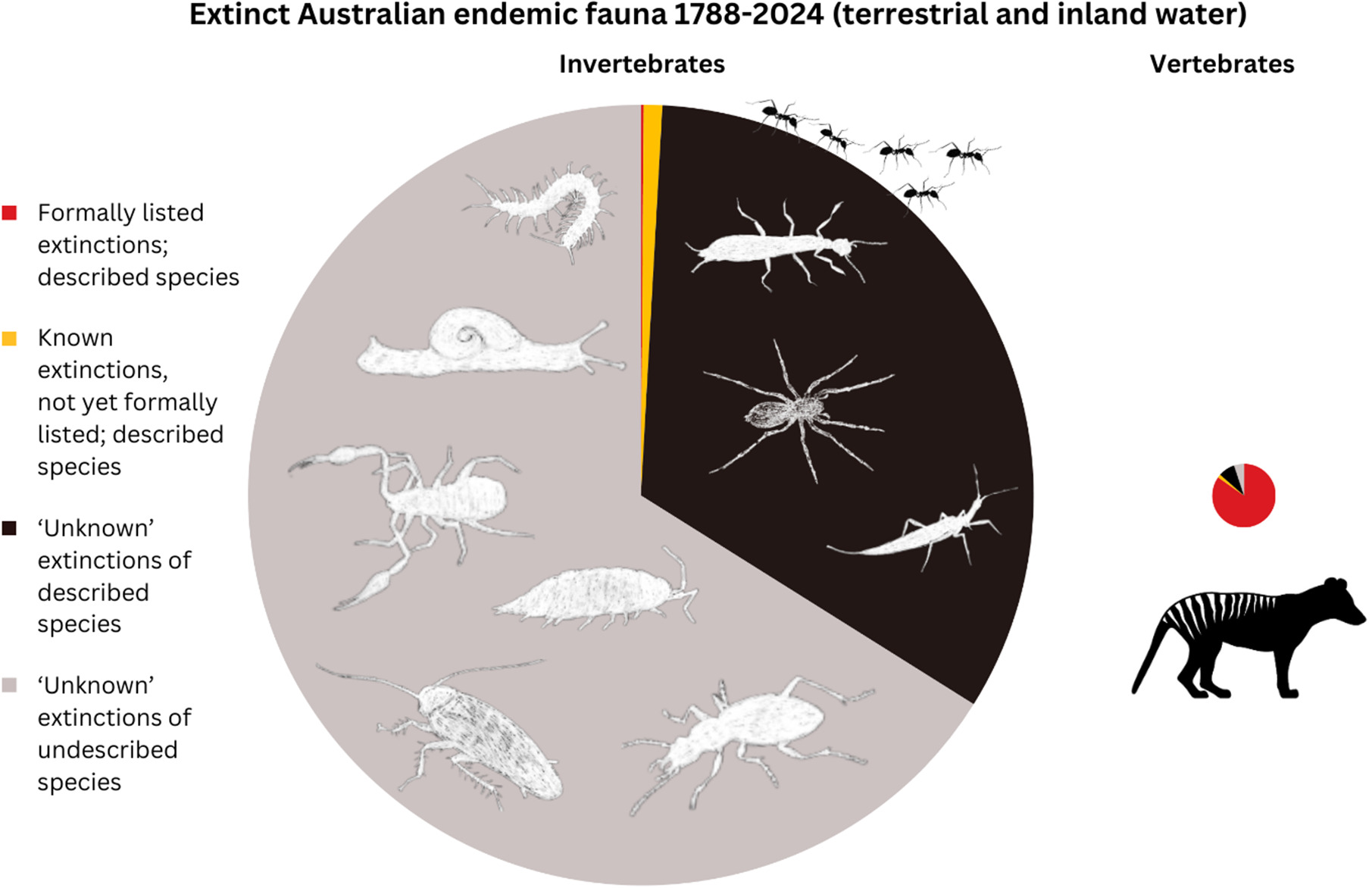
Biodiversity is in rapid decline, but the extent of loss is not well resolved for poorly known groups. We estimate the number of extinctions for Australian non-marine invertebrates since the European colonisation of the continent. Our analyses use a range of approaches, incorporate stated uncertainties and recognise explicit caveats. We use plausible bounds for the number of species, two approaches for estimating extinction rate, and Monte Carlo simulations to select combinations of projected distributions from these variables. We conclude that 9,111 (plausible bounds of 1,465 to 56,828) Australian species have become extinct over this 236-year period. These estimates dwarf the number of formally recognised extinctions of Australian invertebrates (10 species) and of the single invertebrate species listed as extinct under Australian legislation. We predict that 39–148 species will become extinct in 2024. This is inconsistent with a recent pledge by the Australian government to prevent all extinctions. This high rate of loss is largely a consequence of pervasive taxonomic biases in community concern and conservation investment. Those characteristics also make it challenging to reduce that rate of loss, as there is uncertainty about which invertebrate species are at the most risk. We outline conservation responses to reduce the likelihood of further extinctions.
In this article, we calculate the Birkhoff spectrum in terms of the Hausdorff dimension of level sets for Birkhoff averages of continuous potentials for a certain family of diagonally affine iterated function systems. Also, we study Besicovitch–Eggleston sets for finite generalized Lüroth series number systems with redundancy. The redundancy refers to the fact that each number $x \in [0,1]$ has uncountably many expansions in the system. We determine the Hausdorff dimension of digit frequency sets for such expansions along fibres.

This article clarifies the relationship between Isaiah Berlin’s liberalism, pluralism, humanism, and “aestheticism” by analyzing his unique approach to, and stories about, the history of ideas. I argue that Berlin should be understood as a reformer of liberalism, who understood his intervention in intellectual-historical terms. Reacting against what he saw as threats to human liberty and dignity rooted in the monist rational–scientific aspirations and expectations of Enlightenment-influenced political ideologies, Berlin responded by reinterpreting liberalism’s commitment to negative liberty through an aesthetic conception of the human being and a pluralist way of thinking about politics. In addition to reconstructing how Berlin’s writings on the history of ideas enact this liberal reformation, and clarifying the ways in which his resulting liberalism is and is not aesthetic, I also evaluate the potential implications of Berlin’s work for thinking about liberal politics in the present.
Breast cancer patients and survivors deal with physical and psychological challenges due to oncological treatments. The existing literature highlights the importance of compassion in reducing the main cancer-related effects in terms of emotions, quality of life, and dysfunctional coping skills. Over the past few years, compassion-based interventions (CBIs) have been considered an interesting approach to reduce anxiety and depression symptoms and improve quality of life and well-being. However, there have not been many studies that show the benefits of these interventions in breast cancer patients and survivors. The primary objective of this systematic review is to provide evidence of the impact of CBIs on specific variables identified in the literature as affected by this pathology. The variables that will be studied are (a) emotional issues (e.g., anxiety, stress, and depression symptoms); (b) quality of life; and (c) positive coping skills. A systematic search during the previous 10 years up to November 2023 was conducted following the PRISMA guidelines across multiple databases, such as PubMed, Web of Science, PsycINFO, and Scopus. Nine eligible randomized controlled trials were included in this article, with a total of 813 breast cancer patients and survivors. Findings show that CBIs increased compassion, mindful observation, and acting with awareness skills, leading to a significant reduction of anxiety and stress levels, depression, and negative affect. Additionally, less body image distress and greater body appreciation were reported as a consequence of the interventions. This review shows the CBI’s efficacy on emotions, positive coping skills, and quality of life in breast cancer patients and survivors. Guidelines for future studies are listed to promote CBIs as a clinically useful intervention for breast cancer patients and survivors.
Politicians are increasingly subjected to violence, both online and offline. Recent studies highlight a gendered pattern to this violence. But, as societies diversify and minorities increasingly hold political office, we have yet to assess whether members of these groups face disproportionate levels of violence. Our research investigates levels and types of violence against immigrant background politicians in Sweden, where over one-third is either foreign-born or has a foreign-born parent, using a unique three-wave survey ($ N=23,000 $) on Swedish elected officials. Across every form of violence examined, politicians with immigrant backgrounds report experiencing significantly more physical and psychological violence than their counterparts. These experiences are not without political consequence: immigrant background politicians, and among them especially women, are significantly more likely than their counterparts to consider exiting politics due to harassment. Together, these findings suggest that violence may be driving this already underrepresented group of immigrant background politicians out of office.
Usage data on research outputs such as books and journals is well established in the scholarly community. Yet, as research impact is derived from a broader set of scholarly outputs, such as data, code, and multimedia, more holistic usage and impact metrics could inform national innovation and research policy. While usage data reporting standards, such as Project COUNTER, provide the basis for shared statistics reporting practice, mandated access to publicly funded research has increased the demand for impact metrics and analytics. In this context, stakeholders are exploring how to scaffold and strengthen shared infrastructure to better support the trusted, multistakeholder exchange of usage data across a variety of outputs. In April 2023, a workshop on Exploring National Infrastructure for Public Access and Impact Reporting supported by the United States (US) National Science Foundation (NSF) explored these issues. This paper contextualizes the resources shared and recommendations generated in the workshop.