To save content items to your account,
please confirm that you agree to abide by our usage policies.
If this is the first time you use this feature, you will be asked to authorise Cambridge Core to connect with your account.
Find out more about saving content to .
To save content items to your Kindle, first ensure no-reply@cambridge.org
is added to your Approved Personal Document E-mail List under your Personal Document Settings
on the Manage Your Content and Devices page of your Amazon account. Then enter the ‘name’ part
of your Kindle email address below.
Find out more about saving to your Kindle.
Note you can select to save to either the @free.kindle.com or @kindle.com variations.
‘@free.kindle.com’ emails are free but can only be saved to your device when it is connected to wi-fi.
‘@kindle.com’ emails can be delivered even when you are not connected to wi-fi, but note that service fees apply.
The existence of Ordovician Peruvian cephalopods has been known since at least the 1910s. However, they have not been effectively documented previously with only a few described taxa listed in open nomenclature. Here, we describe a cephalopod assemblage at the finest taxonomic level possible. The specimens were collected from the Floian section (Baltograptus minutus graptolite Zone) of the San José Formation from the Kimbiri area, northwest of Cuzco (= Cusco), and from a section along the Inambari River, southeastern Peru. The dark mudstone-siltstone of the San José Formation was deposited within the Central Andean Basin. The assemblage contains five species of small orthoceracones belonging to four families and three orders, consisting of one indeterminate dissidocerid, one bathmoceratid (Saloceras sp.), one rioceratid (Rioceras? sp.), and two baltoceratids belonging to Annbactroceras grecicostatum (Kobayashi, 1937), and Bactroceras cocafolium new species. The dominance of small orthoceracones is typical for early Paleozoic pelagic cephalopod assemblages. One species, A. grecicostatum, is known from elsewhere in the Central Andean Basin. The other taxa indicate a peri-Gondwana-Avalonia paleogeographical relationship of the cephalopod fauna, which is consistent with previously published data from brachiopods and trilobites.
Secularism has long been employed by states to signal their emancipation from “religion,” itself often positioned as unmodern and undemocratic. In this paper, we examine the ways in which secularism is understood in contemporary debates in Quebec. While secularism is typically employed to regulate religion, often with a focus on Islam, we show that with An Act Respecting the Laicity of the State (2019) its usage is mobilised to articulate the distinctiveness of the “Quebec nation.” Based on our discourse analysis of the 35 public briefs in favour of the Act, submitted to the Quebec legislature prior to its enactment, we show how most of these submissions define laïcité as a necessary tool to emancipate the Quebec nation from the rest of Canada. Laïcité is thus conceptualized as central to Quebec’s identity and constructed in opposition to a Canadian liberal-multicultural-Anglophone Other.
Parkinson’s disease (PD) is characterized by the inability of dopamine production from amino acids. Therefore, changes in amino acid profile in PD patients are very critical for understanding disease development. Determination of amino acid levels in PD patients with a cumulative approach may enlighten the disease pathophysiology.
Methods:
A systematic search was performed until February 2023, resulting in 733 articles in PubMed, Web of Science and Scopus databases to evaluate the serum amino acid profile of PD patients. Relevant articles in English with mean/standard deviation values of serum amino acid levels of patients and their healthy controls were included in the meta-analysis.
Results:
Our results suggest that valine, proline, ornithine and homocysteine levels were increased, while aspartate, citrulline, lysine and serine levels were significantly decreased in PD patients compared to healthy controls. Homocysteine showed positive correlations with glutamate and ornithine levels. We also analyzed the disease stage parameters: Unified Parkinson’s Disease Rating Scale III (UPDRS III) score, Hoehn–Yahr Stage Score, disease duration and levodopa equivalent daily dose (LEDD) of patients. It was observed that LEDD has a negative correlation with arginine levels in patients. UPDRS III score is negatively correlated with phenylalanine levels, and it also tends to show a negative correlation with tyrosine levels. Disease duration tends to be negatively correlated with citrulline levels in PD patients.
Conclusion:
This cumulative analysis shows evidence of the relation between the mechanisms underlying amino acid metabolism in PD, which may have a great impact on disease development and new therapeutic strategies.
In intersystemic cases, a court applies the law of a foreign system. Scholars have argued that the court ought to use the interpretive methodology of the foreign system’s courts. I argue against that intuitive position. First, interpretive methodology is not bound up with primary rights and duties such that it constitutes substantive law for conflict of laws purposes. Second, although interpretive methodology has epistemic value and may affect case outcomes, a given methodology might not have the same epistemic value or the same effect on outcomes for differently situated interpreters. Further, the approach that the foreign judges take to interpreting their own law is necessarily anchored to the foreign system’s rule of recognition, which is not true of the approach of external judges. Descriptive facts might align such that external interpreters would have to use the internal methodology to identify the applicable law, but that’s an empirical question the answer to which will vary from case to case.
The WHO describes micronutrient deficiencies, or hidden hunger, as a form of malnutrition that occurs due to low intake and/or absorption of minerals and vitamins, putting human development and health at risk. In many cases, emphasis, effort and even policy revolve around the prevention of deficiency of one particular micronutrient in isolation. This is understandable as that micronutrient may be among a group of nutrients of public health concern. Vitamin D is a good exemplar. This review will highlight how the actions taken to tackle low vitamin D status have been highly dependent on the generation of new data and/or new approaches to analysis of existing data, to help develop the evidence-base, inform advice/guidelines, and in some cases, translate into policy. Beyond focus on individual micronutrients, there has also been increasing international attention around hidden hunger, or deficiencies of a range of micronutrients, which can exist unaccompanied by obvious clinical signs but can adversely affect human development and health. A widely quoted estimate of the global prevalence of hidden hunger is a staggering two billion people, but this is now over 30 years old. This review will outline how strategic data sharing and generation is seeking to address this key knowledge gap in relation to the true prevalence of hidden hunger in Europe, a key starting point towards defining sustainable and cost-effective, food-based strategies for its prevention. The availability of data on prevalence and food-based strategies can help inform public policy to eradicate micronutrient deficiency in Europe.
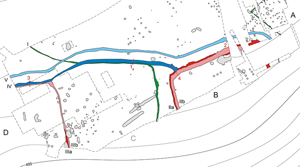
Enclosed rectangular farmsteads from the Hallstatt period in Central Europe are often cast as the seats of high-status farmers, whose land and social standing could be inherited and consolidated. Excavations at Landshut-Hascherkeller in Bavaria reveal the developmental trajectory of one such site through the stratigraphic disentanglement of its numerous ditches. Here, the authors argue that the coalescence of two rectangular farmsteads into a larger settlement complex at Hascherkeller reflects the union of neighbouring families and the resultant massing of status. The article situates this process in a segmented social system that counterpoints the typified Hallstatt hierarchy, suggesting that two social structures coexisted in the Hallstatt culture.
Insights from Social Network Analysis reveal that the structure of the social network surrounding international courts is important for these courts’ ability to secure compliance with their judgments and by this to initiate social change. International courts like the European Court of Human Rights (ECtHR) invest growing resources in shaping their networks, recognising that these networks are necessary tools that can help them to influence society. This paper will focus on the ways social network analysis can facilitate a better understanding of the ECtHR. The paper explains how certain characteristics of the network surrounding the ECtHR determine the ultimate social impact of the court.
In following the interdisciplinary spirit of this symposium, I emphasise the usefulness of the sociological approach of interpretivism, together with qualitative methods, by examining how EU legal actors perceived the Eurozone crisis and how they enabled policy solutions: financial assistance and policy conditionality. This case constitutes a legal conundrum because of how these solutions encompass and connect different forms of law – EU law, international law and private financial law – and how EU lawyers seek to protect the EU legal order from this hybrid arrangement by drawing the arrangement as closely as they can to the EU legal order. This in turn creates issues of accountability as the imposition of policy conditionality engenders litigation by EU citizens who were directly affected therein, raising the question of whether establishing liability for damages is possible in such a hybrid arrangement. Using interviews with legal actors and observations of court proceedings, I foreground the multiple meanings of EU law and explain how such an approach can expand our understanding of not only what EU law means to its practitioners, but also how these meanings give insight into the potential paths of EU law’s development. To interrogate these multiple meanings, I examine the crisis policy solutions as well as a set of court cases – Ledra Advertising, Mallis and Chrysostomides – that sought to hold the EU accountable for losses suffered because of these policies. Using these methods can partially overcome the opaqueness of judicial proceedings at the EU level, as well as give insight into the development of the legal arrangements being contested in court. A novel methodological element is the descriptive analysis of observations of court proceedings in Chrysostomides, where I demonstrate how the interactions between the lawyers and the judges shed light on how legal actors establish legal validity as a collective project.
In Chung–Lu random graphs, a classic model for real-world networks, each vertex is equipped with a weight drawn from a power-law distribution, and two vertices form an edge independently with probability proportional to the product of their weights. Chung–Lu graphs have average distance $O(\log\log n)$ and thus reproduce the small-world phenomenon, a key property of real-world networks. Modern, more realistic variants of this model also equip each vertex with a random position in a specific underlying geometry. The edge probability of two vertices then depends, say, inversely polynomially on their distance.
In this paper we study a generic augmented version of Chung–Lu random graphs. We analyze a model where the edge probability of two vertices can depend arbitrarily on their positions, as long as the marginal probability of forming an edge (for two vertices with fixed weights, one fixed position, and one random position) is as in a Chung–Lu random graph. The resulting class contains Chung–Lu random graphs, hyperbolic random graphs, and geometric inhomogeneous random graphs as special cases.
Our main result is that every random graph model in this general class has the same average distance as a Chung–Lu random graph, up to a factor of $1+o(1)$. This shows in particular that specific choices, such as taking the underlying geometry to be Euclidean, do not significantly influence the average distance. The proof also shows that every random graph model in our class has a giant component and polylogarithmic diameter with high probability.
Treating images as data has become increasingly popular in political science. While existing classifiers for images reach high levels of accuracy, it is difficult to systematically assess the visual features on which they base their classification. This paper presents a two-level classification method that addresses this transparency problem. At the first stage, an image segmenter detects the objects present in the image and a feature vector is created from those objects. In the second stage, this feature vector is used as input for standard machine learning classifiers to discriminate between images. We apply this method to a new dataset of more than 140,000 images to detect which ones display political protest. This analysis demonstrates three advantages to this paper’s approach. First, identifying objects in images improves transparency by providing human-understandable labels for the objects shown on an image. Second, knowing these objects enables analysis of which distinguish protest images from non-protest ones. Third, comparing the importance of objects across countries reveals how protest behavior varies. These insights are not available using conventional computer vision classifiers and provide new opportunities for comparative research.
This paper traces discourse and practices among Jewish communal leaders in Western Europe and the United States regarding the need for Jewish missions to China and Ethiopia. Though thousands of miles apart, China and Ethiopia became closely entwined in their racial imagination. Beginning in the 1840s, the Jewish international press depicted both as biblical lost tribes, languishing in isolation and ignorance, and in need of a guiding hand with the mounting threat of Christian missionizing. Jewish communal leaders began to call for Jewish missions in the 1850s, and they looked to contemporary scientific, evangelical, and civilizing missions as models, merging elements from all three. Throughout the 1860s, in debates over who should lead a Jewish mission, three different types surfaced: an explorer, rabbinic emissary, and Orientalist. Each of these reframed prophetic calls for the return of the lost tribes within a modern scientific and imperial project. Drawing on the work of Sylvia Wynter, I argue that these communities in China and Ethiopia came to serve as boundary markers, demarcating the outer limits of the Jewish world, of Jewishness, and Judaism as it became increasingly circumscribed through theological, behavioral, and racial norms. Not only does this upend assumptions about Jewish solidarity and internationalism, but it also points to how missionizing was deployed by minoritized communities in the nineteenth century.
Existential happiness is happiness that one has a basic life at all. Having a basic life, as I understand it, involves being the subject of experiences and being an agent in some minimal sense. As I argue, existential happiness is a fitting response to having a basic life. To make this argument, I look at two possible accounts of the fittingness of existential happiness: the value of a basic life and attachment to the constitutive elements of one’s life. I also consider a few possible sources of existential happiness, including encounters with death, counterfactual thinking, and hedonically positive feelings of awe directed toward one’s own consciousness.
The use of programming languages in archaeological research has witnessed a notable surge in the last decade, particularly with R, a versatile statistical computing language that fosters the development of specialized packages. This article introduces the tesselle project (https://www.tesselle.org/), a comprehensive collection of R packages tailored for archaeological research and education. The tesselle packages are centered on quantitative analysis methods specifically crafted for archaeology. They are designed to complement both general-purpose and other specialized statistical packages. These packages serve as a versatile toolbox, facilitating the exploration and analysis of common data types in archaeology—such as count data, compositional data, or chronological data—and enabling the construction of reproducible workflows. Complementary packages for visualization, data preparation, and educational resources augment the tesselle ecosystem. This article outlines the project's inception, its objectives, design principles, and key components, along with reflections on future directions.
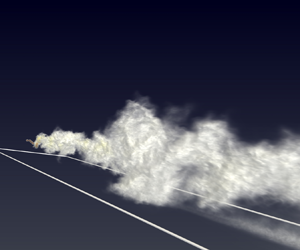
We investigate the concentration fluctuations of passive scalar plumes emitted from small, localised (point-like) steady sources in a neutrally stratified turbulent boundary layer over a rough wall. The study utilises high-resolution large-eddy simulations for sources of varying sizes and heights. The numerical results, which show good agreement with wind-tunnel studies, are used to estimate statistical indicators of the concentration field, including spectra and moments up to the fourth order. These allow us to elucidate the mechanisms responsible for the production, transport and dissipation of concentration fluctuations, with a focus on the very near field, where the skewness is found to have negative values – an aspect not previously highlighted. The gamma probability density function is confirmed to be a robust model for the one-point concentration at sufficiently large distances from the source. However, for ground-level releases in a well-defined area around the plume centreline, the Gaussian distribution is found to be a better statistical model. As recently demonstrated by laboratory results, for elevated releases, the peak and shape of the pre-multiplied scalar spectra are confirmed to be independent of the crosswind location for a given downwind distance. Using a stochastic model and theoretical arguments, we demonstrate that this is due to the concentration spectra being directly shaped by the transverse and vertical velocity components governing the meandering of the plume. Finally, we investigate the intermittency factor, i.e. the probability of non-zero concentration, and analyse its variability depending on the thresholds adopted for its definition.
To investigate the potential application of replacing a proportion of a perennial ryegrass (PRG) silage diet with press cake on productivity and enteric methane (CH4) emissions in late lactation and non-lactating spring-calving dairy cows, a study was undertaken in which control cows (n = 21) were offered PRG silage, while treatment cows (n = 21) were offered a diet consisting of 60% PRG press cake and 40% of the same PRG silage. Although treatment cows had higher group average dry matter intakes (DMI) and produced more enteric CH4, carbon dioxide (CO2), milk solids, protein, fat- and protein-corrected milk yield (FPCM) in late lactation, the magnitude of the difference between treatment and control cows varied from week to week (P < 0.050). When enteric CH4 per kg of milk yield, milk solids and FPCM were considered, there was no significant difference between treatment and control. Absolute enteric CH4 was higher for cows fed press cake during the non-lactating period but this tended to vary from week to week. Similarly, CO2 (P < 0.001) and hydrogen (H2; P = 0.023) differed from week to week for cows offered press cake, and cows offered PRG silage in the non-lactating period. Although there was no significant effect of diet on body weight (BW) and body condition score (BCS), when enteric CH4 was expressed on a per kg BW basis, cows offered press cake tended to produce more enteric CH4 in both late lactation and during the dry period.
Inspired by developments in artificial intelligence, space engineering, and genetics, discussion of post-human visions of the future is now widespread, especially in the tech world. This reflective essay analyses various ideological configurations of “transhumanism,” a body of thought centred on the pursuit of radical human improvement through technoscientific intervention. It focuses on the political values and world-making projects transhumanists have advocated since the early twentieth century. We argue that transhumanism constitutes a significant strand of international political thought: transhumanists have articulated extraordinarily ambitious visions of global order. Through analysing the work of key transhumanists from the interwar era to the present, we show that assorted socialist and liberal iterations have aimed to overcome the irrationality of a state-centric international order, with projects ranging from Marxist accounts of a world state to anarcho-capitalist visions of market order through to dreams of space colonization. Analysing transhumanist world-making visions helps to clarify the political ideas underlying current techno-utopian projects and debates about existential risks to humanity.
Fossil egg capsules of chimaeroids (holocephalian fishes), although rare, have been known for more than 150 years (Bessels, 1869; Meunier, 1891a) and have been found in rocks as old as Upper Triassic (Gottfried and Fordyce, 2014). Egg capsules of extant chimaeroids are spindle shaped, with a smooth central body where the embryo develops, an elongate anterior beak through which the hatchling emerges, and an elongate posterior pedicle. The capsules are flanked by a lateral membrane or web on both sides, and the web is reinforced with branching or unbranching rib-like costae that extend laterally from the central body, beak, and pedicle. Specimens are typically about 10–30 cm long. Egg capsules of extant chimaeroids are made of collagen (Hamlett et al., 2005) and as fossils, chimaeroid egg capsules are typically preserved as external casts (Fischer et al., 2014).