To save content items to your account,
please confirm that you agree to abide by our usage policies.
If this is the first time you use this feature, you will be asked to authorise Cambridge Core to connect with your account.
Find out more about saving content to .
To save content items to your Kindle, first ensure no-reply@cambridge.org
is added to your Approved Personal Document E-mail List under your Personal Document Settings
on the Manage Your Content and Devices page of your Amazon account. Then enter the ‘name’ part
of your Kindle email address below.
Find out more about saving to your Kindle.
Note you can select to save to either the @free.kindle.com or @kindle.com variations.
‘@free.kindle.com’ emails are free but can only be saved to your device when it is connected to wi-fi.
‘@kindle.com’ emails can be delivered even when you are not connected to wi-fi, but note that service fees apply.
On any given day, millions of people will read e-books. Yet many of us will do so while holding them apart from 'real books'. The fact that a book can be worthy – of our time, money, respect, even love – without being 'real' is a fascinating paradox of twenty-first century reading. Drawing on original data from a longitudinal study, Laura Dietz investigates how movement between conceptions of e-books as ersatz, digital proxy, and incomplete books serves readers in unexpected ways. The cultural value of e-books remains an area of intense debate in publishing studies. Exploring the legitimacy of e-books in terms of their 'realness' and 'bookness', Dietz enriches our understanding of what e-books are, while also opening up new ways of thinking about how we imagine, how we use, and what we want from books of every kind. This title is also available as Open Access on Cambridge Core.
Moving beyond the normative frames of terrorism and counter-terrorism, this book shows how world literatures from the Global South can be used to examine the multiple modalities of violence that pervade contemporary world politics, such as communalism, factionalism, peasant wars, banditry, nationalist struggles, resource wars and acts of vengeance. The comparative approach of this book enables a theoretical realignment of insurgency from the mobilization of violence for grand, mythic, and ideological causes – as seen through the eyes of the state – to the violence for small causes, namely, the splintered violence conjured under conceptual rubrics such as divine violence, intimate violence, routine violence, everyday violence, inherited violence, and subterranean violence. Analyzing novels, autobiographies, journalistic accounts from key regions, such as Nigeria, Myanmar (Burma), India, and the Middle East, Insurgent Cultures provides a new understanding of the narratives of violence in the Global South. This title is also available as Open Access on Cambridge Core.
The success of Islamic imperialism in the period from the conquests to the Ayyubid dynasty has traditionally been explained as purely the result of military might. This book, however, adopts a bottom-up approach which puts social relationships and local power dynamics at the centre of the Islamic empire's cohesion. Its chapters draw on sources in diverse languages: not just Arabic, but also Greek, Coptic, Syriac, Hebrew, and Bactrian, showing how different linguistic communities intersected and contributed to a connected yet diverse empire. They highlight how not just literary and historical texts, but also physical documents and archaeological evidence should be incorporated into writing histories of the late antique and early medieval Middle East. Social institutions and relationships explored include oaths; petitions, decrees, and begging letters; and financial frameworks such as debt and taxation. This title is also available as Open Access on Cambridge Core.
While the judicial machinery of early modern witch-hunting could work with terrifying swiftness, skepticism and evidentiary barriers often made conviction difficult. Seeking proof strong enough to overcome skepticism, judges and accusers turned to performance, staging 'acts of Sorcery and Witch-craft manifest to sense.' Looking at an array of demonological treatises, pamphlets, documents, and images, this Element shows that such staging answered to specific doctrines of proof: catching the criminal 'in the acte'; establishing 'notoriety of the fact'; producing 'violent presumptions' of guilt. But performance sometimes overflowed the demands of doctrine, behaving in unpredictable ways. A detailed examination of two cases – the 1591 case of the French witch-demoniac Françoise Fontaine and the 1593 case of John Samuel of Warboys –suggests the manifold, multilayered ways that evidentiary staging could signify – as it can still in that conjuring practice we call law. This title is also available as Open Access on Cambridge Core.
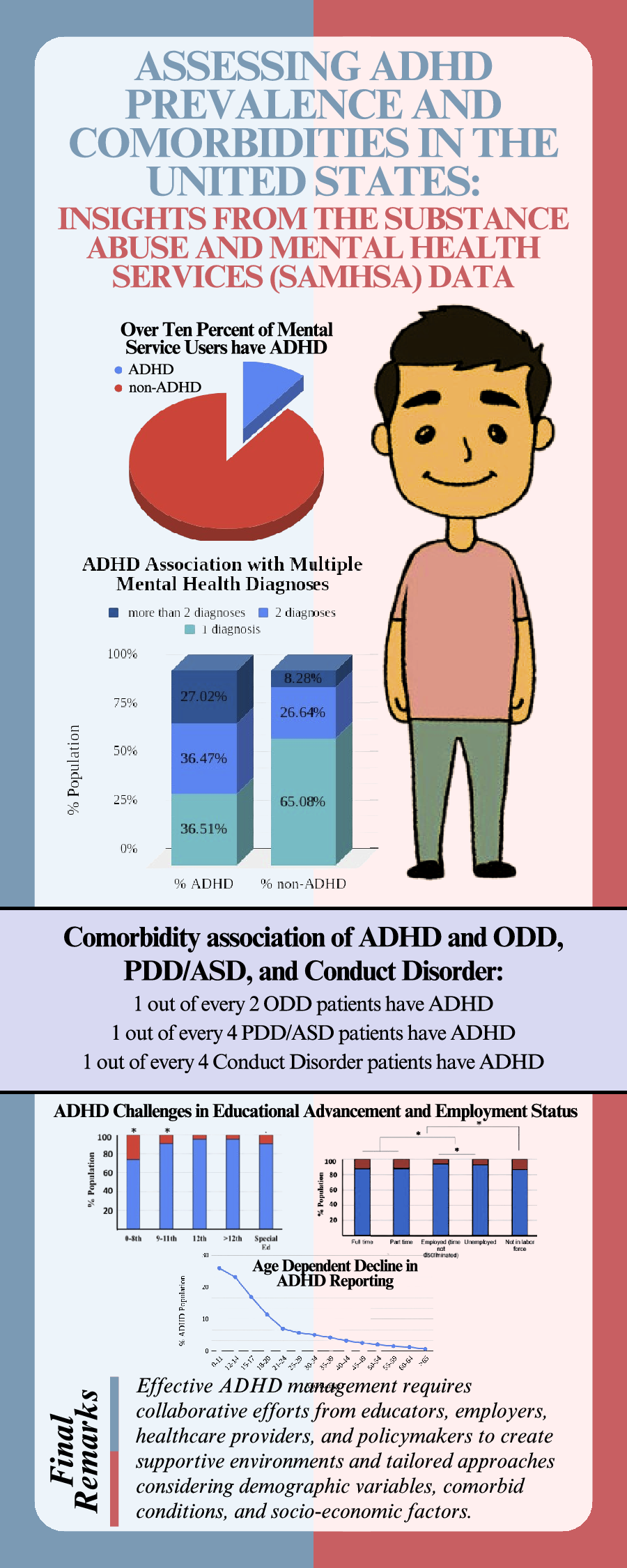
This study analyzes 2022 data from SAMHSA’s Mental Health Client-Level Data (MH-CLD) to investigate ADHD prevalence and comorbidity. The findings reveal that 10.70% of the 5,899,698 patients were diagnosed with ADHD, indicating a high demand for targeted resources. ADHD prevalence declines with age, highest in children aged 0–11, and decreases with educational attainment, emphasizing the need for early intervention. Employment challenges are significant, with the highest ADHD prevalence among those not in the labor force. Racial disparities show Black individuals have the highest ADHD rates (9.71%) and Asian individuals the lowest (5.05%). Geographic differences indicate higher prevalence in the Midwest and South. Gender disparities and marital status also influence prevalence, with males and never-married individuals showing higher rates. ADHD shows strong comorbidity with oppositional defiant disorder, pervasive developmental disorder/autism spectrum disorder and conduct disorder. Effective ADHD management requires collaborative efforts from educators, employers, healthcare providers and policymakers to create supportive environments and tailored approaches considering demographic variables, comorbid conditions and socioeconomic factors.
Politicians frequently face toxic behaviors. We argue that these behaviors impose a double burden on women, who may not only face higher exposure to toxicity, but experience attacks that they and others understand to be motivated by prejudice and designed to push them out of office. Using large-scale image-based conjoint experiments in the United States, Denmark, Belgium, and Chile, we demonstrate that both politicians themselves and citizens regard messages targeting women politicians as more toxic than otherwise equivalent messages targeting men. This perception intensifies when messages mention gender or come from perpetrators who are men. A second experiment to investigate the mechanisms shows that hostile behaviors toward women are more frequently understood as driven by prejudice and attempts to remove women from politics. These findings highlight the importance of understanding how perceptions of perpetrators’ motives affect the severity of political toxicity, and provide insights into the gendered effects of political hostility.
The mental health of paramedics is critical for disaster response in order to provide rapid and effective interventions. This study aimed to determine the prevalence of post-traumatic stress disorder (PTSD) and related individual and occupational factors in Turkish paramedics during the eleventh month of the COVID-19 pandemic.
Methods
The “Sociodemographic Information Form,” “Life Events Checklist,” and “Post-Traumatic Stress Disorder Checklist” were used to collect data from 440 randomly selected paramedics in this cross-sectional study.
Results
The prevalence of PTSD was 59.8% in the 11th month of the COVID-19 pandemic. Multiple regression analysis revealed that approximately 25% of the total PTSD score could be independently explained by paramedics’ general health situation and sociodemographic characteristics; 27% by crisis management skills, long working hours, a lack of equipment, and intensive work; and 40% by past traumatic experiences due to difficult life events during their professional practice, such as responding to gunshot wounds, becoming a victim of a gunshot attack, or sexual assault (P < 0.05).
Conclusions
Integrating a mental health monitoring system into the health and safety program, providing paramedics with supervision and psychological assistance, and engaging them in disaster preparedness planning would be beneficial.
This article examines the evolution of bioethics over the past four decades since the publication of John Harris’ seminal work, “The Value of Life” (1985). It argues that while the core principles articulated by Harris remain relevant, bioethics has undergone significant transformation across four key domains. First, the expanding frontiers of biotechnology have necessitated engagement with complex issues beyond individual clinical ethics. Second, there has been a widening of the circle of moral concern to encompass nonhuman animals, disability rights, and global health equity. Third, bioethics has become increasingly entangled with public policy and governance. Finally, the field has seen substantial academic proliferation and institutionalization. These developments have pushed bioethics to adapt its frameworks and methodologies while maintaining fidelity to foundational principles. This article concludes by considering the future challenges and opportunities for bioethics in an increasingly complex technological and social landscape.
Among those with common mental health disorders (e.g. mood, anxiety, and stress disorders), comorbidity of substance and other addictive disorders is prevalent. To simplify the seemingly complex relationships underlying such comorbidity, methods that include multiple measures to distill which specific addictions are uniquely associated with specific mental health disorders rather than due to the co-occurrence of other related addictions or mental health disorders can be used.
Methods
In a general population sample of Jewish adults in Israel (N = 4002), network analysis methods were used to create partial correlation networks of continuous measures of problematic substance (non-medical use of alcohol, tobacco, cannabis, and prescription sedatives, stimulants, and opioid painkillers) and behavioral (gambling, electronic gaming, sexual behavior, pornography, internet, social media, and smartphone) addictions and common mental health problems (depression, anxiety, and post-traumatic stress disorder [PTSD]), adjusted for all variables in the model.
Results
Strongest associations were observed within these clusters: (1) PTSD, anxiety, and depression; (2) problematic substance use and gambling; (3) technology-based addictive behaviors; and (4) problematic sexual behavior and pornography. In terms of comorbidity, the strongest unique associations were observed for PTSD and problematic technology-based behaviors (social media, smartphone), and sedatives and stimulants use; depression and problematic technology-based behaviors (gaming, internet) and sedatives and cannabis use; and anxiety and problematic smartphone use.
Conclusions
Network analysis isolated unique relationships underlying the observed comorbidity between common mental health problems and addictions, such as associations between mental health problems and technology-based behaviors, which is informative for more focused interventions.
To co-design support strategies to enable sustainable, healthy, affordable food provision, including waste mitigation practices, in Australian Early Childhood Education and Care (ECEC) settings.
Design:
Based on the co-design IDEAS framework (Ideate, DEsign, Assess & Share), this co-design process involved iterative interviews and focus groups with ECEC centre staff and workshops with Nutrition Australia. Interview and workshop themes were coded to the Theoretical Domains Framework (TDF) to develop initial prototypes for support strategies that were further developed and refined in focus groups.
Setting:
ECEC with onsite food provision, in Victoria, Australia.
Participants:
ECEC staff and a Victorian Government-funded programme delivered through Nutrition Australia that provides nutrition support to ECEC services.
Results:
ECEC staff interviews (n 17) suggested a lack of knowledge on the topic of sustainable healthy food provision and a need for resources and support for all staff and children. Workshops with Nutrition Australia built on interviews and suggested a focus on lower intensity strategies and a suggestion to embed knowledge-related activities into the children’s curriculum. Focus groups (n 8) further informed co-design of strategies, producing a visual representation of sustainable healthy food provision with supporting tips and a whole-of-centre approach that includes children through a classroom activity.
Conclusions:
The co-designed resources could provide feasible strategies for the adoption of sustainable, healthy and affordable provision practices in the ECEC setting. Involvement of a local government-funded health promotion service provides valuable research-to-practice contribution as well opportunity for scalable dissemination of resources through existing infrastructure.
To enhance the capacity for early and effective management of genital tract infections at primary and secondary levels of the healthcare system, we developed a prediction model, validated internally to help predict individual risk of self-reported genital tract infections (sGTIs) at the community level in Ghana. The study involved 32973 men and women aged 15–49 years from three rounds of the Ghana Demographic Health Survey, from 2003 to 2014. The outcomes were sGTIs. We applied the least absolute shrinkage and selection operator (LASSO) penalized regression with a 10-fold cross-validation model to 11 predictors based on prior review of the literature. The bootstrapping technique was also employed as a sensitivity analysis to produce a robust model. We further employed discriminant and calibration analyses to evaluate the performance of the model. Statistical significance was set at P-value <0.05. The mean±standard deviation age was 29.1±9.7 years with female preponderance (60.7%). The prevalence of sGTIs within the period was 11.2% (95% CI = 4.5–17.8) and it ranged from 5.4% (95% CI = 4.8–5.86) in 2003 to 17.5% (95% CI = 16.4–18.7) in 2014. The LASSO regression model retained all 11 predictors. The model’s ability to discriminate between those with sGTIs and those without sGTIs was approximately 73.50% (95% CI = 72.50–74.26) from the area under the curve with bootstrapping technique. There was no evidence of miscalibration from the calibration belt plot with bootstrapping (test statistic = 17.30; P-value = 0.060). The model performance was judged to be good and acceptable. In the absence of clinical measurement, this prediction tool can be used to identify individuals aged 15–49 years with a high risk of sGTIs at the community level in Ghana. Frontline healthcare staff can use this tool for screening and early detection. We, therefore, propose external validation of the model to confirm its generalizability and reliability in different population.
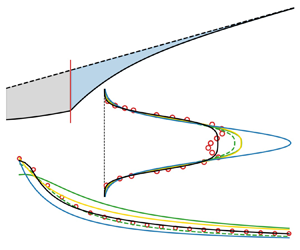
Describing the evolution of a wind turbine's wake from a top-hat profile near the turbine to a Gaussian profile in the far wake is a central feature of many engineering wake models. Existing approaches, such as super-Gaussian wake models, rely on a set of tuning parameters that are typically obtained from fitting high-fidelity data. In the current study, we present a new engineering wake model that leverages the similarity between the shape of a turbine's wake normal to the streamwise direction and the diffusion of a passive scalar from a disk source. This new wake model provides an analytical expression for a streamwise scaling function that ensures the conservation of linear momentum in the wake region downstream of a turbine. The model also considers the different rates of wake expansion that are known to occur in the near- and far-wake regions. Validation is presented against high-fidelity numerical data and experimental measurements from the literature, confirming a consistent good agreement across a wide range of turbine operating conditions. A comparison is also drawn with several existing engineering wake models, indicating that the diffusion-based model consistently provides more accurate wake predictions. This new unified framework allows for extensions to more complex wake profiles by making adjustments to the diffusion equation. The derivation of the proposed model included the evaluation of analytical solutions to several mathematical integrals that can be useful for other physical applications.
The article considers systems of interacting particles on networks with adaptively coupled dynamics. Such processes appear frequently in natural processes and applications. Relying on the notion of graph convergence, we prove that for large systems the dynamics can be approximated by the corresponding continuum limit. Well-posedness of the latter is also established.
Residual blood specimens collected at health facilities may be a source of samples for serosurveys of adults, a population often neglected in community-based serosurveys. Anonymized residual blood specimens were collected from individuals 15 – 49 years of age attending two sub-district hospitals in Palghar District, Maharashtra, from November 2018 to March 2019. Specimens also were collected from women 15 – 49 years of age enrolled in a cross-sectional, community-based serosurvey representative at the district level that was conducted 2 – 7 months after the residual specimen collection. Specimens were tested for IgG antibodies to measles and rubella viruses. Measles and rubella seroprevalence estimates using facility-based specimens were 99% and 92%, respectively, with men having significantly lower rubella seropositivity than women. Age-specific measles and rubella seroprevalence estimates were similar between the two specimen sources. Although measles seropositivity was slightly higher among adults attending the facilities, both facility and community measles seroprevalence estimates were 95% or higher. The similarity in measles and rubella seroprevalence estimates between the community-based and facility serosurveys highlights the potential value of residual specimens to approximate community seroprevalence.
The aim of this study was to explore and identify why young adults aged between 18 and 30 years in the UK and France do or do not consume dairy products. Several studies have associated dairy products with a healthy diet, and the production of soft dairy, i.e. milk, yoghurt, and soft cheese, as more environmentally friendly than some other animal-based products. Yet recent reports highlight that dairy intake is lower than recommended for health, especially among young adults. Using a qualitative methodology, forty-five participants aged 18–30 years (UK: n = 22; France: n = 23) were asked about their reasons for (non)consumption of a wide range of dairy products. Audio-recorded focus groups and individual interviews were conducted in English in the UK and in French in France, transcribed and coded. A thematic analysis found four themes and sixteen sub-themes (theme product-related: sub-themes sensory, non-sensory, composition; theme individual-related: sub-themes mode of consumption, preferences, personal reasons, knowledge, attitudes and concerns, needs or cravings; theme cultural aspects: sub-themes product categorization, social norms, use; theme market offering: sub-themes alternative, packaging, value for money, availability) to influence participants’ dairy (non)consumption in both countries. A seventeenth sub-theme (theme cultural aspects: sub-theme structure of the meal) was found to influence dairy consumption only in France. Further studies are needed to investigate these themes within larger samples, but these findings contribute to understanding dairy (non)consumption in young adults in the UK and France and may aid the development of strategies to improve young adults’ diets.
As the most populous city in China, Shanghai’s human waste disposal underwent a dramatic transition between 1949 and 2010. While human waste continued to be sold to farmers as fertilizer, the authorities attempted to modernize the methods of manual removal, promoting nightsoil dump stations and vacuum trucks from the early 1970s. These new methods soon became widespread. However, urban human waste gradually lost its value as fertilizer from the late 1970s, chiefly because of the popularization of chemical fertilizers, at which point Shanghai was faced with serious human waste issues. Encountering this unforeseen shift, the municipality had to accept the reality that there were no longer rural markets for urban human waste, and that it would have to start treating human waste as refuse. In contrast to the Western model, Shanghai’s approach to modernizing human waste disposal was distinctive, having been influenced by factors beyond the city.
This article examines the intertwined history of local divination schools and divination instructors during the Yuan–Ming transition through a microhistory of the Zhu family—a diviner family who, as newcomers to Suzhou, carefully navigated the turbulent dynastic transition. Based on broader prosopographical research of Yuan and Ming divination school instructors, this study draws two main conclusions regarding social and institutional history during this crisis period. First, the Zhu family, representing lesser elites whose status depended on state institutions, survived the Yuan–Ming transition by building local networks, transforming their expertise, and manipulating narratives of their family history. Second, despite the Ming founder's order for the re-establishment of local divination schools, it was the diviner families, seeking to recover from the dynastic transition, who played a key role in restoring the local institution. This study extends our understanding of the scope of the fourteenth-century crisis, its diverse manifestations across social groups, and the manipulation of crisis narratives for various purposes. It also proposes a bottom-up approach to engage with the Yuan–Ming social and institutional continuity and rupture.
We evaluated the prevalence and risk factors for child maltreatment in multiples aged 3 years and compared them to singletons in Japanese population-based data. Records on child maltreatment and health check-ups at 3 years of age from 17,125 singletons, 488 twins and 18 triplets were collected from a Public Health Center between April 2007 and March 2011. The associations of child maltreatment with potential risk factors were analyzed using the logistic regression model. Out of all children, 76 (4.31 per 1000) children had documented maltreatment including 69 (4.03 per 1000) singletons and seven (14.31 per 1000) twins. All of the cases in twins were physical abuse (100%) and nearly half of the cases (43%) included emotional abuse. Among twins, 86% of the biological mothers were suspected. The alleged perpetrators of twins showed a significantly higher rate of maternal depression compared to those of singletons. After adjusting the results for a number of potential biological and social risk factors, twins or triplets had a higher risk for maltreatment than singletons (OR 3.39, 95% CI [1.17, 9.83]). Healthcare providers should be aware that a multiple birth can place considerable stress on a family leading to child maltreatment and should provide appropriate support and intervention for mothers with multiples.
The present study examines whether age of second language acquisition, duration of exposure to that language, and chronological age determine vocabulary knowledge in 214 Russian–Hebrew bilinguals (ages 19–80, immigration ages 1–46, and exposure duration 7–63 years). Participants reported their language background and completed a multiple-choice vocabulary test in Hebrew, alongside other objective tests of Russian and Hebrew proficiency. While vocabulary scores were below age-matched norms for native Hebrew speakers, they were similar to those of younger native speakers matching in exposure duration. Raw vocabulary scores were similar whether participants immigrated up to age 15 or after that age, although results indicated a negative association between age of immigration and vocabulary scores. A positive association emerged between exposure duration and vocabulary scores, and when analyzing all measures together, age of immigration did not predict vocabulary scores, whereas exposure duration was its main determinant. We suggest that bilingualism itself does not cause a vocabulary gap, and that bilinguals’ vocabulary knowledge in their second language improves with exposure, as it does in native speakers throughout adulthood. The study emphasizes that learning a foreign language requires extensive exposure and that vocabulary learning is a lifelong process.
In contemporary Europe, far-right parties threaten liberal democratic principles such as pluralism, media freedom and minority rights. Despite the stigma they normally face, far-right parties have experienced electoral breakthroughs even in countries where they remained electorally marginal such as Germany, Portugal, Spain and Sweden. We advance the idea that this happened because the level of stigmatization faced by these parties decreased before their electoral breakthrough. Therefore, we form a theoretical framework based on a threefold mechanism: far-right parties manage to reduce the stigma they face because of a reputational shield or by moderating their message; the media help the far right gain visibility and legitimacy by accommodating its views; established parties accommodate far-right parties without ostracizing them. Then, we test the framework by looking at the electoral breakthroughs of four parties: the results confirm the expectations except for the role of established parties, which is inconclusive.