To save content items to your account,
please confirm that you agree to abide by our usage policies.
If this is the first time you use this feature, you will be asked to authorise Cambridge Core to connect with your account.
Find out more about saving content to .
To save content items to your Kindle, first ensure no-reply@cambridge.org
is added to your Approved Personal Document E-mail List under your Personal Document Settings
on the Manage Your Content and Devices page of your Amazon account. Then enter the ‘name’ part
of your Kindle email address below.
Find out more about saving to your Kindle.
Note you can select to save to either the @free.kindle.com or @kindle.com variations.
‘@free.kindle.com’ emails are free but can only be saved to your device when it is connected to wi-fi.
‘@kindle.com’ emails can be delivered even when you are not connected to wi-fi, but note that service fees apply.
Deep brain stimulation (DBS) is an important treatment for Parkinson’s disease, tremor and dystonia in appropriately selected patients. The Canada Health Act emphasizes equity and “reasonable access to medically necessary hospital and physician services.” How to define “reasonable access” has not been well studied. We aimed to assess access to DBS implantation surgery and to determine the time required from initial assessment through to surgery and which step(s) delay the implantation.
Methods:
DBS implants from 2016 to 2023 at the University of Alberta were analyzed. The neurologists’ decision to proceed with DBS marks the start of the workup. The time required to see a neurosurgeon, psychiatrist, neuropsychologist and healthcare allies and to receive DBS surgery was assessed. The impact of COVID-19 was studied.
Results:
The total time from starting the workup to DBS surgery was 387.76 ± 125.19 days prior to COVID-19, and marked delay occurred during and post-COVID-19 (840.15 ± 165.41 days and 839.78 ± 300.66 days, respectively). Most workups were done within 6 months pre-COVID-19, although a big range existed due to variable factors. The longest delay to surgery was from consent to DBS implantation, owing to a lack of operative time. There has not been a recovery post-pandemic.
Conclusions:
Time to DBS implantation surgery from initial decision is lengthy and more than doubled over the course of the COVID-19 pandemic. The biggest delay was in the time from consent to implantation surgery, which has not improved despite the pandemic having ended.
In the mid-fourteenth century, the Jochid ulus went through a phase of extreme political turbulence. Following the death of the last Batuid khan Berdibek (r. 1357–1359), during the next two decades, circa 1360–1380, a high number of power contenders rose at both the central and the local levels of the ulus. This article aims to map and exemplify those attempts as part of the broader theoretical discussion concerning the scope and depth of the khanate's crisis. It does so by combining an overall, bird's-eye perspective on the political history of the ulus by zooming in on the regional history, as well as through the analysis of both written primary and numismatic sources. None of the multiple patterns of reaction to the dying-out of the Batuid lineage clearly contradicted the idea of the khanate's unity and the overarching ‘Chinggisid principle’. At this point in time, the ulus still followed the centrifugal logic of the Chinggisid rule. At the same time, the crisis of the Jochid ulus of the mid-fourteenth century indeed prepared the very ground for the power division between the still-existing branches of the Jochid family and the break-up of the Jochid power domain of the fifteenth century that followed the last unification attempt of the ulus under Toqtamïsh (r. 1380–1406).
This paper compares the views of Hegel and Schelling regarding the problem of individuation, i.e. the question of what makes an individual (a) numerically distinct from others and (b) the very individual it is. My focus is on how Hegel approaches this problem in his metaphysics and how that relates to Schelling’s views as articulated in his ‘negative philosophy’. While Hegelians like Robert Stern and Karen Ng are optimistic that Hegel can solve the problem of individuation, I argue that Schelling puts forward an objection that both challenges Hegel’s account and provides a rationale for taking seriously Schelling’s own insistence on a pre-logical dimension of being.
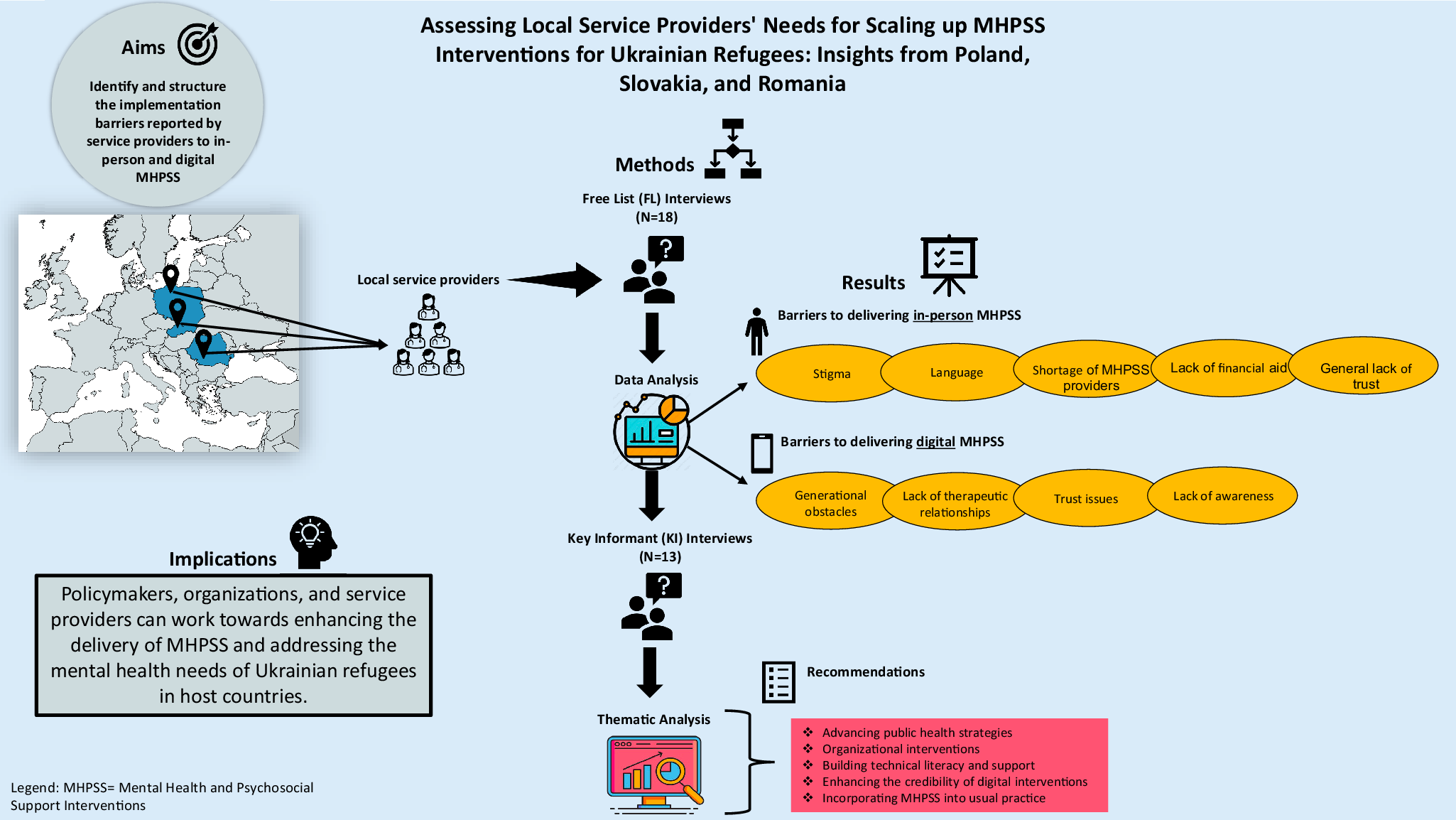
Providing Mental Health and Psychosocial Support interventions (MHPSS) for forcibly displaced Ukrainians in Central and Eastern Europe poses numerous challenges due to various socio-cultural and infrastructural factors. This qualitative study explored implementation barriers reported by service providers of in-person and digital MHPSS for Ukrainian refugees displaced to Poland, Romania and Slovakia due to the war. In addition, the study aimed to generate recommendations to overcome these barriers. Semi-structured Free List and Key Informant interviews were conducted using the Design, Implementation, Monitoring and Evaluation protocol with 18 and 13 service providers, respectively. For in-person interventions, barriers included stigma, language, shortage of MHPSS providers, lack of financial aid and general lack of trust among refugees. For digital MHPSS, barriers included generational obstacles, lack of therapeutic relationships, trust issues, and lack of awareness. Recommendations included advancing public health strategies, organizational interventions, building technical literacy and support, enhancing the credibility of digital interventions and incorporating MHPSS into usual practice. By implementing the recommendations proposed in this study, policymakers, organizations and service providers can work towards enhancing the delivery of MHPSS and addressing the mental health needs of Ukrainian refugees in host countries, such as Poland, Romania and Slovakia.
The Edmonton-based mobile stroke unit (MSU), which transports patients to the University of Alberta Hospital (UAH), enrolled patients in the Intravenous Tenecteplase Compared with Alteplase for Acute Ischemic Stroke (AcT) trial. We examined the feasibility of trial enrollment in MSU, its impact on acute stroke workflow metrics and functional outcomes at 90–120 days.
Methods:
In this post hoc analysis, patients were divided into three groups based on enrollment site: MSU (n = 43), UAH (n = 273) and non-UAH (n = 1261). All patients were enrolled with a deferred consent process. The primary outcome for this analysis was the feasibility of enrollment defined as the proportion of patients receiving intravenous thrombolysis (IVT) during the study period who were enrolled in the trial. Multiple linear and binary logistic regression was used to evaluate the adjusted effect of the study groups on acute stroke workflow metrics and functional outcomes at 90–120 days.
Results:
100% of eligible IVT-treated patients in the MSU during the study period were enrolled in the AcT trial. Covariate-adjusted linear regression showed shorter door-to-needle (17.2 [9.7–24.6] min) and CT-to-needle (10.7 [4.2–17.1] min) times in the MSU compared to UAH and non-UAH sites. There was no difference in the proportion of patients with an excellent functional outcome (mRS 0–1) at 90–120 days or symptomatic intracerebral hemorrhage (ICH) at 24 hours between groups.
Conclusions:
Enrollment in the AcT trial from the MSU was feasible. MSU-enrolled patients demonstrated faster door-to-needle and CT-to-needle times, resulting in earlier IVT administration and similar rates of symptomatic ICH.
Proton acceleration in a near-critical-density gas driven by a light spring (LS) pulse with a helical structure in its intensity profile is investigated using three-dimensional particle-in-cell simulations. Compared with other pulse modes with the same laser power, such as the Gaussian pulse or the donut Laguerre–Gaussian (LG) pulse, the LS structure significantly enhances the peak intensity and drives a stronger longitudinal acceleration field and transverse focusing field. Both the high intensity and helical structure of the LS pulse contribute to the formation of a bubble-like structure with a fine electron column on the axis, which is critical for stable proton acceleration. Therefore, it is very promising to obtain ultra-high-energy protons using LS pulses with a relatively lower power. For example, by using LS pulses with the same power of 4.81 PW, the proton in the gas can be accelerated up to 8.7 GeV, and the witness proton can be accelerated to 10.6 GeV from 0.11 GeV, which shows the overwhelming advantage over the Gaussian and LG pulse cases.
This article presents a description of German schon and noch as nontemporal scalar focus operators. Both items operate in a scalar model of sufficiency and signal that the focus value yields a more informative proposition than all alternatives under consideration; that is, they are special cases of scalar additives. Where the two expressions differ is in the complementary perspectives they evoke. Schon relates to higher alternatives. Noch relates to lower alternatives, but brings about an inverse (i.e., antonymically ordered) scalar model. The use of schon and noch as scalar sufficiency operators is traced back to an amalgamation of two other uses of the same items. The descriptive findings contribute to the advancement of our cross-linguistic understanding of scalar focus operators and raise fundamental questions pertaining to the typological and theoretical status of scale reversal phenomena.*
Randomised controlled trials are the ‘gold standard’ approach in nutrition research to show a causal relationship between a dietary intervention and clinically relevant outcomes at the population level. Here we review why different study designs are needed to establish the efficacy of dietary interventions at the individual level and to better account for relevant factors that can also influence the outcomes. Over the past decade, precision nutrition approaches have been developed as a new way to measure the effectiveness of dietary interventions at the individual and population level. Precision nutrition aims to determine the individual factors that are associated with differences in responses to dietary interventions. This is complex, typically needing studies with a large number of participants and using advanced statistical approaches and machine-learning algorithms to identify predictors that can explain why individuals do or do not respond to consuming specific foods, meals or diets, for a given outcome. N-of-1 study designs, which are new to nutrition science, offer a robust alternative approach to assess how an intervention and everyday behaviours affect individual health outcomes. They utilise repeated measures within individuals, rather than baseline and end measures in a larger number of participants, to provide the statistical power required to determine an individual’s responsiveness to an intervention. The adoption of new study designs and modelling approaches, particularly the N-of-1 approach, to examine responses to interventions within individuals, will help to further the understanding of the relationships between diet and health within individuals more effectively and accurately.
Ecuador is a key area in South America when it comes to understanding the economic, social and archaeological aspects of pre-Hispanic cultures in the northwestern region of the Andes. Among the most complex societies to have inhabited this territory is the so-called Manteño culture (AD ∼800–1530), which spanned across most of Ecuador’s central Pacific coast. Ongoing research at the site of Ligüiqui (Manta, Manabí) has enabled us to obtain a more complete overview of the chronological sequence of the Manteño period as well as contributing further data on the advanced stage of social development reached during the period; characterized by the hierarchical arrangement of sites, the use of extensive settlement models, and semi-circular stone fish traps (corrales). In order to understand the role played by this coastal site in the complex Manteño culture, a detailed radiocarbon study was performed in the sequence of the Ligüiqui site. In addition, using a detailed review of available Manteño settlement radiocarbon data (13 sites and 64 dates), we established a chronostratigraphic framework for the culture. Our data indicate that Ligüiqui probably acted as a supply centre for marine-origin products from the twelfth century onwards with activity peaking during the Late Manteño period. A multisite comparison using Bayesian modeling indicates an early onset of the Manteño culture in Ligüiqui around AD 700, and a general demise in most of the sites AD ∼1500 or slightly before. This culture finally collapsed before AD ∼1600 during the early Spanish colonial period. Only one site, La Libertad, shows potential evidence of having remained a Manteño settlement after that date.
A long-wave asymptotic model is developed for a viscoelastic falling film along the inside of a tube; viscoelasticity is incorporated using an upper convected Maxwell model. The dynamics of the resulting model in the inertialess limit is determined by three parameters: Bond number Bo, Weissenberg number We and a film thickness parameter $a$. The free surface is unstable to long waves due to the Plateau–Rayleigh instability; linear stability analysis of the model equation quantifies the degree to which viscoelasticity increases both the rate and wavenumber of maximum growth of instability. Elasticity also affects the classification of instabilities as absolute or convective, with elasticity promoting absolute instability. Numerical solutions of the nonlinear evolution equation demonstrate that elasticity promotes plug formation by reducing the critical film thickness required for plugs to form. Turning points in travelling wave solution families may be used as a proxy for this critical thickness in the model. By continuation of these turning points, it is demonstrated that in contrast to Newtonian films in the inertialess limit, in which plug formation may be suppressed for a film of any thickness so long as the base flow is strong enough relative to surface tension, elasticity introduces a maximum critical thickness past which plug formation occurs regardless of the base flow strength. Attention is also paid to the trade-off of the competing effects introduced by increasing We (which increases growth rate and promotes plug formation) and increasing Bo (which decreases growth rate and inhibits plug formation) simultaneously.
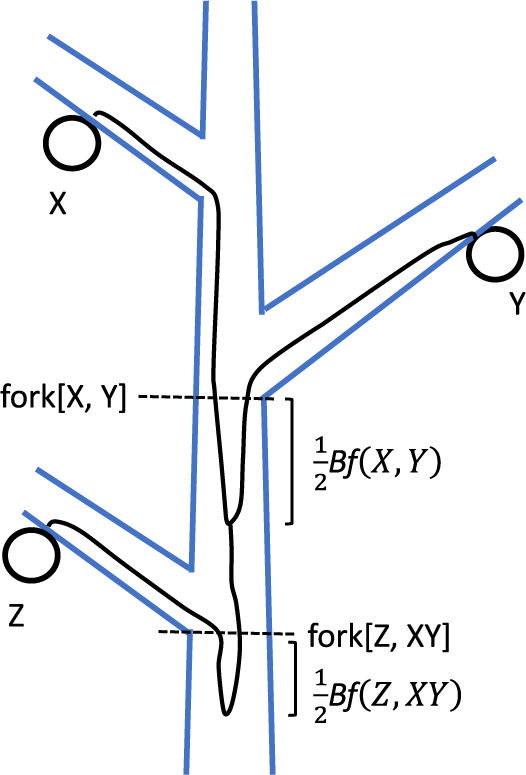
Trees, living for centuries, accumulate somatic mutations in their growing trunks and branches, causing genetic divergence within a single tree. Stem cell lineages in a shoot apical meristem accumulate mutations independently and diverge from each other. In plants, somatic mutations can alter the genetic composition of reproductive organs and gametes, impacting future generations. To evaluate the genetic variation among a tree’s reproductive organs, we consider three indexes: mean pairwise phylogenetic distance ($\overline{D}$), phylogenetic diversity ($PD$; sum of branch lengths in molecular phylogeny) and parent-offspring phylogenetic distance (${D}_{PO}$). The tissue architecture of trees facilitated the accumulation of somatic mutations, which have various evolutionary effects, including enhancing fitness under strong sib competition and intense host-pathogen interactions, efficiently eliminating deleterious mutations through epistasis and increasing genetic variance in the population. Choosing appropriate indexes for the genetic diversity of somatic mutations depends on the specific aspect of evolutionary influence being assessed.
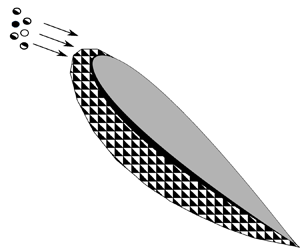
Ice-crystal icing (ICI) in aircraft engines is a major threat to flight safety. Due to the complex thermodynamic and phase-change conditions involved in ICI, rigorous modelling of the accretion process remains limited. The present study proposes a novel modelling approach based on the physically observed mixed-phase nature of the accretion layers. The mathematical model, which is derived from the enthalpy change after accretion (the enthalpy model), is compared with an existing pure-phase layer model (the three-layer model). Scaling laws and asymptotic solutions are developed for both models. The onset of ice accretion, the icing layer thickness and solid ice fraction within the layer are determined by a set of non-dimensional parameters including the Péclet number, the Stefan number, the Biot number, the melt ratio and the evaporative rate. Thresholds for freezing and non-freezing conditions are developed. The asymptotic solutions present good agreement with numerical solutions at low Péclet numbers. Both the asymptotic and numerical solutions show that, when compared with the three-layer model, the enthalpy model presents a thicker icing layer and a thicker water layer above the substrate due to mixed-phased features and modified Stefan conditions. Modelling in terms of the enthalpy poses significant advantages in the development of numerical methods to complex three-dimensional geometrical and flow configurations. These results improve understanding of the accretion process and provide a novel, rigorous mathematical framework for accurate modelling of ICI.
Persons living with dementia are at risk of becoming lost. While return discussions after missing incidents are common with children, these discussions are seldom done with persons living with dementia. Our objective was to describe the use of return discussions with persons living with dementia according to the literature and practice. We conducted a scoping review using 19 databases to locate scholarly and grey literature on return discussions, followed by 20 semi-structured interviews with first responders and service providers in Canada and the United Kingdom (UK). Eleven scholarly and 94 grey sources were included, most from the UK, related to missing children, none included persons with dementia. According to participants, although there was no standardized procedure, there were themes about conditions that facilitate return discussions. This was the first study to examine return discussion practice in dementia, and results can inform development of evidence-based protocols.
Bipolar disorder (BD) is a leading cause of disability and is linked to cognitive and functional impairment, increased mortality from cardiometabolic disorders and bipolar disorder suicide. Few studies in sub-Saharan Africa have explored cognitive dysfunction in bipolar disorder. Our study explores the cognitive characteristics in a bipolar patient cohort in Nigeria and assesses its association with clinical and demographic variables.
40 participants from the Bipolar Disorder Longitudinal Study, at baseline, were included in the pilot study of the BiDiLos-Ng. Using a cross-sectional design, cognitive function was assessed using the Screen for Cognitive Impairment in Psychiatry. Multiple linear regression models were used to explore associations between dependent and independent variables.
Cognitive impairment was present in 41% of the bipolar cohort, it was not associated with the frequency of mood episodes, and higher educational level was associated with higher verbal fluency test scores (p = 0.02). Being in employment (p = 0.03), younger age (p = 0.00), and lower YMRS score (p = 0.006) were associated with higher working memory test scores.
The presence of mania symptoms during the euthymic phase of BD was associated with cognitive impairment. Executive function and working memory were linked to better academic and occupational attainment.
Gambling has been Macau’s principal industry and a major source of income for the city for nearly 180 years. However, surprisingly little has been said about its urban impact and connections to a wider economy of vice, e.g. opium, pawnbroking and prostitution, which was consolidated in the second half of the nineteenth century mostly by the hands of a Chinese entrepreneurial elite. This article takes a novel approach to examining Macau’s early colonial development by historicizing the city’s modern economy from a different, mostly neglected urban angle. It shows that the development of vice businesses promoted the diversification of commercial activity, real estate development and the creation of public facilities, defining a type of ordinary urbanization, business-led rather than government-oriented, that affected Macau’s urban character and identity in durable ways.
This study investigated the impact of reading statements in a second language (L2) versus the first language (L1) on core knowledge confusion (CKC), superstition, and conspiracy beliefs. Previous research on the Foreign Language Effect (FLE) suggests that using an L2 elicits less intense emotional reactions, promotes rational decision-making, reduces risk aversion, causality bias and superstition alters the perception of dishonesty and crime, and increases tolerance of ambiguity. Our results do not support the expected FLE and found instead an effect of L2 proficiency: Participants with lower proficiency exhibited more CKC, were more superstitious and believed more in conspiracy theories, regardless of whether they were tested in L1 or L2. The study emphasises the importance of considering L2 proficiency when investigating the effect of language on decision-making and judgements: It—or related factors—may influence how material is judged, contributing to the FLE, or even creating an artificial effect.
In the development discourse, there has been a tendency to frame the Global South, especially Africa, as a perpetual recipient of ideas from the Global North. This has led to the implementing of “development” initiatives based on the unsuccessful modernization paradigm and the associated Washington Consensus. Despite the emergence of counter theories such as dependency and underdevelopment theories, they share similar assumptions with the modernization paradigm. These assumptions include the belief that historical change brings development or progress, the sidelining of noneconomic factors like ethnicity, race, and gender, and the sole emphasis on economic growth as a measure of development. Both models assume that the state should primarily drive advancement. To address the weaknesses of these development models, alternative perspectives such as women and development, women in development, and gender and development were introduced. However, these perspectives would be integrated into the mainstream development discourse, diluting their impact.
The emergence of early cities required new agricultural practices and archaeobotanical crop-processing models have been used to investigate the social and economic organisation of urban ‘consumer’ and non-urban ‘producer’ sites. Archaeobotanical work on the Indus Valley has previously identified various interpretations of labour and subsistence practices. Here, the authors analyse a large archaeobotanical assemblage from Harappa, Pakistan (3700–1300 BC), questioning some of the assumptions of traditional crop-processing models. The ubiquity of small weed seeds, typically removed during the early stages of crop processing, is argued to result from dung burning. This additional taphonomic consideration adds nuance to the understanding of Harappa's labour organisation and food supply with implications for crop-processing models in other contexts.