To save content items to your account,
please confirm that you agree to abide by our usage policies.
If this is the first time you use this feature, you will be asked to authorise Cambridge Core to connect with your account.
Find out more about saving content to .
To save content items to your Kindle, first ensure no-reply@cambridge.org
is added to your Approved Personal Document E-mail List under your Personal Document Settings
on the Manage Your Content and Devices page of your Amazon account. Then enter the ‘name’ part
of your Kindle email address below.
Find out more about saving to your Kindle.
Note you can select to save to either the @free.kindle.com or @kindle.com variations.
‘@free.kindle.com’ emails are free but can only be saved to your device when it is connected to wi-fi.
‘@kindle.com’ emails can be delivered even when you are not connected to wi-fi, but note that service fees apply.
This scoping review addresses gaps in the existing literature on dietary guidelines for pregnant and lactating women globally. The study delves into adherence levels, identifies influencing factors and examines outcomes associated with these guidelines. Analysing food-based dietary guidelines (FBDG) from around the world, the review reveals that half of the countries lack FBDG, with only 15% providing tailored advice for pregnant and lactating women. Utilising data extracted from forty-seven articles across MEDLINE and EMBASE, the study highlights a scarcity of adherence studies, particularly in low- or middle-income countries (LMIC), and emphasises the lack of research during lactation. Overall adherence to dietary guidelines is low, with disparities in fruit, vegetable, whole grain and fish consumption. Positive correlations with adherence include age, education, employment, social class and certain medical histories, while negative correlations involve smoking, alcohol consumption, metropolitan residence and elevated BMI. The study documented significant associations between adherence and reduced risks of gestational complications but calls for further exploration of intermediate nutritional outcomes such as micronutrient deficiencies and child growth. Emphasising the urgency for globally standardised guidelines, especially in LMIC, this review provides a foundational call for prioritised studies and strategies to enhance dietary practices for pregnant and lactating women worldwide.
Horizontal convection at large Rayleigh and Prandtl numbers is studied experimentally in a regime up to seven orders of magnitude larger in terms of Rayleigh numbers than previously achieved. To reach Rayleigh numbers up to $10^{17}$, the horizontal density gradient is generated using differential solutal convection by a differential input of salt and fresh water controlled by diffusion in a novel experiment in which the zero-net mass flux of water is ensured through permeable membranes. This set-up allows us to accurately measure the Nusselt number in solutal convection by carefully controlling the amount of salt water exchanged through the membranes. Combined measurements of density and velocity across more than five orders of magnitude in Rayleigh numbers show that the flow transitions from the Beardsley & Festa (J. Phys. Oceanogr., vol. 2, issue 4, 1972, pp. 444–455), Shishkina & Wagner (Phys. Rev. Lett., vol. 116, issue 2, 2016, 024302) regime to the Chiu-Webster et al. (J. Fluid Mech., vol. 611, 2008, pp. 395–426) regime and frames the present results within the scope of Shishkina et al. (Geophys. Res. Lett., vol. 43, issue 3, 2016, pp. 1219–1225), and the theory of Part 1 (Passaggia & Scotti, vol. 997, 2024, J. Fluid Mech., A5). In particular, we show that, even for large Prandtl numbers, the circulation eventually clusters underneath the forcing horizontal boundary, leaving a stratified core without motion. Finally, the previous regime diagrams (Hughes & Griffiths, Annu. Rev. Fluid Mech., vol. 40, 2008, pp. 185–208; Shishkina et al., Geophys. Res. Lett., vol. 43, issue 3, 2016, pp. 1219–1225) are extended by combining the present results at high Prandtl numbers, the results at low Prandtl numbers of Part 1, together with previous results from the literature. This work sets a new picture of the transition landscape of horizontal convection over six orders of magnitude in Prandtl number and sixteen orders of magnitude in Rayleigh number.
This study aimed to evaluate clinical characteristics, treatments and outcomes of paediatric temporal bone fractures at our institute.
Methods:
A retrospective study of paediatric skull fractures confirmed by imaging from January 2010 to December 2022. Data on demographics, clinical presentations, injury mechanisms and complications were analysed, and fractures were categorised into otic capsule sparing (OCS) and violating (OCV).
Results:
Of 369 skull fracture cases, 88 (24 per cent) involved temporal bones, predominantly caused by falls and vehicle accidents. Common symptoms were loss of consciousness, hematoma, and hemotympanum, with complications like facial nerve injury and cerebrospinal fluid leaks in 3.4 per cent of cases. OCV fractures led to more severe complications, including hearing loss. Audiology showed 65 per cent without hearing impairment, while others had various degrees of loss.
Conclusion:
Paediatric temporal bone fractures, particularly OCV types, pose significant challenges. Early detection and thorough management are vital, underscoring the need for consistent data collection and regular audiometric monitoring.
Quality of life is dependent upon the extent to which behavioural needs are met, and the balance between pleasant and unpleasant lifetime experiences. In Part II of this systematic review, articles (n = 109) relating to horse-human interactions were reviewed to identify behavioural evidence of their positive or negative impact on the horse. The number of articles (n = 22) relating to the recognition of pain in horses, indicated the importance of identifying health issues, which are also likely to increase the aversiveness of interactions. These and articles relating to emotional reactivity testing in horses (n = 19), the behaviour of horses during handling and management procedures (n = 17), behaviour of the horse when ridden (n = 17), non-procedural horse-human interactions (n = 13), horse behaviour during transportation (n = 12) and behaviour during training other than when ridden (n = 9) were reviewed. During most interactions, horse behaviour is controlled and/or restricted by the human, masking negative or positive signs, and may be confounded by factors including fear and individual differences. In situations involving freedom of movement, positive experiences of horses with humans were associated with approach behaviour, negative ones with avoidance, but training could affect both. Undoubtedly, change is needed to reduce the extent to which interactions with humans are unpleasant for the horse. Only when the needs of the horse are fulfilled and interactions with humans are predominantly pleasurable will their quality of life improve.
The welfare of horses involved in sport and leisure activities has come under increasing scrutiny, both from within the equine sector and from the public. A systematic review of scientific evidence was conducted to derive observable, evidence-based behavioural measures of positive or negative affective state and factors relating to quality of life in the domestic horse (Equus caballus). Two separate searches (including the terms ‘emotion/affect’, or ‘stress’) were conducted, with 179 articles being retained. In Part I of this two-part review (companion paper published simultaneously), articles relating to the extent to which the species-specific needs of the horse are fulfilled in the home environment (n = 21), in relation to social grouping (n = 20), and during weaning (n = 14) were reviewed. Experimental tests of affective state in relation to housing and management (n = 8), and studies relating to stereotypical behaviour (n = 7) were also included. Opportunities for behavioural expression were dependent upon the provision of social and physical resources. Withdrawn or agitated behaviours in situ, avoidance behaviour during handling and agonistic intra-species interactions were indicative of negative affective state. Affiliative intra-specific social interactions, and forage ingestion were considered positive signs. For horses to live a good life, their need for space, companionship, and forage must be prioritised from birth and throughout their lives.
Lie detection research comparing manual and automated coding of linguistic cues is limited. In Experiment 1, we attempted to extend this line of research by directly comparing the veracity differences in manual coding and two coding software programs (Text Inspector and Linguistic Inquiry and Word Count [LIWC]) on the linguistic cue “total details” across eight published datasets. Mixed model analyses revealed that LIWC showed larger veracity differences in total details than Text Inspector and manual coding. Follow-up classification analyses showed that both automated coding and manual coding could accurately classify honest and false accounts. In Experiment 2, we examined if LIWC’s sensitivity to veracity differences was the result of honest accounts including more redundant (repeated) words than false accounts as LIWC—but not Text Inspector or manual coding—accounts for redundancy. Our prediction was supported, and the most redundant words were function words. The results implicated that automated coding can detect veracity differences in total details and redundancy, but it is not necessarily better than manual coding at accurately classifying honest and false accounts.
Deborah C. Payne's ground-breaking study traces the historical origins of a dilemma still bedevilling theatre companies: how to reconcile audience demand for novelty with profitability. As a solution, English acting companies in 1660 adopted an unprecedented theatrical duopoly. Implicit to its economic logic were scarcity, prestige, and innovation: attributes that, it was hoped, would generate wealth and exclusivity. Changes to playhouse architecture, stagecraft, dramatic repertory, and company practices were undertaken to create this new, upmarket theatre of “great expences.” So powerful was the promise of the duopoly and so enthralling the wholesale transformation of the theatrical marketplace that management—despite dwindling box office—resisted change for 35 years. Drawing upon network and behavioural economic theory, Professor Payne shows why the acting companies clung to an economic model inimical to their self-interest. Original archival research further bolsters this radically new perspective on an exciting and crucial period in English theatre. This title is also available as Open Access on Cambridge Core.
The historic task of the European Union (EU) today, this book argues, is to articulate and institute a new imaginary of prosperity. Imaginaries of prosperity integrate societies around the shared pursuit of a prosperous future, rendering 'political-economic' questions as the main preoccupation of politics. The new imaginary of prosperity in the EU must be able to provide answers to contemporary societal challenges while also conjuring a world in which people want to live. Through analyses of several policy fields, the book shows that the EU has already made modest strides in fostering more caring consumption, circular products and technologies, sustainable industry, and fairer corporate activity. But the EU must go further and faster if it hopes to respond effectively to Europe's problems, while arresting another descent into tribalism. This title is also available as Open Access on Cambridge Core.
The behaviour of an axisymmetric bubble in a pure liquid forced by an acoustic pressure field is analysed. The bubble is assumed to have a sharp deformable interface, which is subject both to surface tension and to Rayleigh viscosity damping. Two modelling regimes are considered. The first is a linearized solution, based on the assumption of small axisymmetric deformations to an otherwise spherical bubble. The second involves a semi-numerical solution of the fully nonlinear problem, using a novel spectral method of high accuracy. For large-amplitude nonspherical bubble oscillations, the fully nonlinear solutions show that a complicated resonance structure is possible and that curvature singularities may occur at the interface, even in the presence of surface tension. Rayleigh viscosity at the interface prevents singularity formation, but eventually causes the bubble to become purely spherical unless shape-mode resonances occur. An extended analysis is also presented for purely spherical bubbles, which allows for a more detailed study of the effects of resonance and the Rayleigh viscosity at the bubble surface.
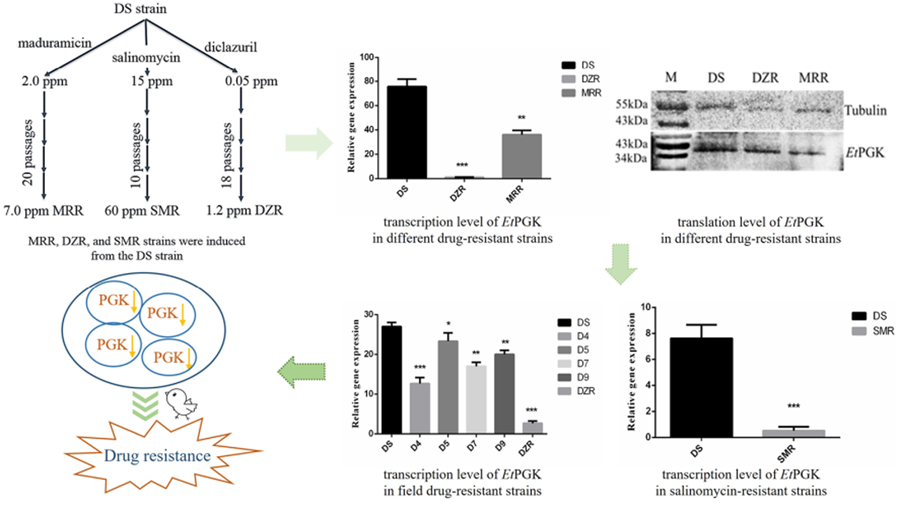
Coccidiosis is a parasitic disease caused by Eimeria spp., and the emergence of drug resistance has seriously affected the control of the disease. Using RNA-seq, we previously found that phosphoglycerate kinase of Eimeria tenella (EtPGK) was differentially downregulated in diclazuril-resistant (DZR) and maduramicin-resistant (MRR) strains compared with drug-sensitive (DS) strain. In this study, we further analysed the characteristics and functions of EtPGK to find the possible mechanism of drug resistance of E. tenella. Quantitative real-time PCR (qRT-PCR) and western blot found that EtPGK was highly expressed in sporulated oocysts, followed by sporozoites and second-generation merozoites of E. tenella. Indirect immunofluorescence localization showed that EtPGK was located mainly in the cytoplasm and on the surface of the parasites. Invasion inhibition assays showed that anti-rEtPGK antibody significantly inhibited the invasion of parasites. Further studies using qRT-PCR and western blot found that the transcription and translation levels of EtPGK were downregulated in both resistant (DZR and MRR) strains compared with the DS strain, and the transcription level correlated negatively with the drug concentration. The enzyme activity assay revealed that EtPGK enzyme activity was decreased in the DZR strain compared with the DS strain. qRT-PCR revealed that the mRNA transcription level of EtPGK was significantly downregulated in the field DZR strain and salinomycin-resistant strain compared with the DS strain. These results suggested that EtPGK has other important roles that are separate and distinct from its function in glycolysis, and it might be involved in the development of drug resistance of E. tenella.
This article contributes to a recent shift in the study of early modern political thought, moving away from a state-centric view of the period towards an interest in the political significance of a range of other communities. More specifically, I argue that debates about the scope of one key concept, that of societas, resulted in different visions of the relationships between a variety of human associations. To demonstrate this, I reconstruct Johannes Althusius’s theory of societas and compare it to those of several contemporaries, ranging from Renaissance Ciceronianism to Jean Bodin and Hugo Grotius. I show that Althusius provided an innovative juridical interpretation of societas, which he used to ground a conception of politics according to which all human associations, from the family to the corporation to the state, are political. This complements traditional theological interpretations of his thought, which alone cannot fully account for its distinctiveness. Althusius’s conception of politics enabled him to chart an original middle way between two options available at the time: on the one hand, the isolation of politics from social and religious life; on the other, its subordination to or full identification with other kinds of community.
This paper surveys what we have learned on financial literacy and its relation to financial behavior from data collected in the Dutch Central Bank (DNB) Household Survey, a project done in collaboration with academics. A pioneering survey fielded in 2005 included an extensive set of financial literacy questions and questions that can serve as instruments for financial literacy in regression analyses to assess the causal effect of financial literacy on behavior. We describe how this survey spurred a series of research papers demonstrating the crucial role of financial literacy in stock market participation, retirement planning, and wealth accumulation. This inspired various follow-up studies and experiments based on new data collections in the DNB Household Survey. Researchers worldwide have used these data for innovative studies, and other surveys have included similar questions. This case study exemplifies the essential role of data in empirical research, showing how innovative data collections can inspire new research initiatives and significantly contribute to our understanding of household financial decision-making.
Learning orientation emphasizes the importance of learning from any experience. It is grounded on commitment to learn, shared vision, open‐mindedness, and knowledge sharing. Organizational knowledge management literature based on social complexity theory posits that learning orientation makes companies generate new knowledge through spontaneous multi-level iterations and self-organization. Challenges related to the current business environment requires companies to constantly adjust to remain competitive. Still, the mechanisms making learning-oriented companies more capable to develop innovative product have been scantly explored. Pertinent literature actually conjectures this relationship as spontaneous, directed, and unmediated. Moreover, Small and Medium Enterprises (SMEs)rarely represent the context of analysis of research on this topic. Frequently lacking resources to systematically pursue product innovation, SMEs rely on solutions deriving from the combination of internal knowledge and external sources; thus, these companies depend on learning orientation principles to remain innovative. In this vein, the research aims to understand how learning orientation allows product innovation in SMEs through the achievement of strategic flexibility. Structural equation modelling was used to analyse data from 300 British SMEs. The results demonstrate the mediating role of strategic flexibility in the relationships between learning orientation and product innovation. The importance of innovation culture also emerged.
One type of computational indeterminacy arises from partitioning a system’s physical state space into state types that correspond to the abstract state types underlying the computation concerned. The mechanistic individuative strategy posits that computation can be uniquely identified through either narrow physical properties exclusively or wide, proximal properties. The semantic strategy posits that computation should be uniquely identified through semantic properties. We develop, and defend, an alternative functional individuative strategy that appeals—when needed—to wide, distal functions. We claim that there is no actual computation outside of a functional context. Desiderata for the underlying notion of teleofunction are discussed.
We investigated whether an observed reduction in overall childhood cancer risk (<15 years of age) in twins has been sustained, and how this extends into young adulthood. We searched for English language publications reporting childhood cancer risk in twins, obtained unpublished data directly from some authors, and updated a meta-analysis. We used the Swedish Multigeneration Register to investigate the age to which the reduced overall risk of childhood cancer (observed previously using that Swedish dataset and in this and earlier meta-analyses) persisted into the teenage/young adult years, and which specific tumors accounted for the overall risk reduction beyond childhood. Our meta-analysis of studies of aggregate childhood cancer risk in twins confirmed their approximate 15% reduction in cancer mortality and incidence. Further analysis of Swedish Multigeneration Register data for 1958 to 2002 suggested these reduced risks of cancer (particularly leukaemias and renal tumors) extended from childhood to young adult ages. Reduced risks of these and some other specific tumor types occurring across childhood/teenage/young adult years appeared to account for most of the overall risk reduction. Our results suggest a persistent reduction of overall childhood cancer risk in twins and that this extends into young adulthood. Risk reductions for several specific tumors might account for this and, although there are several potential explanations, intrauterine growth patterns of twins might be a major contributor.
Fetal brain size is decreased in some children with complex CHDs, and the distribution of blood and accompanying oxygen and nutrients is regionally skewed from early fetal life dependent on the CHD. In transposition of the great arteries, deoxygenated blood preferentially runs to the brain, whereas the more oxygenated blood is directed towards the lungs and the abdomen. Knowledge of whether this impacts intrauterine organ development is limited. We investigated lung, liver, and total intracranial volume in fetuses with transposition of the great arteries using MRI.
Eight fetuses with dextro-transposition and without concomitant disease or chromosomal abnormalities and 42 fetuses without CHD or other known diseases were scanned once or twice at gestational age 30 through 39 weeks. The MRI scans were conducted on a 1.5T system, using a 2D balanced steady-state free precession sequence. Slices acquired covered the entire fetus, slice thickness was 10 mm, pixel size 1.5 × 1.5 mm, and scan duration was 30 sec.
The mean lung z score was significantly larger in fetuses with transposition compared with those without a CHD; mean difference is 1.24, 95% CI:(0.59;1.89), p < 0.001. The lung size, corrected for estimated fetal weight, was larger than in the fetuses without transposition; mean difference is 8.1 cm3/kg, 95% CI:(2.5;13.7 cm3/kg), p = 0.004.
In summary, fetuses with dextro-transposition of the great arteries had both absolute and relatively larger lung volumes than those without CHD. No differences were seen in liver and total intracranial volume. Despite the small number of cases, the results are interesting and warrant further investigation.
This article reads Jules Verne’s Extraordinary Voyages series (1863–1905) through a worldmaking lens. It argues that, rather than simply reflecting 19th-century ideologies of progress, Verne was engaged in creative global ordering. The article argues that Verne constructed global order as technocratic, anti-political, and necessarily violent. This space was ambiguously but persistently appropriated by white, male engineers and scientists. This generates two important insights for International Relations (IR). First, Verne’s global order was not about states, sovereignty, or political community: it was about an elite vanguard of technocratic adventurers roaming the globe. At a time when colonial incursions frequently emerged out of interventions by explorers and engineers and other ‘people with projects’, this understanding resonated deeply. It is also worth recovering as a current of technocratic thought not centred on bureaucracy and strong government but on private enterprise. Second, Verne’s fiction constituted a powerful conception of global order, and contemporaries drew upon this as an inspiration for real-world interventions. At the French Société de Géographie, of which Verne was a long-time member, as well as among imperialists across Europe, the Voyages became a casual frame of reference in justification of colonial expansion. Better understanding this typically downplayed aspect of the modern international imagination not only promises to enrich IR’s understanding of the role of speculative fiction in global ordering but also puts the current revival of techno-colonial projects – from Seasteading to the colonisation of Mars – into needed perspective.
Tribrachidium heraldicum is an Ediacaran body fossil characterized by triradial symmetry. Previous work has suggested that the anatomy of Tribrachidium was conducive to passive suspension feeding; however, these analyses used an inaccurate model and a relatively simple set of simulations. Using computational fluid dynamics, we explore the functional morphology of Tribrachidium in unprecedented detail by gauging how the presence or absence of distinctive anatomical features (e.g., apical pits and arms) affects flow patterns. Additionally, we map particle pathways, quantify deposition rates at proposed feeding sites, and assess gregarious feeding habits to more fully reconstruct the lifestyle of this enigmatic taxon. Our results provide strong support for interpreting Tribrachidium as a macroscopic suspension feeder, with the apical pits representing loci of particle collection (and possibly ingestion) and the triradial arms representing morphological adaptations for interrupting flow and inducing settling. More speculatively, we suggest that the radial grooves may represent ciliated pathways through which food particles accumulating in the wake of the organism were transported toward the apical pits. Finally, our results allow us to generate new functional hypotheses for other Ediacaran taxa with a triradial body plan. This work refines our understanding of the appearance of suspension feeding in shallow-water paleoenvironments, with implications for the radiation of Metazoa across the Ediacaran/Cambrian boundary.
While employees actively seek out workplaces that offer meaningful work experiences, the concept of meaningful work remains notably underexplored within the turnover literature. The present study addresses this gap by examining the role of work meaningfulness among knowledge workers and its direct and indirect effects on turnover intentions and job satisfaction through the lens of self-determination theory. Our findings show significant effects on turnover intentions and job satisfaction, with work meaningfulness emerging as a stronger predictor of job satisfaction, while still contributing to reducing turnover intentions. Most extant literature focuses on sources and ways to enhance work meaningfulness. We contribute to more recent research on its relationship with its outcomes especially the link with turnover intentions, offering insight into a relationship that has produced few, but conflicting,results.
The aim of this study is to estimate the minimum prevalence of intestinal parasites in the population of Roman London through analysis of pelvic sediment from 29 third- to fourth-century burials from the 1989 excavations of the western cemetery at 24–30 West Smithfield, 18–20 Cock Lane and 1–4 Giltspur Street (WES89). Microscopy was used to identify roundworm eggs in 10.3 per cent of burials. We integrate these results with past palaeoparasitological work in the province of Britannia to explore disease, hygiene and diet. The most commonly found parasites (whipworm and roundworm) were spread by poor sanitation, but other species caught from animals were also present (fish tapeworm, beef/pork tapeworm and liver flukes). Parasite diversity was highest in urban sites. The health impacts of these infections range from asymptomatic to severe.