To save content items to your account,
please confirm that you agree to abide by our usage policies.
If this is the first time you use this feature, you will be asked to authorise Cambridge Core to connect with your account.
Find out more about saving content to .
To save content items to your Kindle, first ensure no-reply@cambridge.org
is added to your Approved Personal Document E-mail List under your Personal Document Settings
on the Manage Your Content and Devices page of your Amazon account. Then enter the ‘name’ part
of your Kindle email address below.
Find out more about saving to your Kindle.
Note you can select to save to either the @free.kindle.com or @kindle.com variations.
‘@free.kindle.com’ emails are free but can only be saved to your device when it is connected to wi-fi.
‘@kindle.com’ emails can be delivered even when you are not connected to wi-fi, but note that service fees apply.
This article presents a detailed examination of circular target localization techniques for measuring robot pose and performing online pose correction. The investigated target localization methods include centroiding, ellipse fitting with point data and gradient information, and ellipse fitting methods with augmented and corrected input data. The performance of each method is evaluated in terms of accuracy and precision of measurements through experimental comparison with a laser tracker. This study provides technical and practical insights for selecting an appropriate target localization method in robotic applications. It also introduces a vision-based solution for robot relative error correction, comprising the calibration procedure and a closed-loop control with a proportional–integral-derivative controller for pose correction. Results show enhanced accuracy in robot positioning relative to workpiece, highlighting the effectiveness of the proposed solution in robotic drilling applications.
Basal crevasses threaten the stability of ice shelves through the potential to form rifts and calve icebergs. Furthermore, it is important to determine the dependence of crevasse stability on temperature due to large vertical temperature variations on ice shelves. In this work, considering the vertical temperature profile through ice viscosity, we compare (1) the theoretical crack depths and (2) the threshold stress causing the transition from basal crevasses to full thickness fractures in several fracture theories. In the Zero Stress approximation, the depth-integrated force at the crevassed and non-crevassed location are unbalanced, violating the volume-integrated Stokes equation. By incorporating a Horizontal Force Balance (HFB) argument, recent work showed analytically that the threshold stress for rift initiation is only half of that predicted by the Zero Stress approximation. We generalize the HFB theory to show that while the temperature profile influences crack depths, the threshold rifting stress is insensitive to temperature. We compare with observations and find that HFB best matches observed rifts. Using HFB instead of Zero Stress for cracks in an ice-sheet model would substantially enlarge the predicted fracture depth, reduce the threshold rifting stress and potentially increase the projected rate of ice shelf mass loss.
Congenital hearing loss is a chronic condition which occurs worldwide. In the past, investigations focused on testing the most common genes associated with hearing loss (such as Connexin 26-related hearing loss). Targeted testing of specific genes was requested only when a particular syndrome was suspected. Recent advances have led to the development of a large gene panel which utilises next-generation sequencing to simultaneously test for pathogenic variants in many genes associated with hearing loss.
Aim
This review article aims to highlight the changes in the approach to congenital hearing loss in the context of the R67 gene panel, and how its use may increase the efficiency of the diagnosis and management of this condition.
Conclusion
The use of this large gene panel has revolutionised the approach to hearing loss. Uptake of this large gene panel has resulted in prompter diagnosis and therefore more appropriate clinical management.
This paper focuses on the fundamental aspects of super-resolution, particularly addressing the stability of super-resolution and the estimation of two-point resolution. Our first major contribution is the introduction of two location-amplitude identities that characterize the relationships between locations and amplitudes of true and recovered sources in the one-dimensional super-resolution problem. These identities facilitate direct derivations of the super-resolution capabilities for recovering the number, location, and amplitude of sources, significantly advancing existing estimations to levels of practical relevance. As a natural extension, we establish the stability of a specific $l_{0}$ minimization algorithm in the super-resolution problem.
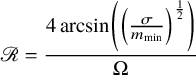
The second crucial contribution of this paper is the theoretical proof of a two-point resolution limit in multi-dimensional spaces. The resolution limit is expressed as
$$\begin{align*}\mathscr R = \frac{4\arcsin \left(\left(\frac{\sigma}{m_{\min}}\right)^{\frac{1}{2}} \right)}{\Omega} \end{align*}$$
for ${\frac {\sigma }{m_{\min }}}{\leqslant }{\frac {1}{2}}$, where ${\frac {\sigma }{m_{\min }}}$ represents the inverse of the signal-to-noise ratio (${\mathrm {SNR}}$) and $\Omega $ is the cutoff frequency. It also demonstrates that for resolving two point sources, the resolution can exceed the Rayleigh limit ${\frac {\pi }{\Omega }}$ when the signal-to-noise ratio (SNR) exceeds $2$. Moreover, we find a tractable algorithm that achieves the resolution ${\mathscr {R}}$ when distinguishing two sources.
The increase in iceberg discharge into the polar oceans highlights the importance of understanding how quickly icebergs are deteriorating and where the resulting freshwater injection is occurring. Recent advances in quantifying iceberg deterioration through combinations of modeling, remote sensing and direct in situ measurements have successfully calculated overall ablation rates, and surface and sidewall ablation; however, in situ measurements of basal melt rates have been difficult to obtain. Radar has successfully measured iceberg thickness, but repeat measurements, which would capture a change in iceberg thickness with time, have not yet been collected. Here we test the applicability of using an on-iceberg autonomous phase-sensitive radar (ApRES) to quantify basal ablation rates of a large (~800 m long) non-tabular Arctic iceberg during an intensive 2019 summer field campaign in Sermilik Fjord, southeast Greenland. We find that ApRES can be used to measure basal ablation even over a short deployment period (10 d), and also provide a lower bound on sidewall melt. This study fills a critical gap in iceberg research and pushes the limits of field instrumentation.
For 50 years, the Thomas Wickham-Jones (TWJ) Foundation has promoted the advancement of otology and audiology in the UK and Republic of Ireland through a series of overseas Fellowships and other grants.
Methods:
The paper examines the history of the Foundation since its establishment in 1974, drawing upon the Foundation's archives and personal recollections. The analysis is located within a framework concerning the factors that shape the success or failure of a foundation including vision, strategy, information, leadership and finance.
Results:
The activities of the TWJ Foundation are charted over five decades, and the governance of the Foundation is detailed. Particular attention is given to the Major Fellowships offered, at first in North America, and to their subsequent development into the Foundation's current rotation.
Conclusion:
The paper offers an assessment of the TWJ Foundation's impact on the training of otologists in the British Isles and concludes with a brief self-reflective analysis.
The crystal structure of benserazide hydrochloride Form I has been solved and refined using synchrotron X-ray powder diffraction data and optimized using density functional theory techniques. Benserazide hydrochloride Form I crystallizes in space group P21/n (#14) with a = 19.22983(15), b = 14.45066(10), c = 4.57982(2) Å, β = 93.6935(3), V = 1270.014(15) Å3, and Z = 4 at 295 K. The crystal structure contains pairs of hydrogen-bonded benserazide cations, which are hydrogen bonded to chloride anions, resulting in chains along the c-axis. In addition, O–H⋯Cl, N–H⋯O, O–H⋯N, and O–H⋯O hydrogen bonds link the cations and anions into a three-dimensional framework. The powder pattern has been submitted to ICDD® for inclusion in the Powder Diffraction File™ (PDF®).
The ontogeny of two species of corynexochid trilobites from the middle Cambrian Mount Cap Formation of the eastern Mackenzie Mountains, northern Canada, is documented. Sahtuia carcajouensis (Dolichometopidae) and Mackenzieaspis parallelispinosa (Zacanthoididae) are both endemic to this formation and only known from one locality. They, along with several other corynexochid taxa, occur in a succession of mudstone with scattered carbonate interbeds, deposited in a weakly storm-agitated setting near the flank of a semi-enclosed basin. The ontogeny of both species is characterized by mainly normal cranidial development, but a unique distribution of segments in their thoraxes and pygidia. The number of trunk segments was typical for their respective families, whereas the final number of segments released into the thorax was reduced. This occurred in both species through timing modifications to segment release, indicating heterochrony. Sahtuia carcajouensis and Mackenzieaspis parallelispinosa are likely derived from two separate clades, and heterochrony probably arose separately but synchronously. The endemicity of both species probably reflects unique paleoecological conditions in this part of the basin. Preliminary results indicate that the fossil-bearing mudstone was deposited under well-oxygenated conditions that underwent high nutrient flux and possibly experienced varying salinity. These factors may have affected the organisms’ physiology, or perhaps provoked an adaptation to achieve early maturation.
This paper takes its cue from Koro and Wolgemuth’s conceptual writing on Apocalyptic Methodologies as an extended prompt to enact the utopian performative as a form of generative Queer Ecopedagogy. A utopian performative is the performance of future potential that critiques our present political moment, highlighting that the present is not enough. The paper offers a troubling of “nature” and place, in its suggestion that digital space can be a refuge for EE practice. It looks to virtual reality as a realm used to create space free from the constraints of colonial history or normative prescriptions of the non/human binary. The VR artwork Thalu: Dreamtime is Now, by Indigenous Ngarluma creator Tyson Mowarin is analysed to make a case that the digital realm can act as a reclamation and resistance to present colonialist realities, thereby enacting the utopian performative. By queering apocalyptic methodologies, the aim is to transcend traditional boundaries and reimagine the role of researchers, educators and custodians of the environment through apocalyptic imaginaries. In this endeavour, the utopian performative is only permissible through the digital space and therefore the political present, is not enough.
Medications are commonly used to treat co-occurring psychopathology in persons with borderline personality disorder (BPD)
Aims
To systematically review and integrate the evidence of medications for treatment of co-occurring psychopathology in people with BPD, and explore the role of comorbidities.
Method
Building on the current Cochrane review of medications in BPD, an update literature search was done in March 2024. We followed the methods of this Cochrane review, but scrutinised all identified placebo-controlled trials post hoc for reporting of non BPD-specific (‘co-occurring’) psychopathology, and explored treatment effects in subgroups of samples with and without defined co-occurring disorders. GRADE ratings were done to assess the evidence certainty.
Results
Twenty-two trials were available for quantitative analyses. For antipsychotics, we found very-low-certainty evidence (VLCE) of an effect on depressive symptoms (standardised mean difference (SMD) −0.22, P = 0.04), and low-certainty evidence (LCE) of an effect on psychotic–dissociative symptoms (SMD −0.28, P = 0.007). There was evidence of effects of anticonvulsants on depressive (SMD −0.44, P = 0.02; LCE) and anxious symptoms (SMD −1.11, P < 0.00001; VLCE). For antidepressants, no significant findings were observed (VLCE). Exploratory subgroup analyses indicated a greater effect of antipsychotics in samples including participants with co-occurring substance use disorders on psychotic–dissociative symptoms (P = 0.001).
Conclusions
Our findings, based on VLCE and LCE only, do not support the use of pharmacological interventions in people with BPD to target co-occurring psychopathology. Overall, the current evidence does not support differential treatment effects in persons with versus without defined comorbidities. Medications should be used cautiously to target co-occurring psychopathology.
Our centre (Freeman Hospital, Newcatle Upon Tyne NHS Trust) has favoured primary surgery over chemoradiotherapy for specific advanced laryngeal cancer patients (e.g. large-volume tumours, airway compromise, significant dysphagia, T4 disease). This study reports the survival outcomes for a modern, high-volume head and neck centre favouring surgical management to determine whether this approach improves survival.
Method
Retrospective analysis of patient data over a seven-year period from a tertiary cancer centre.
Results
In total, 121 patients were identified with T3 (n = 76) or T4 (n = 45) laryngeal cancer (mean follow up 2.9 years). In the cohort treated with curative intent (n = 104, 86.0 per cent), the 2- and 5-year estimated disease-specific survival rates were 77.9 and 64.1 per cent. chemoradiotherapy had the highest 2-year disease-specific survival (92.5 per cent), followed by surgery with adjuvant therapy (81.8 per cent), radiotherapy alone (75 per cent) and surgery alone (72.4 per cent).
Conclusion
For a centre favouring primary surgery for certain advanced laryngeal cancers, the disease-specific survival appears no higher than that found in the published literature. To enhance survival, future research should focus on precision medicine to define treatment pathways in this disease.
This article is an exploratory analysis of the use of humour in Environmental Education, from the perspective of 10 Spanish specialists and educators. Research is carried out using a qualitative methodology through semistructured interviews and a focus group of specialists. The results point to a positive perception of the use of humour and the need for flexibility on the part of the educator to adapt to the particularities of the group and the topics addressed. The differences of opinion lie in the limitations in the use of humour as well as in the recommendations made by the specialists participating in the study, which, given their background, can be considered relevant to the use of humour for environmental education in the Spanish context.
Access to heterogeneous knowledge resources is suggested in the literature as an important explanation of firm innovation and performance. The exchange of knowledge, however, can be a complex managerial challenge, especially between different epistemic communities. Our research focuses on the concept of epistemic communities to illuminate the complexity of tensions that arise in heterogeneous knowledge exchange in alliances, thus filling a gap in the literature. Using the Straussian grounded theory case study approach, our research investigates the emergence of horizontal, vertical, and inter-organizational epistemic tensions and explores management controls as instruments to guide the knowledge exchange in intermediary-driven research and development alliances. We find that the source of multiple epistemic tensions is rooted in the natural social behaviors of epistemic community members and further shows how these behaviors influence the effective use of inter-organizational management controls in facilitating heterogeneous knowledge exchange.
This is the first of a two-part paper. We formulate a data-driven method for constructing finite-volume discretizations of an arbitrary dynamical system's underlying Liouville/Fokker–Planck equation. A method is employed that allows for flexibility in partitioning state space, generalizes to function spaces, applies to arbitrarily long sequences of time-series data, is robust to noise and quantifies uncertainty with respect to finite sample effects. After applying the method, one is left with Markov states (cell centres) and a random matrix approximation to the generator. When used in tandem, they emulate the statistics of the underlying system. We illustrate the method on the Lorenz equations (a three-dimensional ordinary differential equation) saving a fluid dynamical application for Part 2 (Souza, J. Fluid Mech., vol. 997, 2024, A2).
Over the past several years, socio-legal researchers have focused attention on the phenomenon of eviction, particularly in low-income communities and communities of color. One major aspect of the eviction phenomenon has been largely overlooked: how and why certain eviction filings result in forced, legally compelled tenant moves and others do not. Through coding of the legal documents associated with eviction filings and multi-level regression analysis, this article advances the analysis of evictions in two crucial ways. First, it identifies and describes the frequency of the distinct legal procedural pathways that result in forced tenant moves once an eviction case has been filed. Second, it identifies the case, tenancy, neighborhood, and property correlates of forced tenant moves and of distinct procedural pathways to forced tenant moves. The article demonstrates that move-out agreements are the primary procedural pathway by which tenants are forcibly moved, yet they have been largely overlooked in previous eviction research because they are not easily analyzable in administrative datasets. The regression analyses advance the growing work examining the role of landlord characteristics in shaping tenants’ housing stability and break new ground in identifying the characteristics of the different pathways through which tenants are forced out of their homes following eviction filing.
Ice rises hold valuable records revealing the ice dynamics and climatic history of Antarctic coastal areas from the Last Glacial Maximum to today. This history is often reconstructed from isochrone radar stratigraphy and simulations focusing on Raymond arch evolution beneath the divides. However, this relies on complex ice-flow models where many parameters are unconstrained by observations. Our study explores quad-polarimetric, phase-coherent radar data to enhance understanding near ice divides and domes, using Hammarryggen Ice Rise (HIR) as a case study. Analysing a 5 km profile intersecting the dome, we derive vertical strain rates and ice-fabric properties. These align with ice core data near the summit, increasing confidence in tracing signatures from the dome to the flanks. The Raymond effect is evident, correlating with surface strain rates and radar stratigraphy. Stability is inferred over millennia for the saddle connecting HIR to the mainland, but dome ice-fabric appears relatively young compared to 2D model predictions. In a broader context, quad-polarimetric measurements provide valuable insights into ice-flow models, particularly for anisotropic rheology. Including quad-polarimetric data advances our ability to reconstruct past ice flow dynamics and climatic history in ice rises.
Schistosomiasis is a neglected tropical disease with significant health implications, particularly among children. A cross-sectional study was conducted among school-aged children (SAC) in Mwanga district, Tanzania, a region known to be co-endemic for S. haematobium and S. mansoni infection and where annual mass drug administration (MDA) has been conducted for 20 years. In total, 576 SAC from 5 schools provided a urine sample for the detection of Schistosoma circulating anodic antigen using the upconverting particle-based lateral flow (UCP-LF CAA) test. Additionally, the potential of the point-of-care circulating cathodic antigen (POC-CCA) and microhaematuria dipstick test as field-applicable diagnostic alternatives for schistosomiasis were assessed and the prevalence outcome compared to UCP-LF CAA. Risk factors associated with schistosomiasis was assessed based on UCP-LF CAA. The UCP-LF CAA test revealed an overall schistosomiasis prevalence of 20.3%, compared to 65.3% based on a combination of POC-CCA and microhaematuria dipstick. No agreement was observed between the combined POC tests and UCP-LF CAA. Factors associated with schistosomiasis included age (5–10 years), involvement in fishing, farming, swimming activities and attending 2 of the 5 primary schools. Our findings suggest a significant progress in infection control in Mwanga district due to annual MDA, although not enough to interrupt transmission. Accurate diagnostics play a crucial role in monitoring intervention measures to effectively combat schistosomiasis.