To save content items to your account,
please confirm that you agree to abide by our usage policies.
If this is the first time you use this feature, you will be asked to authorise Cambridge Core to connect with your account.
Find out more about saving content to .
To save content items to your Kindle, first ensure no-reply@cambridge.org
is added to your Approved Personal Document E-mail List under your Personal Document Settings
on the Manage Your Content and Devices page of your Amazon account. Then enter the ‘name’ part
of your Kindle email address below.
Find out more about saving to your Kindle.
Note you can select to save to either the @free.kindle.com or @kindle.com variations.
‘@free.kindle.com’ emails are free but can only be saved to your device when it is connected to wi-fi.
‘@kindle.com’ emails can be delivered even when you are not connected to wi-fi, but note that service fees apply.
3q29 deletion syndrome (3q29del) is a rare (~1:30 000) genomic disorder associated with a wide array of neurodevelopmental and psychiatric phenotypes. Prior work by our team identified clinically significant executive function (EF) deficits in 47% of individuals with 3q29del; however, the nuances of EF in this population have not been described.
Methods
We used the Behavior Rating Inventory of Executive Function (BRIEF) to perform the first in-depth assessment of real-world EF in a cohort of 32 individuals with 3q29del (62.5% male, mean age = 14.5 ± 8.3 years). All participants were also evaluated with gold-standard neuropsychiatric and cognitive assessments. High-resolution structural magnetic resonance imaging was performed on a subset of participants (n = 24).
Results
We found global deficits in EF; individuals with 3q29del scored higher than the population mean on the BRIEF global executive composite (GEC) and all subscales. In total, 81.3% of study subjects (n = 26) scored in the clinical range on at least one BRIEF subscale. BRIEF GEC T scores were higher among 3q29del participants with a diagnosis of attention deficit/hyperactivity disorder (ADHD), and BRIEF GEC T scores were associated with schizophrenia spectrum symptoms as measured by the Structured Interview for Psychosis-Risk Syndromes. BRIEF GEC T scores were not associated with cognitive ability. The BRIEF-2 ADHD form accurately (sensitivity = 86.7%) classified individuals with 3q29del based on ADHD diagnosis status. BRIEF GEC T scores were correlated with cerebellar white matter and subregional cerebellar cortex volumes.
Conclusions
Together, these data expand our understanding of the phenotypic spectrum of 3q29del and identify EF as a core feature linked to both psychiatric and neuroanatomical features of the syndrome.
The growing base of research on parenting stress and its relation to child behavior problems has largely paralleled the emergence of developmental psychopathology as a field of inquiry. Specifically, the focus on mechanism rather than main effects has begun to elevate explanatory models in the connection between parenting stress and a variety of adverse child and parent conditions. Still, work on parenting stress is limited by conceptual confusion, the absence of attention to developmental differentiation, a focus on child-specific rather than system influences. Recent research on these parenting stress issues is briefly reviewed, highlighting studies that have illustrated developmental psychopathology perspectives. A conceptual model is offered to illustrate the complex recursive nature of connections between parenting stress, parenting behavior, parent well-being, and children’s adjustment, and I make a case for the adoption of a more systemic perspective to influence the next generation of developmental psychopathology research on parenting stress.
Do Nigerian political parties take left/right ideological positions? Perspectives in comparative politics see party competition in Africa's ‘third wave’ democracies as devoid of disagreement on class or economic grounds – and thus as ‘absent’ of left/right ideology. Yet, a dearth of disagreement among governing parties can also suggest ideological agreement or ‘convergence’. This article maps the development of the left/right cleavage in Nigeria's party system, examining the evolution of economic pledges in the manifestos of parties that took power across Nigeria's four attempts at electoral democracy. It finds that relative to the deeper levels of economic disagreement voiced in earlier periods, the governing parties of Nigeria's Fourth Republic are now largely unanimous in the enunciation of their economic visions. Evidence of such convergence troubles a strict insistence on either the polarisation or ‘absence’ of economic ideology among governing parties in Africa's largest electoral democracy.
Inertial measurement units (IMUs) have proven to be valuable tools in measuring the range of motion (RoM) of human upper limb joints. Although several studies have reported on the validity of IMUs compared to the gold standard (optical motion capture system, OMC), a quantitative summary of the accuracy of IMUs in measuring RoM of upper limb joints is still lacking. Thus, the primary objective of this systematic review and meta-analysis was to determine the concurrent validity of IMUs for measuring RoM of the upper extremity in adults. Fifty-one articles were included in the systematic review, and data from 16 were pooled for meta-analysis. Concurrent validity is excellent for shoulder flexion–extension (Pearson’s r = 0.969 [0.935, 0.986], ICC = 0.935 [0.749, 0.984], mean difference = −3.19 (p = 0.55)), elbow flexion–extension (Pearson’s r = 0.954 [0.929, 0.970], ICC = 0.929 [0.814, 0.974], mean difference = 10.61 (p = 0.36)), wrist flexion–extension (Pearson’s r = 0.974 [0.945, 0.988], mean difference = −4.20 (p = 0.58)), good to excellent for shoulder abduction–adduction (Pearson’s r = 0.919 [0.848, 0.957], ICC = 0.840 [0.430, 0.963], mean difference = −7.10 (p = 0.50)), and elbow pronation–supination (Pearson’s r = 0.966 [0.939, 0.981], ICC = 0.821 [0.696, 0.900]). There are some inconsistent results for shoulder internal–external rotation (Pearson’s r = 0.939 [0.894, 0.965], mean difference = −9.13 (p < 0.0001)). In conclusion, the results support IMU as a viable instrument for measuring RoM of upper extremity, but for some specific joint movements, such as shoulder rotation and wrist ulnar-radial deviation, IMU measurements need to be used with caution.
Examining the graveside tributes left at Brooklyn’s Green-Wood Cemetery, this article considers the meaning-making work of decay. Green-Wood is a polysemous place, existing as a historical and active cemetery, an arboretum, an arts and performance space, a space of mourning, and a place of leisurely strolling and birdwatching. Through a site-specific analysis of the cemetery, I approach decay as an active and durational phase of material life and explore different decay-temporalities through the tributes left graveside. I argue that orienting ourselves to the decay-life of things necessarily entangles us in a larger ecological ethic and relational ontology of self, land, weather, animals (human and non-human), and time. While advocating for material attention to decay-life, I consider how the aesthetics and taboos of decay shape the cemetery’s relationship to visible and invisible rot and ruin. The cemetery staff, wildlife, visitors, ecology, climate, and the dead create a complex network of active actors experiencing and altering the material decay-life of the left-behind natural and artificial material tributes. Together, this active and entangled decay-life of the site forms a network of temporalities of decay that co-construct the affective and environmental space of the cemetery.
This paper uses a new linked sample constructed from full-count census data of 1851–1911 to revise estimates of intergenerational occupational mobility in England. I find that conventional estimates of intergenerational elasticities are attenuated by classical measurement error and severely underestimate the extent of father-son association in socioeconomic status. Instrumenting one measure of the father’s outcome with a second measure of the father’s outcome raises the intergenerational elasticities (β) of occupational status from 0.4 to 0.6–0.7. Victorian England was therefore a society of limited social mobility. The long-run evolution and international comparisons of social mobility in England are discussed.
Global public health agencies have recommended stronger regulation of food marketing to protect children’s diets. This study assessed commercial foods for infants and toddlers available in Australian supermarkets for compliance with the World Health Organization (WHO) Regional Office for Europe’s Nutrient and Promotion Profile Model: supporting appropriate promotion of food products for infants and young children 6–36 months in the WHO European Region (NPPM).
Design:
Dietitians assessed a sample of commercial foods for infants and toddlers against the composition, labelling and promotion requirements of the NPPM.
Setting:
Australia.
Participants:
Commercial foods for infants and toddlers (n 45) available in two major Australian supermarkets, purposely sampled across product categories and brands.
Results:
Fewer than one quarter (23 %) of the assessed products met all nutrient content requirements of the NPPM. No products met all of the labelling or promotional requirements. All products included at least one promotional marketing claim that was not permitted under the NPPM.
Conclusions:
The NPPM is useful to assess and monitor the nutritional composition and prevalence of marketing claims on commercial foods for infants and toddlers. Findings of noncompliance with the NPPM recommendations indicate an urgent need for stronger government regulation of the composition, labelling and marketing of commercial foods for infants and toddlers in Australia.
Research points to the substantial impact of parents' exposure to adverse childhood experiences (ACEs) on parents and their children. However, most studies have been conducted in North America, and research on ACEs effects on observed parenting or on intergenerational transmission of ACE effects is limited. We therefore studied families from diverse ethnocultural backgrounds in Israel and examined whether mothers’ ACEs hampered maternal sensitivity and the quality of the home environment and whether mothers’ psychological distress mediated these links. We also explored whether mothers’ ACEs predicted children’s behavior problems indirectly through maternal psychological distress and whether maternal sensitivity and the home environment attenuated this mediating path. Participants were 232 mothers (Mchild age = 18.40 months, SD = 1.76; 63.36% non-ultra-Orthodox Jewish, 17.24% ultra-Orthodox Jewish, 19.40% Arab Muslim). Results showed mothers’ ACEs were directly associated with decreased maternal sensitivity. Mothers’ ACEs were indirectly associated with more behavior problems in children through mothers’ higher psychological distress, and maternal sensitivity moderated this indirect link; it was significant only for mothers who showed lower sensitivity. Findings emphasize the significant role ACEs play in early mother-child relationships. The importance of including ACE assessment in research and practice with families of infants and toddlers is discussed.
Seasonal influenza epidemics result in high levels of healthcare utilization. Vaccination is an effective strategy to reduce the influenza-related burden of disease. However, reporting vaccine effectiveness does not convey the population impacts of influenza vaccination. We aimed to calculate the burden of influenza-related hospitalizations and emergency department (ED) attendance averted by influenza vaccination in Victoria, Australia, from 2017 to 2019, and associated economic savings. We applied a compartmental model to hospitalizations and ED attendances with influenza-specific, and pneumonia and influenza (P&I) with the International Classification of Diseases, 10th Revision, Australian Modification (ICD-10-AM) diagnostic codes of J09-J11 and J09-J18, respectively. We estimated an annual average of 7657 (120 per 100000 population) hospitalizations and 20560 (322 per 100000 population) ED attendances over the study period, associated with A$85 million hospital expenditure. We estimated that influenza vaccination averted an annual average of 1182 [range: 556 – 2277] hospitalizations and 3286 [range: 1554 – 6257] ED attendances and reduced the demand for healthcare services at the influenza season peak. This equated to approximately A13 [range: A6 – A25] million of savings over the study period. Calculating the burden averted is feasible in Australia and auseful approach to demonstrate the health and economic benefits of influenza vaccination.
This article presents some preliminary results of the first field season of 3D documentation of buildings, monuments, and portable artifacts from the archaeological site of Dzibanche in Quintana Roo, Mexico. Documentation took place at Dzibanche, in the INAH regional research center in Chetumal, and in the Maya Museum of Cancun. Part of the resultant corpus of imagery and inscriptions has not been previously disseminated in academic literature. The analysis of published texts and iconography has benefited from higher resolution and visualization tools made possible by 3D digitization. The presentation proposes several updates to the published interpretations of Dzibanche monuments, and it highlights how new additions to the corpus expand our understanding of Dzibanche's political history and ideology.
Kenneth Waltz once stated, unequivocally, that, ‘I consider myself to be a Kantian, not a positivist’. I explain what Waltz might have meant by this, and how deep this professed Kantianism ran. Such is the depth of the engagement, I argue, that it is no exaggeration to claim that Waltz's political philosophy, his philosophy of history, his philosophy of science, his methodology, and his normative theory of anarchy are all broadly Kantian. Crucially, what Waltz meant by the ‘virtues of anarchy’, is best understood as an attempt to develop a regulative ideal, or an ‘organising principle’ of ‘practical reason’ that would guide diplomats in the nuclear age. Indeed, in his most contentious intervention in global public policy, Waltz deploys Kant to argue that horizontal nuclear spread, rather than the spread of democracy, would ensure the peaceful development of states. This anarchic nuclear peace would, he thought, be the means to achieve ‘perpetual pacification’. This revisionist reconstruction is the primary contribution of the paper. But through unsettling paradigmatic readings of ‘Waltzian IR theory’, the paper also presents an immanent critique of ‘the virtues of anarchy’ that contributes to a wider research project on the concept of anarchy and its emancipatory potential.
Households with children accessing food aid in high-income countries are often food insecure. We aimed to review the evidence on food aid interventions in households with children and impact on food insecurity, diet quality and mental health.
Design:
A systematic search was conducted using Web of Science, MEDLINE, CINAHL and PsycINFO. Articles published from January 2008 to July 2022 including cross-sectional, cohort and interventional studies in high-income countries were eligible.
Setting:
Food aid is defined as the use of interventions providing free food items by community and/or charitable organisations.
Participants:
Two-parent, lone parent or households with a primary caregiver with at least one child ≤ 18 years.
Results:
From a total of 10 394 articles, nine were included. Food banks, mobile pantry combined with a free meal for children, backpack provision during school term and food parcel home delivery interventions were evaluated. Food bank models offering additional support such as community programmes, health and social services, cooking classes and free meals for children, client-choice-based models and programmes providing convenient access were associated with improved food security and diet quality (increased intake of wholegrains, fruit and vegetables). One study reported an improvement in mental health and food bank access at the end of 18 months but not at earlier timepoints and one study reported no change in parents’ mental health.
Conclusions:
Accessing food aid was linked to improved diet quality and reduced food insecurity in some studies. Allowing clients to choose food items and providing support services were most effective.
To characterize caregiver experiences in the context of advanced pediatric cancer by identifying individual (i.e., demographic factors, stress) and family context factors (i.e., family roles, social support) associated with caregiver strain.
Methods
Families of children (ages 5–25) with advanced cancer (i.e., physician-estimated prognosis < 60%, relapsed/refractory disease) were recruited from a large children’s hospital. Mothers (n = 55; 87% White) and fathers (n = 30; 83% White) reported on their caregiver strain, cancer-specific stress, general stress, social support, division of 7 family roles (e.g., medical care of ill child, household chores), and their satisfaction with each role.
Results
Parents reported moderate caregiver strain, cancer-specific stress, and general stress, and high social support and satisfaction with family roles. Fathers reported family roles were shared equally, whereas mothers reported either sharing roles or completing them independently. When accounting for income and partnership status, greater caregiver strain for mothers was associated with greater general stress, greater satisfaction with family roles, and lower social support. For fathers, greater caregiver strain was associated only with greater cancer-specific stress.
Significance of results
In the context of advanced pediatric cancer, fathers may experience caregiver strain as cancer-specific stress increases, whereas mothers’ strain may depend on broader family and social factors. Psychosocial providers should address general and cancer-specific stress within families, and provide resources for enhancing mothers’ social support. Additional research is needed with larger, more diverse samples to inform future intervention approaches.
From the seventeenth to the twentieth century, rivers played a key role in the colonization of Hokkaido, a northern island in the Japanese archipelago. The Kushiro River, in eastern Hokkaido, was transformed into infrastructure, a process which shaped the institutions, strategies, and practices of territorial control during the transition from the Tokugawa shogunate (1603–1868) to Imperial Japan (1868–1947). Trade between local Ainu communities and the shogunate's vassals contributed to a river-based territoriality. Later in the 1800s, as the island became territory of the modern state, the river was further converted into infrastructure through settler colonialism, industrial development, land reclamation, and the dispossession of indigenous communities. This transformation empowered the state to probe territories, exert control over labor, and access natural resources. Drawing on research on the political ecology of rivers, this paper focuses on two hydrosocial functions that emerged during the process of reworking river basins into legible and governable spaces: the transportation conduit and the water delivery system. The river's transition from a living system to infrastructure coincided with and furthered the establishment of colonial settlements and the expansion of the Japanese state's imperial reach.
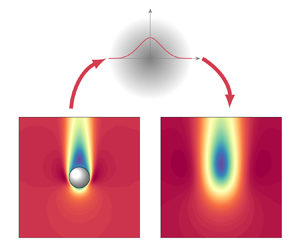
The volume filtering of the governing equations of a particle-laden flow allows for simulating the fluid phase as a continuum, and accounting for the momentum exchange between the fluid and the particles by adding a source term in the fluid momentum equations. The volume filtering of the Navier–Stokes equations allows consideration of the effect that particles have on the fluid without further assumptions, but closures arise of which the implications are not fully understood. It is common to either neglect these closures or model them using assumptions of which the implications are unclear. In the present paper, we carefully study every closure in the volume-filtered fluid momentum equation and investigate their impact on the momentum and energy transfer dependent on the filtering characteristics. We provide an analytical expression for the viscous closure that arises because the filter and spatial derivative in the viscous term do not commute. An analytical expression for the regularization of the particle momentum source of a single sphere in the Stokes regime is derived. Furthermore, we propose a model for the subfilter stress tensor, which originates from filtering the advective term. The model for the subfilter stress tensor is shown to agree well with the subfilter stress tensor for small filter widths relative to the size of the particle. We show that, in contrast to common practice, the subfilter stress tensor requires modelling and should not be neglected. For filter widths comparable to the particle size, we find that the commonly applied Gaussian regularization of the particle momentum source is a poor approximation of the spatial distribution of the particle momentum source, but for larger filter widths, the spatial distribution approaches a Gaussian. Furthermore, we propose a modified advective term in the volume-filtered momentum equation that consistently circumvents the common stability issues observed at locally small fluid volume fractions. Finally, we propose a generally applicable form of the volume-filtered momentum equation and its closures based on clear and well-founded assumptions. Based on the new findings, guidelines for point-particle simulations and the filter width with respect to the particle size and fluid mesh spacing are proposed.
The article presents the results of the last decade of archaeological and epigraphic research, which clarified the history of the polities of the ancient Maya sites of Holmul and Naranjo during the expansion of the Dzibanche royal dynasty in the eastern area of the Department of Peten, Guatemala, from the second half of the sixth century through the first half of the seventh century a.d. The discussion centers on the textual and material indicators of the geopolitical contacts of the royal families of Sak Chuwen of Naranjo and Chak Tok Wayaab of Holmul, including changes in polychrome pottery and hieroglyphic inscriptions, in particular, rhetoric of good governance and political loyalty. In the case of Holmul, the transformation affects the urban landscape of the site. New data clarify the relationship between Holmul and Naranjo during the initial period of their subordination to the kings of Dzibanche. The emerging picture of these secondary alliances and hierarchies within the Kaanu'l domain is essential for a better understanding of Classic Maya political systems at local and regional levels.
En la Mesa Redonda de Palenque de 2004 Erik Velásquez propuso que los gobernantes mayas que portaban el glifo emblema de Kaanuˀl pudieron haber residido durante el Clásico Temprano en Dzibanché, pues no existen referencias que los vinculen con Calakmul antes de 631 d.C. Aquí revisamos los datos sobre su presencia en Dzibanché y otros asentamientos de la región. Argumentos de distinta naturaleza que apoyan este escenario se publicaron desde 2005 hasta 2016, incluyendo los hallazgos de Xunantunich (Helmke y Awe 2016a, 2016b), que permiten conjeturar que una facción disidente de la dinastía se separó de Dzibanché y fundó en 635 d.C. una sede alternativa en Calakmul. Ello produjo el panorama que proponemos en el Clásico Tardío, donde había mandatarios simultáneos de la dinastía Kaanuˀl en el sur de Campeche y en el sur de Quintana Roo, toda vez que en Dzibanché seguían residiendo gobernantes Kaanuˀl al menos hasta el siglo VII.
Inference in spatial and spatio-temporal models can be challenging for a variety of reasons. For example, non-Gaussianity often leads to analytically intractable integrals; we may be in a ‘big’ data setting, whereby the number of observations renders traditional methods too computationally expensive; we may wish to make inferences over spatial supports that are different to those of our measurements; or, we may wish to use a statistical model whose likelihood function is either unavailable or computationally intractable. In this thesis, I develop several techniques that help to alleviate these challenges.
Previous studies investigating behavioural health screening processes have focused on selected diagnoses within paediatric cardiology and focused on a smaller number of potential concerns. We developed and administered a brief survey in our paediatric heart centre to assess the presence of a wider variety of behavioural health concerns and to connect patients with resources. A cohort of 305 patients aged 2–29 years (M = 11.97 years; SD = 6.00 years; 50.49% female), representing a variety of indications for a cardiology clinic visit, or a parent, completed a survey of 14 common behavioural health concerns. Behavioural health concerns were included based on practice patterns within paediatric psychology. Respondents indicated if they were currently receiving behavioural health services and if they were interested in behavioural health follow-up. Surveys were administered during check in and collected by clinic staff. A behavioural health provider attempted to reach all those who indicated interest by phone. Approximately 45% of the sample endorsed one or more behavioural health concerns and 30.16% of the sample endorsed at least one concern but were not already connected to services. Only 27.17% of this group requested follow-up. Most commonly endorsed concerns were anxiety, sleep problems, depressed/irritable mood, and somatic complaints. Survey results converge with existing literature to indicate that behavioural health concerns are common among youth seen in a paediatric cardiology clinic but most patients are not connected to appropriate services. Screening programmes can help meet this need but challenges remain. Clinical implications and future directions are discussed.