Refine listing
Actions for selected content:
142543 results in Open Access
Changing Politics for Changing Times: Rethinking Research Stakeholders and Strategies for Environmental Education
- Part of
-
- Journal:
- Australian Journal of Environmental Education / Volume 40 / Issue 3 / June 2024
- Published online by Cambridge University Press:
- 24 September 2024, pp. 417-430
-
- Article
-
- You have access
- Open access
- HTML
- Export citation
Is dialect proficiency associated with improved executive function?
-
- Journal:
- Applied Psycholinguistics / Volume 45 / Issue 5 / September 2024
- Published online by Cambridge University Press:
- 24 September 2024, pp. 811-833
-
- Article
-
- You have access
- Open access
- HTML
- Export citation
Inequity in cardiometabolic hospital admissions and blood screening in New Zealand Indigenous Māori with psychosis
-
- Journal:
- BJPsych Open / Volume 10 / Issue 5 / September 2024
- Published online by Cambridge University Press:
- 24 September 2024, e159
-
- Article
-
- You have access
- Open access
- HTML
- Export citation
Deliberate synchronization of speech and gesture: effects of neurodiversity and development
-
- Journal:
- Language and Cognition / Volume 16 / Issue 4 / December 2024
- Published online by Cambridge University Press:
- 24 September 2024, pp. 1812-1833
-
- Article
-
- You have access
- Open access
- HTML
- Export citation
Word learning in the wild: App-based evidence for valence and concreteness effects
-
- Journal:
- Applied Psycholinguistics / Volume 45 / Issue 5 / September 2024
- Published online by Cambridge University Press:
- 24 September 2024, pp. 786-810
-
- Article
-
- You have access
- Open access
- HTML
- Export citation
Probing the soft X-ray properties and multi-wavelength variability of SN2023ixf and its progenitor
-
- Journal:
- Publications of the Astronomical Society of Australia / Volume 41 / 2024
- Published online by Cambridge University Press:
- 24 September 2024, e059
-
- Article
-
- You have access
- Open access
- HTML
- Export citation
-
We present a detailed analysis of nearly two decades of optical/UV and X-ray data to study the multi-wavelength pre-explosion properties and post-explosion X-ray properties of nearby SN2023ixf located in M101. We find no evidence of precursor activity in the optical to UV down to a luminosity of $\lesssim$ $1.0\times10^{5}\, \textrm{L}_{\odot}$, while X-ray observations covering nearly 18 yr prior to explosion show no evidence of luminous precursor X-ray emission down to an absorbed 0.3–10.0 keV X-ray luminosity of $\sim$ $6\times10^{36}$ erg s $^{-1}$. Extensive Swift observations taken post-explosion did not detect soft X-ray emission from SN2023ixf within the first $\sim$3.3 days after first light, which suggests a mass-loss rate for the progenitor of $\lesssim$ $5\times10^{-4}\,\textrm{M}_{\odot}$ yr $^{-1}$ or a radius of $\lesssim$ $4\times10^{15}$ cm for the circumstellar material. Our analysis also suggests that if the progenitor underwent a mass-loss episode, this had to occur $>$0.5–1.5 yr prior to explosion, consistent with previous estimates. Swift detected soft X-rays from SN2023ixf $\sim$ $4.25$ days after first light, and it rose to a peak luminosity of $\sim10^{39}$ erg s $^{-1}$ after 10 days and has maintained this luminosity for nearly 50 days post first light. This peak luminosity is lower than expected, given the evidence that SN2023ixf is interacting with dense material. However, this might be a natural consequence of an asymmetric circumstellar medium. X-ray spectra derived from merging all Swift observations over the first 50 days are best described by a two-component bremsstrahlung model consisting of a heavily absorbed and hotter component similar to that found using NuSTAR, and a less-absorbed, cooler component. We suggest that this soft component arises from cooling of the forward shock similar to that found in Type IIn SN2010jl.


PhD Abstracts
- Part of
-
- Journal:
- Journal of Functional Programming / Volume 34 / 2024
- Published online by Cambridge University Press:
- 24 September 2024, e10
-
- Article
-
- You have access
- Open access
- HTML
- Export citation
GaLactic and Extragalactic All-sky Murchison Widefield Array eXtended (GLEAM-X) survey II: Second Data Release
-
- Journal:
- Publications of the Astronomical Society of Australia / Volume 41 / 2024
- Published online by Cambridge University Press:
- 24 September 2024, e054
-
- Article
-
- You have access
- Open access
- HTML
- Export citation
-
We present the second data release for the GaLactic and Extragalactic All-sky Murchison Widefield Array eXtended (GLEAM-X) survey. This data release is an area of 12 892-deg $^2$ around the South Galactic Pole region covering 20 h40 m $\leq$RA $\leq$6 h40 m, -90 $^\circ$ $\leq$Dec $\leq$+30 $^\circ$. Observations were taken in 2020 using the Phase-II configuration of the Murchison Widefield Array (MWA) and covering a frequency range of 72–231 MHz with twenty frequency bands. We produce a wideband source finding mosaic over 170–231 MHz with a median root-mean-squared noise of $1.5^{+1.5}_{-0.5}$ mJy beam $^{-1}$. We present a catalogue of 624 866 components, including 562 302 components which are spectrally fit. This catalogue is 98% complete at 50 mJy, and a reliability of 98.7% at a 5 $\sigma$ level, consistent with expectations for this survey. The catalogue is made available via Vizier, and the PASA datastore and accompanying mosaics for this data release are made available via AAO Data Central and SkyView.


Medea (R.) Hewlett Pp. 423. London: Penguin Random House, 2024. Cased, £16.99. ISBN: 978-1-7876-3729-0.
-
- Journal:
- Journal of Classics Teaching , First View
- Published online by Cambridge University Press:
- 24 September 2024, p. 1
-
- Article
-
- You have access
- Open access
- HTML
- Export citation
China's Antidumping Investigations against US Feed Products: Lessons from the Trenches
-
- Journal:
- World Trade Review / Volume 23 / Issue 4 / October 2024
- Published online by Cambridge University Press:
- 24 September 2024, pp. 532-542
-
- Article
-
- You have access
- Open access
- HTML
- Export citation
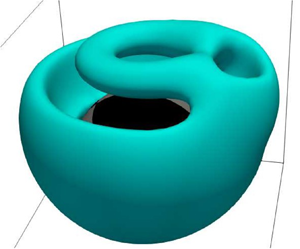
Settling of two rigidly connected spheres
-
- Journal:
- Journal of Fluid Mechanics / Volume 995 / 25 September 2024
- Published online by Cambridge University Press:
- 24 September 2024, A15
-
- Article
-
- You have access
- Open access
- HTML
- Export citation
-
Laboratory experiments and particle-resolved simulations are employed to investigate the settling dynamics of a pair of rigidly connected spherical particles of unequal size. They yield a detailed picture of the transient evolution and the terminal values of the aggregate's orientation angle and its settling and drift velocities as functions of the aspect ratio and the Galileo number $Ga$, which denotes the ratio of buoyancy and viscous forces acting on the aggregate. At low to moderate values of $Ga$, the aggregate's orientation and velocity converge to their terminal values monotonically, whereas for higher $Ga$-values the aggregate tends to undergo a more complex motion. If the aggregate assumes an asymmetric terminal orientation, it displays a non-zero terminal drift velocity. For diameter ratios much larger than one and small $Ga$, the terminal orientation of the aggregate becomes approximately vertical, whereas when $Ga$ is sufficiently large for flow separation to occur, the aggregate orients itself such that the smaller sphere is located at the separation line. Empirical scaling laws are obtained for the terminal settling velocity and orientation angle as functions of the aspect ratio and $Ga$ for diameter ratios from 1 to 4 and particle-to-fluid density ratios from 1.3 to 5. An analysis of the accompanying flow field shows the formation of vortical structures exhibiting complex topologies in the aggregate's wake, and indicates the formation of a horizontal pressure gradient across the larger sphere, which represents the main reason for the emergence of the drift velocity.


Harnessing information communication and technology in enhancing One Health interventions among the university students in Kenya
-
- Journal:
- Research Directions: One Health / Volume 2 / 2024
- Published online by Cambridge University Press:
- 24 September 2024, e10
-
- Article
-
- You have access
- Open access
- HTML
- Export citation
Populist attitudes and foreign policy postures: a comparative analysis of four European countries
-
- Journal:
- European Political Science Review / Volume 17 / Issue 1 / February 2025
- Published online by Cambridge University Press:
- 24 September 2024, pp. 22-40
-
- Article
-
- You have access
- Open access
- HTML
- Export citation
PRODUCTION OPTIMIZATION FOR AGENTS OF DIFFERING WORK RATES
- Part of
-
- Journal:
- The ANZIAM Journal / Volume 66 / Issue 2 / April 2024
- Published online by Cambridge University Press:
- 24 September 2024, pp. 98-120
-
- Article
-
- You have access
- Open access
- HTML
- Export citation
Incubation period of Clostridioides difficile infection in hospitalized patients and long-term care facility residents: a prospective cohort study
-
- Journal:
- Antimicrobial Stewardship & Healthcare Epidemiology / Volume 4 / Issue 1 / 2024
- Published online by Cambridge University Press:
- 24 September 2024, e144
-
- Article
-
- You have access
- Open access
- HTML
- Export citation
The burden of suicide across different altitudes: 11-year geodemographic analysis conducted in 221 cantons in Ecuador ranging from 0 to 4300 m of elevation
-
- Journal:
- BJPsych Open / Volume 10 / Issue 5 / September 2024
- Published online by Cambridge University Press:
- 24 September 2024, e161
-
- Article
-
- You have access
- Open access
- HTML
- Export citation
Authors’ response to the letter entitled ‘zero value-added tax on fruit and vegetables: beyond health and fiscal standards’
-
- Journal:
- Public Health Nutrition / Volume 27 / Issue 1 / 2024
- Published online by Cambridge University Press:
- 24 September 2024, e172
-
- Article
-
- You have access
- Open access
- HTML
- Export citation
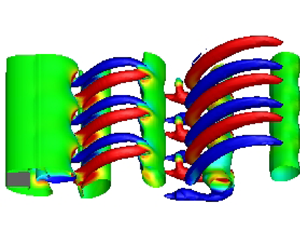
Influence of thermal buoyancy on the wake dynamics of a heated square cylinder
-
- Journal:
- Journal of Fluid Mechanics / Volume 996 / 10 October 2024
- Published online by Cambridge University Press:
- 24 September 2024, A3
-
- Article
-
- You have access
- Open access
- HTML
- Export citation
-
Direct numerical simulation of the three-dimensional (3-D) wake transition of a heated square cylinder subjected to horizontal cross-flow is performed in the presence of buoyancy. In order to capture the effects of large-scale heating, a non-Oberbeck–Boussinesq model is utilized, which includes the governing equations for compressible gas flow. All computations are performed at low free stream Mach number $M=0.1$ using air (free stream Prandtl number, $Pr=0.71$) as the working fluid. The 3-D instability modes A and B, which correspond to free stream Reynolds numbers of 180 and 250, are observed with longer and shorter spanwise wavelengths, respectively, and the onset of three-dimensionality is triggered at a Reynolds number of 173. In the presence of buoyancy, baroclinic vorticity production in the near-wake plays an important role for streamwise vorticity generation. The chaotic wake of the Mode-A instability bifurcates into periodic and quasiperiodic wakes at various heating levels, expressed by the overheat ratio, $\varepsilon =(T_w-T_\infty )/T_\infty$, where $T_w$ and $T_\infty$ are the temperature of the cylinder surface and the ambient air, respectively. At low heating ( $\varepsilon =0.2$), the 3-D Mode-A instability is suppressed leading to a two-dimensional wake flow. Further increase in heating, again brings back the three-dimensionality in the wake through Mode-E instability. The variation of thermophysical properties and the effective Reynolds number with increase in heating level around the cylinder is examined. It is shown that the effect of thermophysical properties competes with the baroclinic streamwise vorticity generation at higher levels of heating ( $\varepsilon \geqslant 0.4$) to control the 3-D modes and wake dynamics.


First-language interference without bilingualism? Evidence from second language vowel production in international adoptees
-
- Journal:
- Applied Psycholinguistics / Volume 45 / Issue 5 / September 2024
- Published online by Cambridge University Press:
- 24 September 2024, pp. 767-785
-
- Article
-
- You have access
- Open access
- HTML
- Export citation
The art of interconnections: Achieving maximum algebraic connectivity in multilayer networks
-
- Journal:
- Network Science / Volume 12 / Issue 3 / September 2024
- Published online by Cambridge University Press:
- 24 September 2024, pp. 261-288
-
- Article
-
- You have access
- Open access
- HTML
- Export citation
