To save content items to your account,
please confirm that you agree to abide by our usage policies.
If this is the first time you use this feature, you will be asked to authorise Cambridge Core to connect with your account.
Find out more about saving content to .
To save content items to your Kindle, first ensure no-reply@cambridge.org
is added to your Approved Personal Document E-mail List under your Personal Document Settings
on the Manage Your Content and Devices page of your Amazon account. Then enter the ‘name’ part
of your Kindle email address below.
Find out more about saving to your Kindle.
Note you can select to save to either the @free.kindle.com or @kindle.com variations.
‘@free.kindle.com’ emails are free but can only be saved to your device when it is connected to wi-fi.
‘@kindle.com’ emails can be delivered even when you are not connected to wi-fi, but note that service fees apply.
Central venous lines (CVLs) are frequently utilized in critically ill patients and confer a risk of central line-associated bloodstream infections (CLABSIs). CLABSIs are associated with increased mortality, extended hospitalization, and increased costs. Unnecessary CVL utilization contributes to CLABSIs. This initiative sought to implement a clinical decision support system (CDSS) within an electronic health record (EHR) to quantify the prevalence of potentially unnecessary CVLs and improve their timely removal in six adult intensive care units (ICUs).
Methods:
Intervention components included: (1) evaluating existing CDSS’ effectiveness, (2) clinician education, (3) developing/implementing an EHR-based CDSS to identify potentially unnecessary CVLs, (4) audit/feedback, and (5) reviewing EHR/institutional data to compare rates of removal of potentially unnecessary CVLs, device utilization, and CLABSIs pre- and postimplementation. Data was evaluated with statistical process control charts, chi-square analyses, and incidence rate ratios.
Results:
Preimplementation, 25.2% of CVLs were potentially removable, and the mean weekly proportion of these CVLs that were removed within 24 hours was 20.0%. Postimplementation, a greater proportion of potentially unnecessary CVLs were removed (29%, p < 0.0001), CVL utilization decreased, and days between CLABSIs increased. The intervention was most effective in ICUs staffed by pulmonary/critical care physicians, who received monthly audit/feedback, where timely CVL removal increased from a mean of 18.0% to 30.5% (p < 0.0001) and days between CLABSIs increased from 17.3 to 25.7.
Conclusions:
A significant proportion of active CVLs were potentially unnecessary. CDSS implementation, in conjunction with audit and feedback, correlated with a sustained increase in timely CVL removal and an increase in days between CLABSIs.
The goal of this paper is to systematically review the literature on United States Department of Agriculture (USDA) forecast evaluation and critically assess their methods and findings. The fundamental characteristics of optimal forecasts are bias, accuracy and efficiency as well as encompassing and informativeness. This review revealed that the findings of these studies can be very different based on the forecasts examined, commodity, sample period, and methodology. Some forecasts performed very well, while others were not very reliable, resulting in forecast specific optimality record. We discuss methodological and empirical contributions of these studies as well as their shortcomings and potential opportunities for future work.
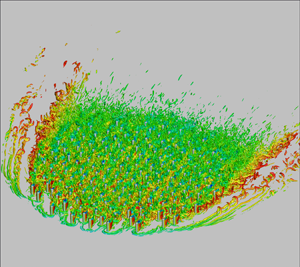
The study investigates the flow structure, dynamics of the large-scale coherent structures, drag forces and sediment entrainment mechanisms generated by a circular array of diameter D containing rigid emerged circular cylinders of diameter d placed in a smooth-bed channel of depth h under strong shallow flow conditions (D/h = 20, d/D = 0.0125 and 0.025). Eddy resolving simulations are conducted with different values of the solid volume fraction 0.025 ≤ SVF ≤ 0.1 and non-dimensional frontal area per unit volume (2.56 ≤ aD ≤ 10.2, where for the present configuration, a = SVF(1/d)4/${\rm \pi}$) and a fixed channel Reynolds number (Reh = 10 000). The flow conditions are such that a vortex street (VS)-type of shallow wake is expected to form for a solid cylinder of diameter D. Findings are compared with previous results obtained for cases with moderately shallow conditions 2.5 ≤ D/h ≤ 3.5 and with the limiting case of flow past a solid cylinder with D/h = 20. For moderately shallow conditions, the core of the main horseshoe vortex (HV) forming around the array occupies a small fraction of the water column and its coherence is the largest in front of the array. By contrast, for very shallow conditions, multiple HVs form around the array and their cores occupy a large fraction of the water column. Moreover, the coherence of most of these HVs peaks close to the sides of the array. Only for relatively large aD values, the main HV extends over the whole upstream face of the array, similar to the limiting case of a solid cylinder. For sufficiently high aD, a secondary instability is present inside the near wake that leads to the formation of parallel horizontal vortices in the vicinity of the wake roller vortices. The changes in the wake structure with decreasing SVF and aD are qualitatively similar to those observed for cases with moderately shallow flow conditions, with the antisymmetric wake shedding mode being suppressed for aD ≤ 2.5. However, the Strouhal number associated with the shedding of wake rollers, which is still close to 0.2 for a solid cylinder with D/h = 20, can be as high as 0.4 for aD = 2.5. The paper also discusses how the steady wake and total wake lengths and the strength of the bleeding flow vary with the SVF. Simulation results show that the capacity of the flow to entrain sediment inside and around the array peaks for SVF = 0.05 and aD = 5.2, with sediment entrainment monotonically increasing with the SVF outside the array and monotonically decreasing inside the array. Despite the differences in the flow structure next to and inside the array, the variation of the mean, time-averaged streamwise drag coefficient of the solid cylinders ${\bar{C}_d}$ with aD is close to that observed for arrays with moderately shallow flow conditions. The combined drag coefficient for the array decreases with increasing flow shallowness, with the decay being stronger for relatively large values of aD.
While universal linguistic theories advocate linear processing of words across languages, psycholinguistic research of Semitic templatic words supports the nonlinear processing into the root and template, mainly due to semantic specifications related to the root and the morphological awareness needed in the tasks. The present study examined whether the root and template affect the word processing of Hebrew native speakers due to metalinguistic awareness regardless of semantics. We designed an auditory rhyme judgment task, a phonological awareness test that requires linear processing and reduces semantics. The task included Hebrew CVCVC templatic word pairs comprising varying root and template phonemes, transposed-phoneme roots emphasizing phonological cooccurrence restrictions, and identical phoneme roots accentuating lexical-syntactic information pronounced in the vocalic melody templates. Findings revealed low accuracy rates in rhyming pairs, particularly those with accentuated linguistic information, indicating distraction from linear processing. However, the accuracy distributions among participants and between and within the stimulus types showed that linear processing also occurred. These results suggest that both linear and nonlinear processing modes are accessible to native Hebrew speakers. The study aligns with models of the mental lexicon proposing dynamic language processing influenced by both linguistic and non-linguistic factors, highlighting the idiosyncratic nature of word processing strategies.
The idea that some abilities might be enhanced by adversity is gaining traction. Adaptation-based approaches have uncovered a few specific abilities enhanced by particular adversity exposures. Yet, for a field to grow, we must not dig too deep, too soon. In this paper, we complement confirmatory research with principled exploration. We draw on two insights from adaptation-based research: 1) enhanced performance manifests within individuals, and 2) reduced and enhanced performance can co-occur. Although commonly assumed, relative performance differences are rarely tested. To quantify them, we need a wide variety of ability measures. However, rather than using adaptive logic to predict which abilities are enhanced or reduced, we develop statistical criteria to identify three data patterns: reduced, enhanced, and intact performance. With these criteria, we analyzed data from the National Institute of Child Health and Human Development Study of Early Child Care and Youth Development to investigate how adversity shapes within-person performance across 10 abilities in a cognitive and achievement battery. Our goals are to document adversity-shaped cognitive performance patterns, identify drivers of reduced performance, identify sets of “intact” abilities, and discover new enhanced abilities. We believe principled exploration with clear criteria can help break new theoretical and empirical ground, remap old territory, and advance theory development.
The genus Tanqua Blanchard, 1904, infests reptiles, particularly those inhabiting aquatic environments. This study examined a population of rainbow water snakes, Enhydris enhydris (Schneider, 1799), collected from southern Thailand. Adult nematodes consistent with Tanqua were found in the stomach. Various morphometric, meristic and qualitative morphological variables, including size, ratios, distances, cephalic appearance, the number of caudal papillae and other features, serve to distinguish the specimens from other species within the genus. In particular, Tanqua anomala and Tanqua diadema, which closely resemble our Tanqua specimens, can be differentiated by key diagnostic characteristics such as a retractable head, the distance from the anterior end to the cervical sac, the relative positions of caudal papillae and excretory pore, and the length of the uterus. Molecular analysis (COI and 18s rRNA genes) confirmed its status as a species of Tanqua, genetically distinct from Tanqua tiara, and matching the genetic sequence found in larvae of Tanqua sp. from a snakehead fish species from Bangladesh. Tanqua siamensis sp. nov. is described, supported by morphological traits, microscopic illustrations and genetic information. This study reports the first evidence of a caudal papillary pair in females. This species causes significant lesions on the stomach wall of the snake host, raising possible issues for snakes held in captivity regarding food hygiene and parasite protection.
This research aimed to assess the agronomic performance of the progeny (F3 and F4 generations) of 48 newly developed Aus rice lines, using a randomized-complete-block-design under rainfed conditions. We found a wide range of variations in yield and yield-contributing traits among the studied genotypes. High board sense heritability percentages were found for sterility percentage (99.50 and 97.20), thousand-grain-weight (88.10 and 90.20 g), plant-height (84.90 and 86.90 cm) and day-to-maturity (84.50 and 97.60 d) in both F3 and F4 generations, respectively. However, the highest genetic advance as mean percentage was observed for sterility (48.00 and 50.60), effective tillers number per hill (ET) (44.70 and 47.10), total tillers number per hill (TT) (43.00 and 45.40) and filled-grains per panicle (41.00 and 43.20) respectively. Notably, the correlation study also identified the traits, TT (r = 0.31 and 0.45), ET (r = 0.30 and 0.44), straw yield (r = 0.57 and 0.39) and harvest index (r = 0.63 and 0.67) as effective for improving grain yield in both F3 and F4 generations, respectively. We identified higher grain yield per hill (g) and shorter to moderate crop growth duration (days) in several distinct accessions, including R1-49-7-1-1, R3-26-4-3-1, R1-6-2-3-1, R1-13-1-1-1, R1-50-1-1-1, R3-49-4-3-1, R1-47-7-3-1, R2-26-6-2-2, R3-30-1-2-1 and R1-44-1-2-1, among the 48 genotypes in both the F3 and F4 generations. A further location-specific agronomic study is recommended to assess the drought tolerance of these promising genotypes. This will further assess their suitability as potential breeding materials when developing rice varieties adapted to grow under fluctuating rainfalls conditions.
This brief review describes the discovery of cosmic rays by Victor Hess from the Vienna Radium Institute and the later contribution of Marietta Blau through her observation of “disintegration stars” in photographic emulsion plates exposed to cosmic-ray bombardment. Marietta Blau, a nearly forgotten cosmic-ray pioneer from the Vienna Radium Institute, developed the nuclear emulsion technique for studying nuclear reactions, eventually discovering the disintegration of nuclei through high-energy cosmic rays. Blau survived the Holocaust by escaping to Mexico City from 1939 to 1944. Starting in 1948 at Columbia University, later as a staff member of Brookhaven National Laboratory and then University of Miami, she performed fundamental and original research with nuclear emulsions exposed to 3-GeV protons at the Brookhaven Cosmotron and to 6-GeV protons at the Berkeley Bevatron. Blau returned to Vienna in 1960, where at the Radium Institute a classical β-decay counting facility for radiocarbon dating had been installed, which was finally superseded by the Vienna Environmental Research Accelerator (VERA), a modern versatile accelerator mass spectrometry facility.
The International Criminal Court (ICC) has come under challenge in recent years as some countries have decided, or considered, to withdraw from it. Against this backdrop, an emerging literature has begun to examine attitudes toward the court among the general public as a key court constituency. However, little is known about how domestic elites perceive the court. This research gap is particularly surprising given that domestic elites have a considerable impact on both public and state support of the court. This article explains why political and societal elites across world regions have confidence or lack confidence in the ICC. We present the results from a unique survey of 722 elite respondents conducted from 2017 to 2019 across six countries: Brazil, Germany, the Philippines, Russia, South Africa, and the United States. We furthermore enrich our analysis by using public opinion data to draw comparisons between elites and the general public. The analyses reveal that the views of elites are most consistently related to their perceptions of other, more well-known international organizations and their country’s relationship with the ICC. Our findings indicate both similarities and differences between how elite and public opinion about the ICC are formed, demonstrating the value of further research on elite opinion on international courts.
To analyze the impact of a fully remote tele-antimicrobial stewardship program (TASP) at two small community hospitals in partnership with an academic medical center.
Design:
Retrospective survey from August 1, 2020, to July 31, 2022.
Setting:
A TASP, co-led by an infectious diseases (ID) physician and ID pharmacist, was implemented at M Health Fairview (MHF) Northland, a 21-bed hospital, and at MHF Lakes, a 49-bed hospital. The ID physician and ID pharmacist are located at the University of Minnesota Medical Center.
Methods:
Antimicrobial stewardship interventions were tracked monthly. Restricted antimicrobial days of therapy per 1000 patient days (DOT/1000 PD) were also tracked monthly and two years pre and postimplementation data were compared. All annual antimicrobial expenditures were followed.
Results:
For the first two TASP years, a total of 789 antimicrobial interventions were made with 85.6% being accepted. Restricted antimicrobial use trended down from 142.93 to 113.97 DOT/1000 PD at MHF Northland. A smaller decrease from 106.31 to 103.12 DOT/1000 PD was seen at MHF Lakes. Annual antimicrobial costs per total patient days decreased. MHF Northland hospital’s annual antimicrobial expenditures per total patient days fell from $18.89 in 2019 (preimplementation) to $6.64. MHF Lakes followed a similar trend, decreasing from $11.20 to $5.36.
Conclusions:
A fully remote TASP in partnership with an academic medical center for two small community hospitals resulted in high rates of accepted interventions sustained over two years. Restricted antimicrobial use and antimicrobial costs trended down.
Instead of being merely a historical occurrence, colonization is a structural feature of civilizations that have been touched by colonialism, which affects the prospects for the colonial subjects. This process is still ongoing in various forms among the so-called postcolonial societies today. Therefore, decolonization is a response to both the negative stereotypes and falsehoods about Indigenous peoples and cultures as well as the structural injustices of colonially impacted society that disproportionately afflict Indigenous peoples. Even though decolonization is a hot issue in academia right now, Indigenous peoples have been fighting against colonialism for millennia and claiming their own spaces, sovereignty, and right to self-determination ever since they first came into contact with colonizers.
Power at Work: A Global Perspective on Control and Resistance, edited by Marcel van der Linden and Nicole Mayer-Ahuja, marks an important moment in the trajectory of labour history over the last half century. Writings on labour have seen a shift from a focus on institutional history to social history in the 1960s, to the cultural and linguistic turn of the 1980s, and, over the last decade or so, a move to reclaim the material in new ways.1 In the 1970s, the labour process and shopfloor politics was an important theme in writings on labour – Marxist and non-Marxist – but these were often framed in reductive and teleological narratives derived from the experience of the Global North.2 Recent writings demonstrate a renewed interest in workplace politics from fresh perspectives that look at the relationship between the production process and cultural transformation in complex ways.
Given the varying degrees of importance that a holy place holds for different parties and the variety of laws used to regulate them, laws pertaining to holy places integrate a broad array of legal, political, social, religious, and economic interests. Acknowledging the difficulty of capturing a singular standard of protection merits examining different existing modalities to discern the means of protection for holy places.
A 2022 Israeli District Court case concerning ownership rights over a Russian Orthodox church in the Old City of Jerusalem shall provide the platform for scrutinizing the relevant laws and variety of interests at play for holy places in Israel, providing insights into the importance of accounting for divergent interests in the cultural heritage protection milieu. This article shall highlight the approaches used towards holy place protection in a difficult and complex context, Israel, to better understand heritage protection methods for unique or significant cultural sites in other regions.
While there is literature on ‘populist securitisation’ and on the ‘securitisation of Islam’, the possibility that some populists may desecuritise Islam is not sufficiently explored. Left-wing populist parties have demonstrated solidarity towards Muslim minorities in Europe through a discourse based on inclusionary rhetoric and deconstruction of the securitising narratives promoted by mainstream and populist right-wing parties. However, their attitude towards Islam can be ambiguous. This paper argues that left-wing populists tend to desecuritise Islam. However, desecuritisation happens in ways that do not always accommodate Muslims’ religious freedoms. This happens because the driver of the left-wing populist desecuritisation of Islam lies in the left-wing thick ideology surrounding populism and not in the populist thin core. I illustrate this argument through the case study of Jean-Luc Mélenchon, leader of the left-wing populist party La France Insoumise. Through a discourse analysis of texts from 2009 to 2022, I show that Mélenchon has predominantly desecuritised Islam. While his desecuritisation is populist, it has not been truly emancipatory for Muslims. Although a more committed fight against Islamophobia has emerged since 2019, Mélenchon’s ideological attachment to laïcité hinders a full rearticulation of French political community based on genuine recognition of Muslims’ religious freedoms.
The field of healthcare epidemiology is increasingly focused on identifying, characterizing, and addressing social determinants of health (SDOH) to address inequities in healthcare quality. To identify evidence gaps, we examined recent systematic reviews examining the association of race, ethnicity, and SDOH with inpatient quality measures.
Methods:
We searched Medline via OVID for English language systematic reviews from 2010 to 2022 addressing race, ethnicity, or SDOH domains and inpatient quality measures in adults using specific topic questions. We imported all citations to Covidence (www.covidence.org, Veritas Health Innovation) and removed duplicates. Two blinded reviewers assessed all articles for inclusion in 2 phases: title/abstract, then full-text review. Discrepancies were resolved by a third reviewer.
Results:
Of 472 systematic reviews identified, 39 were included. Of these, 23 examined all-cause mortality; 6 examined 30-day readmission rates; 4 examined length of stay, 4 examined falls, 2 examined surgical site infections (SSIs) and one review examined risk of venous thromboembolism. The most evaluated SDOH measures were sex (n = 9), income and/or employment status (n = 9), age (n = 6), race and ethnicity (n = 6), and education (n = 5). No systematic reviews assessed medication use errors or healthcare-associated infections. We found very limited assessment of other SDOH measures such as economic stability, neighborhood, and health system access.
Conclusion:
A limited number of systematic reviews have examined the association of race, ethnicity and SDOH measures with inpatient quality measures, and existing reviews highlight wide variability in reporting. Future systematic evaluations of SDOH measures are needed to better understand the relationships with inpatient quality measures.
Chinese characters hold great potential to help inform and enrich psycholinguistic research on lexical ambiguity as a large portion of them are ambiguous in nature with meaning varying from context to context. This report presents a psycholinguistic database that contains over 2000 characters with normative measures for meaning dominance and meaning balance, that is, the relative frequency of each meaning associated with a target character and the degree of balance across the meanings of the character. The measurement process takes advantage of the fact that, in Chinese, generating words containing a target character is the most convenient way to specify and disambiguate character meanings. Character meanings stored in ordinary people’s mental lexicon are identified based on the words, along with a small portion of meaning descriptions, listed by over 900 native speakers. The measures of meaning dominance and meaning balance for the characters are derived from computing the relative frequencies of the meanings. Potential research and practical applications of the database, as a valuable tool, to enhance our understanding of the acquisition, representation, and processing of ambiguous lexical items are discussed.
Dietary surveys are critical in evaluating dietary trends prevailing across the entire population. The aim of this study is to present the results of the latest research into the intakes of energy, macronutrients, and micronutrients amongst the adult population in Lithuania from 2019 through 2020. A cross-sectional study was conducted and dietary data was collected using a 24-h dietary recall method from a total of 2555 Lithuanian adults. Medians, 25th and 75th percentiles were calculated. The diet of Lithuanian adults was found insufficient as the energy intake from fats exceeded the recommended norms, while the energy intake from carbohydrates was below the lower range. The intakes of dietary fibre and most vitamins and minerals were insufficient. Men, compared to women, had a statistically higher total energy intake and energy intake from fats, and a higher intake of dietary fibre. Younger adults, compared to older ones, had statistically lower intakes of energy from fats, including saturated fats, and lower intakes of sodium chloride. Respondents with primary education, compared to those who had attained a higher degree of education, had a statistically lower intake of total energy and dietary fibre. Study showed that intakes of majority of nutrients in the diet of the adult Lithuanian population are not in compliance with the recommended daily intakes. Continuous nationally representative studies into food consumption and nutrient intake of the adult Lithuanian population must be carried out to assess the changes in the population’s diet and the effectiveness of policies aimed at promoting healthy diets.
It is now a cliché to highlight that whilst artificial intelligence (AI) provides many opportunities, it also presents myriad risks to established norms. Amongst the norms considered in the literature, the Rule of Law unsurprisingly features. But the analyses of the Rule of Law are narrow. AI has the capacity to augment as well as to undermine fidelity to the ideal of the Rule of Law. Rather than viewing AI only as a threat to important norms, this article’s core argument is that AI should also be presented as an opportunity to meet their demands. It uses the Rule of Law in tax administration to support this argument.