To save content items to your account,
please confirm that you agree to abide by our usage policies.
If this is the first time you use this feature, you will be asked to authorise Cambridge Core to connect with your account.
Find out more about saving content to .
To save content items to your Kindle, first ensure no-reply@cambridge.org
is added to your Approved Personal Document E-mail List under your Personal Document Settings
on the Manage Your Content and Devices page of your Amazon account. Then enter the ‘name’ part
of your Kindle email address below.
Find out more about saving to your Kindle.
Note you can select to save to either the @free.kindle.com or @kindle.com variations.
‘@free.kindle.com’ emails are free but can only be saved to your device when it is connected to wi-fi.
‘@kindle.com’ emails can be delivered even when you are not connected to wi-fi, but note that service fees apply.
Organ morphogenesis is a complex process and numerous factors must be considered while choosing a method for its quantitative investigation. Few methods facilitate in vivo imaging. These are sequential replica methods combined with scanning electron microscopy and sequential confocal microscopy imaging. The latter is now the most used method to study spatiotemporal changes of organ geometry, growth and involvement of molecular factors in regulating organ development. The time-lapse confocal imaging combined with quantitative analysis of the spatiotemporal pattern of auxin efflux proteins (PIN-FORMED) was used to investigate growth and morphogenesis of Arabidopsis gynoecium and enabled detailed insight into gynoecium development. Yet time-lapse imaging of the gynoecium, concealed within a flower bud, presents challenges in ensuring high-quality data during all the stages of such investigations (sample preparation, maintenance of growing organ during the relatively long time of its development, laser exposure time, etc.). Analysis of vast quantitative data was facilitated by MorphoGraphX.
Various theories have been proposed in the field of second language (L2) sentence processing research and have significantly advanced our understanding of the mechanisms underlying L2 sentence interpretation processes. However, many existing theories have only been formulated verbally, and little progress has been made towards formal modelling. Formal modelling offers several advantages, including enhancing the clarity and verifiability of theoretical claims. This paper aims to address this gap in the literature by introducing formal computational modelling and demonstrating its application in L2 sentence processing research. Through practical demonstrations, the paper also emphasises the importance of formal modelling in the formulation and development of theory.
While the claim that moral ignorance exculpates is quite controversial, the parallel claim with respect to non-moral ignorance seems to be universally accepted. As a starting point, we can state this claim as follows:
Non-moral Ignorance Exculpates: If an agent did everything that could be reasonably expected of her to inquire into some empirical issue as to whether P, the seeming truth of P played the appropriate role in the agent’s motivation to Φ, and the agent would not have merited blame for Φ-ing if P had been the case, then the agent does not merit blame for Φ-ing.
In this paper, I aim to accomplish two tasks. First, I argue that NMIE is false in certain cases in which, by Φ-ing, the agent violates a course-grained, reasonable community norm without knowing that doing so is in everyone’s best interests. Second, I argue that, while moral ignorance, like non-moral ignorance, does not exculpate when community norms are violated in this manner, it does exculpate when they are not. With these two tasks accomplished, we will see the striking parallels in the manner in which both moral and non-moral ignorance exculpate.
This study explored whether lifestyle therapy that promoted adherence to a Mediterranean-style diet as a treatment for depression led to environmental co-benefits. Participants (n 75 complete case) were Australian adults in the Curbing Anxiety and Depression using Lifestyle Medicine non-inferiority, randomised controlled trial, which showed that lifestyle therapy was non-inferior to psychotherapy in reducing depressive symptoms, when delivered in group format via video conferencing over an 8-week treatment period. In this secondary analysis, we hypothesised that the lifestyle arm would be superior to the psychotherapy arm in reducing the environmental impact of self-reported diet over time. Dietary intake derived from FFQ at baseline and 8 weeks was transformed into environmental impact scores by calculating global warming potential (GWP)*. GWP* was calculated for total dietary intake and distinct food groups (Australian Dietary Guidelines and NOVA classifications). Within-arm changes in GWP* over time were calculated using the median difference. Neither arm showed significant changes. Between-arm differences in percentage change in GWP* scores over time were analysed using generalised estimating equations models. No between-arm difference for total GWP* score was found (β = 11·06 (–7·04, 29·15)). When examining distinct food groups, results were mixed. These novel findings contribute to the sparse evidence base that has measured the environmental impact of diets in a clinical trial context. Whilst lifestyle therapy that reduced depressive symptoms did not have clear environmental benefits relative to psychotherapy, nutritional counselling that focuses on the environmental impact of food choices may drive more pronounced planetary co-benefits.
Although evidence suggests men are more generous to women than to men, it may stem from paternalism and could reverse when women excel in important skills for one’s career success, such as cognitive skills. Using a dictator game, this paper studies whether male dictators allocate less to female receivers than to male receivers when these receivers have higher intelligence quotients (IQs) than dictators. By exogenously varying the receivers’ IQ relative to the dictators’, I do not find evidence consistent with this hypothesis; if anything, male dictators allocate slightly more to female receivers with higher IQs than to male receivers with equivalent IQs. The results hold both in mean and distribution and are robust to the so-called “beauty premium.” Also, female dictators’ allocations are qualitatively similar to male dictators. These findings suggest that women who excel in cognitive skills may not receive less favorable treatment than equally intelligent men in the labor market.
The objective of this paper is to devise a set of principles and practices that can break with the temporalities of current pharmaceutical markets, and on this basis sketch a social contract for a new (temporal) political economy of pharmaceuticals. Pharmaceutical futures are, in my analysis, doubly predetermined by standard arguments around pharmaceutical patenting and pricing: they are narrated as a consequence of “past” investments to be recouped, but they are also predetermined on a particular “future perfect,” where past investment successes and promises to maintain the status quo determine the course of action of future investors. This double colonization of the future, in my analysis, eliminates any scope for meaningful change. Making this often implicit temporality of pharmaceutical markets explicit may allow to better take into account multiple temporalities in regulating this space. Chiefly among them are patients’ temporalities, which typically get overridden by the peculiar timelines of patent-based markets. The mRNA vaccine market serves as an illustration of the theoretical arguments raised, and I discuss four strategies that could lead toward a new temporal political economy of pharmaceutical markets: temporally sensitive policymaking; decolonizing the future through narrower patents; delinking patents from their asset condition; and pharmaceutical commons.
The aim of this article is to develop and pilot test a new supportive care intervention, Empower GBM, designed for patients with glioblastoma and their family caregivers to reduce psychological distress and improve quality of life.
Methods
Qualitative interviews were conducted with patients diagnosed with glioblastoma and their caregivers to obtain information about their experiences and needs in coping with glioblastoma. We also gathered their feedback about the supportive care intervention we were proposing (Phase I). Following Phase I, we conducted a single-arm pilot to evaluate the feasibility and acceptability of the 6-session intervention (Phase II).
Results
During interviews (N = 14), patients and caregivers reported having the most difficulty and distress surrounding disease progression and management, maintaining dignity and autonomy, negotiation of roles and responsibilities, and maintaining connection with one another. Participants endorsed that an intervention like Empower GBM with skills focused on managing symptoms to increase independence, increasing caregiving efficacy and support, and coping with dyadic challenges would be of potential benefit. Preliminary results from the pilot study (N = 11) suggested the intervention is both feasible (e.g., 82% completed all 6 sessions and post-treatment surveys) and acceptable (88.9% reported a mean satisfaction score of 3 or higher; mean score of 3.57/4.0). Improvements in psychological outcomes, functional well-being, and caregiving efficacy from pre- to post-treatment survey results suggested the potential benefits of the intervention.
Significance of results
We developed a novel supportive care intervention informed by the dyadic illness model that is designed to meet the individual and interpersonal needs of patients with glioblastoma and their caregivers. Unique features include its flexibility to be delivered to patients and/or their family caregivers individually or jointly, while providing skills and strategies to meet the needs of both individuals and the dyad as the unit of care in coping with glioblastoma.
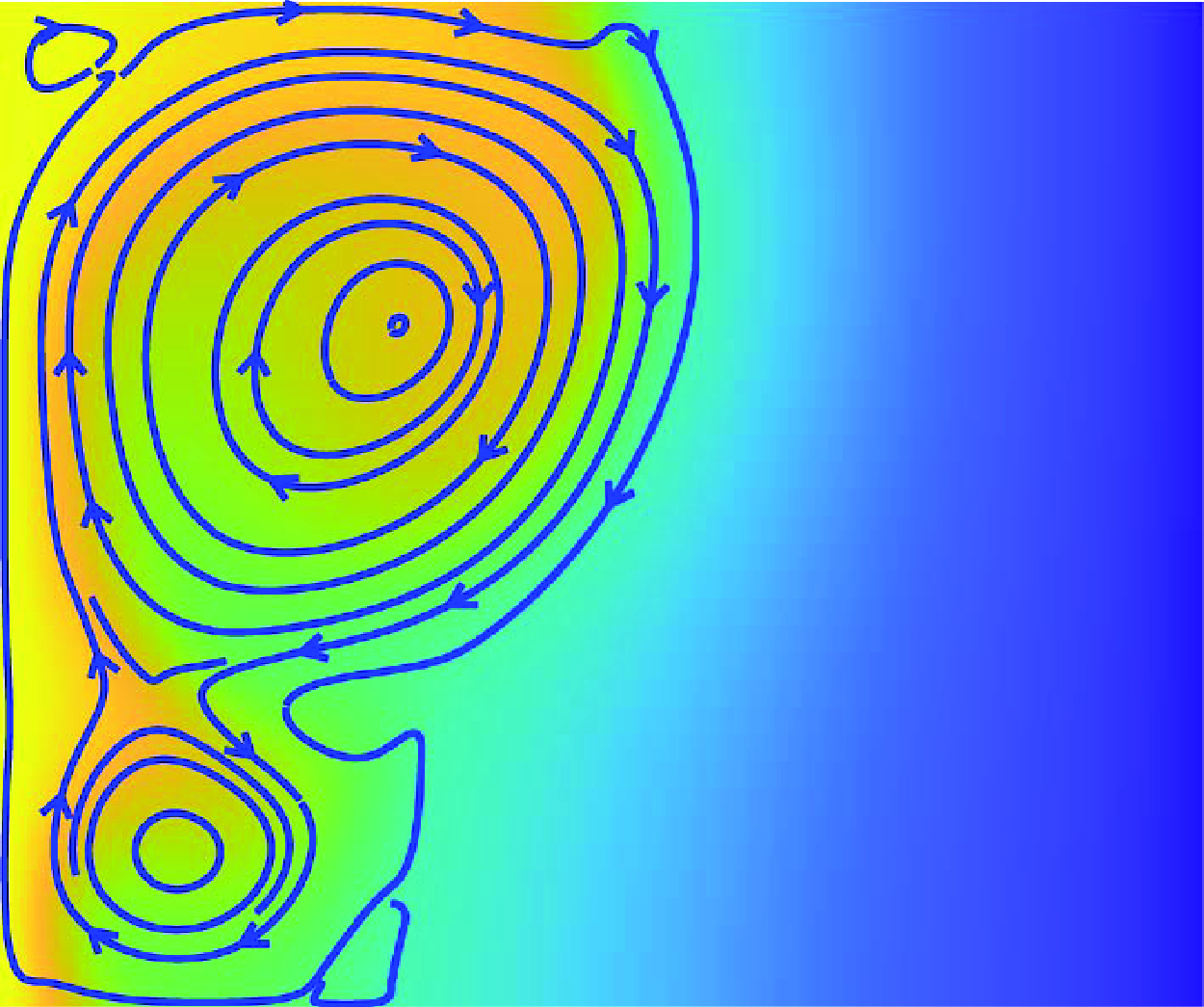
Submarine glacier melt rates of the Greenland Ice Sheet remain a major uncertainty in climate model projections of future sea level rise. Development of submarine melt parameterizations has to a high degree relied on ocean circulation modelling of glacial fjords, designed to quantify effects such as ocean thermal forcing and fjord–glacier geometry. Greenlandic fjords are relatively narrow, and it is frequently assumed that across-fjord flow variations are small enough to allow marine melt to be quantified with two-dimensional ocean-circulation models. Here, we present three-dimensional model simulations showing that the interplay between fjord–glacier geometry, side wall friction, and Earth’s rotation makes the circulation in ice-shelf cavities three-dimensional even in narrow fjords. Remarkably, we find that Earth’s rotation changes the flow pattern in the cavity below the ice shelf, leading to a decrease in the marine melt on a 10 km wide ice shelf by a factor of five compared to a non-rotating simulation. Our study prompts using three-dimensional model configurations of Greenlandic fjords.
Monitoring wildlife populations in vast, remote landscapes poses significant challenges for conservation and management, particularly when studying elusive species that range across inaccessible terrain. Traditional survey methods often prove impractical or insufficient in such environments, necessitating innovative technological solutions. This study evaluates the effectiveness of deep learning for automated Bactrian camel detection in drone imagery across the complex desert terrain of the Gobi Desert of Mongolia. Using YOLOv8 and a dataset of 1479 high-resolution drone-captured images of Bactrian camels, we developed and validated an automated detection system. Our model demonstrated strong detection performance with high precision and recall values across different environmental conditions. Scale-aware analysis revealed distinct performance patterns between medium- and small-scale detections, informing optimal drone flight parameters. The system maintained consistent processing efficiency across various batch sizes while preserving detection quality. These findings advance conservation monitoring capabilities for Bactrian camels and other wildlife in remote ecosystems, providing wildlife managers with an efficient tool to track population dynamics and inform conservation strategies in expansive, difficult-to-access habitats.
This research aimed to explore the perspectives of primary and community care providers on the challenges that hinder the delivery and uptake of personalized type 2 diabetes (T2D) care, with a focus on the integration of mental health support and care.
Background:
The day-to-day burden and demand of self-managing T2D can negatively impact quality of life and take a toll on mental health and psychological well-being. As a result, there is a need for personalized T2D self-management education and support that integrates mental health care. Despite the need for this personalized care, existing systems remain siloed, hindering access and uptake. In response, innovative, comprehensive, and collaborative models of care have been developed to address fragmentations in care. As individuals living with T2D often receive their care in primary care settings, linking mental health care to existing teams and networks in primary care settings is required. However, there is a need to understand how best to support access, adoption, and engagement with these models in these unique contexts.
Methods:
A cross-sectional survey was distributed to primary and community providers of an Ontario-based smoking cessation network. Survey data were analyzed descriptively with free text responses thematically reported.
Findings:
Survey respondents (n = 85) represented a broad mix of health professions across primary and community care settings. Addressing challenges to the delivery and uptake of personalized T2D care requires comprehensive strategies to address patient-, practice-, and system-level challenges. Findings from this survey identify the need to tailor these models of care to individual needs, clearly addressing mental health needs, and building strong partnership as means of enhancing accessibility and sustainability of integrated care delivery in primary care settings.
Sugar beet root damage at harvest promotes sucrose losses of circa 0.1 – 0.4 % day–1 in storage. However, root response to environmental stresses at harvest and their consequential rates of damage are not known. We investigated the effects of temperature and water stress at harvest on root resilience to damage and tissue strength. Water (irrigated to field capacity and non-irrigated) and temperature (cold and mild) treatments were imposed on physiologically mature sugar beet plants for seven weeks prior to and for three days after harvesting, respectively. Water status at harvest significantly affected relative water content (RWC) (p < 0.001), root weight (p < 0.001) and root width (p < 0.001). RWC was positively correlated to surface damage (R2 = 0.43, p = 0.02), root tip damage (R2 = 0.42, p = 0.03), tissue compression (R2 = 0.41, p = 0.05) and tissue puncture (R2 = 0.46, p = 0.01). Tissue damage was not affected by root tissue temperature of 4 °C compared to 12 °C. We conclude that sugar beet damage at harvest is not influenced by root temperatures over the range commonly observed in the UK and temperate production areas. However, higher water status at harvest, such as would be observed in a wet season, increases root tip and surface damage. These findings will help to inform optimum harvesting conditions to minimize sugar loss from the sugar beet crop.
Zoroastrianism is a religion with a long history, but it has been comparatively neglected by contemporary philosophers. This Element aims to bring aspects of its long intellectual history into conversation with contemporary Anglo-American philosophy. Section 1 provides an introduction to Zoroastrianism and its history, some of the important texts, and some contemporary philosophy engaged with Zoroastrian themes. Section 2 discusses distinctive contributions Zoroastrian thought can make to the problems of evil and suffering. And Section 3 discusses a 'quasi-universalist' approach to puzzles about heaven and salvation, inspired by Zoroastrian theological texts. This title is also available as Open Access on Cambridge Core.
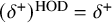
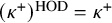
We prove two compactness theorems for HOD. First, if $\kappa $ is a strong limit singular cardinal with uncountable cofinality and for stationarily many $\delta <\kappa $, $(\delta ^+)^{\mathrm {HOD}}=\delta ^+$, then $(\kappa ^+)^{\mathrm {HOD}}=\kappa ^+$. Second, if $\kappa $ is a singular cardinal with uncountable cofinality and stationarily many $\delta <\kappa $ are singular in $\operatorname {\mathrm {HOD}}$, then $\kappa $ is singular in $\operatorname {\mathrm {HOD}}$. We also discuss the optimality of these results and show that the first theorem does not extend from $\operatorname {\mathrm {HOD}}$ to other $\omega $-club amenable inner models.
This chapter focuses on systemic factors in healthcare systems and how these can promote qualities such as mindfulness, awareness, resilience, and compassion. Too often, health systems do not promote these values at the organisational level despite the best efforts of individual healthcare workers. With attention and awareness, however, this can be remedied. This chapter examines the themes of compassionate leadership in healthcare organisations, resilience in these settings, and specific approaches that healthcare professionals can take to increase compassion across the healthcare systems in which we work. These steps include: (a) leading by example to promote compassionate behaviour for better care; (b) supporting the well-being of colleagues and staff we manage; (c) fostering open communication across clinical and managerial teams; (d) including patients and families in decision-making and valuing their perspectives; (e) promoting teamwork and collaboration that are inclusive, adaptive, and resilient; (f) recognising and rewarding compassionate care, both formally and informally; and (g) making self-compassion a key organisational value: health care is challenging, we are all human, and self-compassion is the basis of compassion for others.
This chapter argues that there was significant competition for junior senatorial positions during the early-imperial period. The number of eligible candidates in Italy alone exceeded the available positions with a wide margin. Moreover, the inclusion of increasing numbers of provincials further intensified the competition. Selection occurred across several stages—the latus clavus, vigintivirates, and quaestorship—mitigating potential friction that could arise among competing candidates and their supporters.
This chapter investigates the variation in the governing bodies (the curial councils) of the Italian civitates. It focuses on two aspects: the number of decurions and the census qualification for council entry. The evidence reveals a similar pattern for both of these aspects: medium-sized and larger civitates adhered to ‘canonical’ values (a hundred decurions with at least HS 100,000, likely inspired by Roman tradition), while smaller civitates deviated from this canon, probably due to local economic constraints.
Depression is closely associated with abnormalities in brain function. Traditional static functional connectivity analyses offer limited insight into the temporal variability of brain activity. Recent advances in dynamic analyses enable a deeper understanding of how depression relates to temporal fluctuations in brain activity.
Methods
This study utilized a large resting-state functional magnetic resonance imaging dataset (N = 696) to examine the association between brain dynamics and depression. Two complementary approaches were employed. Hidden Markov modeling (HMM) was used to identify discrete brain states and quantify their temporal switching patterns; temporal variability was computed within and between large-scale functional networks to capture time-varying fluctuations in functional connectivity.
Results
Depression scores were positively associated with switching rate and negatively associated with maximum fractional occupancy. Furthermore, depression scores were significantly associated with greater temporal variability both within and between networks, with particularly strong effects observed in the default mode network, ventral attention network, and frontoparietal network. Together, these findings suggest that individuals with higher depression scores exhibit more unstable brain dynamics.
Conclusion
Our findings reveal that individuals with higher depression levels exhibit greater instability in brain state transitions and increased temporal variability in functional connectivity across large-scale networks. This instability in brain dynamics may contribute to difficulties in emotion regulation and cognitive control. By capturing whole-brain temporal patterns, this study offers a novel perspective on the neural basis of depression.
Phase change materials (PCMs) hold considerable promise for thermal energy storage applications. However, designing a PCM system to meet a specific performance presents a formidable challenge, given the intricate influence of multiple factors on the performance. To address this challenge, we hereby develop a theoretical framework that elucidates the melting process of PCMs. By integrating stability analysis with theoretical modelling, we derive a transition criterion to demarcate different melting regimes, and subsequently formulate the melting curve that uniquely characterises the performance of an exemplary PCM system. This theoretical melting curve captures the key trends observed in experimental and numerical data across a broad parameter space, establishing a convenient and quantitative relationship between design parameters and system performance. Furthermore, we demonstrate the versatility of the theoretical framework across diverse configurations. Overall, our findings deepen the understanding of thermo-hydrodynamics in melting PCMs, thereby facilitating the evaluation, design and enhancement of PCM systems.
The American public is increasingly affectively polarized. A growing body of research has associated affective polarization with two key phenomena: ideological polarization and social group sorting. Although there is ample evidence that social group sorting, particularly along racial and ethnic lines, is driving Republicans’ affect toward the Democratic Party, it is not clear how it shapes Democrats’, particularly White Democrats’, feelings toward the predominantly White Republican Party. We propose a third model that bridges these two theoretical approaches, a racial ideology model that helps explain Democrats’ feelings toward the Republican Party. Specifically, we argue that Democrats increasingly dislike Republicans because Republicans are seen as standing in opposition to racially progressive policies. Using a preregistered conjoint experiment, we find that Americans across party lines see Republicans as opposing efforts to reduce racial inequality and that this perception is associated with negative affect toward the Republican Party among both White and non-White Democrats.