To save content items to your account,
please confirm that you agree to abide by our usage policies.
If this is the first time you use this feature, you will be asked to authorise Cambridge Core to connect with your account.
Find out more about saving content to .
To save content items to your Kindle, first ensure no-reply@cambridge.org
is added to your Approved Personal Document E-mail List under your Personal Document Settings
on the Manage Your Content and Devices page of your Amazon account. Then enter the ‘name’ part
of your Kindle email address below.
Find out more about saving to your Kindle.
Note you can select to save to either the @free.kindle.com or @kindle.com variations.
‘@free.kindle.com’ emails are free but can only be saved to your device when it is connected to wi-fi.
‘@kindle.com’ emails can be delivered even when you are not connected to wi-fi, but note that service fees apply.
Marc Van de Mieroop has written that ‘human agency … defines the limits of the Mediterranean world’.1 Thus whilst not Mediterranean in a geographical sense, Iron Age Vix, in Burgundy, France, was certainly connected to the Mediterranean and to its diverse peoples and cultures. Vix is located strategically at the southern end of the northwest-flowing Seine and the northern reaches of the Saone/Rhone that flows south to the sea at Arles, near Marseilles, the site of a major Greek colony from 600 bc.2 It is around this time that archaeologists note the adoption by many Celtic elites of the accoutrements of Greek drinking culture – the symposion – with its attendant cups and craters. Greek and Etruscan goods are found in greater numbers and Vix had contacts with both cultures and quite possibly Greek and Etruscan craftspeople were at work in Celtic lands.3 Celtic mercenaries were active in the Mediterranean and Celtic people were intermarrying with Etruscans and possibly Greeks too.4
Whilst not especially well known in Anglophone culture,1 the Early-Middle Bronze Age Spanish Argaric culture has long been regarded as important, sometimes even ‘the most important Bronze Age culture in Western Europe’, on a par with the better known Aegean cultures such as the Minoans, who were busy on Crete at the same time.2 Discovered in Victorian times by the Belgian Siret brothers, Louis and Henri, and named for the site at El Argar (in Antas, Almeria), the culture has perhaps suffered from the lack of a classical connection – unlike the Minoans and Mycenaeans there is no hint of them in later sources. Developing from around 2200 bc, the Argaric culture came to comprise several state-level polities that collapsed c. 1550 bc; this ending might have been welcomed by many, as Argaric society is thought to have been quite hierarchical and extractive, and the socio-political system it developed gladly and totally forgotten.3
Around eight or nine thousand years ago in southern Anatolia a young woman lived and died in the place now known as Çatalhöyük, southeast of the modern city of Konya. She was buried in a building, Building 17 of the South Area, Space 620, along with several other bodies, and found, with seventy-six other bodies across the site, by archaeologists in 2017 (Figure 2).1 Since we have no way of knowing her name, she is known simply as F.8018 Sk (21884). It is a specific yet also anonymous memorial to the lived life of a woman who was at the very least a daughter, a neighbour, and a friend.
At the heart of ancient Greece lay a small city perched on a mountainside – Delphi.1 At the heart of Delphi was the temple of Apollo, where delegations from cities far and wide, even beyond Greece, would come for answers and advice. And at the heart of the temple was a woman, the Pythia, the priestess of Apollo and mouthpiece of the god (Figure 17). For a thousand years successive Pythias occupied this position as ‘the voice at the center of the world’, until the oracles eventually ran dry in the fourth century and then pagan cults were outlawed by the Roman emperor Theodosius in the ad 390s.2 Around 480 bc, the Pythia was a woman called Aristonice. Her words have reverberated through western history.
The small island of Gozo lies just a short distance northwest of Malta, in the central Mediterranean. People arrived on the islands in the sixth millennium BC.1 In the later fourth millennium BC Maltese lifestyle changed and more complex societies were developed; this Temple Period is known for its megalithic monuments, which are often regarded as temples, and for its hypogea – caves and chambers. Over the course of this long period, many of the ‘temples’ were constructed, maintained and rebuilt repeatedly, suggesting a stable way of life on the islands. Around 2300 BC or sometime earlier, this lifestyle, and the Temple Period, came to an end for reasons that are unclear, and the island even appears deserted – though archaeologists will state that absence of evidence is not evidence of absence.2 Nevertheless, the striking archaeological remains of prehistoric Malta and Gozo, the temples, labyrinthine underground complexes, and ‘human’ statues all continue to catch the imagination of modern people.
Agricultural practices are key for understanding socio-economic change, community organization, and relationships with landscape and the environment. Under the Roman Empire, cereals were vital for supplying urban and military populations, yet cereal husbandry practices within villa landscapes remain underexplored. In this article, the author applies new methods to analyse a large assemblage of charred plant remains from an area of chalk downland in central-southern England in order to evaluate changes in cereal production strategies over the Middle Iron Age to late Roman periods. Archaeobotany, carbon and nitrogen isotope analysis, and functional weed ecology are combined to reconstruct crop husbandry practices, in order to establish the cereal production system of Roman villas and the preceding Iron Age settlements, and to consider the environmental and socio-economic impact of cereal production systems.
Cet article s’intéresse à deux doxographies présentes dans des résumés et abrégés de Ḥunayn au traité Sur les Éléments de Galien. Nous retraçons l’origine de ces doxographies, depuis des scolies grecques au traité galénique jusqu’au Commentaire à la Physique de Simplicius, dont nous montrons qu’il en est la source ultime. Nous indiquons aussi que le Commentaire de Simplicius a inspiré une interprétation de Parménide et Mélissos que nous trouvons chez Ḥunayn. Cela nous permet de voir des traces du Commentaire à la Physique de Simplicius dans le monde arabe et d’apporter quelques éclaircissements sur la construction de ces résumés à l’oeuvre de Galien que l’on appelle les Summaria alexandrinorum.
Late in his intellectual life, Faḫr al-Dīn al-Rāzī espoused a dualistic position on the nature of the soul, denying that the soul is in any sense a material body. This view, which in broad terms concurs with Avicenna’s, sets al-Rāzī in opposition to the theologians’ materialistic stance. To make his position clear, in his last work Almaṭālib al-Rāzī sets out a comprehensive case for the theologians’ materialism, before critiquing that position. This paper offers a reconstruction of al-Rāzī’s arguments for the theologians’ materialism, providing an insight into arguments in the philosophy of mind during the Islamic Middle Ages.
Cet article comporte l’editio princeps du traité d’Ibn al-Hayṯam « Sur le miroir ardent parabolique », Fī al-marāyā al-muḥriqa bi-al-quṭūʿ, ainsi que sa première traduction en français. Nous examinons la place qu’il occupe dans l’histoire du miroir parabolique durant plus d’un millénaire et demi, aussi bien en grec qu’en arabe et en latin.
Both Arabic modernists and Western humanists often regard the Muslim philosopher Averroes as one of the earliest precursors of Kant and the European Enlightenment. In contrast to this reputation, this paper argues that it was Kant’s critics Herder and Tiedemann who rediscovered Averroes. Tiedemann was the first German historiographer to give an accurate account of Averroes’ thought. This was accompanied by a re-evaluation of Averroes by Herder in his Letters for the Advancement of Humanity, in which he recognized the similarity between his own concept of the spirit of the age as historical reason – his alternative to the Enlightenment concept of a universal and ahistorical reason – and Averroes’ concept of a single material intellect for all individual human minds. Finally, the paper outlines the possible connections between Averroes’ interpretation of Aristotle’s intellect and Hegel’s concept of reason in history.
Do Avicenna’s extant works preserve any trace of his now-lost early philosophical production? This paper considers a hitherto neglected text, namely the chapter “On Hypothetical Propositions” from Avicenna’s “Concise Treatise on the Principles of Logic” (Risāla mūǧaza fī uṣūl al-manṭiq, henceforth: RM). The new evidence offered by the RM chapter in question will lead to a different reading of another well-known passage of Avicenna’s reworking of Aristotle’s Prior Analytics (Qiyās) from the “Book of Healing” (Kitāb al-šifāʾ). The clues gathered from an analysis of these two works will finally lead us to ponder the possibility that Avicenna may in fact have composed a (now lost) work on hypothetical propositions and syllogisms. Since Avicenna’s RM is to date unedited, an edition, as well as an English translation of the relevant chapter, is also provided in the Appendix of this paper.
Terracing is found widely in the Mediterranean and in other hilly and mountainous regions of the world. Yet while archaeological attention to these ‘mundane’ landscape features has grown, they remain understudied, particularly in Northern Europe. Here, the authors present a multidisciplinary study of terraces in the Breamish Valley, Northumberland. The results date their construction to the Early to Middle Bronze Age, when they were built by cutting back the hillside, stone clearance and wall construction. Environmental evidence points to their use for cereal cultivation. The authors suggest that the construction and use of these terraces formed part of an Early to Middle Bronze Age agricultural intensification, which may have been both demographically and culturally driven.
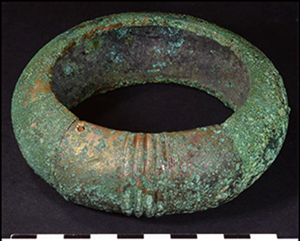
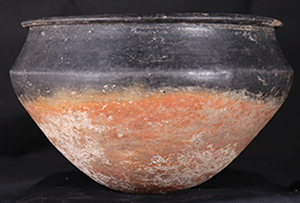
Excavations of the Kopilo cemetery in central Bosnia in 2021 and 2022 have provided the first insights into Bronze and Iron Age burial practices in this part of Europe. We documented a total of 46 inhumation graves, with the variety of finds indicating supra-regional contacts of this population.
A Mongolian-German project is investigating abandoned early modern military and monastic sites in central Mongolia, including how the ruins of these urban nodes continue to shape cultural memory within nomadic society. Initial excavations have revealed a previously unknown site type, interpreted as garrisons from the period of Manchu rule (AD 1636–1911).
Wealth differentials in archaeological sites are a frequently studied topic, but social differentiation approaches are rarely applied to different contexts within a wider territory, especially in Portugal. In this article, the authors discuss the differences in wealth and inequality through the consumption of tablewares from fifteen sites across Portugal dated from the sixteenth to the nineteenth centuries ad. The archaeological evidence derives from two types of contexts: secular (houses and dumps) and religious (female and male religious institutions). Using a statistical similarity method to compare different consumption patterns in each context, the authors discuss how this can help us understand wealth differences in distinct social environments.