Refine search
Actions for selected content:
212932 results in Engineering
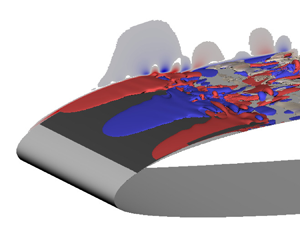
Onset of absolute instability on a pitching aerofoil
-
- Journal:
- Journal of Fluid Mechanics / Volume 988 / 10 June 2024
- Published online by Cambridge University Press:
- 29 May 2024, A8
-
- Article
-
- You have access
- Open access
- HTML
- Export citation
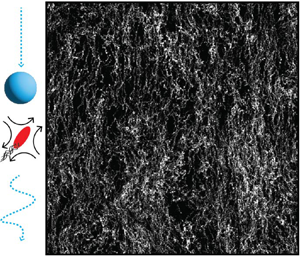
Sedimentation dynamics of passive particles in dilute bacterial suspensions: emergence of bioconvection
-
- Journal:
- Journal of Fluid Mechanics / Volume 988 / 10 June 2024
- Published online by Cambridge University Press:
- 29 May 2024, A9
-
- Article
-
- You have access
- Open access
- HTML
- Export citation
-
Microorganisms are ubiquitous in nature and technology. They inhabit diverse environments, ranging from small river tributaries and lakes, to oceans, as well as wastewater treatment plants and food manufacturing. In many of these environments, microorganisms coexist with settling particles. Here, we investigate the effects of microbial activity (swimming E. coli) on the settling dynamics of passive colloidal particles using particle tracking methods. Our results reveal the existence of two distinct regimes in the correlation length scale ( $L_u$) and the effective diffusivity of the colloidal particles ( $D_{eff}$), with increasing bacterial concentration ( $\phi _b$). At low $\phi _b$, the parameters $L_u$ and $D_{eff}$ increase monotonically with increasing $\phi _b$. Beyond critical $\phi _b$, a second regime is found where both $D_{eff}$ and $L_u$ are independent of $\phi _b$. We demonstrate that the transition between these regimes is characterized by the emergence of bioconvection. We use experimentally measured particle-scale quantities $L_u$ and $D_{eff}$ to predict the critical bacterial concentration for the diffusion–bioconvection transition.


FLM volume 987 Cover and Front matter
-
- Journal:
- Journal of Fluid Mechanics / Volume 987 / 25 May 2024
- Published online by Cambridge University Press:
- 29 May 2024, p. f1
-
- Article
-
- You have access
- Export citation
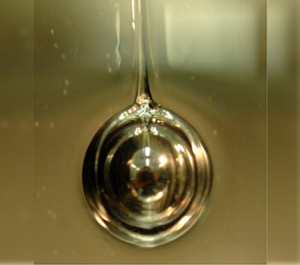
Thin-film flow between a rotating sphere and a nearly vertical moving plate
-
- Journal:
- Journal of Fluid Mechanics / Volume 988 / 10 June 2024
- Published online by Cambridge University Press:
- 28 May 2024, A7
-
- Article
-
- You have access
- Open access
- HTML
- Export citation
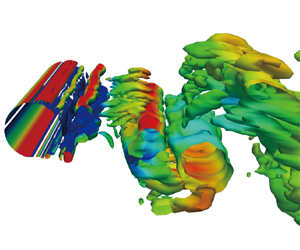
Dynamic feature-based deep reinforcement learning for flow control of circular cylinder with sparse surface pressure sensing
-
- Journal:
- Journal of Fluid Mechanics / Volume 988 / 10 June 2024
- Published online by Cambridge University Press:
- 28 May 2024, A4
-
- Article
- Export citation
-
This study proposes a self-learning algorithm for closed-loop cylinder wake control targeting lower drag and lower lift fluctuations with the additional challenge of sparse sensor information, taking deep reinforcement learning (DRL) as the starting point. The DRL performance is significantly improved by lifting the sensor signals to dynamic features (DFs), which predict future flow states. The resulting DF-based DRL (DF-DRL) automatically learns a feedback control in the plant without a dynamic model. Results show that the drag coefficient of the DF-DRL model is 25 % less than the vanilla model based on direct sensor feedback. More importantly, using only one surface pressure sensor, DF-DRL can reduce the drag coefficient to a state-of-the-art performance of approximately 8 % at Reynolds number $(Re) = 100$ and significantly mitigates lift coefficient fluctuations. Hence, DF-DRL allows the deployment of sparse sensing of the flow without degrading the control performance. This method also exhibits strong robustness in flow control under more complex flow scenarios, reducing the drag coefficient by 32.2 % and 46.55 % at $Re =500$ and 1000, respectively. Additionally, the drag coefficient decreases by 28.6 % in a three-dimensional turbulent flow at $Re =10\,000$. Since surface pressure information is more straightforward to measure in realistic scenarios than flow velocity information, this study provides a valuable reference for experimentally designing the active flow control of a circular cylinder based on wall pressure signals, which is an essential step toward further developing intelligent control in a realistic multi-input multi-output system.


Role of streak secondary instabilities on free-stream turbulence-induced transition
-
- Journal:
- Journal of Fluid Mechanics / Volume 988 / 10 June 2024
- Published online by Cambridge University Press:
- 28 May 2024, A6
-
- Article
-
- You have access
- Open access
- HTML
- Export citation
-
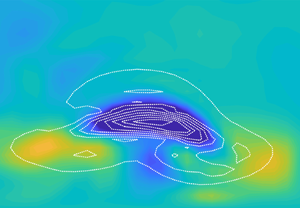
We study the stability of a zero-pressure gradient boundary layer subjected to free-stream disturbances by means of local stability analysis. The dataset under study corresponds to a direct numerical simulation (DNS) of a flat plate with a sharp leading edge in realistic wind tunnel conditions, with a turbulence level of 3.45 % at the leading edge. We present a method to track the convective evolution of the secondary instabilities of streaks by performing sequential stability calculations following the wave packet, connecting successive unstable eigenfunctions. A scattered nature, in time and space, of secondary instabilities is seen in the stability calculations. These instabilities can be detected before they reach finite amplitude in the DNS, preceding the nucleation of turbulent spots, and whose appearance is well correlated to the transition onset. This represents further evidence regarding the relevance of secondary instabilities of streaks in the bypass transition in realistic flow conditions. Consistent with the spatio-temporal nature of this problem, our approach allows us to integrate directly the local growth rates to obtain the spatial amplification ratio of the individual instabilities, where it is shown that instabilities reaching an $N$-factor in the range [2.5,4] can be directly correlated to more than 65 % of the nucleation events. Interestingly, it is found that high amplification is not only attained by modes with high growth rates, but also by instabilities with sustained low growth rates for a long time.

Secondary motions in turbulent ribbed channel flows
-
- Journal:
- Journal of Fluid Mechanics / Volume 988 / 10 June 2024
- Published online by Cambridge University Press:
- 27 May 2024, A2
-
- Article
-
- You have access
- Open access
- HTML
- Export citation
-
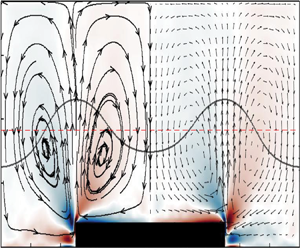
We present data from direct numerical simulation (DNS) of the fully turbulent flow through nominally two-dimensional channels containing longitudinal, surface-mounted, rectangular ribs whose widths ( $W$) are either one third of or equal to the gap ( $S-W$) between consecutive ribs across the domain, where $S$ is the span (centre-to-centre spacing) of the ribs. A range of the ratio of channel half-height ( $H$) to span ( $S$) is considered, covering $0.25\le H/S\le 2.5$. In each case, a fixed rib height ( $h$) of $0.1H$ was used, but a number of cases with much smaller heights, $h/H=0.025$ or 0.05, were also studied. The secondary flows resulting from the presence of the ribs are examined, along with their sources in terms of the axial vorticity transport equation, which highlights the effects of spanwise inhomogeneity in the Reynolds stresses. We show that the strength of the secondary flows depends strongly on $H/S$ (and, correspondingly, on $W/S$) and that the major sources of axial vorticity arise near the top corners of the ribs, with convection of that vorticity dominating its spread. We also show that for smaller ribs, the secondary flow strengths are similar to those predicted by Zampino et al. (J. Fluid Mech., vol. 944, 2022, A4) using a linearised model of the Reynolds-averaged equations, which does not include the vorticity convection process; the behaviour of secondary flow topology and strength with varying $W/H$ is thus noticeably different.


Onsager's ‘ideal turbulence’ theory
-
- Journal:
- Journal of Fluid Mechanics / Volume 988 / 10 June 2024
- Published online by Cambridge University Press:
- 27 May 2024, P1
-
- Article
-
- You have access
- Open access
- HTML
- Export citation
-
In 1945–1949, Lars Onsager made an exact analysis of the high-Reynolds-number limit for individual turbulent flow realisations modelled by incompressible Navier–Stokes equations, motivated by experimental observations that dissipation of kinetic energy does not vanish. I review here developments spurred by his key idea that such flows are well described by distributional or ‘weak’ solutions of ideal Euler equations. 1/3 Hölder singularities of the velocity field were predicted by Onsager and since observed. His theory describes turbulent energy cascade without probabilistic assumptions and yields a local, deterministic version of the Kolmogorov $4/5$th law. The approach is closely related to renormalisation group methods in physics and envisages ‘conservation-law anomalies’, as discovered later in quantum field theory. There are also deep connections with large-eddy simulation modelling. More recently, dissipative Euler solutions of the type conjectured by Onsager have been constructed and his $1/3$ Hölder singularity proved to be the sharp threshold for anomalous dissipation. This progress has been achieved by an unexpected connection with work of John Nash on isometric embeddings of low regularity or ‘convex integration’ techniques. The dissipative Euler solutions yielded by this method are wildly non-unique for fixed initial data, suggesting ‘spontaneously stochastic’ behaviour of high-Reynolds-number solutions. I focus in particular on applications to wall-bounded turbulence, leading to novel concepts of spatial cascades of momentum, energy and vorticity to or from the wall as deterministic, space–time local phenomena. This theory thus makes testable predictions and offers new perspectives on large-eddy simulation in the presence of solid walls.


Asymptotic analysis of hydrodynamic forces in a Brinkman penalization method: case of an initial flow around an impulsively started rotating and translating circular cylinder
-
- Journal:
- Journal of Fluid Mechanics / Volume 988 / 10 June 2024
- Published online by Cambridge University Press:
- 27 May 2024, A3
-
- Article
- Export citation
-
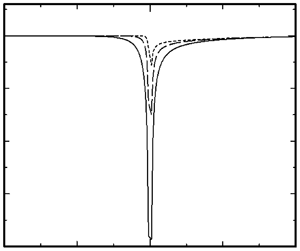
The initial flow past an impulsively started rotating and translating circular cylinder is asymptotically analysed using a Brinkman penalization method on the Navier–Stokes equation. In our previous study (J. Fluid Mech., vol. 929, 2021, A31), the asymptotic solution was obtained within the second approximation with respect to the small parameter, $\epsilon$, that is of the order of $1 / \lambda$. Here, $\lambda$ is the penalization parameter. In addition, the Reynolds number based on the cylinder radius and the translating velocity is assumed to be of the order of $\epsilon$. The previous study asymptotically analysed the initial flow past an impulsively started translating circular cylinder and investigated the influence of the penalization parameter $\lambda$ on the drag coefficient. It was concluded that the drag coefficient calculated from the integration of the penalization term exhibits a half-value of the results of Bar-Lev & Yang (J. Fluid Mech., vol. 72, 1975, pp. 625–647) as $\lambda \to \infty$. Furthermore, the derivative of vorticity in the normal direction was found to be discontinuous on the cylinder surface, which is caused by the tangential gradient of the pressure on the cylinder surface. The present study hence aims to investigate the variance on the drag coefficient against the result of Bar-Lev & Yang (1975). First, we investigate the problem of an impulsively started rotating circular cylinder. In this situation, the moment coefficient is independent of the pressure on the cylinder surface so that we can elucidate the role of the pressure to the hydrodynamic coefficients. Then, the problem of an impulsively started rotating and translating circular cylinder is investigated. In this situation, the pressure force induced by the unsteady flow far from the cylinder is found to play a key role on the drag force for the agreement with the result of Bar-Lev & Yang (1975), whereas the variance still exists on the lift force. To resolve the variance, an alternative formula to calculate the hydrodynamic force is derived, assuming that there is the pressure jump between the outside and inside of the cylinder surface. The pressure jump is obtained in this analysis asymptotically. Of particular interest is the fact that this pressure jump can cause the variance on the lift force calculated by the integration of the penalization term.


Global stability of the flow past a stepped cylinder
-
- Journal:
- Journal of Fluid Mechanics / Volume 988 / 10 June 2024
- Published online by Cambridge University Press:
- 27 May 2024, A1
-
- Article
-
- You have access
- Open access
- HTML
- Export citation
-
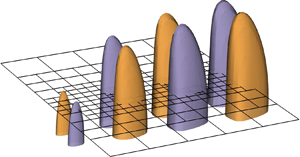
We investigate the global instability mechanism of the flow past a three-dimensional stepped cylinder. A comprehensive study is performed for different diameter ratios of the two joined cylinders ( $r=D/d$) ranging from $r=1.1$ to $r=4$. Independently of $r$, the spectrum of the linearised Navier–Stokes operator reveals a pair of complex conjugate eigenvalues, with Strouhal number $St \approx 0.11$. The initial transition is triggered by a two-dimensional mechanism of the larger cylinder only, not affected by the presence of the junction and the smaller cylinder ( $Re_{D,cr}\approx 47$). The structural sensitivity analysis is used to identify where the instability mechanism acts. The onset of transition is solely localised in the large cylinder wake (L cell), where the wavemaker has two symmetric lobes across the separation bubble. When the Reynolds number increases, a second and a third unstable pair of complex conjugate eigenvalues appears. They are localised in the small cylinder (S) wake and modulation (N) region. For any $r$, the appearance of unstable eigenmodes resembling the three cells S–N–L in the wake is observed. The nonlinear simulation results support this finding, in contrast with the previous classification of the laminar vortex shedding in direct (L–S) and indirect (L–N–S) modes interaction Lewis & Gharib (Phys. Fluids, vol. 4, 1992, pp. 104–117). This result indicates that each cell undergoes a supercritical Hopf bifurcation for any $r$. As $r$ approaches $1$, the modal linear stability results also show an unstable eigenmode in the wake of the small cylinder resembling a new modulation cell, named N2, similar to the N cell but mirrored with respect to the junction plane.


Resolving nonuniform flow in gas turbines: challenges, progress, and moving forward
- Part of
-
- Journal:
- The Aeronautical Journal / Volume 128 / Issue 1325 / July 2024
- Published online by Cambridge University Press:
- 27 May 2024, pp. 1325-1343
-
- Article
- Export citation
Model and algorithm for pharmaceutical distribution routing problem considering customer priority and carbon emissions
- Part of
-
- Journal:
- Data-Centric Engineering / Volume 5 / 2024
- Published online by Cambridge University Press:
- 27 May 2024, e16
-
- Article
-
- You have access
- Open access
- HTML
- Export citation
Powder X-ray diffraction of acalabrutinib dihydrate Form III, C26H23N7O2(H2O)2
-
- Journal:
- Powder Diffraction / Volume 39 / Issue 4 / December 2024
- Published online by Cambridge University Press:
- 27 May 2024, pp. 283-286
-
- Article
-
- You have access
- Open access
- HTML
- Export citation
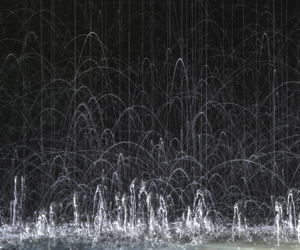
Experimental study on spray in the atmospheric surface layer by raindrops impacting water surface
-
- Journal:
- Journal of Fluid Mechanics / Volume 988 / 10 June 2024
- Published online by Cambridge University Press:
- 27 May 2024, R1
-
- Article
-
- You have access
- Open access
- HTML
- Export citation
Crystal structure of ribociclib hydrogen succinate, (C23H31N8O)(HC4H4O4)
-
- Journal:
- Powder Diffraction / Volume 39 / Issue 4 / December 2024
- Published online by Cambridge University Press:
- 27 May 2024, pp. 227-234
-
- Article
-
- You have access
- Open access
- HTML
- Export citation
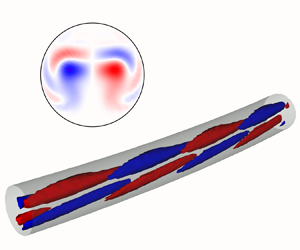
Modal stability analysis of toroidal pipe flow approaching zero curvature
-
- Journal:
- Journal of Fluid Mechanics / Volume 987 / 25 May 2024
- Published online by Cambridge University Press:
- 24 May 2024, A40
-
- Article
-
- You have access
- Open access
- HTML
- Export citation
-
The present study investigates the modal stability of the steady incompressible flow inside a toroidal pipe for values of the curvature $\delta$ (ratio between pipe and torus radii) approaching zero, i.e. the limit of a straight pipe. The global neutral stability curve for $10^{-7} \leq \delta \leq ~10^{-2}$ is traced using a continuation algorithm. Two different families of unstable eigenmodes are identified. For curvatures below $1.5 \times 10^{-6}$, the critical Reynolds number ${{Re}}_{cr}$ is proportional to $\delta ^{-1/2}$. Hence, the critical Dean number is constant, ${{De}}_{cr} = 2\,{{Re}}_{cr}\,\sqrt {\delta } \approx 113$. This behaviour confirms that the Hagen–Poiseuille flow is stable to infinitesimal perturbations for any Reynolds number and suggests that a continuous transition from the curved to the straight pipe takes place as far as it regards the stability properties. For low values of the curvature, an approximate self-similar solution for the steady base flow can be obtained at a fixed Dean number. Exploiting the proposed semi-analytic scaling in the stability analysis provides satisfactory results.


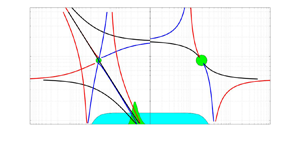
Generalized transport characterizations for short oceanic internal waves in a sea of long waves
-
- Journal:
- Journal of Fluid Mechanics / Volume 987 / 25 May 2024
- Published online by Cambridge University Press:
- 24 May 2024, A43
-
- Article
- Export citation
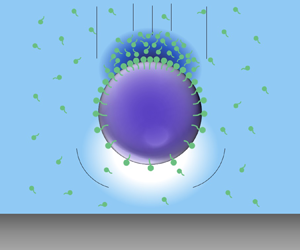
Coupled bulk and interfacial transport of surfactants governs the settling of a drop towards a wall
-
- Journal:
- Journal of Fluid Mechanics / Volume 987 / 25 May 2024
- Published online by Cambridge University Press:
- 24 May 2024, A41
-
- Article
- Export citation
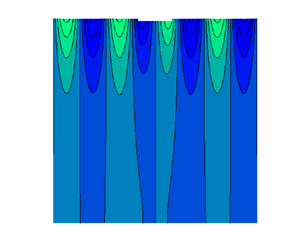
On wave-driven propulsion
-
- Journal:
- Journal of Fluid Mechanics / Volume 987 / 25 May 2024
- Published online by Cambridge University Press:
- 24 May 2024, A44
-
- Article
-
- You have access
- Open access
- HTML
- Export citation
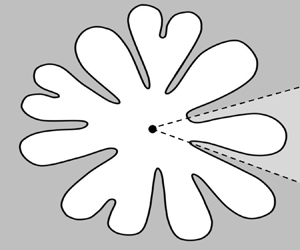
On the selection of Saffman–Taylor viscous fingers for divergent flow in a wedge
-
- Journal:
- Journal of Fluid Mechanics / Volume 987 / 25 May 2024
- Published online by Cambridge University Press:
- 24 May 2024, A42
-
- Article
-
- You have access
- Open access
- HTML
- Export citation
