Refine search
Actions for selected content:
212928 results in Engineering
Bubble departure and sliding in high-pressure flow boiling of water
-
- Journal:
- Journal of Fluid Mechanics / Volume 987 / 25 May 2024
- Published online by Cambridge University Press:
- 23 May 2024, A35
-
- Article
- Export citation
-
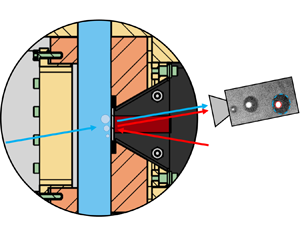
Bubble growth, departure and sliding in low-pressure flow boiling has received considerable attention in the past. However, most applications of boiling heat transfer rely on high-pressure flow boiling, for which very little is known, as experimental data are scarce and very difficult to obtain. In this work, we conduct an experiment using high-resolution optical techniques. By combining backlit shadowgraphy and phase-detection imaging, we track bubble shape and physical footprint with high spatial ( $6\,\mathrm {\mu }{\rm m}$) and temporal ( $33\,\mathrm {\mu }{\rm s}$) resolutions, as well as bubble size and position as bubbles nucleate and slide on top of the heated surface. We show that at pressures above 1 MPa bubbles retain a spherical shape throughout the growth and sliding process. We analytically derive non-dimensional numbers to correlate bubble velocity and liquid velocity throughout the turbulent boundary layer and predict the sliding of bubbles on the surface, solely from physical properties and the bubble growth rate. We also show that these non-dimensional solutions can be leveraged to formulate elementary criteria that predict the effect of pressure and flow rate on bubble departure diameter and growth time.


Gap in drop collision rate between diffusive and inertial regimes explains the stability of fogs and non-precipitating clouds
-
- Journal:
- Journal of Fluid Mechanics / Volume 987 / 25 May 2024
- Published online by Cambridge University Press:
- 23 May 2024, A37
-
- Article
-
- You have access
- Open access
- HTML
- Export citation
-
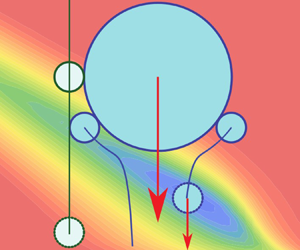
Rain drops form in clouds by collision of submillimetric droplets falling under gravity: larger drops fall faster than smaller ones and collect them on their path. The puzzling stability of fogs and non-precipitating warm clouds with respect to this avalanche mechanism has been a longstanding problem. How can droplets of diameter around 10 $\mathrm {\mu }$m have a low collision probability, inhibiting the cascade towards larger and larger drops? Here we review the dynamical mechanisms that have been proposed in the literature and quantitatively investigate the frequency of drop collisions induced by Brownian diffusion, electrostatics and gravity, using an open-source Monte Carlo code taking all of them into account. Inertia dominates over aerodynamic forces for large drops, when the Stokes number is larger than $1$. Thermal diffusion dominates over aerodynamic forces for small drops, when the Péclet number is smaller than $1$. We show that there exists a range of size (typically 3–30 $\mathrm {\mu }$m for water drops in air) where neither inertia nor Brownian diffusion are significant, leading to a gap in the collision rate. The effect is particularly important, due to the lubrication film forming between the drops immediately before collision, and secondarily to the long-range aerodynamic interaction. Two different mechanisms regularise the divergence of the lubrication force at vanishing separation: the transition to a non-continuum regime in the lubrication film, when the separation is comparable to the mean free path of air, and the induction of a flow inside the drops due to shear at their surfaces. In the gap between inertia-dominated and diffusion-dominated regimes, dipole–dipole electrostatic interactions becomes the major effect controlling the efficiency of drop collisions.


Modelling the first droplet emission from an electrified liquid meniscus hanging at the nozzle tip
-
- Journal:
- Journal of Fluid Mechanics / Volume 987 / 25 May 2024
- Published online by Cambridge University Press:
- 23 May 2024, A38
-
- Article
- Export citation
Turbulent vortex pair at equilibrium and its interaction with the ground at $Re_{\varGamma } = 2 \times 10^5$
-
- Journal:
- Journal of Fluid Mechanics / Volume 987 / 25 May 2024
- Published online by Cambridge University Press:
- 23 May 2024, A34
-
- Article
- Export citation
-
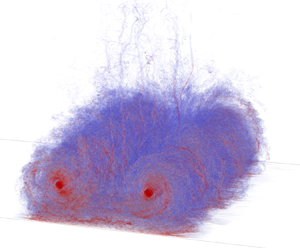
A turbulent two-vortex system (T-2VS) is obtained by inserting analytical model wake vortices into very weak homogeneous isotropic turbulence (HIT) and by evolving them in time using large-eddy simulation until a turbulent state at statistical equilibrium is reached. The T-2VS is characterised as follows: circulation distribution of the vortices; energy of the mean and fluctuating fields; energy dissipation rate. It is also verified that essentially the same T-2VS is obtained when varying the initial model or initial HIT perturbation. A wall-resolved simulation of the T-2VS further interacting with a smooth ground is then performed at $Re_\varGamma = 2 \times 10^5$; this is $10 \times$ higher than in previous works, which allows us to better capture the high Reynolds number behaviour. The high release height of the T-2VS also ensures a physically correct approach to the ground. The results are compared with the literature and also to what is obtained for the case of non-turbulent vortices interacting with the same ground at the same Reynolds number. The flow topologies are discussed, and significant differences are highlighted regarding the separation of the boundary layer generated at the ground, and the way this secondary vorticity interacts with the primary vortices and makes them decay. The vortex trajectories are also measured, together with their circulation distribution and global circulation evolution, and the differences are discussed.

High-efficiency, high-resolution multiple monochromatic imaging based on a multilayer mirror array for laser–plasma diagnostics of X-ray continuum emission
-
- Journal:
- High Power Laser Science and Engineering / Volume 12 / 2024
- Published online by Cambridge University Press:
- 23 May 2024, e48
-
- Article
-
- You have access
- Open access
- HTML
- Export citation
Numerical investigation of thermochemical non-equilibrium effects in Mach 10 scramjet nozzle
-
- Journal:
- The Aeronautical Journal / Volume 128 / Issue 1329 / November 2024
- Published online by Cambridge University Press:
- 22 May 2024, pp. 2707-2724
-
- Article
- Export citation
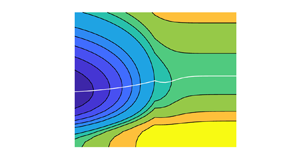
Energy stability of magnetohydrodynamic flow in channels and ducts
-
- Journal:
- Journal of Fluid Mechanics / Volume 987 / 25 May 2024
- Published online by Cambridge University Press:
- 22 May 2024, A33
-
- Article
- Export citation
Possibilities of the X-ray diffraction data processing method for detecting reflections with intensity below the background noise component
-
- Journal:
- Powder Diffraction / Volume 39 / Issue 3 / September 2024
- Published online by Cambridge University Press:
- 22 May 2024, pp. 132-143
-
- Article
-
- You have access
- Open access
- HTML
- Export citation
Linear dynamics of a thick liquid layer subjected to an oblique temperature gradient
-
- Journal:
- Journal of Fluid Mechanics / Volume 987 / 25 May 2024
- Published online by Cambridge University Press:
- 22 May 2024, A32
-
- Article
- Export citation
-
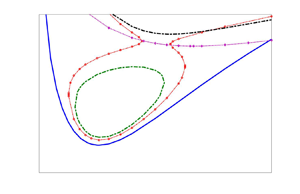
The present study aims to demonstrate the application of the oblique temperature gradient (OTG) to manipulate the buoyancy instabilities and resulting mixing. To accomplish this, we consider a model consisting of a liquid layer supported by a perfectly conducting bottom wall from below and the upper surface is exposed to ambient inert gas in a shallow container. The stability analysis employs the pseudospectral method and perturbation energy budget approach. The imposed OTG consists of a negative vertical temperature gradient (VTG), which leads to unstable density stratification, and a negative horizontal temperature gradient (HTG) component responsible for the Hadley circulation, which can be utilised to control instabilities. Without the HTG, a Rayleigh–Bénard mode of instability exists due to the imposed VTG termed as a VTG mode. The imposed HTG induces a linear VTG term and a quintic polynomial VTG term in the bottom wall-normal coordinate $y$. The induced linear VTG term reinforces the imposed VTG, while the induced quintic polynomial VTG term opposes the imposed VTG. For the vanishing Biot number ( $Bi$), the induced quintic VTG term stabilises the VTG mode for the Prandtl number, $Pr=7$. However, for $Pr=0.01$, the Reynolds stresses associated with the Hadley circulation destabilise the VTG mode. For non-zero $Bi$, new streamwise and spanwise instability modes arise for $Pr=7$ due to the induced linear VTG term. Physical arguments show that the unstable density stratification near the gas–liquid interface caused by the synergistic effect of the imposed VTG and the induced linear VTG term lead to the existence of the predicted new modes. The present study thus shows that the strength of the HTG can be utilised to control the instability modes and critical parameters, thereby demonstrating the utility of the OTG in manipulating the buoyancy instabilities.


Ultrahigh frequency path loss prediction based on K-nearest neighbors
-
- Journal:
- International Journal of Microwave and Wireless Technologies / Volume 16 / Issue 6 / July 2024
- Published online by Cambridge University Press:
- 22 May 2024, pp. 990-1000
-
- Article
- Export citation
Performance analysis of power conditioning and distribution module for microsatellite applications
-
- Journal:
- The Aeronautical Journal / Volume 128 / Issue 1329 / November 2024
- Published online by Cambridge University Press:
- 22 May 2024, pp. 2577-2603
-
- Article
- Export citation
Morphology of clean and surfactant-laden droplets in homogeneous isotropic turbulence
-
- Journal:
- Journal of Fluid Mechanics / Volume 987 / 25 May 2024
- Published online by Cambridge University Press:
- 22 May 2024, A31
-
- Article
-
- You have access
- Open access
- HTML
- Export citation
-
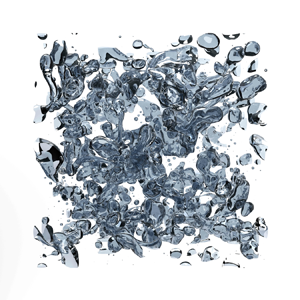
We perform direct numerical simulations of surfactant-laden droplets in homogeneous isotropic turbulence with Taylor Reynolds number $Re_\lambda \approx 180$. The droplets are modelled using the volume-of-fluid method, and the soluble surfactant is transported using an advection–diffusion equation. Effects of surfactant on the droplet and local flow statistics are well approximated using a lower, averaged value of surface tension, thus allowing us to extend the framework developed by Hinze (AIChE J., vol. 1, no. 3, 1955, pp. 289–295) and Kolmogorov (Dokl. Akad. Navk. SSSR, vol. 66, 1949, pp. 825–828) for surfactant-free bubbles to surfactant-laden droplets. We find that surfactant-induced tangential stresses play a minor role in this set-up, thus allowing us to extend the Kolmogorov–Hinze framework to surfactant-laden droplets. The Kolmogorov–Hinze scale $d_H$ is indeed found to be a pivotal length scale in the droplets’ dynamics, separating the coalescence-dominated (droplets smaller than $d_H$) and the breakage-dominated (droplets larger than $d_H$) regimes in the droplet size distribution. We find that droplets smaller than $d_H$ have a rather compact, regular, spheroid-like shape, whereas droplets larger than $d_H$ have long, convoluted, filamentous shapes with a diameter equal to $d_H$. This results in very different scaling laws for the interfacial area of the droplet. The normalized area, $A/d_H^2$, of droplets smaller than $d_H$ is proportional to $(d/d_H)^2$, while the area of droplets larger than $d_H$ is proportional to $(d/d_H)^3$, where $d$ is the droplet characteristic size. We further characterize the large filamentous droplets by computing the number of handles (loops of the dispersed phase extending into the carrier phase) and voids (regions of the carrier fluid completely enclosed by the dispersed phase) for each droplet. The number of handles per unit length of filament scales inversely with surface tension. The number of voids is proportional to the droplet size and independent of surface tension. Handles are indeed an unstable feature of the interface and are destroyed by the restoring effect of surface tension, whereas voids can move freely in the interior of the droplets, unaffected by surface tension.


Turbulent Couette flow up to ${{Re}}_\tau =2000$
-
- Journal:
- Journal of Fluid Mechanics / Volume 987 / 25 May 2024
- Published online by Cambridge University Press:
- 22 May 2024, R9
-
- Article
-
- You have access
- Open access
- HTML
- Export citation
-
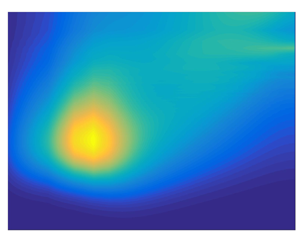
Two simulations of turbulent Couette flows were performed at friction Reynolds numbers of 1000 and 2000 in a large box of dimensions $L_x=16{\rm \pi} h$, $L_y=2h$ and $L_z=6{\rm \pi} h$, where h is the semi-height of the channel. The study focuses on the differences in the intensity and scaling of turbulence at these two Reynolds numbers. The 2000 case showed a lack of a clear log layer with a higher value of the Von Kármán constant $\kappa$ than Poiseuille channels. The intensities were well-scaled in the buffer layer and below, with a second maximum of the streamwise intensity at approximately 350 wall units. Contrary to Poiseuille channels, the dissipation scales close to the wall in wall units. This fact can be attributed to the constant value of the derivative of the streamwise intensity in wall units. The intensities of the 2000 case showed remarkable differences compared with those at Reynolds number 1000 at the channel centre, likely due to the organization of large scales of the streamwise fluctuactions, $u$. These large scales were thought to be considered ‘infinite’. However, for the 2000 case, while all the structures have a width of $\ell _z \approx 6/8{\rm \pi} h$, their length varies from $\ell _x \approx 6{\rm \pi} h$ to $\ell _x \approx 16{\rm \pi} h$, which clearly contradicts the trends obtained in the past. This is a new effect that has not been reported for turbulent Couette flow and points to the uncertainty and sensitivity that is observed for certain statistical quantities.


Evidence of quasiequilibrium in pressure-gradient turbulent boundary layers
-
- Journal:
- Journal of Fluid Mechanics / Volume 987 / 25 May 2024
- Published online by Cambridge University Press:
- 21 May 2024, R8
-
- Article
-
- You have access
- Open access
- HTML
- Export citation
-
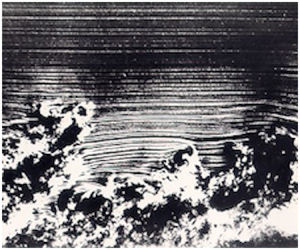
Two sets of measurements utilizing hot-wire anemometry and oil-film interferometry for flat-plate turbulent boundary layers, exposed to various controlled adverse and favourable pressure gradients, are used to evaluate history effects of the imposed and varying free-stream gradients. The results are from the NDF wind tunnel at Illinois Tech (IIT) and the MTL wind tunnel at KTH, over the range $800 < Re_\tau < 22\,000$ (where $Re_{\tau }$ is the friction Reynolds number). The streamwise pressure-gradient parameter $\beta \equiv (-\ell /\tau _{w}) \cdot (\partial P_{e}/\partial x)$ varied between $-2 < \beta < 7$, where $\ell$ is an outer length scale for boundary layers equivalent to the half-height of channel flow and the radius of pipe flow, and is estimated for each boundary-layer profile; note that $\tau_w$ is the wall-shear stress and $P_e$ is the free-stream static pressure. Extracting from each profile the three parameters of the overlap region, following the recent work of Monkewitz & Nagib (J. Fluid Mech., vol. 967, 2023, p. A15) that led to an overlap region of combined logarithmic and linear parts, we find minimum history effects in the overlap region. Thus, the overlap region in this range of pressure-gradient boundary layers appears to be in ‘quasiequilibrium’.


Spanwise unsteadiness in the sidewall-confined shock-wave/boundary-layer interaction
-
- Journal:
- Journal of Fluid Mechanics / Volume 987 / 25 May 2024
- Published online by Cambridge University Press:
- 21 May 2024, R6
-
- Article
- Export citation
-
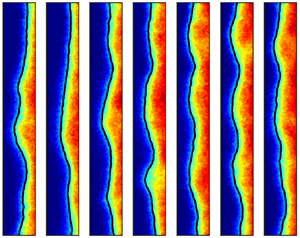
Three-dimensional effects of sidewalls on the low-frequency unsteadiness of the shock-wave/boundary-layer interaction (SBLI) are of academic and practical importance but not yet well understood. Considerable attention has been paid to the viscous effect of sidewalls, whereas the potential inviscid confinement effect of sidewalls has received little attention. The present work provides experimental evidence of multiscale spanwise travelling waves crossing the separation front under the confinement of sidewalls. Global pressure measurements were made for a sidewall-confined 24 $^\circ$ compression ramp interaction in Mach-2.83 flow using fast-responding pressure-sensitive paint. The unsteady pressure in a statistically two-dimensional intermittent region suggests that in addition to the canonical streamwise oscillation, the separation front exhibits significant low-frequency, multiscale spanwise distortion. Modal analysis further reveals that multiscale spanwise unsteadiness has higher intensity and frequency than the streamwise oscillation. Such strong spanwise unsteadiness calls attention to the low-frequency unsteadiness in previous sidewall-confined SBLI experiments and encourages further study on the mechanism of the confinement effect.

Effect of thermal fluctuations on spectra and predictability in compressible decaying isotropic turbulence
-
- Journal:
- Journal of Fluid Mechanics / Volume 987 / 25 May 2024
- Published online by Cambridge University Press:
- 21 May 2024, A29
-
- Article
- Export citation
-
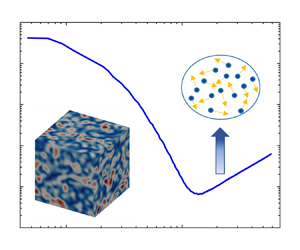
This study investigates the impact of molecular thermal fluctuations on compressible decaying isotropic turbulence using the unified stochastic particle (USP) method, encompassing both two-dimensional (2-D) and three-dimensional (3-D) scenarios. The findings reveal that the turbulent spectra of velocity and thermodynamic variables follow the wavenumber (k) scaling law of ${k}^{(d-1)}$ for different spatial dimensions $d$ within the high wavenumber range, indicating the impact of thermal fluctuations on small-scale turbulent statistics. With the application of Helmholtz decomposition, it is found that the thermal fluctuation spectra of solenoidal and compressible velocity components ( ${\boldsymbol {u}}_{s}$ and ${\boldsymbol {u}}_{c}$) follow an energy ratio of 1 : 1 for 2-D cases, while the ratio changes to 2 : 1 for 3-D cases. Comparisons between 3-D turbulent spectra obtained through USP simulations and direct numerical simulations of the Navier–Stokes equations demonstrate that thermal fluctuations dominate the spectra at length scales comparable to the Kolmogorov length scale. Additionally, the effect of thermal fluctuations on the spectrum of ${\boldsymbol {u}}_{c}$ is significantly influenced by variations in the turbulent Mach number. We further study the impact of thermal fluctuations on the predictability of turbulence. With initial differences caused by thermal fluctuations, different flow realizations display significant disparities in velocity and thermodynamic fields at larger scales after a certain period of time, which can be characterized by ‘inverse error cascades’. Moreover, the results suggest a strong correlation between the predictabilities of thermodynamic fields and the predictability of ${\boldsymbol {u}}_{c}$.


Turbulent drag reduction with streamwise-travelling waves in the compressible regime
-
- Journal:
- Journal of Fluid Mechanics / Volume 987 / 25 May 2024
- Published online by Cambridge University Press:
- 21 May 2024, A30
-
- Article
- Export citation
Data-driven modelling of the regular and chaotic dynamics of an inverted flag from experiments
-
- Journal:
- Journal of Fluid Mechanics / Volume 987 / 25 May 2024
- Published online by Cambridge University Press:
- 21 May 2024, R7
-
- Article
-
- You have access
- Open access
- HTML
- Export citation
Added mass of oscillating bodies in stratified fluids
-
- Journal:
- Journal of Fluid Mechanics / Volume 987 / 25 May 2024
- Published online by Cambridge University Press:
- 20 May 2024, A27
-
- Article
- Export citation
-
The concept of added mass is generalized to stratified fluids, accounting for the presence of internal waves. Once the added mass of a moving body is known, so is the hydrodynamic force exerted on it by the fluid, and the energy imparted by it to the fluid. As a function of frequency, added mass is complex. Its real part is associated with inertia and its imaginary part, only present in the frequency range of propagating waves, with wave damping. Owing to causality, these two parts satisfy Kramers–Kronig relations. The added masses of an elliptic cylinder of horizontal axis, typical of two-dimensional bodies, and a spheroid of vertical axis, typical of three-dimensional bodies, are deduced from their dipole strengths, themselves deduced from their representations as single layers. The wave power is shown to be a maximum, for fixed oscillation amplitude, at approximately $0.8$ times the buoyancy frequency. In the temporal domain, added mass appears as a new memory force taking the form of a convolution integral. The kernel of this integral combines algebraically decaying oscillations at the buoyancy frequency on the one hand; and an exponentially damped oscillation for the horizontal motion of the spheroid, implying short-term memory, an aperiodic algebraic decay for its vertical motion, implying long-term memory, and a constant for the motion of the cylinder, implying everlasting memory, on the other hand. A limitation of the study is its restriction to translational motion.

Design of TE-polarized resonant Bessel-beam launchers for wireless power transfer links in the radiative near-field region
-
- Journal:
- International Journal of Microwave and Wireless Technologies / Volume 16 / Issue 5 / June 2024
- Published online by Cambridge University Press:
- 20 May 2024, pp. 828-837
-
- Article
-
- You have access
- Open access
- HTML
- Export citation
