Refine search
Actions for selected content:
212620 results in Engineering
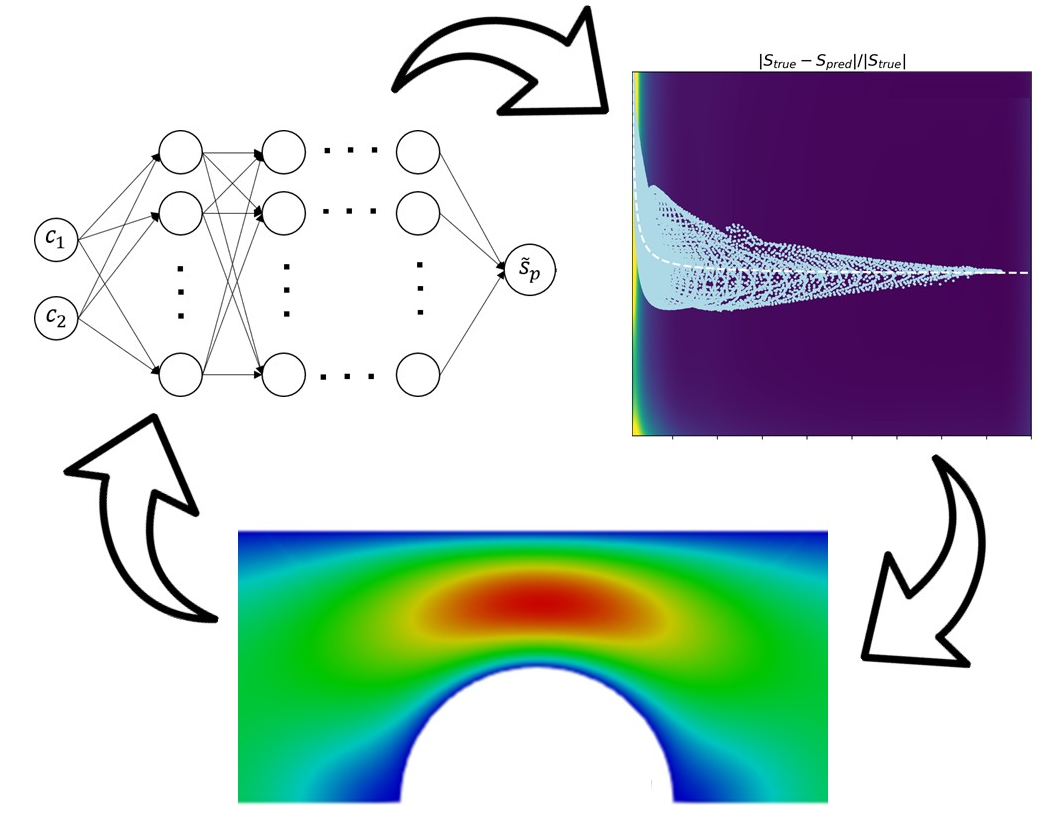
Hammering at the entropy: a GENERIC-guided approach to learning polymeric rheological constitutive equations using PINNs
-
- Journal:
- Journal of Fluid Mechanics / Volume 1016 / 10 August 2025
- Published online by Cambridge University Press:
- 29 July 2025, A11
-
- Article
-
- You have access
- Open access
- HTML
- Export citation

Double-diffusive viscous fingering induced by an active dye
-
- Journal:
- Journal of Fluid Mechanics / Volume 1016 / 10 August 2025
- Published online by Cambridge University Press:
- 29 July 2025, R3
-
- Article
- Export citation

Direct numerical simulation of power-law fluids over smooth and rough surfaces
-
- Journal:
- Journal of Fluid Mechanics / Volume 1016 / 10 August 2025
- Published online by Cambridge University Press:
- 29 July 2025, A13
-
- Article
- Export citation
-
Direct numerical simulation (DNS) studies of power-law (PL) fluids are performed for purely viscous-shear-thinning ( $n\in [0.5,0.75]$), Newtonian ( $n=1$) and purely viscous-shear-thickening ( $n=2.0$) fluids, considering two Reynolds numbers ( $Re_{\tau }\in [395,590]$), and both smooth and rough surfaces. We carefully designed a numerical experiment to isolate key effects and simplify the complex problem of turbulent flow of non-Newtonian fluids over rough surfaces, enabling the development of a theoretical model to explain the observed phenomena and provide predictions. The DNS results of the present work were validated against literature data for smooth and rough Newtonian turbulent flows, as well as smooth shear-thinning cases. A new analytical expression for the mean velocity profile – extending the classical Blasius $1/7$ profile to power-law fluids – was proposed and validated. In contrast to common belief, the decrease in $n$ leads to smaller Kolmogorov length scales and the formation of larger structures, requiring finer grids and longer computational domains for accurate simulations. Our results confirm that purely viscous shear-thinning fluids exhibit drag reduction, while shear-thickening fluids display an opposite trend. Interestingly, we found that viscous-thinning turbulence shares similarities with Newtonian transitional flows, resembling the behaviour of shear-thinning, extensional-thickening viscoelastic fluids. This observation suggests that the extensional and elastic effects in turbulent flows within constant cross-section geometries may not be significant. However, the shear-thickening case exhibits characteristics similar to high-Reynolds-number Newtonian turbulence, suggesting that phenomena observed in such flows could be studied at significantly lower Reynolds numbers, reducing computational costs. In the analysis of rough channels, we found that the recirculation bubble between two roughness elements is mildly influenced by the thinning nature of the fluid. Moreover, we observed that shear-thinning alters the flow in the fully rough regime, where the friction factor typically reaches a plateau. Our results indicate the possibility that, at sufficiently high Reynolds numbers, this plateau may not exist for shear-thinning fluids. Finally, we provide detailed turbulence statistics for different rheologies, allowing, for the first time, an in-depth study of the effects of rheology on turbulent flow over rough surfaces.


High-power laser drivers and fast neutron sources towards green energy applications
- Part of
-
- Journal:
- High Power Laser Science and Engineering / Volume 13 / 2025
- Published online by Cambridge University Press:
- 29 July 2025, e79
-
- Article
-
- You have access
- Open access
- HTML
- Export citation
-
Accelerator-driven systems (ADSs) may offer a promising technology for energy production and transmutation of nuclear waste. Here we introduce the concept of utilizing high-intensity laser acceleration technology in realizing an ADS, with a focus on the use of thorium fuel in subcritical systems. We explore state-of-the-art laser-driven particle sources for neutron generation by nuclear fusion, spallation or photonuclear reactions and the prospect of reaching the flux of ${10}^{15}$ n/s required to drive a subcritical reactor. We review recent advances in high-power laser amplification and assess their technological readiness in view of integration in an ADS. Finally, we present a risk analysis of a laser-driven ADS in terms of laser and target development, radiation safety and operational stability. Our conclusion highlights the potential of laser-driven ADSs as a transformative approach to nuclear fission energy. With continued research and development, technological hurdles can be overcome to fully realize sustainable, green energy production that can meet global energy demands while addressing safety and environmental concerns.


Thin-layer formation of ellipsoidal gyrotactic swimmers in time-dependent hydrodynamic shear
-
- Journal:
- Journal of Fluid Mechanics / Volume 1016 / 10 August 2025
- Published online by Cambridge University Press:
- 29 July 2025, A8
-
- Article
-
- You have access
- Open access
- HTML
- Export citation
-
We investigated the dynamics of thin-layer formation by non-spherical motile phytoplankton in time-dependent shear flow, building on the seminal work of Durham et al. (2009 Science vol. 323, pp. 1067–1070), on spherical microswimmers in time-independent flows. By solving the torque balance equation for a microswimmer, we found that the system is highly damped for body sizes smaller than $10^{-3}$ m, with initial rotational motion dissipating quickly. From this torque balance, we also derived the critical shear for ellipsoidal microswimmers, which we validated numerically. Simulations revealed that the peak density of microswimmers is slightly higher than the theoretical prediction due to the speed asymmetry of sinking and gyrotaxis above and below the predicted height. In addition, we observed that microswimmers with higher aspect ratios tend to form thicker layers due to slower angular velocity. Using linear stability analysis, we identified a thin-layer accumulation time scale, which contains two regimes. This theoretically predicted accumulation time scale was validated through simulations. In time-dependent flow with oscillating critical shear depth, we identified three accumulation regimes and a transitional regime based on the ratio of swimmer and flow time scales. Our results indicate that thin layers can form across time scale ratios spanning five orders of magnitude, which helps explain the widespread occurrence of thin phytoplankton layers in natural water bodies.


Modelling transitional rough-wall turbulence with quasi-linear approximations
-
- Journal:
- Journal of Fluid Mechanics / Volume 1016 / 10 August 2025
- Published online by Cambridge University Press:
- 29 July 2025, A7
-
- Article
-
- You have access
- Open access
- HTML
- Export citation

Experimental investigation of cylindrically divergent Rayleigh–Taylor instability on a water–air interface
-
- Journal:
- Journal of Fluid Mechanics / Volume 1016 / 10 August 2025
- Published online by Cambridge University Press:
- 28 July 2025, R2
-
- Article
- Export citation

Large-eddy simulation of the fluid–structure interaction in aquatic canopies consisting of highly flexible blades
-
- Journal:
- Journal of Fluid Mechanics / Volume 1016 / 10 August 2025
- Published online by Cambridge University Press:
- 28 July 2025, A4
-
- Article
-
- You have access
- Open access
- HTML
- Export citation
A Q-/V-band 37.6-dBm IP0.1 dB and low loss SPDT switch using three-series PIN diodes connection
-
- Journal:
- International Journal of Microwave and Wireless Technologies / Volume 17 / Issue 4 / May 2025
- Published online by Cambridge University Press:
- 28 July 2025, pp. 731-739
-
- Article
-
- You have access
- Open access
- HTML
- Export citation
-
This manuscript presents a novel three-series-only topology P-insulator-N (PIN) diode single-pole-double-through (SPDT) switch designed to address the challenges of high power handling and low insertion loss in Q-band and V-band communication systems. The manuscript provides a detailed theoretical analysis of series-connected PIN diodes, offering insights into their behavior under both small- and large-signal conditions. Based on GaAs PIN diode technology, the switch operates across a frequency range of 37.7 to 61 GHz, achieving a low insertion loss of 0.707 dB and providing an isolation of 24.6 dB. The proposed SPDT switch demonstrates a high $\text{IP}_{\text{0.1~dB}}$ of 37.6 dBm at 38 GHz. With a compact chip size of $0.905\times 0.885 \text{mm}^2$, including all pads, this work offers excellent power handling capability, making it highly suitable for advanced communication systems in Q-band and V-band applications.


Granular segregation across flow geometries: a closure model for the particle segregation velocity
-
- Journal:
- Journal of Fluid Mechanics / Volume 1016 / 10 August 2025
- Published online by Cambridge University Press:
- 28 July 2025, A2
-
- Article
-
- You have access
- Open access
- HTML
- Export citation

Characteristics and modelling of forcing statistics in resolvent analysis of compressible turbulent boundary layers
-
- Journal:
- Journal of Fluid Mechanics / Volume 1016 / 10 August 2025
- Published online by Cambridge University Press:
- 28 July 2025, A10
-
- Article
- Export citation
Design exploration of a ram-air-based heat exchanger system for disruptive engines
-
- Journal:
- The Aeronautical Journal / Volume 129 / Issue 1341 / November 2025
- Published online by Cambridge University Press:
- 28 July 2025, pp. 3142-3164
-
- Article
- Export citation

Role of nonlinearities induced by deterministic forcing in the low-frequency dynamics of transitional shock wave/boundary layer interaction
-
- Journal:
- Journal of Fluid Mechanics / Volume 1016 / 10 August 2025
- Published online by Cambridge University Press:
- 28 July 2025, A6
-
- Article
-
- You have access
- Open access
- HTML
- Export citation
-
Direct numerical simulations are carried out to investigate the underlying mechanism of the low-frequency unsteadiness of a transitional shock reflection with separation at $M=1.5$. To clarify the nonlinear mechanisms, the incoming laminar boundary layer is forced with two different arrangements of oblique unstable modes. Each wave arrangement is given by a combination of two unstable waves such that their difference in frequency falls in a low-frequency range corresponding to a Strouhal number (based on the length of interaction) of 0.04. This deterministic forcing allows the introduction of nonlinearities, and high-order statistical tools are used to identify the properties of quadratic couplings. It is found that the low-frequency unsteadiness and the transition to turbulence are decoupled problems. On the one hand, the unstable modes of the boundary layer interact nonlinearly such that energy cascades to higher frequencies, initiating the turbulent cascade process, and to lower frequencies. On the other hand, the low-frequency quadratic coupling of the oblique modes is found to be responsible for low-frequency unsteadiness affecting the separation point. The direction of the quadratic interactions is extracted and it is shown that, in the presence of low-frequency unsteadiness, these interactions enter the separated zone just before reattachment and travel both downstream and upstream, extending beyond the separation point, hence feeding the low-frequency bubble response. In addition to the two main arrangements of oblique modes, two other combinations are analysed, including multiple oblique waves and streaks. Interestingly, their inclusion did not alter the low-frequency unsteadiness phenomenon. Furthermore, the effect of the forcing difference frequency is examined and it is shown that the breathing phenomenon is sensitive to the range of frequencies present in the system due to a low-pass filter effect.


Mass transport induced by infragravity waves
-
- Journal:
- Journal of Fluid Mechanics / Volume 1016 / 10 August 2025
- Published online by Cambridge University Press:
- 28 July 2025, A5
-
- Article
-
- You have access
- Open access
- HTML
- Export citation

Beyond Nusselt number: assessing Reynolds and length scalings in rotating convection under stress-free boundary conditions
-
- Journal:
- Journal of Fluid Mechanics / Volume 1016 / 10 August 2025
- Published online by Cambridge University Press:
- 25 July 2025, A3
-
- Article
-
- You have access
- Open access
- HTML
- Export citation
-
Convection in planetary environments is often modelled using stress-free boundary conditions, with diffusion-free geostrophic turbulence scalings frequently assumed. However, key questions remain about whether rotating convection with stress-free boundary conditions truly achieves the diffusion-free geostrophic turbulence regime. Here, we investigated the scaling behaviours of the Nusselt number ( $Nu$), Reynolds number ( ${Re}$) and dimensionless convective length scale ( $\ell /H$, where $H$ is the height of the domain) in rotating Rayleigh–Bénard convection under stress-free boundary conditions within a Boussinesq framework. Using direct numerical simulation data for Ekman number $Ek$ down to $5\times 10^{-8}$, Rayleigh number $Ra$ up to $5\times 10^{12}$, and Prandtl number $Pr = 1$, we show that the diffusion-free scaling of the heat transfer $Nu - 1 \sim Ra^{3/2}\, Pr^{-1/2}\, Ek^2$ alone does not necessarily imply that the flow is in a geostrophic turbulence regime. Under the stress-free conditions, ${Re}$ and $\ell /H$ deviate from the diffusion-free scalings, indicating a dependence on molecular diffusivity. We propose new non-diffusion-free scaling relations for this diffusion-free heat transfer regime with stress-free boundary conditions: $\ell /H \sim Ra^{1/8}\, Pr^{-1/8}\, Ek^{1/2}$ and ${Re} \sim Ra^{11/8}\, Pr^{-11/8}\, Ek^{3/2}$. Our findings highlight the need to assess both thermal and dynamic characteristics to confirm geostrophic turbulence.


Estimating the skin-friction coefficient in drag-reduced pipe flows of a flexible polymer
-
- Journal:
- Journal of Fluid Mechanics / Volume 1016 / 10 August 2025
- Published online by Cambridge University Press:
- 25 July 2025, A1
-
- Article
-
- You have access
- Open access
- HTML
- Export citation
-
In turbulent pipe flows, drag-reducing polymers are commonly used to reduce skin-friction drag; however, predicting this reduction in industry applications, such as crude oil pipelines, remains challenging. The skin-friction coefficient ( $C_f$) of polymer drag-reduced turbulent pipe flows can be related to three dimensionless parameters: the solvent Reynolds number ( $Re_s$), the Weissenberg number ( $Wi$) and the ratio of solvent viscosity ( $\eta _s$) to zero-shear-rate viscosity ( $\eta _0$), denoted as $\beta$. The function that relates these four dimensionless numbers was determined using experiments of various pipe diameters ( $D$), flow velocities ( $U$) and drag-reducing polyacrylamide solutions. The experiments included measurements of streamwise pressure drop ( $\Delta P$) for determining $C_f$, and measurements of shear viscosity ( $\eta$) and elastic relaxation time ( $\lambda$). This experimental campaign involved 156 flow conditions, each characterised by distinct values for $C_f$, $Re_s$, $Wi$ and $\beta$. Experimental results demonstrated good agreement with the relationship: $C_f^{-1/2} = \widehat {A}\log _{10}(Re_sC_f^{1/2})+\widehat {B}$, where $\widehat {A} = 27.6(Wi \beta )^{0.346}$ and $\widehat {B} = 122/15-58.9(Wi \beta )^{0.346}$. Based on this relationship, onset and maximum drag reduction are predicted to occur when $Wi \beta$ equals $3.76 \times 10^{-3}$ and $3.40 \times 10^{-1}$, respectively. This function can predict $C_f$ of dilute polyacrylamide solutions based on predefined parameters (bulk velocity, pipe diameter, density, solvent viscosity) and two measurable rheological properties of the solution (shear viscosity and elastic relaxation time) with an accuracy of $\pm 9.36$ %.


A comprehensive review of robotics-aided aircraft non-destructive inspection towards the smart hangar
-
- Journal:
- The Aeronautical Journal / Volume 129 / Issue 1342 / December 2025
- Published online by Cambridge University Press:
- 25 July 2025, pp. 3347-3378
-
- Article
-
- You have access
- Open access
- HTML
- Export citation
Miniaturized multiband dipole-loaded C-shaped resonating patch linear–circular and linear-cross angular stable reflective polarization converter
-
- Journal:
- International Journal of Microwave and Wireless Technologies / Volume 17 / Issue 4 / May 2025
- Published online by Cambridge University Press:
- 25 July 2025, pp. 620-628
-
- Article
- Export citation

Data-enabled discovery of specific and generalisable turbulence closures
-
- Journal:
- Journal of Fluid Mechanics / Volume 1016 / 10 August 2025
- Published online by Cambridge University Press:
- 25 July 2025, R1
-
- Article
- Export citation

Vortices, shocks and non-linear acoustic waves: the ingredients for resonance in impinging compressible jets
- Part of
-
- Journal:
- Journal of Fluid Mechanics / Volume 1015 / 25 July 2025
- Published online by Cambridge University Press:
- 25 July 2025, A56
-
- Article
-
- You have access
- Open access
- HTML
- Export citation
