To save content items to your account,
please confirm that you agree to abide by our usage policies.
If this is the first time you use this feature, you will be asked to authorise Cambridge Core to connect with your account.
Find out more about saving content to .
To save content items to your Kindle, first ensure no-reply@cambridge.org
is added to your Approved Personal Document E-mail List under your Personal Document Settings
on the Manage Your Content and Devices page of your Amazon account. Then enter the ‘name’ part
of your Kindle email address below.
Find out more about saving to your Kindle.
Note you can select to save to either the @free.kindle.com or @kindle.com variations.
‘@free.kindle.com’ emails are free but can only be saved to your device when it is connected to wi-fi.
‘@kindle.com’ emails can be delivered even when you are not connected to wi-fi, but note that service fees apply.
The Simulator of the Human Intestinal Microbial Ecosystem (SHIME) system was provided with baby feed for one week to stabilise the microbial community, followed by a 10-day period with baby feed and another 10-day period with adult feed. The study was conducted using sterilised and standardised feed formulations, which model dietary conditions in vitro. Following the transition from baby to adult feed, a significant reduction in the proportion of butyrate in comparison to total SCFA was found after transitioning to adult feed in both the transverse colon and distal colon bioreactors. Our findings suggest that abrupt early-life dietary changes from simple to complex carbohydrates as well as the exclusion of bovine milk proteins can transiently lower the ability of the microbiota to produce butyrate. The lack of additional microbial input leads to a delay or impairment of the adaptation to the modified feed composition. However, given the short treatment duration and sterilised feed composition, these findings should be interpreted within the limitations of this in vitro model. A reduction in butyrate concentration following the transition to adult feed may reflect a temporary shift in microbial metabolic activity rather than a long-term impact on energy extraction efficiency in vivo.
Soil and irrigation water salinity represent major abiotic stressors limiting global cereal production. This study aimed to assess the variability in salt tolerance among 78 Berbet introgression lines (Berbet-ILs) of wheat and four commercial cultivars at both seedling (controlled laboratory) and adult plant (field) stages. Twelve-day-old seedlings were evaluated for morpho-physiological traits, including germination percentage, root/shoot length, fresh/dry biomass and seedling vigour indices (I and II). Salinity significantly affected all seedling traits (P ≤ 0.01), including germination percentage. At the adult stage, plants were grown in fields irrigated with saline canal water (electrical conductivity [EC] = 3.8–4.2 dS · m⁻1) and non-saline tubewell water (EC = 0.3–0.4 dS · m⁻1). They were assessed for plant height, spikelets per spike, grains per spike, 1000-grain weight, grain yield, harvest index, phenological traits (days to flowering and maturity) and total leaf chlorophyll measured as Soil Plant Analysis Development (SPAD) values. Analysis of variance revealed significant effects of salinity on all parameters (P ≤ 0.01), except chlorophyll content at 20 days after anthesis and days to maturity. Salt Tolerance Index (STI) was calculated for each trait, and Pearson’s correlation analysis was performed on STI values. Hierarchical cluster analysis, based on the mean membership function value, identified L1, L6, L10, L45, L47, L72, L76, L77 and L79 as the most salt-tolerant Berbet-ILs, comparable to the commercial cultivars KRL 210 and PBW 803. Further physiological and biochemical characterization is recommended to understand the mechanisms driving salt tolerance. These findings can aid in developing high-yielding, salt-tolerant wheat varieties suited for saline-prone regions.
This study evaluated the impact of four cover crop species and their termination timings on cover crop biomass, weed control, and corn yield. A field experiment was arranged in a split-plot design in which cover crop species (wheat, cereal rye, hairy vetch, and rapeseed) were the main plot factor, and termination timings [4, 2, 1, and 0 wk before planting corn (WBP)] was the subplot factor. In both years (2021 and 2022), hairy vetch produced the most biomass (5,021 kg ha–1) among cover crop species, followed by cereal rye (4,387 kg ha–1), wheat (3,876 kg ha–1), and rapeseed (2,575 kg ha–1). Regression analysis of cover crop biomass with accumulated growing degree days (AGDDs) indicated that for every 100 AGDD increase, the biomass of cereal rye, wheat, hairy vetch, and rapeseed increased by 880, 670, 780, and 620 kg ha–1, respectively. The density of grass and small-seeded broadleaf (SSB) weeds at 4 wk after preemergence herbicide (WAPR) application varied significantly across termination timings. The grass and SSB weed densities were 56% and 36% less at 0 WBP compared with 2 WBP, and 67% and 61% less compared with 4 WBP. The sole use of a roller-crimper did not affect the termination of rapeseed at 0 WBP and resulted in the least corn yield (3,046 kg ha–1), whereas several different combinations of cover crops and termination timings resulted in greater corn yield. In conclusion, allowing cover crops to grow longer in the spring offers more biomass for weed suppression and impacts corn yield.
To estimate the effect of integrating responsive care, early learning, and development monitoring into a community-based package of activities on nutrition, sanitation, and hygiene, on improvements in early childhood development outcomes.
Design:
This was a quasi-experimental study with nonequivalent comparison groups. The study primary outcome, early childhood development, was measured using the Ages and Stages Questionnaire (ASQ-3) and the Global Scales for Early Development (GSED). We also collected data on the early learning home environment, nutritional practices, and caregiver depressive symptoms as secondary outcomes.
Setting:
This study was conducted across 12 districts in Nampula Province, Mozambique. Half of the districts received holistic nurturing care with responsive care, early learning, nutrition, sanitation, and hygiene packages (intervention), and the other half received only nutrition, sanitation, and hygiene packages (comparison).
Participants:
We recruited an age-stratified random sample of 961 caregivers and their children, aged 0–23 months.
Results:
We found a significantly higher mean caregiver engagement total score (mean difference: 0.36; P ≤ .001) and higher number of activities to support learning (mean difference: 0.30, P = 0.004) in the intervention group than in the control. There were no measurable impacts on the remaining early stimulation activities or on the primary outcomes of the ASQ and GSED developmental scores.
Conclusions:
We discuss the challenges in the integration of nurturing care interventions into existing programs in high-vulnerability contexts, highlighting the aspects needed to achieve effective caregiver behavioral changes that can translate into improved early childhood development outcomes.
The present study was designed to report the prevalence of spotted fever group Rickettsia and Anaplasma in ticks from Pakistan. To address this knowledge gap, ticks were collected from October 2019 to November 2020 from livestock hosts. Three hundred ninety ticks from Punjab, Khyber Pakhtunkhwa and Islamabad were investigated for the presence of Rickettsia and Anaplasma. The collected ticks were subjected to molecular studies for detection and characterization of spotted fever group Rickettsia and Anaplasma in ticks from Pakistan. PCR amplification of the ompA gene was used for detection of Rickettsia and portions of the 16S rDNA gene for detection of Anaplasma. Nine species of ticks were tested. Of the 390 ticks tested, 7 (2.58%) ticks were positive for Rickettsia. Rickettsia spp. were detected in Haemaphysalis punctata, Hyalomma anatolicum, Hyalomma scupense, Rhipicephalus microplus and Rhipicephalus sanguineus. Unknown Rickettsia was detected in Hy. scupense. Fifty-seven (14.6%) ticks were also positive for Anaplasma spp. Anaplasma ovis was detected in Hy. anatolicum, Hy. scupense, Hy. excavatum, Rhipicephalus decoloratus, R. microplus and R. sanguineus. Anaplasma marginale was detected in Hy. anatolicum, Hy. scupense, R. microplus, R. decoloratus and R. sanguineus. The Anaplasma sequences obtained from this experiment were 99–100% similar to those of the documented strains. This study provides information and confirms the presence of spotted fever group Rickettsia and Anaplasma spp. in different tick species. It also highlights the need for control programs to prevent health risks. Further investigation to determine the prevalence and disease burden of these pathogens in Pakistan is necessary.
There is growing interest in using avermectins in livestock as a vector control tool for mosquitoes involved in the transmission of human malaria in sub-Saharan Africa (SSA). If implemented, the potential health and productivity impacts across the livestock sector would need to be considered, as avermectins are already commonly used in veterinary medicine to treat gastrointestinal helminths and parasitic insects. Here we present the results of a restricted systematic review that summarizes what is known about the effects of avermectins on cattle and swine productivity in SSA and the presence of avermectin resistance in endo- and ectoparasites of importance in these species. A total of 583 unique journal articles were identified using key search terms in 3 databases: Agriculture, Life, and Natural Sciences Databases from ProQuest, CAB Abstracts and Scopus. Ten articles met the criteria for inclusion on impacts on productivity and 4 met the inclusion criteria related to avermectin resistance. All studies documenting impacts of avermectins on productivity were performed using ivermectin in cattle. Generally, these showed a positive significant effect on growth rates. Resistance to avermectins was documented in 2 of the 4 included articles. Considering the extensive literature documenting resistance to avermectins in other areas of the world, our findings may reflect a paucity of studies on the subject in SSA. The authors conclude that additional research is needed to quantify the potential benefits and challenges to the livestock sector of using avermectins for malaria control across different production systems, and in a variety of ecological settings.
During the 2019 growing season, seeds of Palmer amaranth and common waterhemp were collected from 141 and 133 agricultural sites, respectively, from across the southeastern and midwestern United States. These accessions were screened with a new protoporphyrinogen oxidase (PPO) inhibitor, epyrifenacil, using a whole-plant bioassay at 20 g ai ha−1 in controlled environmental conditions to estimate its efficacy on these two agronomically important weeds. In addition, the coding sequence of the PPX2 gene was determined for plants from each accession through short-read sequencing of cDNA fragments amplified via polymerase chain reaction. Results showed that nearly all accessions were completely controlled by epyrifenacil, with average survival rates of less than 2% for both species. Target site resistance mutations toward PPO inhibitors were lower in Palmer amaranth (<20%) compared to waterhemp, with nearly half of all waterhemp samples (42%) possessing the ΔG210 allele, which is shown to cause high-level resistance to other commercially available PPO-inhibiting herbicides. Follow-up testing of accessions with high frequency (≥50%) of the ΔG210 allele of PPX2 compared the efficacy of epyrifenacil, saflufenacil, and saflufenacil + trifludimoxazin and showed that of the herbicides tested, epyrifenacil at 20 g ha−1 provided the best control, averaging 85% mortality across these accessions. Same-plant association study of molecular data and whole-plant assay correlated all detected variants of PPX2 with visual injury following epyrifenacil treatment and found that the ΔG210 mutation was associated with a reduction in relative efficacy of epyrifenacil in some accessions. All other known target site resistance mutations appeared to have no significant effect on epyrifenacil efficacy.
Ecosystems are increasingly being represented as marketplaces that produce goods for humanity, and because of this, economic metaphors for increasing efficiency have been introduced into conservation. A powerful model for economic growth is the globalised free market, and some are implicitly deploying it to suggest changes in conservation practice. Ecological globalisation is the position that we should not control the free movement of species and rewilding occurs most efficiently through non-intervention. When species can move and interact with new ecological systems, they create novel ecosystems. These novel arrangements create experimental markets in nature’s economy, providing opportunities for the efficient production of goods for humans, also known as ecosystem services. When invasive species supersede local populations, it indicates previous biotic systems were inefficient, which is why they were replaced, and therefore, it is wrong to protect indigenous “losers” from extinction. Those who defend indigenous species are accused of being xenophobic against recent biotic migrants. This position is flawed both empirically and morally as there is a disconnect between these economic and political arguments when applied to human economies and nature’s economy.
To describe menu item prices and promotions on a meal delivery app in the UK and explore their socio-economic patterns.
Design:
Cross-sectional descriptive analysis
Setting:
We analysed over 21 million menu items from 71 532 food outlets listed on JustEat across the UK. We assessed median prices and types of promotions, examining variations by cuisine (e.g. chicken dishes, pizza) and outlet type (i.e. grocery, chain takeaways). Promotions were categorised into six types: percentage off, stamp cards, free items, meal deal notifications, buy one get one free and low delivery fees.
Results:
The median number of food outlets accessible via JustEat was sixty-nine per postcode district with delivery access (IQR = 14–225). The median menu item price was £6·25, with small/independent takeaways showing the highest prices. Menu item prices were generally lower in more deprived areas. Promotions were prevalent, with 65·96 % of outlets offering at least one. Outlets delivering to more deprived areas tended to offer more promotions, with the most common being low delivery fees, stamp cards and percentage off. Price and promotion strategies differed across cuisines and outlet types.
Conclusions:
Online menu item prices are relatively high, and promotions are widespread in the UK. Food outlets serving deprived areas often offer lower prices and more promotions. These targeted pricing and promotional strategies may influence purchasing behaviour and contribute to diet and health inequalities. Further research is needed to assess their impact on dietary behaviours and population health and guide policy interventions in the digital food environment.
Low birth weight (LBW) and preterm birth (PTB) are primary factors contributing to morbidity and mortality among children aged under 5, resulting in a range of short- and long-term health consequences worldwide. Among the various risk factors, ambient air pollution poses a significant environmental risk and is a key determinant of child health. The prevalence of LBW and PTB among under 5 children sampled from the NFHS-5, 2019–2021, was combined with monthly PM2.5 data (2013–2021) obtained from the Atmospheric Composition Analysis Group at Washington University. Multivariable logistic regression models were used, and a stratified analysis was applied to understand the potential effect modifiers in LBW and PTB. Further, the geographical variation of LBW and PTB spatial autocorrelation (Moran’s I) was used. Geographically weighted regression and ordinary least square spatial regression were used to identify the spatial heterogeneity associated with selected variables. The study comprises a total of 208,181 under 5 children. Out of these children, the LBW rate was 17.41%, and the rate of PTB was 12.42%. The in-utero exposure to the mean concentration of PM2.5 was 56.01 μg/m3. The odds of suffering from LBW showed a non-linear shift when PM2.5 levels rose from the first octile (<28.02 μg/m3) to the last octile (>93.84 μg/m3) (adjusted odds ratio (AOR): 1.06, 95% CI: 1.01–1.12). While comparing the first octile of exposure to PM2.5 (>93.84 μg/m3) to the last octile, there was a 52% more likelihood of having PTB (AOR: 1.52, 95% CI: 1.43–1.61) after accounting for all relevant factors. These findings highlight the urgent need for a thorough strategy to control the air quality in India. Further, to reduce adverse birth outcomes, longitudinal studies and other co-pollutants can consider assessing the possible mechanisms mediating the relationship between maternal exposure and ambient air pollution.
Young adulthood is a transitional period between childhood and adulthood characterised by unique stressors that increase the risk of food insecurity and poor mental health. This study examined the association between food insecurity and mental health outcomes among U.S. young adults aged 18–25.
Design:
A cross-sectional survey was completed by young adults between the ages of 18 and 25 years between January and April 2022. Key measures included food insecurity, perceived stress, anxiety, depressive symptoms and insomnia. Descriptive statistics and linear regression analyses were used to determine the prevalence of and associations between food insecurity and mental health outcomes, controlling for key demographic and social factors.
Setting:
Online survey.
Participants:
1630 U.S. young adults.
Results:
Among the analytic sample of 1041 young adults, nearly 70 % of participants identified as being food insecure in the last year. Participants reported moderate to high levels of perceived stress, anxiety, depressive symptoms and insomnia. Food insecurity was positively associated with each mental health outcome including perceived stress (β = 2·28, P< 0·01), anxiety (β = 2·84, P< 0·01), depressive symptoms (β = 2·74, P< 0·01) and insomnia (β = 1·28, P< 0·01) after controlling for all other factors.
Conclusion:
Food insecurity is associated with mental health problems among young adults. Future efforts should explore the directionality of this relationship to determine if food insecurity initiates or exacerbates poor mental health outcomes or if poor mental health contributes to food insecurity. Interventions to improve food security status may also help support mental health among young adults.
The fall armyworm, Spodoptera frugiperda (J. E. Smith) (Lepidoptera: Noctuidae), is a highly destructive polyvorous pest with a wide host range and the ability to feed continuously with seasonal changes. This destructive pest significantly damages crops and can also utilize non-agricultural plants, such as weeds, as alternative hosts. However, the adaptation mechanisms of S. frugiperda when switching between crop and non-crop hosts remain poorly understood, posing challenges for effective monitoring and integrated pest management strategies. Therefore, this study aims to elucidate the adaptability of S. frugiperda to different host plants. Results showed that corn (Zea mays L.) was more suitable for the growth and development of S. frugiperda than wheat (Triticum aestivum L.) and goosegrass (Eleusine indica). Transcriptome analysis identified 699 genes differentially expressed when fed on corn, wheat, and goosegrass. The analysis indicated that the detoxification metabolic pathway may be related to host adaptability. We identified only one SfGSTs2 gene within the GST family and investigated its functional role across different developmental stages and tissues by analysing its spatial and temporal expression patterns. The SfGSTs2 gene expression in the midgut of larvae significantly decreased following RNA interference. Further, the dsRNA-fed larvae exhibited a decreased detoxification ability, higher mortality, and reduced larval weight. The findings highlight the crucial role of SfGSTs2 in host plant adaptation. Evaluating the feeding preferences of S. frugiperda is significant for controlling important agricultural pests.
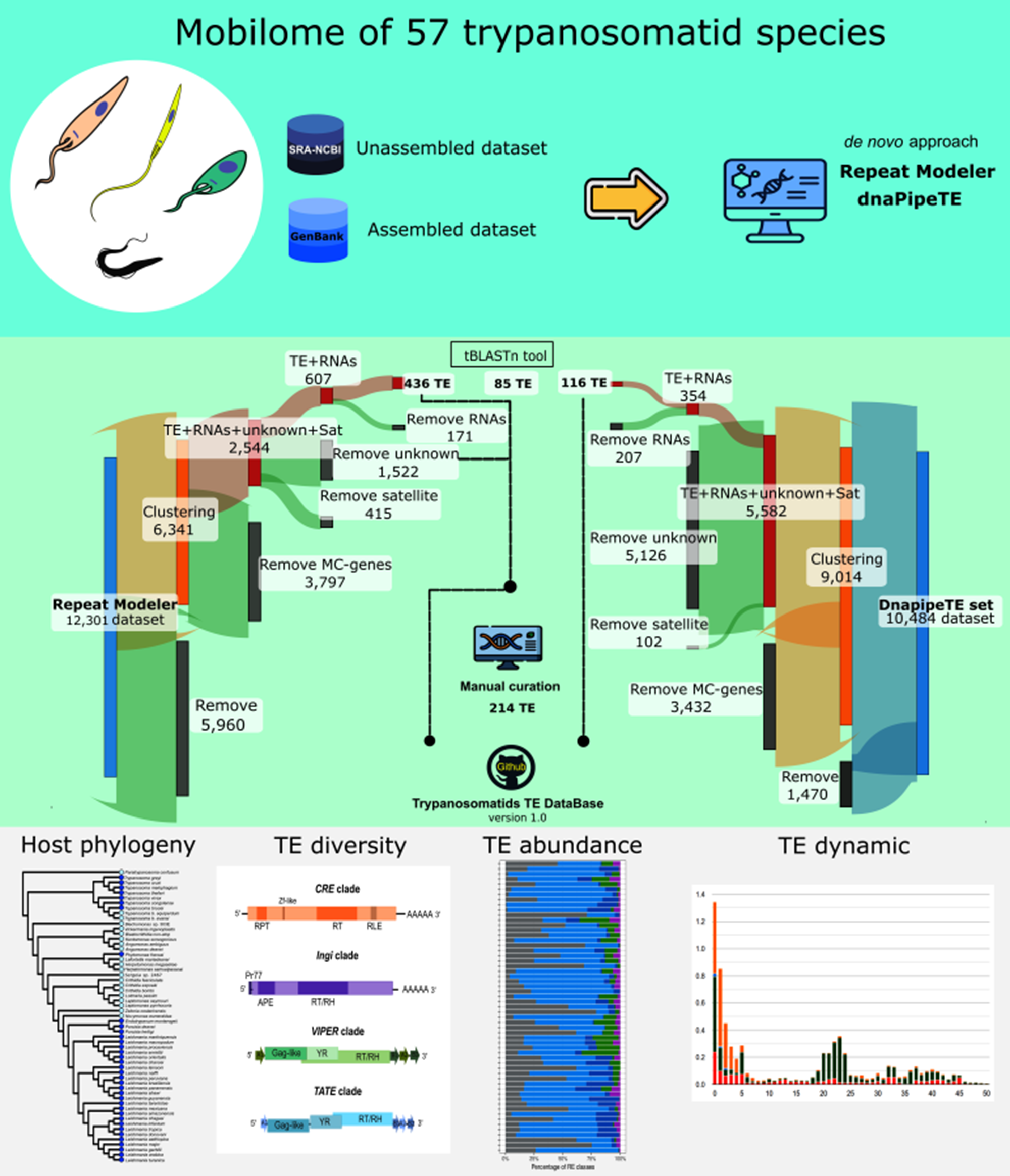
Transposable elements (TEs) have the ability to move and amplify inside the host genome, making them a pivotal source of genome plasticity. Presently, only 4 TE clades (all classified as Class I retrotransposons) have been identified in trypanosomatids. We predicted repeat content and manually curated TEs across the genomes of 57 trypanosomatids, shedding light on their proportions, diversity and dynamics. Our analysis yielded 214 TE consensus sequence models across the dataset, with abundance ranging from 0.1% to 7.2%. We found evidence of recent transposon activity in most species, with notable bursts in the Vickermania, Lafontella, Porcisia and Angomonas spp., along with Leishmania (Mundinia) chancei, L. (M.) orientalis and L. (M.) procaviensis. We confirmed that the 4 TE clades have colonized virtually all lineages of trypanosomatids, potentially playing a role in shaping their genome architecture. The effort of this work culminated in the establishment of the Trypanosomatid TE Database 1.0, a resource designed to standardize the TE annotation process that can serve as a foundation for future studies on trypanosomatid TEs.
Obesity pathophysiological conditions and obesogenic diet compounds may influence brain function and structure and, ultimately, cognitive processes. Animal models of diet-induced obesity suggest that long-term dietary high fat and/or high sugar may compromise cognitive performance through concomitant peripheral and central disturbances. Some indicated mechanisms underlying this relationship are discussed here: adiposity, dyslipidaemia, inflammatory and oxidative status, insulin resistance, hormonal imbalance, altered gut microbiota and integrity, blood–brain barrier dysfunction, apoptosis/autophagy dysregulation, mitochondrial dysfunction, vascular disturbances, cerebral protein aggregates, impaired neuroplasticity, abnormal neuronal network activity and neuronal loss. Mechanistic insights are vital for identifying potential preventive and therapeutic targets. In this sense, flavonoids have gained attention due to their abundant presence in vegetable and other natural sources, their comparatively negligible adverse effects and their capacity to cross the blood–brain barrier promptly. In recent years, interventions with flavonoid sources have proven to be efficient in restoring cognitive impairment related to obesity. Its modulatory effects occur directly and indirectly into the brain, and three fronts of action are highlighted here: (1) restoring physiological processes altered in obesity; (2) promoting additional neuroprotection to the endogenous system; and (3) improving neuroplasticity mechanisms that improve cognitive performance itself. Therefore, flavonoid consumption is a promising alternative tool for managing brain health and obesity-related cognitive impairment.
Vegetable consumption in many countries is less than recommended and even lower in low-income households. This study explored the determinants of current vegetable food choice in households with limited food budgets to inform the implementation of a national vegetable promotion programme. Five focus groups and one individual interview were conducted with twenty-nine parents who self-identified as ‘shopping on a budget’ in an area of multiple deprivation in the southeast of England. Transcripts of audio recordings were coded in NVivo and analysed using inductive thematic analysis. Four main themes which shaped the range of vegetables brought into the home were identified: (1) attributes of vegetables, (2) attributes of parents including their vegetable norms, knowledge and skills (veg-literacy), and interest and opportunity to invest time and effort in vegetables, (3) family food dynamics, and (4) influence of retailers. Overarching this was parents’ capacity to absorb the risk of wasting food, money, time, and effort on vegetables and damaging trust in the parent–child food relationship. The data suggest there is a common set of ‘core vegetables’, which are routinely bought. When money is tight, parents only buy vegetables they know their children will eat and are generally not persuaded to buy ‘off-list’ in response to price discounts or promotions. Cost is not always the main barrier to increased vegetable purchase. To avoid unintentionally widening dietary inequalities, supply-side interventions to promote vegetable consumption need to be designed alongside targeted actions that enhance the capacity of low-income households to respond.
This systematic review aims to evaluate the effectiveness of various physical environmental enrichment items such as brushes, ropes, teats, chains, balls, cowhides/blocks, at improving the welfare of indoor-housed calves, heifers, and cattle. This review of 33 peer-reviewed papers and one industry report evaluated different welfare-related outcomes following physical environmental enrichment, including feed intake, lying time, play and exploratory behaviour, aggression, stereotypic behaviour and cross-sucking behaviour. The results of the meta-analysis revealed that calves and heifers enrolled in experimental studies using enrichment items had significantly improved growth rates, and increased locomotor play, but the overall reduction in cross-sucking behaviour was small and non-significant. The effect of enrichment on feed intake, aggression/stereotypic behaviour, play behaviour, cleanliness score contrasted between studies, with some reporting improvements while others showed no effect of environmental enrichment in these parameters. The risk of bias assessment revealed limitations in researcher blinding, sequence generation, and allocation concealment across the literature assessing the effectiveness of environmental enrichment on animal welfare. Overall, this review underscores the significant positive impact of physical enrichment on the welfare and behaviour of indoor-housed cattle, while highlighting the need for further research to optimise enrichment strategies across different cattle age groups and housing conditions.
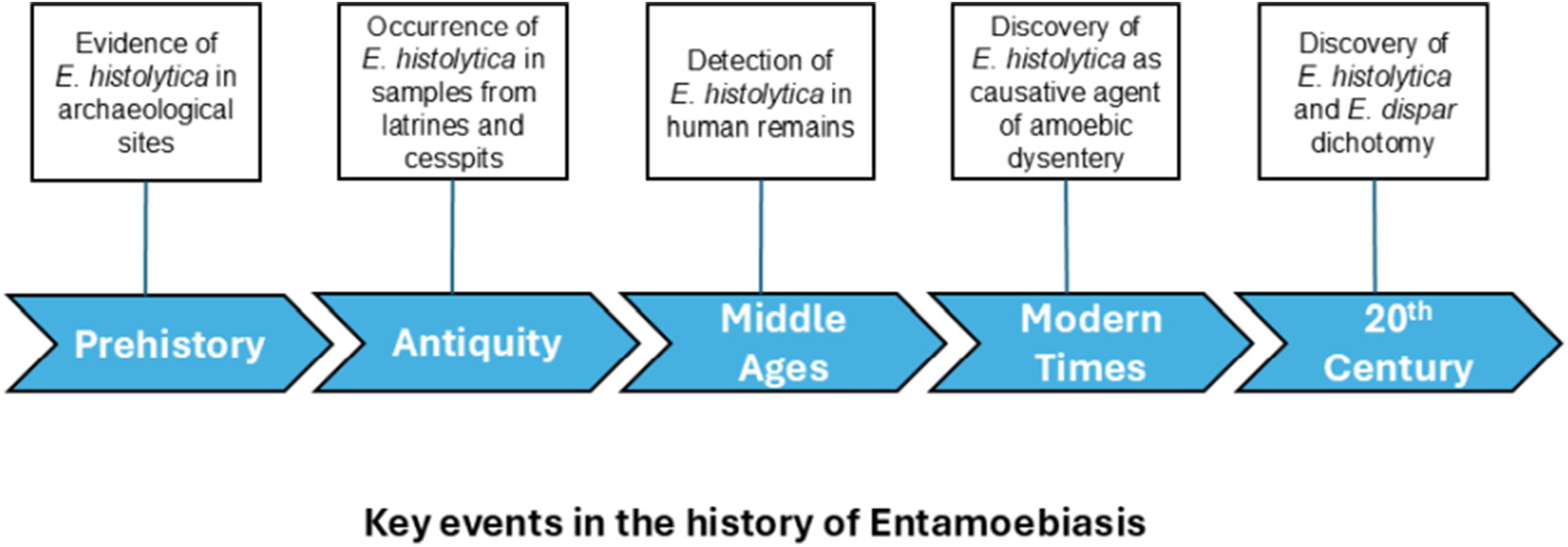
This review article summarizes the history of amoebic dysentery (entamoebiasis) caused by Entamoeba histolytica. Initially, Entamoeba species were thought to be the most primitive extant eukaryotes, but more recent research revealed that they emerged relatively late in evolutionary history. Paleoparasitological data suggest that E. histolytica has been a parasite of humans since ancient times and was probably spread throughout the world by man during early human migration. By the end of the 19th century, it was established that E. histolytica was the etiological agent of amoebic dysentery and liver abscess. The issue over pathogenic and non-pathogenic strains of E. histolytica was resolved in the 1980s by the discovery of the morphologically indistinguishable harmless sister species Entamoeba dispar. Being mainly a disease of tropical and subtropical low-income countries, entamoebiasis cases have increased among travellers and immigrants arriving from endemic regions in recent years.
Fully updated for the second edition, this text remains a comprehensive and current treatment of the cognitive neuroscience of memory. Featuring a new chapter on group differences in long-term memory, areas covered also include cognitive neuroscience methods, human brain mechanisms underlying long-term memory success, long-term memory failure, implicit memory, working memory, memory and disease, memory in animals, and recent developments in the field. Both spatial and temporal aspects of brain processing during different types of memory are emphasized. Each chapter includes numerous pedagogical tools, including learning objectives, background information, further reading, review questions, and figures. Slotnick also explores current debates in the field and critiques of popular views, portraying the scientific process as a constantly changing, iterative, and collaborative endeavor.
Studying deep-water shark species presents inherent challenges stemming from the difficulty in accessing their habitats, coupled with factors such as low population densities, intricate behaviours, and complex biological attributes. The integration of citizen scientists, particularly fishers, offers a valuable avenue to make use of their life-long insights and expertise, thus facilitating the acquisition of crucial data that can effectively enhance the realm of shark research. Our collaborative engagement with fishers since 2017 has yielded an extensive documentation concerning elasmobranchs in the Caribbean region of Puerto Rico providing a unique opportunity to formally record species hitherto unreported. This is exemplified by the first documentation of the smalltooth sandtiger shark (Odontaspis ferox (Risso, 1810)). Despite its broad geographic range and widespread distribution in temperate and tropical marine environments, there is a lack of comprehensive scientific understanding and limited available knowledge regarding this species. A noteworthy finding on December 30, 2020, near Rincón (northwest coast) in Puerto Rico, disclosed a large shark that an experienced fisher had captured as an unidentified by-catch at a depth of 325 m. Through an interdisciplinary approach using molecular (355 bp, Cytochrome Oxidase Subunit 1) and morphological techniques, we successfully confirmed the identity of the specimen as a female smalltooth sandtiger shark. Given the limited information available (e.g., diversity, abundance, behaviour, reproduction, distribution) on shark species in the coastal and deep waters of Puerto Rico, this report provides valuable new data that can significantly contribute to the conservation efforts to protect these enigmatic yet ecologically vital predators.