Refine listing
Actions for selected content:
228 results in 35Rxx
Multipeak solutions for fractional elliptic equations on conformal infinities
- Part of
-
- Journal:
- Proceedings of the Royal Society of Edinburgh. Section A: Mathematics , First View
- Published online by Cambridge University Press:
- 19 December 2025, pp. 1-55
-
- Article
- Export citation
-
We consider the following problem
on an asymptotically hyperbolic manifold \begin{equation*}\varepsilon^{2 s} P_{\hat{h}}^s u+u=u^p, \quad u \gt 0 \quad \text {on } \,(M, \hat{h}),\end{equation*} $(X, g^{+})$ with conformal infinity $(M,[\hat{h}])$, where $s\in (0,1)$, $P_{\hat{h}}^s$ is the fractional conformally invariant operators, $1 \lt p \lt \frac{n+2s}{n-2s}$. By Lyapunov–Schmidt reduction method, we prove the existence of solutions whose peaks collapse, as $\varepsilon$ goes to zero, to a $C^1$-stable critical point of the mean curvature $H$ for $0 \lt s \lt {1}/{2}$ or a $C^1$-stable critical point of a function involving the scalar curvature and the second fundamental form for ${1}/{2}\le s \lt 1$.


Normalized solutions of L2-supercritical NLS equations on non-compact metric graphs
- Part of
-
- Journal:
- Proceedings of the Royal Society of Edinburgh. Section A: Mathematics , First View
- Published online by Cambridge University Press:
- 11 December 2025, pp. 1-34
-
- Article
- Export citation
Monotonicity of positive solutions to equations involving fractional p-Laplacian in coercive epigraph
- Part of
-
- Journal:
- Proceedings of the Edinburgh Mathematical Society , First View
- Published online by Cambridge University Press:
- 10 December 2025, pp. 1-13
-
- Article
-
- You have access
- HTML
- Export citation
-
In this paper, we are concerned with the following Dirichlet problems for nonlinear equations involving the fractional $p$-Laplacian:
 \begin{equation*}\begin{cases}(-\Delta)_p^\alpha u=f(x,u,\nabla u),\ \ u \gt 0,\ \ \text{in}\ \ E,\\\ \ \ \ \ \ u\equiv0, \ \ \ \ \ \ \ \ \ \ \ \ \ \ \ \ \ \ \ \text{in}\ \ \mathbb{R}^{n}\setminus E,\end{cases}\end{equation*}
where $E \subseteq \mathbb{R}^{n}$ is a coercive epigraph, i.e., there exists a continuous function $\phi: \, \mathbb{R}^{n-1} \rightarrow \mathbb{R}$ satisfying
 \begin{equation*}\lim_{|x'|\rightarrow+\infty}\phi(x')=+\infty,\end{equation*}
such that $E:=\{x=(x',x_{n}) \in \mathbb{R}^{n}|\,x_{n} \gt \phi(x')\}$, where $x':= (x_{1},...,x_{n-1}) \in \mathbb{R}^{n-1}$. Under some mild assumptions on the nonlinearity $f(x,u,\nabla u)$, we prove strict monotonicity of positive solutions to the above Dirichlet problems involving fractional $p$-Laplacian in coercive epigraph $E$.
$E$.


On the Γ-limit of weighted fractional energies
- Part of
-
- Journal:
- Proceedings of the Royal Society of Edinburgh. Section A: Mathematics , First View
- Published online by Cambridge University Press:
- 01 December 2025, pp. 1-22
-
- Article
-
- You have access
- Open access
- HTML
- Export citation
-
Given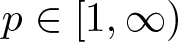 $p\in[1,\infty)$ and a bounded open set $\Omega\subset\mathbb{R}^d$ with Lipschitz boundary, we study the $\Gamma$-convergence of the weighted fractional seminorm
 \begin{equation*}[u]_{s,p,f}^p=\int_{\mathbb{R}^d} \int_{\mathbb{R}^d} \frac{|\tilde u(x)- \tilde u(y)|^p}{\|x-y\|^{d+sp}}\,f(x)\,f(y)\,\mathrm{d} x\,\mathrm{d} y,\end{equation*}
as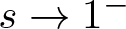 $s\to1^-$ for $u\in L^p(\Omega)$, where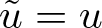 $\tilde u=u$ on $\Omega$ and $\tilde u=0$ on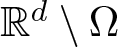 $\mathbb{R}^d\setminus\Omega$. Assuming that $(f_s)_{s\in(0,1)}\subset L^\infty(\mathbb{R}^d;[0,\infty))$ and $f\in\mathrm{Lip}_b(\mathbb{R}^d;(0,\infty))$ are such that $f_s\to f$ in $L^\infty(\mathbb{R}^d)$ as $s\to1^-$, we show that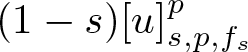 $(1-s)[u]_{s,p,f_s}^p$ $\Gamma$-converges to the Dirichlet $p$-energy weighted by $f^2$. In the case $p=2$, we also prove the convergence of the corresponding gradient flows.


Quantitative stability in fractional Hardy–Sobolev inequalities: the role of Euler–Lagrange equations
- Part of
-
- Journal:
- Proceedings of the Royal Society of Edinburgh. Section A: Mathematics , First View
- Published online by Cambridge University Press:
- 24 November 2025, pp. 1-39
-
- Article
- Export citation
-
This paper investigates sharp stability estimates for the fractional Hardy–Sobolev inequality:
 \begin{align*}\ \ \ \ \ \ \ \ \ \mu_{s,t}\left(\mathbb{R}^N\right) \left(\int_{\mathbb{R}^N} \frac{|u|^{2^*_s(t)}}{|x|^t} \,\mathrm{d}x \right)^{\frac{2}{2^*_s(t)}} \leq \int_{\mathbb{R}^N} \left|(-\Delta)^{\frac{s}{2}} u \right|^2 \,\mathrm{d}x, \quad \text{for all } u \in \dot{H}^s\left(\mathbb{R}^N\right)\end{align*}
where $s \in (0,1)$, $0 \lt t \lt 2s$, $N \gt 2s$ is an integer, and $2^*_s(t) = \frac{2(N-t)}{N-2s}$. Here, $\mu_{s,t}\left(\mathbb{R}^N\right)$ represents the best constant in the inequality. The primary focus is on the quantitative stability results of the above inequality and the corresponding Euler–Lagrange equation near a positive ground-state solution. Additionally, a qualitative stability result is established for the Euler–Lagrange equation, offering a thorough characterization of the Palais–Smale sequences for the associated energy functional. These results generalize the sharp quantitative stability results for the classical Sobolev inequality in $\mathbb{R}^N$, originally obtained by Bianchi and Egnell [J. Funct. Anal. 1991] as well as the corresponding critical exponent problem in $\mathbb{R}^N$, explored by Ciraolo, Figalli, and Maggi [Int. Math. Res. Not. 2017] in the framework of fractional calculus.


Global well-posedness and soliton resolution for the half-wave maps equation with rational data
- Part of
-
- Journal:
- Forum of Mathematics, Sigma / Volume 13 / 2025
- Published online by Cambridge University Press:
- 20 November 2025, e190
-
- Article
-
- You have access
- Open access
- HTML
- Export citation
-
We study the energy-critical half-wave maps equation:
 $$\begin{align*}\partial_t \mathbf{u} = \mathbf{u} \times |D| \mathbf{u} \end{align*}$$
for $\mathbf {u} : [0, T) \times \mathbb {R} \to \mathbb {S}^2$. Our main result establishes the global existence and uniqueness of solutions for all rational initial data $\mathbf {u}_0 : \mathbb {R} \to \mathbb {S}^2$. This demonstrates global well-posedness for a dense subset within the scaling-critical energy space $ \dot {H}^{1/2}(\mathbb {R}; \mathbb {S}^2) $. Furthermore, we prove soliton resolution for a dense subset of initial data in the energy space with uniform bounds for all higher Sobolev norms $\dot {H}^s$ for $s> 0$.
Our analysis utilizes the Lax pair structure of the half-wave maps equation on Hardy spaces in combination with an explicit flow formula. Extending these results, we establish global well-posedness for rational initial data (along with a soliton resolution result) for a generalized class of matrix-valued half-wave maps equations with target spaces in the complex Grassmannians $ \mathsf {Gr}_k(\mathbb {C}^d) $. Notably, this includes the complex projective spaces $ \mathbb {CP}^{d-1} \cong \mathsf {Gr}_1(\mathbb {C}^d) $ thereby extending the classical case of the target $\mathbb {S}^2 \cong \mathbb {CP}^1 $.


On a Cahn–Hilliard equation for the growth and division of chemically active droplets modelling protocells
- Part of
-
- Journal:
- European Journal of Applied Mathematics , First View
- Published online by Cambridge University Press:
- 06 November 2025, pp. 1-31
-
- Article
-
- You have access
- Open access
- HTML
- Export citation
Two uniqueness results in the inverse boundary value problem for the weighted p-Laplace equation
- Part of
-
- Journal:
- Forum of Mathematics, Sigma / Volume 13 / 2025
- Published online by Cambridge University Press:
- 15 September 2025, e147
-
- Article
-
- You have access
- Open access
- HTML
- Export citation
Blow-up of cylindrically symmetric solutions for fractional NLS
- Part of
-
- Journal:
- Proceedings of the Royal Society of Edinburgh. Section A: Mathematics , First View
- Published online by Cambridge University Press:
- 08 September 2025, pp. 1-17
-
- Article
-
- You have access
- Open access
- HTML
- Export citation
-
In this paper, we consider blow-up of solutions to the Cauchy problem for the following fractional Nonlinear Schrödinger Equation (NLS),
 \begin{equation*}\mathrm{i} \, \partial_t u=(-\Delta)^s u-|u|^{2 \sigma} u \quad \text{in} \,\, \mathbb{R} \times \mathbb{R}^N,\end{equation*}
where $N \geq 2$, $1/2 \lt s \lt 1$, and $0 \lt \sigma \lt 2s/(N-2s)$. In the mass critical and supercritical cases, we establish a criterion for blow-up of solutions to the problem for cylindrically symmetric data. The results extend the known ones with respect to blow-up of solutions to the problem for radially symmetric data.


On global fractional Calderón–Zygmund regularity for the fractional Dirichlet problem on Lipschitz domains
- Part of
-
- Journal:
- Proceedings of the Royal Society of Edinburgh. Section A: Mathematics , First View
- Published online by Cambridge University Press:
- 01 August 2025, pp. 1-31
-
- Article
- Export citation
-
Let $n\ge2$, $s\in(0,1)$, and $\Omega\subset\mathbb{R}^n$ be a bounded Lipschitz domain. In this paper, we investigate the global (higher-order) Sobolev regularity of weak solutions to the fractional Dirichlet problem
 \begin{equation*}\begin{cases}(-\Delta)^su=f \ \ & \text{in}\ \ \Omega,\\u=0 \ \ & \text{in}\ \ \mathbb{R}^n\setminus\Omega.\end{cases}\end{equation*}
Precisely, we prove that there exists a positive constant $\varepsilon\in(0,s]$ depending on n, s, and the Lipschitz constant of Ω such that, for any $t\in[\varepsilon,\min\{1+\varepsilon,2s\})$, when $f\in L^q(\Omega)$ with some $q\in(\frac{n}{2s-t},\infty]$, the weak solution u satisfies
 \begin{equation*}\|u\|_{W^{t,p}(\mathbb{R}^n)}\le C\|f\|_{L^q(\Omega)}\end{equation*}
for all $p\in[1,\frac{1}{t-\varepsilon})$. In particular, when Ω is a bounded C1 domain or a bounded Lipschitz domain satisfying the uniform exterior ball condition, the aforementioned global regularity estimates hold with $\varepsilon=s$ and they are sharp in this case. Moreover, if Ω is a bounded $C^{1,\kappa}$ domain with $\kappa\in(0,s)$ or a bounded Lipschitz domain satisfying the uniform exterior ball condition, we further show the global BMO-Sobolev regularity estimate
 \begin{equation*}\left\|(-\Delta)^{\frac{s}{2}}u\right\|_{\mathrm{BMO}(\mathbb{R}^n)}+\left\|\nabla^{s}u\right\|_{\mathrm{BMO}(\mathbb{R}^n)}\le C\|f\|_{L^q(\Omega)}\end{equation*}
for some $q\in(\frac{n}{s},\infty]$, which is sharp in the sense that the BMO norm can not be improved to the $L^\infty$ norm.


STABILITY RESULTS FOR NONLOCAL SERRIN-TYPE PROBLEMS, ANTISYMMETRIC HARNACK INEQUALITIES AND GEOMETRIC ESTIMATES
- Part of
-
- Journal:
- Bulletin of the Australian Mathematical Society / Volume 112 / Issue 2 / October 2025
- Published online by Cambridge University Press:
- 04 July 2025, pp. 394-396
- Print publication:
- October 2025
-
- Article
-
- You have access
- HTML
- Export citation
The evolution problem for the 1D nonlocal Fisher-KPP equation with a top hat kernel. Part 2. The initial-boundary value problem on a finite domain
- Part of
-
- Journal:
- European Journal of Applied Mathematics , First View
- Published online by Cambridge University Press:
- 04 July 2025, pp. 1-31
-
- Article
-
- You have access
- Open access
- HTML
- Export citation
-
In the second part of this series of papers, we address the same evolution problem that was considered in part 1 (see [16]), namely the nonlocal Fisher-KPP equation in one spatial dimension,
where \begin{equation*} u_t = D u_{xx} + u(1-\phi *u), \end{equation*} $\phi *u$ is a spatial convolution with the top hat kernel, $\phi (y) \equiv H\left (\frac {1}{4}-y^2\right )$, except that now we modify this to an associated initial-boundary value problem on the finite spatial interval $[0,a]$ rather than the whole real line. Boundary conditions are required at the end points of the interval, and we address the situations when these are of either Dirichlet or Neumann type. This model is a natural extension of the classical Fisher-KPP model, with the introduction of the simplest possible nonlocal effect into the saturation term. Nonlocal reaction-diffusion models arise naturally in a variety of (frequently biological or ecological) contexts, and as such it is of fundamental interest to examine their properties in detail, and to compare and contrast these with the well known properties of the classical Fisher-KPP model.


Correspondence between Pestov and Weitzenböck identities
- Part of
-
- Journal:
- Mathematical Proceedings of the Cambridge Philosophical Society / Volume 178 / Issue 3 / May 2025
- Published online by Cambridge University Press:
- 02 May 2025, pp. 443-463
- Print publication:
- May 2025
-
- Article
-
- You have access
- Open access
- HTML
- Export citation
Optimal transport on gas networks
- Part of
-
- Journal:
- European Journal of Applied Mathematics , First View
- Published online by Cambridge University Press:
- 16 April 2025, pp. 1-33
-
- Article
-
- You have access
- Open access
- HTML
- Export citation
-
Optimal transport tasks naturally arise in gas networks, which include a variety of constraints such as physical plausibility of the transport and the avoidance of extreme pressure fluctuations. To define feasible optimal transport plans, we utilize a $p$-Wasserstein metric and similar dynamic formulations minimizing the kinetic energy necessary for moving gas through the network, which we combine with suitable versions of Kirchhoff’s law as the coupling condition at nodes. In contrast to existing literature, we especially focus on the non-standard case $p \neq 2$ to derive an overdamped isothermal model for gases through $p$-Wasserstein gradient flows in order to uncover and analyze underlying dynamics. We introduce different options for modelling the gas network as an oriented graph including the possibility to store gas at interior vertices and to put in or take out gas at boundary vertices.


Determination of period matrix of double of surface with boundary via its DN map
- Part of
-
- Journal:
- Canadian Journal of Mathematics , First View
- Published online by Cambridge University Press:
- 07 April 2025, pp. 1-24
-
- Article
- Export citation
-
As is well-known, the conformal class of a surface M with boundary is determined by its Diriclet-to-Neumann (DN) map $\Lambda $. We propose an algorithm for determination of the b-period matrix $\mathbb {B}$ of the (Schottky) double of M via $\Lambda $.


Hardy and Rellich Inequalities with Bessel Pairs
- Part of
-
- Journal:
- Proceedings of the Edinburgh Mathematical Society / Volume 68 / Issue 3 / August 2025
- Published online by Cambridge University Press:
- 31 March 2025, pp. 825-842
-
- Article
-
- You have access
- Open access
- HTML
- Export citation
-
In this paper, we establish suitable characterisations for a pair of functions $(W(x),H(x))$ on a bounded, connected domain $\Omega \subset \mathbb{R}^n$ in order to have the following Hardy inequality:
 \begin{equation*}\int_{\Omega} W(x) |\nabla u|_A^2 dx \geq \int_{\Omega} |\nabla d|^2_AH(x)|u|^2 dx, \,\,\, u \in C^{1}_0(\Omega),\end{equation*}
where d(x) is a suitable quasi-norm (gauge), $|\xi|^2_A = \langle A(x)\xi, \xi \rangle$ for $\xi \in \mathbb{R}^n$ and A(x) is an n × n symmetric, uniformly positive definite matrix defined on a bounded domain $\Omega \subset \mathbb{R}^n$. We also give its Lp analogue. As a consequence, we present examples for a standard Laplacian on $\mathbb{R}^n$, Baouendi–Grushin operator, and sub-Laplacians on the Heisenberg group, the Engel group and the Cartan group. Those kind of characterisations for a pair of functions $(W(x),H(x))$ are obtained also for the Rellich inequality. These results answer the open problems of Ghoussoub-Moradifam [16].


Elliptic Pre-Complexes, Hodge-like Decompositions and Overdetermined Boundary-Value Problems
- Part of
-
- Journal:
- Forum of Mathematics, Sigma / Volume 13 / 2025
- Published online by Cambridge University Press:
- 05 March 2025, e51
-
- Article
-
- You have access
- Open access
- HTML
- Export citation
-
We solve a problem posed by Calabi more than 60 years ago, known as the Saint-Venant compatibility problem: Given a compact Riemannian manifold, generally with boundary, find a compatibility operator for Lie derivatives of the metric tensor. This problem is related to other compatibility problems in mathematical physics, and to their inherent gauge freedom. To this end, we develop a framework generalizing the theory of elliptic complexes for sequences of linear differential operators $(A_{\bullet })$ between sections of vector bundles. We call such a sequence an elliptic pre-complex if the operators satisfy overdetermined ellipticity conditions and the order of $A_{k+1}A_k$ does not exceed the order of $A_k$. We show that every elliptic pre-complex $(A_{\bullet })$ can be ‘corrected’ into a complex $({\mathcal {A}}_{\bullet })$ of pseudodifferential operators, where ${\mathcal {A}}_k - A_k$ is a zero-order correction within this class. The induced complex $({\mathcal {A}}_{\bullet })$ yields Hodge-like decompositions, which in turn lead to explicit integrability conditions for overdetermined boundary-value problems, with uniqueness and gauge freedom clauses. We apply the theory on elliptic pre-complexes of exterior covariant derivatives of vector-valued forms and double forms satisfying generalized algebraic Bianchi identities, thus resolving a set of compatibility and gauge problems, among which one is the Saint-Venant problem.


Solution theory of fractional SDEs in complete subcritical regimes
- Part of
-
- Journal:
- Forum of Mathematics, Sigma / Volume 13 / 2025
- Published online by Cambridge University Press:
- 24 January 2025, e12
-
- Article
-
- You have access
- Open access
- HTML
- Export citation
-
We consider stochastic differential equations (SDEs) driven by a fractional Brownian motion with a drift coefficient that is allowed to be arbitrarily close to criticality in a scaling sense. We develop a comprehensive solution theory that includes strong existence, path-by-path uniqueness, existence of a solution flow of diffeomorphisms, Malliavin differentiability and $\rho $-irregularity. As a consequence, we can also treat McKean-Vlasov, transport and continuity equations.

Strict Faber–Krahn-type inequality for the mixed local–nonlocal operator under polarization
- Part of
-
- Journal:
- Proceedings of the Edinburgh Mathematical Society / Volume 68 / Issue 2 / May 2025
- Published online by Cambridge University Press:
- 22 January 2025, pp. 506-525
-
- Article
- Export citation
-
Let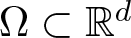 $\Omega \subset \mathbb{R}^d$ with $d\geq 2$ be a bounded domain of class ${\mathcal C}^{1,\beta }$ for some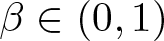 $\beta \in (0,1)$. For $p\in (1, \infty )$ and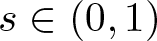 $s\in (0,1)$, let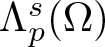 $\Lambda ^s_{p}(\Omega )$ be the first eigenvalue of the mixed local–nonlocal operator $-\Delta _p+(-\Delta _p)^s$ in Ω with the homogeneous nonlocal Dirichlet boundary condition. We establish a strict Faber–Krahn-type inequality for $\Lambda _{p}^s(\cdot )$ under polarization. As an application of this strict inequality, we obtain the strict monotonicity of $\Lambda _{p}^s(\cdot )$ over the annular domains and characterize the rigidity property of the balls in the classical Faber–Krahn inequality for $-\Delta _p+(-\Delta _p)^s$.


Well-posedness for strongly damped abstract Cauchy problems of fractional order
- Part of
-
- Journal:
- Proceedings of the Royal Society of Edinburgh. Section A: Mathematics , First View
- Published online by Cambridge University Press:
- 13 January 2025, pp. 1-27
-
- Article
- Export citation
-
Let X be a complex Banach space and B be a closed linear operator with domain $\mathcal{D}(B) \subset X,\,\, a,b,c,d\in\mathbb{R},$ and $0 \lt \beta \lt \alpha.$ We prove that the problem
 \begin{equation*}u(t) -(aB+bI)(g_{\alpha-\beta}\ast u)(t) -(cB+dI)(g_{\alpha}\ast u)(t) = h(t), \quad t\geq 0,\end{equation*}
where $g_{\alpha}(t)=t^{\alpha-1}/\Gamma(\alpha)$ and $h:\mathbb{R}_+\to X$ is given, has a unique solution for any initial condition on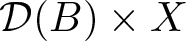 $\mathcal{D}(B)\times X$ as long as the operator B generates an ad-hoc Laplace transformable and strongly continuous solution family $\{R_{\alpha,\beta}(t)\}_{t\geq 0} \subset \mathcal{L}(X).$ It is shown that such a solution family exists whenever the pair $(\alpha,\beta)$ belongs to a subset of the set $(1,2]\times(0,1]$ and B is the generator of a cosine family or a C0-semigroup in $X.$ In any case, it also depends on certain compatibility conditions on the real parameters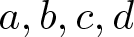 $a,b,c,d$ that must be satisfied.


