
Contents
JFM Rapids

Receptivity of the flow on the stagnation streamline of a blunt body in supersonic flow
-
- Published online by Cambridge University Press:
- 02 June 2026, R1
-
- Article
-
- You have access
- Open access
- HTML
- Export citation
Focus on Fluids

Stripes in granular avalanches: how segregation couples with vortices
-
- Published online by Cambridge University Press:
- 29 May 2026, F1
-
- Article
-
- You have access
- HTML
- Export citation
JFM Papers

Influence of Reynolds number on the pressure gradient of turbulent channel flow with heterogeneous roughness
-
- Published online by Cambridge University Press:
- 26 May 2026, A1
-
- Article
-
- You have access
- Open access
- HTML
- Export citation
-
Pressure-gradient measurements are reported for turbulent channel flows over six heterogeneous rough surfaces with $50\,\%$ roughness coverage, composed of P60 sandpaper patches arranged as streamwise-aligned strips, spanwise-aligned strips, or a checkerboard pattern of square patches. A new metric quantifies the relative pressure-gradient increase of heterogeneous surfaces compared with a homogeneous rough ( $100\,\%$ roughness coverage) surface. Above a surface-dependent critical Reynolds number, this metric $\Delta \varPi ^*$ becomes almost independent of $\textit{Re}_b$ for all investigated surfaces, whereas below this threshold a clear dependence is observed. Complementary hot-wire measurements provide insight into the corresponding flow fields. According to the flow field data, the surfaces exhibiting the smallest $\Delta \varPi ^*$ at low $\textit{Re}_b$ appear almost homogeneous to the flow, a feature that is not present at higher Reynolds number. Based on these observations the concept of a hydraulically heterogeneous surface is introduced. Surfaces with sandpaper patch dimensions of the order of the channel half-height can be perceived by the flow as homogeneous when the Reynolds number is low. As $\textit{Re}_b$ rises, surface heterogeneity translates into flow heterogeneity, which first intensifies in the transitionally heterogeneous regime, then approaches an almost self-similar state in the fully heterogeneous regime where $\Delta \varPi ^*$ is approximately constant. In this regime, comparable pressure gradients for surfaces that generate markedly different mean flow fields indicate that turbulent secondary flows induced by streamwise-aligned roughness strips have little effect on overall drag. Remarkably, the pressure gradient in this regime is captured well by a simple predictive model.


Enhanced Taylor–Aris dispersion in slender pulsatile annular channels: implications for perivascular solute transport
-
- Published online by Cambridge University Press:
- 26 May 2026, A2
-
- Article
-
- You have access
- Open access
- HTML
- Export citation
-
We derive expressions for the long-time effective dispersion coefficients of a solute in a slender annular channel with a spatiotemporally pulsating inner boundary. The problem is motivated by transport in perivascular spaces (PVSs) that are subjected to pulsations induced by travelling waves in the brain. Compared with steady flow, pulsations enhance the effective diffusivity and solute drift which scale quadratically with the wave amplitude, and depend on the ratio of wave-induced to bulk-flow-induced Péclet numbers, $ \textit{Pe}_c/ \textit{Pe}_b$. The mean enhancement in diffusivity can be decomposed into a bulk-flow-induced contribution and two wave-induced corrections: entropic slowdown, which reduces diffusivity due to solute lodging in the constrictions, for $ \textit{Pe}_c/ \textit{Pe}_b \lesssim \mathcal{O}(1)$, and shuttle dispersion which enhances diffusivity due to oscillatory solute transport for $ \textit{Pe}_c/ \textit{Pe}_b \gtrsim \mathcal{O}(1)$. The pulsations also induce an effective solute drift, that scales quadratically with the wave amplitude and linearly with $ \textit{Pe}_c/ \textit{Pe}_b$. The effective dispersion coefficients are sensitive to the annular cross-sectional area ratio with narrower geometries yielding stronger enhancements. For a representative murine PVS geometry subjected to pulsations under delta wave parameters, the mean enhancement of diffusivity, normalised by its value in steady flow, is $\mathcal{O}(10^{3})$ and the mean enhancement in effective solute drift is $-\mathcal{O}(1)$. Physiological mechanisms such as frequency-dependent wave amplitude, and approximately constant wave velocity across brain travelling waves, may diminish the enhancement magnitudes. The research presents a generalised framework for quantifying dispersion in spatiotemporally varying annular conduits and improves our understanding of perivascular solute transport.


Turbulent flow in a vertical channel driven by heat-releasing particles
-
- Published online by Cambridge University Press:
- 28 May 2026, A3
-
- Article
- Export citation
-
We study the particle-laden turbulent flow in a vertical channel where the particles release heat to the surrounding fluid and are settled by gravity. Three-dimensional direct numerical simulations combined with the Lagrange point-particle method are conducted for a range of Rayleigh numbers $ \textit{Ra}$ and Froude numbers $ \textit{Fr}$, where $ \textit{Ra}$ and $ \textit{Fr}$ measure the strength of released heat and gravitational settling. Two distinct regimes are observed. In the gravity-dominated falling regime, particles settle and drag the fluid downwards. In the buoyancy-driven rising regime, the heat released from the particles induces upward fluid motions, which carry the particles upwards. The volume-averaged temperature exhibits non-monotonic variations and reaches its maximum near the regime transition as $ \textit{Fr}$ increases. We propose scaling laws for the regime-transition boundary and Reynolds number that agree with the numerical results. Particles experience different preferential concentration for different parameters. In the falling regime, the Saffman lift pushes particles away from the near-wall region, while in the rising regime, particles accumulate near the wall due to the turbophoretic drift.


Modelling the influence of equilibrium menisci on capillary–gravity wave propagation and transmission through a surface-piercing barrier
-
- Published online by Cambridge University Press:
- 26 May 2026, A4
-
- Article
-
- You have access
- Open access
- HTML
- Export citation

Diffusiophoretic dispersion of a colloidal blob in two-dimensional porous media
-
- Published online by Cambridge University Press:
- 26 May 2026, A5
-
- Article
-
- You have access
- Open access
- HTML
- Export citation

A theory for foam-driven fracturing
-
- Published online by Cambridge University Press:
- 29 May 2026, A6
-
- Article
- Export citation
-
We provide a theoretical model for foam-driven fracturing of an elastic solid. Based on recent experimental observations, we take into consideration the influence of foam rheology and compressibility. We arrive at a nonlinear non-local system that couples the dynamics of one-dimensional compressible plug flow of foam and elastic deformation of the infinite solid. The model leads to time-dependent solutions for the evolution of the fracture’s profile shape and the pressure distribution in the film of foam. The solutions are affected by a dimensionless control parameter $\varPi _c$, which measures the influence of foam compressibility. An increase in $\varPi _c$ leads to more significant expansion of the gas phase in the fracture, and the spreading of the film of foam is enhanced. Asymptotic efforts were also made in the weakly compressible regime. The profile now admits a linear asymptote $h \propto \chi$ as $\chi \equiv x_f - x \to 0^+$, compared with the standard viscous asymptote $h \propto \chi ^{2/3}$ for hydraulic fracturing using incompressible Newtonian fluids. The pressure singularity now follows $p \propto \mbox{ln}\, \chi$, which is weaker than the standard $p \propto \chi ^{-1/3}$ singularity in the viscous regime. It is also observed that the profile shape and pressure distribution can be rescaled appropriately to collapse onto universal curves at intermediate times, with the length and pressure scales following the $x \propto t^{5/9}$, $h \propto t^{4/9}$ and $p \propto t^{-1/9}$ scaling laws. Using foam as the fracturing fluid may save water in practical applications such as enhanced gas recovery from shale rocks.


Coherent structures in Newtonian and viscoelastic turbulent planar jets
-
- Published online by Cambridge University Press:
- 29 May 2026, A7
-
- Article
-
- You have access
- Open access
- HTML
- Export citation

Flow structure in fully developed open-channel flow over a mussel bed
-
- Published online by Cambridge University Press:
- 29 May 2026, A8
-
- Article
-
- You have access
- Open access
- HTML
- Export citation
-
Eddy-resolving numerical simulations are used to investigate the fully developed open-channel flow over an array of large-scale bed roughness elements placed on a rough or on a smooth surface that mimics freshwater mussels partially buried in a gravel or in a sand bed, respectively. The rough surface corresponds to the scanned surface of a gravel bed with uniformly distributed bed roughness. In this paper we analyse how the surface mussel coverage density, BC, the roughness of the bed surface on which the mussels are placed and the filtering activity of the mussels (i.e. the local mass exchange occurring through the mussels’ syphons) affect the double-averaged profiles of the streamwise velocity, turbulent kinetic energy, Reynolds and dispersive shear stresses, and the equivalent bed roughness height, $ K_{S} $. Results show that similar to rough-bed boundary layers forming over sparse roughness elements in a deep environment (uniform free-stream velocity) and to those developing in a depth-limited environment (e.g. open channel), a multilayer analytical model can be used to approximate the double-averaged profile of the streamwise velocity over the flow depth, D, in the case of fully developed flow over a mussel bed. For similar values of BC and height of the protruding mussels, h, the scaling coefficient of the law-of-the-wake component supplementing the law-of-the-wall inside the inertial layer ( $h \lt z \lt D$) is found to be lower than values estimated for developing boundary layers over mussel beds. Results show that the equivalent roughness height increases monotonically with the surface mussel coverage density until BC ≈ 0.8, when the average distance between the mussels becomes sufficiently low for a skimming flow regime to develop over the top of the mussels. Bed roughness effects on the double-averaged variables are significant only for cases with $ \textit{BC} \lt 0.3$. Results also show that mussel-induced velocity streaks are generated over the top of the mussels and the average transverse spacing of the streaks, λ, decays with increasing BC for constant h. The variation of $ \lambda / K_{S} $ with the non-dimensional distance from the bed surface is similar to that observed for fully developed flow over a rough bed with distributed roughness except for very low surface mussel coverage densities (i.e. $ \textit{BC} \lt 0.02 $ ) when λ remains constant (i.e. $ \lambda / K_{S} $ ≈ 10).


Uncovering bistability phenomena in two-layer Couette flow experiments using non-local evolution equations
-
- Published online by Cambridge University Press:
- 29 May 2026, A9
-
- Article
-
- You have access
- Open access
- HTML
- Export citation

Waves in a shear flow: transition between the KH, Holmboe and Miles instability
-
- Published online by Cambridge University Press:
- 29 May 2026, A10
-
- Article
- Export citation
-
We study the generation of waves at the interface of two immiscible fluids, arising due to shear-driven, inviscid instabilities. The background profile is chosen to be the classic exponential velocity profile (Morland & Saffman, J. Fluid Mech., 1993, vol. 252, pp. 383–398) with a sharp density interface (stable stratification). At low Froude $(\sim O_m(1))$ and high Bond numbers ( $\sim O_m(100)$), relevant to geophysical and astrophysical situations, we demonstrate a novel (smooth) transition for the fastest growing mode: from the Kelvin–Helmholtz (KH) instability at density ratio $\delta = 0.9$ (ratio of upper to lower fluid densities) to the Holmboe (H) instability as $\delta \rightarrow 0.5$ and onwards to the Miles (J. Fluid Mech., 1957, vol. 3, issue 2, pp. 185–204) critical layer instability as $\delta \rightarrow 0.001$ (air–water). Notably, the Miles fastest growing mode with its (characteristic) sharp jump in (inviscid) Reynolds stress ( $\tau$) at the critical location, persists up to $\delta = 0.01$ i.e. up to ten times the air–water value. The vertical ( $z$) variation of the Reynolds stress (fastest mode), displays a qualitative change with increasing $\delta$; transitioning from having a sharp jump at the critical location for $\delta \ll 1$ (Miles) to smooth variation through this location for $\delta \geqslant 0.5$ (H). A theoretical explanation for this is presented. In the higher density ratio regime ( $0.5 \leqslant \delta \leqslant 0.9$), by comparing against stability results from the corresponding piecewise linear (PL) velocity profile, we show the possibility of the H and the KH instability in the exponential model. Simulations, solving the incompressible Euler’s equation with gravity and surface tension are reported. In the Miles regime ( $\delta =0.01$) excellent agreement with linear theory upto five wave periods is observed. As these waves saturate, tiny surface ripples appear. Increasing $\delta$ to $0.1$, finite-amplitude waves resulting from the instability display larger-amplitude ripples on their surface; these are reminiscent of Stokes waves with capillary effects. With further increase ( $\delta =0.5$), exponentially growing waves display a sheared cusp at the crest in the nonlinear regime. They emit spume droplets and resemble the asymmetric H waves in the simulations and experiments of Lawrence et al. (1998). At $\delta =0.9$, growing interfacial waves rapidly distort into classic KH spirals within five wave periods. Several comparisons reported between the PL and the exponential profile clarify the role of background profile curvature and the critical location. To our knowledge, this is the first demonstration of three canonical instabilities, within these background states and without usage of the Boussinesq approximation.


Integral-analysis-based diagnostics of turbulence model errors in skin friction
-
- Published online by Cambridge University Press:
- 29 May 2026, A11
-
- Article
-
- You have access
- Open access
- HTML
- Export citation
-
Error diagnostics for turbulence models have traditionally focused on engineering quantities of interest, such as the skin-friction coefficient $C_{\!f}$, most often by comparing the predicted $C_{\!f}$ against reference data. In wall-bounded turbulent boundary layers, however, $C_{\!f}$ results from several physical mechanisms – viscous effects, turbulence, pressure gradients and mean-flow development – whose relative importance depends on the flow conditions. Modelling errors in these mechanisms vary across turbulence closures, and identifying them offers valuable physical insight for model evaluation and improvement. We propose a diagnostics framework that systematically isolates and quantifies such errors using the angular momentum integral formulation. The method is applied to five transport-type Reynolds-averaged Navier–Stokes models in two test cases: a canonical zero-pressure-gradient flat-plate boundary layer, and flow over a three-dimensional hill. For the flat-plate case, comparison with direct numerical simulations data shows that all models reproduce $C_{\!f}$ reasonably well, but often through strong error cancellation, particularly between the turbulent torque and mean-flux contributions; individual terms can deviate by more than 20 % of $C_{\!f}$. For the hill case, where wall-resolved large-eddy simulations are used as the reference, errors are significantly larger. The dominant erroneous contribution differs by model and may exceed several times the local $C_{\!f}$, depending on streamwise position. In separated-flow regions, the error cancellation that was observed in the flat-plate case largely disappears for the hill case, and the leading source of error shifts between mechanisms. These results highlight the value of mechanism-resolved diagnostics, and provide guidance for targeted turbulence model improvements.


Asymmetric freezing of a sliding droplet on an inclined surface
-
- Published online by Cambridge University Press:
- 29 May 2026, A12
-
- Article
- Export citation

A viscoplastic slump on a horizontally oscillating plate
-
- Published online by Cambridge University Press:
- 29 May 2026, A13
-
- Article
-
- You have access
- Open access
- HTML
- Export citation
-
A thin, two-dimensional deposit of viscoplastic fluid is studied as it slumps atop a horizontal plate exhibiting in-plane oscillations. Numerical results are reported for a range of Bingham and oscillatory Reynolds numbers, and comparison is made with asymptotic results obtained for low oscillatory Reynolds numbers. When inertia is small, these flows become arrested as time $t\rightarrow \infty$, and approach a symmetric state where the maximum basal stress in a period of oscillation balances with the yield stress. An exact expression for this final shape is obtained. The deposit slumps further across the plate at small Bingham numbers and results in a thinner profile. The arrested shape is equivalent to the down-slope arrested state attained by viscoplastic fluid on an inclined plane, for an inclination angle that is related to the plate oscillation parameters and gravity. For a Herschel–Bulkley fluid, it is shown that small perturbations to the final shape decay as $t^{-2N/(N+2)}$ at late times, where $N$ is the fluid’s strain-rate power-law index. This decay rate is slower than from slumps driven solely by gravity, which is due to the differing physical mechanisms driving the approach to the arrested state. With forced oscillations, yielding occurs only within progressively shorter intervals of time about the maximum basal stress, whereas the inclined plane deposit is always yielded in some diminishing region at the base.


Interactions between internal solitary waves and porous surface canopies
-
- Published online by Cambridge University Press:
- 29 May 2026, A14
-
- Article
-
- You have access
- Open access
- HTML
- Export citation

Lattice Boltzmann modelling of molecular interaction governing multiphase flow in nanoporous media
-
- Published online by Cambridge University Press:
- 29 May 2026, A15
-
- Article
- Export citation

Measured multiple flow states in quasi-two-dimensional turbulent thermal convection with aspect ratio 10
-
- Published online by Cambridge University Press:
- 29 May 2026, A16
-
- Article
- Export citation
-
We report an experimental investigation of turbulent Rayleigh–Bénard convection in a quasi-two-dimensional rectangular cell of large aspect ratio ( $\varGamma = 10$) over the Rayleigh number range $5.4\times 10^7 \leqslant Ra \leqslant 7.2\times 10^9$ and Prandtl number range $4.3 \leqslant \textit{Pr} \leqslant 67.3$. Planar particle image velocimetry measurements show that the flow self-organises into several horizontally aligned convection rolls, and repeated experiments under identical parameters (both $Ra$ and $\textit{Pr}$) reveal that the number of rolls varies within the range of 3–7 with 6 being the most probable, which demonstrates the presence of multiple flow states. When $\textit{Pr}$ is increased to 67.3, the number of roll-like structures increases significantly, indicating a structural transition from a roll-dominated to a plume-dominated flow. This transition is reflected in the global momentum transport, for $\textit{Pr} \leqslant 18.3$, the Reynolds number scales as $\textit{Re} \sim Ra^{0.58}\textit{Pr}^{-0.97}$, whereas the scaling is changed to $\textit{Re} \sim Ra^{0.72}$ when $\textit{Pr}$ reaches 67.3. Within individual rolls, we further examine the Reynolds numbers based on horizontal and vertical velocity components, $\textit{Re}_{u,\textit{roll}}$ and $\textit{Re}_{w,\textit{roll}}$, and find that the former increases while the latter decreases with roll size (quantified as the aspect ratio of the roll $\varGamma _{\textit{roll}}$) due to continuity constraints, with their ratio following $\textit{Re}_{w,\textit{roll}}/\textit{Re}_{u,\textit{roll}} \sim \varGamma _{\textit{roll}}^{-0.61}$. We impose different initial flow conditions (roll structures) with controlled perturbations and demonstrate that the initial condition can influence the final turbulent state. We show that the number of horizontally aligned rolls regulates the global transport: a larger number of rolls induces greater vertical momentum and heat transfer. Our study provides the first systematic experimental evidence of multiple flow states in large aspect ratio turbulent Rayleigh–Bénard convection and clarify how these states influence global transport.


Reynolds number invariance in the coherent structures of wall-bounded turbulence
-
- Published online by Cambridge University Press:
- 29 May 2026, A17
-
- Article
-
- You have access
- Open access
- HTML
- Export citation
-
Estimation of instantaneous and statistical properties of wall-bounded turbulence across different Reynolds numbers has significant applications in scientific research and engineering, where the key challenge is to identify the Reynolds number invariance underlying the varying flow properties as Reynolds number changes. In this study, we develop a refined inner–outer interaction model (IOIM) that isolates the footprints of large-scale structures populating within a prescribed wall-normal range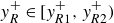 $y_{R}^+ \in [ y_{R1}^+ , y_{R2}^+ )$. When the reference layers are located within $ 80 \leqslant y_{R1}^+ \lt y_{R2}^+ \leqslant 0.3\textit{Re}_\tau$, the energy spectral densities of the isolated large-scale structures, including the wall-attached and wall-detached eddies, are found to be independent of Reynolds numbers with direct numerical simulations spanning $ \textit{Re}_\tau \sim O(10^2)$– $O(10^3)$. The spectral energy densities of the near-wall small-scale motions also show little Reynolds number dependence. The increase in near-wall turbulent kinetic energy with Reynolds number is explained from the identified Reynolds number invariance of coherent structures. Meanwhile, certain amplitude and scale modulation effects caused by large-scale structures are found to make the distribution patterns of fluctuation amplitudes and scales of near-wall structures more susceptible to Reynolds number influence. The findings of this study provide insights for the developments of predictive models for wall-bounded turbulence across different Reynolds numbers.


Stability of radially expanding thin liquid sheets: a modified thinning model
-
- Published online by Cambridge University Press:
- 29 May 2026, A18
-
- Article
- Export citation