Contents
Article
On the Finiteness length of some soluble linear groups
- Part of:
-
- Published online by Cambridge University Press:
- 21 April 2021, pp. 1209-1243
-
- Article
- Export citation
-
Given a commutative unital ring R, we show that the finiteness length of a group G is bounded above by the finiteness length of the Borel subgroup of rank one $\textbf {B}_2^{\circ }(R)=\left ( \begin {smallmatrix} * & * \\ 0 & * \end {smallmatrix}\right )\leq\operatorname {\textrm {SL}}_2(R)$ whenever G admits certain R-representations with metabelian image. Combined with results due to Bestvina–Eskin–Wortman and Gandini, this gives a new proof of (a generalization of) Bux’s equality on the finiteness length of S-arithmetic Borel groups. We also give an alternative proof of an unpublished theorem due to Strebel, characterizing finite presentability of Abels’ groups $\textbf {A}_n(R) \leq \operatorname {\textrm {GL}}_n(R)$ in terms of n and $\textbf {B}_2^{\circ }(R)$. This generalizes earlier results due to Remeslennikov, Holz, Lyul’ko, Cornulier–Tessera, and points out to a conjecture about the finiteness length of such groups.

Simple peeling of planar maps with application to site percolation
- Part of:
-
- Published online by Cambridge University Press:
- 26 February 2021, pp. 907-941
-
- Article
- Export citation
The Parisi formula is a Hamilton–Jacobi equation in Wasserstein space
- Part of:
-
- Published online by Cambridge University Press:
- 28 January 2021, pp. 607-629
-
- Article
- Export citation
Equivariant cohomology of torus orbifolds
- Part of:
-
- Published online by Cambridge University Press:
- 20 November 2020, pp. 299-328
-
- Article
- Export citation
Spaces of knotted circles and exotic smooth structures
- Part of:
-
- Published online by Cambridge University Press:
- 24 August 2020, pp. 1-23
-
- Article
-
- You have access
- Open access
- Export citation
-
Suppose that $N_1$ and $N_2$ are closed smooth manifolds of dimension n that are homeomorphic. We prove that the spaces of smooth knots,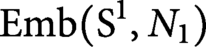 $ \operatorname {\mathrm {Emb}}(\mathrm {S}^1, N_1)$ and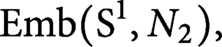 $ \operatorname {\mathrm {Emb}}(\mathrm {S}^1, N_2),$ have the same homotopy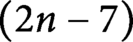 $(2n-7)$-type. In the four-dimensional case, this means that the spaces of smooth knots in homeomorphic $4$-manifolds have sets $\pi _0$ of components that are in bijection, and the corresponding path components have the same fundamental groups $\pi _1$. The result about $\pi _0$ is well-known and elementary, but the result about $\pi _1$ appears to be new. The result gives a negative partial answer to a question of Oleg Viro. Our proof uses the Goodwillie–Weiss embedding tower. We give a new model for the quadratic stage of the Goodwillie–Weiss tower, and prove that the homotopy type of the quadratic approximation of the space of knots in N does not depend on the smooth structure on N. Our results also give a lower bound on $\pi _2 \operatorname {\mathrm {Emb}}(\mathrm {S}^1, N)$. We use our model to show that for every choice of basepoint, each of the homotopy groups, $\pi _1$ and $\pi _2,$ of $ \operatorname {\mathrm {Emb}}(\mathrm {S}^1, \mathrm {S}^1\times \mathrm {S}^3)$ contains an infinitely generated free abelian group.


Automorphisms and opposition in spherical buildings of exceptional type, I
- Part of:
-
- Published online by Cambridge University Press:
- 05 July 2021, pp. 1517-1578
-
- Article
- Export citation
-
To each automorphism of a spherical building, there is a naturally associated opposition diagram, which encodes the types of the simplices of the building that are mapped onto opposite simplices. If no chamber (that is, no maximal simplex) of the building is mapped onto an opposite chamber, then the automorphism is called domestic. In this paper, we give the complete classification of domestic automorphisms of split spherical buildings of types $\mathsf {E}_6$, $\mathsf {F}_4$, and $\mathsf {G}_2$. Moreover, for all split spherical buildings of exceptional type, we classify (i) the domestic homologies, (ii) the opposition diagrams arising from elements of the standard unipotent subgroup of the Chevalley group, and (iii) the automorphisms with opposition diagrams with at most two distinguished orbits encircled. Our results provide unexpected characterizations of long root elations and products of perpendicular long root elations in long root geometries, and analogues of the density theorem for connected linear algebraic groups in the setting of Chevalley groups over arbitrary fields.


Some local maximum principles along Ricci flows
- Part of:
-
- Published online by Cambridge University Press:
- 04 November 2020, pp. 329-348
-
- Article
- Export citation
-
In this work, we obtain a local maximum principle along the Ricci flow $g(t)$ under the condition that $\mathrm {Ric}(g(t))\le {\alpha } t^{-1}$ for $t>0$ for some constant ${\alpha }>0$. As an application, we will prove that under this condition, various kinds of curvatures will still be nonnegative for $t>0$, provided they are non-negative initially. These extend the corresponding known results for Ricci flows on compact manifolds or on complete noncompact manifolds with bounded curvature. By combining the above maximum principle with the Dirichlet heat kernel estimates, we also give a more direct proof of Hochard’s [15] localized version of a maximum principle by Bamler et al. [1] on the lower bound of different kinds of curvatures along the Ricci flows for $t>0$.


Nontame Morse–Smale flows and odd Chern–Weil theory
- Part of:
-
- Published online by Cambridge University Press:
- 06 July 2021, pp. 1579-1624
-
- Article
- Export citation
On a family of torsional creep problems in Finsler metrics
- Part of:
-
- Published online by Cambridge University Press:
- 02 September 2020, pp. 24-41
-
- Article
- Export citation
Torsion in thin regions of Khovanov homology
-
- Published online by Cambridge University Press:
- 29 January 2021, pp. 630-654
-
- Article
- Export citation
-
In the integral Khovanov homology of links, the presence of odd torsion is rare. Homologically thin links, that is, links whose Khovanov homology is supported on two adjacent diagonals, are known to contain only $\mathbb {Z}_2$ torsion. In this paper, we prove a local version of this result. If the Khovanov homology of a link is supported on two adjacent diagonals over a range of homological gradings and the Khovanov homology satisfies some other mild restrictions, then the Khovanov homology of that link has only $\mathbb {Z}_2$ torsion over that range of homological gradings. These conditions are then shown to be met by an infinite family of three-braids, strictly containing all three-strand torus links, thus giving a partial answer to Sazdanović and Przytycki’s conjecture that three-braids have only $\mathbb {Z}_2$ torsion in Khovanov homology. We use these computations and our main theorem to obtain the integral Khovanov homology for all links in this family.


Tracial approximation in simple ${C}^{\ast }$-algebras
- Part of:
-
- Published online by Cambridge University Press:
- 26 February 2021, pp. 942-1004
-
- Article
- Export citation
-
We revisit the notion of tracial approximation for unital simple $C^*$-algebras. We show that a unital simple separable infinite dimensional $C^*$-algebra A is asymptotically tracially in the class of $C^*$-algebras with finite nuclear dimension if and only if A is asymptotically tracially in the class of nuclear $\mathcal {Z}$-stable $C^*$-algebras.


Density theorems for anisotropic point configurations
- Part of:
-
- Published online by Cambridge University Press:
- 03 May 2021, pp. 1244-1276
-
- Article
- Export citation
Möbius automorphisms of surfaces with many circles
- Part of:
-
- Published online by Cambridge University Press:
- 02 September 2020, pp. 42-71
-
- Article
- Export citation
Potential kernels for radial Dunkl Laplacians
- Part of:
-
- Published online by Cambridge University Press:
- 20 April 2021, pp. 1005-1033
-
- Article
- Export citation
-
We derive two-sided bounds for the Newton and Poisson kernels of the W-invariant Dunkl Laplacian in the geometric complex case when the multiplicity $k(\alpha )=1$ i.e., for flat complex symmetric spaces. For the invariant Dunkl–Poisson kernel $P^{W}(x,y)$, the estimates are where the
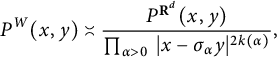 $$ \begin{align*} P^{W}(x,y)\asymp \frac{P^{\mathbf{R}^{d}}(x,y)}{\prod_{\alpha> 0 \ }|x-\sigma_{\alpha} y|^{2k(\alpha)}}, \end{align*} $$ $\alpha $’s are the positive roots of a root system acting in $\mathbf {R}^{d}$, the $\sigma _{\alpha }$’s are the corresponding symmetries and $P^{\mathbf {R}^{d}}$ is the classical Poisson kernel in ${\mathbf {R}^{d}}$. Analogous bounds are proven for the Newton kernel when $d\ge 3$.
The same estimates are derived in the rank one direct product case $\mathbb {Z}_{2}^{N}$ and conjectured for general W-invariant Dunkl processes.
As an application, we get a two-sided bound for the Poisson and Newton kernels of the classical Dyson Brownian motion and of the Brownian motions in any Weyl chamber.


Cyclicity of elliptic curves modulo primes in arithmetic progressions
- Part of:
-
- Published online by Cambridge University Press:
- 03 May 2021, pp. 1277-1309
-
- Article
- Export citation
Shortest paths in arbitrary plane domains
- Part of:
-
- Published online by Cambridge University Press:
- 09 November 2020, pp. 349-367
-
- Article
- Export citation
-
Let $\Omega $ be a connected open set in the plane and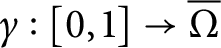 $\gamma : [0,1] \to \overline {\Omega }$ a path such that $\gamma ((0,1)) \subset \Omega $. We show that the path $\gamma $ can be “pulled tight” to a unique shortest path which is homotopic to $\gamma $, via a homotopy h with endpoints fixed whose intermediate paths $h_t$, for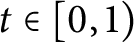 $t \in [0,1)$, satisfy $h_t((0,1)) \subset \Omega $. We prove this result even in the case when there is no path of finite Euclidean length homotopic to $\gamma $ under such a homotopy. For this purpose, we offer three other natural, equivalent notions of a “shortest” path. This work generalizes previous results for simply connected domains with simple closed curve boundaries.


Combinatorics of the geometry of Wilson loop diagrams II: Grassmann necklaces, dimensions, and denominators
- Part of:
-
- Published online by Cambridge University Press:
- 23 July 2021, pp. 1625-1672
-
- Article
- Export citation
-
Wilson loop diagrams are an important tool in studying scattering amplitudes of SYM $N=4$ theory and are known by previous work to be associated to positroids. In this paper, we study the structure of the associated positroids, as well as the structure of the denominator of the integrand defined by each diagram. We give an algorithm to derive the Grassmann necklace of the associated positroid directly from the Wilson loop diagram, and a recursive proof that the dimension of these cells is thrice the number of propagators in the diagram. We also show that the ideal generated by the denominator in the integrand is the radical of the ideal generated by the product of Grassmann necklace minors.

Moves on k-graphs preserving Morita equivalence
- Part of:
-
- Published online by Cambridge University Press:
- 28 January 2021, pp. 655-685
-
- Article
-
- You have access
- Open access
- HTML
- Export citation
-
We initiate the program of extending to higher-rank graphs (k-graphs) the geometric classification of directed graph $C^*$-algebras, as completed in Eilers et al. (2016, Preprint). To be precise, we identify four “moves,” or modifications, one can perform on a k-graph $\Lambda $, which leave invariant the Morita equivalence class of its $C^*$-algebra $C^*(\Lambda )$. These moves—in-splitting, delay, sink deletion, and reduction—are inspired by the moves for directed graphs described by Sørensen (Ergodic Th. Dyn. Syst. 33(2013), 1199–1220) and Bates and Pask (Ergodic Th. Dyn. Syst. 24(2004), 367–382). Because of this, our perspective on k-graphs focuses on the underlying directed graph. We consequently include two new results, Theorem 2.3 and Lemma 2.9, about the relationship between a k-graph and its underlying directed graph.


Further inequalities and properties of p-inner parallel bodies
- Part of:
-
- Published online by Cambridge University Press:
- 09 November 2020, pp. 368-380
-
- Article
- Export citation
-
A. R. Martínez Fernández obtained upper bounds for quermassintegrals of the p-inner parallel bodies: an extension of the classical inner parallel body to the $L_p$-Brunn-Minkowski theory. In this paper, we establish (sharp) upper and lower bounds for quermassintegrals of p-inner parallel bodies. Moreover, the sufficient and necessary conditions of the equality case for the main inequality are obtained, which characterize the so-called tangential bodies.

Involution pipe dreams
- Part of:
-
- Published online by Cambridge University Press:
- 14 May 2021, pp. 1310-1346
-
- Article
-
- You have access
- Open access
- HTML
- Export citation
-
Involution Schubert polynomials represent cohomology classes of K-orbit closures in the complete flag variety, where K is the orthogonal or symplectic group. We show they also represent $\mathsf {T}$-equivariant cohomology classes of subvarieties defined by upper-left rank conditions in the spaces of symmetric or skew-symmetric matrices. This geometry implies that these polynomials are positive combinations of monomials in the variables $x_i + x_j$, and we give explicit formulas of this kind as sums over new objects called involution pipe dreams. Our formulas are analogues of the Billey–Jockusch–Stanley formula for Schubert polynomials. In Knutson and Miller’s approach to matrix Schubert varieties, pipe dream formulas reflect Gröbner degenerations of the ideals of those varieties, and we conjecturally identify analogous degenerations in our setting.

