To save content items to your account,
please confirm that you agree to abide by our usage policies.
If this is the first time you use this feature, you will be asked to authorise Cambridge Core to connect with your account.
Find out more about saving content to .
To save content items to your Kindle, first ensure no-reply@cambridge.org
is added to your Approved Personal Document E-mail List under your Personal Document Settings
on the Manage Your Content and Devices page of your Amazon account. Then enter the ‘name’ part
of your Kindle email address below.
Find out more about saving to your Kindle.
Note you can select to save to either the @free.kindle.com or @kindle.com variations.
‘@free.kindle.com’ emails are free but can only be saved to your device when it is connected to wi-fi.
‘@kindle.com’ emails can be delivered even when you are not connected to wi-fi, but note that service fees apply.
Compelling evidence claims that gut microbial dysbiosis may be causally associated with major depressive disorder (MDD), with a particular focus on Alistipes. However, little is known about the potential microbiota–gut–brain axis mechanisms by which Alistipes exerts its pathogenic effects in MDD.
Methods
We collected data from 16S rDNA amplicon sequencing, untargeted metabolomics, and multimodal brain magnetic resonance imaging from 111 MDD patients and 102 healthy controls. We used multistage linked analyses, including group comparisons, correlation analyses, and mediation analyses, to explore the relationships between the gut microbiome (Alistipes), fecal metabolome, brain imaging, and behaviors in MDD.
Results
Gut microbiome analysis demonstrated that MDD patients had a higher abundance of Alistipes relative to controls. Partial least squares regression revealed that the increased Alistipes was significantly associated with fecal metabolome in MDD, involving a range of metabolites mainly enriched for amino acid, vitamin B, and bile acid metabolism pathways. Correlation analyses showed that the Alistipes-related metabolites were associated with a wide array of brain imaging measures involving gray matter morphology, spontaneous brain function, and white matter integrity, among which the brain functional measures were, in turn, associated with affective symptoms (anxiety and anhedonia) and cognition (sustained attention) in MDD. Of more importance, further mediation analyses identified multiple significant mediation pathways where the brain functional measures in the visual cortex mediated the associations of metabolites with behavioral deficits.
Conclusion
Our findings provide a proof of concept that Alistipes and its related metabolites play a critical role in the pathophysiology of MDD through the microbiota–gut–brain axis.
This article explores the evolution of Chinese terminology for American cochineal to study global material culture in its local and trans-regional contexts. As the most highly valued insect-derived source of red colourant, American cochineal was introduced to China in the sixteenth century, with trade reaching its peak between the 1820s and mid-1870s. Since the early eighteenth century, various Chinese names emerged for cochineal; different terms were applied by different socioeconomic groups, though most were eventually forgotten. This article examines the emergence, spread, and persistence of predominant terms, alongside the obsolescence of others, within the context of Sino-European and regional knowledge exchange, trade dynamics, and scientific understanding of cochineal. The analysis demonstrates the evolution of Chinese terminology for cochineal was intricately linked to shifts within the intertwined spheres of global, regional, and local histories. It also reveals the coexistence and disconnection among various forms of global-local ‘connectivity’ through the linguistic dimensions concerning cochineal’s presence in China.
This study investigates two clayey facies from the Bomkoul area in the littoral region of Cameroon for their suitability as fired clay building products. The field study consisted of a geological survey and a geotechnical mission (G0). Assessment of the raw clayey materials included their mineralogy, particle size, determination of Atterberg limits, density and shear stress. Firing properties (shrinkage, water absorption and flexural strength) at 900−1100°C were also determined. The two main facies observed in the field are the mottled red/yellow grey clays from surface ‘A’ with a thickness of 2.0–2.5 m and the deep blackish fossiliferous schisteous grey clays ‘B’ with a thickness of 8−10 m. Estimation based on boreholes revealed a minimum of 1,400,000 tons of clayey materials. These reserves will supply a small brick-manufacturing unit for a minimum period of 25 years at an extraction rate of 50,000 tons per year. The main clay minerals of both samples are kaolinite (35% and 49%) and illite (1–11%). Both samples contain quartz (47% and 49%) as non-clay minerals, associated with a small amount of anatase (0.5–2.6%) and trace hematite (<1%). The major oxides are SiO2 (71–76%) and Al2O3 (14%). The raw clayey material ‘A’ was finer and more plastic than the ‘B’ facies. The technological properties of the fired bricks obtained from the ‘A’ facies showed greater potential than the ‘B’ facies in terms of sonority and flexural strength. A mixture made of 40% ‘A’ and 60% ‘B’ yielded satisfactory brick properties at 1050°C.
Entangled vortex filaments are essential to turbulence, serving as coherent structures that govern nonlinear fluid dynamics and support the reconstruction of fluid fields to reveal statistical properties. This study introduces a quantum implicit representation of vortex filaments in turbulence, employing a levelset method that models the filaments as the intersection of the real and imaginary zero iso-surfaces of a complex scalar field. Describing the fluid field via the scalar field offers distinct advantages in capturing complex structures, topological properties and fluid dynamics, while opening new avenues for innovative solutions through quantum computing platforms. The representation is reformulated into an eigenvalue problem for Hermitian matrices, enabling the conversion of velocity fields into complex scalar fields that embed the vortex filaments. The resulting optimisation is addressed using a variational quantum eigensolver, with Pauli operator truncation and deep learning techniques applied to improve efficiency and reduce noise. The proposed quantum framework achieves a near-linear time complexity and a exponential storage reduction while maintaining a balance of accuracy, robustness and versatility, presenting a promising tool for turbulence analysis, vortex dynamics research, and machine learning dataset generation.
This article considers a general class of varying coefficient models defined by a set of moment equalities and/or inequalities, where unknown functional parameters are not necessarily point-identified. We propose an inferential procedure for a subvector of the varying parameters and establish the asymptotic validity of the resulting confidence sets uniformly over a broad family of data-generating processes. We also propose a practical specification test for a set of necessary conditions of our model. Monte Carlo studies show that the proposed methods have good finite sample properties. We apply our method to estimate the return to education in China using its 1%-population census data from 2005.
The Bray–Liebhafsky reaction is one of many intricate chemical systems that is known to exhibit periodic behaviour. Although the underlying chemistry is somewhat complicated and involves at least ten chemical species, in a recent work we suggested a reduced two-component model of the reaction involving the concentrations of iodine and iodous acid. Although it is drastically simplified, this reduced system retains enough structure so as to exhibit many of the oscillatory characteristics seen in experimental analyses. Here, we consider the possibility of spatial patterning in a nonuniformly mixed solution. Since many practical demonstrations of chemical oscillations are undertaken using circular containers such as beakers or Petri dishes, we develop both linearized and nonlinear pattern solutions in terms of cylindrical coordinates. These results are complemented by an analysis of the patterning that might be possible within a rectangular domain. The simulations give compelling evidence that spatial patterning may well be feasible in the Bray–Liebhafsky process.
We introduce the mean topological dimension of random bundle transformations associated with an infinite countable discrete amenable group action and show that continuous bundle random dynamical systems for amenable groups with finite fibre topological entropy have zero mean topological dimensions.
Potato (Solanum tuberosum L.) is crucial for food security in Rwanda, but its production growth has slowed. Improved potato varieties are urgently needed for Rwanda potato farmers. Crop breeding can effectively support smallholder farmers when it aligns with their environmental conditions and preferences. Additionally, integrating citizen science into variety development can enhance variety adoption and suitability for smallholder farmers. We assessed the insights from a crop trial following a triadic comparison of technology options (tricot) approach, linking the results with environmental, socio-economic, and on-station trial data. Under a tricot trial, 460 farmers tested eleven potato varieties, randomly allocated in incomplete blocks of three, allowing each farmer to test and compare three varieties. Biological data, reflecting breeding and variety genotypic values, were generated from multi-environmental tests conducted during 2018–2019 to evaluate the adaptability of new varieties. This research revealed that Rwandan farmers preferred the pre-1990 varieties (Cruza and Kirundo), while Gisubizo and Kazeneza, post-2018 varieties, were also considered competitive. Farmers’ preferences were influenced by diverse environmental and socio-economic conditions, with taste being crucial for home consumption and yield prioritized for market sales. Additionally, seasonal temperatures influenced the yield performance ranking of potato varieties across regions, while economic considerations and gender dynamics shaped different patterns of variety preferences. Despite challenges in aligning on-station and on-farm data, our integrated approach provides actionable insights for breeding programmes to develop potato varieties that better align with farmers’ needs, as well as environmental and socio-economic conditions. This innovative method can enhance breeding efficiency, variety adoption, and potato productivity, contributing to food security and agricultural sustainability.
World heritage has become UNESCO’s flagship programme, and it is a site of active state engagement. At the crux of that engagement is the prestigious World Heritage List. This engagement is regularly analysed as pursuits of national prestige. In this article, I advance a Bourdieusian analysis of world heritage as a field that generates international cultural prestige. I identify humanity as the field’s doxa that allows for a vertical separation and the generation of more-than-national cultural value. I show how states’ desire for this prestige jeopardised the field’s autonomy at a critical juncture in 2010 and analyse the field’s aftermath as involving fraught attempts by states to discursively reconstruct the field’s vertical and functional separations in the quest for international cultural prestige. This reconstruction involves nothing less than reinterpreting humanity as the community-of-states, pointing at once to humanity’s indispensability for more-than-national value and undermining its ability to generate that value.
This work aims to address two main scientific objectives. First, it seeks to rigorously compare ice thickness estimates from GPR datasets with those derived from various modelling approaches. Second, it examines warm and cold ice areas identified by GPR in relation to 2D thermal modelling performed along selected profiles. The analyses focus on two nearby glaciers in Greenland, surveyed in different years (2014 and 2024) and seasons (August and February) and with different GPR antennas, namely 50 MHz unshielded and 100 MHz shielded. We found that global-scale ice thickness models provide relatively accurate volume estimates at regional scale, while they have limitations in local accuracy, as well as the ice thickness models, especially when the bedrock topography derived from GPR data is complex. 2D thermal modelling results were only partially consistent with warm and cold ice occurrence derived from GPR data, indicating the unique and complex thermal structures of polythermal glaciers with irregular shape and geometry. Due to the differences between the two surveys, we believe that the results are relevant not only to the specific test site, but also to a wider range of geographical and climatic conditions and may provide useful guidance for similar applications.
The resonance constraint holds that something can benefit someone only if it bears a connection to her favoring attitudes. It is widely taken as a decisive reason to reject objective views of well-being since they do not guarantee such a connection. I aim to show that this is a mistake and that felt-quality hedonism about well-being can in fact meet the constraint. First, I argue that the typical way of putting the constraint is misguided in its demandingness. I then introduce alternatives and argue that the most plausible among them are compatible with felt-quality hedonism. I proceed to show that the same considerations which animate traditional resonance concerns motivate another kind of resonance which the hedonist is well-positioned to accommodate. One upshot is that the constraint does not provide us with a reason to favor subjective views of well-being, as they are traditionally formulated, over objective ones.
La critique de John L. Austin contre le représentationnalisme en philosophie de la perception l’a mené à soutenir que les sens sont « muets », c’est-à-dire qu’ils ne nous fournissent aucun contenu conceptuel. Cette thèse a été reprise par Charles Travis et Jocelyn Benoist, qui y voient tous les deux une raison d’abandonner toute conception normative de la perception. Si la thèse du mutisme des sens prescrit en effet un rejet du caractère conceptuel de la perception, le présent article s’efforce toutefois de montrer que la tendance à en déduire que la perception exclut toute norme relève en fait d’une radicalisation de la thèse originale d’Austin.
We investigate semigroups S which have the property that every subsemigroup of $S\times S$ which contains the diagonal $\{ (s,s)\colon s\in S\}$ is necessarily a congruence on S. We call such an S a DSC semigroup. It is well known that all finite groups are DSC, and easy to see that every DSC semigroup must be simple. Building on this, we show that for broad classes of semigroups, including periodic, stable, inverse and several well-known types of simple semigroups, the only DSC members are groups. However, it turns out that there exist nongroup DSC semigroups, which we obtain by utilising a construction introduced by Byleen for the purpose of constructing interesting congruence-free semigroups. Such examples can additionally be regular or bisimple.

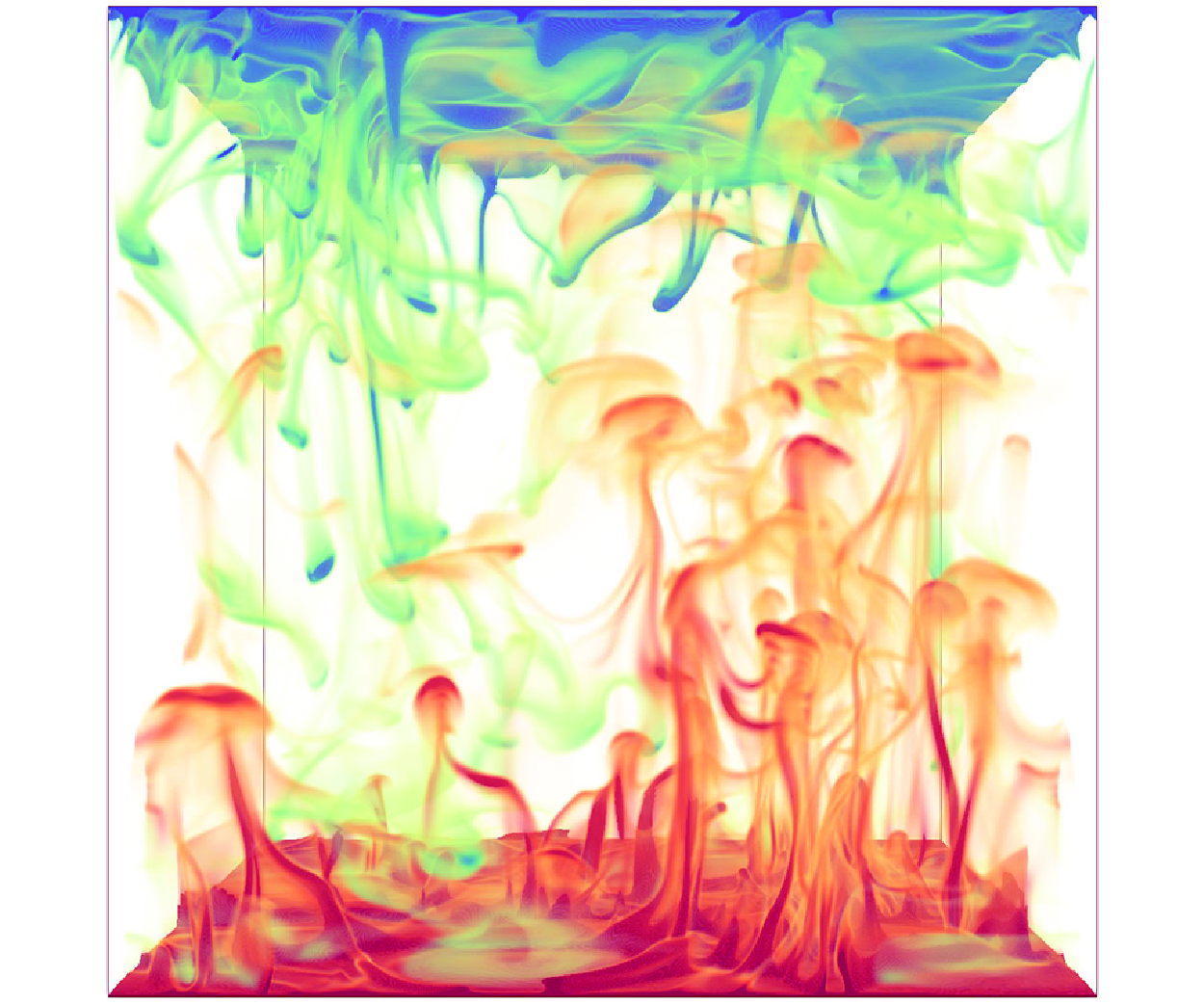
We present results of three-dimensional direct numerical simulations of turbulent Rayleigh–Bénard convection of dilute polymeric solutions for Rayleigh number ($Ra$) ranging from $10^6$ to $ 10^{10}$, and Prandtl number $Pr=4.3$. The viscoelastic flow is simulated by solving the incompressible Navier–Stokes equations under the Boussinesq approximation coupled with the finitely extensible nonlinear elastic Peterlin constitutive model. The Weissenberg number ($Wi$) is either $Wi=5$ or $Wi=10$, with the maximum chain extensibility parameter $L=50$, corresponding to moderate fluid elasticity. Our results demonstrate that both heat transport and momentum transport are reduced by the presence of polymer additives in the studied parameter range. Remarkably, the specific parameters used in the current numerical study give similar heat transfer reduction values as observed in experiments. We demonstrate that polymers have different effects in different regions of the flow. The presence of polymers stabilises the boundary layer, which is found to be the primary cause of the overall heat transfer reduction. In the bulk region, the presence of polymers slows down the flow by increasing the effective viscosity, enhances the coherency of thermal plumes, and suppresses the small-scale turbulent fluctuations. For small $Ra$, the heat transfer reduction in the bulk region is associated with plume velocity reduction, while for larger $Ra$, it is caused by the competing effects of suppressed turbulent fluctuations and enhanced plume coherency.
Understanding patterns and predictors of elevated psychological distress (EPD) among humanitarian migrants compared to the host population is critical for designing effective mental health interventions. However, existing research presents conflicting findings on the prevalence of EPD. This study examined EPD prevalence and associated factors in humanitarian migrants and Australian-born adults using large population-level datasets.
Methods
Kessler 6 scores (range 6–30) were dichotomised, and scores above 19 were defined as EPD and indicative of probable serious mental illness. Comparative 1:2 matched analysis used humanitarian migrant data from the Building a New Life in Australia and Australian-born comparators from the National Health Survey. Each humanitarian migrant was matched by age, sex and location with two Australian-born residents. Modified Poisson regression identified predictors of EPD in both groups.
Results
EPD was higher among humanitarian migrants (17.2%, 95% CI: 15.5, 18.9) compared to Australian-born (14.5%, 95% CI: 13.3, 15.6), with an adjusted relative risk (aRR) with 95% confidence intervals (1.16%, 95% CI: 1.11, 1.21) after adjusting for key factors. In both groups, females had a higher aRR than males, with similar effect sizes: 1.06 (95% CI: 1.04, 1.08) among Australian-born and 1.04 (95% CI: 1.02, 1.07) among humanitarian migrants. The impact of age on distress was more pronounced in Australian-born individuals: compared to the 65+ age group, the youngest group (18–24 years) had an aRR of 1.36 (95% CI: 1.28, 1.43) for Australian-born and 1.19 (95% CI: 1.12, 1.27) for humanitarian migrants. Compared to excellent health, poor and fair self-rated health condition had an aRR of 2.13 (95% CI: 2.03, 2.26) and 1.69 (95% CI: 1.61, 1.79), respectively, for humanitarian migrants and 1.94 (95% CI: 1.82, 2.05) and 1.48 (95% CI: 1.43, 1.56), respectively, for Australian born. Australian-born individuals in the lowest-income quintile had higher distress (aRR: 1.11 [95% CI: 1.06–1.15]) compared to the highest-income quintile, with no significant income effect for humanitarian migrants. In both groups, females with poorer self-rated health had higher aRRs than females reporting excellent health.
Conclusions
Although distress prevalence was higher in the humanitarian migrants, age and sex differences followed similar patterns in both groups. Income level was a factor in Australian-born adults but not in humanitarian migrants. Clinically, this highlights the need for culturally sensitive and group-specific mental health support. From a policy perspective, the use of matching methodology from large, separate datasets offers a valuable model for generating actionable insights, supporting the development of targeted and equitable mental health programmes.
Acid attacks, a harrowing form of violence often involving intimate partners, are prevalent in South and South-East Asia and are on the rise in the global north. There are major psychosocial and mental health sequelae for survivors and their families.
Aims
This ethnographic study, set in Cambodia, aims to identify the cultural and emotional dynamics surrounding acid attacks. The objectives are to define a taxonomy of acid attacks through the identification of the patterns of attack in intimate relations, and to explore the subjective experience of the informants to elucidate the cultural context of the complex emotions of jealousy and envy.
Method
Over 2 decades, ethnographic fieldwork was conducted with 87 survivors and their families and perpetrators in rural and urban Cambodia. Qualitative analysis was used to identify the taxa and enable a cultural understanding of the attacks.
Results
Three taxa were identified. (a) The most prevalent pattern (n = 56) was driven by romantic jealousy, fuelled by perceived infidelity in the context of an explicit ‘love triangle’ involving a married couple and a rival. (b) The second was intimate partner violence (n = 18), for example, a possessive husband maiming his wife after she had fled the coercive control of an abusive marriage. And (c) the last involved attacks within the community (n = 13), perpetrated acts of envy and vengefulness often arising from disputes and pointing at dysfunctional conflict resolution mechanisms.
Conclusions
Acid attacks are a grotesque example of direct violence that leads to severe mental health consequences, including suicidal ideation. The taxa reveal, ‘inside out’, the cultural construction of the causes and consequences of attacks while demonstrating the cultural architecture of envy and romantic jealousy. This study is relevant to transcultural psychiatry and global health, with implications for culturally responsive psychiatric intervention informed by the intrapsychic, interpersonal and structural dimensions of violence.
There has been substantial research undertaken on the role of a health-promoting diet in depression. Yet, the evidence of the relationship between the Nordic diet and the risk of depression is scarce. This cross-sectional study aimed to assess whether a healthy Nordic diet is associated with depressive symptoms. In total, 2603 men aged 42–60 years from the Kuopio Ischaemic Heart Disease Risk Factor Study were included. Diet quality was evaluated with a healthy Nordic diet score derived from the 4-day food diaries and depressive symptoms with the self-reported Human Population Laboratory (HPL) depression scale. Quade ANCOVA was used to examine the mean values of HPL scores in quartiles of a healthy Nordic diet score. Participants’ mean age was 53 years and BMI 26·8 kg/m2; 31·7 % were current smokers, and 86·9 % were married or living as a couple. The mean healthy Nordic diet score was 12·8 (sd 4·0, range 2–25), and the mean HPL depression score was 1·9 (sd 2·1, range 0–13). The findings suggested that lower adherence to a healthy Nordic diet was associated with higher HPL depression scores after adjusting for age, examination year, daily energy intake, leisure-time physical activity, adulthood socio-economic status, smoking and marital status (extreme quartile difference: 0·33 points, 95 % CI 0·10, 0·56, P for trend across the quartiles = 0·003). The results support the hypothesis that a lower-quality diet increases the odds of having depressive symptoms. However, prospective studies are needed to confirm the association.
Previous research has established various debt thresholds beyond which economic performance deteriorates, but few studies examine these thresholds in the context of ongoing fiscal consolidation efforts. This study investigates the interplay between government debt and fiscal consolidation in Organisation for Economic Co-operation and Development countries from 2000 to 2022. The findings reveal that fiscal consolidation, encompassing reductions in government expenditure and tax increases, results in a notable reduction of 1.366% in the primary fiscal balance and a minor 0.024% decrease in GDP per capita. This study significantly contributes to the literature by clarifying the impact of fiscal consolidation relative to specific debt thresholds and its implications for economic performance. A critical government debt threshold of 31.4% of GDP is identified, beyond which debt negatively affects GDP per capita in the presence of fiscal consolidation. Similarly, a debt threshold of 86.7% is found to have a detrimental effect on the primary fiscal balance in the presence of fiscal consolidation. The study shows for disaggregating government expenditure and taxation, that military spending reduces GDP per capita, while investments in health and education have positive effects. Notably, government consumption expenditure harms GDP per capita. On the fiscal balance side, military and education spending improve fiscal health, whereas government consumption and indirect taxes contribute negatively. The findings underline the importance of targeted fiscal policies, suggesting that prudent government spending, especially in health as well as education, and careful management of debt levels are crucial for maintaining economic stability during fiscal consolidation.
Semantic transparency is usually defined as the extent to which the lexical meaning of a morphologically complex word can be inferred from its structure and constituents. Recent studies have emphasized the need to distinguish two aspects of transparency: relatedness (i.e. the degree to which the meaning of lexical constituents is retained in that of a complex word) and compositionality (i.e. the degree to which the meaning of a complex word is determined by the meaning of its constituents and the way they are combined). In this paper, we investigate the influence of a variety of linguistic factors on both relatedness and compositionality. Our objective is twofold, as we seek to (i) determine more precisely the impact of lexical and morphological properties on transparency and (ii) better understand the distinction between relatedness and compositionality based on their respective determinants. The study focuses on deverbal nouns in French and estimates relatedness and compositionality based on human judgments and computational methods. The results indicate that the frequency and ambiguity of bases and derivatives, as well as the productivity and polyfunctionality of nominalizing suffixes, have different effects on relatedness and compositionality. They confirm the relevance of the distinction between the two aspects of transparency.
This paper presents the design of a phase gradient metasurface lens (MSL) that enables the orbital angular momentum (OAM) beam convergence alleviating the limitations of the OAM beams in far-field wireless communication. An MSL of a specific constitutive electromagnetic parameter, i.e., relative refractive index, in front of a traditional Uniform Circular Array is designed at 10 GHz. In the presence of the lens, the beam converges from 58∘ to 24∘ for +1 and –1 OAM modes. The proposed MSL can also be used for second-order (±2) OAM modes. The experimental verification performed on the laboratory prototype agrees well with the simulated results. The purity analysis also confirms that the OAM beams passing through the lens maintain high mode purity, thereby not disturbing the phase distribution in the corresponding OAM modes. The designed lens can be used in point-to-point and defense communications.