Refine listing
Actions for selected content:
2117392 results in Journals
Performance analysis of single-frequency real-time single point positioning over Latin America
-
- Journal:
- The Journal of Navigation , First View
- Published online by Cambridge University Press:
- 07 July 2026, pp. 1-31
-
- Article
- Export citation
Ultrafast Laser Interaction with Dielectric–Metal Hybrid Coatings: A 2D FDTD Modeling Study
-
- Journal:
- High Power Laser Science and Engineering / Accepted manuscript
- Published online by Cambridge University Press:
- 07 July 2026, pp. 1-17
-
- Article
-
- You have access
- Open access
- Export citation
WHEN IS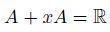 $A+xA=\mathbb{R}$
-
- Journal:
- The Journal of Symbolic Logic / Accepted manuscript
- Published online by Cambridge University Press:
- 07 July 2026, pp. 1-16
-
- Article
- Export citation

Large-scale streaky structures in compressible turbulent mixing layers up to $ \boldsymbol{M_c= 5.0}$
-
- Journal:
- Journal of Fluid Mechanics / Volume 1038 / 10 July 2026
- Published online by Cambridge University Press:
- 07 July 2026, A22
-
- Article
- Export citation
-
Large-scale streaky structures (LSSs) in a temporally developing compressible turbulent mixing layer are investigated using numerical simulations at convective Mach numbers up to $M_c = 5.0$, corresponding to turbulent Mach numbers approaching 1.0. This significantly extends existing numerical studies of compressible mixing layers, which are typically limited to convective Mach numbers of $M_c \approx 2.0$, far below the flow conditions encountered in practical applications such as rocket engines and hypersonic vehicles. As compressibility increases, the growth rate of the momentum thickness decreases continuously without showing signs of saturation, accompanied by a significant increase in the length of the LSSs. In instantaneous flow field, the length of LSSs can exceed 100 times the vorticity thickness $\delta _\omega$ at $ M_c=4.0$. This behaviour is closely connected to the reduction of the pressure–strain redistribution of turbulent kinetic energy with increasing Mach number. Under strong compressibility, the growth stage is dominated by the streamwise components of production and dissipation, generating long, coherent streaks. As small-scale motions emerge, pressure–strain redistribution intensifies, transferring energy from the streamwise to the vertical and spanwise components and inducing streak meandering and breakdown. In the self-similar regime, production, dissipation and redistribution of kinetic energy reach a dynamic equilibrium. The spanwise scale of the LSSs is weakly affected by compressibility and converges to $0.4\delta _\omega$ with the increase of Mach number. Increasing compressibility enhances flow anisotropy, leading to the progressive reduction of vertical and spanwise turbulent kinetic energy relative to the streamwise component, with the vertical component experiencing a more pronounced reduction.


The Southern-sky MWA Rapid Two-metre (SMART) pulsar survey—IV. Survey update and an atlas of 205 non-recycled southern pulsars
-
- Journal:
- Publications of the Astronomical Society of Australia / Accepted manuscript
- Published online by Cambridge University Press:
- 07 July 2026, pp. 1-30
-
- Article
-
- You have access
- Open access
- Export citation
Automating Translation, by Joss Moorkens, Andy Way and Séamus Lankford. London, Routledge, 2024. ISBN 9781032436807. 270 pages.
-
- Journal:
- Natural Language Processing ,
- Published online by Cambridge University Press:
- 07 July 2026, pp. 1-4
-
- Article
-
- You have access
- Open access
- HTML
- Export citation

Identification of blood biomarkers of a healthy dietary pattern as facilitated by cluster analysis in patients from the MEDDINI study: a pilot randomised trial
-
- Journal:
- Journal of Nutritional Science / Volume 15 / 2026
- Published online by Cambridge University Press:
- 07 July 2026, e52
-
- Article
-
- You have access
- Open access
- HTML
- Export citation
Empires Awheel: Fanny Bullock Workman, American Transimperial Travel, and Temporal Fantasies of European Empire
-
- Journal:
- Modern American History , FirstView
- Published online by Cambridge University Press:
- 07 July 2026, pp. 1-19
-
- Article
-
- You have access
- Open access
- HTML
- Export citation
RECONSIDERING GÖDEL’S DOCTRINE: INDEPENDENCE RESULTS
-
- Journal:
- The Review of Symbolic Logic / Accepted manuscript
- Published online by Cambridge University Press:
- 07 July 2026, pp. 1-44
-
- Article
- Export citation
Early Meiji Diplomacy Viewed through the Lens of the International Treaties Culminating in the Annexation of the Ryukyus
-
- Journal:
- Asia-Pacific Journal / Volume 19 / Issue 6 / March 2021
- Published online by Cambridge University Press:
- 07 July 2026, e7
-
- Article
-
- You have access
- Open access
- Export citation
Morocco’s linguistic landscape: Is English the new French?
-
- Journal:
- English Today , First View
- Published online by Cambridge University Press:
- 07 July 2026, pp. 1-7
-
- Article
-
- You have access
- HTML
- Export citation
ETS volume 46 issue 8 Cover and Front matter
-
- Journal:
- Ergodic Theory and Dynamical Systems / Volume 46 / Issue 8 / August 2026
- Published online by Cambridge University Press:
- 07 July 2026, pp. f1-f2
- Print publication:
- August 2026
-
- Article
-
- You have access
- Export citation
Global imagination, cultural taste and ritual resistance: Unpacking the symbolic power of the Chinese English buzzword “city walk”
-
- Journal:
- English Today , First View
- Published online by Cambridge University Press:
- 07 July 2026, pp. 1-9
-
- Article
-
- You have access
- HTML
- Export citation
Global credit cycles and pro-business rhetoric in party manifestos
-
- Journal:
- Business and Politics , First View
- Published online by Cambridge University Press:
- 07 July 2026, pp. 1-25
-
- Article
-
- You have access
- Open access
- HTML
- Export citation
FLM volume 1037 Cover and Front matter
-
- Journal:
- Journal of Fluid Mechanics / Volume 1037 / 25 June 2026
- Published online by Cambridge University Press:
- 07 July 2026, p. f1
-
- Article
-
- You have access
- Export citation
Living Material Archives. Epistemic Infrastructures under Conditions of Transformation, Decay and Finitude
-
- Journal:
- Biotechnology Design / Accepted manuscript
- Published online by Cambridge University Press:
- 07 July 2026, pp. 1-26
-
- Article
-
- You have access
- Open access
- Export citation
Inroads to selectivity: Stacked cultivation in snap bean and beet
-
- Journal:
- Weed Technology / Accepted manuscript
- Published online by Cambridge University Press:
- 07 July 2026, pp. 1-21
-
- Article
-
- You have access
- Open access
- Export citation
Capturing Heterogeneity in Levels, Variability, and Couplings across Persons and Time with a Hierarchical Time-Varying Coefficient Formulation of the Multivariate Normal
-
- Journal:
- Psychometrika ,
- Published online by Cambridge University Press:
- 07 July 2026, pp. 1-26
-
- Article
-
- You have access
- Open access
- HTML
- Export citation
Glymphatic dysfunction associates with regional white matter hyperintensities and plasma amyloid-β burden across the Alzheimer’s disease continuum
-
- Journal:
- Psychological Medicine / Volume 56 / 2026
- Published online by Cambridge University Press:
- 07 July 2026, e220
-
- Article
-
- You have access
- Open access
- HTML
- Export citation

Uniform momentum zones for the logarithmic layer in turbulent pipe flow
-
- Journal:
- Journal of Fluid Mechanics / Volume 1038 / 10 July 2026
- Published online by Cambridge University Press:
- 07 July 2026, A31
-
- Article
- Export citation
-
Wall-bounded turbulent flows consist of multiple zones of relatively uniform streamwise velocity, known as uniform momentum zones (UMZs), separated by thin shear layers across which sharp velocity jumps occur. These zonal-like arrangements form a hierarchy consistent with the self-similar eddies postulated in Townsend’s attached-eddy hypothesis (AEH). However, whether the velocity fields carried by UMZs exhibit the asymptotic behaviours predicted by the AEH remains unclear because UMZs coexist over a wide range of scales. Here, we extract wall-scaled UMZs characterised by the wall-normal distance ( $y$) and the friction velocity ( $u_\tau$), and examine the velocity fields within them in the context of the AEH. We analyse direct numerical simulation data of turbulent pipe flow at friction Reynolds numbers $\textit{Re}_\tau = 550$– $6000$. The number of UMZs increases logarithmically with $\textit{Re}_\tau$, while their interface velocities span a wide range, reflecting their hierarchical organisation. We identify wall-scaled UMZs exhibiting linear growth of thickness with $y$ and velocity jumps scaled by $u_\tau$. The turbulence statistics associated with these UMZs reveal a common wall-normal range, $5\textit{Re}_\tau ^{-1/2} \lt y/R \lt 0.2$ (where $R$ is the pipe radius), over which the mean velocity follows the logarithmic law and the wall-parallel turbulence intensities exhibit logarithmic variation. Within this range, constant regions emerge in the wall-normal turbulence intensity and the Reynolds shear stress wherever the number of UMZs exceeds its mean. The probability density functions (PDFs) of the velocity fluctuations within the wall-scaled UMZs exhibit $\textit{Re}_\tau$-independent self-similarity, characterised by near-zero skewness across the logarithmic region. Consistently, the Kullback–Leibler divergence remains approximately constant, confirming invariant PDF shapes in $y$. These findings demonstrate that the wall-scaled UMZs are directly related to the logarithmic layer and provide a structural basis for the statistical behaviour of wall-bounded turbulence.


