Refine listing
Actions for selected content:
1416025 results in Open Access
Michael William Thomas dir. Cine-Addis. 2023. 39 minutes, Amharic with English Subtitle, Ethiopia. No price reported. The Screen Worlds Collective, available on Vimeo.
-
- Journal:
- African Studies Review / Volume 68 / Issue 1 / March 2025
- Published online by Cambridge University Press:
- 08 January 2025, pp. 220-221
-
- Article
-
- You have access
- HTML
- Export citation
Géographie politique de l'opinion publique québécoise et réévaluation du « mystère » de Québec
-
- Journal:
- Canadian Journal of Political Science/Revue canadienne de science politique / Volume 57 / Issue 4 / December 2024
- Published online by Cambridge University Press:
- 08 January 2025, pp. 816-841
-
- Article
-
- You have access
- Open access
- HTML
- Export citation
Louise Heren. Sex and Violence in 1920s Scotland: Incest, Rape, Lewd and Libidinous Practices, 1918–1930 History of Crime, Deviance and Punishment Series Editor Anne-Marie Kilday. London: Bloomsbury, 2024. Pp. 254, £85.00 hardback.
-
- Journal:
- Journal of British Studies / Volume 63 / Issue 3 / July 2024
- Published online by Cambridge University Press:
- 08 January 2025, pp. 720-721
-
- Article
- Export citation
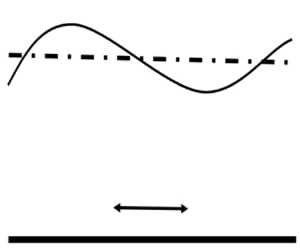
Linear stability analysis of a thin liquid film on a horizontal wall under quasi-periodic oscillation
-
- Journal:
- Journal of Fluid Mechanics / Volume 1002 / 10 January 2025
- Published online by Cambridge University Press:
- 08 January 2025, A39
-
- Article
- Export citation
-
We carry out a linear stability analysis of the flow of a thin layer of Newtonian fluid with a deformable free surface bounded at the bottom by a horizontal wall subjected to quasi-periodic oscillation in its own plane. Or's model (J. Fluid Mech., vol. 335, 1997, pp. 213–232), using a periodic oscillation, is extended to the configuration where oscillation has two incommensurate frequencies, $\omega _1$ and $\omega _2$, with an irrational ratio $\omega ={\omega _2}/{\omega _1}$. Using the long-wave expansion, we derive the asymptotic function involved in the long-wave instability criterion while taking into account the frequency ratio. It turns out that the maximum of this asymptotic function, as well as the frequency parameter at which long-wave instabilities occur, depend strongly on the frequency ratio. For arbitrary wavenumbers, the equations governing the problem under consideration are solved in space using Chebyshev's spectral collocation method, while the temporal resolution is performed using Floquet theory, knowing that an irrational number can be approximated by a rational number. For a large frequency ratio and for a velocity amplitude ratio equal to unity, we obtain, as in Or's work (J. Fluid Mech., vol. 335, 1997, pp. 213–232) considering the same frequency parameter interval, an alternation between the U shape and oblique shape referring respectively to instabilities of long wavelength and finite wavelength appearing in the diagram representing Reynolds number as a function of frequency parameter. By decreasing the frequency ratio towards $1/\sqrt {37}$, the three initial U-shaped and three oblique instabilities merge into a single U-shaped and a single oblique instability. This merging phenomenon also occurs when the ratio of the amplitudes of the superimposed velocities, linked to the introduction of the second frequency, increases from small values to unity. For a fixed frequency parameter, the effect of frequency ratio and velocity amplitude ratio on the marginal stability curves in terms of Reynolds number versus wavenumber is also investigated, focusing on the appearance of long wavelength instability and finite wavelength instability.


Local scale carbon stock measurements, including deep soil layers, in a terra firme forest in northwestern Amazon
-
- Journal:
- Journal of Tropical Ecology / Volume 41 / 2025
- Published online by Cambridge University Press:
- 08 January 2025, e2
-
- Article
- Export citation
On the binomial transforms of Apéry-like sequences
- Part of
-
- Journal:
- Canadian Mathematical Bulletin / Volume 68 / Issue 2 / June 2025
- Published online by Cambridge University Press:
- 08 January 2025, pp. 359-376
- Print publication:
- June 2025
-
- Article
- Export citation
-
In his proof of the irrationality of $\zeta (3)$ and $\zeta (2)$, Apéry defined two integer sequences through $3$-term recurrences, which are known as the famous Apéry numbers. Zagier, Almkvist–Zudilin, and Cooper successively introduced the other $13$ sporadic sequences through variants of Apéry’s $3$-term recurrences. All of the $15$ sporadic sequences are called Apéry-like sequences. Motivated by Gessel’s congruences mod $24$ for the Apéry numbers, we investigate congruences of the form $u_n\equiv \alpha ^n \ \pmod {N_{\alpha }}~(\alpha \in \mathbb {Z},N_{\alpha }\in \mathbb {N}^{+})$ for all of the $15$ Apéry-like sequences $\{u_n\}_{n\ge 0}$. Let $N_{\alpha }$ be the largest positive integer such that $u_n\equiv \alpha ^n\ \pmod {N_{\alpha }}$ for all non-negative integers n. We determine the values of $\max \{N_{\alpha }|\alpha \in \mathbb {Z}\}$ for all of the $15$ Apéry-like sequences $\{u_n\}_{n\ge 0}$. The binomial transforms of Apéry-like sequences provide us a unified approach to this type of congruences for Apéry-like sequences.


ETS volume 45 issue 2 Cover and Front matter
-
- Journal:
- Ergodic Theory and Dynamical Systems / Volume 45 / Issue 2 / February 2025
- Published online by Cambridge University Press:
- 08 January 2025, pp. f1-f2
- Print publication:
- February 2025
-
- Article
-
- You have access
- Export citation
Effect of process parameters on the corrosion characteristics of friction stir welded aluminum alloy AA2014-T6
-
- Journal:
- The Aeronautical Journal / Volume 129 / Issue 1334 / April 2025
- Published online by Cambridge University Press:
- 08 January 2025, pp. 960-974
-
- Article
- Export citation
Foraging abilities and competitive interactions between two egg parasitoids of bagrada bug in California
-
- Journal:
- Bulletin of Entomological Research / Volume 114 / Issue 6 / December 2024
- Published online by Cambridge University Press:
- 08 January 2025, pp. 737-743
-
- Article
- Export citation
A characterization of the existence of zeros for operators with Lipschitzian derivative and closed range
- Part of
-
- Journal:
- Canadian Mathematical Bulletin / Volume 68 / Issue 2 / June 2025
- Published online by Cambridge University Press:
- 08 January 2025, pp. 395-400
- Print publication:
- June 2025
-
- Article
-
- You have access
- Open access
- HTML
- Export citation
-
Let H be a real Hilbert space and $\Phi :H\to H$ be a $C^1$ operator with Lipschitzian derivative and closed range. We prove that $\Phi ^{-1}(0)\neq \emptyset $ if and only if, for each $\epsilon>0$, there exist a convex set $X\subset H$ and a convex function $\psi :X\to \mathbf {R}$ such that $\sup _{x\in X}(\|x\|^2+\psi (x))-\inf _{x\in X}(\|x\|^2+\psi (x))<\epsilon $ and $0\in \overline {{\mathrm {conv}}}(\Phi (X))$.


Embedding of some classes of operators into strongly continuous semigroups
- Part of
-
- Journal:
- Canadian Mathematical Bulletin / Volume 68 / Issue 1 / March 2025
- Published online by Cambridge University Press:
- 08 January 2025, pp. 219-231
- Print publication:
- March 2025
-
- Article
- Export citation
-
In this paper, we study the embedding problem of an operator into a strongly continous semigroup. We obtain characterizations for some classes of operators, namely composition operators and analytic Toeplitz operators on the Hardy space $H^2$. In particular, we focus on the isometric ones using the necessary and sufficient condition observed by T. Eisner.

Proinflammatory gene expression is associated with prospective risk for adolescent suicidal thoughts and behaviors over twelve months
-
- Journal:
- Development and Psychopathology / Volume 37 / Issue 3 / August 2025
- Published online by Cambridge University Press:
- 08 January 2025, pp. 1676-1684
-
- Article
- Export citation
JBR volume 63 issue 3 Cover and Front matter
-
- Journal:
- Journal of British Studies / Volume 63 / Issue 3 / July 2024
- Published online by Cambridge University Press:
- 08 January 2025, pp. f1-f7
-
- Article
-
- You have access
- Export citation
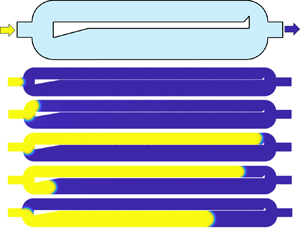
Controlled Haines jumps in a dual-channel multiphase system: inferring fluid properties from the dynamics of interface motion
-
- Journal:
- Journal of Fluid Mechanics / Volume 1002 / 10 January 2025
- Published online by Cambridge University Press:
- 08 January 2025, A40
-
- Article
-
- You have access
- Open access
- HTML
- Export citation
Exploring genetic diversity of pummelo (Citrus grandis L. Osbeck) genotypes in Devanahalli region of Karnataka, India
-
- Journal:
- Plant Genetic Resources / Volume 23 / Issue 3 / June 2025
- Published online by Cambridge University Press:
- 08 January 2025, pp. 208-216
-
- Article
- Export citation
Unanticipated Behavioral Consequences of On-demand COVID-19 Testing Policy in US States
-
- Journal:
- Disaster Medicine and Public Health Preparedness / Volume 19 / 2025
- Published online by Cambridge University Press:
- 08 January 2025, e7
-
- Article
-
- You have access
- Open access
- HTML
- Export citation
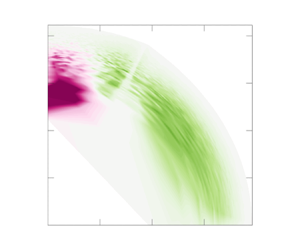
Mode-to-mode nonlinear energy transfer in turbulent channel flows
-
- Journal:
- Journal of Fluid Mechanics / Volume 1002 / 10 January 2025
- Published online by Cambridge University Press:
- 08 January 2025, A42
-
- Article
-
- You have access
- Open access
- HTML
- Export citation
-
We investigate nonlinear energy transfer for channel flows at friction Reynolds numbers $Re_{\tau }=180$ and $590$. The key feature of the analysis is that we quantify the energy transferred from a source mode to a recipient mode, with each mode characterised by a streamwise wavenumber and a spanwise wavenumber. This is achieved through an explicit examination of the triadic interactions of the nonlinear energy transfer term in the spectral turbulent kinetic energy equation. First, we quantify the nonlinear energy transfer gain and loss for individual Fourier modes. The gain and loss cannot be obtained without expanding the nonlinear triadic interactions. Second, we quantify the nonlinear energy transfer budgets for three types of modes. Each type of mode is characterised by a specific region in streamwise–spanwise wavenumber space. We find that a transverse cascade from streamwise-elongated modes to spanwise-elongated modes exists for all three types of modes. Third, we quantify the forward and inverse cascades between resolved scales and subgrid scales in the spirit of large-eddy simulations. For the cutoff wavelength range that we consider, the forward and inverse cascades between the resolved scales and subgrid scales result in a net forward cascade from the resolved scales to the subgrid scales. The shape of the net forward cascade curve with respect to the cutoff wavelength resembles the net forward cascade predicted by the Smagorinsky eddy viscosity.


An approach towards mobile robot recovery due to vision sensor failure in vSLAM systems using ROS
-
- Article
-
- You have access
- Open access
- HTML
- Export citation
Effects of intraspecific hybridisation between the northern and the southern populations of the cabbage beetle, Colaphellus bowringi on life-history traits
-
- Journal:
- Bulletin of Entomological Research / Volume 115 / Issue 1 / February 2025
- Published online by Cambridge University Press:
- 08 January 2025, pp. 39-47
-
- Article
- Export citation
