To save content items to your account,
please confirm that you agree to abide by our usage policies.
If this is the first time you use this feature, you will be asked to authorise Cambridge Core to connect with your account.
Find out more about saving content to .
To save content items to your Kindle, first ensure no-reply@cambridge.org
is added to your Approved Personal Document E-mail List under your Personal Document Settings
on the Manage Your Content and Devices page of your Amazon account. Then enter the ‘name’ part
of your Kindle email address below.
Find out more about saving to your Kindle.
Note you can select to save to either the @free.kindle.com or @kindle.com variations.
‘@free.kindle.com’ emails are free but can only be saved to your device when it is connected to wi-fi.
‘@kindle.com’ emails can be delivered even when you are not connected to wi-fi, but note that service fees apply.
Infant mortality, a reflection of socioeconomic and health conditions of a population, is shaped by diverse factors. This study delves into a pre-industrial population, scrutinizing neonatal and post-neonatal deaths separately. Family factors such as mortality crises, religion, and legitimacy are also explored. Data of 9,086 people obtained through multigenerational information from ecclesiastic records from 1603 to 1908 were analysed by means of a joinpoint regression analysis. Death risk was assessed with univariate and multivariate Cox Proportional Hazard models. Early neonatal mortality was 5.6% of births and showed a gradual and steady increase from 1630 to 1908, with no substantial improvement over the three centuries analysed. Late neonatal (4.3% of births) and post-neonatal mortality (18.7% of births) shared a different pattern, showing a decline between the mid-18th and mid-19th centuries, and an increase by the 20th century that could be caused by socioeconomic factors and the impact of several epidemics. In the historical population of Hallstatt, infant survival was influenced by the sex of the newborn, the death of the mother and the precedent sibling, and by the birth interval. Environmental and cultural factors, such as mortality crises and religion, influenced late neonatal and post-neonatal mortality, but not early neonatal mortality. The results highlight the need to independently assess early neonatal mortality in studies of infant mortality in historical populations, and to use as complete time periods as possible to capture differences in mortality patterns.
We conducted a pilot study of implementing community health workers (CHWs) to assist patients with hypertension and social needs. As part of clinical care, patients identified as having an unmet need were referred to a CHW. We evaluated changes in blood pressure and needs among 35 patients and conducted interviews to understand participants’ experiences. Participants had a mean age of 54.1 years and 29 were Black. Twenty-six completed follow-up. Blood pressure and social needs improved from baseline to 6 months. Participants reported being accepting of CHWs, but also challenges with establishing a relationship with a CHW and being unclear about their role.
This paper examines the impact of financially constrained intermediate inputs on within-industry total factor productivity loss. Utilizing exogenous tax reforms in China as a natural experiment, our difference-in-difference analysis reveals that reduced tax burdens lead to increased firm-level intermediate inputs, particularly among financially constrained firms. We incorporate financially constrained intermediate inputs into a partial equilibrium model of firm dynamics. Our calibration suggests that financially constrained intermediate inputs play a quantitatively more important role in accounting for misallocation than financially constrained capital. The presence of financially constrained intermediate inputs introduces a downward bias in the measurement of value-added productivity, especially for firms in the top decile of gross-output productivity. As a result, the average “efficient” levels of capital and labor for the top decile firms in the standard Hsieh and Klenow (2009) exercise are lower than what is truly efficient.
Post COVID-19 condition (PCC) refers to persistent symptoms occurring ≥12 weeks after COVID-19. This living systematic review (SR) assessed the impact of vaccination on PCC and vaccine safety among those with PCC, and was previously published with data up to December 2022. Searches were updated to 31 January 2024 and standard SR methodology was followed. Seventy-eight observational studies were included (47 new). There is moderate confidence that two doses pre-infection reduces the odds of PCC (pooled OR (pOR) 0.69, 95% CI 0.64–0.74, I2 = 35.16%). There is low confidence for remaining outcomes of one dose and three or more doses. A booster dose may further reduce the odds of PCC compared to only a primary series (pOR 0.85, 95% CI 0.74–0.98, I2 = 16.85%). Among children ≤18 years old, vaccination may not reduce the odds (pOR 0.79, 95% CI 0.56–1.11, I2 = 37.2%) of PCC. One study suggests that vaccination within 12 weeks post-infection may reduce the odds of PCC. For those with PCC, vaccination appears safe (four studies) and may reduce the odds of PCC persistence (pOR 0.73, 95% CI 0.57–0.92, I2 = 15.5%).
Combine modifications for harvest weed seed control like the Redekop Seed Control Unit (SCU) and the integrated Harrington Seed Destructor (iHSD) have been successfully used to kill problematic weed seeds in small grain production in Australia. These seed impact mills could have a fit in U.S. soybean [Glycine max (L.) Merr.] production. Testing the seed kill rate of problematic weed species in soybean is important for confirming the efficacy of the mills. Additionally, the mills may be affected by changes in crop yield and harvest residue moisture, which can have an impact on chaff flow rate and chaff moisture, respectively. This research aimed at determining the seed kill percent for problematic weeds and how varying chaff flow rates and chaff moisture content in soybean chaff affect the seed kill rate and horsepower draw of two different impact mills, the Redekop SCU and the iHSD. All testing was conducted using stationary test stands. Chaff flow rate and chaff moisture levels tested ranged from 0.5× to 2× standard combine throughput and 11.7% to 28.6% moisture, respectively. All tested species were killed at >98% by both mills. Increasing chaff flow rate resulted in a decrease in seed kill for all tested species with the iHSD and only common ragweed (Ambrosia artemisiifolia L.) with the Redekop SCU. Increasing chaff moisture only resulted in a decrease in seed kill for Palmer amaranth (Amaranthus palmeri S. Watson) with the iHSD. Data evaluating the horsepower needed to power the mills also indicated that chaff flow rate and chaff moisture resulted in a significant increase in horsepower draw. With generally high kill rates (>98%) and the ability to kill weed seeds at >98% in less than ideal harvest conditions (i.e., high-moisture chaff), seed impact mills could be used in soybean production to reduce weed seed inputs into the soil seedbank during harvest.
Different participatory mechanisms for the representation of Indigenous peoples have been proposed across states. Since their creation in 1867, the Māori electorates in the national Parliament have led to dedicated representation for Māori (Indigenous peoples of New Zealand). However, only half of Māori choose to vote on the Māori roll, the remainder choosing to vote on the General roll, illustrating that roll choice is not based simply on group representation. This survey aimed to ask Māori (N = 1,958) in their own words why they made their roll choice. Through a deductive codebook thematic analysis, a range of codes were constructed around the reasoning behind roll choice. Māori on the Māori roll made their choice because they valued Māori representation; as an expression of their identity; to support the electorates; as a strategic choice; or they had been influenced by others or through education. Those on the General roll felt their roll was the default or a more familiar option; the Māori roll had less of an impact; it was a strategic choice, or they appreciated greater candidate variety; or they valued the smaller geographic electorate size. Some felt Māori no longer needed separate representation or felt less connected to their identity as Māori. The results have implications for both Māori and Indigenous representation through dedicated representational mechanisms.
While providing compensation for participation in research studies is common, there is an ongoing debate surrounding compensation models and how they can be equitably applied. This work attempts to better understand the landscape of research compensation by evaluating factors associated with compensation of research study participants across instiutional review board (IRB)-approved studies at a single academic institution in California.
Methods:
We extracted all IRB applications for social, behavioral, educational, and public policy research studies between January 1, 2019, and December 31, 2021, at the University of California, San Francisco. Compensation amounts, time estimates for participation, and location of study activities (hybrid, remote, in-person) were extracted from free text entries in the IRB application and reorganized into discrete variables. Multivariable logistic regression was used to assess factors associated with receiving payment after adjusting for time.
Results:
We analyzed 403 unique IRB applications. Studies held at public hospitals and clinics were more likely to provide compensation to study participants, whereas studies held at the university hospitals and clinics were less likely to provide compensation. Unfunded studies also were less likely to provide compensation to research study participants. While participants that were classified as “economically/educationally disadvantaged” and “unable to read, speak, or understand English” within the institution’s IRB application were more likely to receive compensation, those that had “diminished capacity to consent” were less likely to receive compensation.
Conclusions:
While there are multiple frameworks for compensation, there is still significant variability in compensation strategies. Institutions should center equity in considering standardized approaches to compensation for research participation.
The use of palliative care (PC) services from people of Islamic faith is seen limited. There are a fundamental lack of PC services appropriate to the target group and a lack of knowledge and acceptance. The transition from curative to PC is often perceived as problematic. Factors influencing PC use and end-of-life (EOL) decisions and preferences among people of Islamic faith are largely unclear.
Methods
A scoping review was carried out using the methodology of the Joanna Briggs Institute. Studies of any design, published in English, German, or Arabic, and published by the end of August 2022, were eligible for inclusion. The systematic literature search was conducted in MEDLINE via PubMed, CINAHL, Cochrane Library, and Web of Science. Study statements were analyzed with a clear distinction between PC as EOL care and other EOL decisions, such as euthanasia, withdrawal, or withholding of one or more life-sustaining treatments or medications.
Results
Sixty studies published between 1998 and 2022 were included. Only a few studies made statements about EOL care. The majority of studies focused on forms of euthanasia and indicated negative attitudes toward euthanasia, assisted suicide, and some other EOL decisions. Reasons for rejection include theological arguments, ethical and moral considerations, and others. Reasons for acceptance were principles of good death and dying, medical justifications, and others. The following barriers to the use of PC were identified laws and policies, lack of necessary resources, cultural norms and values, structure of the health-care system, communication and interaction between patients, relatives, and health-care staff, and others.
Significance of results
This review identifies the preferences for and difficulties in making EOL decisions and identifies barriers to specific PC for the Muslim population. Findings suggest how these barriers might be overcome.
Adolescence marks a critical transition period, with significant mental health challenges including anxiety and depression symptoms that affect long-term happiness. There has been a lack of research exploring the factors mediating adolescent happiness.
Aims
To investigate the mediating effects of anxiety and depression on adolescent happiness, as well as the contributions of sociodemographic factors.
Methods
We recruited 392 adolescents. Anxiety symptoms, depression symptoms and happiness were assessed by the seven-item Generalized Anxiety Disorder scale, nine-item Patient Health Questionnaire and single-item happiness scale, respectively. Self-administered questionnaires were used to collect sociodemographic information.
Results
Spearman correlation analysis showed significant negative correlations of happiness with anxiety (r = −0.37, P < 0.0001) and depression (r = −0.47, P < 0.0001). Positive predictors of happiness included quality of parents’ marriage (β = 0.12, P = 0.006), regular physical exercise (β = 0.13, P = 0.006) and regular diet (β = 0.10, P = 0.03). Mediation analysis indicated that depressive symptoms (estimate = 0.50, 95% CI: 0.25 to 0.80) and anxiety symptoms (estimate = 0.32, 95% CI: 0.12 to 0.57) partially mediated the relationship between regular exercise and happiness, whereas depressive symptoms completely mediated the relationship between anxiety symptoms and happiness (estimate = −0.14, 95% CI: −0.20 to −0.08).
Conclusion
The findings of this study highlight the intricate interplay of mental health issues, lifestyle factors and adolescent happiness and emphasise the need for comprehensive interventions focusing on enhancing physical activity and addressing psychological health to foster happiness among adolescents.
The first compilations of Proterozoic eukaryote diversity, published in the 1980s showed a dramatic peak in the Tonian Period (1000–720 Ma), interpreted as the initial radiation of eukaryotes in the marine realm. Over the decades, new discoveries filled in the older part of the record and the peak diminished, but the idea of a Tonian radiation of eukaryotes has remained strong, and is now widely accepted as fact. We present a new diversity compilation based on 181 species and 713 species occurrences from 145 formations ranging in age from 1890 Ma to 720 Ma and find a significant increase in diversity in the Tonian. However, we also find that the number of eukaryotic species through time is highly correlated with the number of formations in our dataset (i.e. eukaryote-bearing formations) through time. This correlation is robust to interpretations of eukaryote affinity, bin size, and bin boundaries. We also find that within-assemblage diversity—a measure thought to circumvent sampling bias—is related to the number of eukaryote-bearing formations through time. Biomarkers show a similar pattern to body fossils, where the rise of eukaryotic biosignatures correlates with increased sampling. We find no evidence that the proportion of eukaryote-bearing versus all fossiliferous formations changed through the Proterozoic, as might be expected if the correlation reflected an increase in eukaryote diversity driving an increase in the number of eukaryote-bearing formations. Although the correlation could reflect a common cause such as changes in sea level driving both diversification and an increase in sedimentary rock volume, we favor the explanation that the pattern of early eukaryote diversity is driven by variations in paleontological sampling.
Through the colonial period in Sāmoa, Christian morality was embedded into Samoan culture. This transformed gender relations, introducing a new, well-disciplined figure of the Samoan woman. Because of this shift, we argue for the need to develop Samoan feminist thought, which is as much a development of new thinking as it is a return to and restoration of Samoan feminist thought already in existence within Indigenous Samoan cosmologies. We contextualize this thinking within a coalition of Pacific, Indigenous, Black, and women of color feminist thinkers. As feminist scholars have established, feminism doesn’t resonate or work with a simple copy and paste to culture and context. Rather, feminisms are contextual and subjective. It is thus imperative that those from within various contexts continue to broaden understandings and conceptualizations of feminism/s, which work toward demarcating spaces for feminist thought that illuminates multiple, diverse, and intersecting subjectivities and positionalities. As such, the task for us as Samoan women, people, and communities is to develop a feminist space that encompasses and fosters a by-us, for-us, with-us approach that challenges coloniality in Sāmoa and articulates feminist possibilities and futures.
Adaptive radiotherapy (ART) is commonly used to mitigate effects of anatomical change during head and neck (H&N) radiotherapy. The process of identifying patients for ART can be subjective and resource-intensive. This feasibility project aims to design and validate a pipeline to automate the process and use it to assess the current clinical pathway for H&N treatments.
Methods:
The pipeline analysed patients’ on-set cone-beam CT (CBCT) scans to identify inter-fractional anatomical changes. CBCTs were converted into synthetic CTs, contours were automatically generated, and the original plan was recomputed. Each synthetic CT was evaluated against a set of dosimetric goals, with failed goals causing an ART recommendation.
To validate pipeline performance, a ‘gold standard’ was synthesised by recomputing patients’ original plans on a rescan-CT acquired during treatment and identifying failed clinical goals. The pipeline sensitivity and specificity compared to this ‘gold standard’ were calculated for 12 ART patients. The pipeline was then run on a cohort of 12 ART and 14 non-ART patients, and its sensitivity and specificity were instead calculated against the clinical decision made.
Results:
The pipeline showed good agreement with the synthesised ‘gold standard’ with an optimum sensitivity of 0·83 and specificity of 0·67. When run over a cohort containing both ART and non-ART patients and assessed against the subjective clinical decision made, the pipeline showed no predictive power (sensitivity: 0·58, specificity: 0·47).
Conclusions:
Good agreement with the ‘gold standard’ gives confidence in pipeline performance and disagreement with clinical decisions implies implementation could help standardise the current clinical pathway.
Late-life affective disorders (LLADs) are common and are projected to increase by 2050. There have been several studies linking late-life depression to an increased risk of dementia, but it is unclear if bipolar affective disorder or anxiety disorders pose a similar risk.
Aims
We aimed to compare the risk of LLADs progressing to all-cause dementia, and the demographic and clinical variables mediating the risk.
Methods
We used the South London and Maudsley National Health Service Foundation Trust Clinical Records Interactive Search system to identify patients aged 60 years or older with a diagnosis of any affective disorder. Cox proportional hazard models were used to determine differences in dementia risk between late-life anxiety disorders versus late-life depression, and late-life bipolar disorder versus late-life depression. Demographic and clinical characteristics associated with the risk of dementia were investigated.
Results
Some 5695 patients were identified and included in the final analysis. Of these, 388 had a diagnosis of bipolar affective disorder, 1365 had a diagnosis of an anxiety disorder and 3942 had a diagnosis of a depressive disorder. Bipolar affective disorder was associated with a lower hazard of developing dementia compared to depression (adjusted model including demographics and baseline cognition, hazard ratio: 0.60; 95% CI: 0.41–0.87). Anxiety disorders had a similar hazard of developing dementia (adjusted hazard ratio: 1.05; 95% CI: 0.90–1.22). A prior history of a depressive disorder reduced the risk of late-life depression progressing to dementia – suggesting the new onset of a depressive disorder in later life is associated with higher risk – but a prior history of anxiety disorders or bipolar affective disorder did not alter risk.
Conclusions
LLADs have a differential risk of developing all-cause dementia, with demographic- and illness-related factors influencing the risk. Further prospective cohort studies are needed to explore the link between LLADs and dementia development, and mediators of the lower risk of dementia associated with late-life bipolar disorder compared to late-life depression.
The governance of farm animal welfare is led, in certain countries and sectors, by industry organisations. The aim of this study was to analyse the legitimacy of industry-led farm animal welfare governance focusing on two examples: the Code of Practice for the Care and Handling of Dairy Cattle and the Animal Care module of the proAction programme in Canada, and the Animal Care module of the Farmers Assuring Responsible Management (FARM) programme in the United States (US). Both are dairy cattle welfare governance programmes led by industry actors who create the standards and audit farms for compliance. We described the normative legitimacy of these systems, based on an input, throughput, and output framework, by performing a document analysis on publicly available information from these organisations’ websites and found that the legitimacy of both systems was enhanced by their commitment to science, the presence of accountability systems to enforce standards, and wide participation by dairy farms. The Canadian system featured more balanced representation, and their standard development process uses a consensus-based model, which bolsters legitimacy compared to the US system. However, the US system was more transparent regarding audit outcomes than the Canadian system. Both systems face challenges to their legitimacy due to heavy industry representation and limited transparency as to how public feedback is addressed in the standards. These Canadian and US dairy industry standards illustrate strengths and weakness of industry-led farm animal welfare governance.
Introductions of new crops can provide alternate market opportunities, but also may pose ecological risks. New crops lack established management, have uncertain performance issues, and may become weedy in their introduced region. The introduction of hemp (Cannabis sativa L.) into southern Florida poses a unique introduction scenario because of the subtropical climate and no commercial production on record, unlike in other eastern and midwestern U.S. states. We assessed the escape from cultivation for hemp by tracking establishment and reproduction of volunteer plants from the earliest modern hemp planting in Florida. Hemp is a weed across much of the United States matching its historical distribution and has been assessed to be of high invasion risk for Florida because of its biological attributes, history of escape, and colonization in other states and countries. We conducted monitoring of volunteer plants and a seed establishment experiment in southern Florida finding that hemp volunteer plants occurred in pulses over time, with variable and declining germination. Volunteer plants persisted for up to 2 yr and appeared in areas that were disked and mowed according to USDA-approved hemp crop termination procedures. In the seed establishment experiment, we found that hemp established in disturbed soils (∼9% of seeds planted) and that mean plant heights and seed counts were positively related to soil disturbance and nutrient addition. These findings showed that hemp plantings should be monitored for volunteer establishment, and containment plans should be in place to control the establishment of volunteer hemp plants in agricultural fields. Our study further illustrates the need for multiyear monitoring and repeat termination procedures to ensure containment of hemp volunteers. There was limited evidence of volunteer establishment in surrounding areas and on undisturbed land. However, seed containment, equipment cleaning, and the monitoring of nearby fields and seed transportation routes remains warranted.
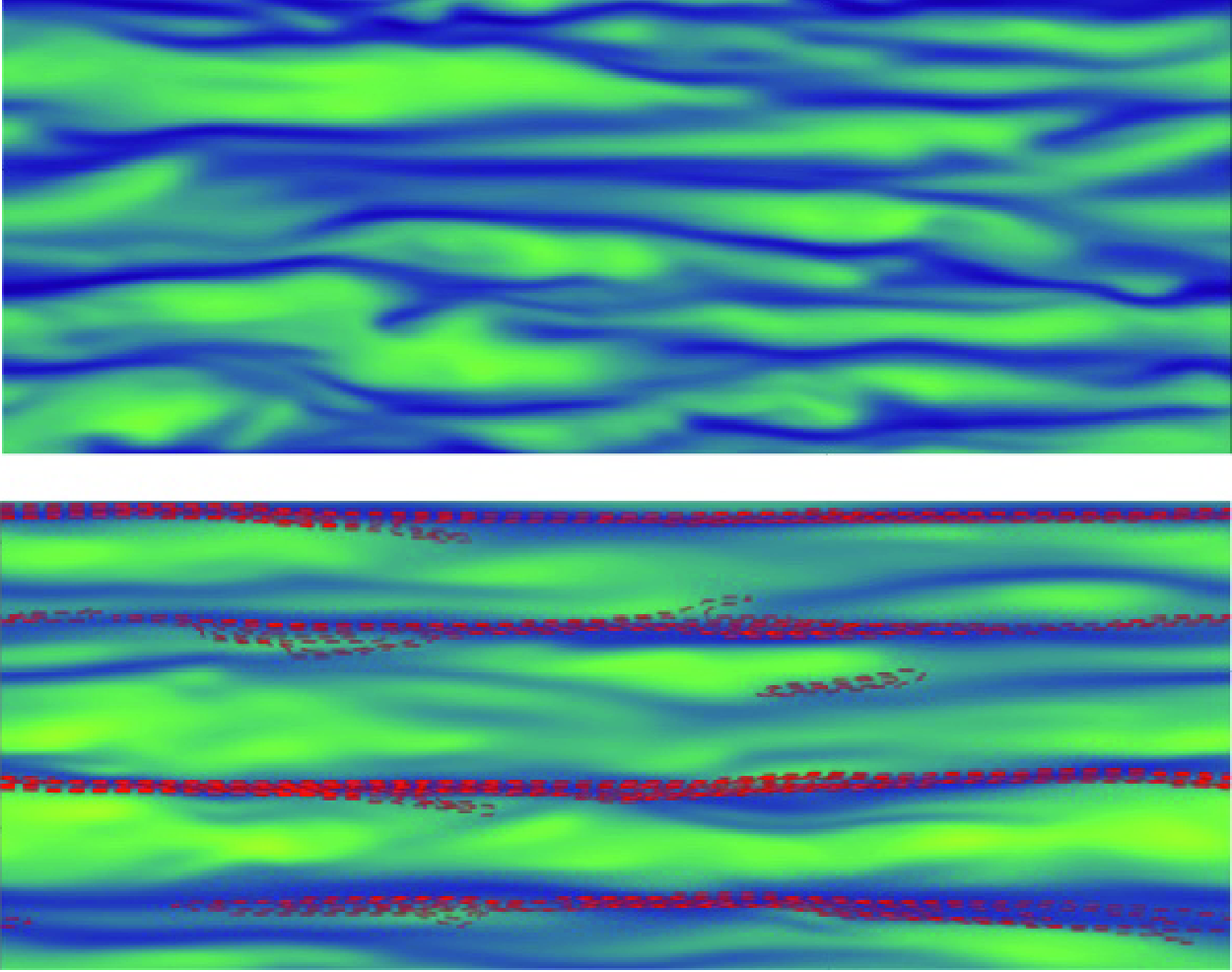
Using clean numerical simulation (CNS) in which artificial numerical noise is negligible over a finite, sufficiently long interval of time, we provide evidence, for the first time, that artificial numerical noise in direct numerical simulation (DNS) of turbulence is approximately equivalent to thermal fluctuation and/or stochastic environmental noise. This confers physical significance on the artificial numerical noise of DNS of the Navier–Stokes equations. As a result, DNS on a fine mesh should correspond to turbulence under small internal/external physical disturbance, whereas DNS on a sparse mesh corresponds to turbulent flow under large physical disturbance. The key point is that all of them have physical meanings and so are correct in terms of their deterministic physics, even if their statistics are quite different. This is illustrated herein. Our paper provides a positive viewpoint regarding the presence of artificial numerical noise in DNS.
Self-injurious behaviors (SIB) are common in autistic people. SIB is mainly studied as a broad category, rather than by specific SIB types. We aimed to determine associations of distinct SIB types with common psychiatric, emotional, medical, and socio-demographic factors.
Methods
Participants included 323 autistic youth (~50% non−/minimally-speaking) with high-confidence autism diagnoses ages 4–21 years. Data were collected by the Autism Inpatient Collection during admission to a specialized psychiatric inpatient unit (www.sfari.org/resource/autism-inpatient-collection/). Caregivers completed questionnaires about their child, including SIB type and severity. The youth completed assessments with clinicians. Elastic net regressions identified associations between SIB types and factors.
Results
No single factor relates to all SIB types. SIB types have unique sets of associations. Consistent with previous work, more repetitive motor movements and lower adaptive skills are associated with most types of SIB; female sex is associated with hair/skin pulling and self-rubbing/scratching. More attention-deficit/hyperactivity disorder symptoms are associated with self-rubbing/scratching, skin picking, hair/skin pulling, and inserts finger/object. Inserts finger/object has the most medical condition associations. Self-hitting against surface/object has the most emotion dysregulation associations.
Conclusions
Specific SIB types have unique sets of associations. Future work can develop clinical likelihood scores for specific SIB types in inpatient settings, which can be tested with large community samples. Current approaches for SIB focus on the behavior functions, but there is an opportunity to further develop interventions by considering the specific SIB type in assessment and treatment. Identifying factors associated with specific SIB types may aid with screening, prevention, and treatment of these often-impairing behaviors.