To save content items to your account,
please confirm that you agree to abide by our usage policies.
If this is the first time you use this feature, you will be asked to authorise Cambridge Core to connect with your account.
Find out more about saving content to .
To save content items to your Kindle, first ensure no-reply@cambridge.org
is added to your Approved Personal Document E-mail List under your Personal Document Settings
on the Manage Your Content and Devices page of your Amazon account. Then enter the ‘name’ part
of your Kindle email address below.
Find out more about saving to your Kindle.
Note you can select to save to either the @free.kindle.com or @kindle.com variations.
‘@free.kindle.com’ emails are free but can only be saved to your device when it is connected to wi-fi.
‘@kindle.com’ emails can be delivered even when you are not connected to wi-fi, but note that service fees apply.
Host–parasite adaptation is crucial for evolutionary success of a parasite. The nematode Angiostrongylus cantonensis has a heterogenic life cycle involving molluscs as intermediate hosts and rats as definitive hosts. Several mollusc species are susceptible hosts of A. cantonensis, allowing the development of first-stage larvae (L1) into third-stage larvae (L3). Changes in the metabolism of infected molluscs have been demonstrated, disturbing regular routes and inducing host defence mechanisms. This study aimed to identify changes in the proteomic content of Phyllocaulis spp. mucus during A. cantonensis infection. Proteins were extracted from the mucus samples of infected and non-infected slugs and identified using liquid chromatography–tandem mass spectrometry. We found 26 up-regulated and 15 down-regulated proteins in infected slugs compared to non-infected slugs. Protein profiles are promising markers of parasite infection, and a better understanding of proteomic profiles during infection may help inform in vivo studies and promote new tools for the non-invasive identification of infected hosts.
Palliative care (PC) professionals confront the suffering and mortality of their patients, adding to the conventional stressors related to work dynamics or personal life. However, the specific stressors inherent in end-of-life (EOL) care and their relation with the mental health of these professionals, remain inadequately explored. This study seeks to examine the respective roles of various stressors encountered by PC professionals and their associations with mental health. Additionally, it aims to elucidate the relationships between specific psychosocial factors (psychological resources or work environment perceptions) and mental health within the context of stress associated with PC.
Method
An online questionnaire was developed and distributed to PC professionals in France (e.g., doctors, nurses, care assistants, psychologists). The questionnaire contained measures of stress experienced in the last 6 months (personal, professional, or EOL); measures of mental health; and measures of psychosocial factors (perceptions of work environment and psychological resources).
Results
Three hundred and seventy-nine participants completed the entire questionnaire in November 2022. Among the various stress factors assessed, the accumulation of EOL care emerged as a robustly linked stressor to poorer mental health. In this specific context of EOL care stress, self-compassion and psychological flexibility are significantly related to well-being and mental health, even when other psychosocial factors related to the work environment are statistically controlled.
Significance of results
This study is the first to highlight the main stressor affecting the well-being of PC professionals – the accumulation of EOL care – along with the key resources – psychological flexibility and self-compassion – that are associated with their well-being.
Schistosomiasis is a parasitic disease that imposes a significant burden on society. The eggs are the primary pathogenic factor in schistosomiasis, and their accumulation in liver could lead to the formation of granulomas and liver fibrosis. However, the metabolic changes in liver resulting from schistosomiasis remain poorly understood. We established a mouse model of schistosomiasis japonica, where the eggs accumulate in the liver and form egg granulomas. We used mass spectrometry imaging to analyze the differences in metabolites among various liver regions, including the liver tissue from normal mice, the liver area outside the granulomas in schistosomiasis mice, and the granuloma region in schistosomiasis mice. There were significant differences in metabolites between different liver regions, which enriched in metabolic pathways such as the biosynthesis of unsaturated fatty acids, taurine and hypotaurine metabolism, glycerophospholipid metabolism, glycolysis/gluconeogenesis, purine metabolism, arachidonic acid metabolism, and bile secretion. In normal liver tissue, higher concentrations of oleic acid (FA (18:1)), eicosapentaenoic acid (FA (20:5)), and L-glutamine were observed. In liver regions outside the granulomas, D-glucose and pyruvic acid were elevated compared to those in normal mice. Taurine increased in the liver of schistosomiasis. Meanwhile, there were elevated uric acid and spermidine in the egg granulomas. We employed mass spectrometry imaging technology to investigate metabolic reprogramming in liver of Schistosoma japonicum-infected mice. We explored the spatial distribution of differential metabolites in liver of schistosomiasis including unsaturated fatty acids, taurine, glutamine, spermidine, and uric acid. Our research provides valuable insights for further elucidating metabolic reprogramming in schistosomiasis.
Bovine trichomoniasis is a venereal disease that causes significant losses in the US beef industry. The USDA Animal and Plant Health Inspection Service views bovine trichomoniasis as endemic and delegates control to state agencies and producers. Disease management’s positive externalities are not reflected in a producer’s profit maximization problem, leading to potentially suboptimal levels of control. Our objective was to assess the economic impacts of 50% and 100% reductions of herd-level bovine trichomoniasis prevalence. The cumulative present value of net welfare increased by $388.856 and $193.222 million under the 100% and 50% scenarios, respectively. Feeder cattle producers and retail beef consumers benefit most from enhanced control.
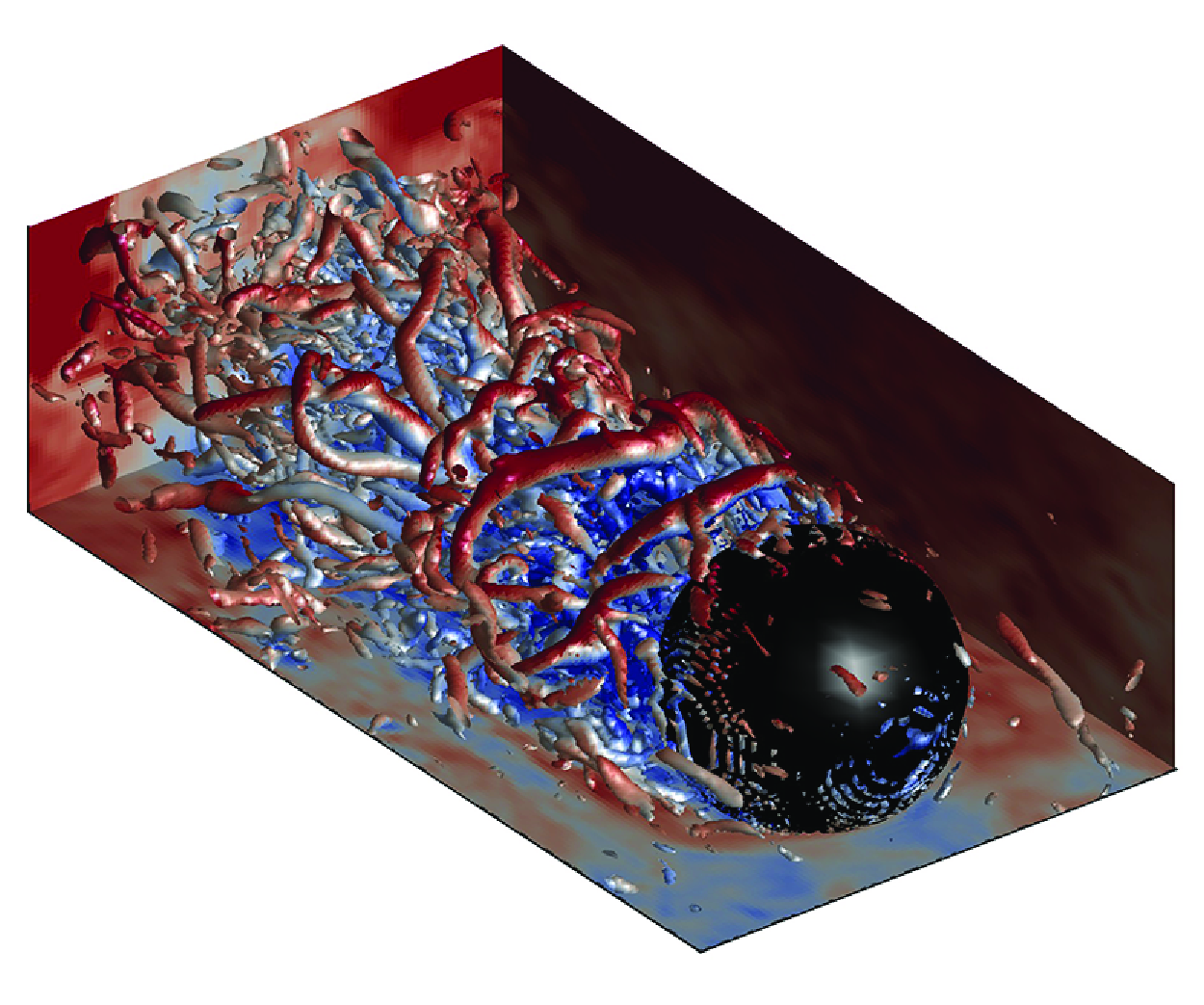
We perform simulations of a two-fluid–structure interaction problem involving liquid–gas flow past a fully submerged stationary circular cylinder. Interactions between the liquid–gas interface with finite surface tension and flow disturbances arising from the cylinder induce a variety of interfacial phenomena and wake structures. We map different interface regimes in a parameter space defined by the Bond number $Bo \in [100, 5000]$ and the submergence depth $h/D \in [1, 2.5]$ of the cylinder while keeping the Reynolds (Re) and Weber (We) numbers fixed at 150 and 1000, respectively. The emerging interface features are classified into three distinct regimes: interfacial waves generated by Strouhal vortices, the entrainment of multi-scale gas bubbles and the reduced deformation state. In the interfacial wave regime, we demonstrate that the frequency of transverse interface fluctuations at a specific streamwise location is identical to the vortex shedding frequency. Additionally, the wavelength of interfacial waves is determined by the size of vortex pairs consisting of alternating Strouhal vortices. In the gas entrainment regime at $ Bo = 1000$, our bubble-size distributions reveal that the entrained bubbles have sizes ranging from one to two orders of magnitude smaller than the cylinder. These multi-scale bubbles are formed primarily through plunging and surfing breakers at $h/D = 2.5$. In contrast, at $h/D = 1$, smaller bubbles initially emerge from the breakup of a gas finger. Over time, some of these bubbles grow in size through coalescence cascades. The influence of $ Re \in [50, 150]$ and $ We \in [700, 1100]$ on gas entrainment is quantified in terms of mean bubble size and count. Lastly, we demonstrate how the deformability of the liquid–gas interface drives the hydrodynamic lift force acting on the cylinder. The net downward lift materializes only in the gas entrainment and reduced deformation regimes due to the broken symmetry of the front stagnation point. While our study focuses on two-dimensional simulations, we also provide insights into the three-dimensional gas entrainment mechanism for one of the extreme cases at $h/D = 1$.
Previous research indicates that strong right-hand preference predicts performance in other skills, such as vocabulary size and executive function (EF). The purpose of this study was to assess the relationship between these functions, as well as social competence (SC), in a sample of preschool children. We used parent questionnaires and/or tabletop assessments to measure hand preference, fine motor skills, language, EF, and SC in 81 three- to five-year-old children. The results strengthened the evidence of a connection between right-hand use for pointing and vocabulary performance but indicated that right-hand use was not related to EF or SC. Further, the findings revealed a reciprocal connection between vocabulary and SC as well as EF and SC, but not vocabulary and EF. We discuss the implications of these connections for early childhood development.
Each year, I brace for National Hispanic Heritage Month, the intensely rich and active national holiday that takes months to plan, weeks to execute, and days from which to recover. With community partners, we often discuss how to best make use of this public holiday to spotlight our most pressing needs. As an educator, I use this public holiday to show students and colleagues, who are ever-more concerned about curricular alignment with workforce needs, about the importance of my mother tongue and its superpower to bridge communication in our multilingual nation. In the United States, more than 40 million people speak Spanish as their first language and there are more than 50 million speakers of Spanish. We can use this national public holiday to unearth and commemorate more widely – and loudly – that Spanish is also an American language. However, we might also realize that honoring our national Hispanic heritage needs more than one month.
Charcoal economies in central-east Africa are deep and powerful: they connect military and state financing with everyday family cooking. This article, based on new fieldwork in the understudied charcoal economy in South Sudan, explores the hierarchies and systems of self-employed producers, cash-for-piecework workers, middlemen and transporters, large-scale investors, and the public and defence sector financiers, landlords, brokers and security providers who all work in this political economy of forestry and charcoal-making. Drawing on local colonial archives and extensive fieldwork over 2020–2022, we break down the forms of work, investment and exploitation across this historical post/colonial landscape of labour, tree cultures, land rights and regional trade. In doing this we expand and escape the dominant and neatening metaphor of the value chain; we present a wider view of the expansion of the armed, privatised state economy; and we highlight current debates over the value, commodification and sale of forests and rural life.
Safety accounts of knowledge intend to explain why certain true and intuitively justified beliefs fail to be knowledge in terms of such beliefs falling prey to a modal veritic type of luck. In particular, they explain why true and intuitively justified beliefs in “lottery propositions” (highly likely propositions reporting that a particular statistical outcome obtains) are not knowledge. In this paper, I argue that there is a type of case involving lottery propositions that inevitably lies beyond the scope of any reasonable safety account of epistemic luck. I offer counterexamples to accounts of epistemic luck in terms of safety conditions that involve both “locally” and “globally” reliable ways of forming beliefs in nearby worlds. All such counterexamples present a lottery case illustrating the next possibility: the process of selecting the lottery winner might be such that any world in which it delivers a different outcome is extremely far away from the actual world. In addition to being a case of safe ignorance, this type of lottery case shows that, ultimately, either veritic epistemic luck is not unsafe true belief or beliefs in lottery propositions are not epistemically luckily true.
Haemosporidians constitute a monophyletic group of vector-borne parasites that infect a wide range of vertebrate hosts, including Neotropical lizards. The remarkable diversity of these host-parasite associations and inadequate research on certain parasite groups have resulted in controversial haemosporidian taxonomy. Herein, we rediscover erythrocytic and non-erythrocytic haemosporidians infecting golden tegus (Tupinambis teguixin) from Brazil and Colombia. The erythrocyte-inhabiting parasite belongs to Plasmodium sp., and the non-erythrocytic form was identified as Saurocytozoon tupinambi, previously attributed to the Family Leucocytozoidae. These non-pigmented haemosporidian parasites do not multiply in the blood. The relationships between the Saurocytozoon and Leucocytozoidae species were discussed for many years, especially during the 1970s. However, cytochrome b (cytb) sequences and the mitochondrial genomes recovered for this species strongly support classifying this parasite as a Plasmodium taxon. Therefore, we proposed a new combination for this parasite, Plasmodium (Saurocytozoon) tupinambi comb. nov., where Saurocytozoon is retained as a subgenus due to its distinct morphology. These results reinforce that a broader definition of Plasmodiidae must include saurian parasites that develop non-pigmented leucocytozoid-like gametocytes.
Let M be a von Neumann algebra, let $\varphi $ be a normal faithful state on M and let $L^p(M,\varphi )$ be the associated Haagerup noncommutative $L^p$-spaces, for $1\leq p\leq \infty $. Let $D\in L^1(M,\varphi )$ be the density of $\varphi $. Given a positive map $T\colon M\to M$ such that $\varphi \circ T\leq C_1\varphi $ for some $C_1\geq 0$, we study the boundedness of the $L^p$-extension $T_{p,\theta }\colon D^{\frac {1-\theta }{p}} MD^{\frac {\theta }{p}}\to L^p(M,\varphi )$ which maps $D^{\frac {1-\theta }{p}} x D^{\frac {\theta }{p}}$ to $D^{\frac {1-\theta }{p}} T(x) D^{\frac {\theta }{p}}$ for all $x\in M$. Haagerup–Junge–Xu showed that $T_{p,{\frac {1}{2}}}$ is always bounded and left open the question whether $T_{p,\theta }$ is bounded for $\theta \not ={\frac {1}{2}}$. We show that for any $1\leq p<2$ and any $\theta \in [0, 2^{-1}(1-\sqrt {p-1})]\cup [2^{-1}(1+\sqrt {p-1}), 1]$, there exists a completely positive T such that $T_{p,\theta }$ is unbounded. We also show that if T is $2$-positive, then $T_{p,\theta }$ is bounded provided that $p\geq 2$ or $1\leq p<2$ and $\theta \in [1-p/2,p/2]$.
While reformulation policies are commonly used to incentivise manufacturers to improve the nutrient profile of the foods and beverages they produce, only a few countries have implemented mandatory reformulation policies. This paper aimed to review evidence on the design, implementation challenges and effectiveness of mandatory reformulation policies and compare them to voluntary reformulation policies. The systematic search retrieved seventy-one studies including twelve on mandatory reformulation policies. Most mandatory reformulation policies were aimed at reducing trans-fatty acids or sodium in foods. Overall, mandatory reformulation policies were found to be more effective than voluntary ones in improving dietary intakes. Mandatory policies were implemented when voluntary policies either failed or were found to be insufficient to improve the composition of foods. Typical features of mandatory policies could also improve the design of voluntary policies. Examples include strict but attainable targets and a tight monitoring of compliance.
This article documents a trend of declining flexibility in share repurchase policies over the last 4 decades. We show that repurchases have become particularly sticky for firms with repurchase programs in place. We also exploit the additional inflexibility within existing repurchase programs to show that repurchase stickiness can have real effects for firms. Using the 2008 financial crisis as a shock to firms’ ability to raise capital, we find that firms with ongoing share repurchase programs ending after Dec. 2007 reduced investment, employment, and R&D spending by more than similar firms with programs ending before the onset of the crisis.
Mangrove restoration efforts have been ongoing, but with varying levels of success, requiring spatial and temporal monitoring to better understand the stocks and drivers of success. Here, we used multi-spectral remote sensing and spatial regression techniques to examine mangrove distribution and restoration potential in the Vietnamese Southern Coastal (VSC) region from 1988 to 2023, an area where multiple episodes of mangrove restoration have been attempted over the past decades. Our results show that 51.5% of the mangrove area has recovered from previous losses, while 48.5% has been lost during the 1988–2023 period. Significant gains were observed between 2018 and 2023, accounting for 77.8% of the total restoration. However, over 40,000 ha of mangroves were lost during each decade between 1988 and 2018, primarily due to land-use changes. Regression analyses estimated a sustainable mangrove cover increase of 9.9% (23,407 ha) and persistence of 22.5% (52,936 ha), mainly in protected areas and low-impact zones. Conversely, 9.8% (23,056 ha) of mangroves in erosion-prone and human-disturbed regions face continued decline. Our study demonstrated the effectiveness of integrating long-term Normalised Difference Vegetation Index time-series analysis with spatial regression to monitor mangrove ecosystems. These techniques offered a scalable framework for global mangrove monitoring and restoration planning, supporting evidence-based conservation policies.
Founded a century ago upon the initiative of three European men, each with links to colonial administration or mission, the International African Institute subsequently developed in directions that could hardly have been predicted. Most of those directly involved in the first two decades were from Belgium, Britain, France, Germany, Italy and Switzerland, including a growing number of academics. In addition to promoting creative writing in Africa and a common orthography for African languages, the Institute secured private American funding for a big research programme involving social anthropological fieldwork. After 1945, with decolonization on the horizon, the focus was on systematically producing ethnographic and linguistic handbooks. From the 1960s onwards the Institute endeavoured to shake off its remaining links to colonialism and – to a modest degree – to africanize itself. Its successes lay in organizing a series of International African Seminars, held at newly emerging African universities, and in continuing to produce the journal Africa, as well as several series of monographs.
The marketing of unhealthy foods has been implicated in poor diet and rising levels of obesity. Rapid developments in the digital food marketing ecosystem and associated research mean that contemporary review of the evidence is warranted. This preregistered (CRD420212337091)1 systematic review and meta-analysis aimed to provide an updated synthesis of the evidence for behavioural and health impacts of food marketing on both children and adults, using the 4Ps framework (Promotion, Product, Price, Place). Ten databases were searched from 2014 to 2021 for primary data articles of quantitative or mixed design, reporting on one or more outcome of interest following food marketing exposure compared with a relevant control. Reviews, abstracts, letters/editorials and qualitative studies were excluded. Eighty-two studies were included in the narrative review and twenty-three in the meta-analyses. Study quality (RoB2/Newcastle–Ottawa scale) was mixed. Studies examined ‘promotion’ (n 55), ‘product’ (n 17), ‘price’ (n 15) and ‘place’ (n 2) (some > 1 category). There is evidence of impacts of food marketing in multiple media and settings on outcomes, including increased purchase intention, purchase requests, purchase, preference, choice, and consumption in children and adults. Meta-analysis demonstrated a significant impact of food marketing on increased choice of unhealthy foods (OR = 2·45 (95 % CI 1·41, 4·27), Z = 3·18, P = 0·002, I2 = 93·1 %) and increased food consumption (standardised mean difference = 0·311 (95 % CI 0·185, 0·437), Z = 4·83, P < 0·001, I2 = 53·0 %). Evidence gaps were identified for the impact of brand-only and outdoor streetscape food marketing, and for data on the extent to which food marketing may contribute to health inequalities which, if available, would support UK and international public health policy development.
Recent years have seen many cases where the moral transgressions of public figures have led to widespread disengagement from their work, such as no longer watching their shows or reading their books. In the academic context, this can manifest as not inviting an academic to speak, no longer citing or teaching their work, or even ending professional relationships. This paper aims to explore the question of whether there could be purely epistemic reasons that could underwrite such practices of disengagement; bracketing social, moral, or political concerns. In doing so, it addresses a common criticism: an academic’s moral transgression need not give us epistemic reasons to doubt the quality of their work, making disengaging unjustified. The main part of the paper investigates whether this criticism can be countered by viewing an academic’s moral transgressions as a defeater. After dismissing the option of undercutting defeat, it proposes a template argument for when there could be purely epistemic reasons for disengaging, namely if it takes place in areas where the moral transgression that motivates disengagement also functions as a higher order defeater.
Americans living in nineteenth-century Hong Kong and China's treaty ports encountered a contradiction. The British dominated elite foreign society, their political, social, and cultural agendas often setting the pace for life within the community. But as citizens of a country that had recently wrested its independence from its one-time imperial overlord, Americans arriving in China were ostensibly averse to imperialism and the culture of empire. They maintained a belief that theirs was a benevolent republic that championed international amity and self-determination. Still, as Elisa Tamarkin notes, if Americans were wary of the British Empire, many found the spectacle of it appealing—a tendency evident in Hong Kong and the foreign enclaves along China's coast. Americans eager to enter elite foreign society proclaimed newfound sympathies for British belligerence in China, in turn developing increasingly prejudiced opinions about their Chinese neighbours and staff. Their derisive expressions of racial difference reinforced efforts to reconcile Anglo-American cultural incongruities. Such sentiments reflect the entangled processes through which extraimperial groups such as Americans fashioned themselves as members of the colonial elite. I argue that through such processes, the British and Americans subordinated national rivalry in the interest of entrenching racial divisions between white and non-white communities.
This article provides the first comprehensive evidence that the return extrapolation behavior of investors leads to biases in the expectations of volatility. Lower past returns are associated with higher expectations of volatility when using the physical, risk-neutral, and survey measures to estimate volatility expectations. Consistent with the return extrapolation framework, recent past returns have a larger impact than distant past returns on volatility expectations. Biases in volatility expectations are i) distinct from extrapolating past realized volatility, ii) asymmetrically induced by recent past negative returns, and iii) lead investors to pay more to insure against the perceived higher expected volatility.