To save content items to your account,
please confirm that you agree to abide by our usage policies.
If this is the first time you use this feature, you will be asked to authorise Cambridge Core to connect with your account.
Find out more about saving content to .
To save content items to your Kindle, first ensure no-reply@cambridge.org
is added to your Approved Personal Document E-mail List under your Personal Document Settings
on the Manage Your Content and Devices page of your Amazon account. Then enter the ‘name’ part
of your Kindle email address below.
Find out more about saving to your Kindle.
Note you can select to save to either the @free.kindle.com or @kindle.com variations.
‘@free.kindle.com’ emails are free but can only be saved to your device when it is connected to wi-fi.
‘@kindle.com’ emails can be delivered even when you are not connected to wi-fi, but note that service fees apply.
Over the past decade the European Union (EU) has transformed sustainability into a dense matrix of legally binding ESG reporting obligations for companies. Compliance increasingly hinges on firms’ ability to collect and verify thousands of datapoints deep into global supply chains – an exercise that is costly, error-prone and may yield non-comparable results. (Semi-)centralised ESG data-sharing arrangements – shared hubs where suppliers post one or more verified sets of sustainability figures that all their customers can reuse – can restore some efficiency by eliminating duplicate requests and supplying standardised, audit-ready inputs, but this amplifies competition-law risk. Drawing on competition law and policy and recent Dutch banking practice, the paper devises a set of legal “firewalls” and access rules that neutralise collusive potential resulting from the information exchange that takes place while safeguarding smaller market players from exclusion. These safeguards are essential to ensure that ESG data collaboration supports – not hinders – the EU’s Twin Transition towards a green and digital economy.
The aim of this study was to describe how the detection of protozoan and helminth parasites has been affected by the introduction of polymerase chain reaction (PCR) and changes in test algorithms. We extracted data about faecal samples tested for parasites (n = 114839) at five Norwegian clinical microbiology laboratories. Samples were classified into prePCR or postPCR depending on whether they were submitted before or after the introduction of PCR, and into diagnostic episodes (n = 99320). The number of diagnostic episodes increased 3.7-fold from prePCR to postPCR. Giardia positive episodes doubled, the positivity rate decreased from 2.0% to 1.3%. Cryptosporidium was hardly detected prePCR and increased to a positivity rate of 1.2%. Entamoeba histolytica was rarely found. Episodes examined for helminths decreased 51%, the number of positive episodes decreased 34%. Samples from immigrants were more likely to be positive for Giardia, E. histolytica, or helminths and less likely to be Cryptosporidium positive. During the COVID-19 pandemic, the number of Giardia and helminth-positive episodes decreased. Cryptosporidium-positive episodes remained unchanged. The implementation of multiplex PCR for protozoa led to a doubling of Giardia cases and a better test for Cryptosporidium. Fewer microscopy examinations raise concerns that helminth infections may be overlooked.
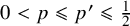
Let n be a positive integer, let $0<p\leqslant p'\leqslant \frac 12$, and let $\ell \leqslant pn$ be a nonnegative integer. We prove that if $\mathcal {F},\mathcal {G}\subseteq \{0,1\}^n$ are two families whose cross intersections forbid $\ell $—that is, they satisfy $|A\cap B|\neq \ell $ for every $A\in \mathcal {F}$ and every $B\in \mathcal {G}$ – then, setting $t:= \min \{\ell ,pn-\ell \}$, we have the subgaussian bound

Multicenter clinical trials are essential for evaluating interventions but often face significant challenges in study design, site coordination, participant recruitment, and regulatory compliance. To address these issues, the National Institutes of Health’s National Center for Advancing Translational Sciences established the Trial Innovation Network (TIN). The TIN offers a scientific consultation process, providing access to clinical trial and disease experts who provide input and recommendations throughout the trial’s duration, at no cost to investigators. This approach aims to improve trial design, accelerate implementation, foster interdisciplinary teamwork, and spur innovations that enhance multicenter trial quality and efficiency. The TIN leverages resources of the Clinical and Translational Science Awards (CTSA) program, complementing local capabilities at the investigator’s institution. The Initial Consultation process focuses on the study’s scientific premise, design, site development, recruitment and retention strategies, funding feasibility, and other support areas. As of 6/1/2024, the TIN has provided 431 Initial Consultations to increase efficiency and accelerate trial implementation by delivering customized support and tailored recommendations. Across a range of clinical trials, the TIN has developed standardized, streamlined, and adaptable processes. We describe these processes, provide operational metrics, and include a set of lessons learned for consideration by other trial support and innovation networks.
The peace agreement signed by the Colombian government and the FARC guerrilla group in 2016 marked a historic turning point for the country and its long history of civil war. The Colombian state agreed with the FARC to carry out a rural reform to ensure redistribution and access to land, the right to food and a boost to the rural economy that would allow farmers to live in dignity. The peace agreement includes commitments to change some elements of the state’s current agricultural and industrial policies, which could raise questions from Colombia’s trading partners about their trade-related implications. This chapter argues that such measures are consistent with Colombia’s obligations under the WTO Agreement on Agriculture and Colombia’s preferential trade agreements. Right to food measures (such as domestic support for small agricultural producers in the 2016 Peace Agreement’s rural reform) are within policy space under the Agreement on Agriculture because they do not affect international trade. Other government policies fall within Colombia’s international trade commitments because they aim to enable a food economy system in which rural communities can harvest their food and build improved productivity networks that meet their economic and social needs. This chapter shows how local attempts to implement a particular agricultural policy are framed within international trade rules.
Dating the shear zone activity remains challenging and depends on geochronometer reactivity. We investigate the Forno-Rosarolo Shear Zone (Ivrea-Verbano Zone, Italy), developed in the intermediate-low continental crust under amphibolite-facies conditions. Sheared paragneisses and calc-silicates were dated using in situ U–(Th–)Pb monazite and titanite geochronology. Three monazite generations (MNZI-III) were identified based on microstructural position, internal features, chemical zoning (Th, Y) and isotopic data. Deformation was mainly recorded by MNZII, with high-Y domains yielding Triassic dates (average ages of: 238±8 and 222±8 Ma). Rare, highly fractured or porous MNZIII grains provided younger dates (202±8 to 184±6 Ma). MNZI, abundant in protomylonites, retains regional metamorphism, linking monazite U–Th–Pb data to fabric evolution. Titanite shows different zoning features and chemistry as a function of the surrounding mineral assemblage: (i) strongly zoned grains are mostly associated with silicate-rich layers; (ii) homogeneous grains are generally within the silicate-poor layers. Both types show a decoupling between chemistry, almost completely related to the peak metamorphism, and U–Pb isotopes. Deformation microstructures promoted a total reset of the U–Pb dataset at the beginning of deformation and a subsequent volume diffusion through the grains: the innermost domains of both titanite types provide a Triassic lower intercept age (240±5 Ma) while the rims/tips, locally coinciding with high strained portions, define an alignment of isotopic data with a Jurassic lower intercept age (186±6 Ma). This study highlights how combining monazite and titanite geochronology refines the timing and duration of deformation, particularly in large-scale shear zones involving different lithologies.
This article explores Britain and the Soviet Union’s reciprocal exhibitions in 1961. Using methods from diplomatic and cultural history the article finds that, while typical of the cultural encounters that punctuated moments of Cold War crisis, these exhibitions formed part of a broader British policy of cultural diplomacy. The British state worked closely with the exhibition companies to present subtle propaganda about the British way of life at both displays. Britain’s key propaganda message was that a system of free enterprise was vital to a good political system and economy. However, while the fairs were nominally organised by an independent company many of the company’s directors were part of a network that existed between government, the civil service and business. The government was involved at all stages. A warm attitude was displayed towards the Soviets by many British people when the reciprocal fair opened in London, despite the less positive reception of Soviet consumer goods in the press. The British state sought to limit the Soviets’ propaganda gain. It therefore ensured that it was the trade fair’s organisers rather than communist supporting organisations who received the visit of the world’s first cosmonaut, Yuri Gagarin.
Special and differential treatment (SDT) has a long history in international trade negotiations. Born as a response to the development gap in the multilateral fora, S&DT has evolved as a set of substantive and procedural rules aimed at providing developing countries with broader policy space. Latin-American countries, which had fostered the creation and improvement of S&DT rules in the GATT-WTO, have faced different challenges in the negotiation of these provisions in their preferential trade agreements (PTAs). This chapter explores the scope of S&DT principles and operative clauses included in Latin-American trade agreements since the early 2000s. The main contributions of this chapter are, first, to present S&DT as a cross-cutting topic in PTAs; second, to bring to light the evolution of development-related policy space in trade agreements recently signed in the region; and third, to assess differences in the legal S&DT architecture across PTAs.
Edited by
Lisa Vanhala, University College London,Elisa Calliari, International Institute for Applied Systems Analysis, Vienna and Euro-Mediterranean Centre on Climate Change, Venice
This chapter focuses on how Bangladesh, a country with extensive experience of climate-related disasters, has dealt with loss and damage in its national policymaking. In response to its high vulnerability, Bangladesh is – among the countries studied in this book – a role model in disaster reduction and preparedness. However, the government’s efforts do not meet the scope of needs connected to climate impacts on the ground. Drawing on a review of relevant policy documents and semi-structured interviews with key public and civil society actors, the chapter analyzes national-level engagement with loss and damage from climate change in Bangladesh. It demonstrates that while fundamentally all ministries in Bangladesh are involved in averting, minimizing, or addressing loss and damage, the concept is yet to be fully integrated in national policy. The chapter also finds that existing policies tend to focus on addressing economic losses and overlook the significant noneconomic losses from climate change. It is argued that integrating loss and damage into national policies, establishing a fair national mechanism, and creating a comprehensive database of loss and damage data would strengthen Bangladesh’s role as both an advocate for loss and damage governance and a leader in climate response.
We study a specific practice of predatory lending: Borrowers being rejected and approved in rapid succession by the same lender. We show that in such cases borrower and contract characteristics and ex post performance are consistent with predatory steering. Steered borrowers are associated with groups with lower financial sophistication. They are more likely to enter non-amortizing contracts with high profit margins that are quickly securitized. Steered borrowers default less in boom years when refinancing is easy. However, their performance deteriorates sharply once falling prices trap them in contracts with rising payments, reflecting the long-term costs of predatory lending.
Chapter 4 presents the lexical dimension to Balkan linguistic convergence, treating first loanwords from various sources, Balkan and non-Balkan, into the Balkan sprachbund languages, at successive historical periods, e.g. from Greek and Latin in ancient times, from Slavic in Byzantine times, from Romance languages during the Crusades, from Turkish in the Ottoman period, and, more recently, from West European languages. The borrowing material surveyed includes both words and affixes. A key innovative construct is introduced for the typology of loanwords by focusing on a significant group of items that must have been borrowed through the medium of conversational interaction. Such conversationally based loans, neologistically referred to as “ERIC” loans (for those “Essentially Rooted In Conversation”) are exemplified through the borrowing of various closed class items, including both grammatical forms like complementizers and pronouns and discourse markers, many of which come from Turkish. Particular attention is given as well to taboo words in the Balkans, to shared phraseology—including shared idioms and proverbs—to shared semantics (isosemy), to shared expressive forms involving reduplication and onomatopoeia. Finally, the lexical side of shared style and register is discussed.
We have focused in this final chapter on the lessons learned about sprachbunds in general and the Balkans in particular, as the originally identified, and still relevant, exemplar of the concept. But there are important findings having to do with contact linguistics that are worth recounting here. We have already mentioned our innovative notion of ERIC loans, and we trust that our arguments for this notion can be relevant for scholars working in other regions. Similarly, we hope that our enunciation of our “four-M model” for sprachbund formation will find echoes and applicability elsewhere.1 But especially, given the continued, if unjustifiably controversial, status of the claim that the borrowing of structure and grammar is possible, a controversy brought to the fore in the modern linguistic era through the discussion in Thomason & Kaufman 1988, we consider it important also to remind readers, in closing, that the Balkans offer numerous instances in which structure and/or grammar have clearly made their way from one grammatical system into another.
Edited by
Lisa Vanhala, University College London,Elisa Calliari, International Institute for Applied Systems Analysis, Vienna and Euro-Mediterranean Centre on Climate Change, Venice
What explains a preference for one trading partner over another? We present three broad answers to this question that focus on economic interests, geopolitical concerns, and political ideology. Empirically, we address the question by investigating the trade partner preferences of citizens and members of parliament in Latin America. With respect to the former, we rely on data from the Latinobarómetro that asked respondents about their evaluation of trade with the United States and China. In terms of the latter, we use the Latin American Elites Database, which contains data from surveys of legislators since 1994. By combining data gathered from citizens and political elites, we can highlight similarities and differences in trade partner preferences across these two types of actors. The results indicate that political ideology is an important predictor of preferences for trading partners for both political elites and citizens. By contrast, economic considerations only matter for legislators’ preferences and geopolitical considerations only for citizens’ preferences.
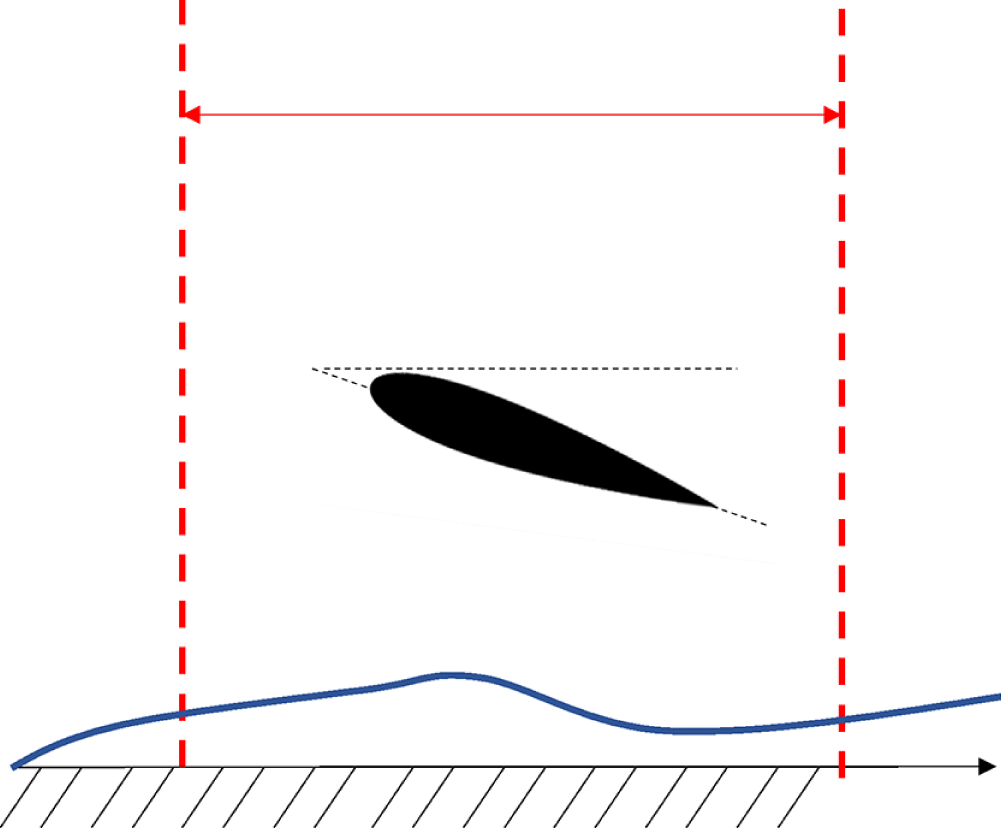
Experiments are carried out in a smooth-wall turbulent boundary layer (TBL) ($\textit{Re}_\tau \geq 3500$) subjected to different pressure gradient (PG) histories. Oil-film interferometry is used to measure the skin friction evolution over the entire history while wide-field particle image velocimetry captures the mean flow field. This data are used to demonstrate the influence of PG history on skin friction as well as other integral quantities such as displacement ($\delta ^*$) and momentum thickness ($\theta$). Based on observations from the data, a new set of ordinary differential equations are proposed to model the streamwise evolution of a TBL subjected to different PG histories. The model is calibrated using a limited number of experimental cases and its utility is demonstrated on other cases. Moreover, the model is applied to data from large-eddy simulations of flows in adverse PG conditions (Bobke et al. 2017, J. Fluid Mech.820, 667–692). The model is subsequently used to identify the impact of PG history length on the boundary layer. This can also be interpreted as determining the spatial frequency response of the boundary layer to PG disturbances. Results suggest that short spatial variations in PGs primarily affect a small portion of the TBL evolution, whereas longer-lasting ones have a more extensive impact.
Edited by
Lisa Vanhala, University College London,Elisa Calliari, International Institute for Applied Systems Analysis, Vienna and Euro-Mediterranean Centre on Climate Change, Venice
Chile has begun to play a new leadership role on loss and damage in the international negotiations. Historically, Chile engaged little with loss and damage discussions in negotiations, but this changed with its presidency of the twenty-fifth Conference of Parties in 2019. Drawing on a review of the domestic policy landscape and institutional responses to loss and damage as well as fourteen interviews with key government, non-governmental organization, and private sector actors, this chapter suggests that while the presidency role acted as a driver for Chile taking the lead on the topic at the international level, the country’s economic identity acts as a constraint on the domestic development of adequate responses to loss and damage and on engagement with the loss and damage terminology. It also finds that Chile’s centralism and lack of ministerial coordination as well as the relatively institutionally weak position of the Ministry of the Environment limits more effective loss and damage governance. The chapter further argues that loss and damage as a concept has not permeated Chilean civil society. Finally, it demonstrates that Chile’s prioritization of economic growth and its extractivist economy undermine efforts to meaningfully address loss and damage at the national level.
A robust literature on the professional advancement of Chinese officials has paid comparatively little attention to an important elite group: the foreign policy bureaucracy. We introduce original data documenting over 11,000 career assignments of 1,357 senior officials in the foreign ministry from 1949 to 2023 and leverage these data to offer the first systematic analysis of who rises to the top of China’s foreign affairs system. We find that diplomats who spend a greater share of their careers in postings abroad are less likely to be promoted to higher ranks than diplomats who remain at home – and that these patterns persisted even after the professionalization of the foreign affairs bureaucracy. Meanwhile, the analysis finds only mixed evidence that diplomatic performance assists promotion. The data and analysis draw attention to the unique challenges of professional advancement in bureaucracies charged with managing China’s foreign relations.