To save content items to your account,
please confirm that you agree to abide by our usage policies.
If this is the first time you use this feature, you will be asked to authorise Cambridge Core to connect with your account.
Find out more about saving content to .
To save content items to your Kindle, first ensure no-reply@cambridge.org
is added to your Approved Personal Document E-mail List under your Personal Document Settings
on the Manage Your Content and Devices page of your Amazon account. Then enter the ‘name’ part
of your Kindle email address below.
Find out more about saving to your Kindle.
Note you can select to save to either the @free.kindle.com or @kindle.com variations.
‘@free.kindle.com’ emails are free but can only be saved to your device when it is connected to wi-fi.
‘@kindle.com’ emails can be delivered even when you are not connected to wi-fi, but note that service fees apply.
The capacity of river mouths to reduce storm surge water levels upstream, referred to as along-estuary attenuation, has been assessed by several studies. The coastal protection function of semi-enclosed water bodies such as lagoons and channels with narrow inlets remains less explored and generalization is hampered by differences in morphology and hydrodynamic forcing. Here we use a hydrodynamic model to investigate surge attenuation along a microtidal channel with a narrow inlet at the Baltic Sea coast of Germany called The Schlei. We quantify the importance of wind and the contribution of the barrier spit system, which is constricting the inlet, to the reduction of water levels at the landward end of the channel. In addition, we explore the role of dikes in the region for the reduction of peak water levels and coastal flooding. We find effective along-channel attenuation inside The Schlei in its current state, which is mostly a result of the channel’s narrows. However, reduction rates decrease under simplified sea-level rise scenarios. Furthermore, along-channel attenuation is highly variable and can change to substantial amplification depending on hydrometeorological forcing. The barrier spit contributes to along-channel attenuation whereas the effect of existing dikes (or their removal) for along-channel attenuation is negligible.
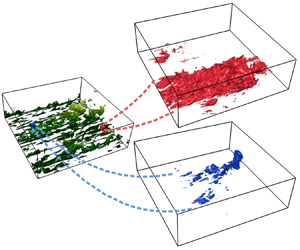
The causal relevance of local flow conditions in open-channel turbulence is analysed using ensembles of interventional experiments in which the effect of perturbing the flow within a small cell is monitored at some future time. When this is done using the relative amplification of the perturbation energy, causality depends on the flow conditions within the cell before it is perturbed, and can be used as a probe of the flow dynamics. The key scaling parameter is the ambient shear, which is also the dominant diagnostic variable for wall-attached perturbations. Away from the wall, the relevant variables are the streamwise and wall-normal velocities. Causally significant cells are associated with sweeps that carry the perturbation towards the stronger shear near the wall, whereas irrelevant ones are associated with ejections that carry it towards the weaker shear in the outer layers. Causally significant and irrelevant cells are themselves organised into structures that share many characteristics with classical sweeps and ejections, such as forming spanwise pairs whose dimensions and geometry are similar to those of classical quadrants. At the wall, this is consistent with causally significant configurations in which a high-speed streak overtakes a low-speed one, and causally irrelevant ones in which the two streaks pull apart from each other. It is argued that this is probably associated with streak meandering.
Across Latin American countries, there is remarkable heterogeneity in abortion legislation, ranging from full prohibition to legal elective abortion.1 However, abortion policy does not seem to clearly map onto implementation on the ground. On the one hand, even in countries with very restrictive abortion laws, (clandestine) abortion rates are comparatively high, and legislation that criminalizes abortion is rarely enforced (Blofield 2006; Htun 2003). On the other hand, in countries that allow abortion under all or some circumstances, access to abortion is not guaranteed. In Argentina, for instance, different reports have stressed the difficulty in accessing abortion procedures both before and after legalization was enacted in early 2021.2
The behaviour of mountain glaciers on decadal time scales is a useful indicator for assessing climate change. Although less monitored and studied than the ice sheet, local glaciers and ice caps along the coast of Greenland are substantial contributors to meltwater runoff and sea level rise. This study analyses the cumulative area, ice mass and Equilibrium Line Altitude (ELA) change that occurred on 4100 glaciers and ice caps in West Greenland from 1985 to approximately 2020, using remotely sensed data and including glaciers smaller than 1 km2 in the calculations. The glaciers involved in the study decreased in area by 1774 ± 229 km2 which corresponds to almost −15%. Their surface elevation decreased on average by 20.6 ± 3.9 m, corresponding to a rate of −0.5 ± 0.1 m w.e. a−1. The ELA shows a median regional rise of 150 m with marked local variability and higher median rise in the northern part of the study area. Strong regional gradients in ELA of individual glaciers are found, both towards the ice sheet and in areas where local orography affects precipitation. The observed high spatial variability of changes suggests that more monitoring on sub-regional level is needed.
Many real-world intertemporal decisions involve a group of two or more individuals making consensual decisions through group collaboration. Here, we ask how group collaboration affects intertemporal choices. In two experiments, participants completed intertemporal choices individually first (the precollaboration phase). Then, participants were placed into groups of two or three and completed a similar intertemporal task, with the group arriving at a consensual decision on each trial (the group collaboration phase). Finally, participants once again completed the intertemporal choices individually (the postcollaboration phase). Results showed that after group collaboration, the delay discounting significantly decreased compared to before collaboration both at group level and at individual level. The effect of group collaboration on individual intertemporal choices was no longer discernible by 1 week later. Therefore, the current research demonstrates the effectiveness of group collaboration and provides a way to nudge both groups and individuals to make farsighted choices.
Cognitive and psychiatric symptoms have been increasingly reported after severe acute respiratory syndrome coronavirus 2 infection, developing soon after infection and possibly persisting for several months. We aimed to study this syndrome and start implementing strategies for its assessment.
Methods
Consecutive patients, referred by the infectious disease specialist because of cognitive complaints after COVID-19, were neurologically evaluated. Neurological evaluation included a cognitive screening test (Montreal Cognitive Assessment, MoCA). Moreover, patients were invited to fill out a general symptom questionnaire and a self-administered multidimensional assessment of psychiatric symptoms, followed by a full psychiatric assessment if scores were above validated cutoffs.
Results
Of 144 referred patients, 101 (mean age 55.2±13.1, 63.4% females) completed the cognitive screening and the self-administered psychiatric questionnaire. Acute infection severity was low for most patients and the most common persisting symptoms were fatigue (92%), sleep problems (69.5%), and headache (52.4%). MoCA outlined cognitive deficits in ≥1 cognitive domain in 34% of patients, mainly in memory and attention. About 60% of patients presented depressive, anxiety, or stress-related symptoms. Psychiatric scale scores significantly correlated with overall symptom burden and MoCA score. No significant correlation was found between MoCA scores and overall symptom burden.
Conclusion
We hypothesize that persistent cognitive complaints after COVID-19 might reflect a concomitant or reactive psychopathological condition, possibly coupled with an infection-related impact on cognitive functions. The application of a combined neurological and psychiatric assessment seems crucial to appraise the nature of post-COVID-19 condition.
Ticks and tick-borne diseases affect humans, livestock, and wildlife in most regions of the globe. Although there are over 900 tick species globally, only approximately 10% of species are second to mosquitoes as major vectors of human and veterinary diseases. The 17 articles of this themed Special Issue highlight the current research trends associated with newly discovered tick species, concepts of tick evolution, new vaccinology approaches, factors affecting disease transmission, and factors affecting tick ecology and tick-borne disease epidemiology. Table 1 summarizes the articles in this Special Issue in alphabetical author order and Fig. 1 is a word cloud generated from the article titles. Of the 17 articles in this Special Issue, two are review articles (vaccinology) while the remaining 15 are original research articles. The topics range from tick control, to epidemiology, ecology, tick-borne disease control, tick-borne disease transmission, vaccine approaches, and the description of novel extant and extinct tick species. Fig. 2 is graphical representation of the articles within this Special Issue including tick hosts and the most representative tick species studied. The articles also include authors from most continents globally with first author contributions from Australia, Bangladesh, Brazil, Czech Republic, Germany, India, Mexico, Pakistan, South Africa, Spain, Turkey, United Arab Emirates, USA and Zambia. This issue is thus truly diverse which reflects the diversity of ticks, tick-borne diseases and they hosts they infest globally.
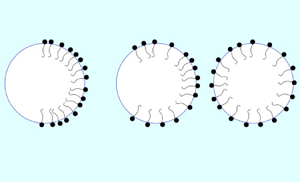
A model is formulated of a two-dimensional migrating, or swimming, inviscid bubble in a viscous fluid whose unsteady displacement is caused by the spreading over its surface of an initial distribution of insoluble surfactant. Assuming small capillary and Reynolds numbers, and a linear equation of state giving the surface tension as a function of surfactant concentration, the quasi-steady Stokes flow around the bubble is found analytically and explicit formulas are determined for the time-dependent bubble speed and its final overall displacement. At infinite surface Péclet number this is done using a complex version of the method of characteristics to solve a complex partial differential equation of Burgers type. For a finite non-zero surface Péclet number, the problem is shown to be linearizable by a complex variant of the classical Cole–Hopf transformation. The formulation allows general statements to be made on the bubble speed and its total net displacement in terms of the initial surfactant distribution. A weak finite-time singularity in the surface activity associated with an isolated clean point on the bubble surface is also identified and studied in detail.
This article examines recent measures undertaken by major commercial banks to mitigate and address human rights risks associated with their financial dealings in the arms industry. By reviewing the corporate policies of 20 leading banks that provide financing to top arms manufacturing and exporting companies, the article provides insights into three significant aspects of banks’ efforts: the development of defence sector policies, the implementation of risk assessments for adverse human rights impacts, and the application of exclusion clauses. These measures highlight the increasing recognition by banks of the need to address the ethical, social and human rights implications of financing arms deals, contributing to the broader regulatory and normative framework governing the arms industry.
New limit theory is provided for a wide class of sample variance and covariance functionals involving both nonstationary and stationary time series. Sample functionals of this type commonly appear in regression applications and the asymptotics are particularly relevant to estimation and inference in nonlinear nonstationary regressions that involve unit root, local unit root, or fractional processes. The limit theory is unusually general in that it covers both parametric and nonparametric regressions. Self-normalized versions of these statistics are considered that are useful in inference. Numerical evidence reveals interesting strong bimodality in the finite sample distributions of conventional self-normalized statistics similar to the bimodality that can arise in t-ratio statistics based on heavy tailed data. Bimodal behavior in these statistics is due to the presence of long memory innovations and is shown to persist for very large sample sizes even though the limit theory is Gaussian when the long memory innovations are stationary. Bimodality is shown to occur even in the limit theory when the long memory innovations are nonstationary. To address these complications, new self-normalized versions of the test statistics are introduced that deliver improved approximations that can be used for inference.
According to conventional wisdom, a great power engaging in international retrenchment regularly incurs tremendous costs. Following its withdrawal from a commitment abroad, the argument goes, windows of opportunity emerge that rivals exploit to their benefit, thus imposing significant costs on the retrenching great power. I argue that pundits and policymakers consistently overestimate the dangers associated with strategic withdrawals: great powers can – and in the past frequently have – successfully engaged in international retrenchment without creating opportunities for their rivals to gain significant strategic benefits. To make this case, I develop a new typology of international retrenchment strategies based on the kind and degree of disengagement they entail and demonstrate that most types do not regularly pave the way for rival gains. I support my argument through a series of plausibility probes: the Soviet retrenchment from Romania in the 1950s; the US retrenchment from Korea in the 1970s; and the US retrenchment from Western Europe in the 1990s.
During oscillatory wetting, a phase retardation emerges between contact angle variation and contact line velocity, presenting as a hysteresis loop in their correlation – an effect we term dynamic hysteresis. This phenomenon is found to be tunable by modifying the surface with different molecular layers. A comparative analysis of dynamic hysteresis, static hysteresis and contact line friction coefficients across diverse substrates reveals that dynamic hysteresis is not a result of dissipative effects but is instead proportionally linked to the static hysteresis of the surface. In the quest for appropriate conditions to model oscillatory contact line motion, we identify the generalized Hocking's linear law and modified generalized Navier boundary condition as alternative options for predicting realistic dynamic hysteresis.
This article compares China’s stance during the UNCLOS negotiations – the starting point of contemporary law of the sea, with its engagement in the latest development of negotiations on the United Nations agreement on biodiversity beyond national jurisdiction (BBNJ). It answers the question, how does China participate in these two important rules-making processes of the international law of the sea? By identifying salient positions China took in each set of lengthy negotiations and explaining the reasons behind, the article also aims to reflect what a rising China may bring to the international legal maritime order in the foreseeable future. The first part of this article, on the nature of China’s engagement in the UNCLOS negotiations, draws on archival study of official records of the UNCLOS III (1973–1982), as has been digitalized by the UN Office of Legal Affairs. The second part examines the period between the adoption of the UNCLOS (1982) and the start of the BBNJ process (2004), paying attention to China’s shifting practice towards the exploration and exploitation of the deep seabed mineral resources, and its concerns over the ratification of the UNCLOS and the 1995 FSA. Then the article focuses on China in the BBNJ negotiations – Working Groups, Preparatory Committee Meetings and Intergovernmental Conferences. Drawing upon the evolution of China’s positions over the past five decades, the article concludes with some insights on the likely future directions and implications of China’s engagement with the international law of the sea.
The main theories explaining electoral backlash against immigration focus on citizens’ cultural, economic, and security concerns. We test these predictions in Switzerland, which opened its labor market to neighboring countries in the 2000s. Employing a difference-in-differences design, we document a substantial rise in immigrant workers in Swiss border municipalities after the border opened. This was accompanied by a 6-percentage-point (95% confidence interval 2–10) increase in support for anti-immigrant parties, equivalent to a 32% rise at the mean. However, we find no adverse effects on citizens’ employment, wages, or subjective perceptions of economic, cultural, or security threats. Instead, we describe how far-right parties introduced novel narratives related to overcrowding to advance hostility toward immigrants. We provide evidence that this rhetoric targeted border municipalities, where it had the greatest impact on voters susceptible to political persuasion. Together, these findings suggest that elites can play a role in driving anti-immigrant votes.
Early intervention in psychosis (EIP) services improve outcomes for young people, but approximately 30% disengage.
Aims
To test whether a new motivational engagement intervention would prolong engagement and whether it was cost-effective.
Method
We conducted a multicentre, single-blind, parallel-group, cluster randomised controlled trial involving 20 EIP teams at five UK National Health Service (NHS) sites. Teams were randomised using permuted blocks stratified by NHS trust. Participants were all young people (aged 14–35 years) presenting with a first episode of psychosis between May 2019 and July 2020 (N = 1027). We compared the novel Early Youth Engagement (EYE-2) intervention plus standardised EIP (sEIP) with sEIP alone. The primary outcome was time to disengagement over 12–26 months. Economic outcomes were mental health costs, societal costs and socio-occupational outcomes over 12 months. Assessors were masked to treatment allocation for primary disengagement and cost-effectiveness outcomes. Analysis followed intention-to-treat principles. The trial was registered at ISRCTN51629746.
Results
Disengagement was low at 15.9% overall in standardised stand-alone services. The adjusted hazard ratio for EYE-2 + sEIP (n = 652) versus sEIP alone (n = 375) was 1.07 (95% CI 0.76–1.49; P = 0.713). The health economic evaluation indicated lower mental healthcare costs linked to reductions in unplanned mental healthcare with no compromise of clinical outcomes, as well as some evidence for lower societal costs and more days in education, training, employment and stable accommodation in the EYE-2 group.
Conclusions
We found no evidence that EYE-2 increased time to disengagement, but there was some evidence for its cost-effectiveness. This is the largest study to date reporting positive engagement, health and cost outcomes in a total EIP population sample. Limitations included high loss to follow-up for secondary outcomes and low completion of societal and socio-occupational data. COVID-19 affected fidelity and implementation. Future engagement research should target engagement to those in greatest need, including in-patients and those with socio-occupational goals.
Wind tunnel measurements of the incident turbulent velocity fields and axial forces on a horizontal axis turbine and porous disc analogues are reported. The models were tested in both a simulated atmospheric boundary layer (ABL) and in grid turbulence, allowing for a range of turbulence length scale to rotor diameter ratios to be considered. A theoretical framework to account for the combined effect of distortion and potential flow blocking in the induction zone is presented. In the case of very large length-scale turbulence to diameter ratios, where distortion effects are minimal, a quasi-steady approach is adopted for the effect of blocking. For the small length-scale ratio limit, the method is developed from the classical analyses for rapid distortion of turbulence and blockage from flow through a porous sheet of resistance. For general length-scale ratios, an efficient prediction method based on interpolation between the two length-scale ratio extremes is established. For very large length-scale ratios, a quasi-steady theory without distortion is appropriate for a rotor or disc in a simulated ABL. The small length-scale theory is applicable for tests conducted in grid turbulence. The results of the study can inform the prediction and interpretation of typical measurements of turbulence within the induction zone and the fluctuating loads on a rotor, at both prototype and full scale. This is of particular importance to fatigue load assessments.
Dualism holds that experiences and physical states are distinct in that neither sort of state is identical with or grounded in the other. Cognitive phenomenal realism holds that cognitive experiences are irreducible to sensory experiences. While dualism and cognitive phenomenal realism are logically orthogonal and usually discussed separately, I argue that dualism’s plausibility is sensitive to whether cognitive phenomenal realism is true. In particular, I argue that if cognitive phenomenal realism is true, then it bolsters the case for dualism via a cognitive knowledge argument that has several advantages over the standard sensory knowledge argument.
In this paper, we provide a theoretical framework justifying the existence of a correlation risk premium in a market with two traded assets. We prove that risk-neutral dependence can differ substantially from real-world dependence by characterizing the set of risk-neutral martingale measures. This implies that implied correlation can be significantly different with the realized correlation. Depending on the choice of the market regarding the pricing measure, implied correlation can be high or low. We label the difference between risk-neutral and real-world correlation the “correlation gap” and make the connection with correlation risk premium. We show how dispersion trading can be used to exploit this correlation gap and demonstrate how there can exist a negative correlation risk premium in the financial market.
This paper explores active wake-flow control on a notchback Ahmed body using genetically inspired optimization. Hotwire and particle image velocimetry measurements record velocity data and flow structures in the wake. Pulsed jets at four actuation slots (two at the roof trailing edge, two at the side trailing edges) dynamically control the wake to minimize aerodynamic drag. The study achieves up to 9.2 % (without consideration of energy consumption) drag reduction, primarily by manipulating vortices from the roof rear end. The paper elucidates the underlying flow mechanism and evaluates various actuation strategies, highlighting how optimal control leads to reattachment of wake separation at the rear slant, diminishing the slant bubble and promoting downstream reattachment for enhanced drag reduction.
Nozick’s ‘utility monster’ is often regarded as impossible, because one life cannot be better than a large number of other lives. Against that view, I propose a purely marginalist account of utility monster defining the monster by a higher sensitivity of well-being to resources (instead of a larger total well-being), and I introduce the concept of collective utility monster to account for resource predation by a group. Since longevity strengthens the sensitivity of well-being to resources, large groups of long-lived persons may, if their longevity advantage is sufficiently strong, fall under the concept of collective utility monster, against moral intuition.