To save content items to your account,
please confirm that you agree to abide by our usage policies.
If this is the first time you use this feature, you will be asked to authorise Cambridge Core to connect with your account.
Find out more about saving content to .
To save content items to your Kindle, first ensure no-reply@cambridge.org
is added to your Approved Personal Document E-mail List under your Personal Document Settings
on the Manage Your Content and Devices page of your Amazon account. Then enter the ‘name’ part
of your Kindle email address below.
Find out more about saving to your Kindle.
Note you can select to save to either the @free.kindle.com or @kindle.com variations.
‘@free.kindle.com’ emails are free but can only be saved to your device when it is connected to wi-fi.
‘@kindle.com’ emails can be delivered even when you are not connected to wi-fi, but note that service fees apply.
Undernutrition among children under the age of five years is a prevalent global issue, especially in Bangladesh. This study aimed to explore the relationships of household environmental conditions (HECs) with child undernutrition in Bangladesh, with a specific focus on rural–urban variations.
Design:
We analysed children’s data from the 2017/18 Bangladesh Demographic Health Survey. The outcome variable considered were measures of child undernutrition, including stunting, wasting and underweight. The primary exposure variables considered were indicators of HEC. We used a hierarchical multilevel mixed-effect generalized linear models (GLM) modified with a Poisson regression to explore the association between outcomes and exposures, adjusting for potential confounders.
Setting:
Nationally representative cross-sectional survey.
Participants:
8,057 under-5 children.
Results:
The prevalence of stunting, wasting and underweight in Bangladesh was 31%, 8%, and 22%, respectively, with notable urban–rural variations. Under-5 children who lived in houses constructed with unimproved materials (aRR: 1·17), exposed to household air pollution (aPR: 1·37), had unimproved drinking water sources (aPR: 1·28) or had poor handwashing facilities (aPR: 1·24) had a greater likelihood of stunting compared to their counterparts. Similar associations were observed for underweight. The likelihood of stunting and underweight increased with increasing scores of poor HECs, with variations in the effect size across urban–rural areas.
Conclusion:
The high prevalence of stunting and underweight in Bangladesh is linked to poor HECs, therefore, integrated approaches should be adopted to address these environmental factors collectively. Policies and programmes should prioritse enhancing housing quality to achieve sustainable improvements in child nutritional outcomes.
Increasing rates of dementia in First Nations populations require culturally grounded approaches to dementia diagnosis and care. To respond to the need for a culturally appropriate cognitive assessment tool, a national team of health services researchers and community partners, guided by a Nakoda Advisory Group, aimed to adapt the Canadian Indigenous Cognitive Assessment tool for a Nakoda First Nation in Carry the Kettle First Nation, Saskatchewan, Canada. The adaptation of the CICA for a Nakoda First Nation community resulted in a slightly modified version of the CICA signalling that the CICA requires minimal adaptation to be used in different First Nations contexts.
Placing an inertial measurement unit (IMU) at the 5th lumbar vertebra (L5) is a frequently employed method to assess the whole-body center of mass (CoM) motion during walking. However, such a fixed position approach does not account for instantaneous changes in body segment positions that change the CoM. Therefore, this study aimed to assess the congruence between CoM accelerations obtained from these two methods. The CoM positions were calculated based on trajectory data from 49 markers placed on bony landmarks, and its accelerations were computed using the finite-difference algorithm. Concurrently, accelerations were obtained with an IMU placed at L5, a proxy CoM position. Data were collected from 16 participants. Bland–Altman Limits of Agreement and Statistical Parametric Mapping approaches were used to examine the similarity and differences between accelerations directly obtained from the IMU and those derived from position data of the L5 marker (ML5) and whole-body CoM during a gait cycle. The correlation was moderate between IMU and CoM accelerations (r = 0.58) and was strong between IMU and ML5 or between CoM and ML5 accelerations (r = 0.76). There were significant differences in magnitudes between CoM and ML5 and between CoM and IMU accelerations along the anteroposterior and mediolateral directions during the early loading response, mid-stance, and terminal stance to pre-swing. Such comprehensive understanding of the similarity or discrepancy between CoM accelerations acquired by a single IMU and a camera-based motion capture system could further improve the development of wearable sensor technology for human movement analysis.
Cracks in the liberal international order (LIO) have been occurring since its very formation. Yet, some international relations scholarship frames the narrative about imminent threats to the LIO as if such threats were new. From a postcolonial vantage point, this essay contends that mainstream theorizing about international order is problematically Eurocentric and develops a three-pronged argument. In the first place, the essay argues for understanding order as a command or as an imposition. Order as a command renders visible power disparities, injustices, and inequalities of the international order as seen by actors from below. Second, the essay leans on Edward Said's contrapuntal reading method to show that experiences of order are plural rather than singular or universal. Third, the essay argues that from a postcolonial perspective, the opposite of order is not chaos or volatility but rather agency or the authorship to be a rule maker. A full picture of order as imposition requires understanding how togetherness and sameness are modes for Global South actors to find collective unity to resist the injustices and inequalities of the LIO.
Since the outbreak of the COVID-19 epidemic, it has posed a great crisis to the health and economy of the world. The objective is to provide a simple deep-learning approach for predicting, modelling, and evaluating the time evolutions of the COVID-19 epidemic. The Dove Swarm Search (DSS) algorithm is integrated with the echo state network (ESN) to optimize the weight. The ESN-DSS model is constructed to predict the evolution of the COVID-19 time series. Specifically, the self-driven ESN-DSS is created to form a closed feedback loop by replacing the input with the output. The prediction results, which involve COVID-19 temporal evolutions of multiple countries worldwide, indicate the excellent prediction performances of our model compared with several artificial intelligence prediction methods from the literature (e.g., recurrent neural network, long short-term memory, gated recurrent units, variational auto encoder) at the same time scale. Moreover, the model parameters of the self-driven ESN-DSS are determined which acts as a significant impact on the prediction performance. As a result, the network parameters are adjusted to improve the prediction accuracy. The prediction results can be used as proposals to help governments and medical institutions formulate pertinent precautionary measures to prevent further spread. In addition, this study is not only limited to COVID-19 time series forecasting but also applicable to other nonlinear time series prediction problems.
The Hobbesian problem of order has been central to international relations (IR) pedagogy. What are the political implications of this pedagogy? Giving students conceptual tools to understand world politics feels vital in this moment of anxiety about the erosion of the current international order. But some of the deepest threats to international order are rooted in a multiplicity of justice claims. IR's explanatory orientation, and the many biases underlying its anchoring concepts, limit our ability as educators to make sense of those threats in the language of the discipline. How do we teach IR, then, without socializing students into a problematic discipline that only reproduces the existing order? I propose that rather than jettison our disciplinary concepts and frames with their baked-in injustices, we can reorient our teaching about them. Drawing on history and mythology, I focus on the Westphalian myth that anchors IR's central question: Given states, how can international order be produced? I suggest another version of the myth that foregrounds how order and justice, the explanatory and the normative, are entangled all the way down. This revised Westphalian myth urges us to think of recognition of political units—a justice claim—as intrinsic to ordering decisions.
Understanding the origins of policy ideas can be crucial when trying to explain dynamics of political change and continuity. Paradigmatic changes in the German pension system have been attributed to the import of “foreign” neoliberal policy ideas from transnational organizations and other countries. The literature describes such processes as policy diffusion, transfer, or translation. In contrast, this article argues that foreign pension ideas did not have a substantive influence on local policy innovations and preference-formation processes. Instead, pension policy pioneers developed their ideas predominantly “from within” through bricolage by reconfiguring long-standing domestic schools of thought. Drawing on a wide range of primary and secondary sources, the analysis combines a broad historical perspective with case studies of individual policy makers. This sheds new light on the careers of ideas and why significant actors pick them up at certain points.
In Iberia, ditched enclosures appeared during the Copper Age (late fourth to third millennium bc). These sites are linked by their circular organization, communal labour investment, and complex temporality, but vary markedly in their distribution, function, and scale. Though archaeological attention has focused on ‘mega-sites’, an assessment of small-scale enclosures in marginal environments is key to understanding the social dynamics that facilitated their emergence. Here, the authors present results from Los Melgarejos (Getafe, Spain), the first Iberian Chalcolithic enclosure (3 ha) to be extensively documented, with all structures and seven per cent of the enclosure ditches excavated. Bioarchaeology, mortuary archaeology, isotope analyses (δ13Cco, δ13Cap, δ15N), and radiocarbon dating are employed to compare lived experiences of diet, stress, trauma, and funerary ritual at small- and large-scale enclosures. Comparisons with the mega-site of Marroquíes reveal similarities in lived experience and ritual practice, as well as regional differences in dietary isotopes, highlighting the utility of multiscalar comparisons for understanding prehistoric lifeways.
Trade and sustainable development (TSD) chapters in international trade agreements include labour provisions with a view to prevent a “race to the bottom” and reaffirm the existing international labour commitments. When properly formulated and implemented, these provisions could have positive normative impacts on the international and domestic rule of law. This article provides a critical analysis of the evolution of labour standards in international trade agreements, particularly focusing on the European Union’s (EU) approach, in comparison with the approach in the Comprehensive and Progressive Agreement for Trans-Pacific Partnership (CPTPP). More specifically, it considers ways in which trade agreements contribute to the improvement of labour standards in domestic legal systems. While EU trade agreements embrace minimum standards under international labour law rather than higher standards that apply in the EU legal order, the article argues that there is at least a normative shift towards a more efficient implementation of labour rights through EU agreements, which could make a limited contribution to the rule of law.
Historically, the higher education curriculum in business degrees has contained little or no Aboriginal and Torres Strait Islander (herein ‘Indigenous’) content. With the increase in awareness at the societal level, Australian university business schools need to change and design the curriculum, so that students graduate with the capability to engage with Indigenous businesses, individuals, and communities while understanding contemporary policy and business including sustainability, Human Resources, supply chain, and governance. First, secondary data from Australian Department of Education, Skills, and Employment were collected on Indigenous and non-Indigenous higher education students is presented to establish the current levels of student’s access and completion rates in management, commerce and business areas. Secondly, focus groups were held to gain the views of educators who have taught Indigenous curriculum in Foundation business and commerce curriculum and share their perceptions of the impact of this on students and themselves. The secondary data presented show the imperative of providing strategies to support and opportunities to Indigenous students and that by embedding Indigenous knowledge students can build awareness and connection leading to short and long term improvements. Information gathered from the research can be used to support the largely positive impact teaching Indigenous curriculum thereby addressing government policies in closing the gap of education and employment.
We have experimentally investigated the collisionless shock acceleration of ions via the interaction of a relativistic intensity (3 × 10¹⁹ W/cm2), 1.053 µm wavelength laser pulse with an underdense plasma. This plasma is formed through the use of a novel cluster jet design that allows for control of the plasma peak density and front scale length without the use of additional plasma-forming laser pulses. When the front density scale length of the target plasma is less than 60 µm, the laser pulse (1 J, 400 fs) is capable of launching an electrostatic shock wave that accelerates a proton beam. This beam is shown to have a narrow divergence angle of 0.8°, a peak flux of 14 × 106 protons/sr with an ion energy exceeding 440 keV. Particle-in-cell simulations indicate this narrow ion beam is produced by converging shocks generated via filamentation of the laser pulse in high-density (near critical) plasma.
Small and medium-sized enterprises constitute the largest share of companies in most economies. As major resource users and significant contributors to environmental pollution, they are relevant targets for public policy programs aimed at increasing sustainability. We study how ‘sludge’ – small frictions in the choice architecture – can impact the uptake and effectiveness of such public policy programs targeted at SMEs. To this end, we conducted a field experiment within an existing policy program designed to support SMEs in implementing cost-effective environmental management practices. We manipulated the process of receiving free green items intended to support the implementation of those environmentally friendly practices within firms. We find that sludge, in the form of minor additional effort required to order the items, substantially undermined the program’s effectiveness. These results have important implications for policymakers: even minor sludge in the choice architecture can seriously impair the effectiveness of public policy programs targeted at companies.
Overconfidence plays a role in a large number of individual decision biases and has been considered a ‘meta-bias’ for this reason. However, since overconfidence is measured behaviorally with respect to particular tasks (in which performance varies across individuals), it is unclear whether people generally vary in terms of their general overconfidence. We investigated this issue using a novel measure: the Generalized Overconfidence Task (GOT). The GOT is a difficult perception test that asks participants to identify objects in fuzzy (‘adversarial’) images. Critically, participants’ estimated performance on the task is not related to their actual performance. Instead, variation in estimated performance, we argue, arises from generalized overconfidence, that is, people indicating a cognitive skill for which they have no basis. In a series of studies (total N = 1,293), the GOT was more predictive when looking at a broad range of behavioral outcomes than two other overestimation tasks (cognitive and numeracy) and did not display substantial overlap with conceptually related measures (Studies 1a and 1b). In Studies 2a and 2b, the GOT showed superior reliability in a test–retest design compared to the other overconfidence measures (i.e., cognitive and numeracy measures), particularly when collecting confidence ratings after each image and an estimated performance score. Finally, the GOT is a strong predictor of a host of behavioral outcomes, including conspiracy beliefs, bullshit receptivity, overclaiming, and the ability to discern news headlines.
This article scrutinizes public contestations over Black history during 1963’s Emancipation Centennial. Specifically, it investigates how the Kennedy administration censored the historian John Hope Franklin’s drafts for the chief commemorative effort Freedom to the Free, a history of civil rights since 1863. Reflecting the hubris of mid-twentieth-century racial liberalism, these edits excised white supremacy from American history, instead celebrating a confining definition of racial progress that prioritized Black equalization, adjustment, and incorporation into a deracialized liberal nationhood. The censoring of Franklin’s dissident Americanism therefore highlights how racial liberalism simultaneously promoted and suppressed Black history, historians, and public figures more generally.
Growth faltering is widespread in many low- and middle-income countries, but its effects on childhood bone mass accrual are unknown. The objective of this study was to estimate associations between length (conditional length-for-age z-scores, cLAZ) and weight (conditional weight-for-age z-scores, cWAZ) gain in three age intervals (ages 0–6, 6–12 and 12–24 months) with dual-energy X-ray absorptiometry-derived measures of bone mass (total body less head (TBLH) bone mineral content (BMC), areal bone mineral density (aBMD) and bone area) at 4 years of age.
Design:
Associations between interval-specific growth parameters (cLAZ and cWAZ) and bone outcomes were estimated using linear regression models, adjusted for maternal, child and household characteristics.
Setting:
Data collection occurred in Dhaka, Bangladesh.
Participants:
599 healthy children enrolled in the BONe and mUScle Health in Kids Study.
Results:
cLAZ in each age interval was positively associated with TBLH BMC, aBMD and bone area at 4 years; however, associations attenuated towards null upon adjustment for concurrent height-for-age z-scores (HAZ) at age 4 years and confounders. cWAZ from 0 to 6 and 6 to 12 months was not associated with bone mass, but every sd increase in cWAZ between 12 and 24 months was associated with greater BMC (7·6 g; 95 % CI: 3·2, 12·0) and aBMD (0·008 g/cm2; 95 % CI: 0·003, 0·014) after adjusting for concurrent WAZ, HAZ and confounders.
Conclusions:
Associations of linear growth (birth to 2 years) with bone mass at age 4 years were explained by concurrent HAZ. Weight gain in the second year of life may increase bone mass independently of linear growth in settings where growth faltering is common.
Why did the human brain evolve? This study develops a Malthusian growth model with heterogeneous agents and natural selection to explore the evolution of human brain size. We find that if the cognitive advantage of a larger brain dominates its higher metabolic costs, then the average brain size increases over time, which is consistent with the rising trend in human brain size that started over 2 million years ago. Furthermore, an improvement in hunting-gathering productivity (e.g., the discovery of using stone tools and fire in hunting animals and cooking food) helps to trigger this human brain size evolution. As the average brain size increases, the average level of hunting-gathering productivity also rises over time. Quantitatively, our model is able to replicate the trend in hominin brain evolution over the last 10 million years.
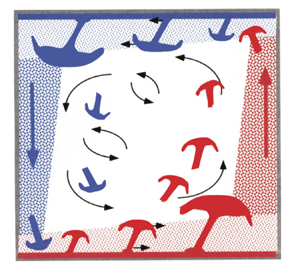
The paper by Castaing et al. (J. Fluid Mech., vol. 204, 1989, pp. 1–30) on turbulent Rayleigh–Bénard convection has been one of the most impactful papers on the subject – not by giving the right and complete answers but by developing versatile concepts and by asking the right questions, namely: (i) What is the overall flow organization? (ii) What is the dependence of the Nusselt number ${\textit {Nu}}$ (the dimensionless heat transport) on the Rayleigh number ${\textit {Ra}}$ (the thermal driving strength)? (iii) What is the ultimate state of turbulence for extremely large ${\textit {Ra}}$? Thanks to Castaing et al. having asked the right questions, the field has made tremendous progress over the last 35 years.
Universities face a critical crossroads, in need of swift, targeted, and efficient actions to address future challenges. This necessities a strategic approach to updating and assessing engineering design education. Efforts to improve teaching and learning require systematic change in many universities, yet research on structuring such change is scarce. Few studies have combined a systems perspective with a functional operational level. This research embeds design thinking to structure to isolated actions. Drawing from an extensive literature review of educational change frameworks and several illustrative cases, this article demonstrates the potential of design-driven change. It highlights how dynamic interrelations can facilitate educational transformations across diverse academic levels. By presenting an educational ecosystem as a framework for systematic educational change, design thinking functions as a catalyst for educational transformation. The article also presents case findings that strengthen supportive actions ingrained in existing change research frameworks connecting, them to a transparent approach for sustainable and careful decision-making.
During the 20th century, dealing with grief through an ongoing involvement with the deceased (such as speaking to their grave) was seen as pathological by Western authors such as Sigmund Freud. Nowadays, we are presented with the opportunity to continue interacting with digital representations of the deceased. As a result, the paper adopts an Ubuntu perspective, i.e., a sub-Saharan African philosophy focussed on community and relationship to provide a toolkit for using this emerging technology. I will argue that the Ubuntu framework I propose contributes to the use of griefbots in two ways. The first is that it shows that it is morally permissible to use griefbots to assuage our grief. The second is that it delineates how we can ethically use the technology. To do so, I split my analysis into four sections. In the first section, I show that meaningful relationships can occur between the bereaved and griefbots. This will be done by exploring the Western theory of continuing bonds proposed by Dennis Klass, Phyllis Silverman and Steven Nickman. In my second, I flesh out my Ubuntu framework according to Thaddeus Metz’s accounts on Ubuntu as a modal-relational theory. In my third section, I apply my Ubuntu framework to the case of Roman Mazurenko. Furthermore, I consider some counterarguments to the Ubuntu framework regarding privacy, commercialisation and people replacement. Finally, I conclude that, despite these limitations, the Ubuntu framework positively contributes to determining whether we should communicate with the dead through griefbots to assuage our grief.