Refine listing
Actions for selected content:
143774 results in Open Access
The Three-Verdict Problem
-
- Journal:
- Legal Theory / Volume 30 / Issue 2 / June 2024
- Published online by Cambridge University Press:
- 25 November 2024, pp. 105-127
-
- Article
-
- You have access
- Open access
- HTML
- Export citation
Legalizing Abortion in the Southern Cone
-
- Journal:
- PS: Political Science & Politics / Volume 58 / Issue 1 / January 2025
- Published online by Cambridge University Press:
- 25 November 2024, pp. 60-64
- Print publication:
- January 2025
-
- Article
-
- You have access
- Open access
- HTML
- Export citation
A search for 3-mm molecular absorption line transitions in the magellanic stream
-
- Journal:
- Publications of the Astronomical Society of Australia / Volume 41 / 2024
- Published online by Cambridge University Press:
- 25 November 2024, e094
-
- Article
-
- You have access
- Open access
- HTML
- Export citation
-
The Magellanic Stream (MS), a tail of diffuse gas formed from tidal and ram pressure interactions between the Small and Large Magellanic Clouds (SMC and LMC) and the Halo of the Milky Way, is primarily composed of neutral atomic hydrogen (HI). The deficiency of dust and the diffuse nature of the present gas make molecular formation rare and difficult, but if present, could lead to regions potentially suitable for star formation, thereby allowing us to probe conditions of star formation similar to those at high redshifts. We search for $\text{HCO}^{+}$, HCN, HNC, and C $_2$H using the highest sensitivity observations of molecular absorption data from the Atacama Large Millimeter Array (ALMA) to trace these regions, comparing with HI archival data from the Galactic Arecibo L-Band Feed Array (GALFA) HI Survey and the Galactic All Sky Survey (GASS) to compare these environments in the MS to the HI column density threshold for molecular formation in the Milky Way. We also compare the line of sight locations with confirmed locations of stars, molecular hydrogen, and OI detections, though at higher sensitivities than the observations presented here.
We find no detections to a 3 $\sigma$ significance, despite four sightlines having column densities surpassing the threshold for molecular formation in the diffuse regions of the Milky Way. Here we present our calculations for the upper limits of the column densities of each of these molecular absorption lines, ranging from $3 \times 10^{10}$ to $1 \times 10^{13}$ cm $^{-2}$. The non-detection of $\text{HCO}^{+}$ suggests that at least one of the following is true: (i) $X_{\text{HCO}^{+}{}, \mathrm{MS}}$ is significantly lower than the Milky Way value; (ii) that the widespread diffuse molecular gas observed by Rybarczyk (2022b, ApJ, 928, 79) in the Milky Way’s diffuse interstellar medium (ISM) does not have a direct analogue in the MS; (iii) the HI-to- $\text{H}_{2}$ transition occurs in the MS at a higher surface density in the MS than in the LMC or SMC; or (iv) molecular gas exists in the MS, but only in small, dense clumps.


Case Salience in the State Supreme Courts: A Research Update
-
- Journal:
- State Politics & Policy Quarterly / Volume 25 / Issue 1 / March 2025
- Published online by Cambridge University Press:
- 25 November 2024, pp. 108-118
- Print publication:
- March 2025
-
- Article
-
- You have access
- Open access
- HTML
- Export citation
Identifying stakeholder motivations in normative AI governance: a systematic literature review for research guidance
- Part of
-
- Journal:
- Data & Policy / Volume 6 / 2024
- Published online by Cambridge University Press:
- 25 November 2024, e58
-
- Article
-
- You have access
- Open access
- HTML
- Export citation
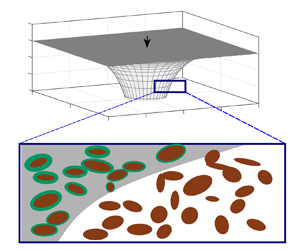
Microbial growth within porous gravity currents
-
- Journal:
- Journal of Fluid Mechanics / Volume 1000 / 10 December 2024
- Published online by Cambridge University Press:
- 25 November 2024, A24
-
- Article
-
- You have access
- Open access
- HTML
- Export citation
Inferring species extinction from sighting data
-
- Journal:
- Cambridge Prisms: Extinction / Volume 2 / 2024
- Published online by Cambridge University Press:
- 25 November 2024, e19
-
- Article
-
- You have access
- Open access
- HTML
- Export citation
Letter to the editor: social influences on the relationship between dissociation and psychotic-like experience
-
- Journal:
- Psychological Medicine / Volume 54 / Issue 15 / November 2024
- Published online by Cambridge University Press:
- 25 November 2024, pp. 4457-4458
-
- Article
-
- You have access
- Open access
- HTML
- Export citation

Security in Sustainable Energy Transitions
- Interplay between Energy, Security, and Defence Policies in Estonia, Finland, Norway, and Scotland
-
- Published online:
- 23 November 2024
- Print publication:
- 21 November 2024
-
- Book
-
- You have access
- Open access
- Export citation

Customary International Law and Its Interpretation by International Courts
- Theories, Methods and Interactions
-
- Published online:
- 22 November 2024
- Print publication:
- 28 November 2024
-
- Book
-
- You have access
- Open access
- Export citation
Implementing Climate Change Policy
- Designing and Deploying Net Zero Carbon Governance
-
- Published online:
- 22 November 2024
- Print publication:
- 05 December 2024
-
- Book
-
- You have access
- Open access
- Export citation

SCN2A-Related Disorders
-
- Published online:
- 22 November 2024
- Print publication:
- 02 January 2025
-
- Element
-
- You have access
- Open access
- HTML
- Export citation

These things take time: the first 1000 volumes of the Journal of Fluid Mechanics
-
- Journal:
- Journal of Fluid Mechanics / Volume 1000 / 10 December 2024
- Published online by Cambridge University Press:
- 22 November 2024, E1
-
- Article
-
- You have access
- Open access
- HTML
- Export citation
Predictors of willingness to participate in COVID-19 clinical trials among Black and Latino adults
-
- Journal:
- Journal of Clinical and Translational Science / Volume 8 / Issue 1 / 2024
- Published online by Cambridge University Press:
- 22 November 2024, e217
-
- Article
-
- You have access
- Open access
- HTML
- Export citation
On choice inconsistency: the ‘error’ error in behavioural paternalism
-
- Journal:
- Behavioural Public Policy / Volume 9 / Issue 3 / July 2025
- Published online by Cambridge University Press:
- 22 November 2024, pp. 516-529
-
- Article
-
- You have access
- Open access
- HTML
- Export citation
A high-resolution palynological and geochemical study of the end-Triassic mass-extinction based on a new cored succession at Winterswijk (the Netherlands)
-
- Journal:
- Geological Magazine / Volume 161 / 2024
- Published online by Cambridge University Press:
- 22 November 2024, e17
-
- Article
-
- You have access
- Open access
- HTML
- Export citation

The establishment of JFM Perspectives
-
- Journal:
- Journal of Fluid Mechanics / Volume 1000 / 10 December 2024
- Published online by Cambridge University Press:
- 22 November 2024, E5
-
- Article
-
- You have access
- Open access
- HTML
- Export citation
Rethinking International Order
-
- Journal:
- Ethics & International Affairs / Volume 38 / Issue 2 / Summer 2024
- Published online by Cambridge University Press:
- 22 November 2024, pp. 200-208
-
- Article
-
- You have access
- Open access
- HTML
- Export citation
An interpretative qualitative case study of a Compassionate Cities initiative in the United Kingdom: Lessons for implementation in other settings
-
- Journal:
- Palliative & Supportive Care / Volume 22 / Issue 6 / December 2024
- Published online by Cambridge University Press:
- 22 November 2024, pp. 2077-2083
-
- Article
-
- You have access
- Open access
- HTML
- Export citation
Modelling of the electron cyclotron emission burst from a laboratory tokamak plasma with loss-cone maser instability
- Part of
-
- Journal:
- Journal of Plasma Physics / Volume 90 / Issue 6 / December 2024
- Published online by Cambridge University Press:
- 22 November 2024, 985900601
-
- Article
-
- You have access
- Open access
- HTML
- Export citation
-
The maser instability associated with the loss-cone distribution has been widely invoked to explain the radio bursts observed in the astrophysical plasma environment, such as aurora and corona. In the laboratory plasma of a tokamak, events reminiscent of these radio bursts have also been frequently observed as an electron cyclotron emission (ECE) burst in the microwave range ($\mathrm{\sim }2{f_{\textrm{ce}}}$
 near the last closed flux surface) during transient magnetohydrodynamic events. These bursts have a short duration of ~10 μs and display a radiation spectrum corresponding to a radiation temperature ${T_{e,\textrm{rad}}}$
 of over $30\ \textrm{keV}$
 while the edge thermal electron temperature ${T_e}$
 is only in the range of $1\ \textrm{keV}$
 . Suprathermal electrons can be generated through magnetic reconnection, and a loss-cone distribution can be generated through open stochastic field lines in the magnetic mirror of the near-edge region of a tokamak plasma. Radiation modelling shows that a sharp distribution gradient $\partial f/\partial {v_ \bot } > 0$
 at the loss-cone boundary can cause a negative absorption of ECE radiation through the maser instability. The negative absorption then amplifies the radiation so that the microwave intensity is significantly stronger than the thermal value. The significant ${T_{e,\textrm{rad}}}$
 from the simulations suggests the potential role of the loss-cone maser instability in generating the ECE burst in a tokamak.


