To save content items to your account,
please confirm that you agree to abide by our usage policies.
If this is the first time you use this feature, you will be asked to authorise Cambridge Core to connect with your account.
Find out more about saving content to .
To save content items to your Kindle, first ensure no-reply@cambridge.org
is added to your Approved Personal Document E-mail List under your Personal Document Settings
on the Manage Your Content and Devices page of your Amazon account. Then enter the ‘name’ part
of your Kindle email address below.
Find out more about saving to your Kindle.
Note you can select to save to either the @free.kindle.com or @kindle.com variations.
‘@free.kindle.com’ emails are free but can only be saved to your device when it is connected to wi-fi.
‘@kindle.com’ emails can be delivered even when you are not connected to wi-fi, but note that service fees apply.
This study examined the relationship between reformulation and food price in Canadian packaged foods and beverages between 2017 and 2020.
Design:
Matched foods and beverages in the University of Toronto Food Label Information and Price 2017 and 2020 databases were analysed (n 5774). Price change by food category and by retailer were compared using Wilcoxon signed-rank tests. The proportion of products with changes in calories and nutrient levels were determined, and mixed-effects models were used to examine the relationship between reformulation and price changes. The Food Standards Australia New Zealand (FSANZ) nutrient profiling model was applied to calculate nutritional quality scores, and mixed-effects models were used to assess if changes in nutritional quality score were associated with price changes.
Setting:
Large grocery retailers by market share in Canada.
Participants:
Foods and beverages available in 2017 and 2020.
Results:
Food price changes differed by retailer and by food category (e.g. increased in Bakery, Snacks, etc; decreased in Beverages, Miscellaneous, etc.). Nutrient reformulation was minimal and bidirectional with the highest proportion of products changing in sodium (17·8 %; 8·4 % increased and 9·4 % decreased). The relationship between nutrient reformulation and price change was insignificant for all nutrients overall and was not consistent across food categories. Average FSANZ score did not change (7·5 in both years). For Legumes and Combination dishes, improvements in nutritional quality were associated with a price decrease and increase, respectively.
Conclusions:
Stronger policies are required to incentivise reformulation in Canada. Results do not provide evidence of reformulation impacting food prices.
The nanoscale is the new frontier of fluid dynamics and its phenomenology can echo at the macroscale as in the canonical example of drop impact on a planar substrate. Unprecedented advances in measurement technology have recently equipped fluid dynamicists with the ability to probe nanoscale effects. The paper by Li et al. (J. Fluid Mech., vol. 785, 2015, R2) uses ultrafast imaging at the hundreds of nanoseconds scale to resolve the first contact between the drop and the substrate and thereby reveal the effect of prescribed nano-roughness on contact line motion.
This article looks again at the history of British migration policy in the 1940s and 1950s by centering international and imperial politics, and by drawing on archives related to shipping. These sources suggest that the British government sought to reactivate a system of race-segregated mobility across the Empire-Commonwealth after the Second World War. This involved subsidizing fares for emigrants bound for Australia, transporting migrants from Europe to the UK, and withdrawing shipping from routes that connected the Caribbean to the UK. Very soon, however, these policies came under strain. There were not enough deep-sea ships to meet demand for berths to Australia or to bring over recruited European migrants. Then the Australian government found new ways to ship migrants from continental Europe by signing a deal with the International Refugee Organization, challenging UK policy to keep Australian immigration British. Meanwhile, new routes were opened up from the Caribbean and South Asia to the UK. These trends raised a host of dilemmas for policymakers and all related to transport infrastructure. Thinking about transport can deepen our understanding of migration history, and the article's conclusion suggests some of the ways that taking such an approach can contribute to existing explanations for the government's fateful decision to amend the UK's nationality and citizenship legislation during the 1960s.
In light of the growing threat of climate change and urgency of mitigation at the societal and individual level, an exponentially growing body of research has addressed how and what people think about climate change—ranging from basic judgments of truth and attitudes about risk to predictions of future outcomes. However, the field is also beset by a striking variety of items and scales used to measure climate change beliefs, with notable differences in content, untested structural assumptions, and unsatisfactory or unknown psychometric properties. In a series of four studies (total N = 2,678), scales for the assessment of climate change beliefs are developed that are comprehensive and balanced in content and psychometrically sound. The latent construct structure is tested, and evidence of high rank-order stability (1-year retest-reliability) and predictive validity (for policy preferences and actual behavior) provided.
Advancements in wearable robots aim to improve user motion, motor control, and overall experience by minimizing energetic cost (EC). However, EC is challenging to measure and it is typically indirectly estimated through respiratory gas analysis. This study introduces a novel EMG-based objective function that captures individuals’ natural energetic expenditure during walking. The objective function combines information from electromyography (EMG) variables such as intensity and muscle synergies. First, we demonstrate the similarity of the proposed objective function, calculated offline, to the EC during walking. Second, we minimize and validate the EMG-based objective function using an online Bayesian optimization algorithm. The walking step frequency is chosen as the parameter to optimize in both offline and online approaches in order to simplify experiments and facilitate comparisons with related research. Compared to existing studies that use EC as the objective function, results demonstrated that the optimization of the presented objective function reduced the number of iterations and, when compared with gradient descent optimization strategies, also reduced convergence time. Moreover, the algorithm effectively converges toward an optimal step frequency near the user’s preferred frequency, positively influencing EC reduction. The good correlation between the estimated objective function and measured EC highlights its consistency and reliability. Thus, the proposed objective function could potentially optimize lower limb exoskeleton assistance and improve user performance and human–robot interaction without the need for challenging respiratory gas measurements.
Antenna arrays are a main driver of next generation millimeter-wave communication and radar systems as shrinking antenna sizes leverage larger arrays to compensate for reduced link budget. However, conventional phase controlled arrays exhibit a frequency dependent scan angle that appears as loss to a fixed counterpart. Bandwidth limitations introduced by the so-called beam squint effect hinder larger array sizes and data rates thereby generating a demand for timed arrays as a solution. This paper gives a quantified overview of the beam squint phenomenon, different hardware architectures as well as evaluation parameters and common shortcomings of true-time delay (TTD) elements. A broad variety of TTD realizations from literature are compared by their operational principles and performance. Finally, the delay interpolation principle, its non-idealities, and their impact on a hierarchically time delay controlled D-band antenna array are described. Extended content on a previously published, continuously tunable TTD implementation at a center frequency of 144 GHz with a bandwidth of 26 GHz and a delay range of 1.75 ps that requires only 0.53 × 0.3 mm2 of core chip area is presented. Measurement results have been obtained from a demonstrator manufactured in 130 nm BiCMOS technology.
This manuscript showcases the latest advancements in deepImageJ, a pivotal Fiji/ImageJ plugin for bioimage analysis in life sciences. The plugin, known for its user-friendly interface, facilitates the application of diverse pre-trained convolutional neural networks to custom data. The manuscript demonstrates several deepImageJ capabilities, particularly in deploying complex pipelines, three-dimensional (3D) image analysis, and processing large images. A key development is the integration of the Java Deep Learning Library, expanding deepImageJ’s compatibility with various deep learning (DL) frameworks, including TensorFlow, PyTorch, and ONNX. This allows for running multiple engines within a single Fiji/ImageJ instance, streamlining complex bioimage analysis workflows. The manuscript details three case studies to demonstrate these capabilities. The first case study explores integrated image-to-image translation followed by nuclei segmentation. The second case study focuses on 3D nuclei segmentation. The third case study showcases large image volume segmentation and compatibility with the BioImage Model Zoo. These use cases underscore deepImageJ’s versatility and power to make advanced DLmore accessible and efficient for bioimage analysis. The new developments within deepImageJ seek to provide a more flexible and enriched user-friendly framework to enable next-generation image processing in life science.
Consider a flow in $\mathbb{R}^3$ and let K be the biggest invariant subset of some compact region of interest $N \subseteq \mathbb{R}^3$. The set K is often not computable, but the way the flow crosses the boundary of N can provide indirect information about it. For example, classical tools such as Ważewski’s principle or the Poincaré–Hopf theorem can be used to detect whether K is non-empty or contains rest points, respectively. We present a criterion that can establish whether K has a non-trivial homology by looking at the subset of the boundary of N along which the flow is tangent to N. We prove that the criterion is as sharp as possible with the information it uses as an input. We also show that it is algorithmically checkable.

This paperpresents the measurement procedure as well as the calculations and theoretical background for the estimation of particle sizes with the help of a dual-frequency measurement setup. For the measurement, two fully integrated radar sensors are implemented which offer advantages over typically used technologies at high frequencies. The first sensor has a constant transmitting frequency of 90 GHz while the second sensor offers a possibility to vary the transmitting frequency over the entire D-band with frequencies between 110 and 180 GHz. With these frequencies, different sizes can be determined. The presented approach makes use of the different transitions between the linear increasing Rayleigh scattering regime and the Mie regime. With a fitting indoor measurement setup that resembles an industrial duct, the approach is verified for spheroid glass particles with a diameter of 0.875 mm. The results show a slight deviation from the expected value of particle sizes overall.
The agency of a person with young onset dementia (YOD) changes owing to individual symptoms, uncertainty about the speed of progression and the severity of YOD. Dementia usually greatly interrupts life and reduces agency. Previous studies show that some people and families integrate and cope with dementia better than others. This study aimed to find out how YOD changes the agency of the person who has it and what family members’ role is in forming their agency. The data were collected in Finland in semi-structured interviews with 14 people with YOD and 15 family members, about a year after the diagnosis. These two data sets were analysed with a narrative method, actantial analysis. A wide variety of elements, both human and non-human factors, were found to promote and undermine agency. It was found that people with YOD need both integrity and flexibility to reconstruct their own agency. Resources support them in this process of reconstruction, and hinderers interrupt the process. This combination of integrity and flexibility, resources and hinderers, generates how people with YOD recount the future, the aims they set and how they reconstruct their agency. Other people, especially family members, are part of this dynamic process and when their relationship is cohesive, the agency of both parties increases. The participants used ideal and burdensome storylines to narrate factors that supported or interrupted their agency. Based on our findings, narrating one’s situation is, for coping, not only a means but its very basis.
This study uses a rational choice approach to argue that an under-theorized and rarely tested cause of governmental discrimination against religious minorities is its popularity. Specifically, we argue that self-interested politicians are more likely to enact discriminatory policies when they believe said discrimination will be popular. These policies, in turn, have payoffs via increased public perceptions of governmental legitimacy. Using the Religion and State project, round 3 and World Values Survey data for members of the majority religion between 1990 and 2014 in 58 Christian-majority countries, we demonstrate that prejudice against members of other religions predicts increased governmental religious discrimination, which is, in turn, associated with higher confidence in government, legislatures, and political parties. While our results are specific to discrimination against religious minorities, this suggests that when discrimination against minorities in general is popular, politicians are likely to oblige.
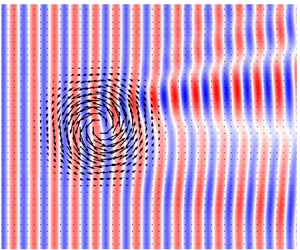
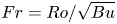
The propagation paths of oceanic internal tides are influenced by their interactions with vortices. We examine the scattering effect that an isolated vortex in (cyclo)geostrophic balance has on a rotating shallow-water plane wave. We run a suite of simulations in which we vary the non-dimensional vorticity of the vortex, $Ro$, the relative scale of the vortex size to the Rossby radius of deformation, $Bu$, and the size of the vortex compared with the plane wave wavelength, $K$. We compare the scattered wave flux pattern with ray-tracing predictions. Ray-tracing predictions are relatively insensitive to $K$ in the $1< K<4$ range we investigate; however, they generally underestimate the broad angles of the shallow-water wave scattering patterns, especially for the lower end of the $K$ range. We then measure the ratio of the scattered wave energy flux to the incoming wave energy flux, denoted by $S$, for each simulation. We find that $S$ follows a power law $S \propto (FrK)^2$ when $S < 0.2$, where $Fr = Ro/\sqrt {Bu}$ is the Froude number. When $S>0.2$, it starts plateauing.
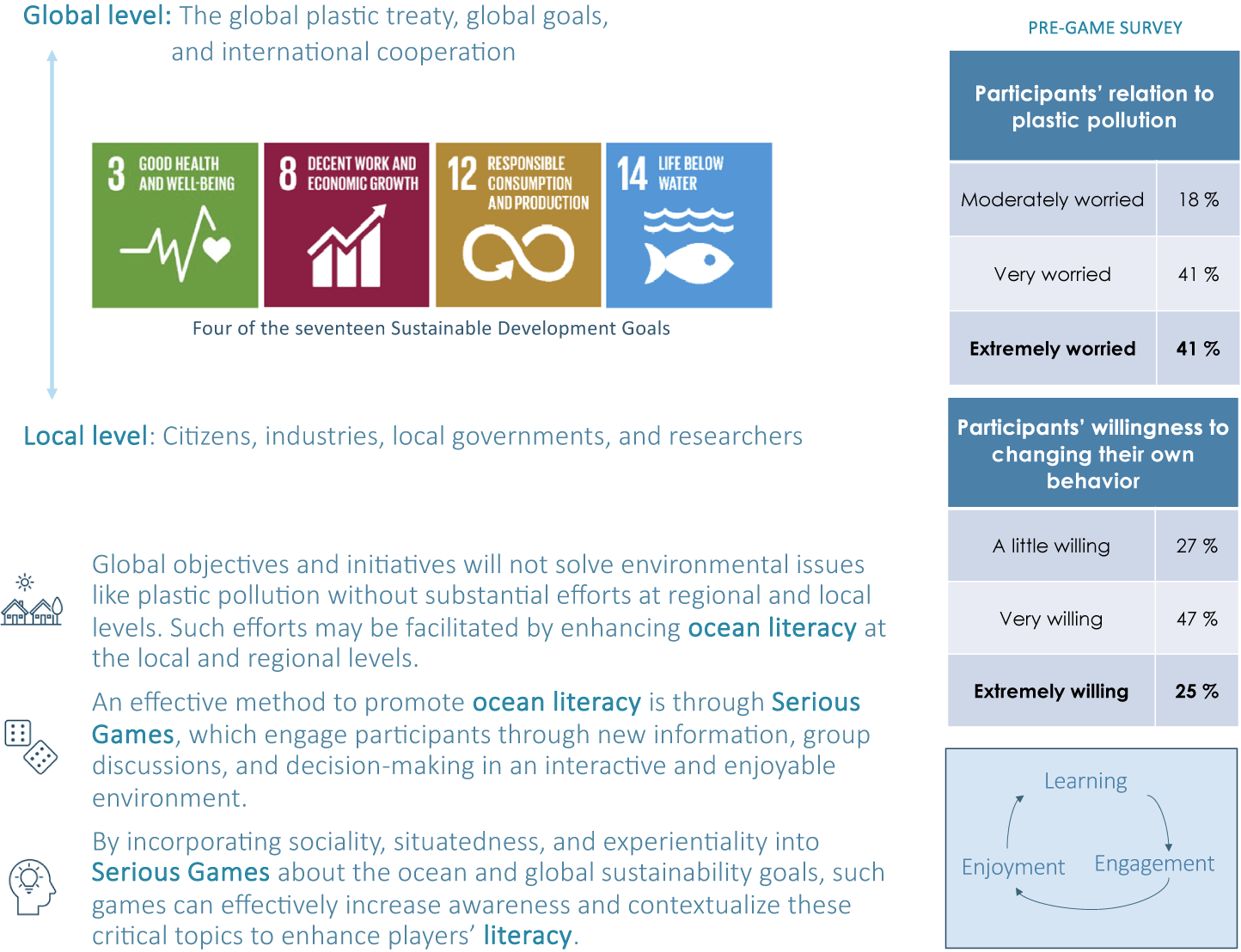
Serious games are a method that can be used to reach the public on complex topics related to the ocean. Although games used for learning generally, and ocean literacy specifically, have developed gradually since the 1970s, it was not until the popularization of digital games, around the turn of the millennium, that serious games rose to prominence in academia. Since then, vast amounts of serious games research have been published each year – chiefly on digital games, but also increasingly on hybrid and analogue games. In this article, we present results from a series of serious games that were played in three geographical regions in Norway with future-generation stakeholders and tie this to ocean literacy. We report on the potential benefits of serious games for learning and motivation based on these results. The games were played within the context of the United Nations Decade of Ocean Science, the sustainable development goals and multilevel governance, with a special focus on microplastic pollution and jellyfish blooms. We argue that using serious games can be beneficial not just for outreach but also as a tool for unintrusive collection of qualitative data in the form of narratives from transcriptions post-gaming session and contribute to ocean literacy.
Biodiversity shortfalls and taxonomic bias can lead to inaccurate assessment of conservation priorities. Previous literature has begun to explore practical reasons why some species are discovered sooner or are better researched than others. However, the deeper socio-cultural causes for undiscovered and neglected biodiversity, and the value of collectively analysing species at risk of unrecorded, or “dark”, extinction, are yet to be fully examined. Here, we argue that a new label (we propose “shadow diversity”) is needed to shift our perspective from biodiversity shortfalls to living, albeit unknown, species. We suggest this linguistic shift imparts intrinsic value to these species, beyond scientific gaze and cultural systems. We review research on undiscovered, undetected and hidden biodiversity in the fields of conservation biology, macroecology and genetics. Drawing on philosophy, geography, history and sociology, we demonstrate that a range of socio-cultural factors (funding, education and historical bias) combine with traditional, practical impediments to limit species discovery and detection. We propose using a spectrum of shadow diversity which enables a complex, non-binary and comprehensive approach to biodiversity unknowns. Shadow diversity holds exciting potential as a tool to increase awareness, appreciation and support for the conservation of traditionally less studied wildlife species and sites, from soil microbes to less charismatic habitat fragments. We advocate for a shift in how the conservation community and wider public see biodiversity and an increase in popular support for conserving a wider range of life forms. Most importantly, shadow diversity provides appropriate language and conceptual frameworks to discuss species absent from conservation assessment and at potential risk of dark extinction.
We present a new proof of the compactness of bilinear paraproducts with CMO symbols. By drawing an analogy to compact linear operators, we first explore further properties of compact bilinear operators on Banach spaces and present examples. We then prove compactness of bilinear paraproducts with CMO symbols by combining one of the properties of compact bilinear operators thus obtained with vanishing Carleson measure estimates and interpolation of bilinear compactness.
Language variation is demonstrably affected by accumulated experiences reflecting the consequences of the contexts in which words are most frequently used. Yet, these contextual frequency effects are seldom explored in children’s speech. This study uses a corpus-based approach to investigate how 29 Spanish-speaking children, aged 5–15, realize word-initial Spanish /d/ as a function of accumulated experiences with /d/-initial words in articulatory contexts that promote reduction. Contextual frequency effects are also examined in 12 Spanish-speaking adults from the children’s community. Cumulative experience is estimated as the form’s frequency of occurrence in a specific context that promotes a specific variant. Results reveal contextual frequency effects in both the child and adult data. Moreover, the extent of the contextual frequency effect is comparable across generations.
Cartels today are illegal and illegitimate across the globe. Yet until the end of World War II, cartels were legal, ubiquitous, and popular—especially in Europe. How, then, did cartels become bad, if they had been considered a positive force for capitalist stabilization and peace in the first half of the 20th century? That is the question this dissertation poses. By the 1930s, over 1,000 monopolistic agreements regulated nearly half of world trade. International cartels governed the interwar world economy, setting prices and output quotas, dividing world markets, regulating trade flows, and even controlling the transfer of patents across firms and sovereign state borders. I conceptualize this regime as “cartel capitalism.” Most cartels were headquartered in industrial Europe. First, I trace how a surprising consensus in interwar Europe—comprising national governments; international organizations like the League of Nations; industrialists, led by the International Chamber of Commerce; federalists; and even socialists—backed cartels as a panacea to the problems of reconstruction after 1918, namely the quest for peace and stable markets. However, in the wake of 1945, most countries in Western Europe—along with the new supranational European Coal and Steel Community (ECSC, 1951) and European Economic Community (EEC)—started prohibiting cartels. My project illuminates the causes and consequences of this great reversal. Monopoly Menace reveals, for the first time, how Europe’s transnational reckoning with the shocks of the Great Depression, fascism, and total war produced a genuine anticartel revolution that rewrote the rules of the modern European and global economy. Monopoly Menace ends by illuminating how American, British, French, and West German postwar planners designed new national welfare states, the Bretton Woods Order, and the European Union on the neglected foundation of anti-cartel policies.
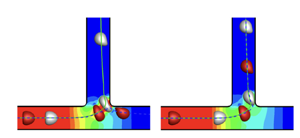
In recent years, microfluidic systems have underpinned a wealth of biotechnology applications and proposed solutions for complex problems, including the sorting and enrichment of deformable particle suspensions. Motivated by such applications of microfluidic systems, Lu et al. (J. Fluid Mech., vol. 923, 2021, A11) present a three-dimensional computational study of a train of deformable capsules flowing through a branched microchannel. Insights into the intricacies of the underlying complex fluid–structure interactions between the suspended capsules and the surrounding fluid can inform experimental scenarios whereby strong capsule interactions are avoided, facilitating precise operating control of microfluidic devices for sorting and enrichment.
To make profitable investment decisions, investors must know and understand their risks. They can learn about these risks in different ways. Evidence suggests that investors who learn from a ‘risk tool’ simulator perceive financial risk more accurately, feel more informed and confident, and thus take on more financial risk. We attempt a conceptual replication of these findings, exploring whether they extend from kind to wicked environments and to investors with some investment experience. We conducted four studies online, amounting to 3,804 participants, and observe that neither the risk tool nor any of the other risk communication interventions lead to different risk taking or to different subjective representations of risk relative to a control condition in which participants received no intervention. We evaluated several moderators, but none could explain the absence of an intervention effect, suggesting that the effect of risk tools and other interventions could be limited.
The motion of a bubble of negligible viscosity, such as air, forced down a tube filled with a viscous fluid which wets the walls of the tube has become a classic of the fluid dynamical literature. The differential motion of the bubble and the fluid are determined by the thin film which surrounds the bubble, whose shape and thickness are set by the interplay between gradients in surface tension and viscous shear stresses. Bretherton (J. Fluid Mech., vol. 10, issue 2, 1961, p. 166) provided a first, clear mathematical analysis in the lubrication limit coupled with carefully constructed experimental confirmation of the thin films deposited by a bubble moving in the confining geometry of the capillary tube. Its lasting impact has been not only in the migration of bubbles, but in a host of related fluid dynamical, industrial, biological and environmental processes for which thin lubricating films on the sometimes convoluted geometries of complex microstructures, such as porous media, determine the large-scale behaviour.