Refine listing
Actions for selected content:
142351 results in Open Access
Classical Puzzles (J.) Morgan Pp. x + 89, ills. Independently published, 2021. Paper, £5.99. ISBN: 9781719033640
-
- Journal:
- Journal of Classics Teaching , First View
- Published online by Cambridge University Press:
- 18 September 2024, p. 1
-
- Article
-
- You have access
- Open access
- HTML
- Export citation
Thermal boundary layer dynamics in low-Prandtl-number Rayleigh–Bénard convection
-
- Journal:
- Journal of Fluid Mechanics / Volume 994 / 10 September 2024
- Published online by Cambridge University Press:
- 18 September 2024, A4
-
- Article
-
- You have access
- Open access
- HTML
- Export citation
-
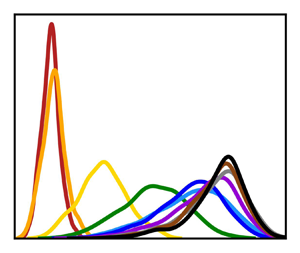
In this experimental study, we explore the dynamics of the thermal boundary layer in liquid metal Rayleigh–Bénard convection, covering the parameter ranges of $0.026 \leq$ Prandtl numbers $(Pr) \leq 0.033$ and Rayleigh numbers ( $Ra$) up to $2.9\times 10^9$. Our research focuses on characterising the thermal boundary layer near the top plate of a cylindrical convection cell with an aspect ratio of 0.5, distinguishing between two distinct regions: the shear-dominated region around the centre of the top plate and a location near the side wall where the boundary layer is expected to be affected by the impact or ejection of thermal plumes. The dependencies of the boundary layer thickness on $Ra$ at these positions reveal deviating scaling exponents with the difference diminishing as $Ra$ increases. We find stronger fluctuations in the boundary layer and increasing deviation from the Prandtl–Blasius–Pohlhausen profile with increasing $Ra$, as well as in the measurements outside the centre region. Our data illustrate the complex interplay between flow dynamics and thermal transport in low- $Pr$ convection.


The insect colonisation, succession, and decomposition of the domestic pig (Artiodactyla: Suidae) in southern Ontario, Canada
-
- Journal:
- The Canadian Entomologist / Volume 156 / 2024
- Published online by Cambridge University Press:
- 18 September 2024, e22
-
- Article
-
- You have access
- Open access
- HTML
- Export citation
Decision Making in a Strategic Medical Command and Control Team During the Covid-19 Pandemic: A Case Study
-
- Journal:
- Disaster Medicine and Public Health Preparedness / Volume 18 / 2024
- Published online by Cambridge University Press:
- 18 September 2024, e119
-
- Article
-
- You have access
- Open access
- HTML
- Export citation
Media Credibility and Voter Penalization of Corrupt Politicians in Latin America
-
- Journal:
- Latin American Politics and Society / Volume 66 / Issue 4 / November 2024
- Published online by Cambridge University Press:
- 18 September 2024, pp. 40-57
-
- Article
-
- You have access
- Open access
- HTML
- Export citation
Miscegenation Madness: Interracial Intimacy and the Politics of ‘Purity’ in Twentieth-Century South Africa
-
- Journal:
- Du Bois Review: Social Science Research on Race / Volume 21 / Issue 2 / Fall 2024
- Published online by Cambridge University Press:
- 18 September 2024, pp. 223-249
-
- Article
-
- You have access
- Open access
- HTML
- Export citation
The Breakdown of Effective Field Theory in Particle Physics: Lessons for Understanding Intertheoretic Relations
-
- Journal:
- Philosophy of Science / Volume 92 / Issue 1 / January 2025
- Published online by Cambridge University Press:
- 18 September 2024, pp. 100-120
- Print publication:
- January 2025
-
- Article
-
- You have access
- Open access
- HTML
- Export citation
Media tone and trading activity on the Sydney Stock Exchange 1901–1950
-
- Journal:
- Financial History Review / Volume 31 / Issue 1 / April 2024
- Published online by Cambridge University Press:
- 18 September 2024, pp. 36-66
-
- Article
-
- You have access
- Open access
- HTML
- Export citation
Old Wine in New Bottles, or Novel Challenges? A Labour History Perspective on Digital Labour
- Part of
-
- Journal:
- International Review of Social History / Volume 69 / Issue 2 / August 2024
- Published online by Cambridge University Press:
- 18 September 2024, pp. 307-316
-
- Article
-
- You have access
- Open access
- HTML
- Export citation
‘Broken souls’ vs. ‘mad ax man’ – changes in the portrayal of depression and schizophrenia in the German media over 10 years
- Part of
-
- Journal:
- Epidemiology and Psychiatric Sciences / Volume 33 / 2024
- Published online by Cambridge University Press:
- 18 September 2024, e37
-
- Article
-
- You have access
- Open access
- HTML
- Export citation
A flow-field integrated flight control: dynamic wind tunnel testing and simulation
-
- Journal:
- The Aeronautical Journal / Volume 128 / Issue 1329 / November 2024
- Published online by Cambridge University Press:
- 18 September 2024, pp. 2451-2482
-
- Article
-
- You have access
- Open access
- HTML
- Export citation
Capturing the clinical complexity in young people presenting to primary mental health services: a data-driven approach
-
- Journal:
- Epidemiology and Psychiatric Sciences / Volume 33 / 2024
- Published online by Cambridge University Press:
- 18 September 2024, e39
-
- Article
-
- You have access
- Open access
- HTML
- Export citation
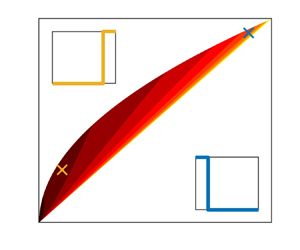
Internal heating profiles for which downward conduction is impossible
-
- Journal:
- Journal of Fluid Mechanics / Volume 993 / 25 August 2024
- Published online by Cambridge University Press:
- 17 September 2024, A5
-
- Article
-
- You have access
- Open access
- HTML
- Export citation
-
We consider an internally heated fluid between parallel plates with fixed thermal fluxes. For a large class of heat sources that vary in the direction of gravity, we prove that $\smash { \smash {{\langle {\delta T} \rangle _h}} } \geq \sigma R^{-1/3} - \mu$, where $\smash { \smash {{\langle {\delta T} \rangle _h}} }$ is the average temperature difference between the bottom and top plates, $R$ is a ‘flux’ Rayleigh number and the constants $\sigma,\mu >0$ depend on the geometric properties of the internal heating. This result implies that mean downward conduction (for which $\smash { \smash {{\langle {\delta T} \rangle _h}} }< 0$) is impossible for a range of Rayleigh numbers smaller than a critical value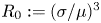 $R_0:=(\sigma /\mu )^{3}$. The bound demonstrates that $R_0$ depends on the heating distribution and can be made arbitrarily large by concentrating the heating near the bottom plate. However, for any given fixed heating profile of the class we consider, the corresponding value of $R_0$ is always finite. This points to a fundamental difference between internally heated convection and its limiting case of Rayleigh–Bénard convection with fixed-flux boundary conditions, for which $\smash {{\langle {\delta T} \rangle _h}}$ is known to be positive for all $R$.
$R$.


Cabral and Revolution in Portuguese-Speaking Africa
-
- Journal:
- African Studies Review / Volume 67 / Issue 4 / December 2024
- Published online by Cambridge University Press:
- 17 September 2024, pp. 1044-1048
-
- Article
-
- You have access
- Open access
- HTML
- Export citation
Central Tibetan (Lhasa)
-
- Journal:
- Journal of the International Phonetic Association / Volume 54 / Issue 2 / August 2024
- Published online by Cambridge University Press:
- 17 September 2024, pp. 788-810
-
- Article
-
- You have access
- Open access
- HTML
- Export citation
Capturing MRSA Diversity by Integrating Genomic and Epidemiological Data of Patients and their Spaces
-
- Journal:
- Antimicrobial Stewardship & Healthcare Epidemiology / Volume 4 / Issue S1 / July 2024
- Published online by Cambridge University Press:
- 16 September 2024, p. s15
-
- Article
-
- You have access
- Open access
- Export citation
-
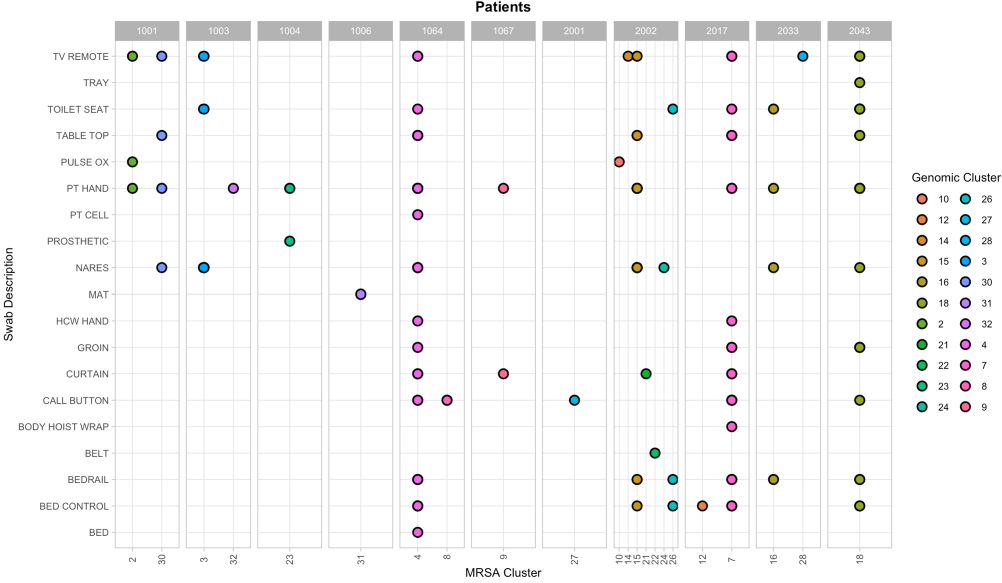
Background: Methicillin-resistant S. aureus (MRSA) is known to cause frequent and severe infections in community living centers, potentially resulting in significant mortality for elderly patients. More research is needed to understand how to utilize genomic and epidemiological data to understand characteristics that may lead to increased transmission. We hypothesized that combining genomic and epidemiological information to sample patients and their environments during long-term stays, we will be able to capture a diverse set of MRSA strains. Method: This work included genome sequencing of patient and environmental samples from 11 patients within the VA Ann Arbor Healthcare System from May 4, 2021- November 16, 2022. All 11 patients tested positive for MRSA during their stay (mean days = 31). Patient and environmental samples were taken throughout their stays, screened for MRSA, and whole-genome sequenced. Single nucleotide variants (SNVs) were identified by mapping reads and calling variants against strain-specific reference genomes. We used ape v5.6-2 in R v4.2.2 to analyze and infer evolution, acquisition, and transmission events based on pairwise SNV distances. Genomic clusters were determined using stats v3.6.2, with a SNV distance threshold of 20. Result: Samples that were collected from patient bodily sites were able to reveal 20 distinct genomic clusters of MRSA (patient hands: n = 10, nares: n = 7, groin: n = 3). Environmental samples from patient environments also revealed distinct genomic MRSA clusters (tv remote: n = 9, toilet seat and bed rail: n = 6, table top, bed control, and call button: n = 5, bed curtain: n = 4, pulse ox = 2, cell phone, tray, pulse ox, mat, body hoist wrap, and bed: n = 1). Conclusion: The identification of various genomic clusters from patients and their environmental reservoirs suggests intrahost variation that can only be captured by using a more holistic approach of integrating epidemiology and genomic sequencing. Developing studies that incorporate genomic data, various environmental sources, and multiple isolates over time within community living centers can increase our understanding of strains that are more likely to transmit, survive on living and non-living surfaces and therefore lead to improved recommendation for infection prevention interventions and drivers of endemicity.
Disclosure: Lona Mody: NIH, VA, CDC, Kahn Foundation; Honoraria: UpToDate; Contracted Research: Nano-Vibronix
Risk Factors and Outcomes of Candida auris in Southeast Michigan
-
- Journal:
- Antimicrobial Stewardship & Healthcare Epidemiology / Volume 4 / Issue S1 / July 2024
- Published online by Cambridge University Press:
- 16 September 2024, pp. s92-s93
-
- Article
-
- You have access
- Open access
- Export citation
-
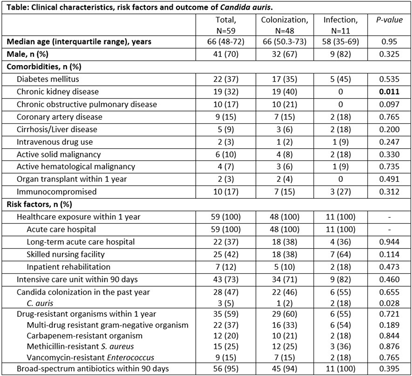
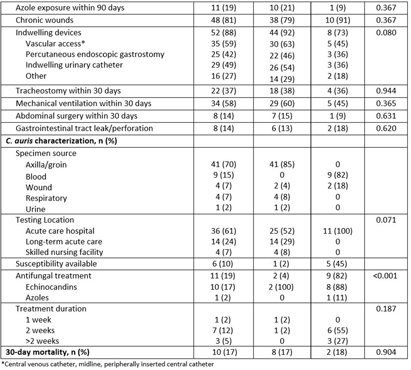
Background: Candida auris is an emerging multidrug resistant fungus that presents a serious global health threat and causes severe infections with a high mortality rate in hospitalized patients with significant underlying comorbidities. We describe the risk factors and clinical outcomes associated with C. auris in Southeast Michigan. Methods: This is a retrospective case series of culture-positive C. auris patients who had contact with our healthcare facility in Detroit from 2021 to 2023. We evaluated demographics, comorbidities, risk factors, and outcomes. A comparative analysis of colonized and infected patients was performed. Results: Forty-eight (81%) colonized and 11 (19%) infected patients were included (Table); 70% were male with median age of 66 years. All variables were comparable between the two groups except chronic kidney disease, which was significantly more prevalent among colonized patients (40% vs 0, p=0.011). All patients had prior exposure to acute care hospital (ACH), 37% to long-term acute care hospital, and 42% to skilled nursing facility within 1 year of diagnosis. Chronic wounds, prior broad-spectrum antibiotic use, and indwelling devices were prevalent in both groups; more than half required mechanical ventilation in the last month, and one third had tracheostomy at the time of C. auris detection. Almost 60% had a prior history of drug-resistant organisms, including multi-drug resistant gram negative (37%) and carbapenem-resistant (20%) organisms. Blood (82%) and wound (18%) were sources of invasive candidiasis. More than half (61%) of the testing was performed at ACH. Nine patients (82%) with invasive disease were treated with echinocandins (88%); among the colonized, two (4%) were treated with echinocandins but had persistent colonization. Thirty-day mortality was not significantly different among the two groups and was nearly 20%. Conclusions: In this large cohort study, a history of healthcare exposure, drug-resistant organisms, use of broad-spectrum antibiotics, indwelling devices, and chronic wounds were common risk factors among C. auris patients. Limiting the use of broad-spectrum antimicrobials and invasive devices, adherence to infection prevention and control practices, and interfacility transfer communication are important mitigating strategies to reduce the incidence and spread of C. auris.
Bridging the Gap: Specialized Training Programs for Infection Prevention Specialists Increase Certification Success
-
- Journal:
- Antimicrobial Stewardship & Healthcare Epidemiology / Volume 4 / Issue S1 / July 2024
- Published online by Cambridge University Press:
- 16 September 2024, pp. s107-s108
-
- Article
-
- You have access
- Open access
- Export citation
-
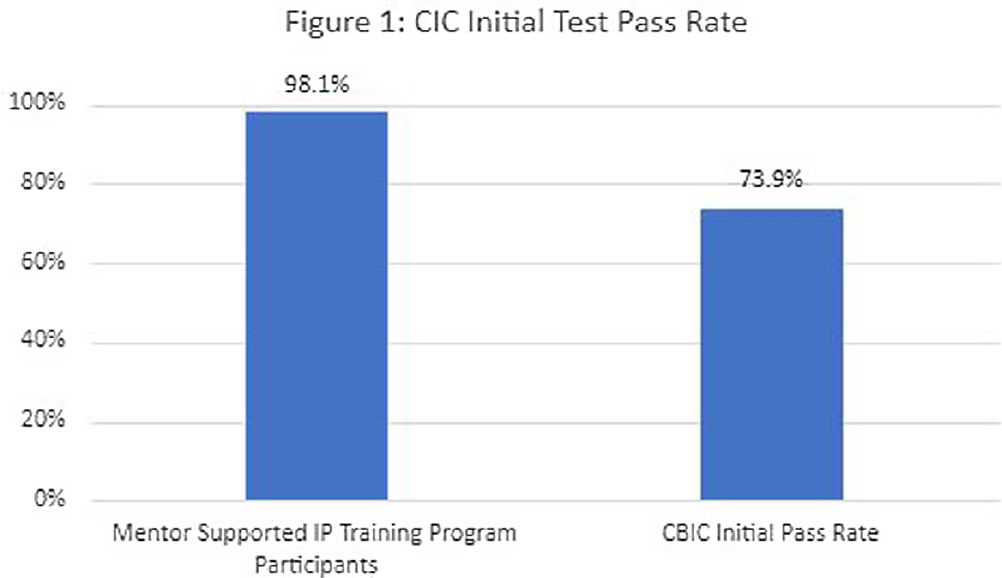
Background: The role of the infection preventionist (IP) is complex and encompasses a range of responsibilities requiring extensive knowledge in infection control practices, data analysis, surveillance, performance improvement and collaboration with multidisciplinary teams. Infection prevention certification (CIC) by the certification Board of Infection Control (CBIC) is a standardized marker of knowledge and competencies required for practice in the field. In a 2020 survey of IPs, less than half were certified or planned to become certified. Of those that do take the certification exam, less than three quarters pass on their initial exam attempt. Methods: From 2017 to 2023, fifty-two new IPs were enrolled in a competency-based training program which combined didactic and applied learning on core IP job functions, and a structured mentoring program. The initial didactic phase consisted of evidence-based learning modules with validation of competency through post-training testing and practical demonstration. Education was provided by an advanced practice IP via remote webinars, which included discussion of questions, skills coaching, and review of post-tests. Novice IPs were partnered with at least two preceptors: one advanced practice lead preceptor guided the novice IPs through assigned education modules and oversaw program management and training benchmarks. A second, near-peer preceptor or mentor collaborated with the novice IP in the facility setting. Initial training focused on facility operations, surveillance, rounding and other facility specific activities. Facility mentors were responsible for combining education module topics with practical application of skills. Mentors guided novice IPs through National Healthcare Surveillance network (NHSN) surveillance training and validated surveillance and infection coding until the novice IP had an interrater reliability validation assessing surveillance competency. After the initial training phase, the novice IPs began preparation for certification. This phase included additional training modules aligned with the CBIC certification content outline and practice exams. Results: All 52 novice IPs completed the training program and attempted the CIC examination. The initial pass rate for the certification exam among IPs in the supervised training and mentorship program was 98.1% (n=51). This is 33% higher than the initial pass rate published by CBIC, which was 73.9% (Figure 1). Conclusions: Organizing evidence-based guidelines into topic-specific modules builds a foundation of infection prevention and control knowledge, which is enhanced through remote instruction and direct application of skills under a preceptor’s supervision. This method allows IPs to be introduced to concepts covered in the board certification exam upon hire and support certification with improved outcome
Just Research: Evaluation findings of an educational program to promote inclusive research among investigators and research staff
-
- Journal:
- Journal of Clinical and Translational Science / Volume 8 / Issue 1 / 2024
- Published online by Cambridge University Press:
- 16 September 2024, e120
-
- Article
-
- You have access
- Open access
- HTML
- Export citation
Clinical Characteristics and Cycle Thresholds Among Discordant and True Positive Test Results for Clostridiodes difficile
-
- Journal:
- Antimicrobial Stewardship & Healthcare Epidemiology / Volume 4 / Issue S1 / July 2024
- Published online by Cambridge University Press:
- 16 September 2024, p. s67
-
- Article
-
- You have access
- Open access
- Export citation
-
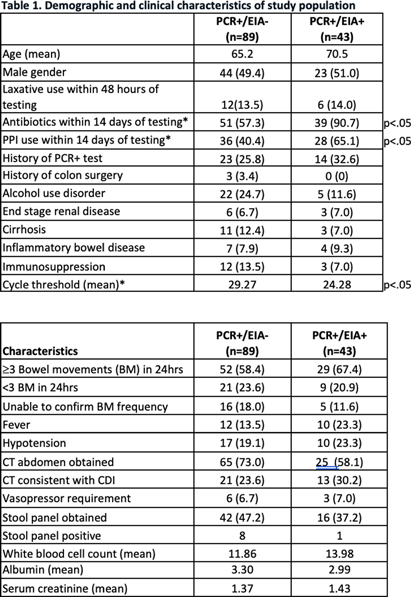
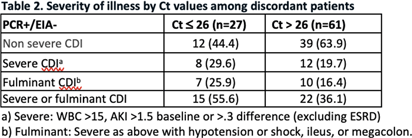
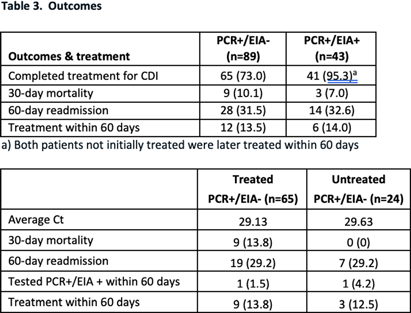
Background: The diagnosis of Clostridioides difficile infection (CDI) is challenging. Despite guideline-directed, multistep testing algorithms and diagnostic stewardship, the treatment of C. difficile colonization persists. The testing algorithm at our system utilizes an initial real-time PCR test (PCR) for Toxin B gene, which if positive, reflexes to an enzyme immunoassay (EIA) for detecting Toxins A and B. Discordant results (PCR +/EIA -) are suggestive of colonization, but the majority of patients with discordant results are treated for CDI. Correlation of C. difficile EIA B polymerase chain reaction (PCR) cycle thresholds (Ct) with the presence of free EIA and disease severity has been observed, but the ability to use Ct in the decision to treat patients with discordant results is unclear. Our study assesses if Ct values and other clinical characteristics favor treatment in select patients with discordant Methods: A retrospective chart review was performed of adult patients (≥ 18-year-old) with positive C. difficile PCR results that were admitted to our health system between June 01 and August 31, 2023. C. difficile PCR and Ct results were obtained by Cepheid GeneXpert and Toxin A and B EIA results were obtained by Meridian Bioscience Immunocard. Patients with discordant (PCR+/EIA) and true positive (PCR+/EIA+) results were compared. We assessed demographics, past medical history, clinical characteristics, severity of illness, PCR Ct values, treatment, and clinical outcomes including: 30-day all-cause mortality and re-admission, and 60-day CDI repeat testing and treatment. Results Of the 122 patients identified, 89 patients had discordant results and 43 had true positive Results: Severity of illness and other clinical and laboratory characteristics were similar between both groups. Mean Ct values were significantly lower for true positive results compared to discordant results, 24.28 vs 29.27, respectively (p26 (p=.08). Of the patients with discordant results, 73 completed treatment for CDI and no difference in clinical outcomes was observed compared to patients with discordant results that were not treated. Conclusion Ct values were lower among patients with true positive results compared to patients with discordant Conclusion: There were no statistically significant different rates of severe or fulminant CDI among patients with discordant results and Ct values < 26, although this finding may be limited by sample size and Ct may be helpful in deciding which discordant patients to treat.